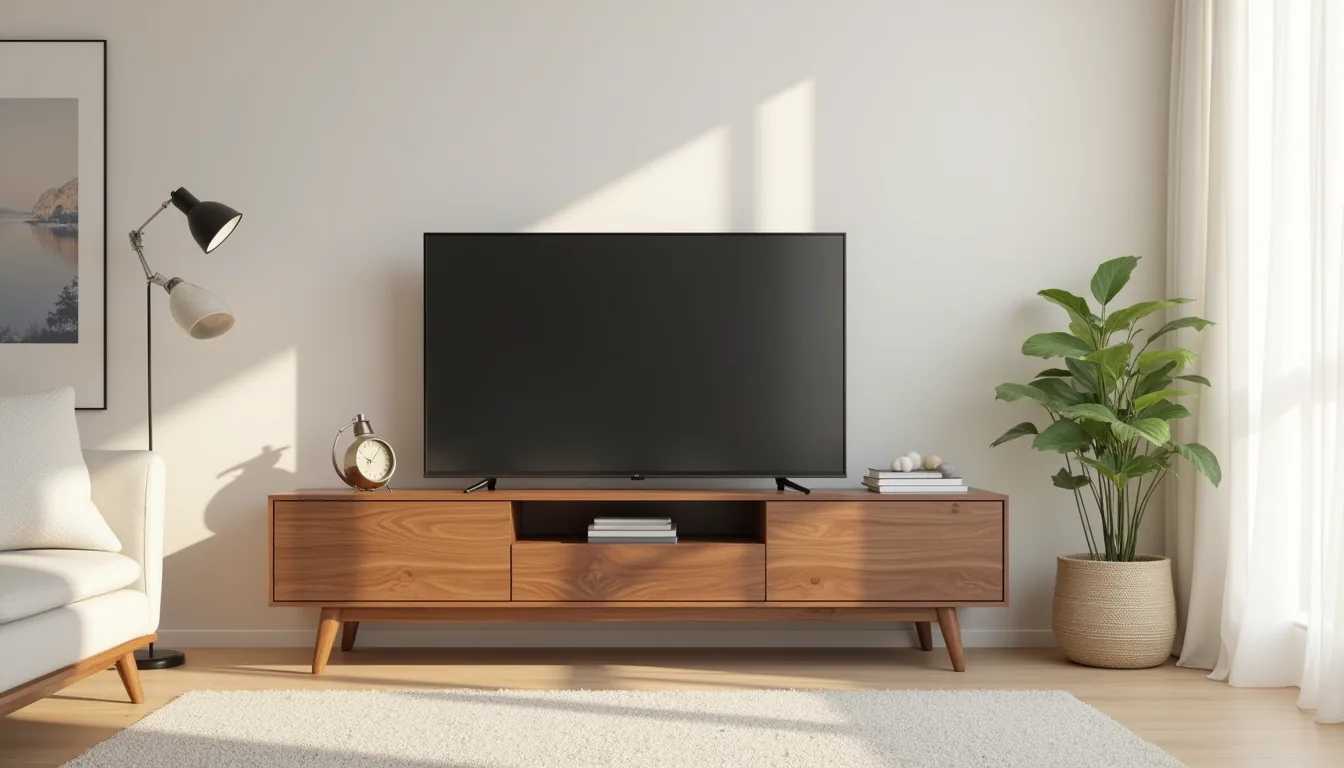
A TV stand is the structural hinge of your living room, and choosing the wrong one means living with either a cramped walkway or a floating screen that strains your neck. The fix isn’t a single perfect unit; it’s a set of design decisions about height, depth, and airflow. The six approaches that follow break down exactly what to measure, what to pay, and where each style fits.
Key takeaways
- Measure your viewing distance before choosing a stand height: the TV center should sit at eye level when seated, typically 40–48 inches from the floor for most sofas.
- Prioritize closed storage if you’ve kids or pets, doors hide cable clutter and dust-prone electronics, while open shelves suit curated decor only if you commit to weekly tidying.
- Choose solid hardwood over veneer for a long-term investment stand; painted MDF chips at edges and shows wear within 2–3 years, whereas oiled oak or walnut hides scratches and can be refinished.
- Floating stands save floor space but require reinforced drywall anchors rated for 50–100 pounds, and you’ll lose hidden cable routing unless you cut access holes before mounting.
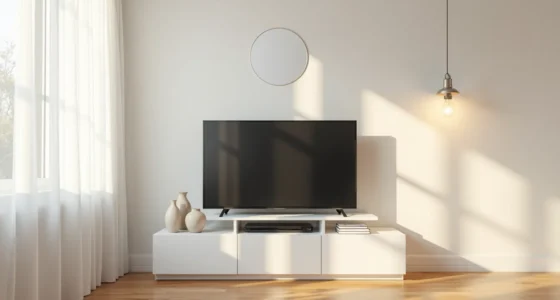
Long Low-Profile Stands for Modern Rooms
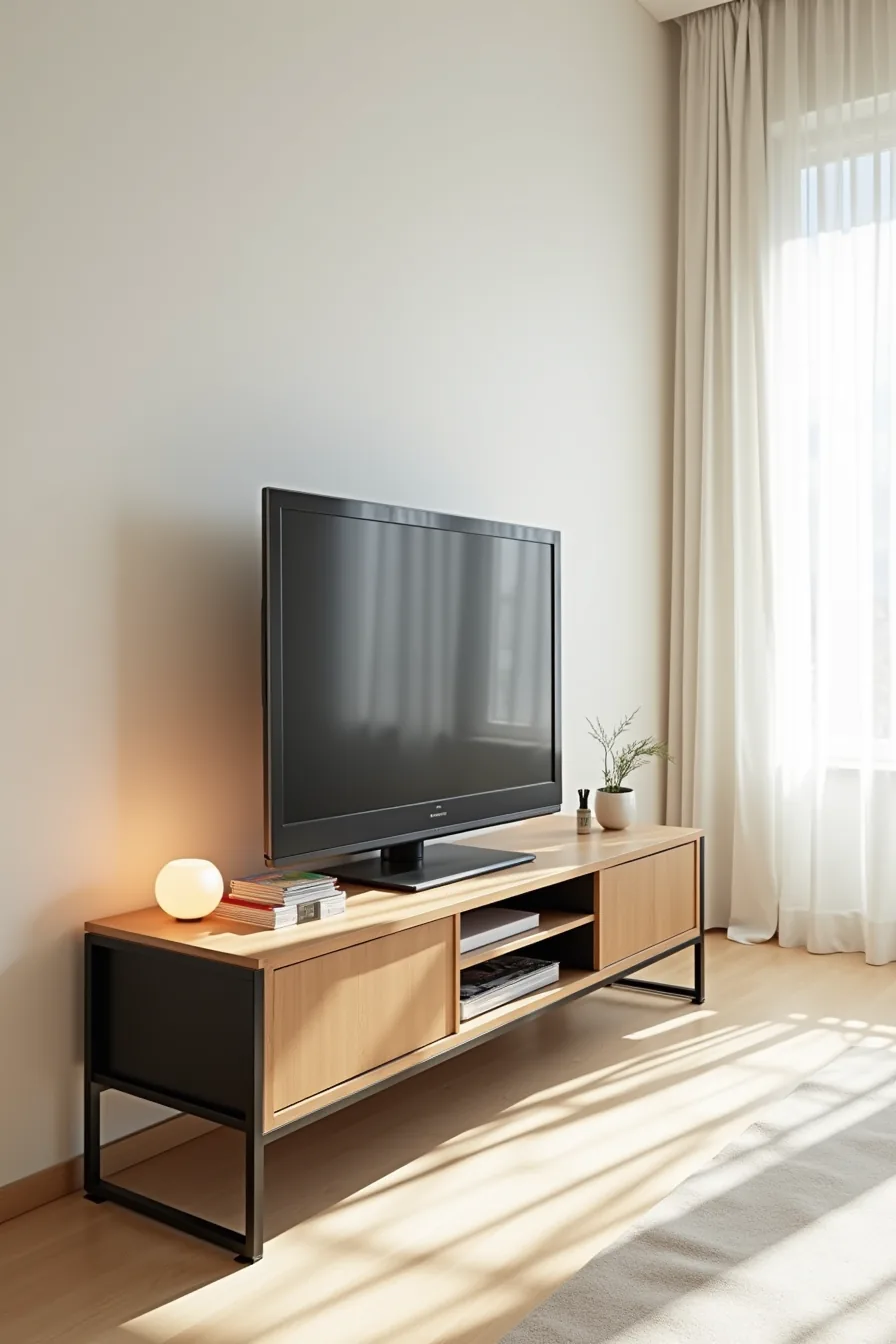
The most reliable TV stand designs for a more polished room start with a horizontal line that anchors the wall without competing with the screen. A long low-profile unit, typically running 60 to 72 inches wide and no more than 18 inches tall, keeps your eye on the display, not the furniture beneath it. That horizontal stretch works because it mirrors the widescreen aspect ratio above, creating a single visual plane.
The matte black metal frame and light oak top suit a modern space by pairing cool structure with warm texture, which keeps the piece from feeling sterile. In a small room, scale down to 48 to 55 inches wide and maintain that 16-inch height; the low line frees upper wall space and makes a 10-foot wall feel longer. For a large open-plan room, extend to 72 to 80 inches and add a second identical unit beside it for symmetrical storage.
Reproducing this look requires a flat screen mounted or set directly on the surface, a single potted plant, and one decorative object on the shelf below. Anything more visually clutters the negative space that makes this design effective. Matte metal needs an occasional wipe with a dry microfiber cloth, while the oak top benefits from a yearly furniture oil application to prevent drying.
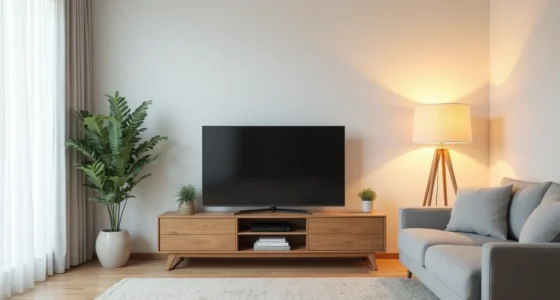
Open Shelves vs. Closed Doors: Trade-Offs and Fit
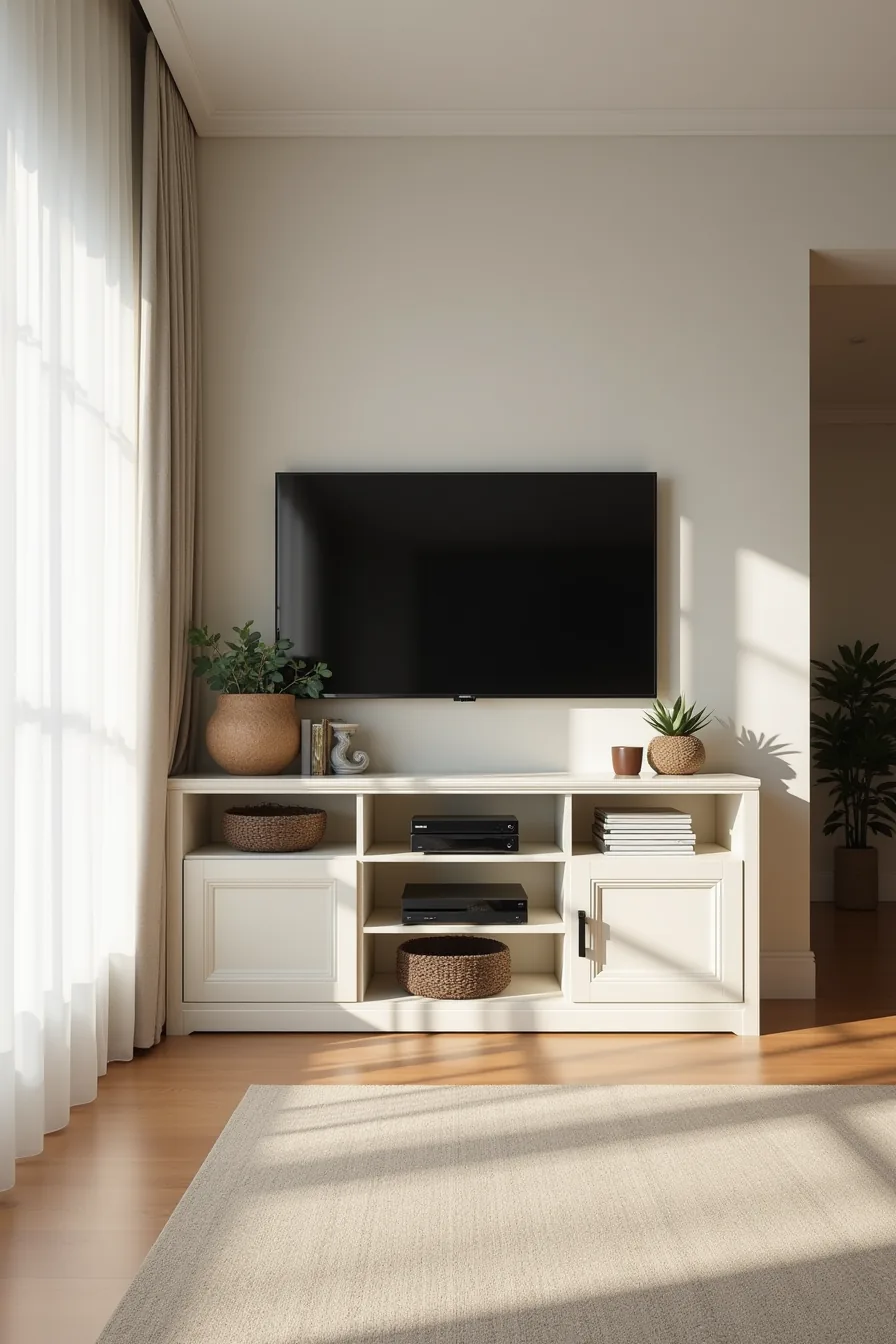
The split between open shelving and closed doors is the single biggest functional decision in TV stand designs, and it comes down to how much visual noise you tolerate near the screen. Open shelves put your cable boxes, gaming console, and decorative baskets on display, which suits a curated setup where everything matches and cables are fully managed. The trade-off is dust: expect to wipe surfaces weekly, and any tangled wiring becomes a permanent focal point beside the screen.
Closed doors hide all of that behind a clean facade, cutting visual clutter to nearly zero and reducing dusting to monthly. This route suits a busy family room or a rental where you don’t want to curate every shelf. The cost is accessibility, reaching a console behind a door adds two steps every time you switch inputs, so choose doors with soft-close hinges and ensure the interior depth clears your equipment by at least 2 inches for ventilation.
For a rental, open shelves travel better because they don’t require hinges or alignment adjustments after a move; for a long-term owned space, doors hold up better against warp and sag over a decade of use.
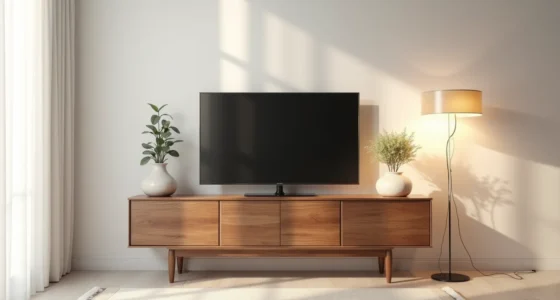
Wood vs. Painted Console: Durability and Aesthetic Impact
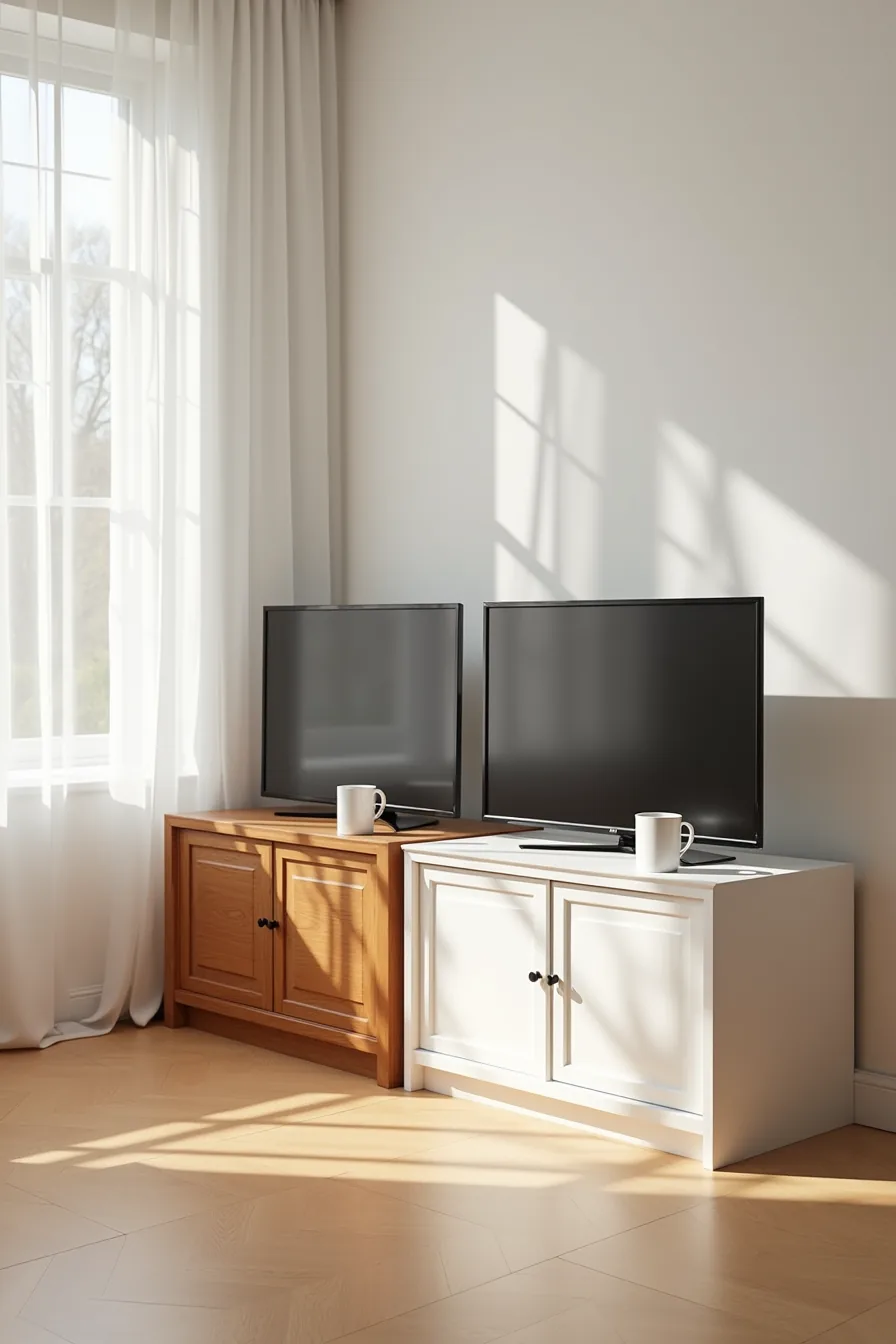
That split between natural cherry and soft white paint on identical 54-inch frames represents a deeper choice than color preference. A wood console with visible grain hides minor scratches and dents far better than paint, since the natural variation in tone camouflages everyday wear from coffee mugs and remote drops. Expect a solid-wood unit to last 15-20 years with occasional oiling, while a painted MDF or plywood piece typically needs touch-ups within 3-5 years and full repainting after 8-10.
The painted option wins on design flexibility, that soft white finish matches virtually any wall color and lets you change accent pillows or art without rethinking the furniture. Wood locks you into a warmer palette, but rewards you with a piece that gains character as the cherry deepens with light exposure over time. Budget-wise, a comparable painted console runs 20-30% less than solid wood upfront, though you’ll spend more on maintenance over a decade.
For a living room with kids or pets, choose wood; for a minimalist, design-forward space you plan to restyle frequently, the painted route gives you more room to evolve.
Tall Narrow Stands for Compact Rooms
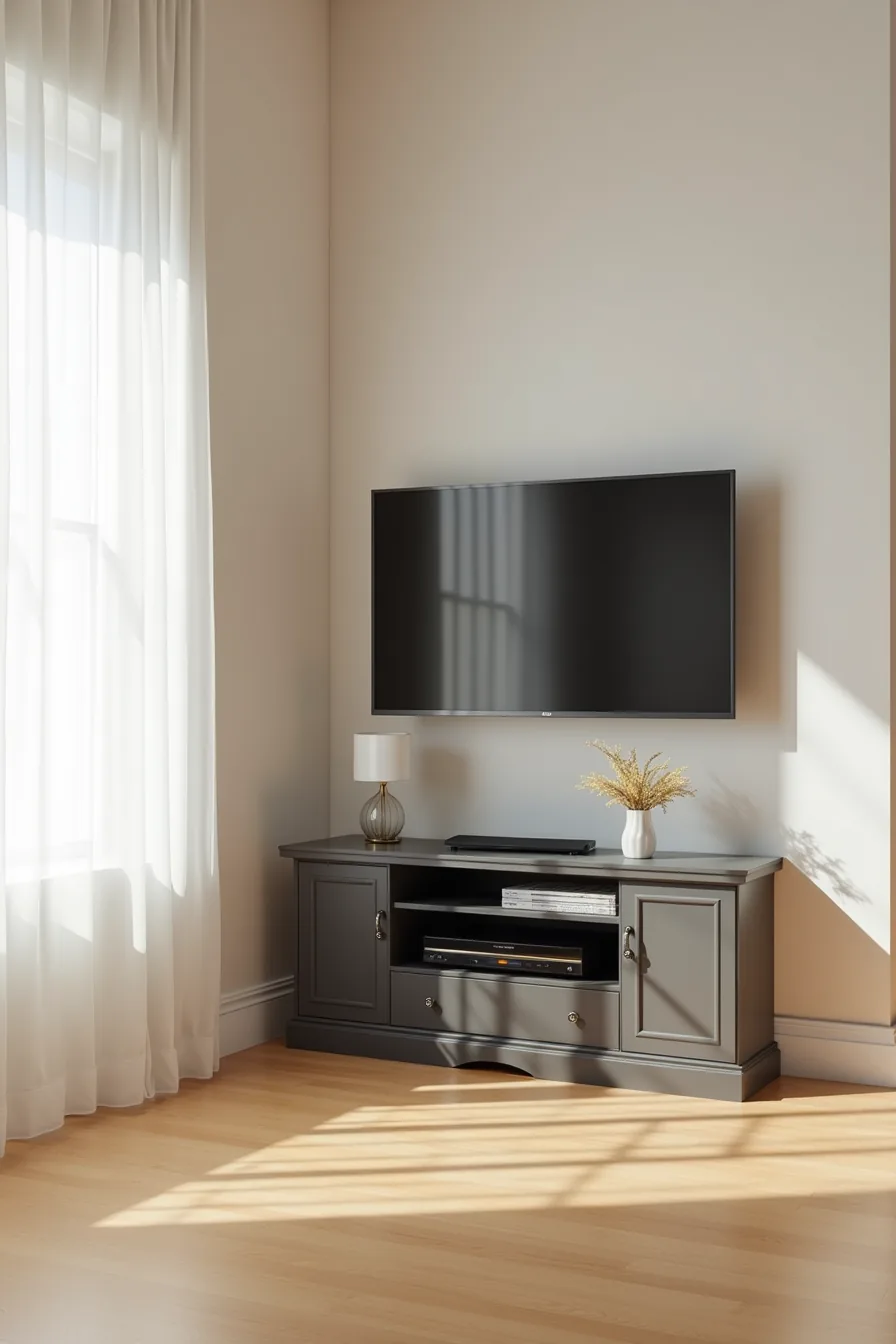
When floor space is measured in inches, vertical storage changes the entire geometry of a room. A stand 26-30 inches wide and 40-46 inches tall, like this dark gray laminate unit, keeps the television at a comfortable sightline while freeing up the floor on both sides for circulation or a plant and a floor lamp. The narrow footprint typically runs 24-30 inches deep or less, so it fits against a 6-foot wall without dominating it.
Stability is the non-negotiable. A tall, narrow frame requires a wide base or wall anchoring, especially if you’ve children or pets, the weight distribution shifts dramatically once the TV is mounted on top. Look for stands with a depth of at least 16-18 inches at the base, or use furniture straps rated for the combined weight of the stand and television.
In a studio, this setup doubles as a room divider: position it perpendicular to the wall to define a sleeping zone without building anything permanent. The dark gray laminate resists fingerprints and cleans with a damp cloth, worth prioritizing in a compact space where every surface stays within arm’s reach.
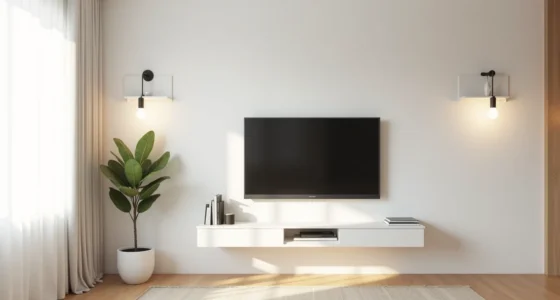
Floating and Wall-Mounted TV Stand Designs
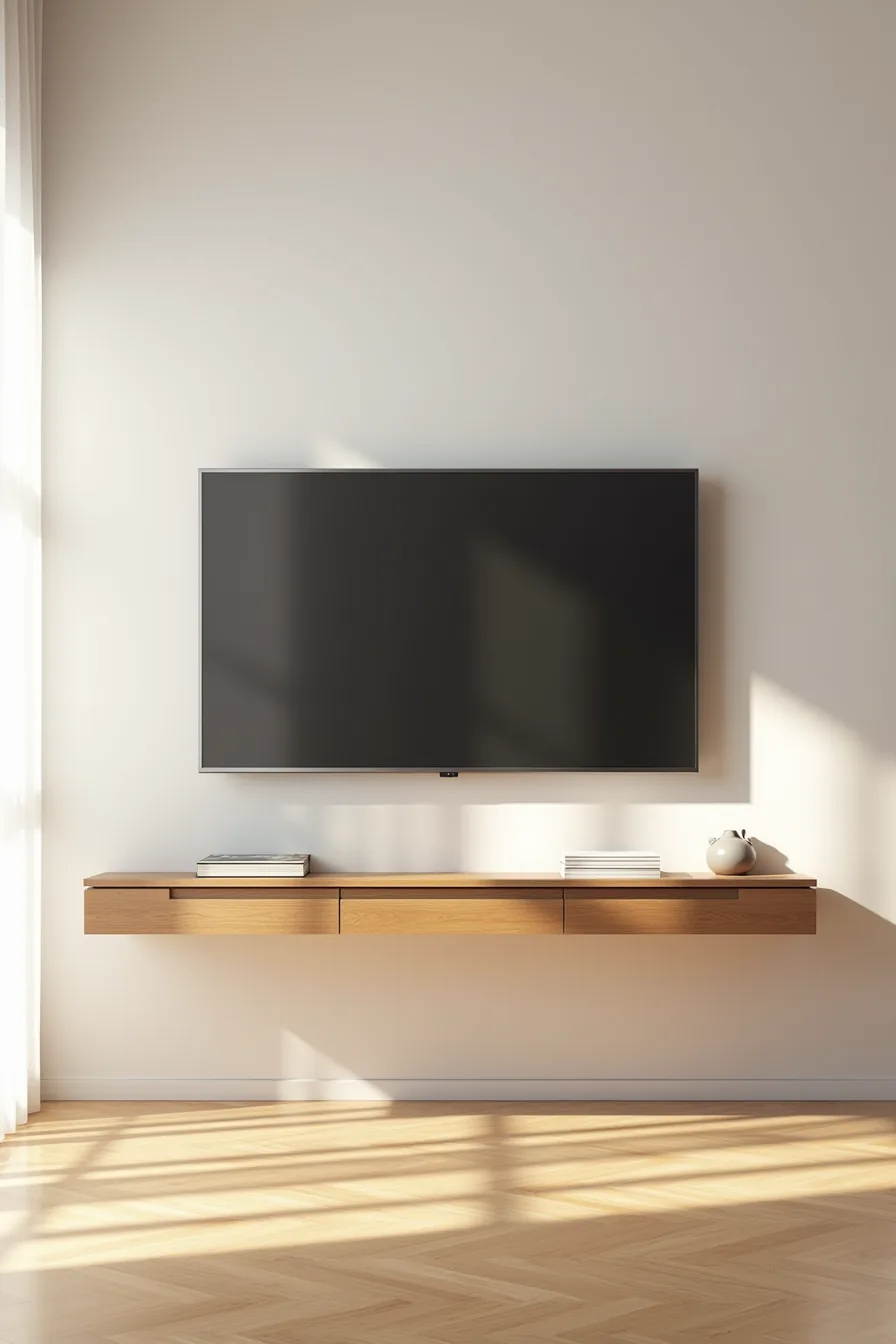
A wall-mounted stand is the strongest option for opening up floor space, and the 48-inch floating unit here demonstrates why. Mounted 16-20 inches above the floor, it keeps the television secured to its bracket while leaving the area beneath completely clear, a straightforward way to make a 10×12-foot room feel larger without moving a single wall. The trade-off is installation: you need a solid wood stud or masonry anchor rated for the combined weight of the stand and TV, typically 80-120 pounds, and a level bracket system that distributes load across at least two studs.
For renters, this route cuts both ways. A floating stand requires drilling into the wall, which usually means patching and repainting at move-out, check your lease or negotiate a written agreement with the landlord first. Homeowners, by contrast, gain permanent value from routing cables through the wall cavity, as this setup shows, eliminating visible cords entirely.
Expect to pay $40-80 for a wall-mounting kit and cable pass-through plates, plus $150-300 for the floating cabinet itself, with installation running 2-3 hours if you’ve a stud finder and a drill. If you can’t drill, skip this option entirely, a freestanding console is the safer, deposit-friendly fallback.
Corner and Angled TV Stand Designs for Awkward Layouts
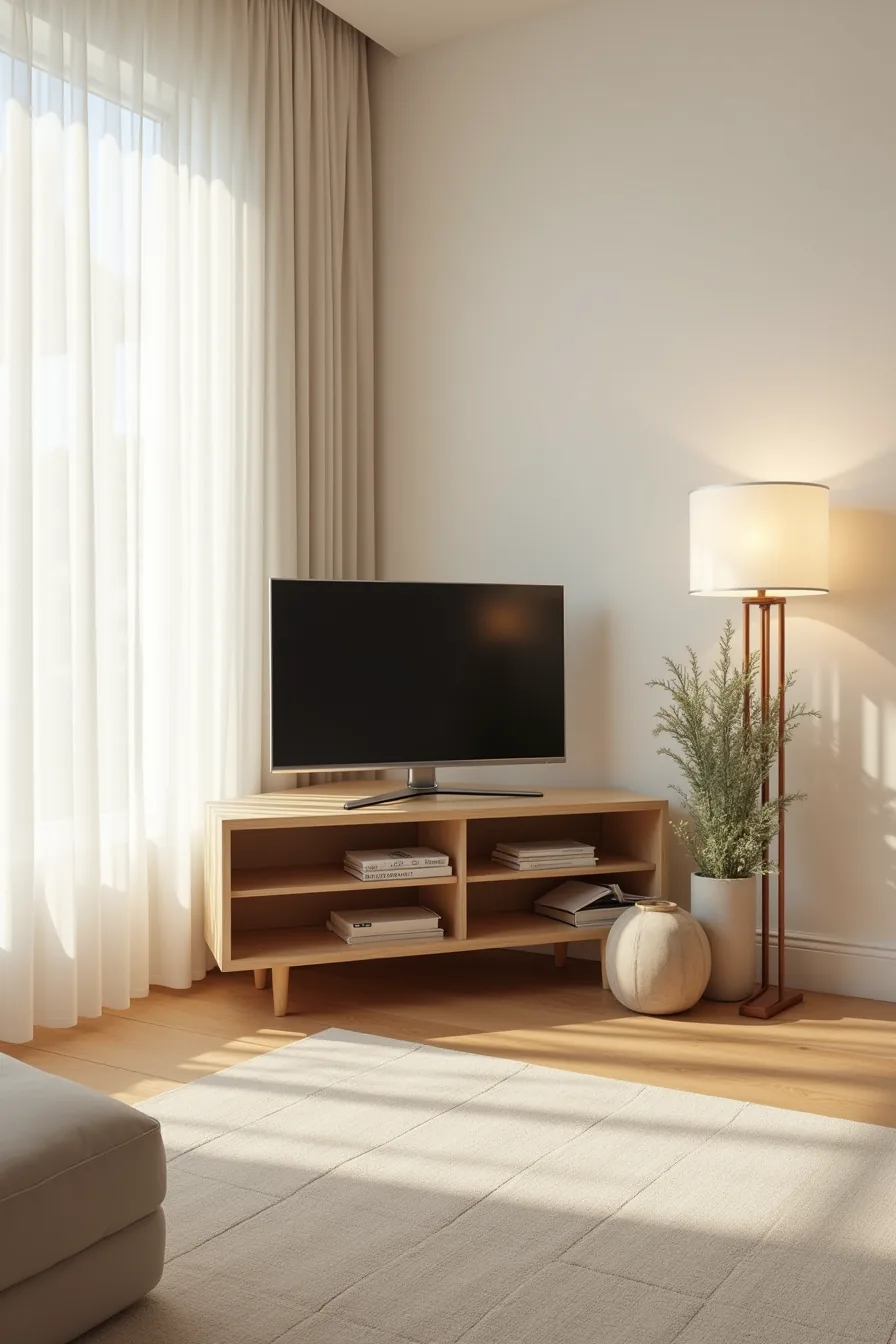
When a room has no usable wall space, a corner placement becomes your only viable option, and the triangular stand here solves that problem directly. With sides measuring roughly 36 inches each, its angled shelves follow the corner geometry while the top surface faces 45 degrees into the room, allowing the television to sit slightly tilted outward for a comfortable viewing angle without forcing you to rearrange the sofa.
This configuration works best in square rooms between 10×10 and 12×12 feet, where a straight console would either block a doorway or push seating too far from the screen. The key clearance rule: the front edge of the triangular stand should sit at least 24 inches from your primary seating position, and you need 18-20 inches of open floor on each adjacent wall so the piece doesn’t obstruct traffic flow. Corner units typically hold TVs up to 55 inches, but measure your space diagonally first, a stand this size fits best when the corner-to-corner distance exceeds 84 inches.
For materials, choose a matte-finish engineered wood or powder-coated metal over high-gloss surfaces, which reflect window light directly into the screen at an angle. Dust collects quickly on the slanted edges, so budget for a microfiber wipe-down every two weeks. If your corner sits near a radiator or heating vent, keep at least 12 inches of clearance behind the stand to prevent heat damage to both the cabinet and the television’s internal components.
Your Decision Checklist
Before you buy, measure the wall width and the distance from your seating position. Your TV stand should be roughly two-thirds the width of the TV, and the screen center should sit at eye level when you’re seated. For ventilation, leave 2–4 inches of clearance behind a console if it houses a receiver.
Choose materials based on your lifestyle: solid wood if you want it to last a decade, MDF with a laminate finish if you need a budget option, and open metal frames if you rent and move often. Match the finish to your floor tone rather than your wall color to anchor the room.
Your next step: grab a tape measure, note the height and width of your TV, and write down the three non-negotiable features you need, storage, cable management, or open display. That list will filter out most options before you even open a browser tab.
Frequently Asked Questions
Question
What’s the ideal TV stand height for comfortable viewing from a seated position?
Your eye level should align with the lower third of the screen. For most sofas, that means the stand’s top sits 24–30 inches off the floor. Measure your seated eye height first, then adjust.
Question
Can I use a TV stand designed for a 55-inch TV with a 65-inch model?
Yes, if the stand’s width is at least 56 inches and it holds the TV’s weight. The legs must span the stand’s surface without overhang. Check the VESA pattern and rated maximum load before mounting.
Question
How do I prevent a tall TV stand from tipping over in a household with children or pets?
Anchor the stand to a wall stud using a furniture anti-tip strap rated for the stand’s weight. Place heavier components on lower shelves. Never leave remotes or toys on top that encourage climbing.
Question
What’s the difference between a TV console and a media stand in terms of function and design?
A TV console is low and wide, designed to hold the TV and hide components behind closed doors. A media stand is taller and often open-shelved, prioritizing component access and display over a low profile.