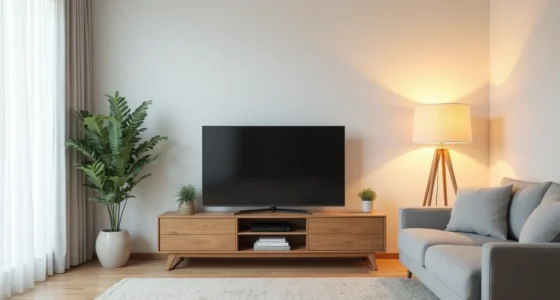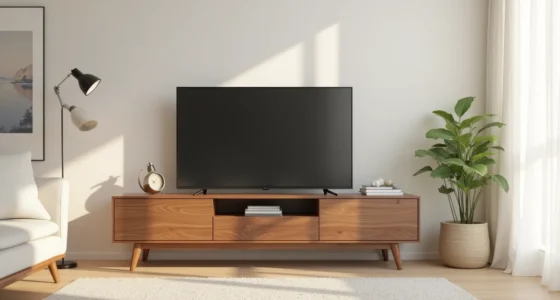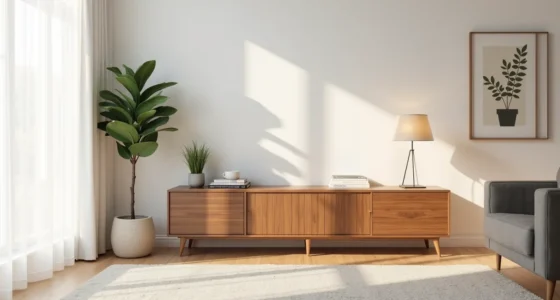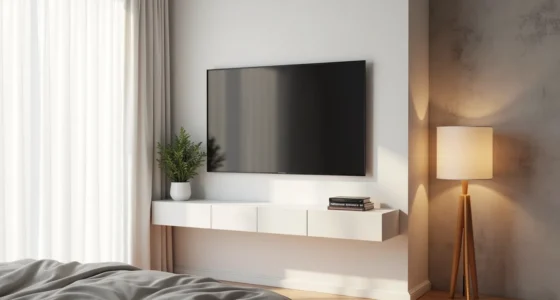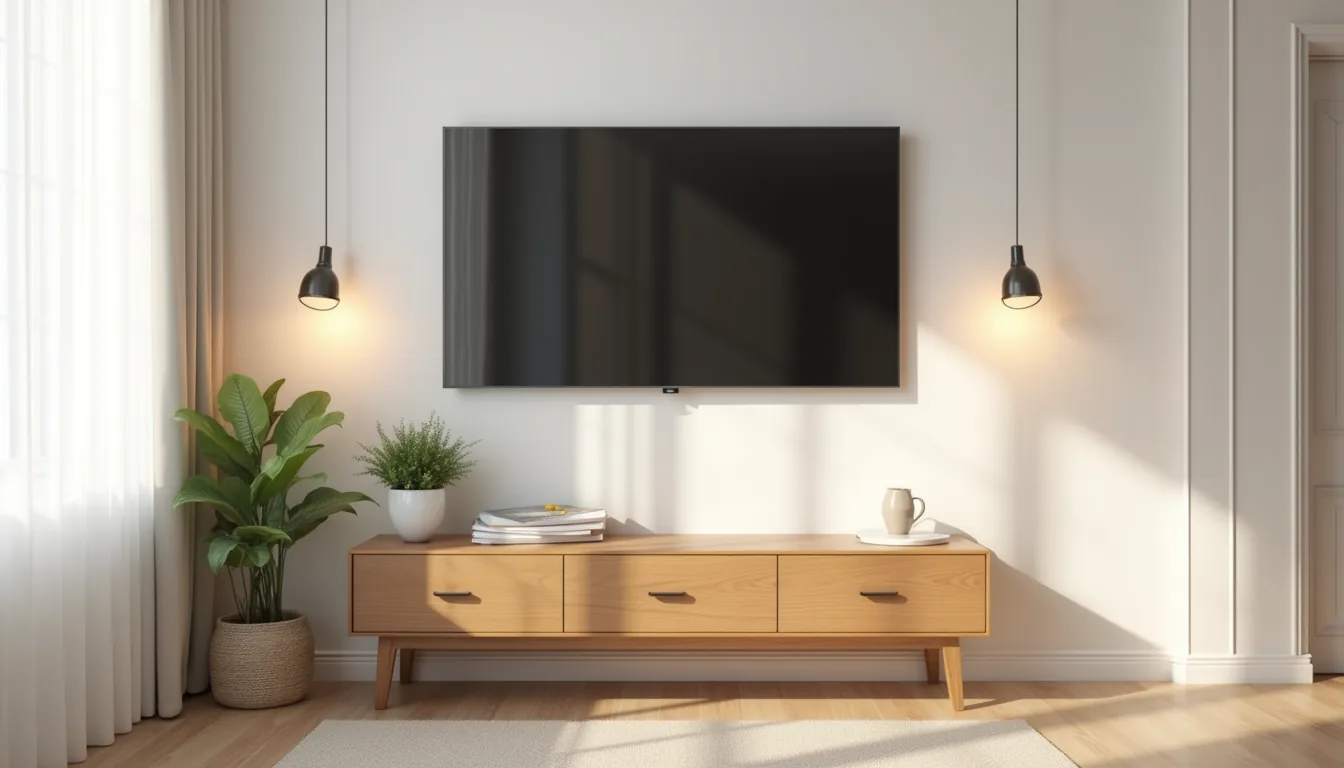

The console table under your TV is the most underrated piece of real estate in your living room, and the way you style it determines whether that wall reads as intentional design or leftover furniture placement. Getting it right comes down to three decisions: scale, function, and visual weight. The following six approaches each solve a specific problem, from hiding cable clutter to balancing a massive screen, and every one includes the exact measurements and trade-offs you need to replicate it without guesswork.
Key takeaways
- Start with scale: Measure your console’s width against the TV’s, aim for a console at least as wide as the screen, or up to 10 inches wider on each side, to avoid a top-heavy look.
- Balance depth and flow: Keep the console depth between 12 and 16 inches in tight spaces, and leave at least 3–4 inches of clearance behind it for cable access and ventilation.
- Layer in threes, not clutter: Place one tall item (like a lamp or plant), one mid-height piece (books or a decorative box), and one low object (tray or vase) to create visual rhythm without blocking the screen.
- Rotate seasonally with storage: Use baskets or closed bins for 70% of items to cut visual noise, then swap only the top 30% of decor, like greenery or ceramics, for a fresh look in under 15 minutes.
Minimalist Approach: Function Over Ornament
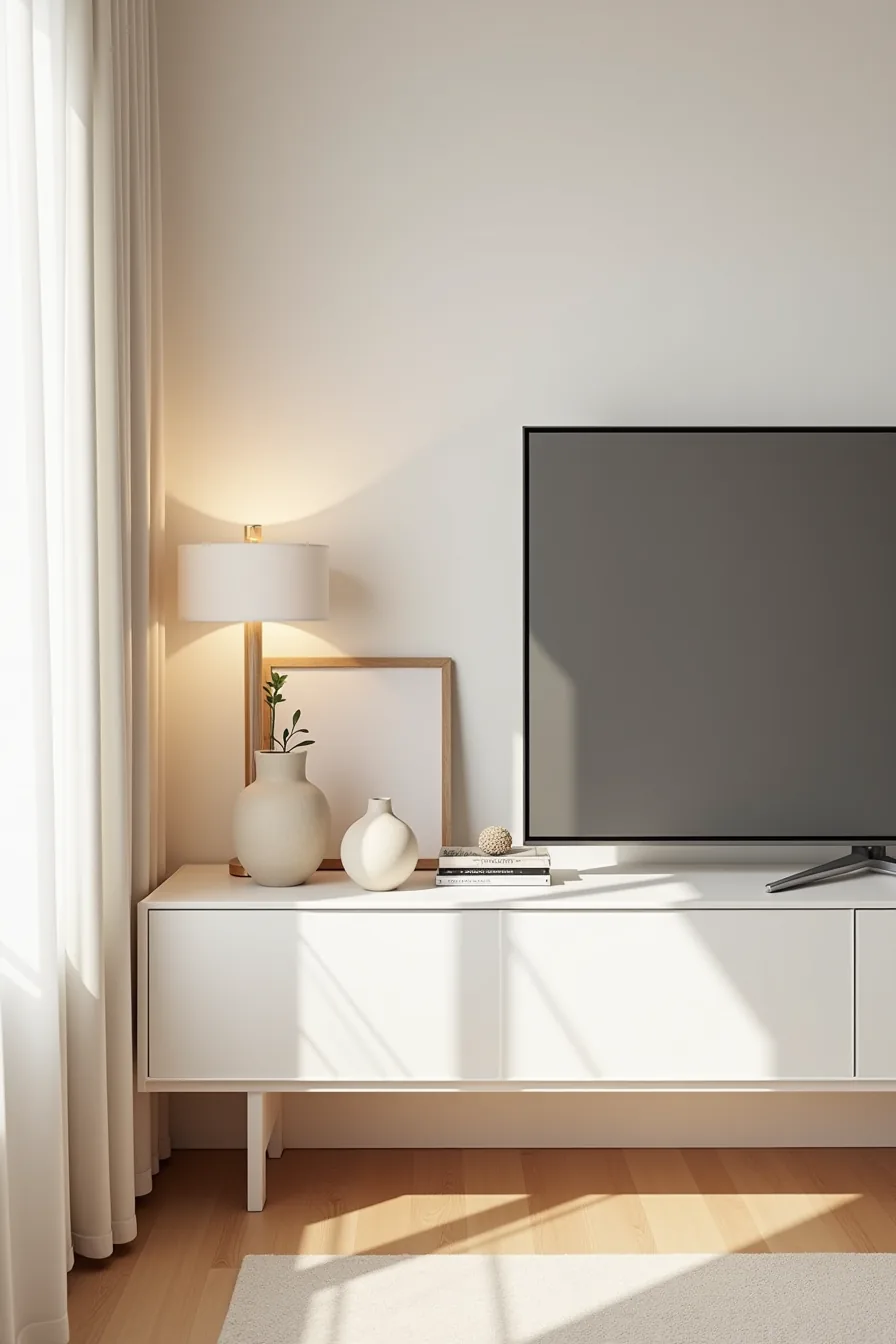
The white console table carries just three objects: two ceramic vessels and one framed artwork leaning against the wall. That’s the entire composition. The remaining 60 percent of the surface stays empty, which is the point.
This approach works because it respects the sightline. When you sit at eye level, the uncluttered surface lets the TV anchor the wall while the vessels and art create a quiet secondary focal point. You never compete with the screen for attention.
It suits small rooms, where visual noise reads as clutter, and anyone who finds styled shelves stressful to maintain. Reproduction costs stay low, a secondhand table, two vessels under $30 total, and one frame you already own. The only maintenance is a weekly dust pass, which takes under two minutes.
For practical console decorating, restraint isn’t absence; it’s selection with purpose.
Layered Storage Display: Combining Access and Aesthetics
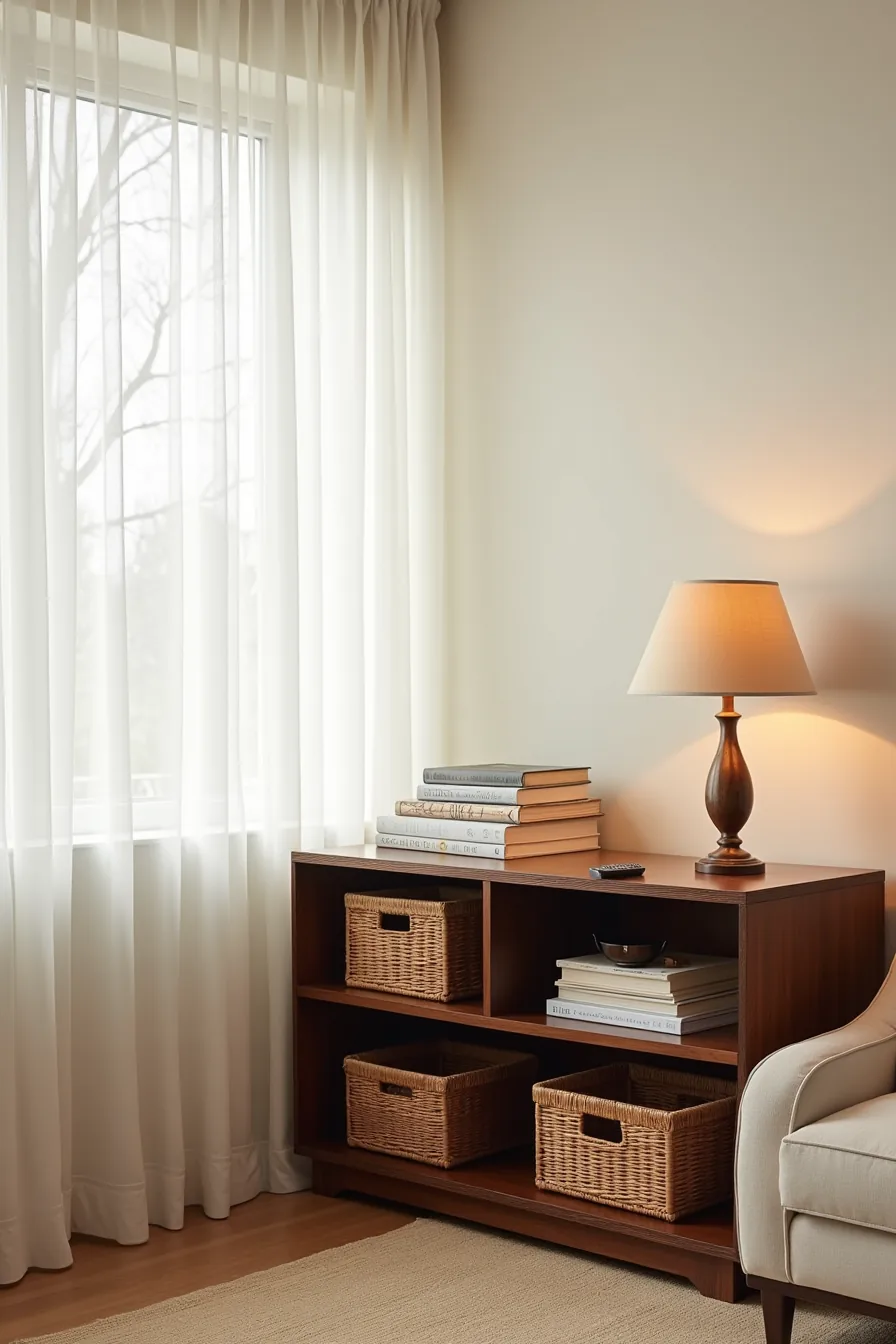
Layered storage solves the two biggest console failures: cable chaos and the remote hunt. A dark wood console with stacked woven baskets underneath hides media, gaming controllers, and spare HDMI cables behind natural texture. On top, an open shelving unit adds vertical display space for books and decorative boxes, drawing the eye upward and balancing the screen’s weight.
This setup suits households where daily use beats staged perfection, families, gamers, or anyone who refuses to hide the remote in a drawer. The baskets cost $15–40 each and the shelving unit runs $60–150, making it a mid-range option that upgrades easily over time. Keep one surface rule: leave the top of the console itself at 50 percent clear, with only the remote and one or two small objects resting there.
Dust the baskets weekly; woven materials trap more than wood, so vacuum them every other month to prevent buildup. For practical console decorating, this is the rare solution that improves with more stuff, as long as every layer has a designated job.
Symmetrical Styling for Traditional Rooms
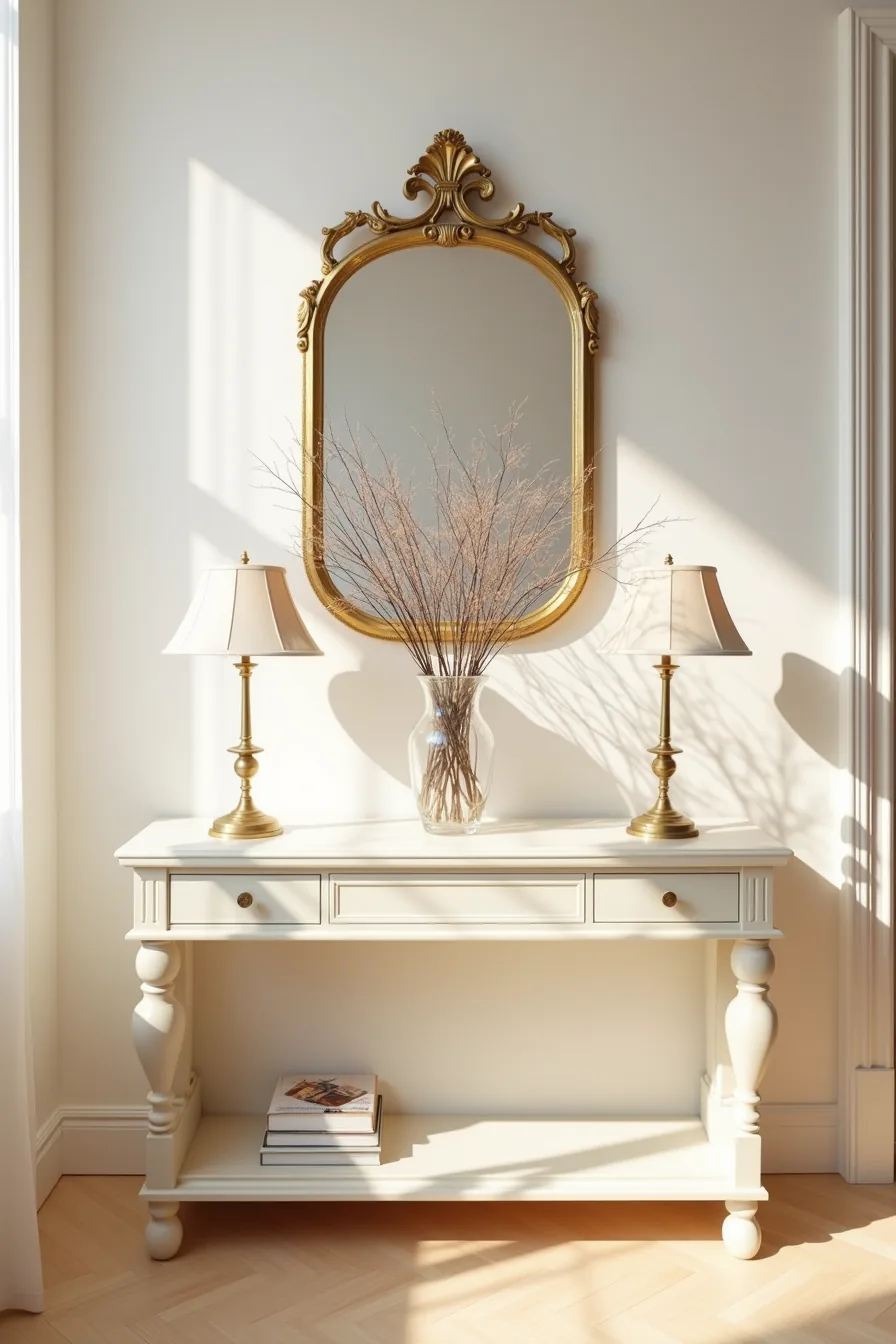
For formal living rooms, symmetry signals order and permanence. Place matching brass table lamps on either side of a central tall vase with dried branches, all resting on a cream console table. The ornate mirror above ties the arrangement together, creating a coherent vertical line that frames the TV without competing with it.
This approach works best when you want the console to feel like furniture, not media equipment. The mirror and lamps borrow from classical decoration, so the television reads as an integrated element rather than the room’s sole focus. You’ll need a console at least 48 inches wide to give each lamp proper breathing room, most traditional pairs require 10–12 inches of clearance on each side.
Balanced TV console styling depends on consistent sightlines: the lamp shades should align horizontally, and the vase’s height shouldn’t exceed two-thirds of the TV’s height. Brass needs monthly polishing to avoid tarnish, while dried branches last six to twelve months before replacement.
Asymmetrical Grouping for Modern Spaces
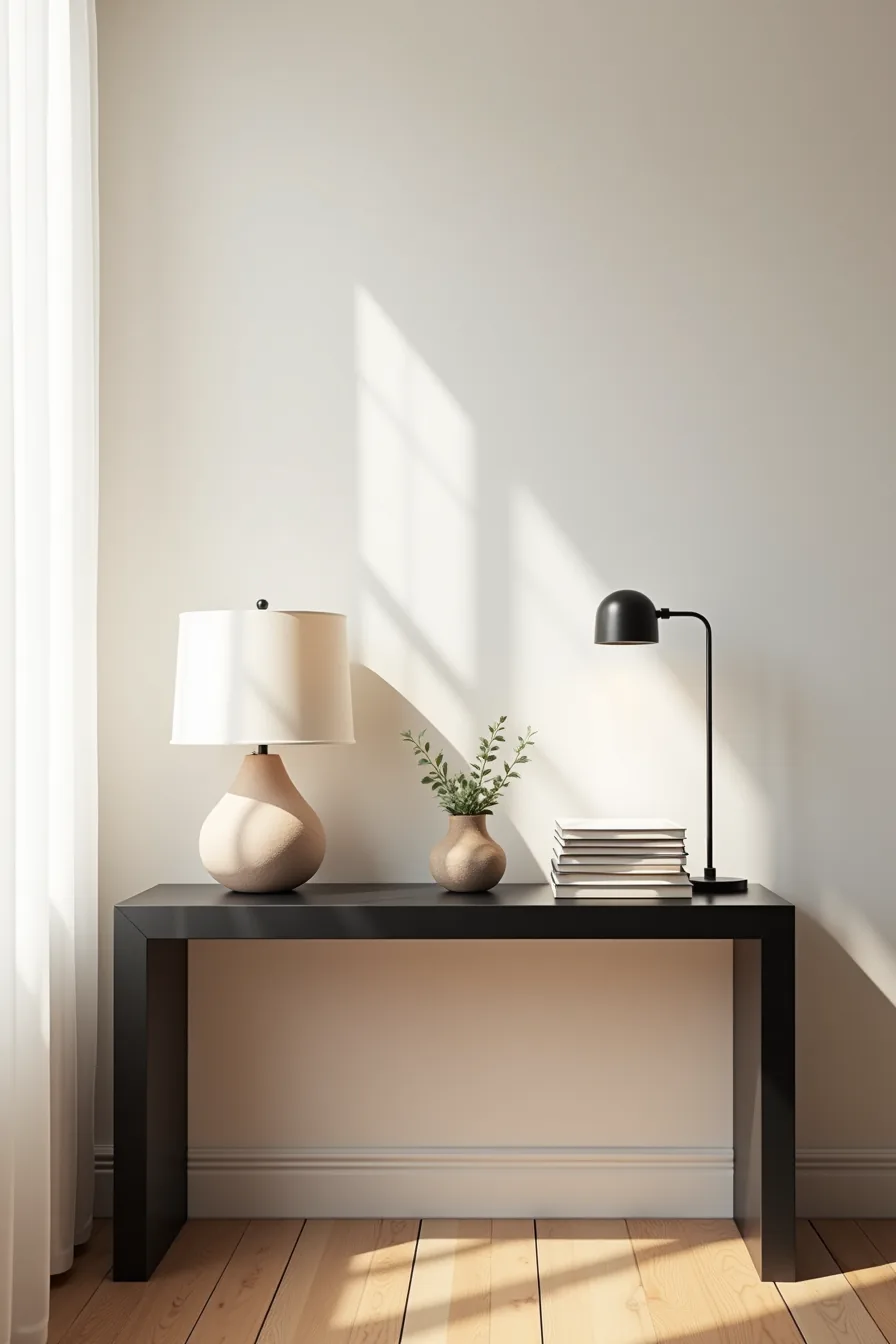
Break the center-line habit when your room leans minimalist or your console runs shorter than 48 inches. On a sleek black console table, place a tall sculptural object on the left, something reaching 24 to 30 inches, and cluster a short ceramic piece with two or three stacked books on the right. The uneven weight draws the eye horizontally across the TV rather than into a rigid triangle, which suits open-plan layouts where the screen is visible from multiple angles.
This off-center composition works because it introduces texture contrast, matte ceramic against glossy book spines, without adding visual noise. You’ll need only three to five objects total; any more and the grouping reads as clutter. Avoid placing the tall piece directly beneath the TV’s edge, as it will compete with the screen for attention.
For a balanced TV console styling approach, anchor the heavier cluster on the side opposite the room’s primary seating, steering sightlines toward the conversation area rather than the wall.
Seasonal Rotation and Flexible Styling
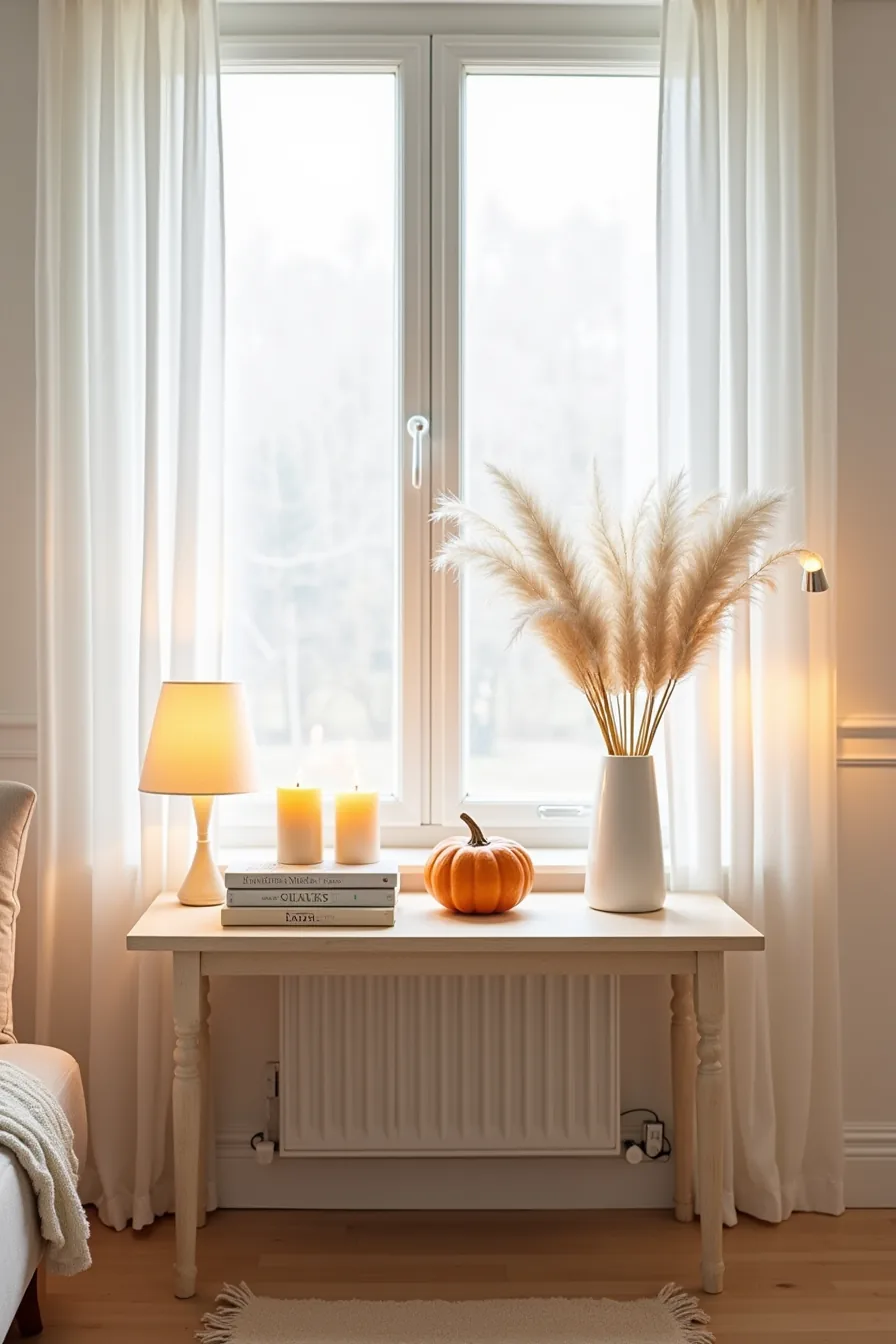
Swap your under-TV arrangement with the calendar, and the console becomes the cheapest room refresh you own. A renter-friendly setup built entirely from portable pieces, a lightweight console table, three candles of varying heights, a small pumpkin, and dried grasses in a vase, turns over in under fifteen minutes. Autumn styling like this works because the warm orange and tan tones echo the season without committing you to paint or permanent fixtures.
This approach suits anyone who rents, budgets tightly, or simply tires of static decor. Keep your rotation pieces in one storage bin, and you’ll spend nothing beyond the initial purchase. For Stylish under-TV decor that adapts, choose items under six inches wide at the base so they clear the screen’s sightline from seated positions.
When the season shifts, pack the pumpkin away and replace it with a ceramic bud vase, the grasses stay year-round, giving continuity without repetition.
Scale and Proportion Rules for Any Room Size
Your console’s depth should track your TV’s size, not your wall’s width. For a 55-inch screen, a shallow 12-14 inch deep console keeps the set visually grounded without pushing it too far into the room; for 65-inch and larger TVs, step up to a 16-18 inch depth so the proportions read as intentional.
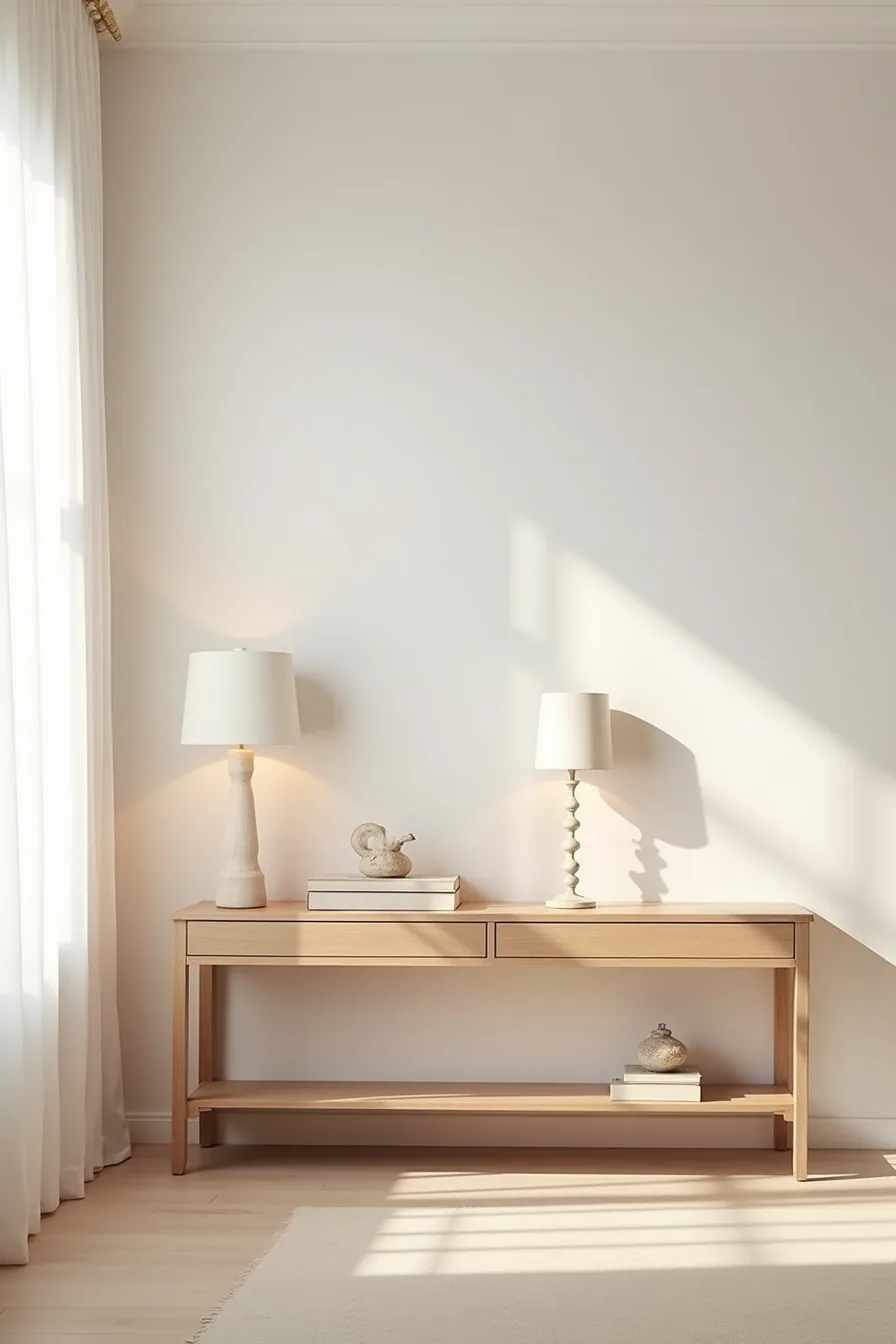
The three-console setup you see here works because object heights scale with furniture depth. The small console table pairs with compact accessories, short candlesticks, a low vase, so nothing crests above the TV’s bottom edge. The medium console table gets medium-height pieces that fill the vertical gap between tabletop and screen.
The large console table, at 36+ inches, carries one tall statement piece that would overwhelm smaller setups.
Your viewing distance sets the real ceiling. Sit at your typical watching position, if the tallest object blocks the screen’s bottom bezel, it’s too tall, regardless of console size. A general rule: keep accessory height under two-thirds of the distance from tabletop to TV bottom edge, and leave 4-6 inches of clear space between objects for the composition to breathe.
Where to start
You now have six distinct approaches to console table decorating under TV, each with its own trade-offs in cost, upkeep, and visual payoff. Before you buy anything, measure your console width against your TV’s span, the table should be at least as wide as the screen, but not more than 1.5 times its width for balanced proportion.
Start with the floor plan, not the decor. Walk the room, mark your viewing distance, and confirm you’ve 3–5 inches of clearance behind the console for cable access and airflow. If that checks out, choose one focal piece, a lamp, a vase, or a plant, and build outward from there.
Your next step: take a photo of your current TV wall, print it, and sketch three layouts on paper before moving a single object.
Frequently Asked Questions
How tall should decorative objects be on a console table under a TV?
Keep objects under one-third of the TV’s height. For a 50-inch TV, that means roughly 10–14 inches max. Taller pieces block the screen and break sightlines, especially from seating.
Can I put a console table directly under a wall-mounted TV, or does it need clearance?
Yes, you can place it directly underneath, but leave 6–8 inches of clearance between the TV’s bottom edge and the tabletop. This gap prevents heat buildup (if the TV vents downward) and keeps the screen fully visible from seated eye level.
What materials work best for console table decorating in high-traffic living rooms?
Choose solid wood, metal, or tempered glass, not particleboard or lacquered finishes. In high-traffic rooms, surfaces get bumped, drinks spill, and dust collects. Solid oak or steel resists scratches and wipes clean with a damp cloth; glass needs daily smudge control.
How do I prevent cable clutter from ruining the look of my styled console table?
Run cables through a cable raceway or adhesive clips along the wall, then bundle them with a velcro strap behind the table. Install a power strip with USB ports inside a cable box to hide the excess. Tuck the box against the back leg, and your styling stays undisturbed.