
Dressing chair design isn’t a single look but a set of six practical seating strategies, each defined by its footprint, function, and how it interacts with the rest of your bedroom layout. The approach you choose determines whether your vanity area feels spacious or cramped, and whether the chair earns its keep or just collects laundry. Below, you’ll get the exact trade-offs for each option, sizing, clearance, material maintenance, and cost range, so you can match a strategy to your room’s constraints without guesswork.
Key takeaways
- Measure your clearance first, allow at least 24–30 inches between the chair’s front edge and your vanity or dresser so you can sit and stand without scraping your knees.
- Choose a tuck-away stool or folding chair if your bedroom floor space is under 30 square feet, since a full-size armchair typically needs a 22–26 inch depth footprint that blocks circulation.
- Prioritize a solid hardwood frame with a washable performance fabric for a long-term investment piece, expecting to spend noticeably more upfront but gaining a 10–15 year lifespan versus a budget chair’s 2–3 years.
- Confirm your mounting method before buying, wall-mounted or clamp-on designs work for renters without drilling, but they support less weight (typically 150–250 pounds) than freestanding chairs, so verify your needs first.
Chair vs Vanity Stool: Which Suits Your Space

The choice comes down to how long you sit and how much room you’ve. A backless padded stool, typically 16–18 inches in seat height, tucks fully under a desk edge when not in use, freeing up to 18 inches of floor depth in a compact layout. It suits small bedrooms where every square foot counts and you only need a perch for a quick morning routine.
A wingback chair with arms, at 18–20 inches in seat height, demands roughly 30 inches of clearance behind it for comfortable access, but it delivers lumbar support and armrests for extended styling sessions or reading. Choose the chair if you spend more than 15 minutes at the vanity daily or have back concerns; choose the stool if your room measures under 9 feet across at the vanity wall. Measure your seat height against your vanity top, your lap should clear the lower edge by 2–3 inches for proper leg room.
Tuck-Away Seating for Small Bedrooms
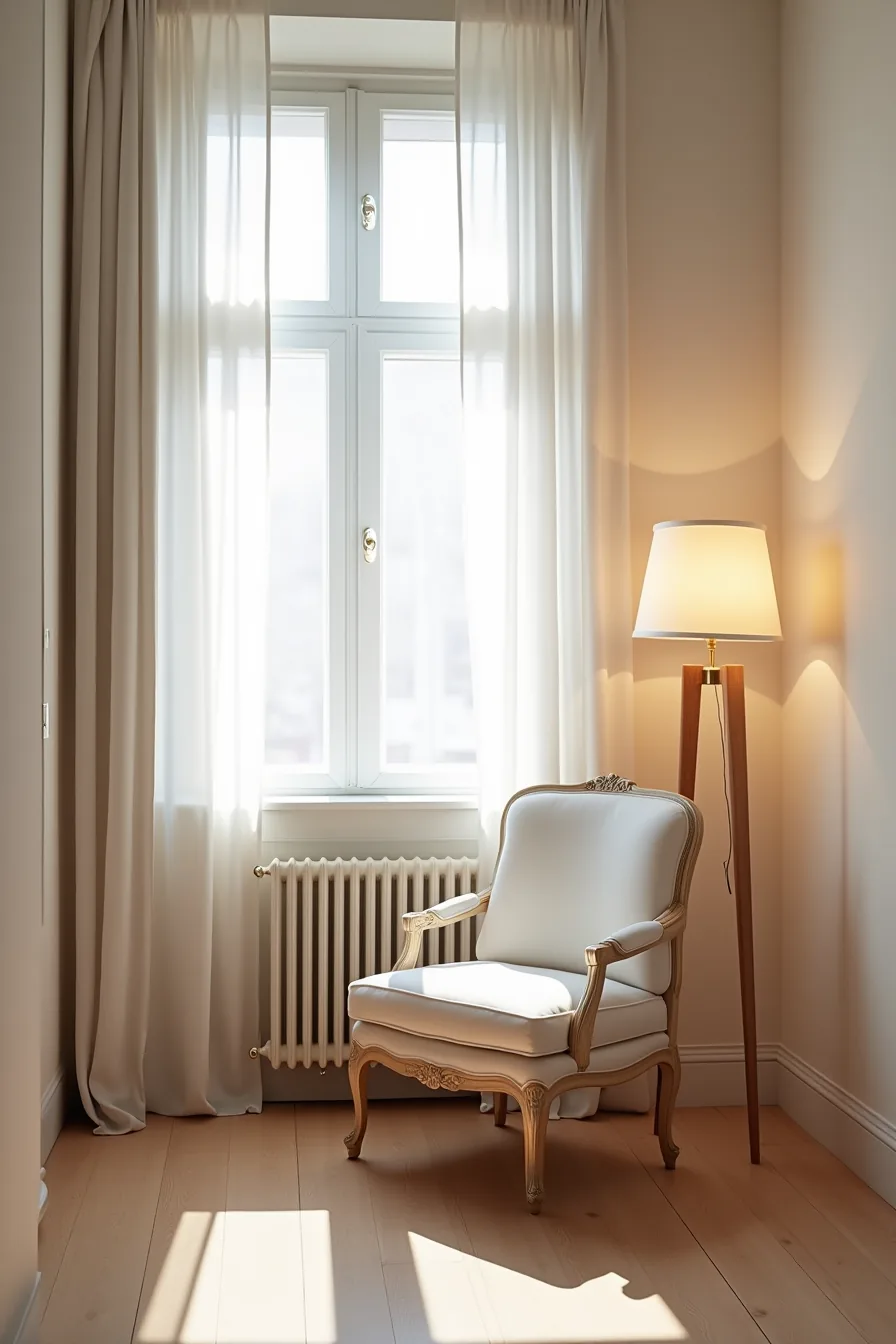
In rooms under 120 square feet, the dressing chair design problem shifts from aesthetics to real estate management. A slim-profile accent chair with a seat width of 24–28 inches can turn a window alcove into a dedicated grooming spot while leaving the central floor plan intact. Position it so the back fits flush against the corner wall, this eliminates the 12–18 inches of wasted space behind a freestanding chair and keeps the main pathway between bed and closet at full width.
Choose a chair with legs rather than a solid skirt base; the exposed floor beneath creates visual lightness and lets you slide a shallow storage basket underneath. An open-frame side chair without arms gives you the same seated comfort as a padded version but takes up roughly 15 inches less depth, which matters when the alcove shares space with a heater vent or curtain stack. If your alcove measures under 30 inches across, skip the arms entirely and confirm the seat height lands in the 17–19 inch range so your knees clear the vanity drawer fronts.
Soft Bedroom Accent: Upholstered Options That Layer Function

When a dressing chair moves beside the bed rather than the vanity, it becomes a soft bedroom accent with dual duties: a place to sit for morning lotion or evening socks, and a visual counterweight to the headboard. In that position, the tufted chair in linen or linen-blend fabric works because the texture breaks up large expanses of flat bedding while the neutral tone holds its own against a patterned throw pillow and folded blanket resting on the seat.
Fabric durability matters more here than it does for a dining chair, since the seat takes daily friction from pajama fabric and occasional spills from skincare products. For linen blends, look for a rub count in the 25,000–40,000 range; anything below that will show wear within two years of daily use. Keep the palette within two shades of your existing bedding or wall color, a contrasting hue competes with the headboard instead of supporting it.
Cleaning is straightforward if you plan for it: removable cushion covers let you machine-wash on cold, while fixed upholstery requires a spot-treatment routine with a mild detergent every four to six weeks. Avoid high-pile velvet or chenille in this spot, as they trap dust and flatten permanently under repeated sitting pressure. This configuration suits medium to large bedrooms where the chair sits at least 24 inches from the bed edge, leaving clearance for a nightstand and the lower drawers of a dresser.
Budget Route: Affordable Pieces That Last Two to Three Years

For a dressing chair that costs under $150, a wooden-frame chair with basic polyester upholstery is the workhorse option. That setup is visible in the scene before you: a simple frame, modest padding, and a flat-pack assembly box waiting on the floor. You’re trading longevity for price, and that trade is fair as long as you set expectations.
Expect the polyester to pill under daily friction by month eight, and the frame joints to loosen slightly after eighteen to twenty-four months of regular sitting.
Assembly takes 20–40 minutes with a hex key, so factor that into your evening, not your weekend. The construction features four cross-braced legs and a blow-molded plastic seat base, sturdy enough for a 250-pound adult but not built for repeated drops or leaping into the seat. Place it with the neutral wall behind it and a rug beneath to prevent the legs from scratching laminate or hardwood.
The real selling point is the price-to-pressure ratio. If you move within three years or live in a temporary setup, you avoid the anxiety of caring for a fine finish. The polyester fabric wipes clean with a damp cloth, handles a dozen rescue operations with coffee or foundation, yet refuses to degrade past the point of acceptable wear.
Budget the expect replacement before you move again, and subtract the peace of mind the trade-off buys.
Renter-Friendly Designs: No-Drill Installation and Easy Moves
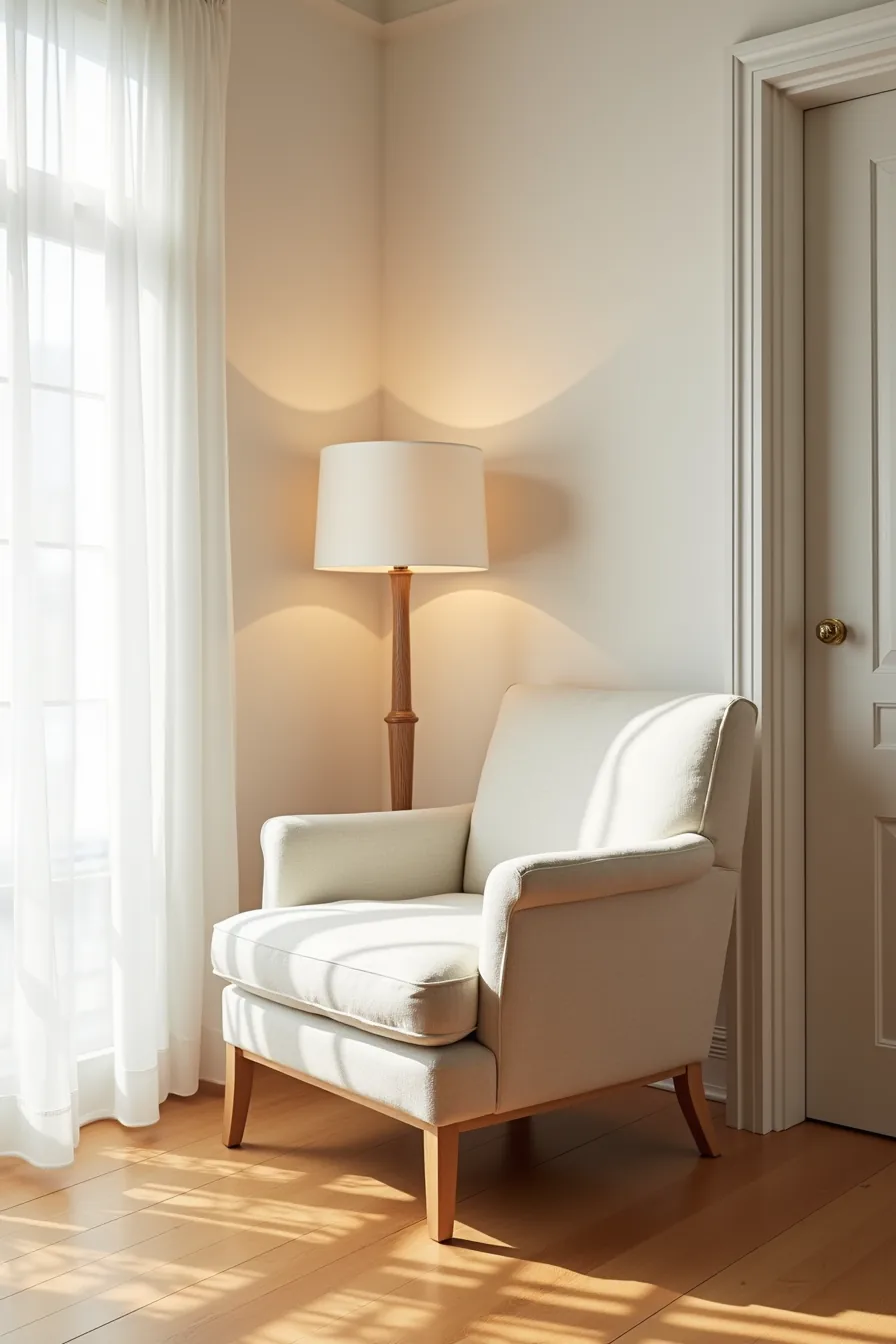
A freestanding dressing chair skips wall anchors entirely, which is the defining feature of a renter-friendly setup. The chair sits unanchored on the hardwood floor, with felt protectors glued to the bottom of each leg to prevent scratches and allow silent sliding across the surface. At roughly 40–60 pounds, it’s heavy enough not to shift during use but light enough for one person to tilt and walk through a standard 30-inch doorway, the clear sightline behind it confirms this maneuverability.
This approach suits shared housing where drilling voids deposits or where your layout changes every lease cycle. Because the chair requires zero tools to install and zero patches to remove, you can reposition it between a corner vanity, a bedroom window, or a closet threshold without consequence. Felt protectors wear down every six to twelve months; replace them before they expose the metal foot and begin scoring the floor.
When moving day arrives, you simply lift, carry, and reapply fresh protectors at the next address.
Long-Term Investment: Solid Wood and Premium Upholstery
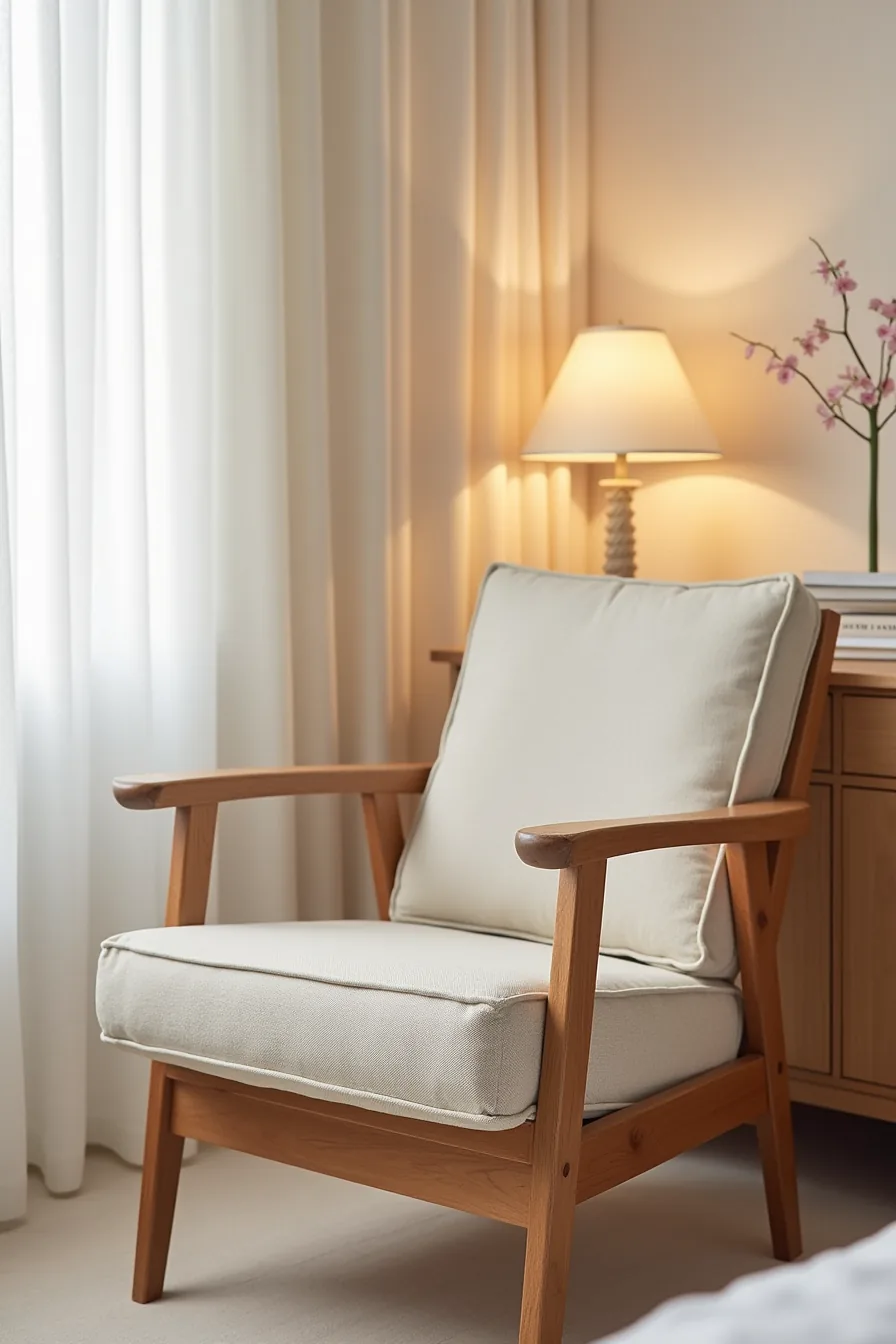
A dressing chair built for a decade or more starts with the frame, not the fabric. White oak, walnut, and hard maple all rate as durable hardwoods, while softer species like pine or poplar will show dents within the first few years of daily use. The solid wood frame arm and exposed grain on this example signal a chair you can refinish, scratches sand out, and a fresh oil finish restores the surface every five to seven years.
The upholstery fiber determines how the seat ages. Performance-grade wool or solution-dyed nylon blends resist fading and crushing, with a typical lifespan of 10–15 years before the cushion needs re-stuffing. The tight stitching along the seat edge indicates a channel-quilted or bench-made construction, which holds its shape longer than loose, slipcovered styles that sag.
Expect to pay two to three times what a veneer-and-polyester chair costs, but factor in that a solid wood frame can be reupholstered once or twice, effectively resetting the chair’s service life. Choose a neutral, stain-resistant weave if you intend to keep it through decor changes.
What to do first
Measure the depth of your vanity or dressing table before you choose anything. You need 28-36 inches of clear floor space in front of the seat for a chair, but a stool or bench can work in as little as 18-24 inches. That single measurement determines whether you buy a chair with arms, a backless stool, or a bench.
Then match the seat height to your table. Most dressing tables sit 28-30 inches high, so your seat should land 10-12 inches below the surface. Renters can skip drilling entirely with a backless storage stool that tucks fully under the table when not in use, while homeowners on a longer timeline should invest in a upholstered chair with a washable slipcover for easy maintenance.
Walk into your space with a tape measure and commit to one of those three routes today.
Frequently Asked Questions
What is the difference between a dressing chair and a vanity stool?
A dressing chair has a backrest and often armrests, offering posture support for longer grooming sessions. A vanity stool is backless, tucks fully under the table, and suits quick tasks or tight floor plans.
How much floor space does a typical dressing chair need?
Allow a footprint of roughly 20-24 inches wide by 20-26 inches deep. Add 30-36 inches of clearance behind it for pulling out and sitting down, so total floor impact runs 50-60 inches deep.
Can I use a dressing chair in a room smaller than 100 square feet?
Yes, if you choose an armless, low-back model with a slim profile. Skip swivel bases and thick upholstered arms. Measure the chair’s depth plus 30 inches of clearance to confirm it won’t block doors or closet access.
What upholstery fabric holds up best in a bedroom with daily use?
Performance polyester or a tightly woven microfiber resists fading, pilling, and moisture from skincare products. Avoid pure linen or silk, which wear quickly at seams. Look for a stain-resistant finish and a removable, machine-washable seat cover.