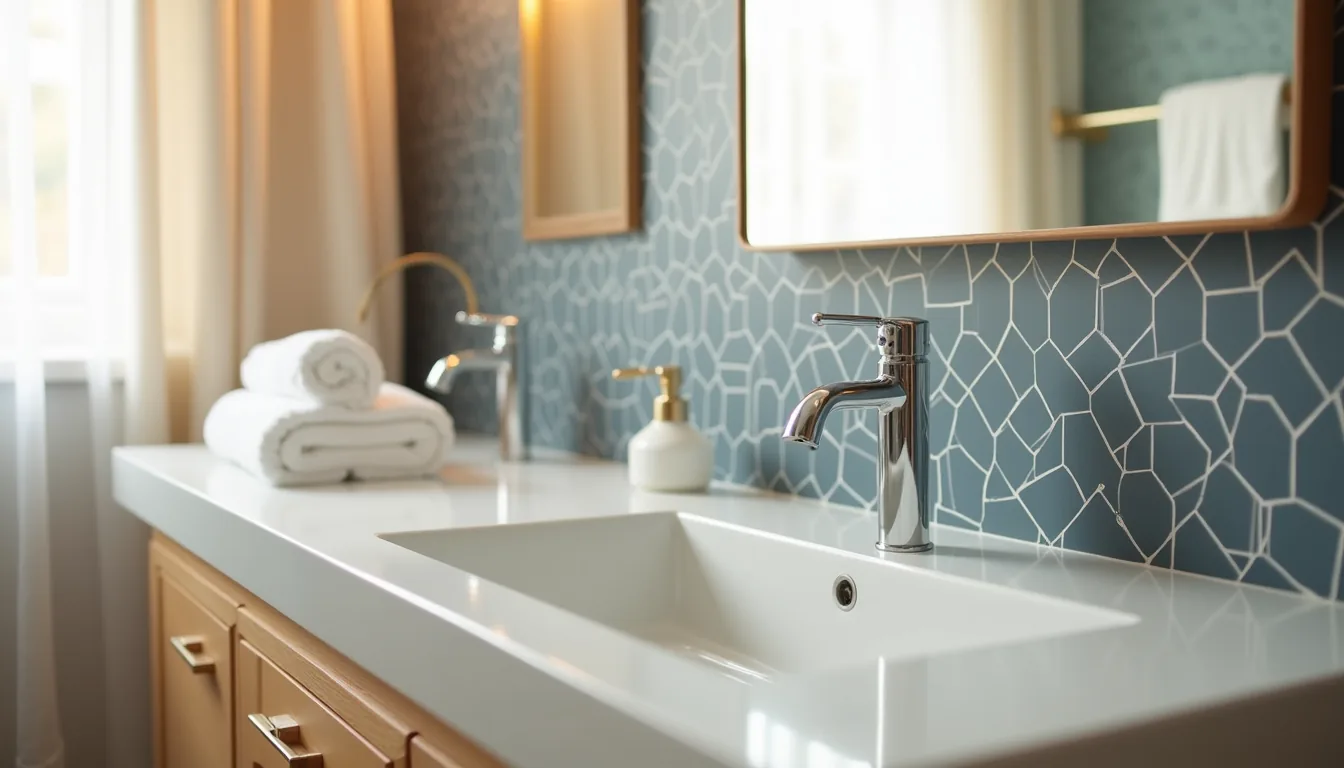
Half bathroom wallpaper is the most transformative update you can make in a space that typically measures just 20 to 40 square feet, and the right pattern can turn a utilitarian stop into a design moment without the paint commitment of a full renovation. Because the room is small, you can afford bolder prints, richer textures, or a full wrap that would overwhelm a larger area. The trade-off is precision: every roll, seam, and trim decision carries disproportionate weight, so your choices must balance visual impact with practical upkeep.
Below, six distinct approaches show how to match pattern, placement, and material to your specific room size, moisture levels, and budget.
Key takeaways
Pattern scale matters, large florals or overscaled geometrics suit medium-to-large half baths, while small prints keep a tight space from feeling busy. Dark wallpaper hides wear, deep tones and dense patterns mask water spots and splatter better than light finishes in high-use powder rooms. Removable vinyl works, for renters, choose peel-and-stick rated for humidity and test adhesion on a primed wall before committing to full coverage. Full coverage beats an accent wall, in a half bath under 30 square feet, wallpapering all four walls visually expands the room, while an accent wall suits larger layouts.
Dark Pattern Wallpaper for Drama and Depth
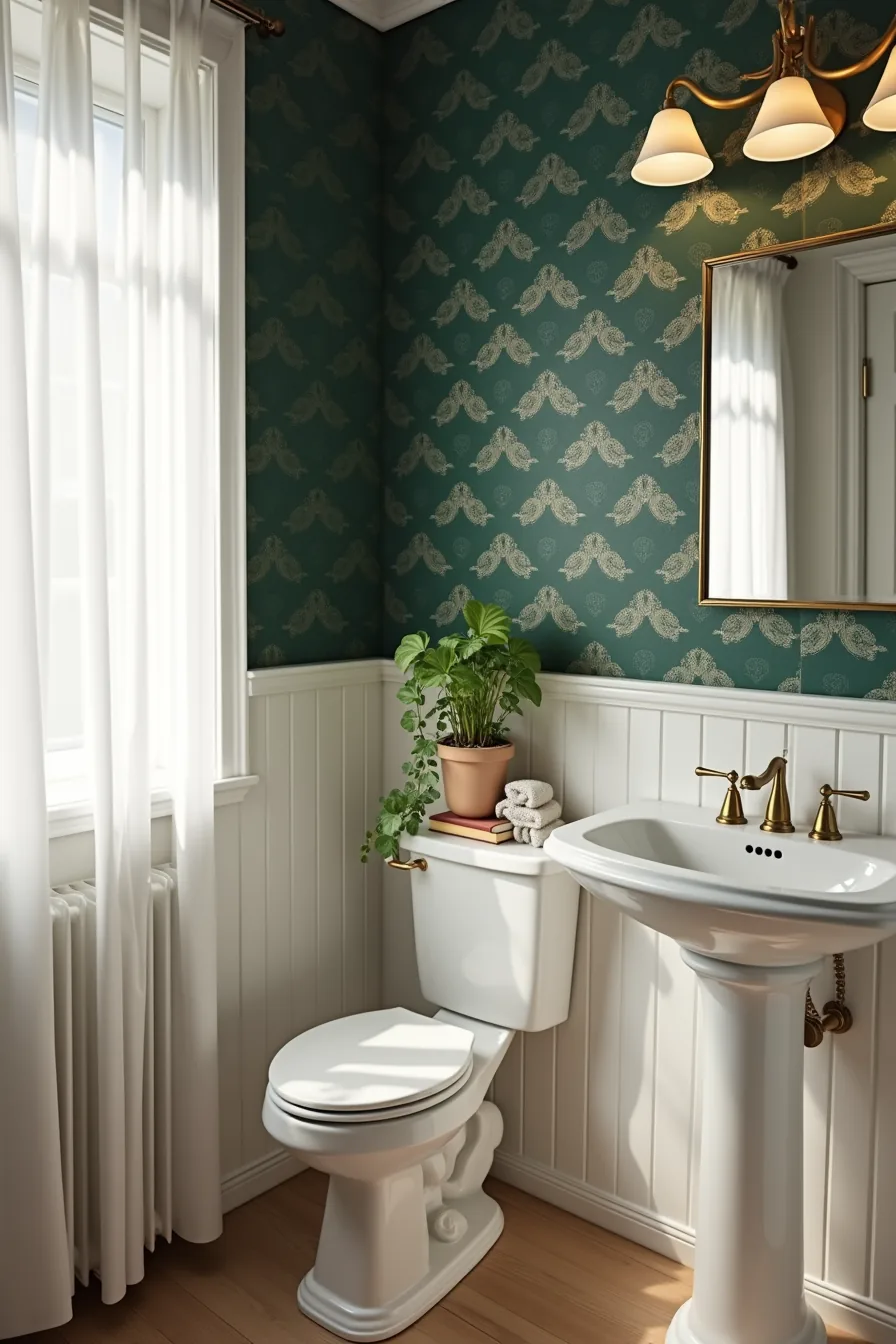
A half bathroom is the one space where you can commit to a dark pattern without the risk of overwhelming a large open floor plan. Deep emerald wallpaper with a small-scale damask motif wraps the walls, turning a utilitarian room into a jewel box. The white pedestal sink and brass mirror frame become deliberate focal points against the saturated backdrop, while the compact footprint means the pattern reads as intentional rather than oppressive.
This approach suits anyone who wants maximum visual payoff per square foot and already has adequate task lighting. Since dark surfaces absorb light, you’ll likely need to add a dimmable overhead fixture or wall sconce to keep the room functional, not just atmospheric. The trailing plant on the narrow shelf above the toilet tank softens the density of the pattern and introduces a natural counterpoint.
Maintenance is the trade-off. Dark backgrounds show water spots, toothpaste flecks, and dust more readily than light finishes, so expect to wipe walls down monthly rather than seasonally. Use a vinyl-coated or washable wallpaper for durability, and pair it with an exhaust fan running for at least 15 minutes after showers to prevent moisture from loosening adhesive seams.
Light and Airy Designs for Brightness
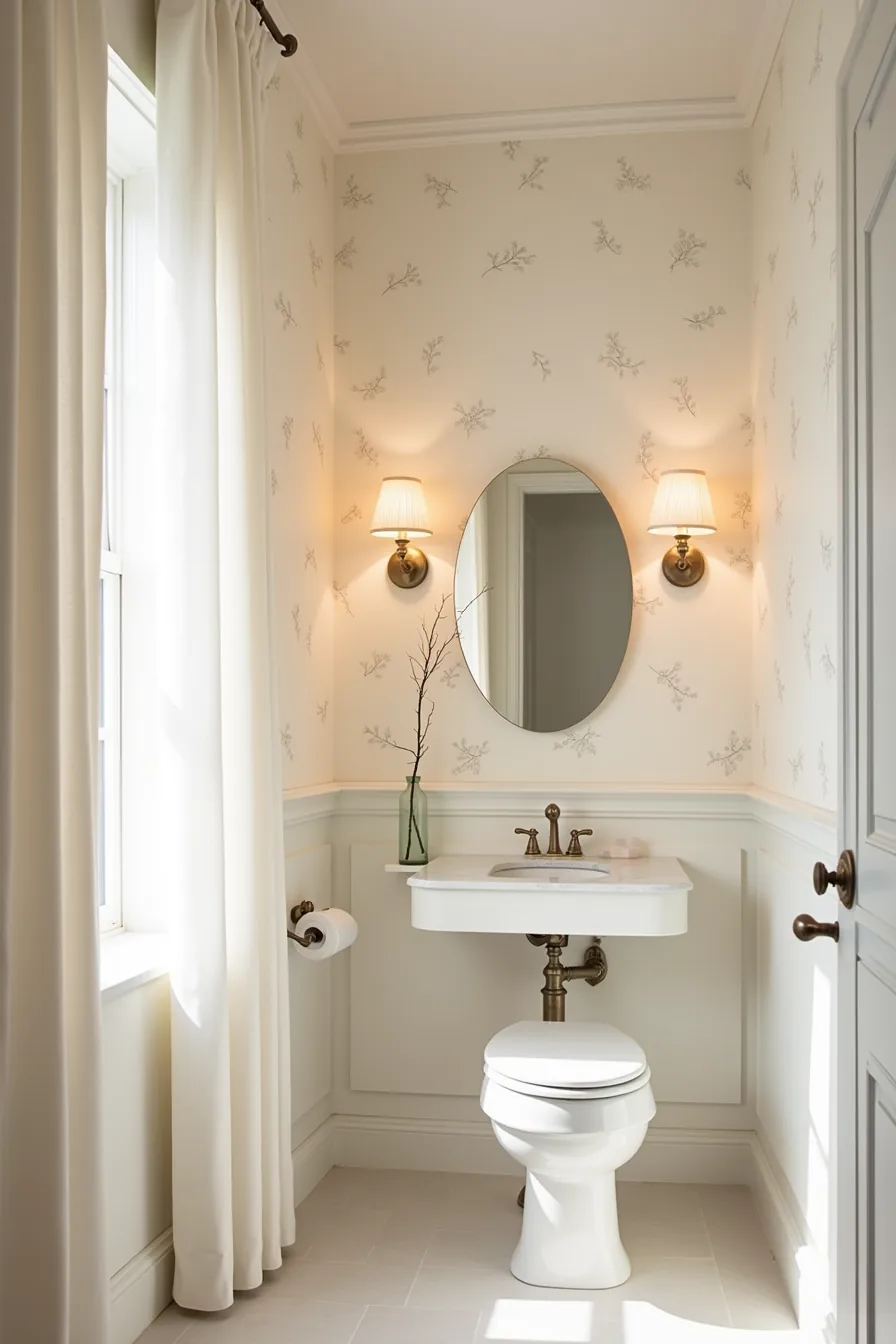
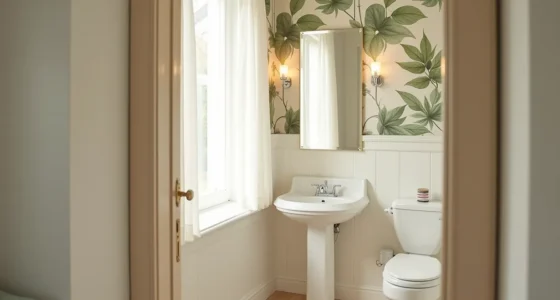
Pale botanical wallpaper with delicate line-drawn stems instantly expands a compact powder room by reflecting whatever natural light enters through a single window. The cream background reads as white on the walls while the fine ink details add texture that keeps the space from feeling sterile. Pairing it with white subway-tiled wainscoting grounds the pattern and protects the lower wall from splashes, making this a smart choice for a family-adjacent half bath.
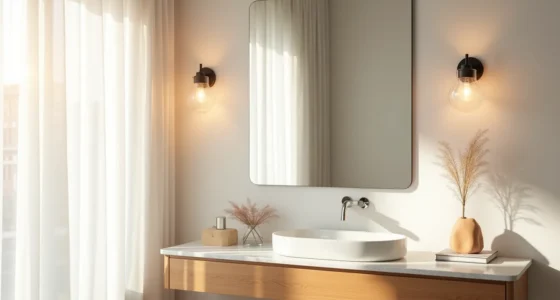
A floating vanity with a marble top and a small round mirror completes the look without introducing bulky visual weight. This route suits renters or cautious homeowners who want personality without a permanent dark commitment. Light surfaces forgive smudges between cleanings, though you’ll still want a washable vinyl wallpaper and a fan running for 15 minutes post-shower to keep humidity from curling seams.
Wallpaper Around the Mirror Frame
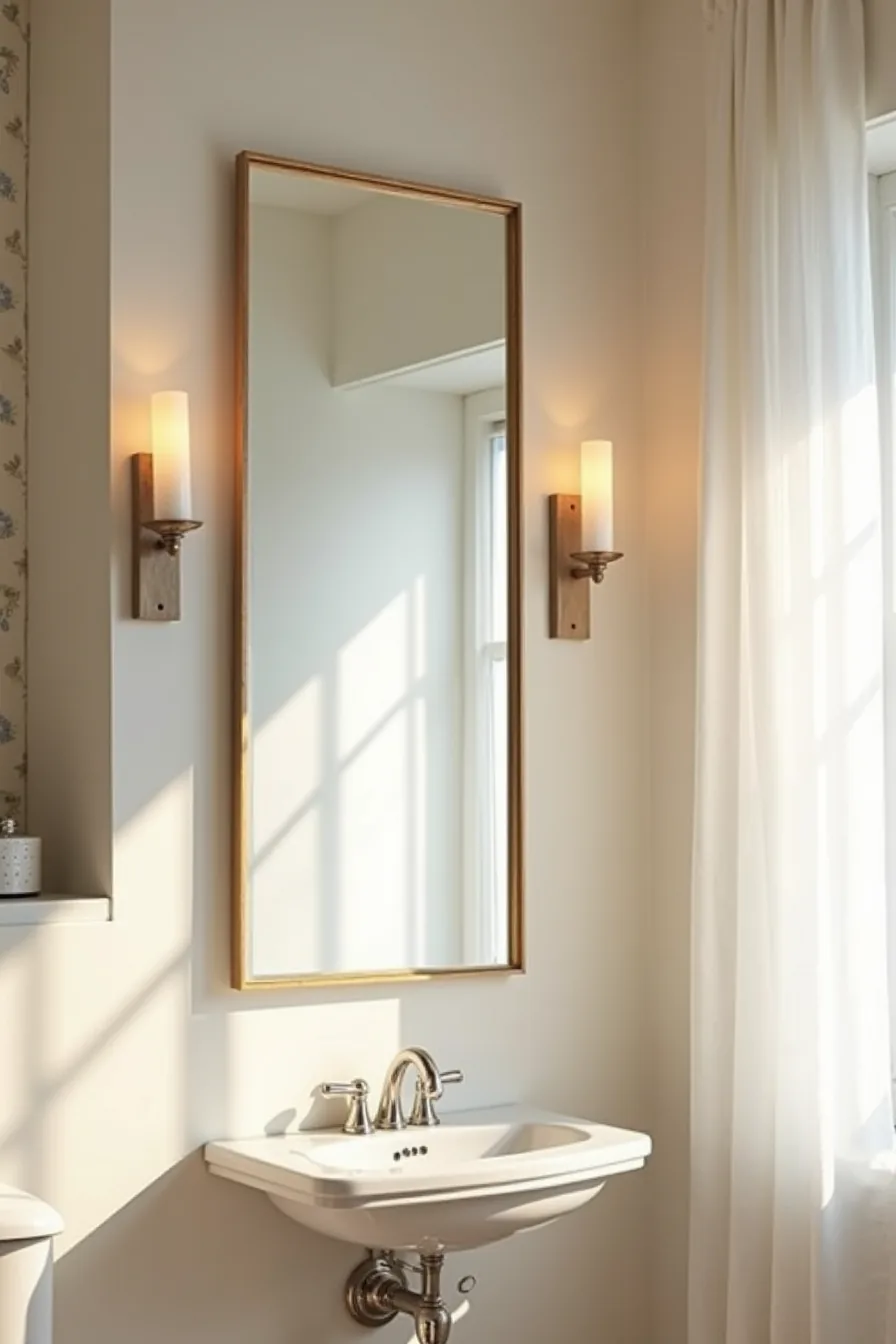
Wrapping wallpaper around mirror creates a defined focal point that anchors the vanity without adding bulky cabinetry. The small floral print extends to the edges of the rectangular mirror frame, with sconce lights flanking both sides to cast even illumination across your face for daily grooming tasks. This placement works best when the mirror occupies roughly one-third of the wall width, any larger and the pattern overwhelms the room; any smaller and the effect reads as an afterthought.
Measure the mirror perimeter first, then add two inches to each side before cutting. Precision matters here: use a sharp utility blade and a straightedge to trim flush against the frame, leaving no visible gaps. A narrow shelf below the mirror holds a ceramic dish for rings or bobby pins, preventing countertop clutter from competing with the pattern.
Choose a vinyl-coated wallpaper for this zone, since toothpaste splatter and hand-washing residue accumulate quickly around sinks. The technique suits powder rooms with a centered mirror and at least 18 inches of clearance on each side for the sconces to function without interference.
Textured and Dimensional Finishes
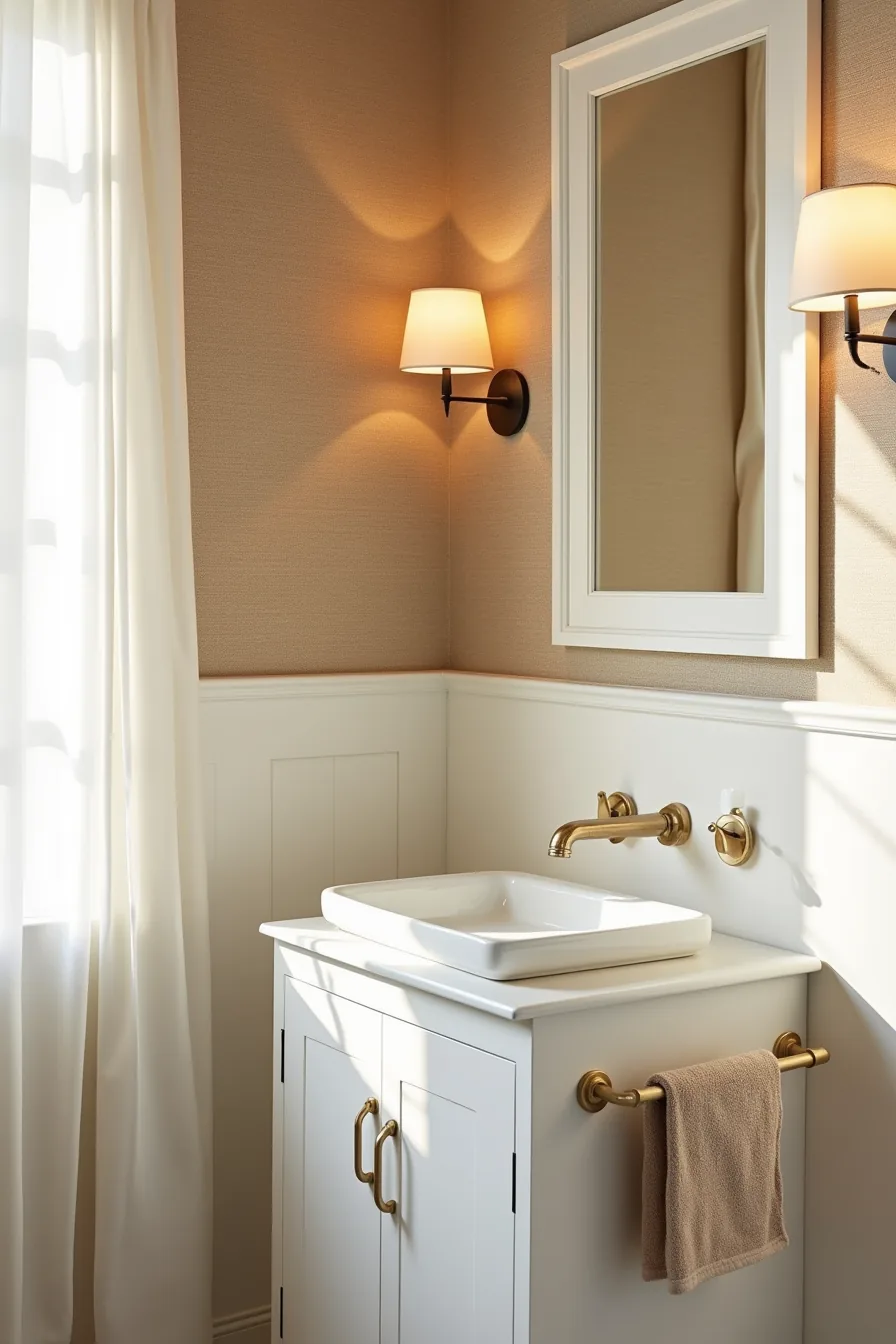
Grasscloth delivers immediate tactile depth that flat paper can’t replicate, making it the strongest choice when you want the walls to feel like furniture rather than decoration. Natural tan fibers catch raking light and cast subtle shadows across the entire room, which visually softens the hard edges of a white vanity and vessel sink. This material suits powder rooms where guests linger near the sink, the texture reads as intentional luxury even from three feet away.
The trade-off is maintenance. Real grasscloth absorbs moisture, so it demands an exhaust fan running five to ten minutes after every shower and a dehumidistat set below 60 percent relative humidity. For a budget route, embossed vinyl mimics the woven look at roughly a third of the cost and wipes clean with a damp sponge.
The brass ring and linen towel in this setup work because their matte and nubby finishes echo the wall texture instead of fighting it. Install grasscloth with a non-woven adhesive applied directly to the wall, not the paper, to prevent bubbling along the seams in humid conditions.
Removable and Renter-Friendly Solutions
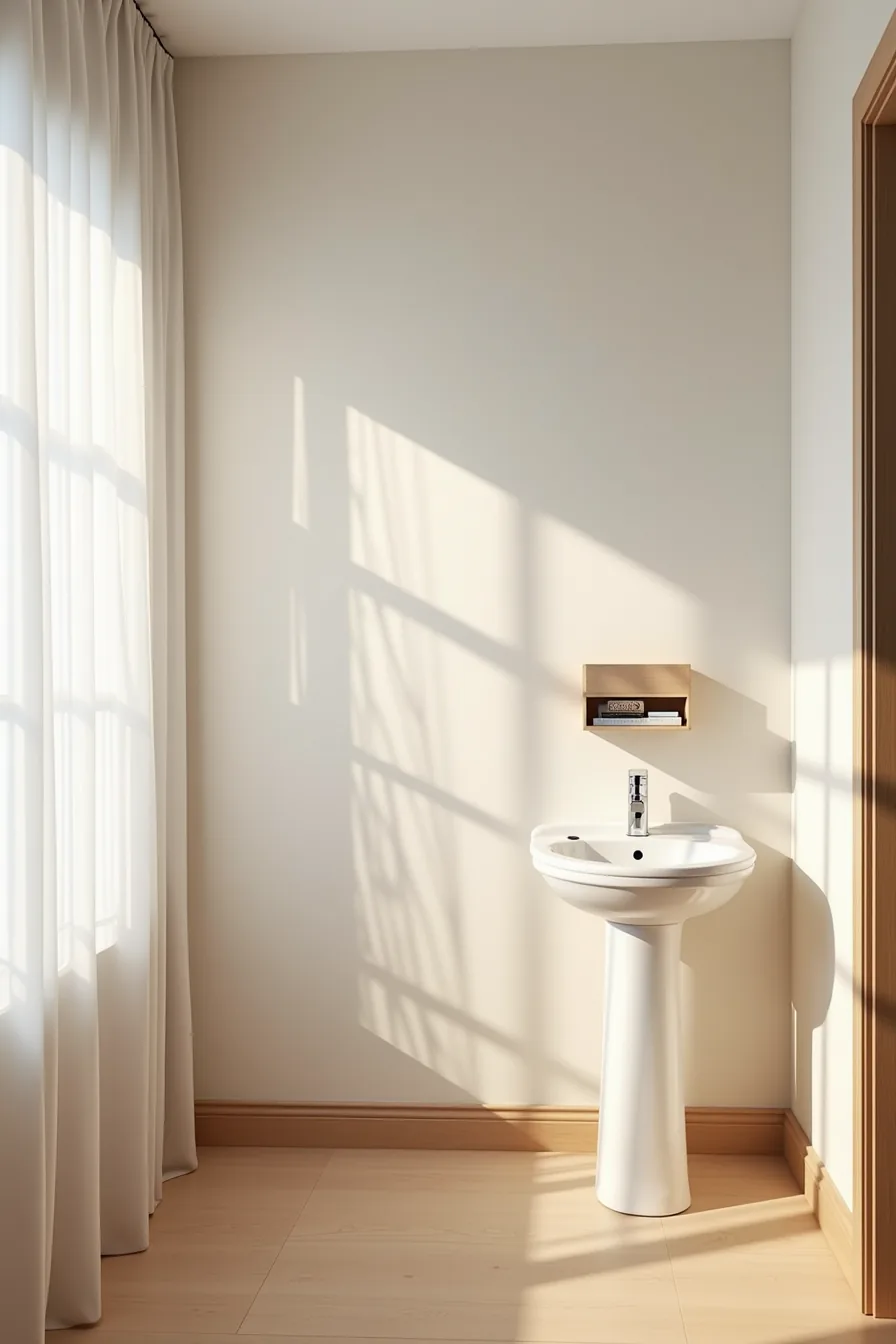
Peel-and-stick wallpaper changes the half bathroom equation when you can’t paint or commit to paste. The geometric stripes applied to one wall wrap the room in pattern while keeping the other three walls neutral, which prevents the space from feeling smaller, a common risk with full-coverage patterns in tight quarters. This approach suits renters who want visual impact without risking a security deposit, since the removable adhesive lifts cleanly when you’re ready to move.
Surface prep decides success. Wash the wall with TSP substitute, let it dry for 24 hours, and test a small corner first, if paint peels when you pull the backing, the wall needs a primer coat before installation. Apply the paper with a smooth plastic scraper, working from the center outward to force air bubbles to the edges.
This setup pairs well with a portable pedestal sink and a shelf unit because the pattern carries the design weight, so you don’t need bulky permanent fixtures to make the room feel finished. A removable wall-mounted organizer adds function without drilling anchors into the landlord’s drywall. Budget-conscious renters can cover just one wall with a single roll, typically running $25-$50, rather than purchasing three to four rolls for full coverage.
Accent Wall vs. Full Coverage Decisions
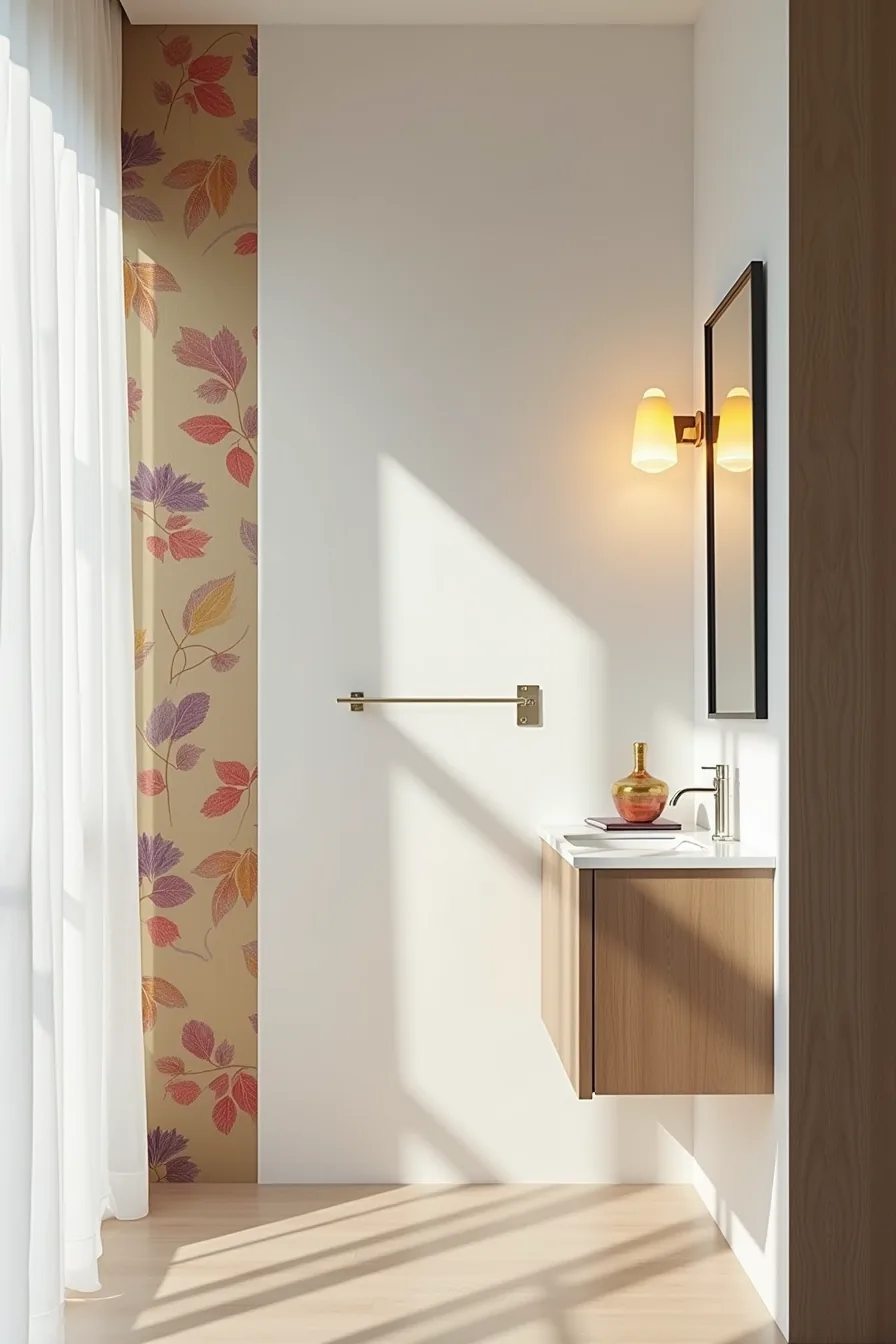
The difference between one bold wall and wrapping the entire room comes down to how you want the space to feel, and how much visual weight it can absorb. A patterned accent wall in jewel tones facing the entrance, with three plain white walls surrounding it, creates a deliberate focal point that draws you in without overwhelming a compact footprint. This setup works best in powder rooms under 40 square feet, where full coverage risks making the walls feel like they’re closing in.
The plain walls give the eye a place to rest, making the mirror and towel hook against the patterned surface read as intentional design choices rather than afterthoughts.
Choose full coverage when your half bathroom exceeds 50 square feet or receives strong natural light that can diffuse the pattern’s density. The accent route suits anyone who wants a bold statement without the commitment: you can switch the single wall’s paper seasonally or whenever the mood strikes, keeping the neutral walls as your constant. A narrow counter holding one decorative object completes the vignette without competing for attention.
When in doubt, start with the accent wall, it delivers roughly 80 percent of the visual impact for about one-third of the material cost, and you can always expand to full coverage later if the pattern grows on you.
Your Decision Checklist
Before you buy, confirm three things: your wall condition (peel-and-stick needs smooth paint, not texture), your humidity level, and your room’s natural light. If you rent, choose removable wallpaper with a documented “peelable” backing. If you own and want longevity, invest in vinyl-coated traditional paper, expect to pay 20-40% more upfront but gain washability and a 10-15 year lifespan.
Your next step: Measure your powder room’s largest wall, order one sample roll (most suppliers offer 24×36-inch swatches), tape it up, and live with it for 72 hours. That single test will answer more questions than any Pinterest board ever could.
Frequently Asked Questions
What size wallpaper roll do I need for a half bathroom?
Measure your wall height and perimeter. Most standard rolls cover 25–30 square feet. For a typical powder room (30–40 square feet of wall space), buy two rolls to account for pattern matching and trimming errors.
Can wallpaper handle moisture and humidity in a powder room?
Yes, if you choose the right type. Vinyl, non-woven, or commercial-grade papers resist moisture better than paper-backed options. Ensure the room has adequate ventilation, ideally an exhaust fan or operable window, to prevent peeling or mold growth over time.
How do I cut and fit wallpaper around a mirror or outlet?
Turn off power, remove outlet covers, and hang wallpaper over the outlet, then cut an X and trim flush. For mirrors, hang paper slightly overlapping the edge, then score and trim with a sharp utility knife. Always use a straightedge for clean cuts.
Is peel-and-stick wallpaper durable enough for a half bath?
Yes, for moderate use. High-quality peel-and-stick vinyl holds up well in low-traffic powder rooms with proper surface prep. It may not withstand frequent scrubbing or high-humidity conditions long-term.
Choose removable options if you plan to change the look within a few years.