Bathroom wallpaper is no longer a moisture-risk gamble, modern vinyl-coated and commercial-grade options hold up in steamy conditions, and when chosen and installed correctly, they outperform tile on cost, warmth, and visual impact. You’ll pay roughly $2–$8 per square foot installed versus $10–$30 for tile, and you can swap the pattern in a weekend. But the real difference is in the material and the prep work.
The six approaches below break down exactly what to buy, where to place it, and what you’ll need to maintain, so you can match the right wallpaper to your room’s size, traffic, and humidity without guesswork.
Key takeaways
- Choose patterns by room size: bold, large-scale prints suit medium and large bathrooms, while small spaces benefit from subtle, small-repeat designs that won’t overwhelm.
- Pair wallpaper with tile strategically: install tile only in the wet zone (shower and sink splashback) and wallpaper the remaining dry walls to cut material costs by roughly 30–50%.
- For renters, use temporary wallpaper: peel-and-stick options from brands like Tempaper or Chasing Paper remove cleanly without damaging paint, but avoid placing them directly behind a shower head.
- Match wallpaper grade to humidity: use vinyl-coated or non-woven wallpaper in bathrooms with poor ventilation, and expect a lifespan of 5–10 years versus 2–3 years for standard paper in damp conditions.
Bold vs Subtle Pattern: Which Suits Your Space
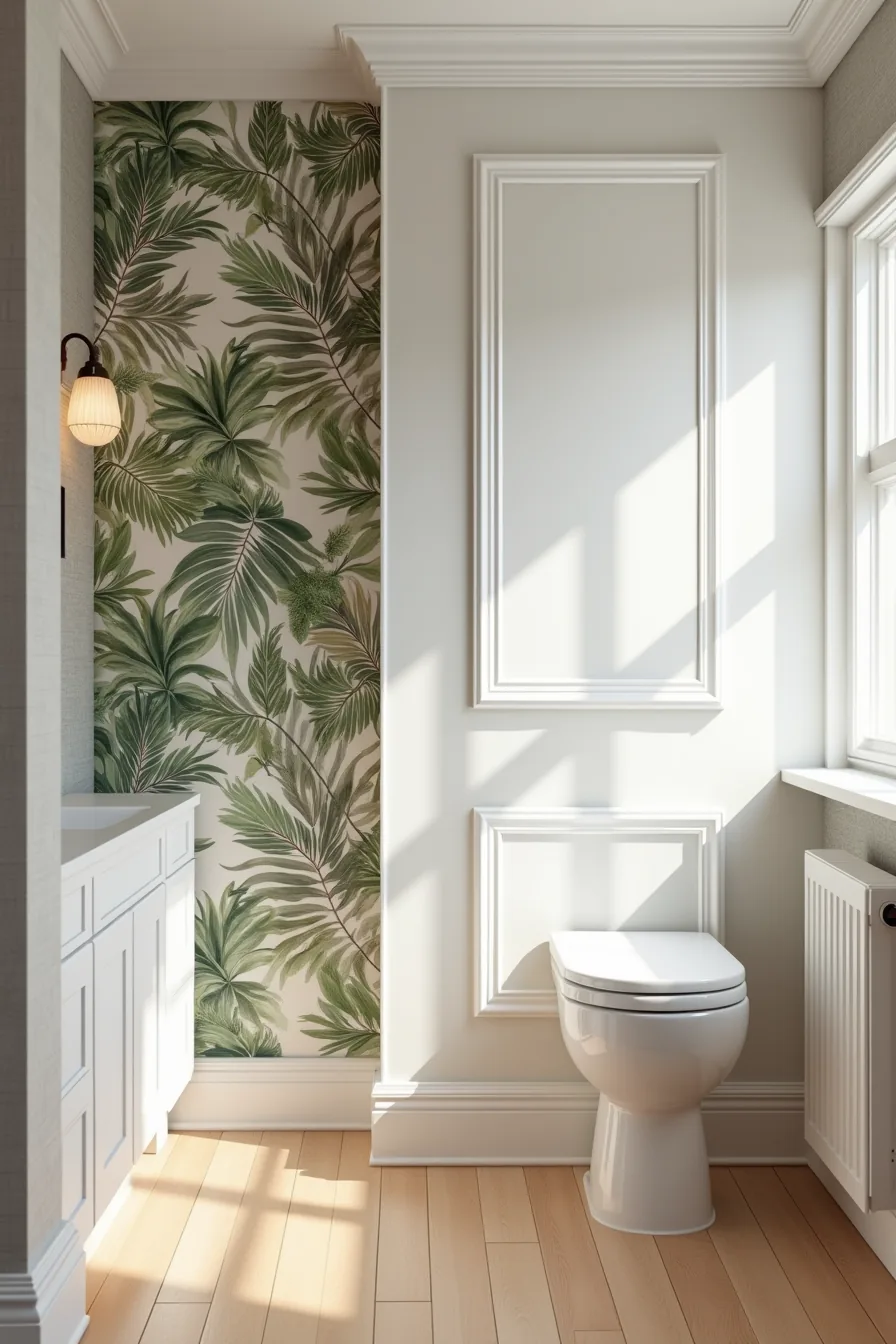
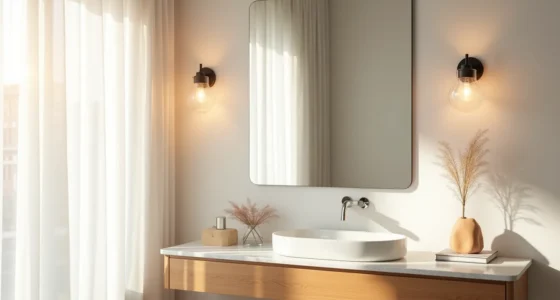
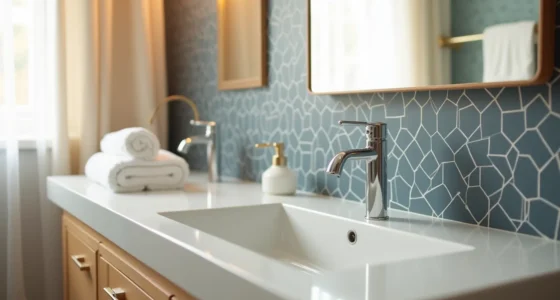
Your first decision is intensity, and it hinges on how the room will be used. A large-scale tropical leaf wallpaper in jewel tones commands attention, so it suits a guest powder room or a spacious primary bath where you want a daily dose of drama. The high-contrast pattern works best when it wraps all four walls to avoid a chopped-up feel, and it pairs well with crisp white trim to anchor the visual weight.
For a family bathroom or a compact space, a fine linen texture in neutral gray offers the same tactile depth without competing with your fixtures. The subtle weave reads as solid from a distance but adds dimension under recessed ceiling lights, making it ideal for rooms with limited natural light. It also forgives minor wall imperfections that bold prints would exaggerate.
Your tolerance for visual intensity matters as much as the room itself. Bold pattern leaves little room for decorative accessories, while subtle texture lets towels, plants, or artwork carry the design. If you tire of decor quickly, choose the subtle route, it’s significantly easier to live with day after day.
Wallpaper with Tile: Combining Two Materials
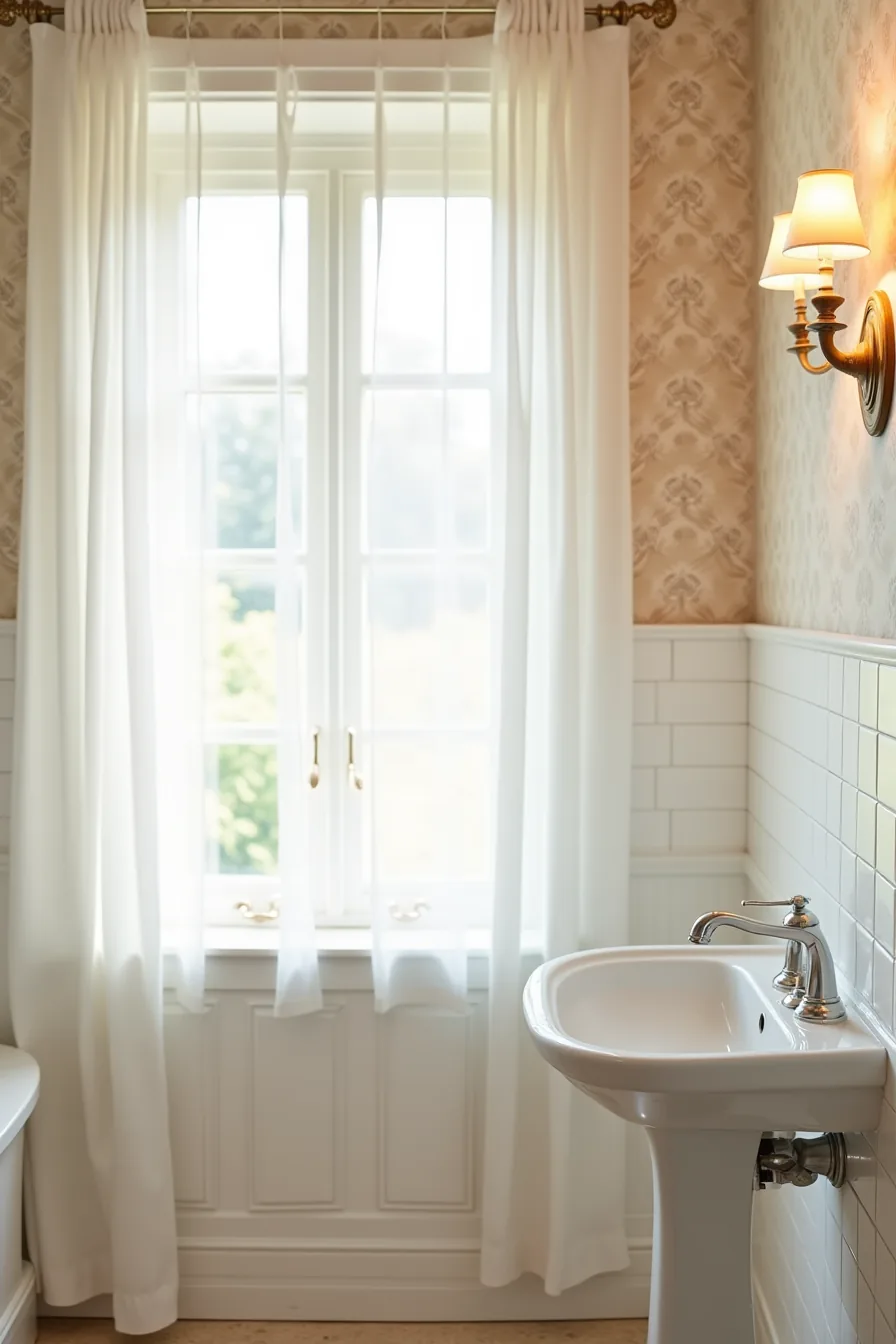
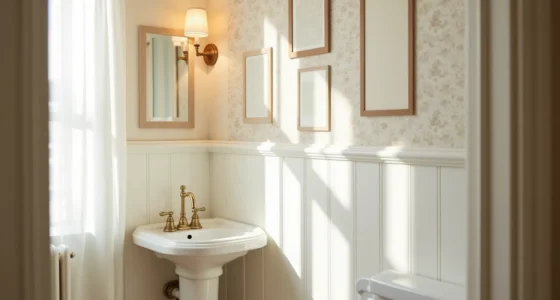
The most reliable wallpaper with tile pairing is the classic wainscot split: subway tile running from floor to chair rail, with wallpaper above. The horizontal transition line does the heavy lifting here, it gives the eye a clean stopping point and keeps moisture-prone lower walls tile-covered while letting the damask pattern stay dry and vivid. A pedestal sink keeps the floor plan open, so the pattern has room to breathe rather than competing with vanity mass.
Install order matters. Tile first, then wallpaper, then a final bead of caulk along the chair rail molding to seal the seam against splash-back. This also prevents the wallpaper edge from lifting when the tile is grouted.
The damask print reads best on a larger powder room or a primary bath with a separate shower; in a tight half-bath, scale the pattern down or the repeat will overwhelm the wall area above the rail.
Powder Room Drama: Maximum Impact in Minimal Space
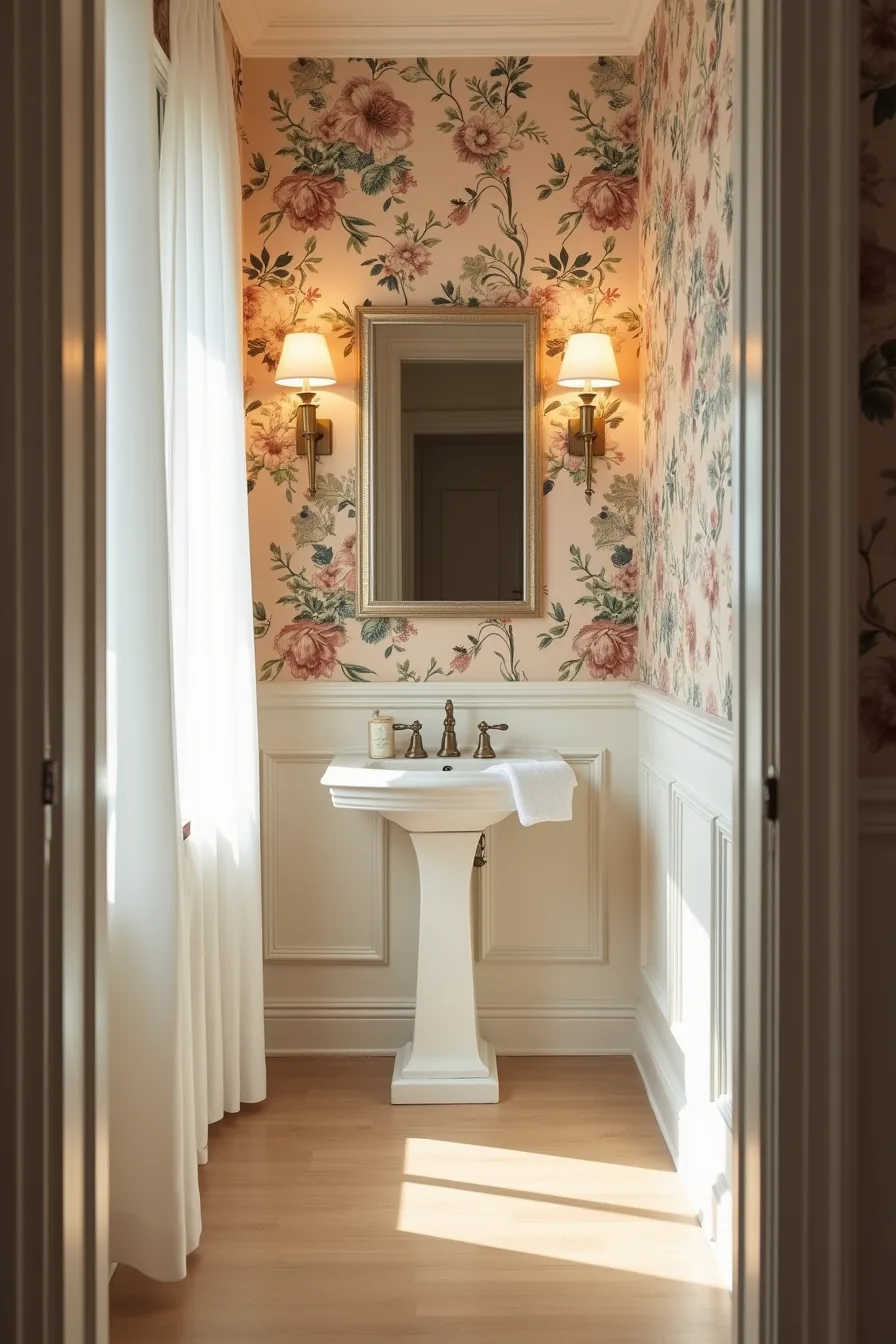
A powder room is the one place where bathroom wallpaper can go bold without apology, you’re in and out in minutes, so the pattern never wears out its welcome. Cover all four walls in a jewel-toned floral, and the compressed square footage works in your favor: the close sightlines amplify the color saturation, making the room feel like a deliberate, jewel-box moment rather than an accident.
The pedestal sink keeps the floor plan open so the pattern reads uninterrupted, while a small wall-mounted mirror and a single brass sconce provide the only visual breaks. Scale the floral repeat to the wall dimensions, on a typical 5-by-7-foot powder room, look for a pattern repeat under 12 inches so it doesn’t dwarf the wall area. Keep the decorative hand towel neutral to let the wallpaper carry the palette, and pair it with a high-gloss trim paint to bounce light against the dense color.
This setup suits anyone who wants a guest-facing statement but doesn’t want to commit to tile or paneling in a room they rarely use.
Use Bathroom Wallpaper to Transform a Small Space
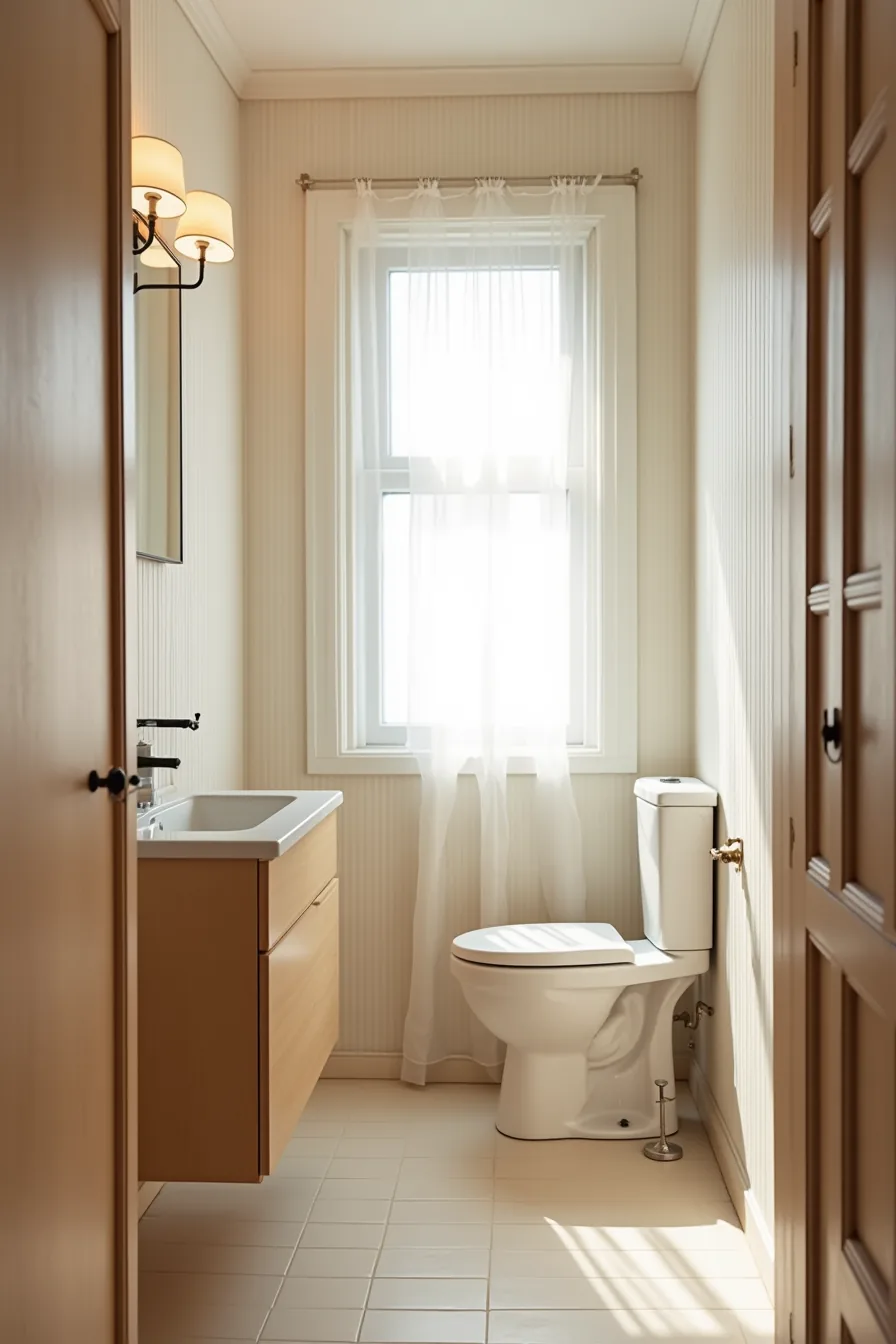
When square footage is tight, the wallpaper’s visual weight does the heavy lifting. In a narrow bathroom running lengthwise, floor-to-ceiling vertical stripes draw the eye along the room’s longest axis, which stretches the perceived depth instead of emphasizing the cramped width. Choose a stripe with a high-contrast repeat, think deep navy on white, so the directional pull reads clearly from the doorway, and install it with the pattern running continuously from the ceiling line to the baseboard for an uninterrupted column effect.
The single window matters more than you might expect. Place it on the side wall so the light rakes across the striped surface, which amplifies the shadow lines between each band and intensifies the vertical rhythm. Pair the wallpaper with a compact vanity and toilet arranged in a tight configuration against the opposite wall, leaving the patterned surface as the sole focal point.
Select a light-reflective finish, a vinyl-coated paper with a subtle sheen bounces available light better than a matte flat, and keep the narrow floor tiles plain and light-toned so the flooring recedes rather than competes with the wall pattern. This approach works best for bathrooms under 40 square feet where you want to mask awkward proportions without sacrificing character.
Renter-Friendly and Budget Options
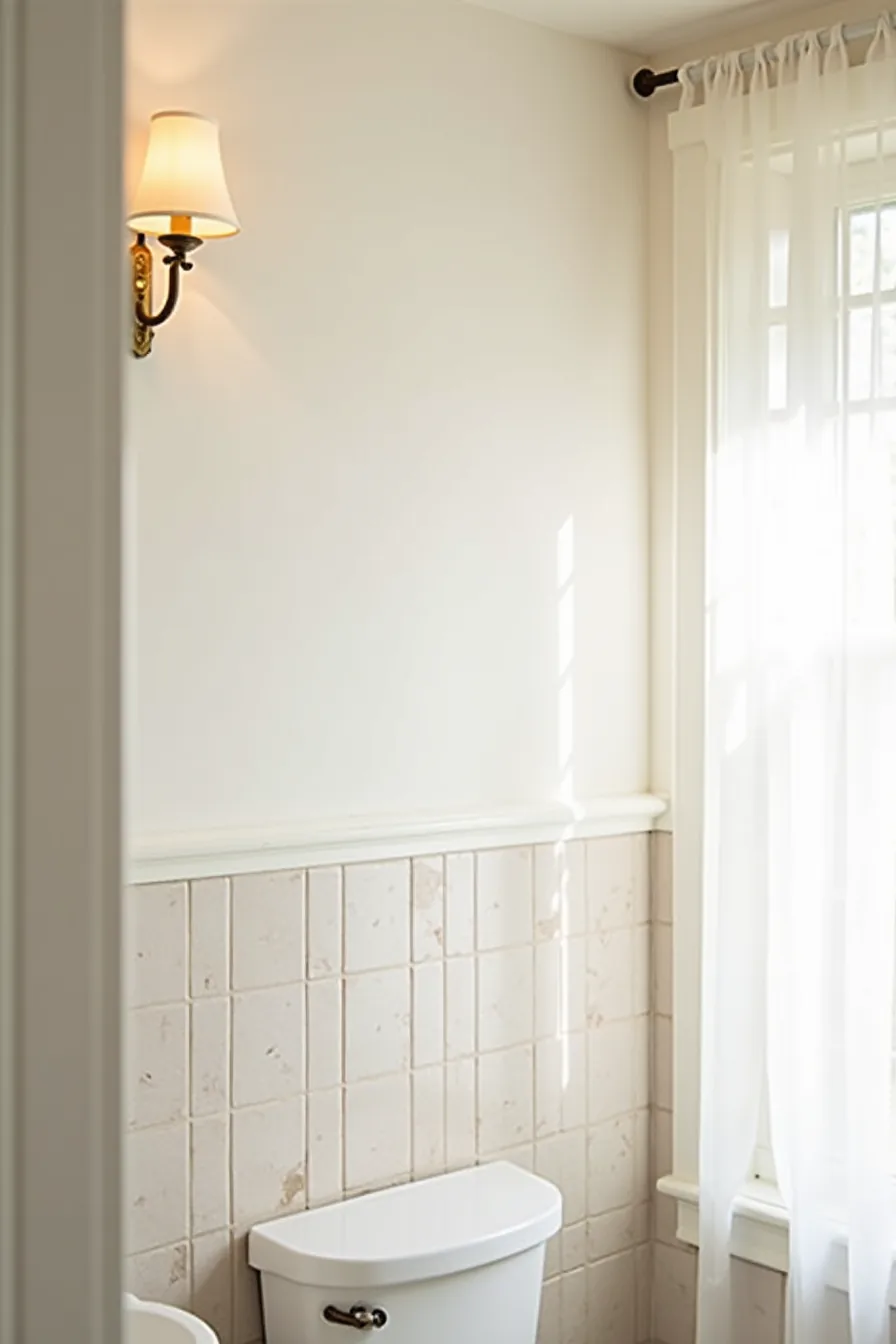
Peel-and-stick wallpaper solves the two biggest rental objections: damage and permanence. A quality removable film, typically costing $2–$4 per square foot, holds firmly for years yet peels away cleanly when you pull a corner and strip it at a 45-degree angle. Applying it to only the lower half of the wall, as seen here, reduces material cost by roughly half and makes the pattern read as a deliberate wainscot treatment rather than a missed installation.
The lifted edge tells you exactly what matters: proper removal starts at a seam, not the middle of a sheet. Work slowly and keep the angle shallow to avoid tearing the vinyl backing. Painter’s tape along the top edge adds a crisp transition line against the white subway tile, which stays untouched and deposit-safe.
This approach suits renters who want pattern without repainting, and it tolerates imperfect walls better than full-coverage applications since minor bubbles and wrinkles hide behind the furniture line. Budget-wise, expect to spend $30–$60 for a typical half-wall in a 5×8-foot bathroom, about a third of what a full professional installation costs.
Durability and Maintenance for Wet Environments
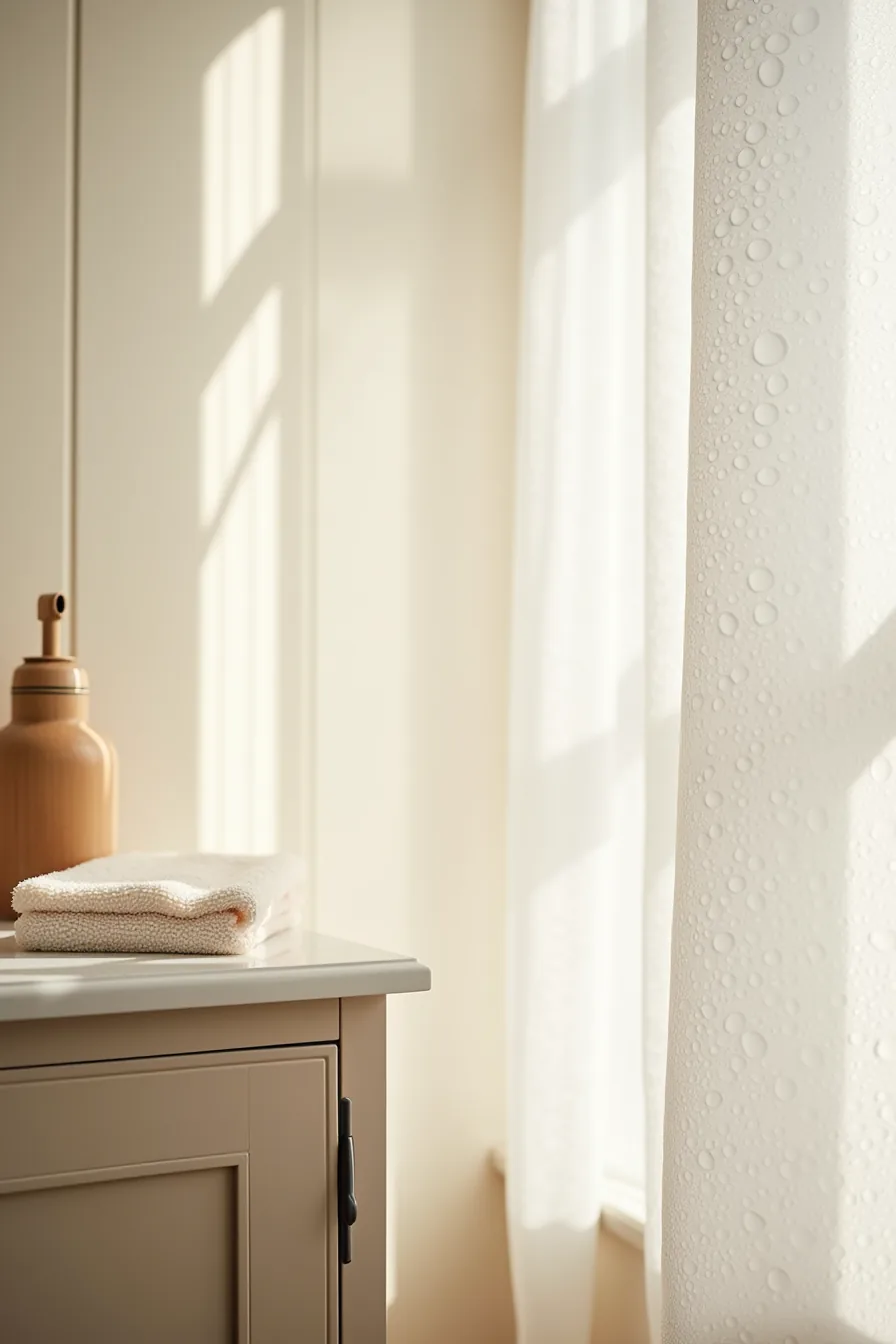
Standard wallpaper won’t survive a bathroom. You need vinyl-coated or solid vinyl sheets, which use a waterproof top layer that causes water to bead and run off rather than soak into the paper. Expect to pay $3–$8 per square foot for bathroom-grade vinyl versus $1–$2 for standard residential paper, the premium buys you years of service in a space that cycles between steam and dryness daily.
Your ventilation does the heavy lifting. Run the exhaust fan for 20–30 minutes after every shower to keep humidity below 60%, and seal all edges with acrylic caulk where the wallpaper meets fixtures and trim. The water droplets beading on the vinyl surface in this setup demonstrate why the material works: they wipe away without leaving mineral deposits or staining.
Clean with a soft-bristled brush and a microfiber cloth dipped in warm water with a drop of dish soap. Avoid abrasive pads and bleach-based sprays, which dull the printed surface over time. One pass of the brush along seams keeps mold from finding a foothold, while the cloth dries the surface so no moisture lingers behind the exhaust vent grille.
Your Decision Checklist
Before you buy, confirm three things: your room’s humidity level (steam-heavy bathrooms need vinyl or washable non-woven paper), your wall’s condition (peeling paint or plaster means you must address it first or choose peel-and-stick), and your exit strategy (removable film for rentals, traditional paste for a 5-10 year commitment). Scale the pattern to the room, large florals for spacious bathrooms, small geometrics for powder rooms.
Your next step is simple: order three samples and tape them to the wall for 48 hours. Live with them through a few hot showers. The one that doesn’t annoy you after two days is the one to install.
Frequently Asked Questions
Can you use regular wallpaper in a bathroom, or do you need special bathroom wallpaper?
Regular wallpaper fails quickly in humidity. You need vinyl-coated, vinyl-backed, or non-woven wallpaper designed for moisture. These resist steam, peeling, and mold.
Standard paper or fabric wallpapers will blister and lift within months.
How long does bathroom wallpaper typically last before it needs replacing?
With proper installation and ventilation, vinyl or non-woven bathroom wallpaper lasts 8–12 years. In poorly ventilated bathrooms, expect 3–5 years. High-moisture zones near showers may need replacement sooner.
Proper sealing at edges and seams extends lifespan significantly.
What’s the best way to remove bathroom wallpaper without damaging drywall?
Score the wallpaper, apply a warm water and fabric softener solution, wait 15 minutes, then peel. Use a wide putty knife at a shallow angle. For vinyl, perforate first.
Never scrape dry; wetting prevents drywall damage. Test a corner first.
Should you wallpaper behind the toilet or only accent walls in a bathroom?
Wallpaper behind the toilet works fine if you maintain a 2-inch gap from the tank and use a moisture-resistant finish. Avoid wallpapering the wall directly opposite the shower head. Accent walls are safer in high-splash zones; full coverage suits well-ventilated, powder-room scenarios.