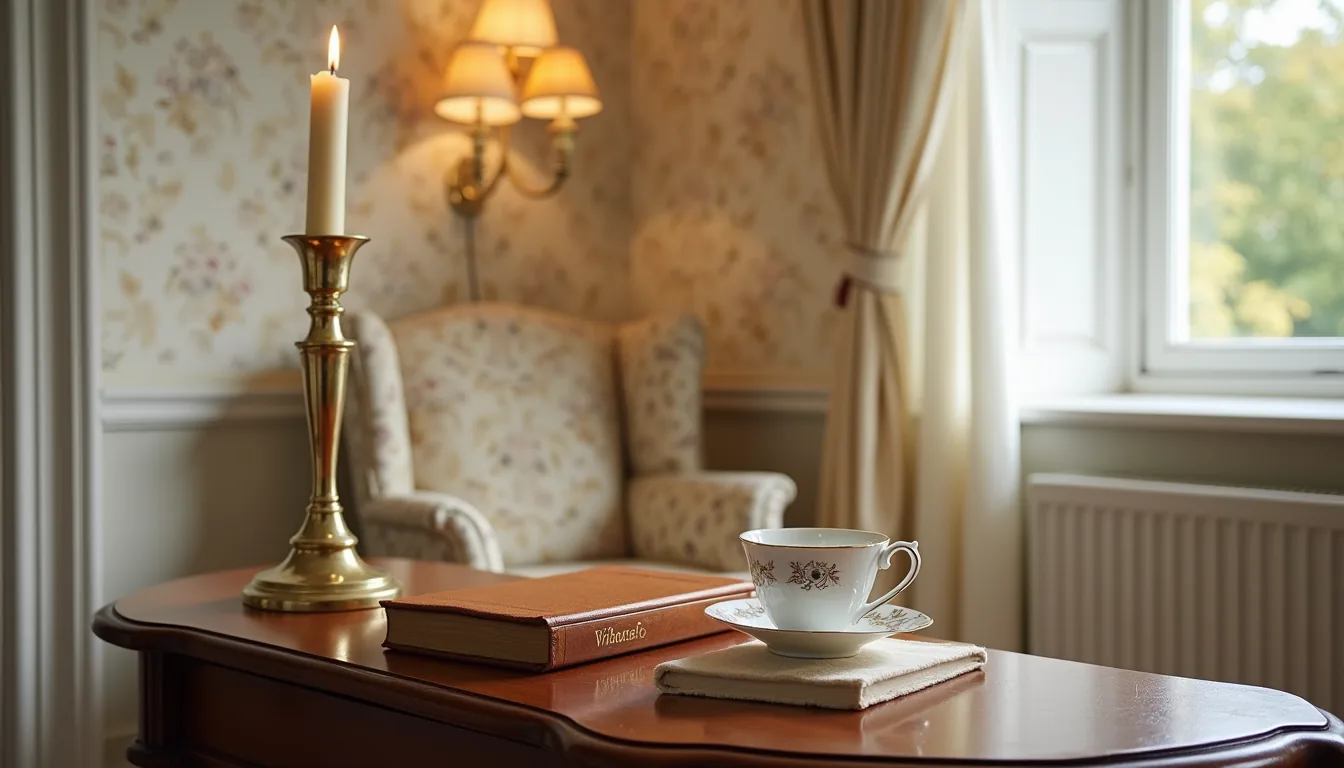
An edwardian living room isn’t a museum piece but a working design system built on high ceilings, generous light, and a deliberate layering of comfort and formality, and you can achieve it without gutting your home or emptying your bank account. The style rewards symmetry and natural materials, but it bends to modern budgets, rental restrictions, and compact floor plans. The six approaches below range from a weekend refresh to a structural commitment, so you can match the look to your actual walls, windows, and wallet.
Key takeaways
Anchor your layout around the fireplace, not the television, to create a natural focal point that structures seating and traffic flow in most Edwardian rooms. Trade period moldings for modern comfort by keeping original ceiling details and window frames, while replacing draughty sash windows with double-glazed inserts that preserve the look. Layer patterns deliberately by limiting yourself to two main motifs, like a floral wallpaper and a geometric rug, and repeating one of them in cushions or upholstery to avoid visual noise. For small spaces, skip heavy mahogany sideboards and instead install a wall-mounted console with a mirror above, freeing floor area while retaining the era’s vertical emphasis.
The Fireplace-Centered Room: Anchor Your Layout
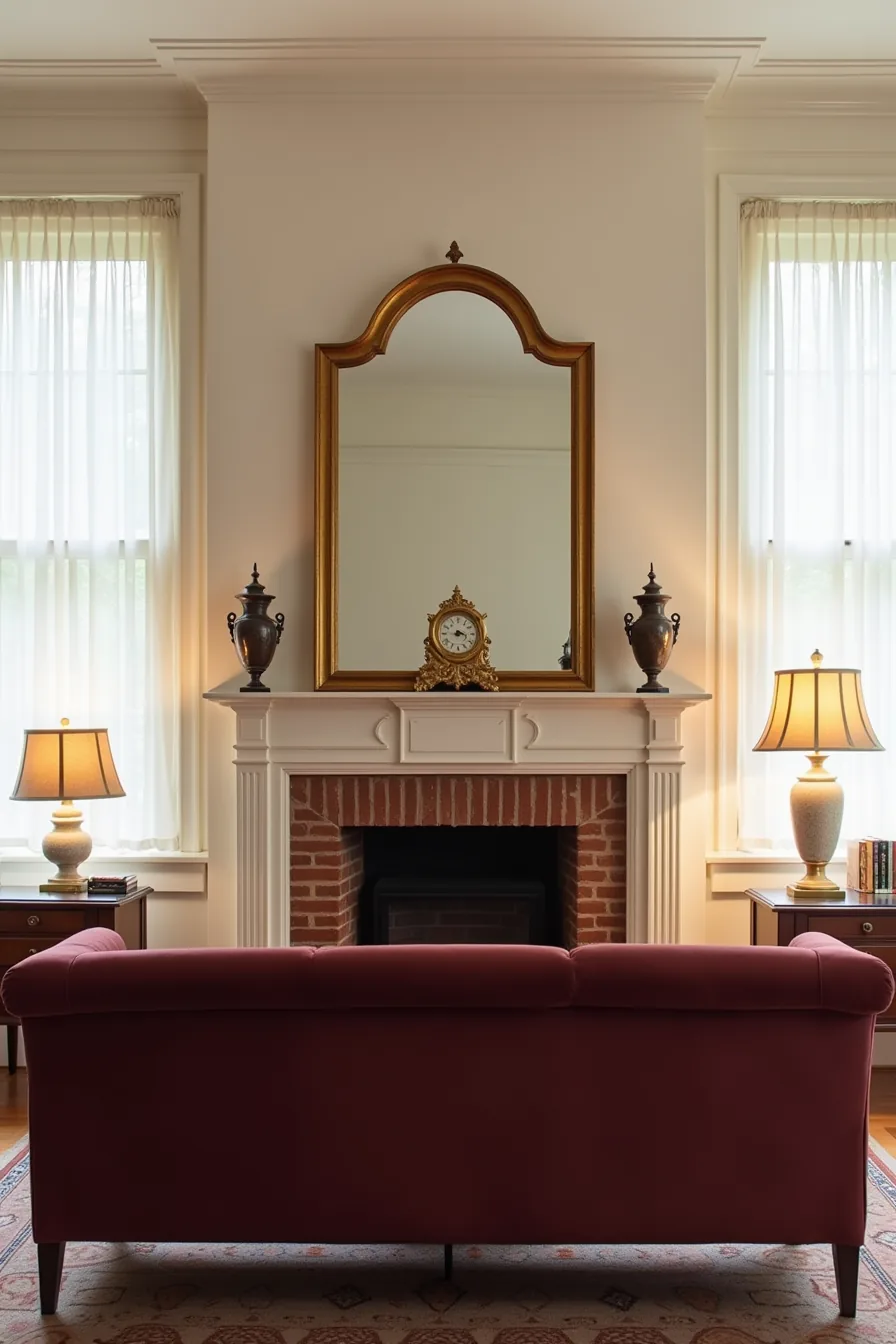
A fireplace-centered room works because it solves the hardest problem in any living space: where do the seats go? When the fire is the anchor, every piece of furniture earns its position relative to that fixed point. The setup here, a burgundy velvet sofa placed 8 feet from the brick hearth, creates a conversation zone that respects the room’s depth without crowding the mantelpiece.
This arrangement suits medium-to-large rooms (roughly 12 by 15 feet or larger) where you can maintain that 7-9 foot viewing distance. The white mantelpiece carries three objects of varying heights: a gilt-framed mirror at the back, two ceramic urns flanking a brass clock at the front. That triadic composition, tall behind, short in front, symmetrical across, reads as effortless but requires nothing more than a 30-second rearrange when dusting.
For smaller rooms, pull the sofa to 6 feet and skip the mirror to keep the sightline open. You lose the layered depth but gain breathing room for circulation paths behind the seating.
Period Detail vs Modern Comfort: The Trade-Off Framework
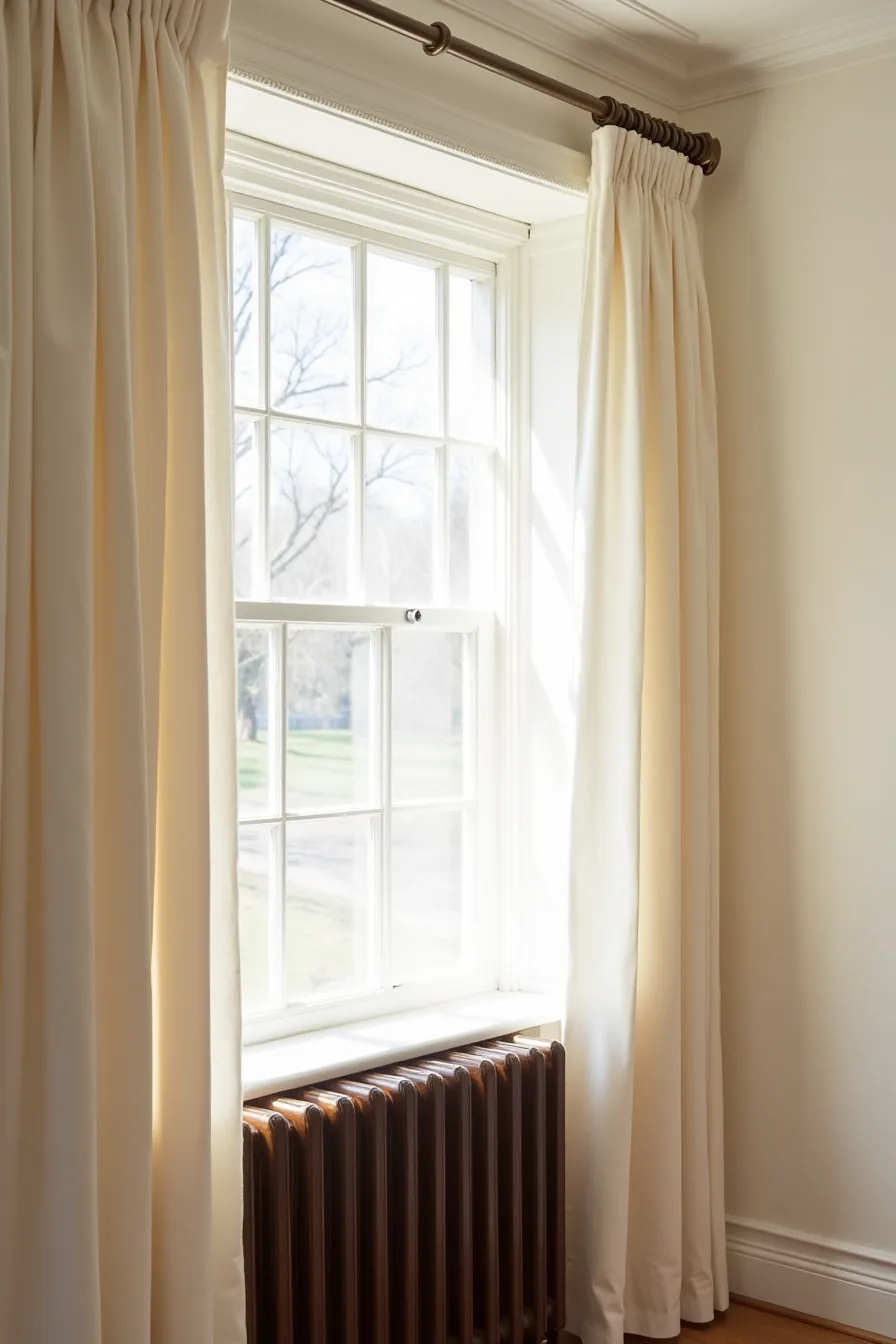
The sash window, crown molding, and heavy linen drapes give a room its Edwardian character, but they also create friction with modern living. Those cream drapes block draughts in winter yet trap heat in summer, and the original sash cords may need replacing, budget £150–£300 per window if they snap. The dark wood radiator cover solves the ugliest modern intrusion without sacrificing the period frame, but it reduces heat output by roughly 10–20 percent, so reserve it for rooms with oversized radiators.
Your decision rule is simple: keep any detail that costs less to maintain than to replace, and swap anything that fights your climate control or cleaning routine. Crown molding painted white stays, it hides cracks and needs only an annual dust. The linen drapes, however, should be machine-washable or lined with a removable cotton layer, because dry-cleaning a full set runs £80–£120 each time.
If you rent, skip permanent changes like new sash cords and use tension rods inside the window recess instead.
Pattern Layering Without Visual Chaos
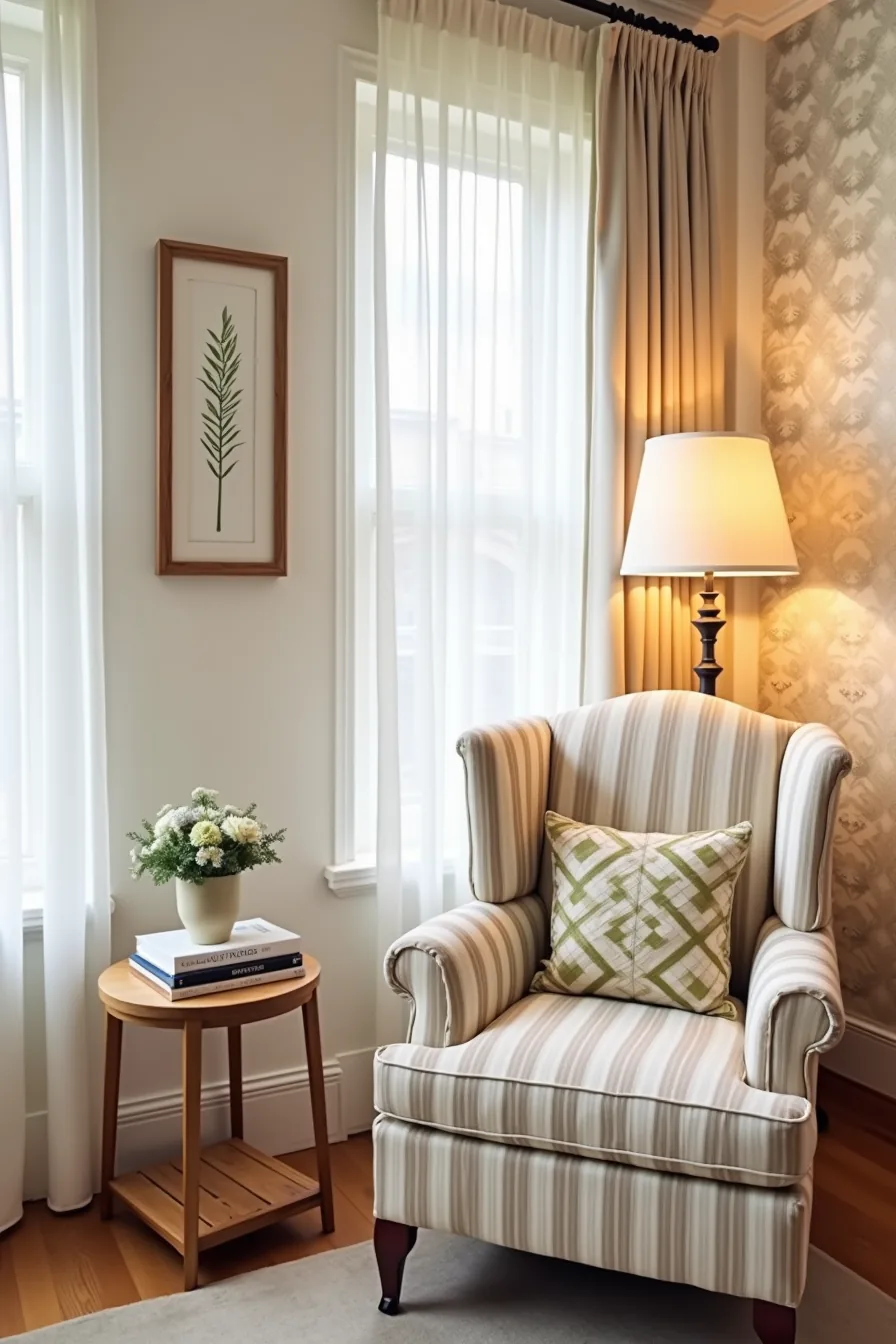
The striped wingback chair anchors the vignette, while the floral throw pillow and geometric cushion on the side table introduce contrast at different visual weights. Damask wallpaper behind the chair provides a large-scale backdrop, and the botanical print pulls the green tones from the florals into a cohesive frame. The rule for pattern layering is to vary scale by at least threefold between adjacent prints, a small geometric on a cushion reads clearly against a large damask wall, where two similar-sized patterns would blur into noise.
Color is your anchor. Pull one secondary hue from the floral (typically the green leaf tone) and repeat it in the botanical print and a solid upholstery piece elsewhere in the room. Keep the ratio at roughly 60 percent solid or textured surfaces, 30 percent medium-scale patterns, and 10 percent small-scale accents, which prevents the eye from competing for dominance.
For a calmer effect, limit the room to two pattern families, one floral and one geometric, and repeat them in at least two locations each.
Adapting Edwardian Style to Small Spaces
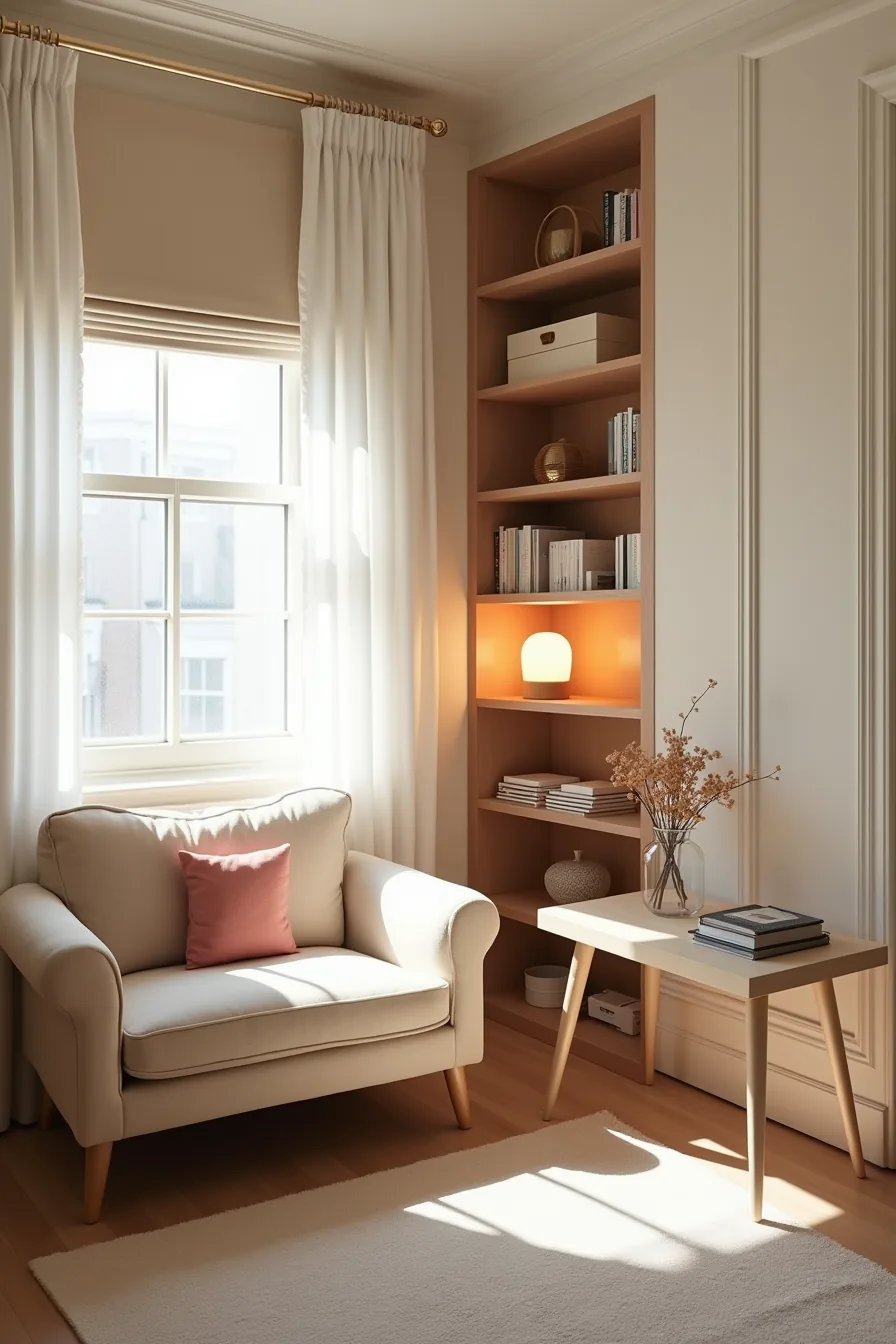
Compact rooms fail when you force in a full-size chesterfield or a massive bookcase. Instead, choose a low-slung settee with rolled arms, most measure roughly 30-32 inches in seat height versus the 34-38 inches of a standard sofa, which keeps your eyeline low and makes the ceiling feel taller. Pair it with a narrow console table with tapered legs that tucks under a small window; the exposed floor beneath the table reads as breathing room.
Vertical shelving is your best storage ally. Stack books and decorative boxes floor-to-ceiling, but keep the bottom two shelves for heavier objects and the top ones for lighter, visually airy items so the unit doesn’t loom. A roman shade at the window maintains the Edwardian profile without the bulk of heavy drapes that would block light.
Use a jewel-toned accent wall, deep emerald or sapphire, behind the seating to create depth, but keep the other three walls pale. Keep the largest pattern (such as a damask wallpaper) to a single wall, and restrict florals to soft furnishings no larger than cushion size. Tight-kerf hardwood floors or a low-pile runner further prevent visual clutter, and a single oversized mirror opposite the window can double the perceived square footage.
Budget, Rental, and Investment Routes
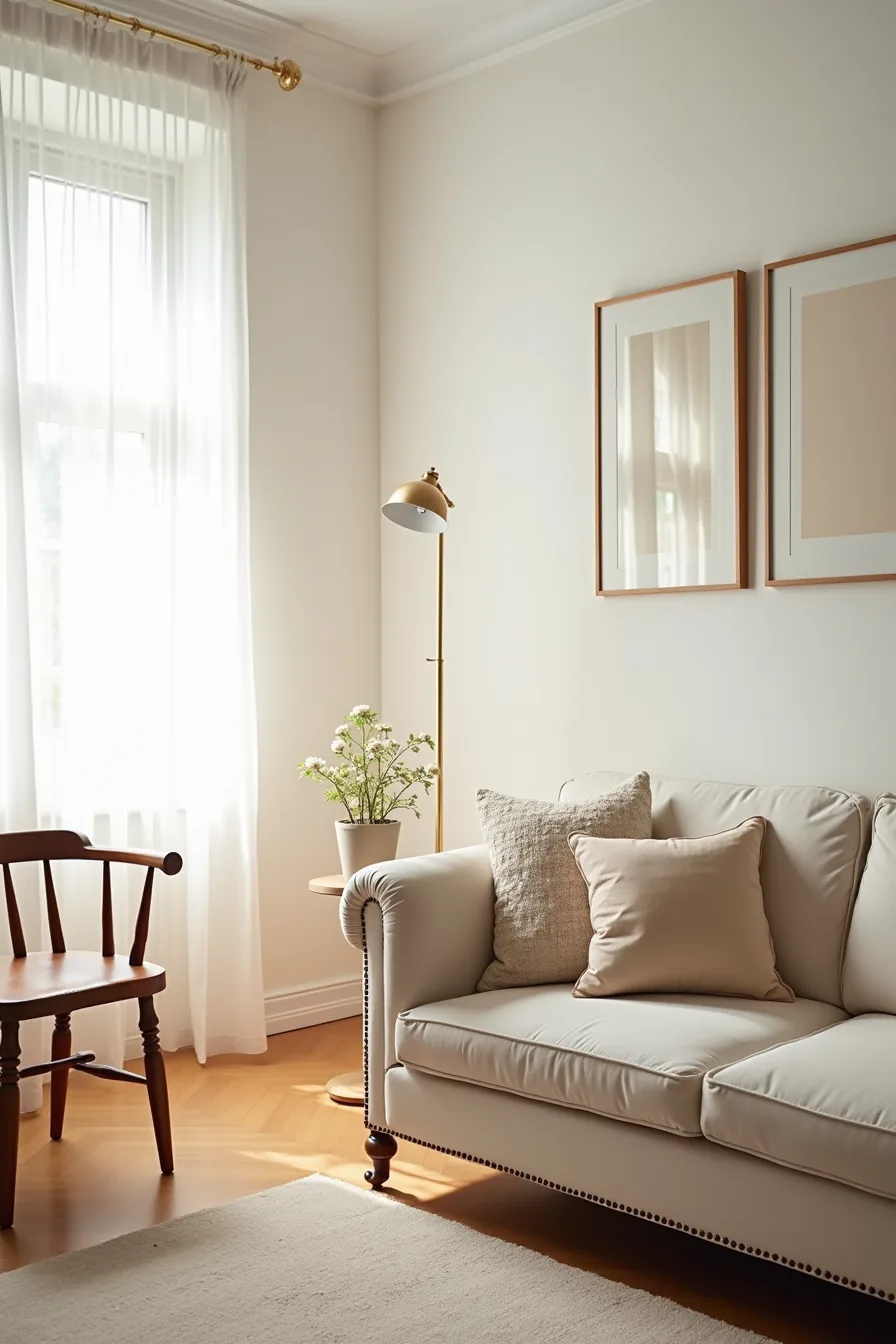
The thrifted wooden chair with fresh paint anchors the budget route: you can redo a solid secondhand frame for under $50 in materials, and a quick sanding plus two coats of chalk paint takes roughly three hours. This suits anyone who values originality over perfection and has a weekend to spare, just test the paint on an inconspicuous spot first, as some vintage finishes absorb color unevenly.
For renters, the peel-and-stick wallpaper and a fabric drape over a plain sofa deliver maximum Edwardian impact with zero permanent damage. The wallpaper removes cleanly within six months if you follow the manufacturer’s warm-water technique, and a 5-by-7-foot section typically costs $60–$90. Drape a wool or linen throw across the sofa’s back and arms to suggest carved upholstery without the price tag; secure it with upholstery pins that won’t leave holes.
The investment route centers on the upholstered Chesterfield sofa with brass nailheads and carved mahogany legs. A quality piece with eight-way hand-tied springs runs $3,000–$6,000, but it will outlast three budget sofas and holds resale value near 60% after a decade. Expect to reupholster every 10–15 years at $800–$1,500 depending on fabric choice; spring for a performance weave if you’ve kids or pets.
Make Edwardian Living Rooms Work for Everyday Life
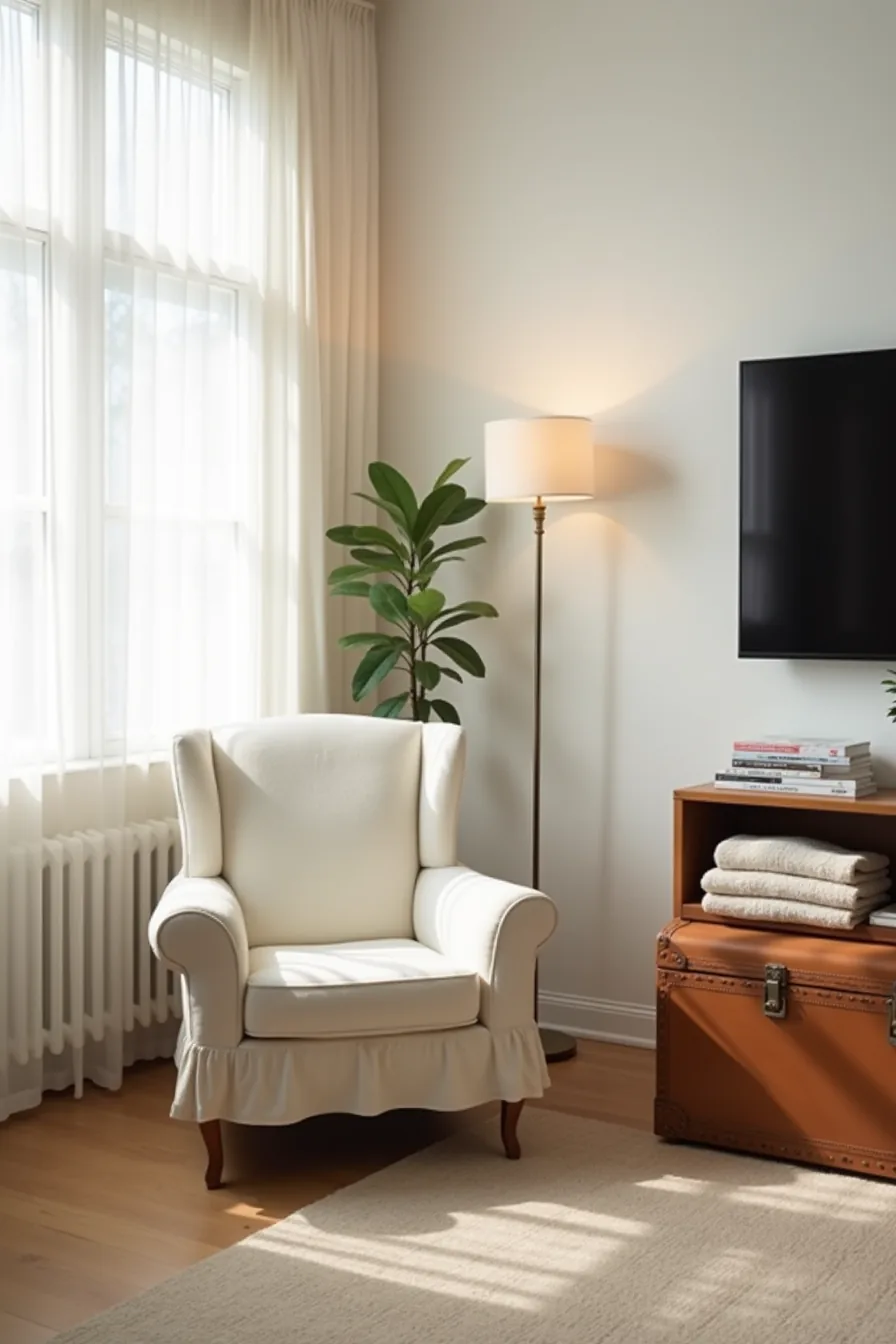
A washable slipcover on a wingback chair transforms a delicate period silhouette into a practical daily seat. Cotton duck slipcovers in ivory or sage run $80–$150, unzip for machine washing, and hide spills from coffee or red wine without compromising the bowed front or rolled arms. If you’ve shedding pets, skip velvet entirely and match the slipcover with a leather ottoman, leather resists scratches and wipes clean with a damp cloth, so you maintain the era’s low seating profile without weekly lint rolling.
Keep the visual clutter of modern living inside a closed storage chest, preferably one with a lift lid and casters so you can move it near the fireplace when guests arrive. A flat-screen television mounted on the wall above a console table preserves floor space and sightlines; route cables through a cord cover painted the same color as the wall to blend into the paneling. On the side table, a potted fern or aspidistra introduces the dark green that Edwardian rooms favored, and it also improves indoor air quality, plus, the plant’s broad leaves hide small scuffs on the tabletop that would otherwise draw your eye.
Your Edwardian Living Room Checklist
Before you buy anything, measure your room’s longest wall and your doorway width. This single step prevents the most common mistake: oversized furniture that blocks circulation or can’t be delivered.
Then decide your route. Renter-friendly options include peel-and-stick wallpaper and freestanding lighting. For long-term value, invest in a solid oak sideboard or a cast-iron fireplace surround.
Your next step is simple: choose one wall to anchor the room, and paint it your base color. Start there, and the rest will follow.
Frequently Asked Questions
What is the difference between Edwardian and Victorian living room style?
Victorian style is heavy, dark, and cluttered with deep colors and dense patterns. Edwardian style lightens everything: softer palettes, simpler lines, and more airy layouts that prioritize natural light and comfortable, less fussy furniture.
Can you create an edwardian living room in a modern apartment with no original features?
Yes. Focus on key elements: a painted fireplace surround, dado rails, and period-appropriate lighting. Use pale walls, geometric wallpaper, and bentwood or Arts-and-Crafts furniture. These portable pieces and paint treatments create the look without structural changes.
How do you keep an edwardian living room clean and dust-free without constant maintenance?
Choose smooth, painted woodwork over ornate carved details, and opt for washable cotton or linen slipcovers. Use a vacuum with a brush attachment weekly on upholstery and drapes. Avoid heavy velvet or intricate trims that trap dust and require professional cleaning.
What is the typical cost to furnish an edwardian living room from scratch?
A budget route using reproductions and second-hand finds costs $1,500–$3,000 for a small room. Mid-range, with quality sofas and real period pieces, runs $5,000–$10,000. A full investment with bespoke joinery and antiques can exceed $20,000, depending on room size and finishes.