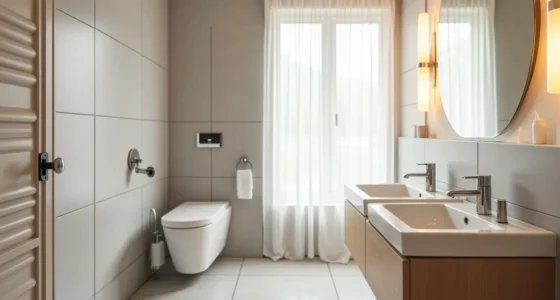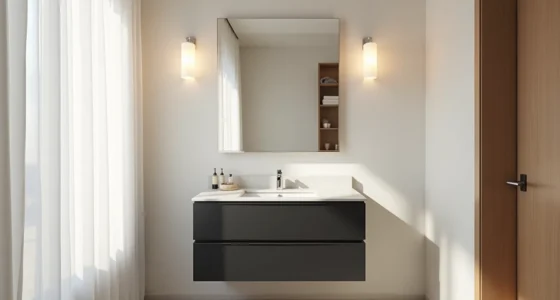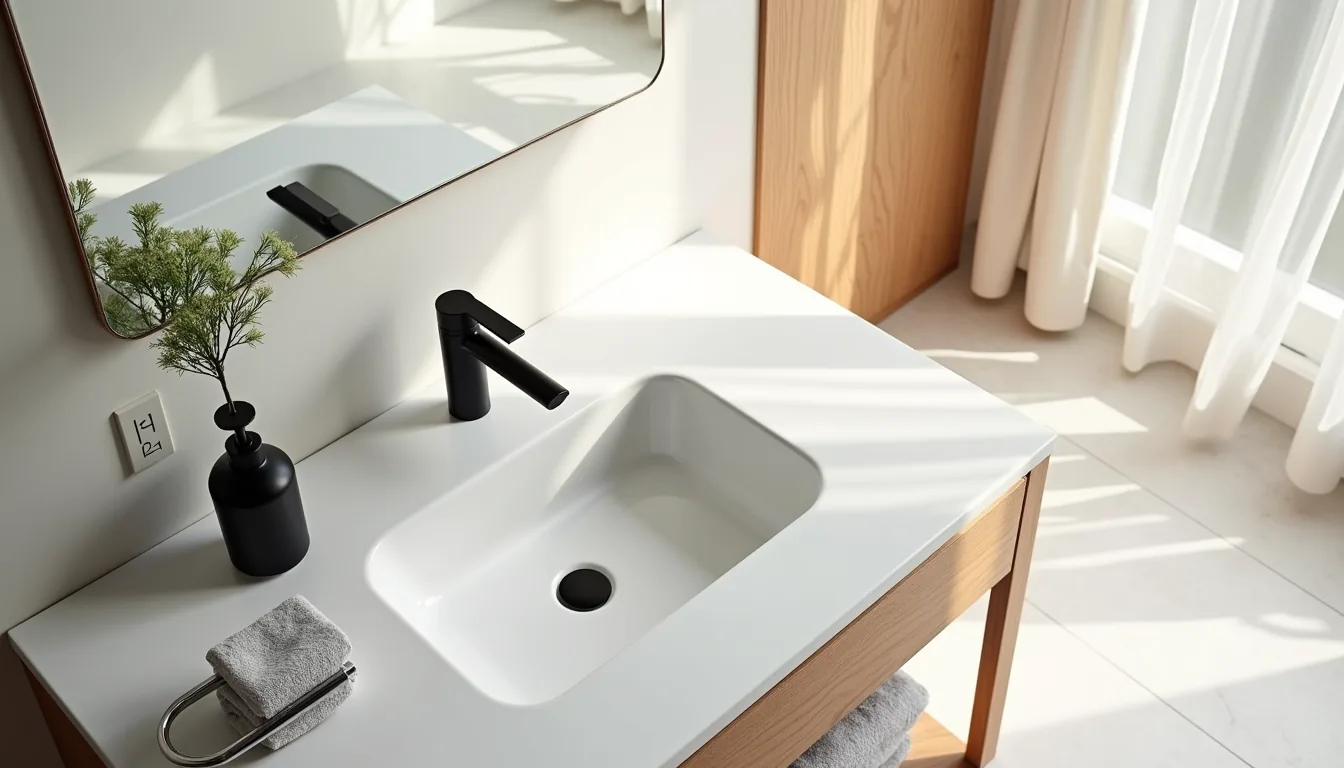
Black bathroom decor isn’t a single look but a spectrum of six distinct design strategies, each with its own material requirements, scale rules, and maintenance realities, and choosing the right one depends less on taste and more on your room’s dimensions, lighting, and budget. The difference between a sleek, enduring retreat and a cave-like mistake comes down to three variables: how much natural light you’ve, where you place dark surfaces, and which finishes you can realistically maintain. The next sections break down each strategy with specific measurements, cost ranges, and the exact trade-offs you need to weigh before committing.
Key takeaways
Black accents are the safest entry point, costing under $50 for a faucet, towel bar, or mirror frame that you can swap out in an afternoon. Pairing black with warm oak or walnut tones prevents the room from feeling cold, and you only need two or three wood elements, like a vanity top or shelf, to balance the contrast. High-contrast schemes demand a matte black finish (not glossy) to avoid showing water spots, and you should budget for weekly wiping if your water is hard. Full black walls work best in bathrooms over 60 square feet with a vent fan rated for at least 50 CFM, since dark surfaces make humidity and streaks more visible.
Black Accents Only: Starting Small Without Commitment
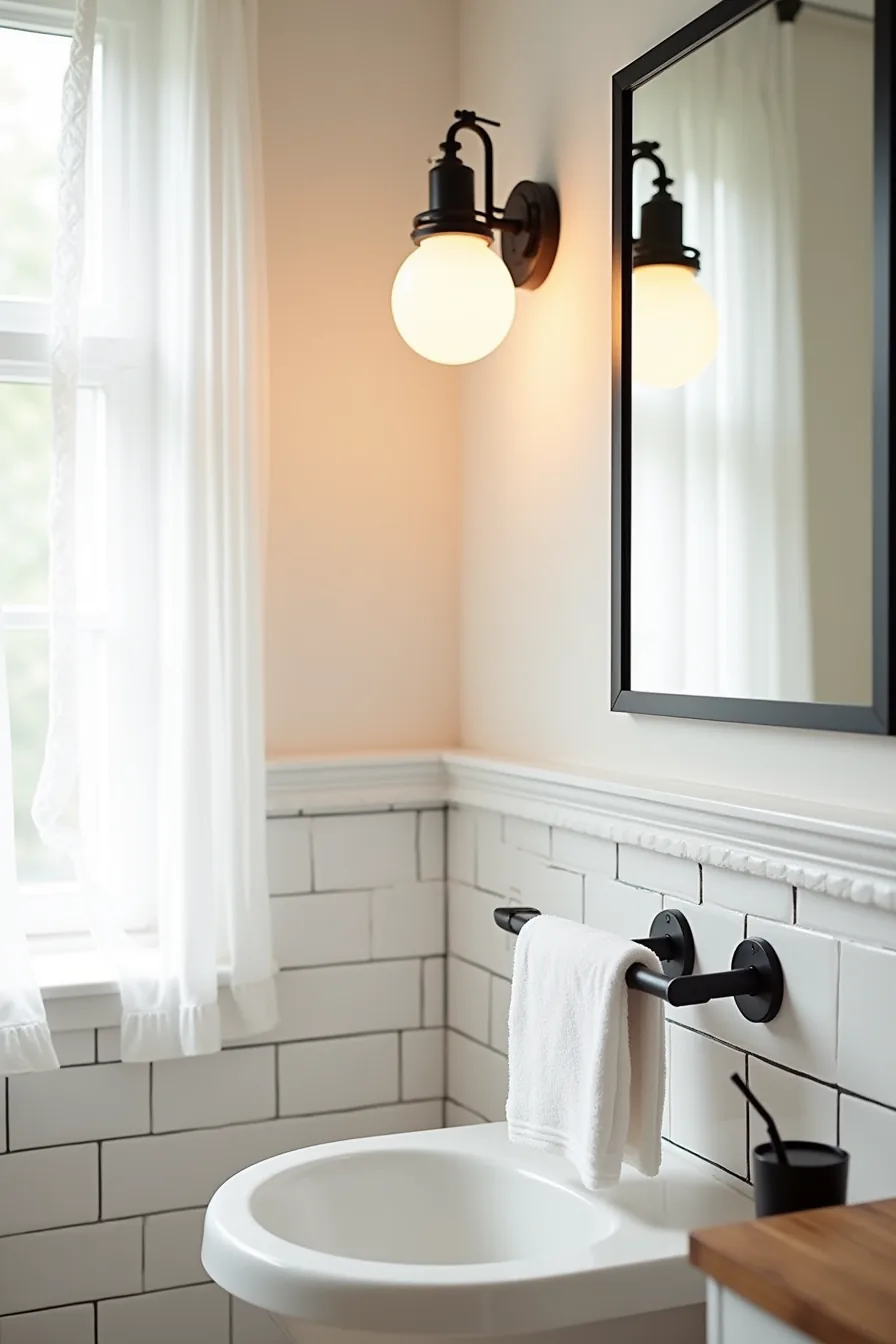
If you’re renting or simply unsure about a permanent shift to dark tones, black bathroom decor can begin with the pieces you touch and reach for daily. A black towel bar is a practical starting point: it holds a white rolled towel, introduces a strong visual anchor without painting a single wall, and reads as intentional against a white subway tile backdrop. Pair it with a small black toothbrush holder on the ledge to create a two-point echo of color that feels designed rather than accidental.
The chrome mirror frame keeps the look from going flat, giving you a metallic contrast that brightens the corner.
This approach works best in bathrooms that are already bright and neutral, where the black reads as a deliberate accent rather than a competing statement. You get the full effect of black bathroom decor without a landlord dispute or a weekend of painting, and when your lease ends, the whole look reverses in five minutes with a screwdriver.
Black with Warm Wood: Balancing Dark and Natural Tones
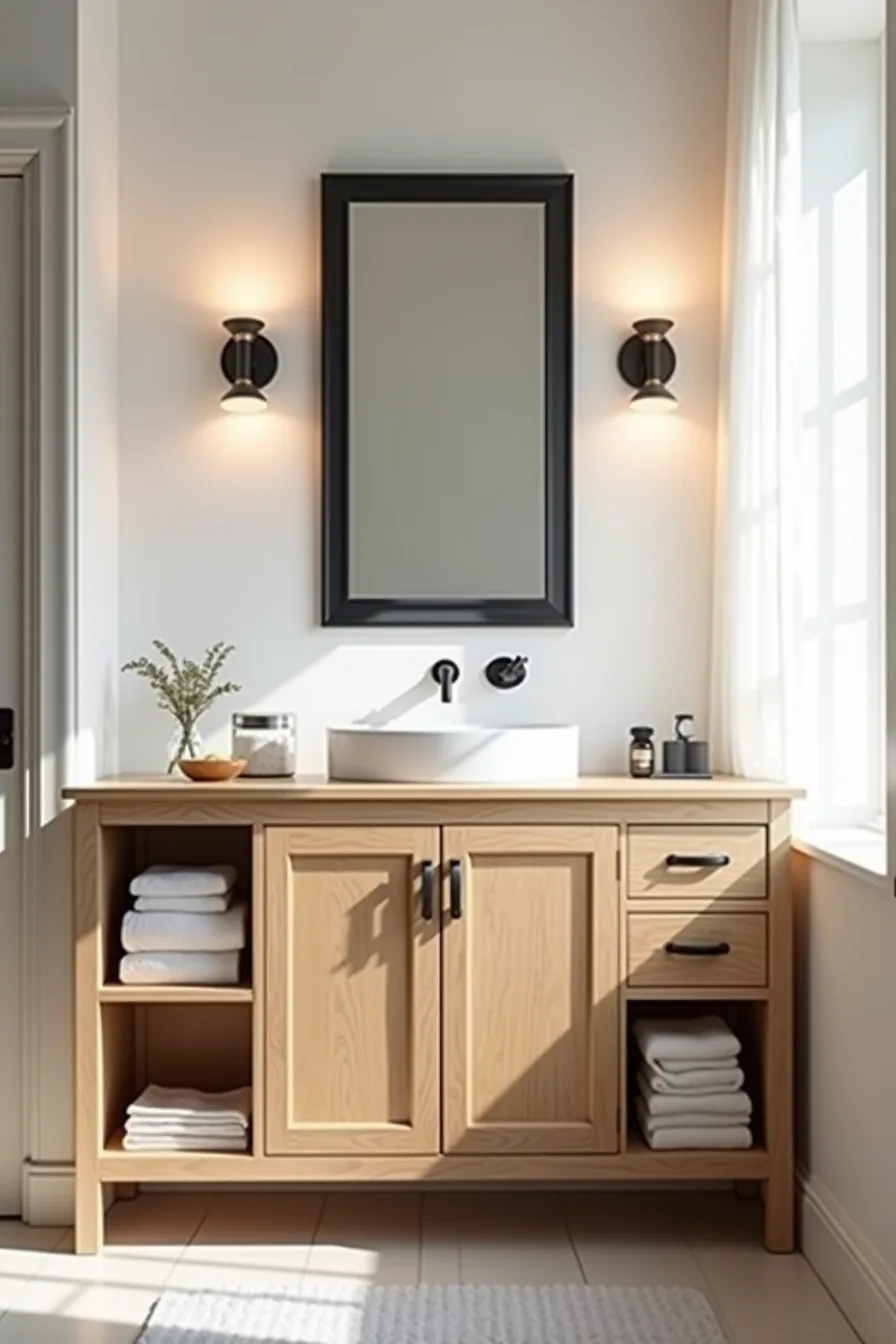
Medium oak cabinetry is the most reliable counterbalance to matte black hardware in a medium-to-large bathroom. The wood’s red and amber undertones warm the space, while the black framed mirror above the white porcelain sink anchors the vanity visually without darkening the entire wall. You avoid the clinical feel that pure black-and-white schemes often produce, because the grain gives the eye somewhere soft to rest between hard edges.
You’ll need a vanity with visible wood grain, not a flat laminate, and the shelf above it should hold folded towels and a glass jar rather than more black objects. The contrast works because the wood carries the warmth and the black carries the structure; if you flip that ratio, the room starts to feel like a cave. Budget-wise, this route costs nothing extra if your cabinet is already oak; if you’re replacing hardware, expect to spend roughly $30-60 for a set of six matte black pulls.
High-Contrast Bathroom: Combining Black with Bright Whites
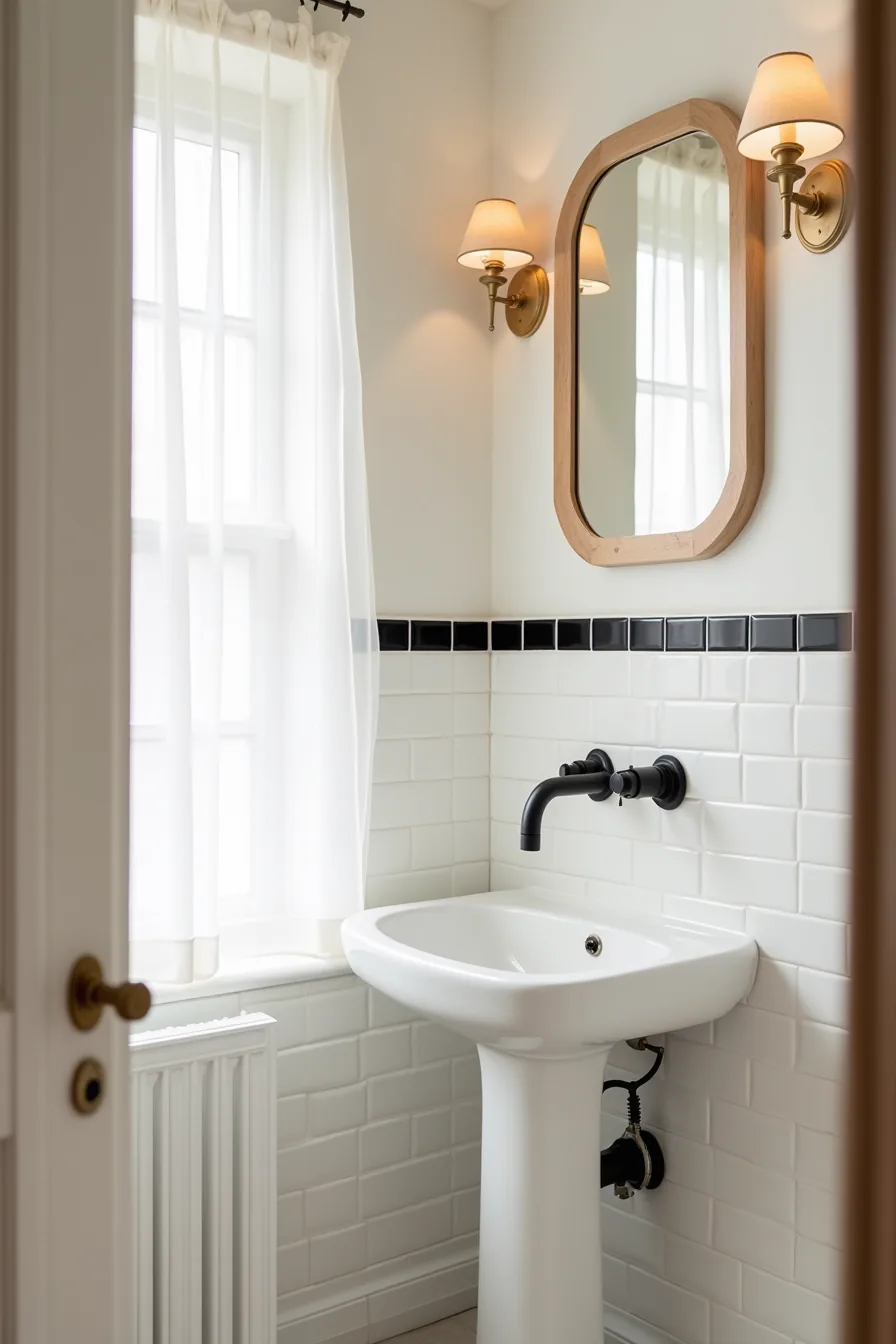
This approach delivers maximum drama per square foot by letting black function as an accent rather than a dominant surface. In a compact space, white subway tile reflects available light while a single row of black accent tile at shoulder height draws the eye horizontally, making the wall feel wider than it actually is. The white pedestal sink keeps the floor visually open, and a black matte faucet provides the necessary weight without consuming visual real estate.
The scheme works best in bathrooms under 50 square feet where full black walls would close in the room. You’ll need to commit to white grout for the subway tile and black grout for the accent stripe, mismatched grout lines destroy the clean geometry this look depends on. Installation runs $8-15 per square foot if you hire out, but the accent row alone is a manageable weekend DIY project with a tile cutter and pre-spaced sheets.
This high-contrast bathroom style suits renters and first-time homeowners alike because it lives entirely in tile and fixtures, both reversible with effort, neither requiring structural changes. The one trade-off: black matte faucets show water spots more readily than chrome, so budget for a squeegee beside the sink and plan a weekly wipe-down.
Full Black Walls: Sizing, Ventilation, and Maintenance Reality
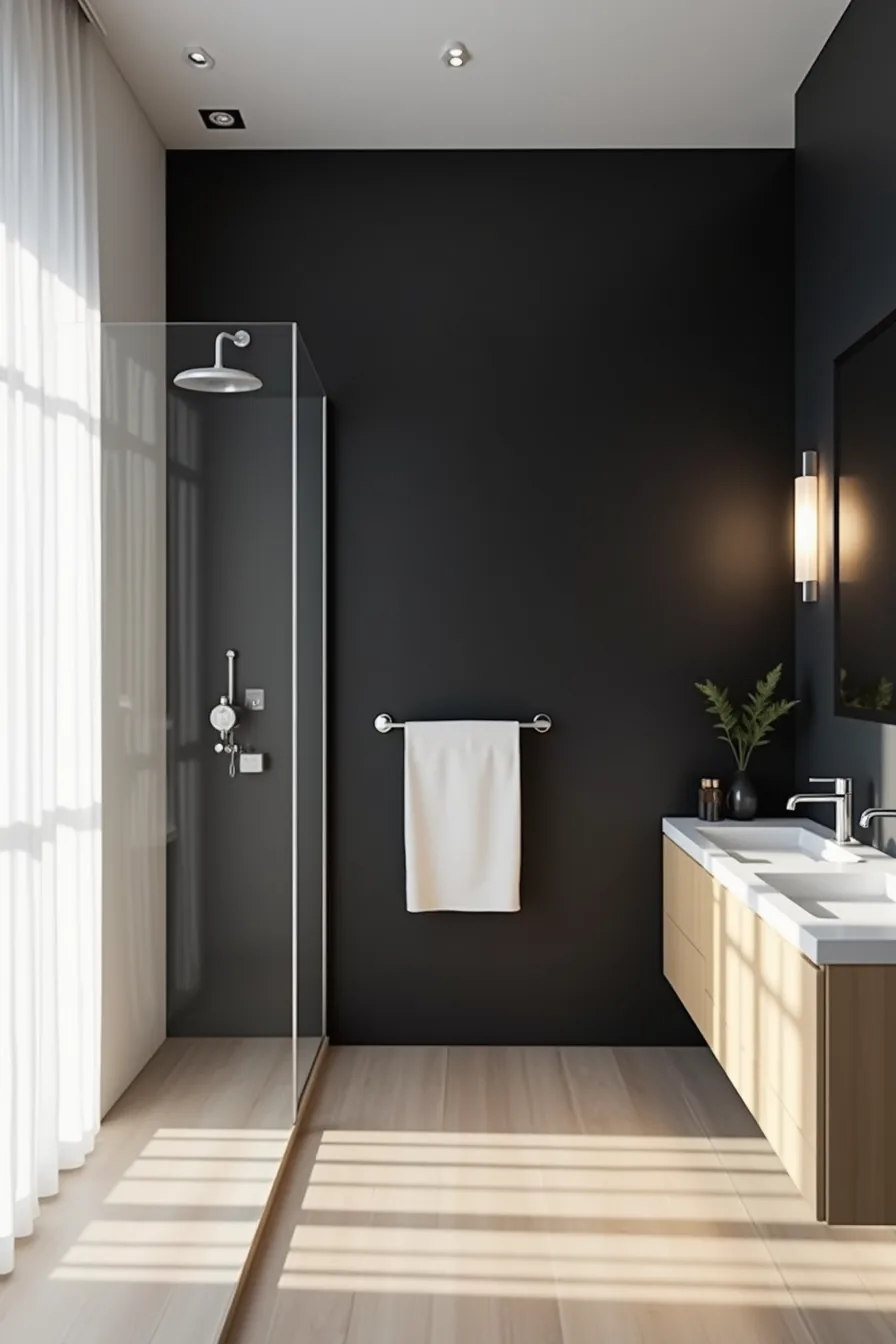
A single full black wall works best when your bathroom measures at least 50-60 square feet and has a white ceiling and chrome fixtures, like the setup with the chrome exhaust vent, chrome sink fixtures, the white towel on the black bar, and the light wood vanity. The contrast between the matte wall and the reflective chrome keeps the room from feeling like a cave, while the wood vanity adds the warmth a pure black-and-white scheme lacks. Choose a matte or eggshell paint finish, satin and semi-gloss will telegraph every imperfection in your drywall, and flat finishes will trap humidity and mildew.
Ventilation is non-negotiable. Before committing, confirm your exhaust fan moves at least 50 cubic feet per minute for every 25 square feet of floor space; if it doesn’t, the dark wall will develop streaky watermarks within months. Expect to repaint this wall every 18-24 months, and plan on wiping it down monthly with a damp microfiber cloth, anything abrasive will polish the matte finish and create a permanent sheen patch.
This route suits homeowners with good airflow; for renters, a peel-and-stick matte black film achieves the same look for roughly $60-120 per wall and removes cleanly.
Black Bathroom Decor for a Cozy Winter Refresh: Layering Warmth
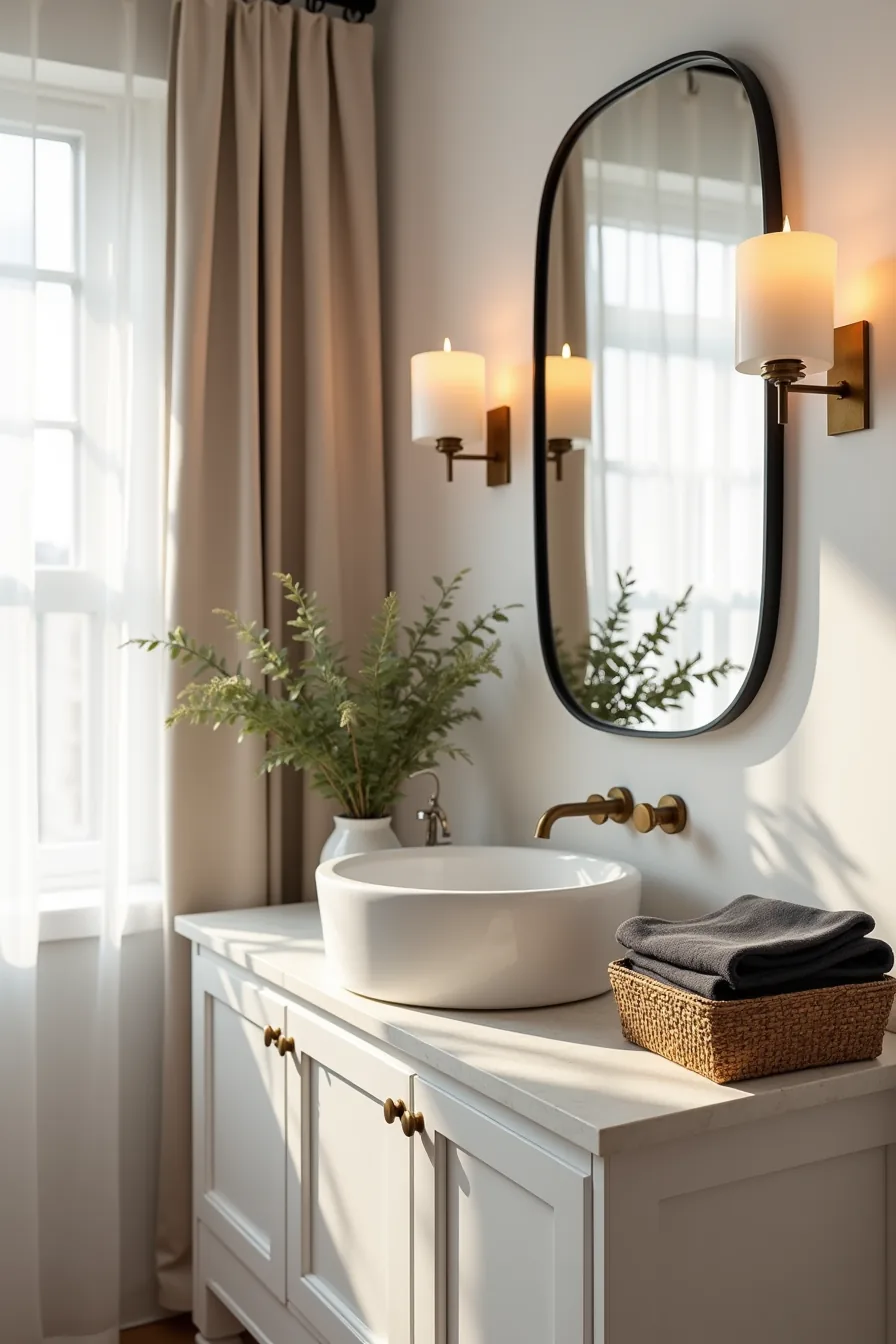
Black turns from stark to snug when you pair it with warm metals and soft textiles. The setup with the black mirror, brass candle holders, and lit candles on the vanity demonstrates the principle: the matte black surface reads as a grounding backdrop, while the brass sconces on either side bounce candlelight across the room. Dark gray folded linens introduce a tactile layer that invites touch, and the woven basket adds organic texture that prevents the palette from feeling industrial.
This interpretation suits bathrooms with existing warm wood or neutral tile, and it works in spaces as small as 35 square feet because nothing here consumes floor area. Recreate it by swapping your mirror for a black-framed one ($40-80), installing battery-operated brass sconces ($60-120 per pair) to avoid rewiring, and replacing white towels with charcoal or heathered gray sets. The candles require daily supervision, never leave them burning unattended, and you’ll need to dust the brass monthly to maintain the glow.
For a budget route, skip the sconces and cluster three pillar candles of varying heights on a black tray; the layering effect survives the cost cut.
Adapting Black Decor to Your Space: Small, Medium, and Large
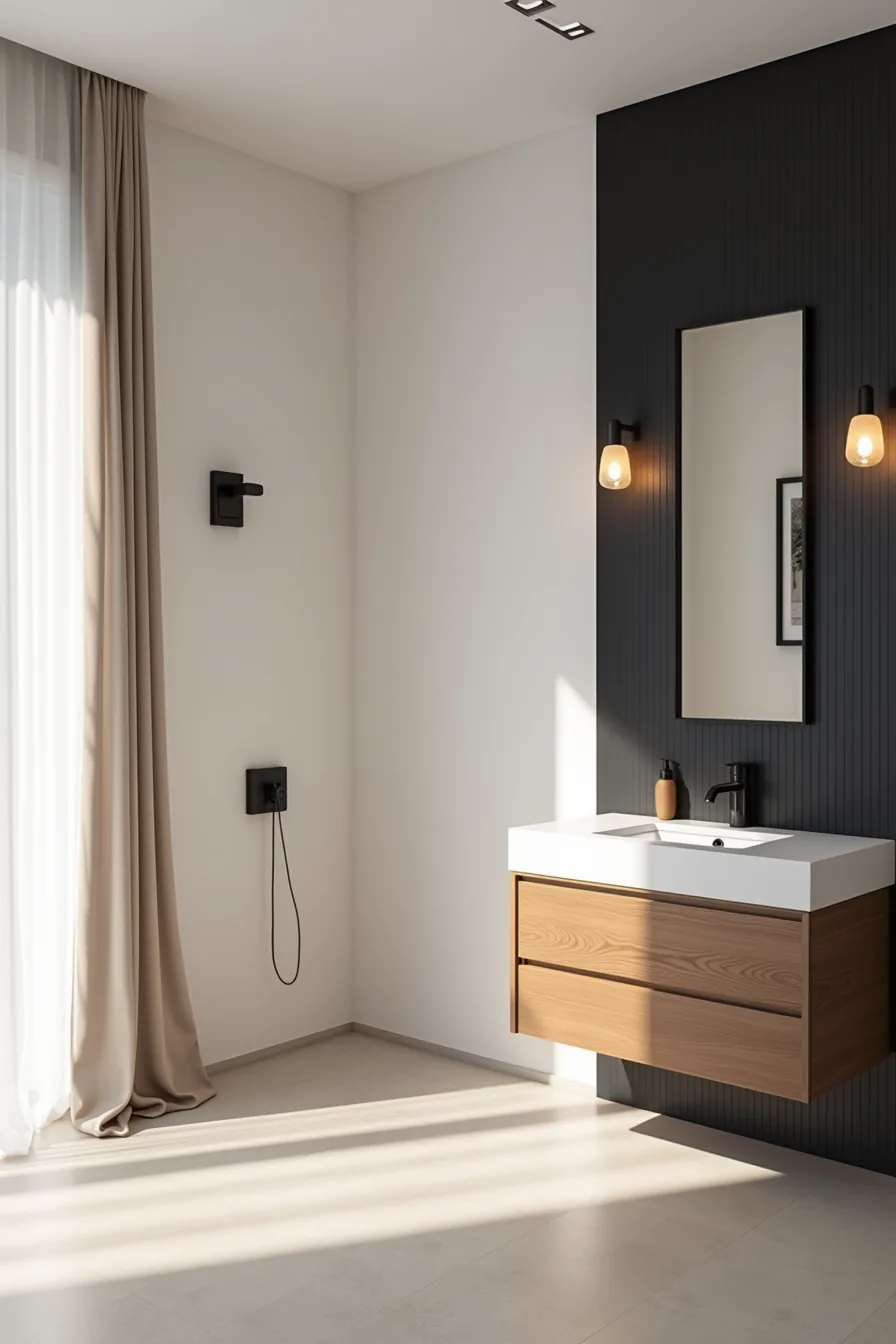
Scale decides whether black decor shrinks or swells a room. In a tight corner under 40 square feet, restrict yourself to one black accessory, a soap dispenser or towel ring, on a white wall; the contrast reads as intentional punctuation rather than a weighty block. A single black-framed mirror above a wood vanity works for medium bathrooms up to 80 square feet because the natural grain warms the frame and the mirror itself doubles the perceived floor area.
Reserve a full black accent wall for rooms exceeding 90 square feet, keeping it behind the toilet or along the longest wall so it anchors without boxing you in.
Materials follow the same gradient. High-gloss black tile reflects light and suits small rooms, while matte black paint absorbs it and demands square footage to breathe. For placement, never run a black wall into a corner without a white gap of at least 12 inches, it reads as a shadow and darkens the whole room.
Test any black finish on a 2×2-foot swatch first; lighting shifts its appearance from charcoal to near-blue across the day.
Where to start
If you’re still hesitating, begin with one matte black faucet or showerhead, the smallest change that delivers the biggest visual shift. Live with it for two weeks before committing to cabinetry or tile. That single swap will tell you whether the moody direction suits your daily routine and lighting.
Your next move: photograph your bathroom with flash on and off, then match the black finish to your existing metals. Undertones matter, warm brass pairs best with soft black, while chrome wants a truer charcoal. Start there, and every following decision gets easier.
Frequently Asked Questions
Does black bathroom decor make a small bathroom feel smaller?
Yes, if you paint all four walls matte black. Instead, use black on one feature wall or lower half, paired with white or light tile above. High-gloss finishes reflect light and keep the room feeling open.
What paint finish works best for black bathroom walls?
Use satin or semi-gloss for moisture resistance and easy wiping. Flat or matte finishes show every water spot and streak, requiring frequent cleaning. Semi-gloss also reflects more light, which helps small spaces feel larger.
Can you use black bathroom decor in a rented apartment?
Yes, with renter-friendly tactics: black peel-and-stick tile for floors or backsplashes, temporary wallpaper on one wall, and black fixtures that swap out without plumbing changes. Avoid painting walls black unless your landlord approves repainting before you leave.
How do you prevent a black bathroom from looking cold or clinical?
Layer warm materials, brass or brushed nickel fixtures, wood vanity tops, and soft white or cream textiles. Add warm lighting at 2700–3000K, and include plants or natural stone accents. Texture breaks the flat black surface, keeping the room inviting.