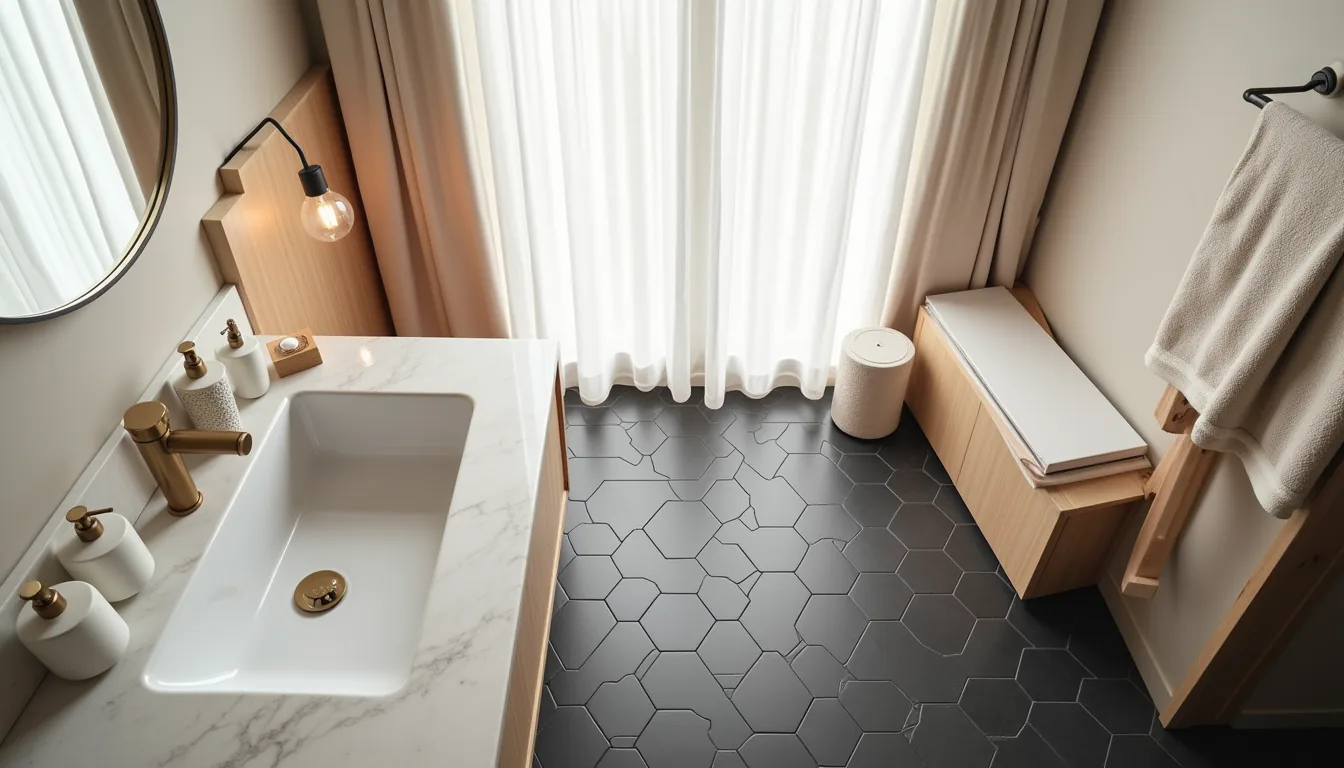
Dark bathroom floor tile is a striking design move that works best when you match the material, finish, and grout to your room’s size, light, and maintenance tolerance, not just its color. The difference between a dramatic, high-end look and a dated, cave-like one often comes down to three variables: tile size, surface texture, and how much natural light the space receives. Before you commit to a single slate or porcelain slab, you’ll need to know which dark shades read as charcoal versus black, and why glossy finishes shrink a small bathroom while matte finishes expand it.
The six approaches below range from a $2-per-square-foot ceramic option to a $15-per-square-foot natural stone investment, each with specific installation and upkeep requirements.
Key takeaways
- Charcoal tiles hide soap scum and hard-water spots far better than true black, making them the practical choice for busy family bathrooms.
- A matte finish with a textured surface (like slate or pebble) provides slip resistance without the cold, clinical feel of glossy porcelain.
- Matching grout to a dark tile creates a smooth, modern expanse that visually enlarges a small floor, while contrasting grout draws attention to each tile’s shape.
- Pairing dark floors with a light vanity and bright walls prevents the room from feeling like a cave, especially in windowless or compact spaces under 50 square feet.
Charcoal vs Black Floor Tile: Material and Tone Trade-Offs
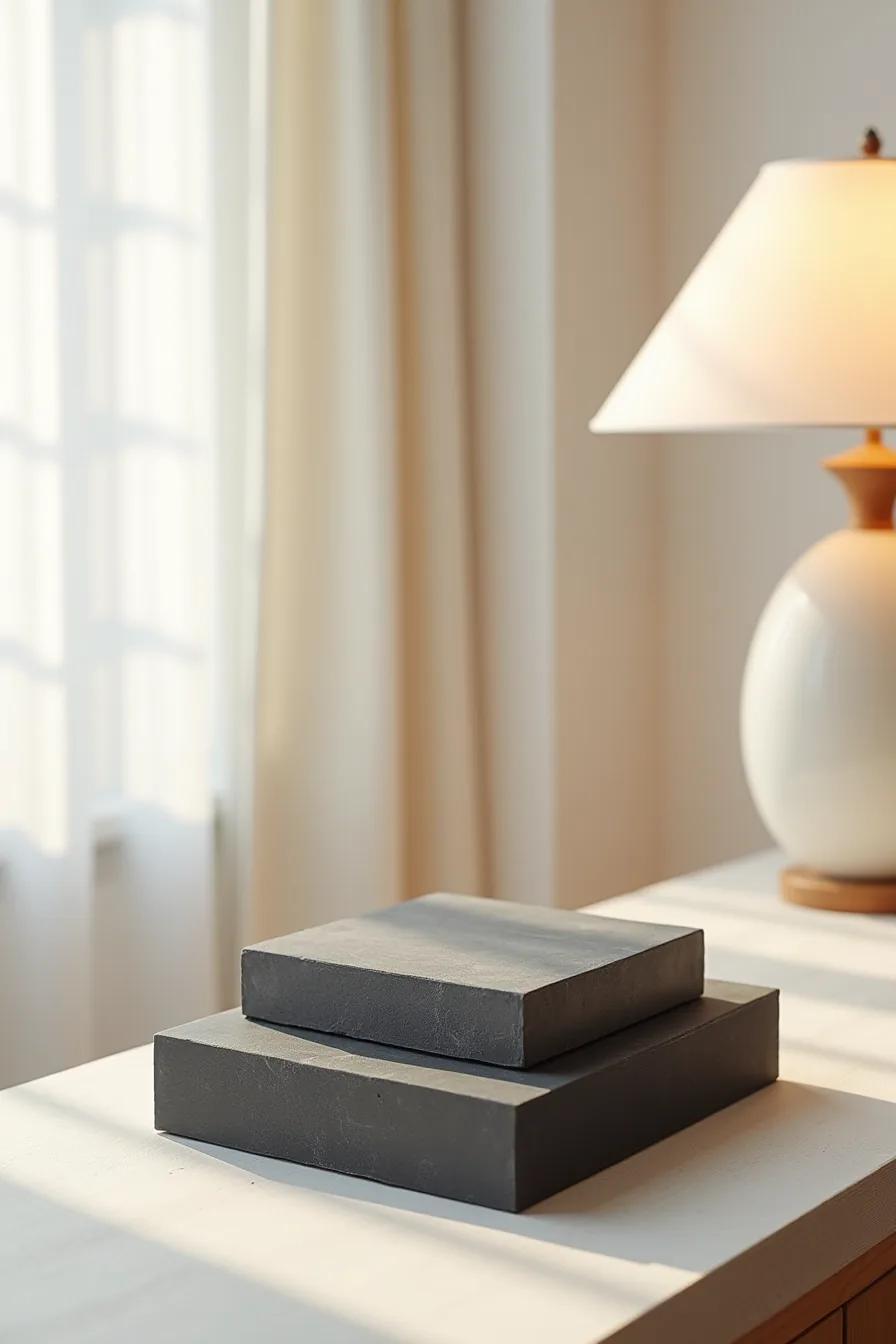
A side-by-side comparison of a charcoal rectangular tile and a pure black rectangular tile on a neutral surface tells you more than any swatch book. Place a single light source from the left, and you’ll see the charcoal sample holds a subtle gray undertone that softens its edges, while the black tile reads flat and absorbs nearly all light hitting its face. That difference in reflectivity drives both maintenance and mood.
Pure black shows water spots, toothpaste flecks, and dust in about two days of normal use; charcoal hides that same traffic for closer to a week. Choose charcoal if your bathroom gets morning sun or you prefer warmer, softer contrast against white fixtures. Black suits windowless powder rooms where you want drama without needing to clean every other day.
For materials, matte porcelain in either tone resists staining better than natural stone, which requires annual sealing regardless of shade. Your darker dark bathroom floor tile should match how much light you actually get, not how bold you feel at the showroom.
Matte Finish for Slip Resistance and Spa-Like Feel
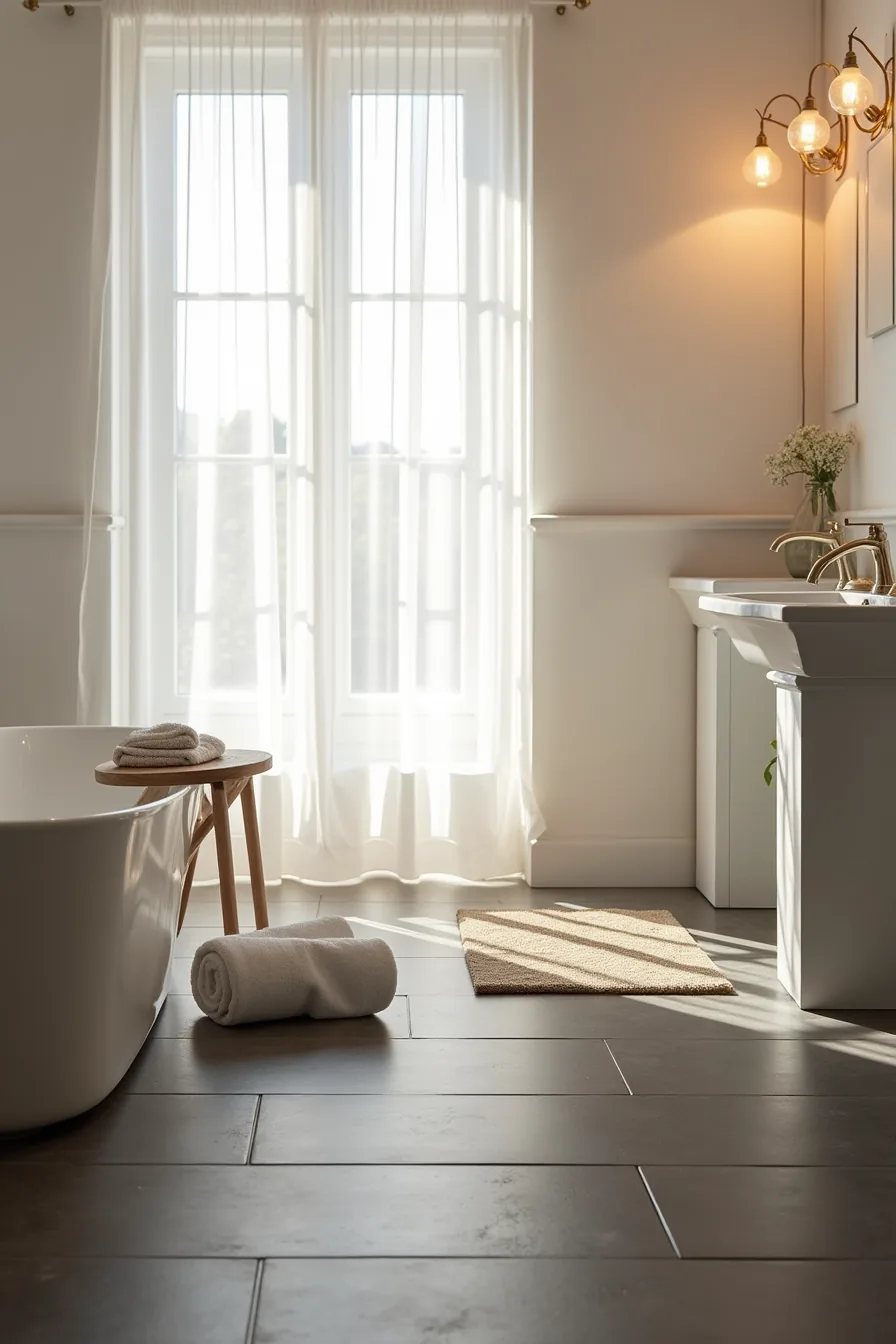
A matte dark bathroom floor tile for a spa like feel hinges on one physical property: friction. The low-angle view of a slate-gray square tile captures it well, water droplets bead across the surface rather than sheeting into a film, and the texture breaks the meniscus that makes polished tile slick. A rolled white cotton towel and a natural stone bath mat reinforce the ritual: you step from shower onto a surface that grips bare wet feet without the cold shock of gloss.
The grip comes from the micro-roughness of the matte glaze, which typically delivers a coefficient of friction in line with what code requires for commercial wet areas.
Size follows room dimensions. For a small powder room or guest bath under 40 square feet, use 12-inch squares to keep grout lines minimal and prevent a busy patchwork. Medium bathrooms of 40 to 80 square feet handle 18- or 24-inch squares, which reduce grout maintenance and make the space feel more expansive.
Large primary baths can take 12×24-inch rectangles laid in a running bond, but avoid overly long tiles in narrow galley layouts, they exaggerate the corridor effect. The matte finish does require slightly more effort to keep clean than polished surfaces, since the pores grip soap scum; a squeegee after each shower cuts that chore in half.
Grout Tone Choice: Matching, Contrasting, and Blending Strategies
Your grout color decides whether the floor reads as one continuous surface or a grid of individual tiles. Matching dark grout (charcoal or deep gray) visually fuses the tiles, making a small bathroom feel larger because the eye isn’t interrupted by contrast lines. Light gray grout, by contrast, frames each tile and makes the floor feel busier, a deliberate choice if you want to emphasize a large-format tile pattern in a medium or large room.
For wet environments, avoid white or very light grout entirely; it stains visibly within months. Medium charcoal strikes the practical balance, hiding soap scum while providing subtle definition. When selecting, keep in mind that sanded grout in darker shades requires sealing every 12 to 18 months in a shower floor.
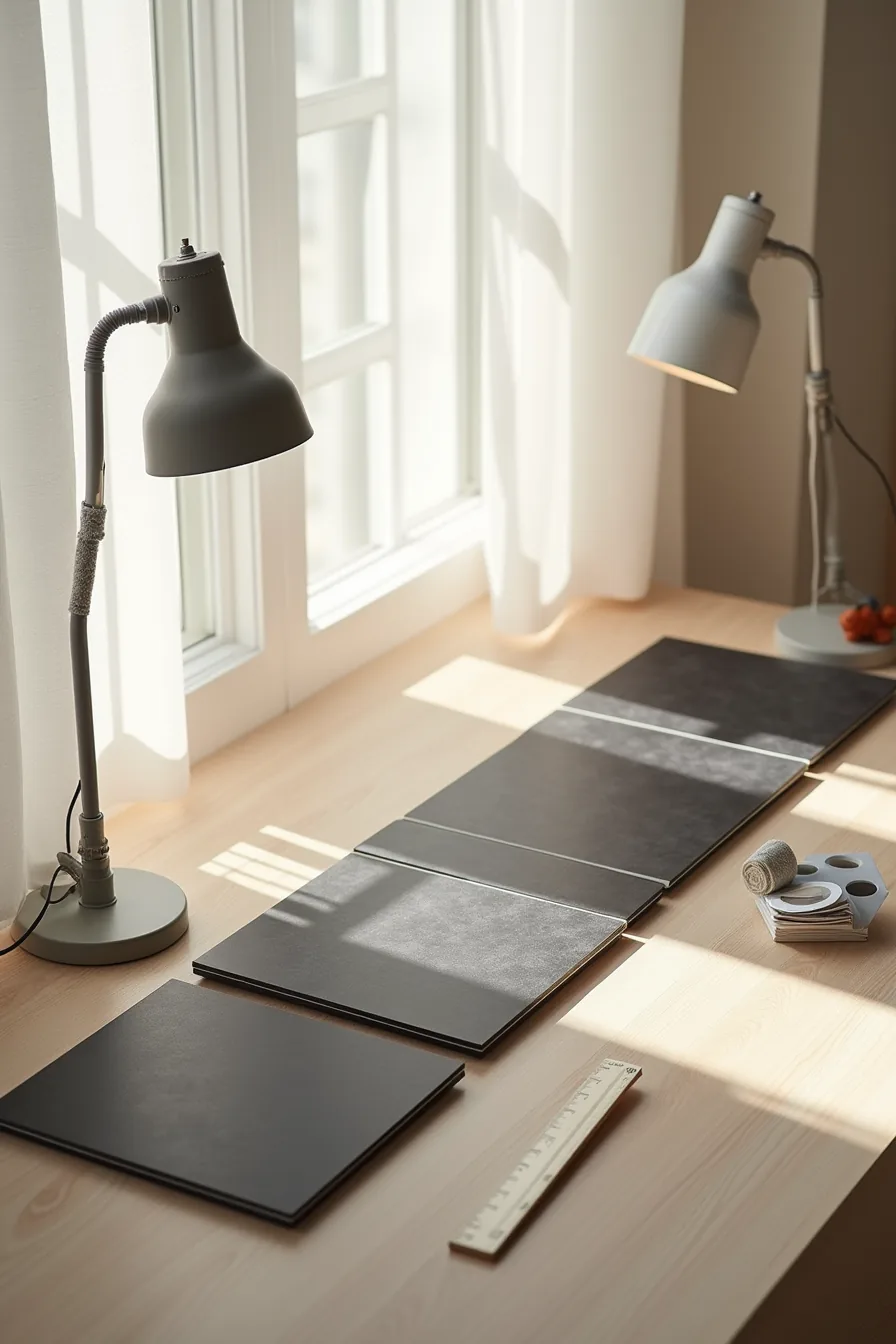
A flat lay of three dark tile samples, one with matching dark grout, one with light gray, one with medium charcoal, with a ruler and grout color swatches beside them shows the difference clearly: the matching sample disappears into a monolith, the light-gray sample sharpens each tile edge, and the medium option sits between, offering definition without harshness.
Dark Floor Light Vanity: Contrast Pairing and Visual Balance
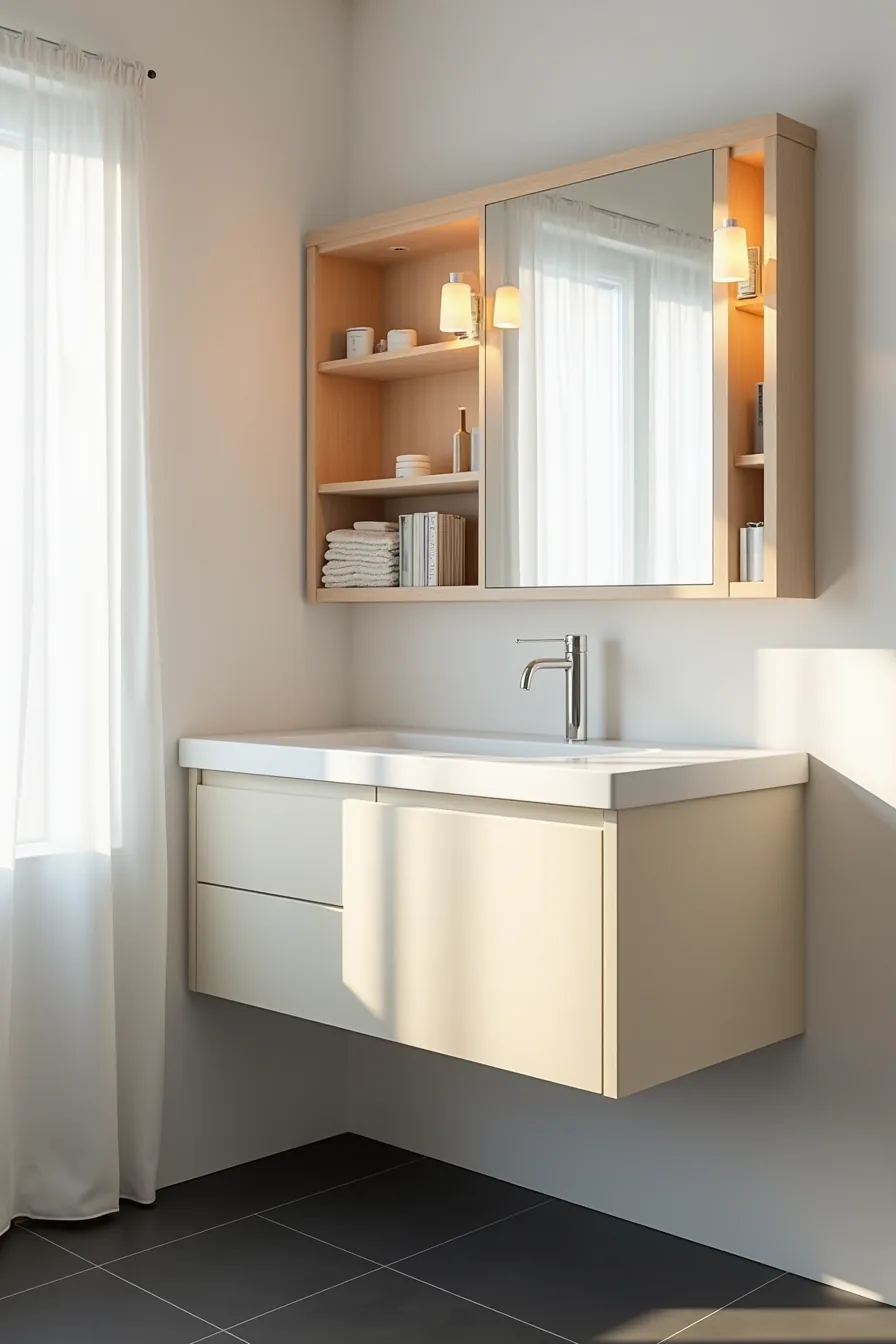
A pale floating vanity against dark charcoal floor tiles creates the highest-contrast zone in a bathroom, and that contrast does the compositional work for you. The cream cabinet reads as the focal point while the dark floor anchors the room visually, preventing the space from feeling weightless or clinical. For this pairing to succeed, the vanity must clear the floor by at least 8–10 inches so the dark tile continues beneath it, extending the ground plane and making a small bathroom feel deeper.
In a medium bathroom, keep the vanity width to roughly one-third of the wall it sits on. A chrome faucet and white mirror frame echo the light tones upward, while light wood shelving introduces a mid-tone bridge that softens the jump from cream to charcoal, without that middle value, the room can feel chopped in half. In compact spaces, opt for a wall-mounted sink or narrower vanity (24 inches or less) so the dark floor remains the dominant surface; in large bathrooms, you can scale the vanity up to half the wall width without the top-heavy effect, since the expansive floor balances the mass below.
Polished and Textured Dark Tile for Different Lighting Conditions
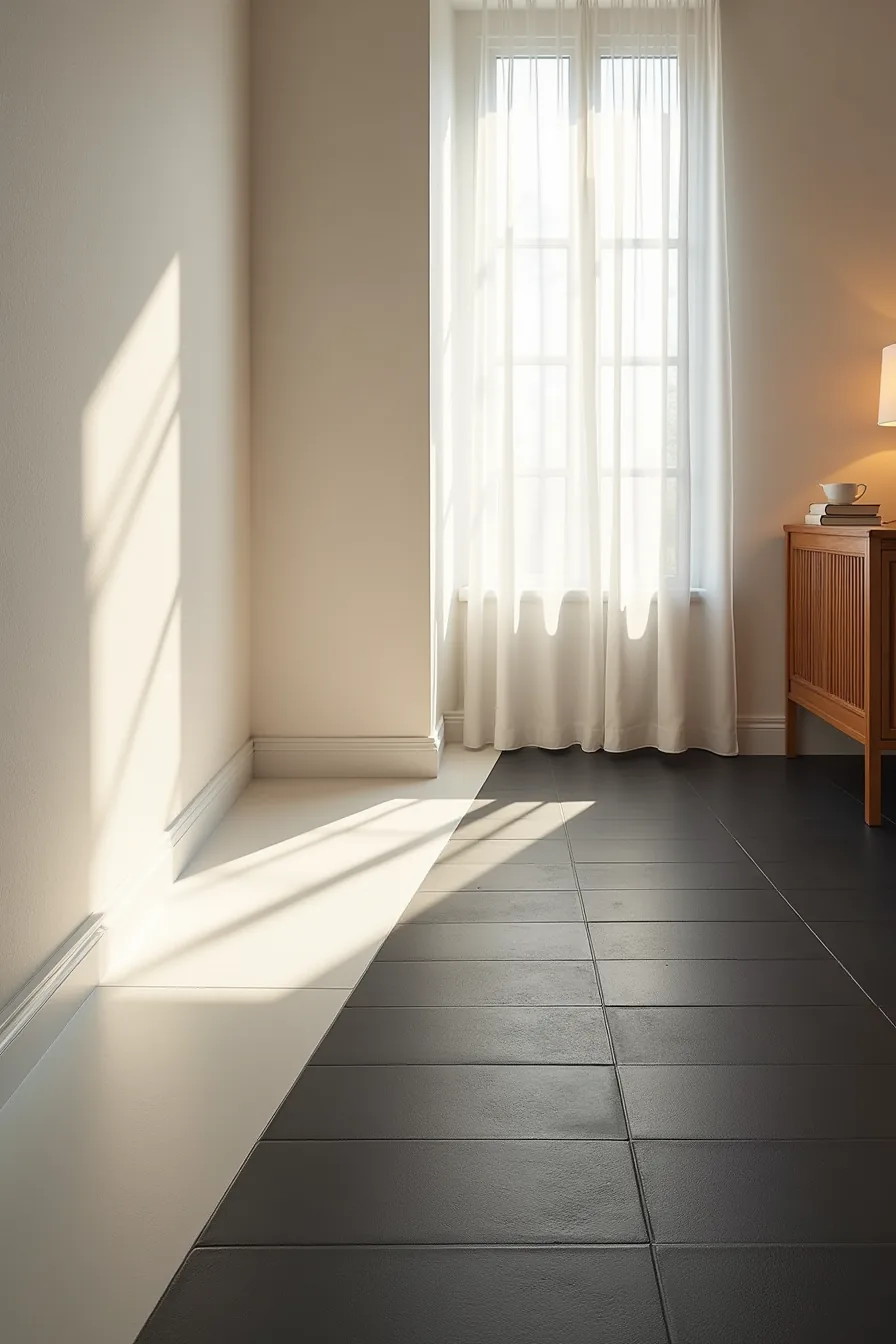
The finish you choose determines how your dark floor behaves under light. Polished black tile acts like a mirror, reflecting a single downlight fixture into a doubled ceiling glow and visually lifting the room, but it also shows every water spot and requires more frequent wiping in a shower-heavy space. Use it in a powder room or a dry-zone area where foot traffic is light and you want drama without upkeep stress.
Textured charcoal tile does the opposite: it absorbs light, making the floor appear flat and grounding the room, and its matte surface provides better slip resistance when wet. That same light absorption can swallow a small, dim bathroom, so pair textured tile with a strong downlight fixture and light walls to keep the space from feeling like a cave. If you’ve a window or ample artificial light, the low-glare texture wins for daily family use, especially in the shower or near a tub where water contact is constant.
Budget, Rental, and Investment Routes for Dark Bathroom Flooring
Your route depends on whether you own the space and how long you plan to stay. For a temporary upgrade under $200, peel-and-stick vinyl dark tile runs roughly $2–$4 per square foot and installs in an afternoon with only a utility knife and a roller. It suits renters who want the look without drilling or permanent adhesive, though you must clean the subfloor thoroughly before applying or the edges will curl within weeks.
Temporary adhesive-backed tile sheets, priced between $3–$6 per square foot, sit a step above vinyl for durability and come off cleanly with a heat gun when your lease ends. Use them in a dry powder room rather than a wet shower zone, moisture can creep under the seams.
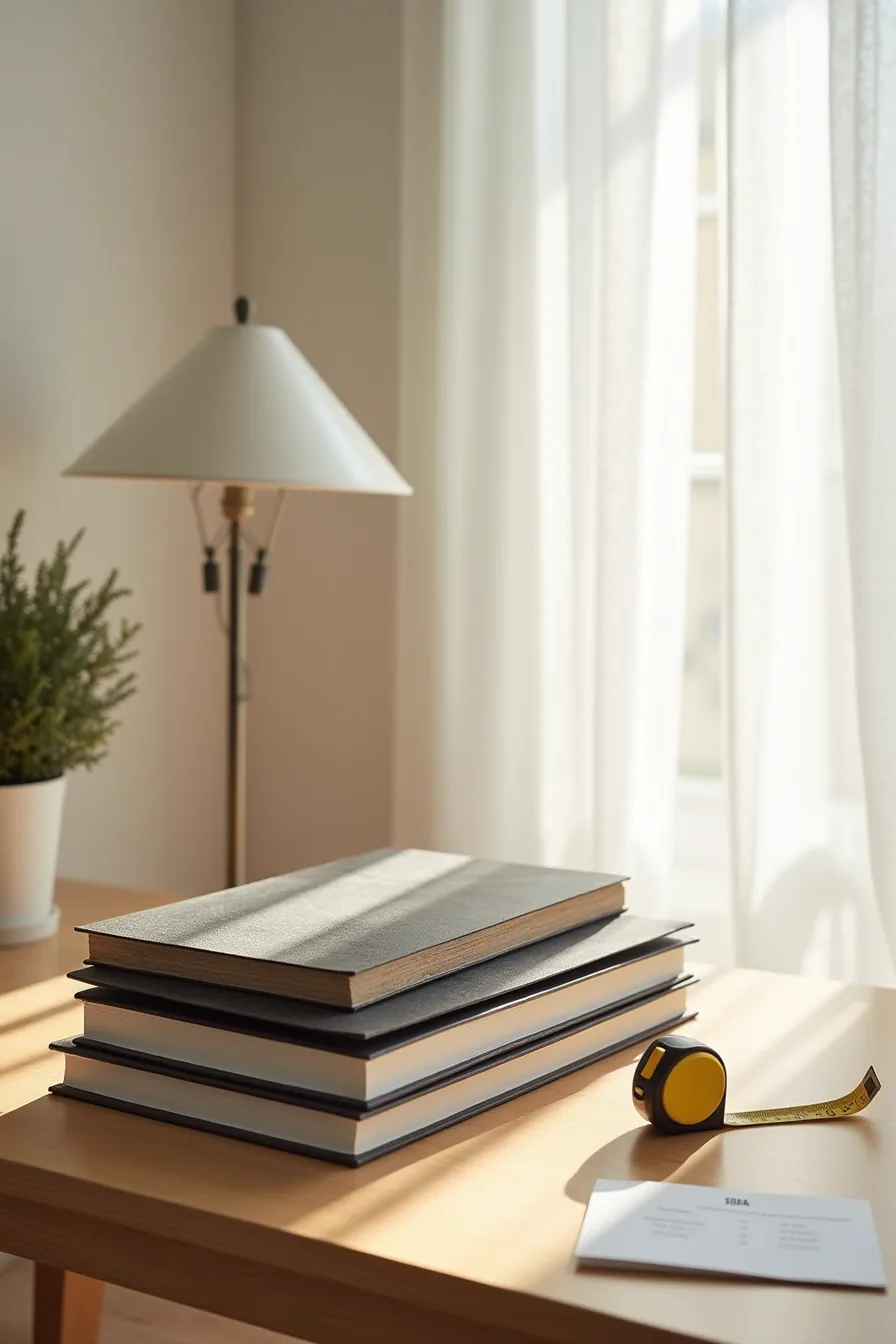
For a permanent ceramic dark floor tile, budget $5–$15 per square foot plus professional installation, which typically adds $3–$8 per square foot. This route pays off if you plan to stay five years or longer, as ceramic resists scratching and water damage far better than adhesive options. The tape measure beside the stack is your check: measure the room twice before ordering any route, since peel-and-stick and ceramic both require a 10% overage for cuts and breakage.
Start with the non-negotiable
Before you buy a single tile, order three 12×12-inch samples of your top contenders and live with them for a week. Place them in your actual bathroom lighting, morning sun, evening vanity light, because a matte charcoal slate reads completely differently under warm bulbs than a polished basalt does.
Make the call that saves you money
If your budget is tight, a porcelain tile that mimics slate delivers the visual weight at roughly half the cost of natural stone. Renting? Use a large-format peel-and-stick vinyl in a deep graphite tone, it handles moisture, removes cleanly, and gives you the moody floor without a security deposit fight.
Your next move today
Walk into your bathroom right now, measure the floor, and snap a photo in natural light. Then compare that photo against the sample images here, if your space is under 50 square feet, skip the glossy finish and commit to a matte texture. That single decision filters out half the options and gets you closer to the right dark bathroom floor tile for your room.
Frequently Asked Questions
Does dark bathroom floor tile make a small bathroom feel smaller?
Yes, if you use large-format dark tile with high contrast grout. Choose small mosaics or matte finishes, and pair with light walls and bright lighting to keep the space visually open.
What grout color hides stains best with dark tile?
Match the grout to the tile color. Dark gray or charcoal grout blends with black or slate tiles, hiding dirt and soap scum effectively. Light grout shows every speck, so avoid it unless you seal religiously.
Can you use dark floor tile in a bathroom with no natural light?
Absolutely, but you must compensate. Install layered lighting, overhead, vanity, and a shower light, and use glossy or polished dark tile to reflect what little light exists. Matte dark tile will absorb light and feel cave-like.
How often do you need to seal dark bathroom floor tile?
Seal natural stone (slate, travertine) every 6-12 months. Porcelain and ceramic dark tiles rarely need sealing, check the manufacturer’s spec. Always test a corner first, and reapply sealer when water stops beading on the surface.