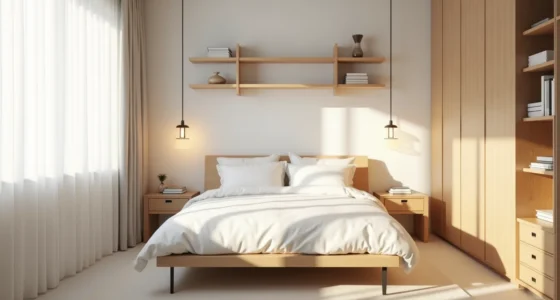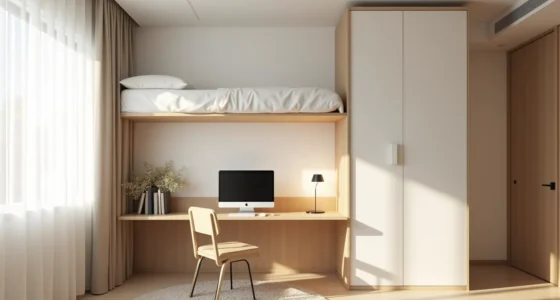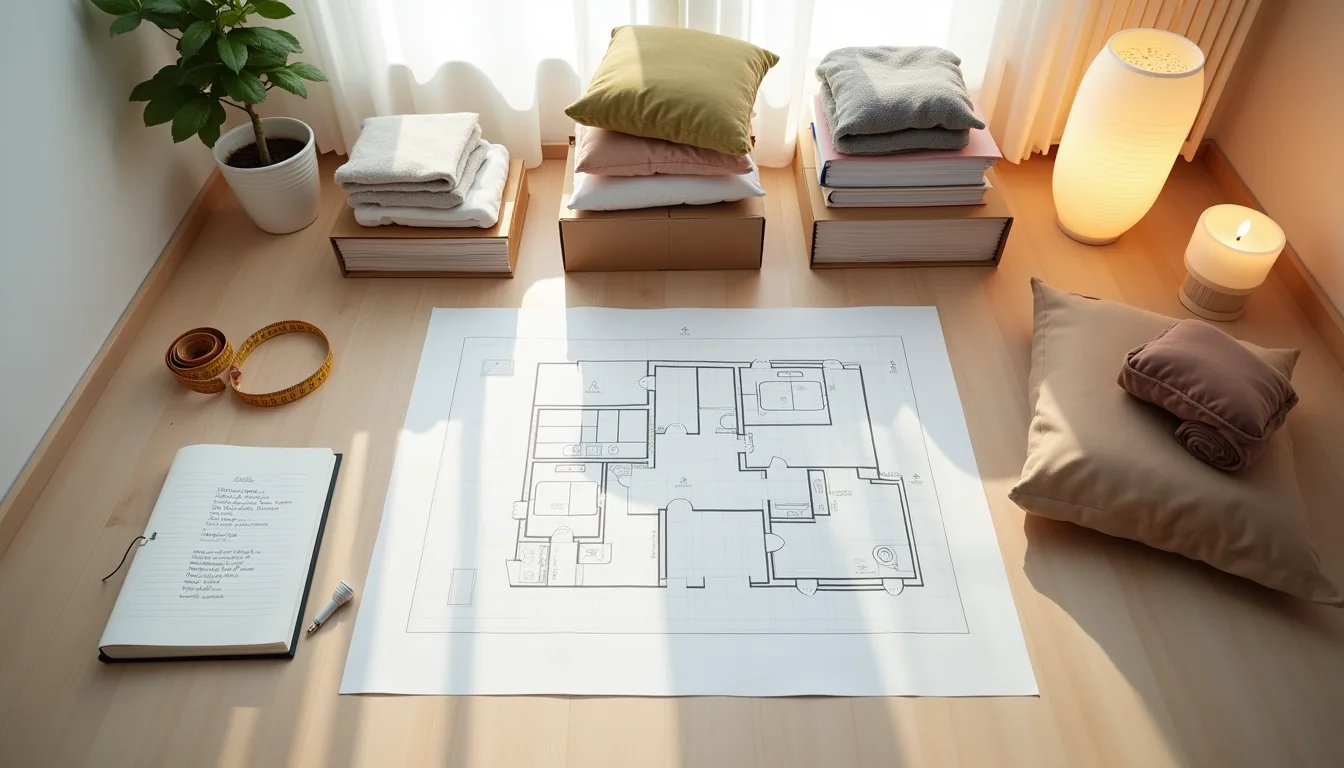

Before you buy a single bin or basket, empty every drawer, shelf, and closet in your bedroom onto the floor, because the most effective small bedroom storage ideas begin with an honest inventory of what you actually own, not with the containers themselves. This sorting phase reveals your true storage demands: the volume of items, their frequency of use, and the awkward shapes that defeat standard organizers. Only after you separate keep, donate, and discard piles can you match systems to your actual footprint, whether that means vertical wardrobes, under-bed rolling trays, or wall-mounted shelving.
The payoff comes later, when circulation paths stay clear and every category has a designated, reachable home.
Key takeaways
Audit first: Sort every item into keep, donate, or toss categories before measuring or purchasing a single container, since storage needs shrink by roughly 30-40% once you remove unused belongings. Behind-door depth: Mount over-door organizers or hooks that hold items under 3 inches deep, leaving at least 2 inches of clearance between the rack and the door frame to avoid scraping walls when opening. Bed height trade-off: Choose a bed frame with 12-18 inches of under-bed clearance for standard rolling bins, or a platform with built-in drawers, but verify the mattress thickness so drawers don’t jam against the slats. Adjustable wins for renters: Prioritize tension rods, freestanding shelving units, and modular cube systems over wall-mounted fixtures, since they require no drilling, survive moves intact, and cost typically $30-$150 less than custom built-ins.
Audit Your Belongings Before Buying Storage
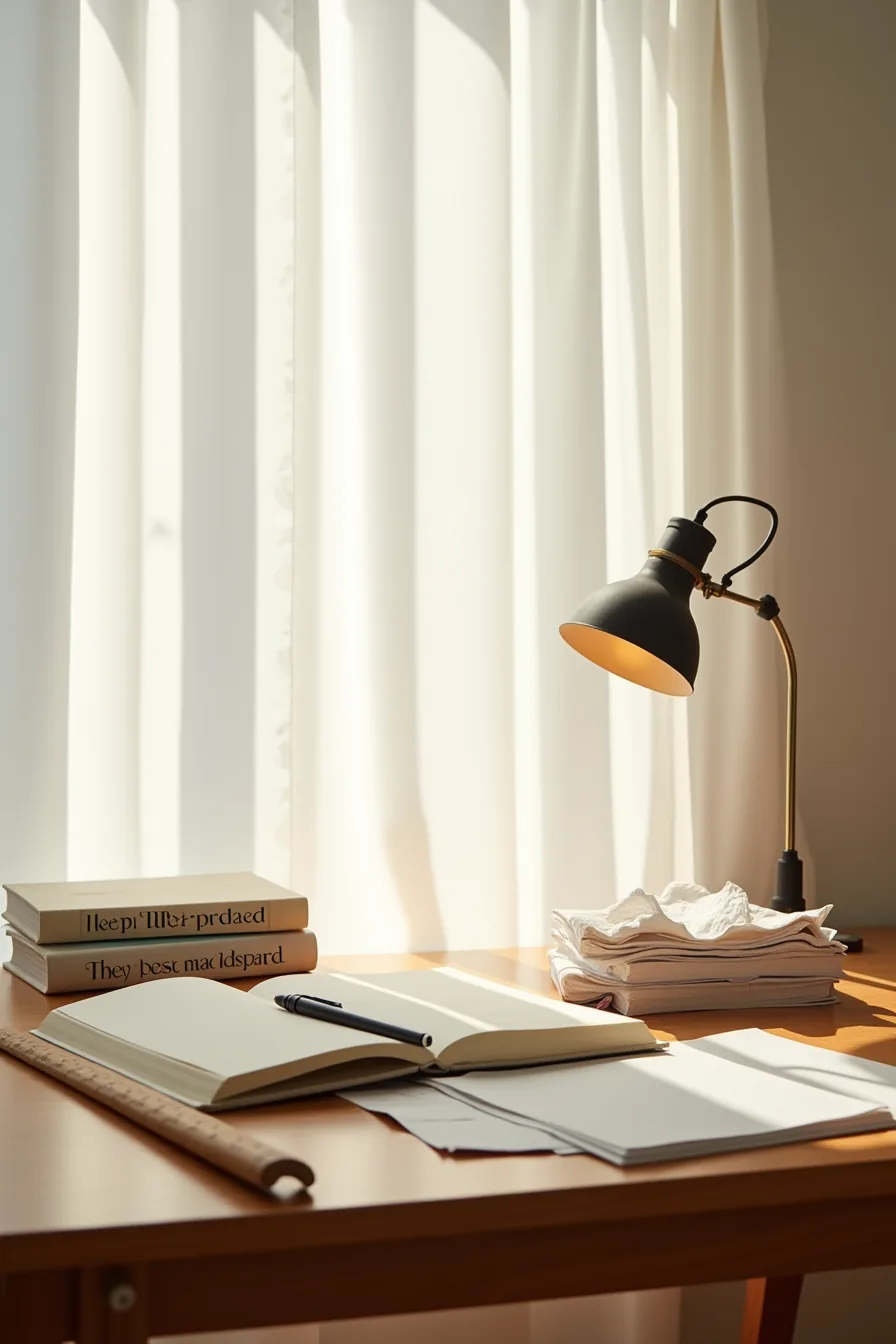
Every small bedroom storage idea fails if you organize items you don’t need. Begin with a full inventory: pull everything from drawers, closets, and under-bed bins, then sort into three piles, keep, donate, and discard. The keep pile holds items you used in the last six months; everything else leaves the room.
Spread your belongings across a flat surface like a desk, with an open notebook, pen, and measuring ruler within reach. Record what remains in the keep pile and measure each category’s footprint, clothing stacks, shoe rows, accessory boxes. That notebook becomes your spec sheet: a 12-inch stack of folded sweaters requires roughly 18 inches of shelf depth, while a shoe collection of ten pairs needs about 30 inches of linear space.
Before selecting any container, measure your room’s vertical and floor dimensions, including alcoves and the gap between bed frame and wall. Most small bedrooms offer 18–24 inches of clearance beside a standard bed, and 24–30 inches above closet rods. Match these numbers against your inventory list; you now know exactly what capacity you need, which eliminates guesswork at the store.
Behind-Door Storage: Maximizing Unused Vertical Real Estate
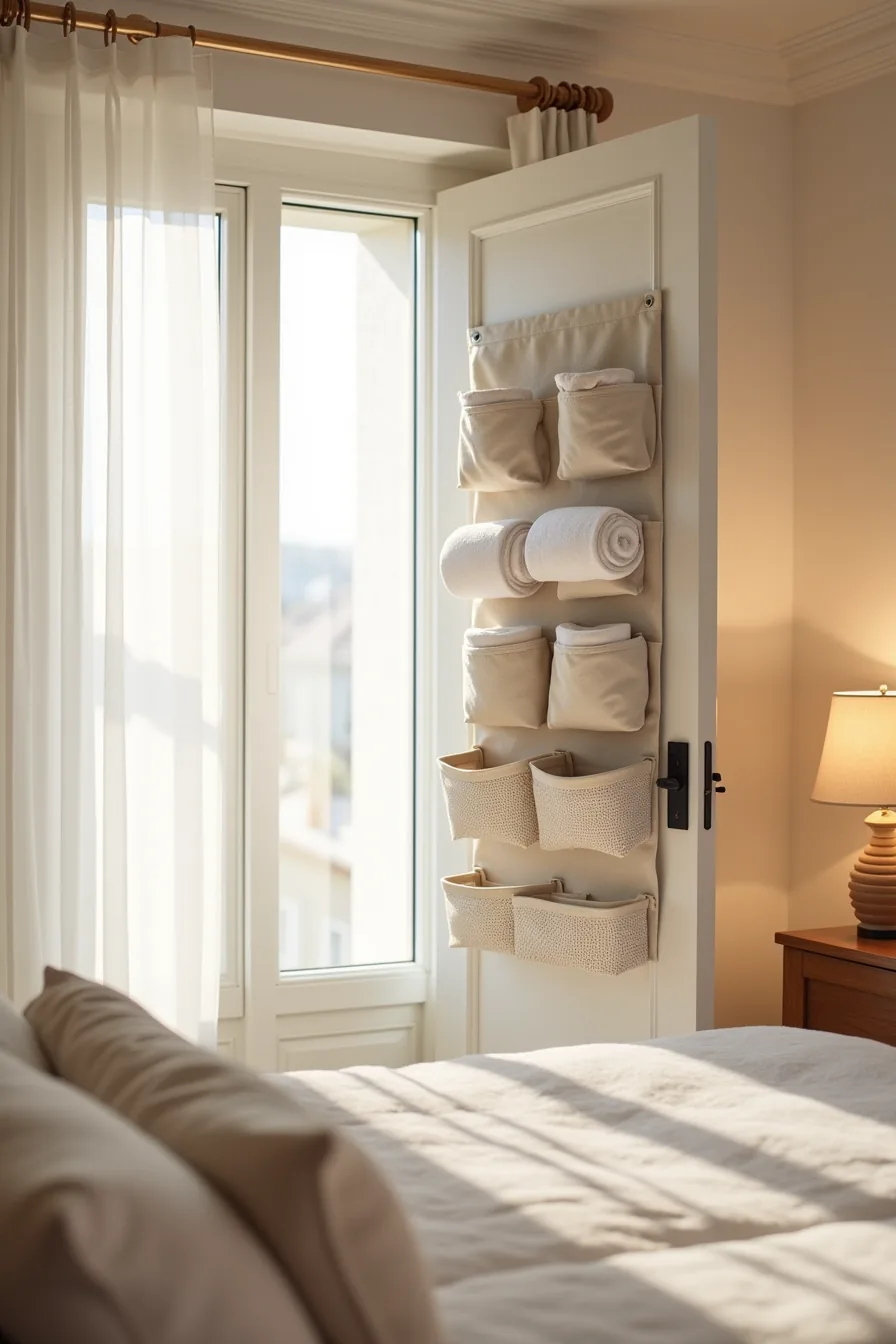
Behind-door storage converts a dead zone, the 1–2 inches of clearance between a closed door and its frame, into prime real estate. An over-the-door organizer mounted on the hinge side works because it never intrudes on walking paths or floor space; it’s the rare small bedroom storage idea that requires zero floor footprint. You can mount one on a standard hollow-core interior door, but confirm the door’s thickness (most are 1⅜ inches) against the organizer’s hook spacing before buying.
The setup you see here holds rolled towels, fabric pouches, and small bins, a mix that suits renters who can’t drill into walls. Weight is your constraint: most over-the-door hooks support 20–35 pounds when evenly distributed, so load the heavier bins at the bottom. Hang the organizer on the door’s interior face, opposite the hinges, so it doesn’t scrape the jamb when opening.
For owners, a permanent rack screwed into a solid-core door adds capacity but voids your ability to move it without patching holes.
Narrow Wall Solutions for Tight Layouts
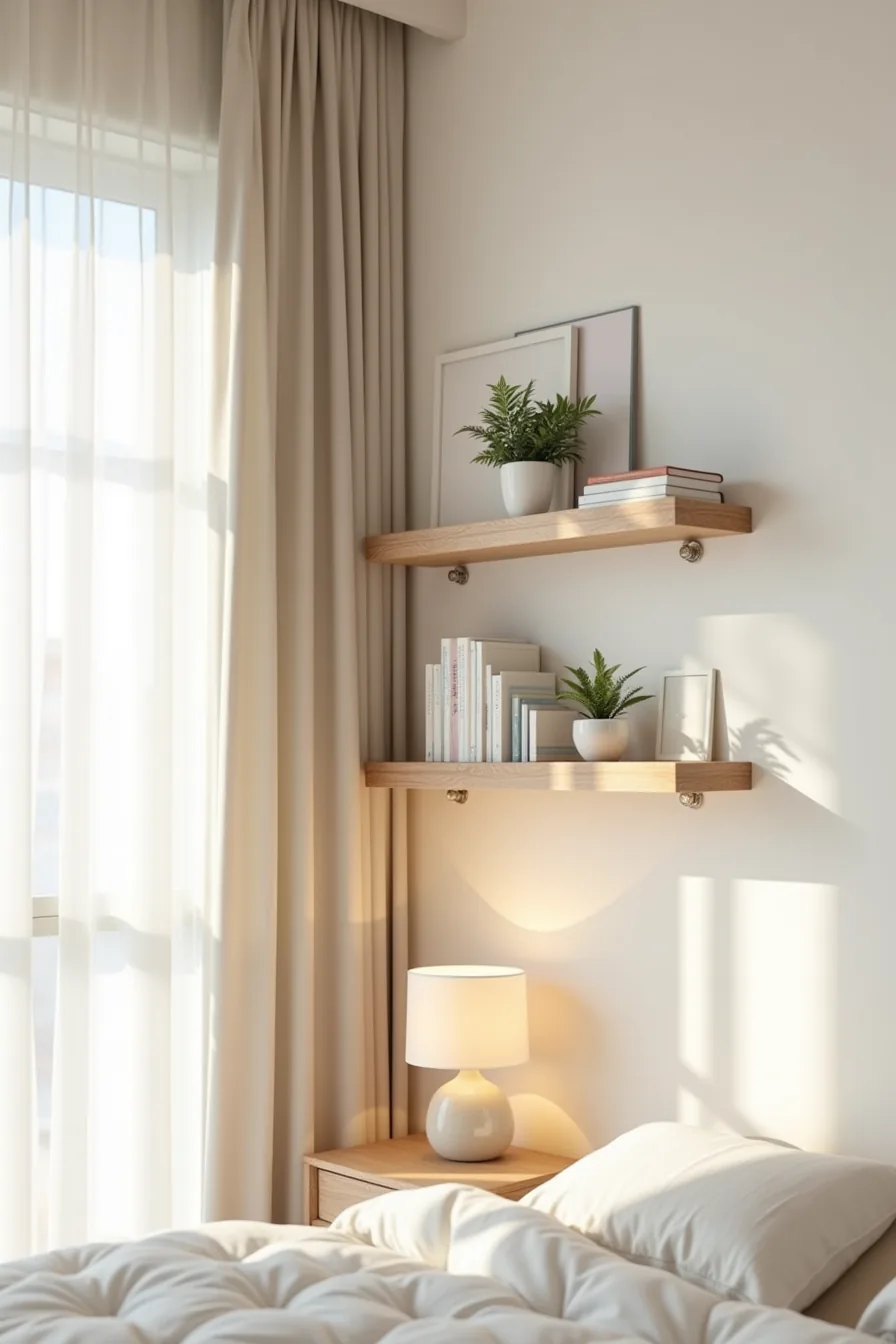
When your floor space is spoken for, the wall becomes your storage canvas, but only if you respect the room’s proportions. The setup here works because two floating shelves sit close together on a narrow wall, creating a cohesive unit rather than scattered perches. Each shelf runs roughly 24–36 inches, leaving enough negative space around them so the wall doesn’t feel crowded.
Stacked books anchor the lower shelf visually, while framed objects and a small potted plant balance the upper one.
Narrow wall solutions suit rooms where a standard bookcase would block circulation or swallow the sightline. Mount shelves 12–18 inches apart vertically, and place the lowest one 30–36 inches above the floor to keep it within easy reach. Every shelf must anchor into studs or use toggle bolts rated for 50+ pounds per pair; drywall alone fails under a full row of books.
For renters, adhesive strips or tension rods work on lightweight items only, keep them to under 5 pounds per shelf and avoid placing them above your bed. Choose shelves 8–10 inches deep for books and display objects; deeper units push the visual weight forward and make the room feel tighter.
Bed with Hidden Capacity: Storage Beneath and Inside
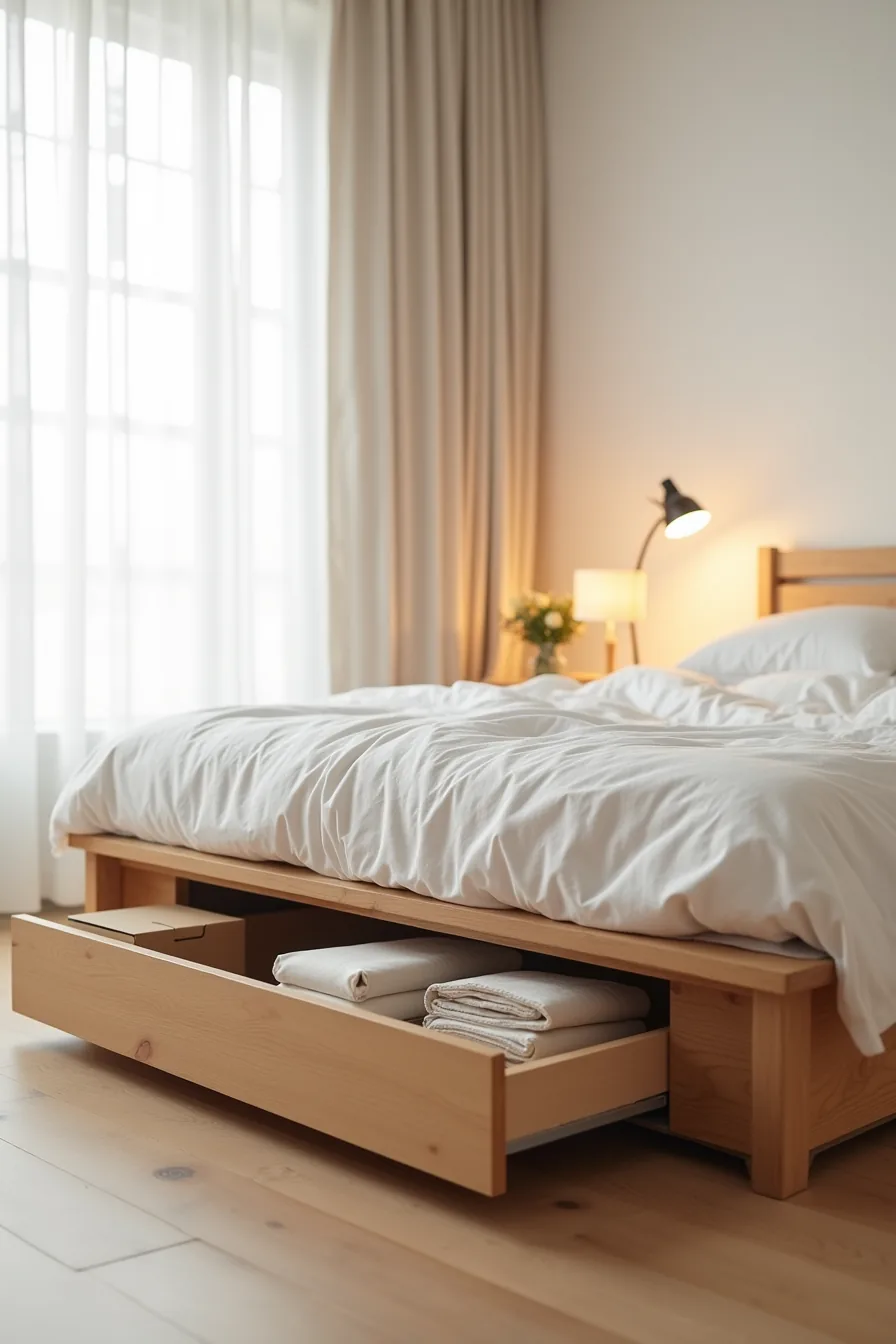
A platform bed with a shallow underbed drawer pulls double duty by turning dead airspace into prime real estate. The setup here uses a low-profile frame with wooden slats supporting the mattress, leaving roughly 6–8 inches of clearance. One drawer glides out smoothly, revealing folded linens stacked beside clear storage boxes that keep smaller items visible without digging.
This configuration suits you if you’re tired of bending into a dark, dusty crawl space, the drawer brings everything into the light.
Expect the drawer to hold 8–12 folded blankets or a full set of seasonal bedding, but access comes with a trade-off: you’ll kneel to reach it, so store daily-use items higher up. Keep off-season clothing and guest linens here instead. Ventilation matters, wooden slats allow airflow, but always wash and fully dry textiles before storing to prevent musty smells in that enclosed space.
For deeper frames, consider two shallower drawers rather than one cavernous bin; they’re easier to slide and keep contents organized by category.
Fixed Versus Adjustable Systems: Choosing Your Commitment Level
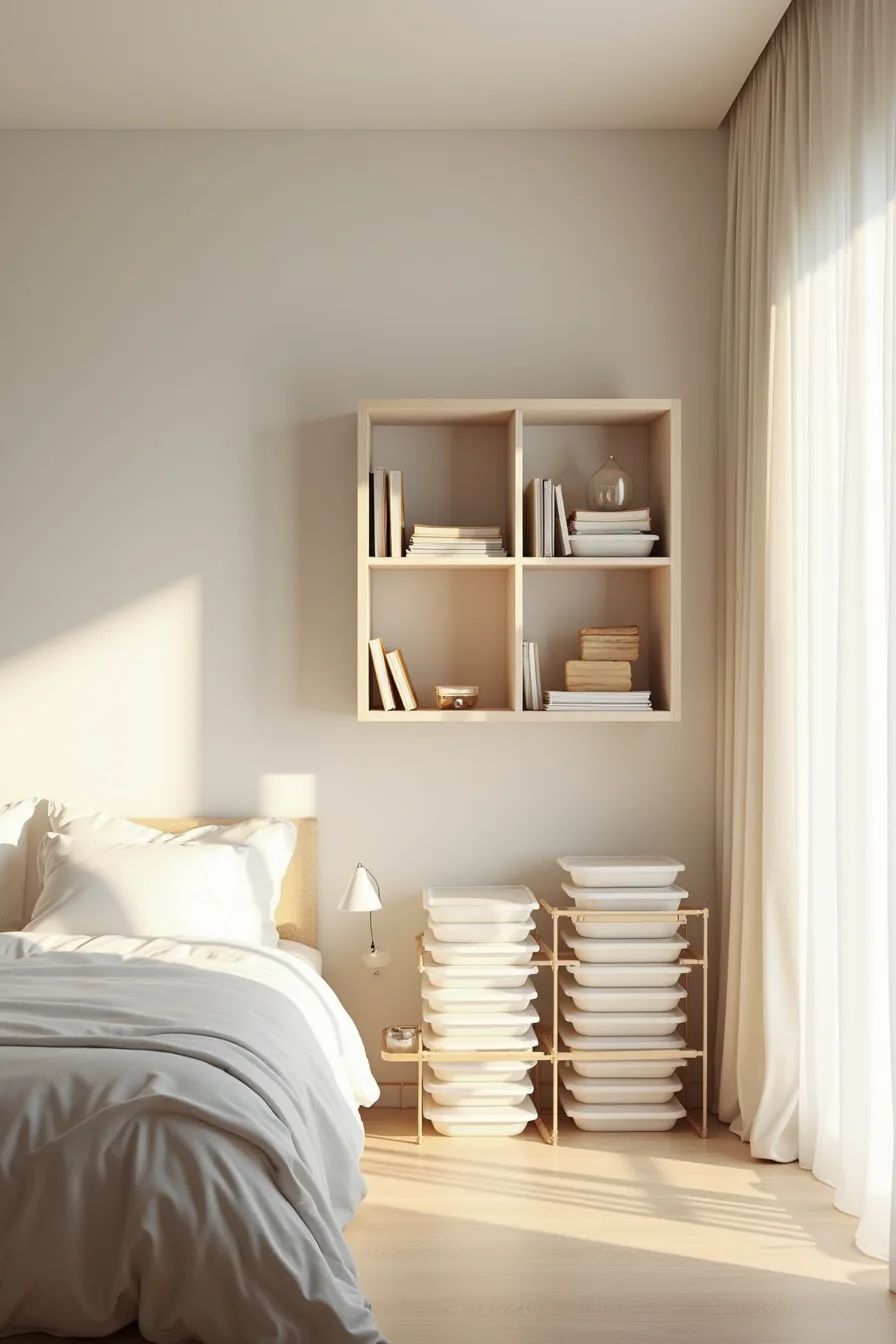
Wall-mounted shelves give you the most rigid footprint, they stay put, hold heavier items, and never slide out of alignment. Plan for a stud finder, a drill, and a level before you commit, because removing them later means patching holes and repainting. Renter-friendly options exist, but they typically cap out at 20–30 pounds per bracket pair, so reserve those for lighter household items.
A modular cube unit splits the difference: it stands freely, moves with you, and lets you reconfigure the openings as your needs shift. The image shows one holding the same folded blankets and books as the wall shelves, proving adjustable systems don’t sacrifice capacity, they just trade vertical wall space for floor space. Stacked plastic bins remain the cheapest portable route, but they stack only as high as you can comfortably lift, and digging to the bottom bin becomes a workout.
Fixed systems suit owners; adjustable suits renters; portable suits anyone rearranging seasonally.
Labeling, Cleaning, and Safety in Compact Storage
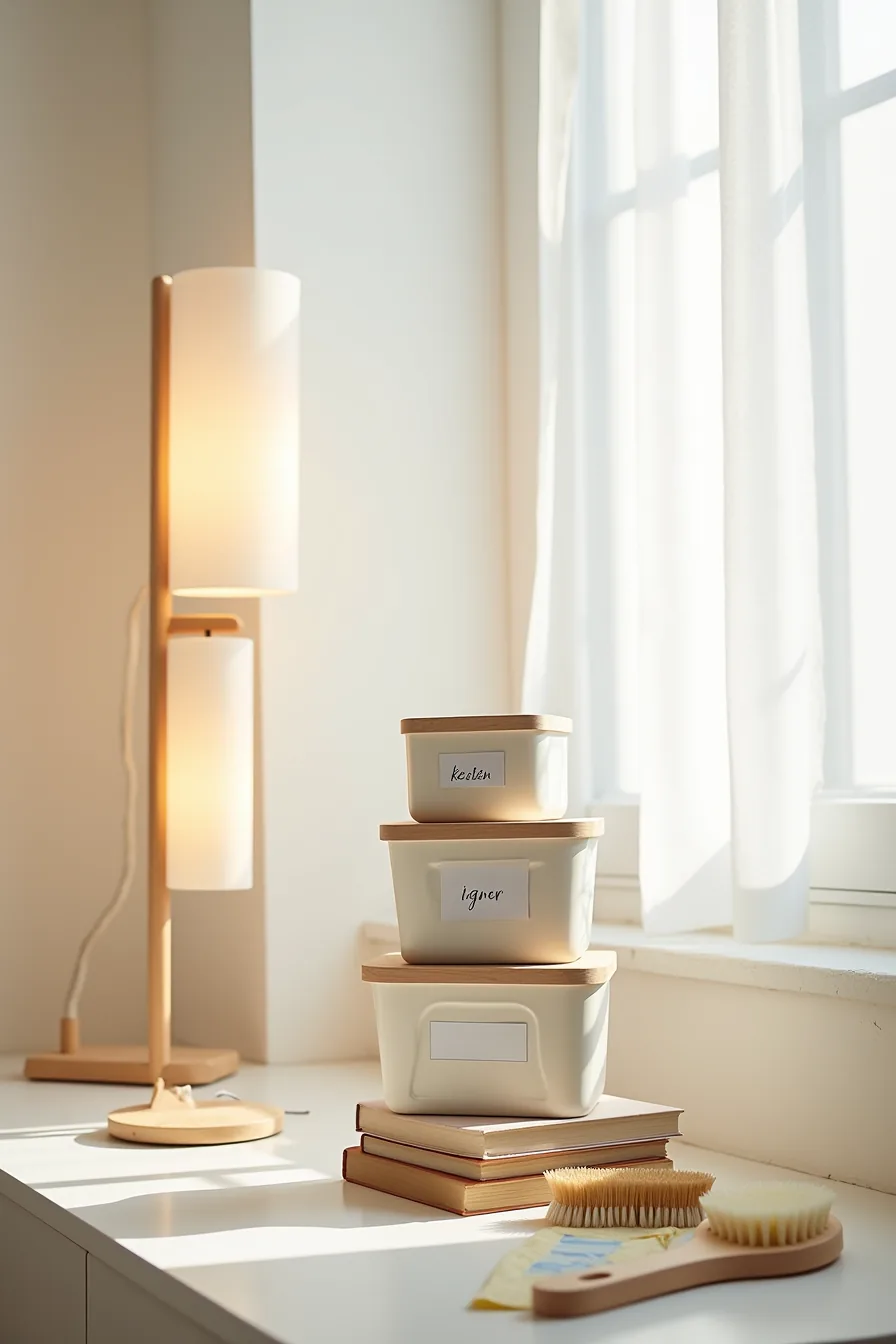
The flat-lay setup in this section shows exactly how to keep a small system functional: handwritten label cards on each bin, a soft brush, and a microfiber cloth stationed nearby. Labeling isn’t about aesthetics, it eliminates the “open every container” search that undoes your tidying momentum. Use plain card stock and a permanent marker, and write the contents in two words or fewer; anything longer slows retrieval when you’re in a rush.
Dust is the hidden cost of any open storage configuration. Run the soft brush over bin tops and shelf edges weekly, and wipe down the microfiber cloth monthly with a mild soap solution, don’t use silicone sprays, which leave a residue that attracts more particles. For stacking, keep the pyramid stable by placing the heaviest bins at the base and never exceeding three tiers if any bin exceeds roughly 15 pounds.
Cramming lighter items on top risks a topple, and a falling bin near your bed means injury, not just clutter. These habits take about five minutes per week and are the difference between Small Bedroom Storage Ideas for Faster Tidying that last and ones that collapse by month two.
Your Next Step
Start with your closet and nightstand, not the container store. Empty every drawer and shelf, then sort into keep, donate, and relocate piles. This 30-minute inventory tells you exactly what you’re storing and what deserves prime real estate.
Measure your floor-to-ceiling height and wall clearances before buying anything. That single measurement determines whether overhead shelving, under-bed bins, or a vertical wardrobe makes sense for your space.
Frequently Asked Questions
How much can I realistically store in a small bedroom without it feeling cramped?
You can store roughly 30–50% of your closet’s volume using vertical and underbed space. Keep walkways at least 24 inches clear. If you can’t close drawers or open doors fully, you’ve exceeded capacity.
Are behind-door storage solutions safe for heavy items like shoes or books?
Yes, if you use over-door racks rated for 20–30 pounds and distribute weight evenly. Avoid hanging more than 10 pounds on hollow-core doors. Solid wood doors handle up to 50 pounds, but check hinges and clearance first.
What’s the best storage option if I rent and cannot drill into walls?
Freestanding modular shelving with adjustable feet, no mounting required. Look for units 60–72 inches tall with a base footprint under 18 inches deep. Tension rod systems and command hooks work for lighter items but fail with sustained weight.
How do I prevent mold and dust buildup in underbed storage drawers?
Use breathable fabric bins or plastic containers with silica gel packs, not sealed plastic bags. Vacuum the area monthly and air out containers every season. Keep items at least 2 inches off the floor on casters or risers to allow airflow.