Your TV unit is the largest horizontal surface in your living room that isn’t a table, yet most styling advice treats it as an afterthought, a spot to park a remote and a dusty plant. That flat expanse, typically 48–72 inches wide and 15–20 inches deep, carries more visual weight than any wall art. The six approaches below range from a $15 shelf refresh to a built-in renovation, each with the exact measurements, materials, and maintenance trade-offs you need to decide which fits your space, budget, and tolerance for dusting.
Key takeaways
- Match scale first: your TV unit should span roughly the same width as your screen or slightly wider, leaving 4–6 inches of breathing room on each side.
- Anchor with asymmetry: place one tall lamp or plant on a single side to break the center-heavy look without adding visual noise.
- Renters, skip drilling: use peel-and-stick hooks, tension rods, and removable adhesive strips to mount lightweight decor and cable trays that come off cleanly.
- Budget for maintenance: expect to dust open shelves weekly and wipe down real wood monthly with a damp cloth, materials like matte laminate hide fingerprints far better than glossy finishes.
Minimal Decor Around Screen: When Less Serves Function
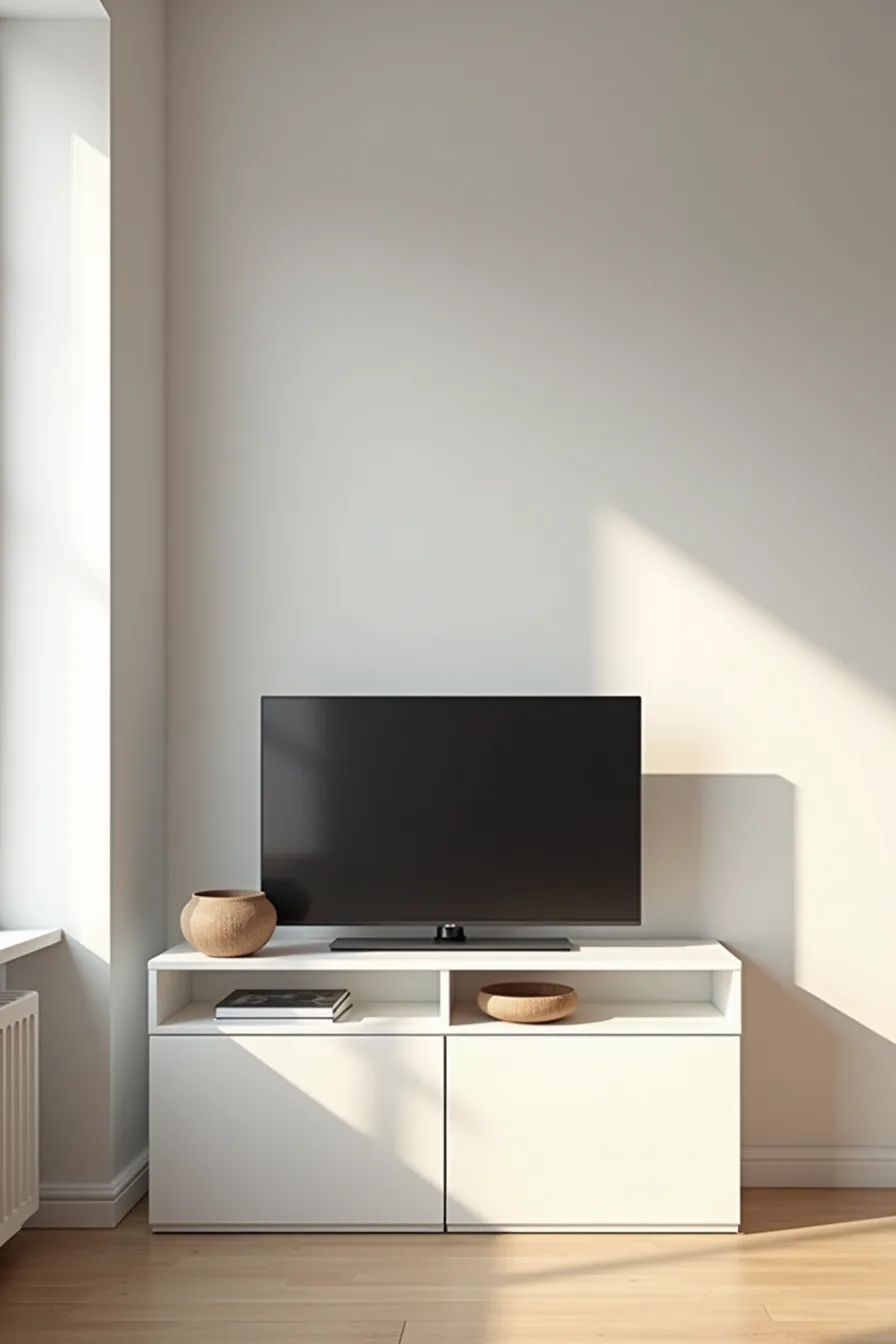
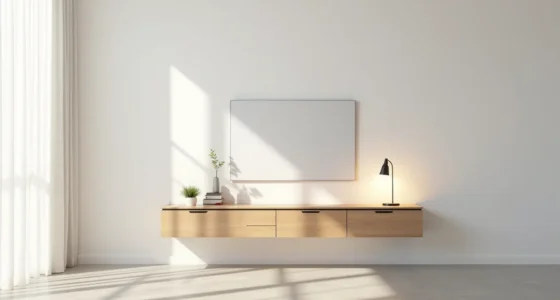
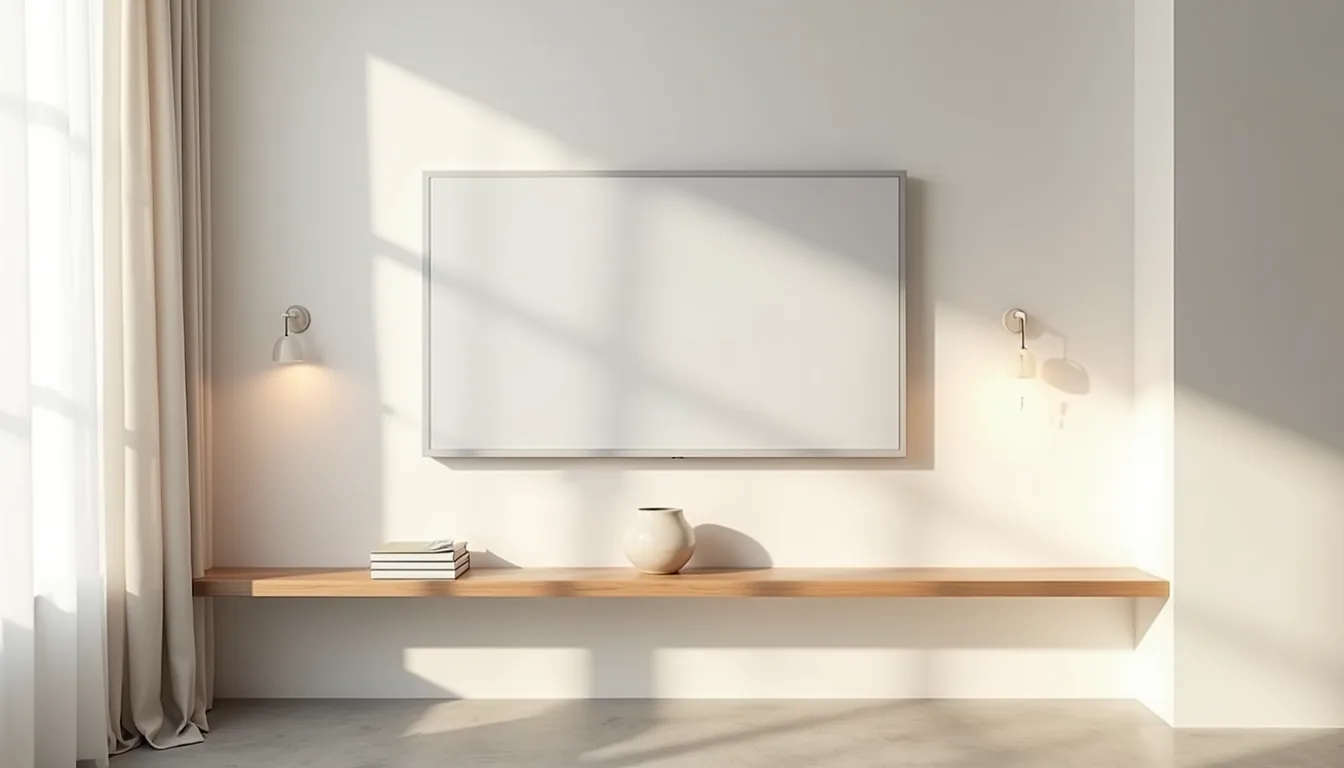
A flat-screen TV on a low white console against a soft gray wall, with a single wooden bowl placed off-center, this setup works because it removes every decision your eye would otherwise have to make. The empty wall space on either side isn’t wasted; it gives the screen visual breathing room, which matters most in small spaces and open-plan rooms where the TV already competes with sightlines from the kitchen or dining area.
This restrained approach suits you if your TV unit doubles as a pass-through zone or sits near a doorway. Position the accent piece, the wooden bowl, to one side rather than dead center; this draws the eye horizontally without blocking the screen’s base, which is critical if your console runs 48 to 60 inches wide. Choose a single low-contrast material like unfinished wood or matte ceramic; anything glossy or brightly colored will pull attention away from the display during dark scenes.
Low decor around screen also means fewer dust-collecting surfaces to wipe, so you spend less time cleaning and more time watching.
Layering Plants and Lamps for Depth Without Clutter
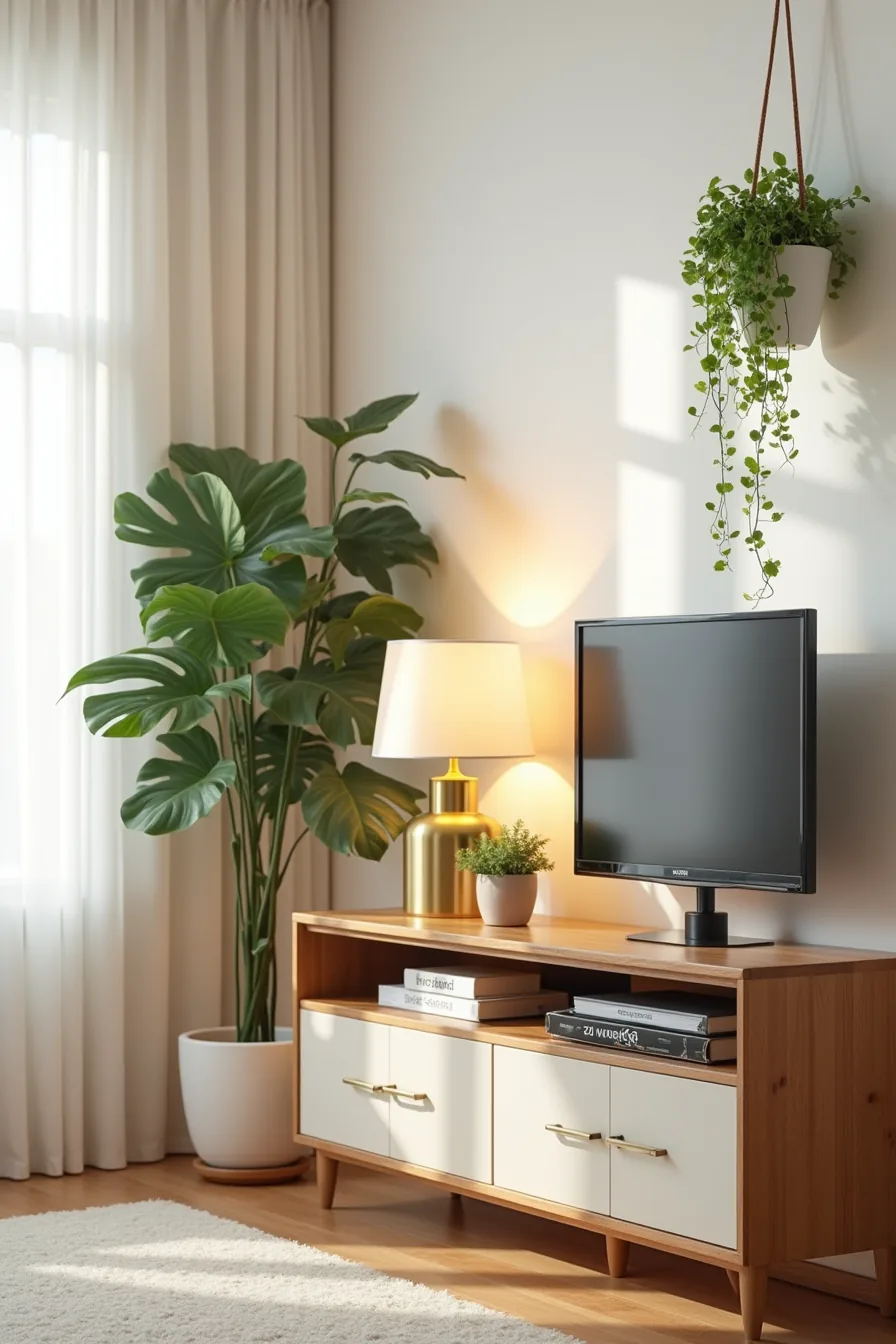
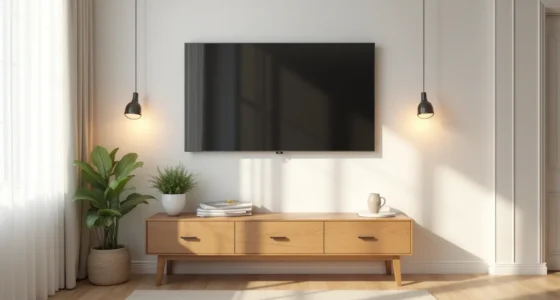
The plant vs lamp balance works best when you assign each a distinct height and job. A tall potted monstera on the left anchors the composition, a brass table lamp in the center provides ambient light, and a trailing pothos in a hanging planter on the right softens the vertical line, three elements, three functions, no overlap.
Keep the lamp’s shade at or slightly below eye level when you’re seated, which typically means 16 to 24 inches from the console top. Position the monstera so its leaves clear the screen’s edge by at least 6 inches, preventing visual crowding during playback. This combination suits rooms with moderate natural light; if your space is dark, skip the hanging pothos and add a second lamp instead.
In bright rooms, swap the brass lamp for a matte ceramic one to reduce glare on the screen. Water the monstera weekly, the pothos every 7–10 days, and you’ll have a living arrangement that requires less dusting than a shelf of objects.
Asymmetrical Styling: Breaking the Center-Heavy Rule
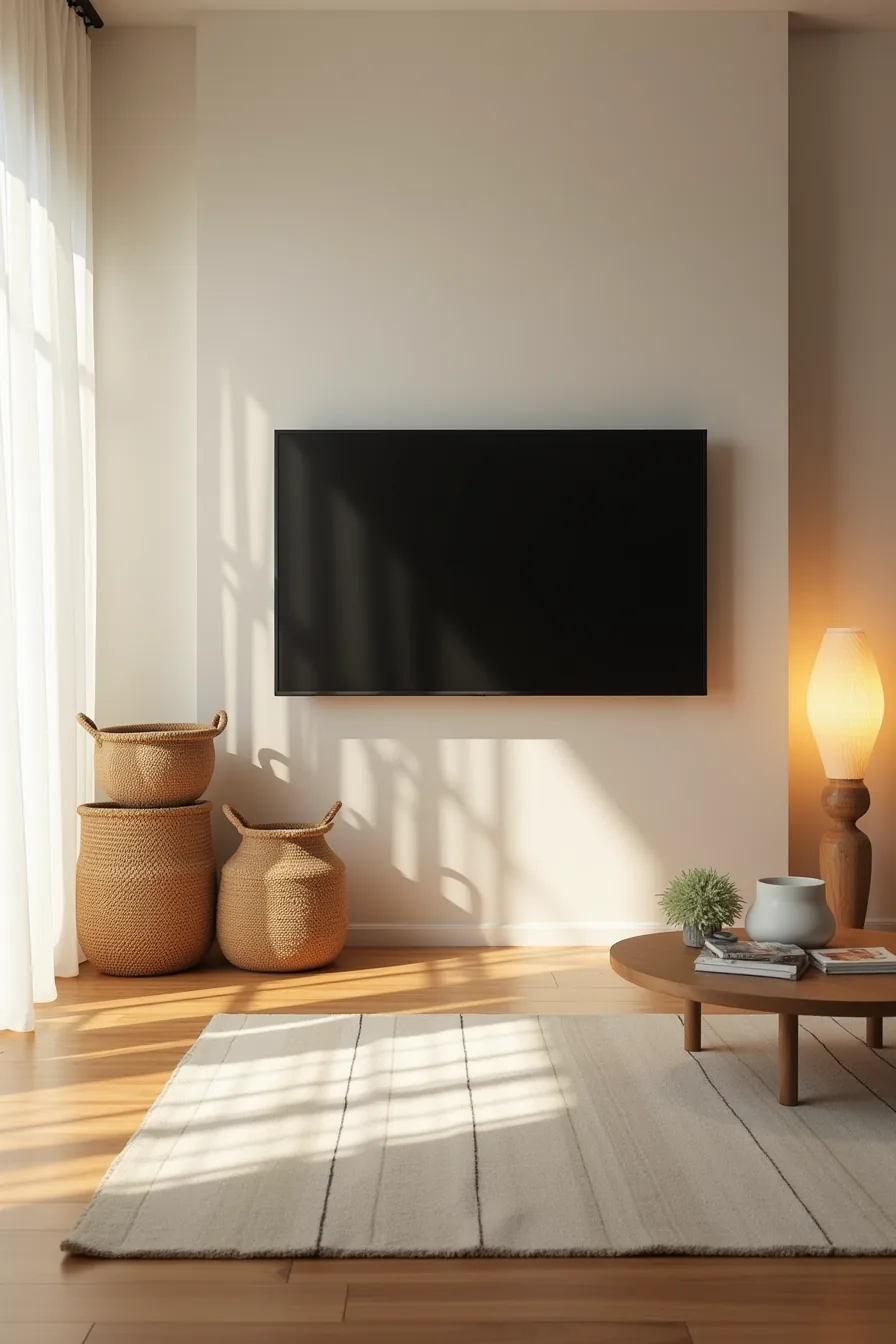
Centering every object around the screen creates a static, furniture-showroom effect. Asymmetrical styling works because it gives your eye a deliberate journey: a heavy visual anchor on one side, deliberate negative space on the other, and a low counterweight that keeps the whole composition from tipping over.
Consider a dark wall with three stacked woven baskets on the left, varying in size from roughly 12 to 18 inches in diameter, and a single tall sculptural object placed near the floor on the right. The baskets create mass and texture at mid-height; the sculpture, rising 24 to 30 inches, grounds the right side without competing with the screen. This arrangement suits medium to large living rooms where seating is off-center, because it visually balances the room’s traffic flow rather than the TV itself.
For a small unit, reduce the baskets to two and keep the sculpture under 20 inches; for a very wide console, add a fourth basket or a low stack of books behind the sculpture to extend the mass. Avoid placing the tall object where it blocks a speaker or the TV’s IR receiver, and leave at least 4 inches of clear wall on the bare side, crowding it defeats the tension the asymmetry creates.
Budget-Friendly TV Unit Decor for Renters
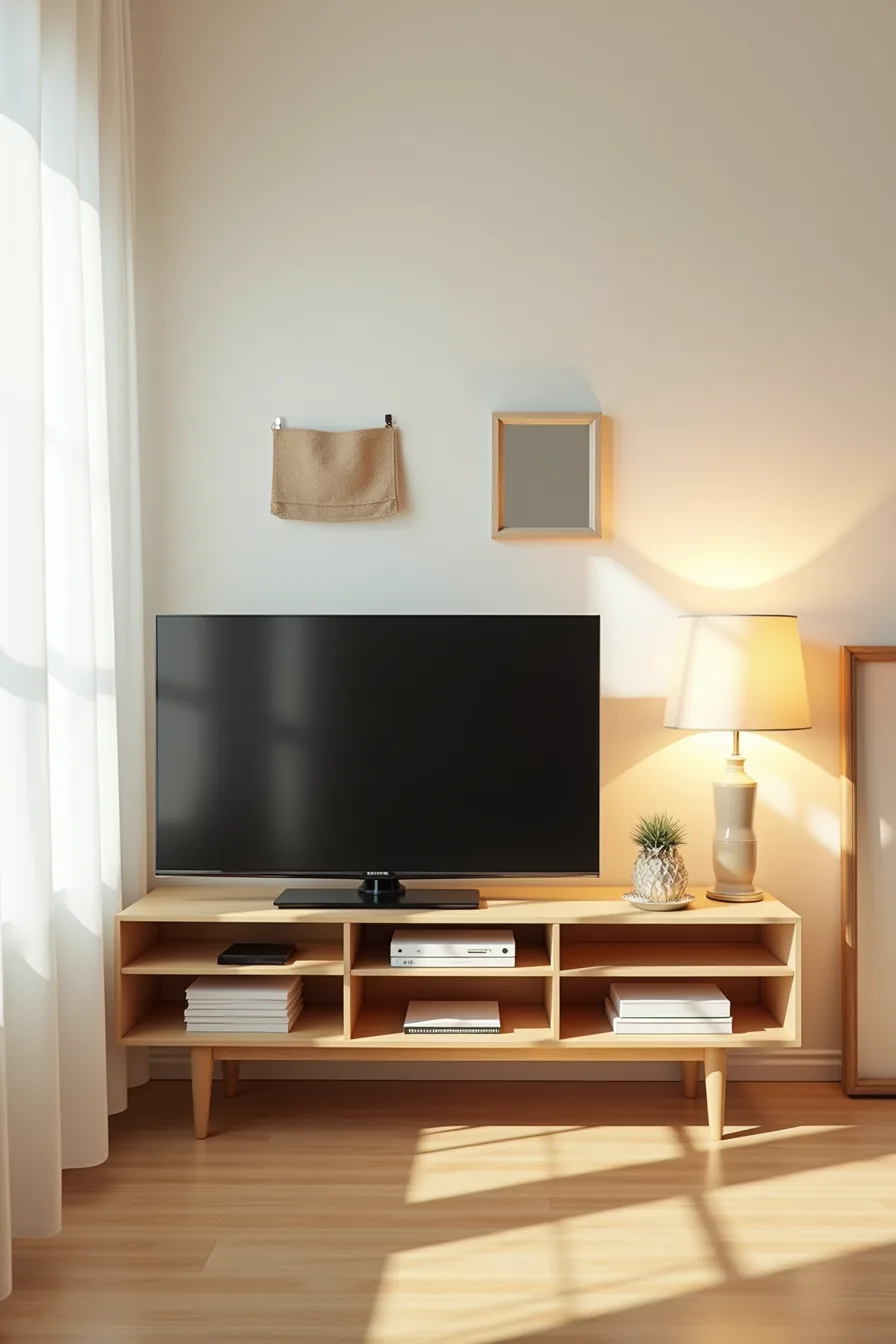
That particle-board stand can carry a lot of visual weight if you layer the right pieces on top. A removable adhesive hook set, rated for 5 to 10 pounds per hook on smooth surfaces, can hold a small mirror and two fabric organizers directly on the wall beside the unit, which frees up the console surface for a lamp or a single bowl. The fabric organizers are the workhorse here: they hide remote controls, cables, and loose batteries while adding texture that reads as intentional styling rather than storage clutter.
Leaning a thrifted metal frame against the wall beside the stand costs nothing beyond the frame itself and breaks the unit’s boxy outline. Look for frames with an open, geometric pattern so it reads as sculpture, not a forgotten picture. This full arrangement, adhesive hooks, organizers, and a leaning frame, costs under $60 and installs in under 15 minutes, and the only tools involved are a level and a cleaning wipe to prep the wall.
Because none of it touches the floor or drills into the drywall, you walk away with your deposit intact, and the entire look reverses in under five minutes when the lease ends.
Investment-Grade TV Unit Decor for Long-Term Spaces
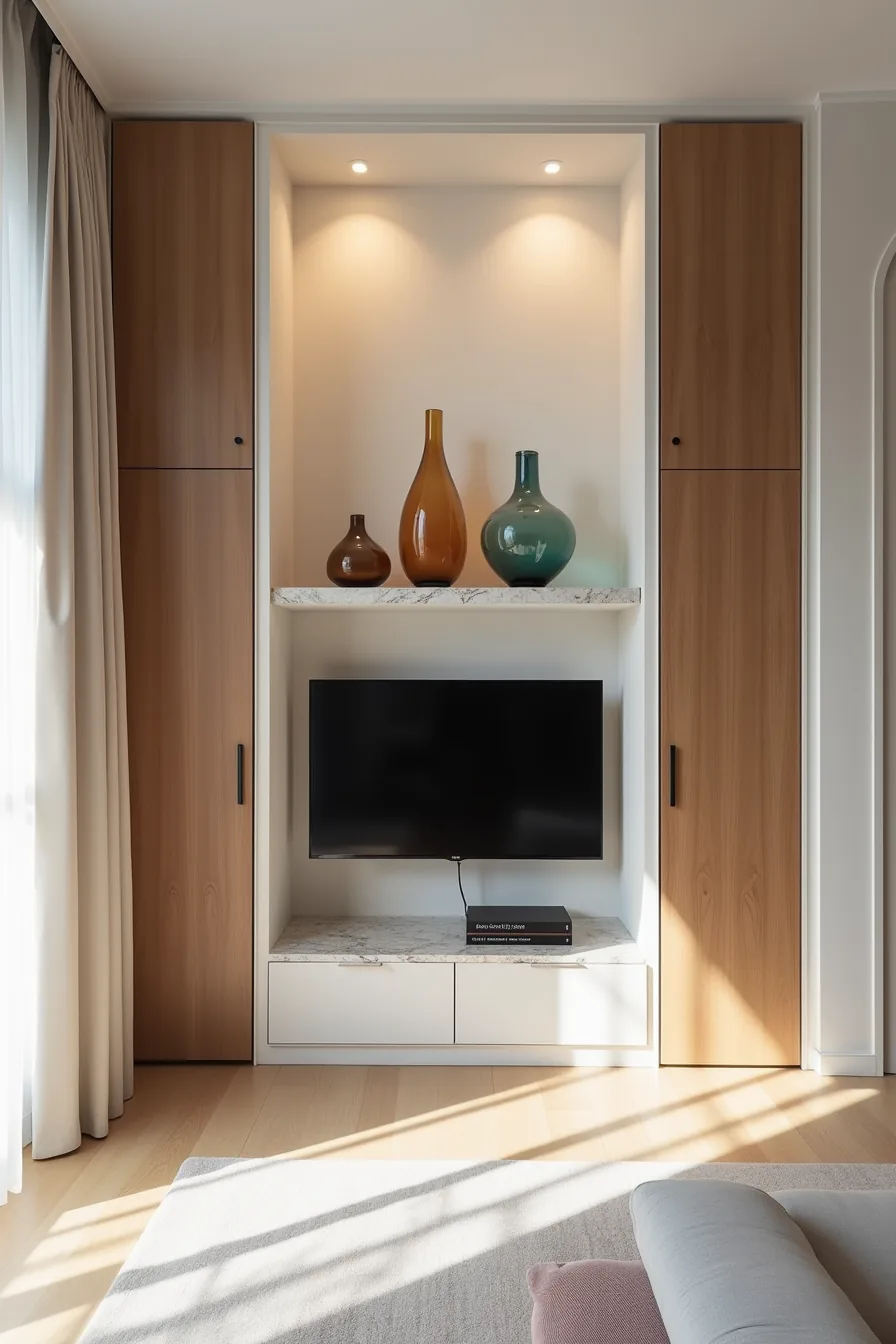
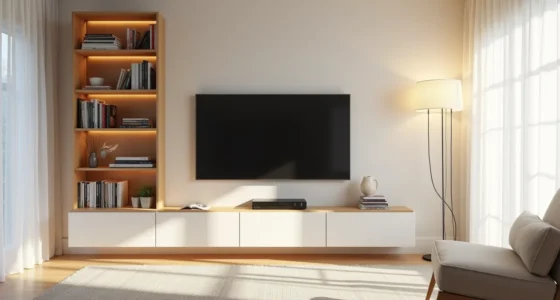
Built-in cabinetry transforms the TV wall from furniture into architecture. Closed walnut doors flanking a recessed TV niche conceal media components behind solid wood, eliminating the visual noise of blinking lights and tangled cables. The marble-topped shelf above the niche provides a heat-resistant surface for three art glass vessels, intentionally sparse, since the stone pattern carries the visual interest.
Spec walnut-faced plywood or solid-wood cabinetry with soft-close hinges; expect to invest three to five times what a quality freestanding console costs. Recessed LED strip lighting in the niche and under the shelf costs little to install during framing but is costly to retrofit later, so commit before drywall goes up. Dust the marble with a dry microfiber cloth weekly, stone scratches if wiped with gritty debris.
This route suits homeowners planning to stay seven-plus years or anyone who wants the wall to feel permanent, not decorated.
Seasonal TV Unit Decor for a Fresh Look Year-Round
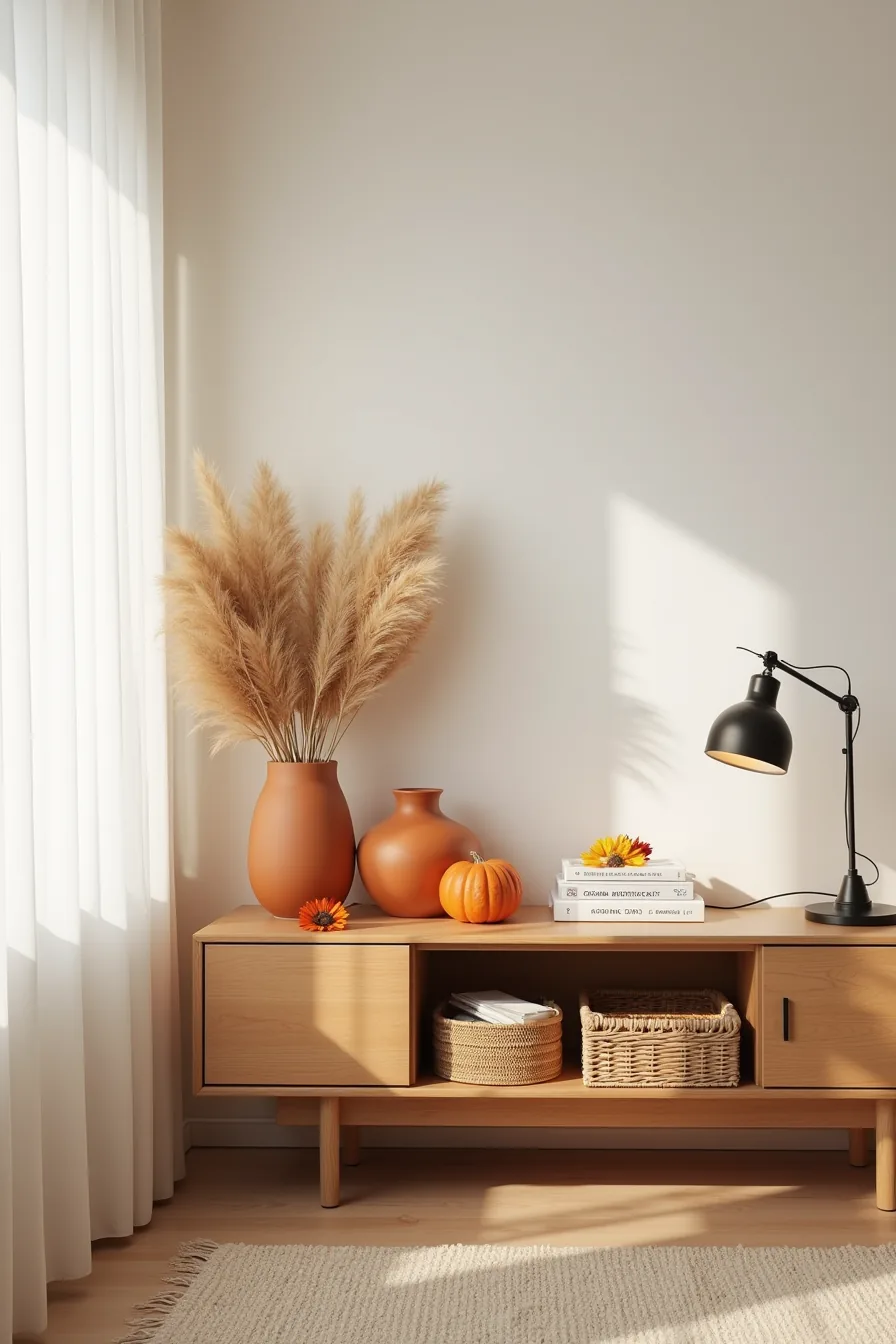
The fastest way to refresh your TV unit without touching the furniture is to swap a few warm-toned hero pieces as the seasons change. Terracotta pots in two or three heights paired with dried pampas grass introduce autumn’s earthy palette instantly, while the burnt-orange ceramic piece anchors the arrangement and echoes the tones without screaming holiday decor. Layering these forward against the TV screen creates depth even in a shallow setup.
You need roughly 10-15 minutes and zero tools to rotate the look.
Keep a wicker storage basket at the base dedicated to off-season pieces; it doubles as a catch-all for remotes and hides whatever you’re not currently displaying. Choose decor items under 12 inches tall so they don’t block the TV’s bottom edge or interfere with the infrared sensor, which usually sits on the lower bezel. This approach suits renters and anyone who tires of a static look, you’re refreshing five or six small objects, not redesigning the whole unit.
For a consistent seasonal rotation, log what you displayed on your phone, then reuse the same storage and swap order each year.
What to do first
Start with the one thing you can change today: clear the surface and group what remains into three clusters, one tall, one wide, one low. Snap a photo from your usual seating position. That two-minute edit reveals most proportion problems before you spend anything.
If your unit sits below eye level, work upward with height; if it’s a floating shelf, work outward with width. Match your decor weight to your TV size, a 55-inch screen needs objects roughly 12–18 inches tall, not trinkets.
Your next step: pick one anchor piece (a vase, lamp, or plant) and place it before buying anything else. Everything follows from that single decision.
Frequently Asked Questions
What is the difference between TV unit decor and general shelf styling?
TV unit decor prioritizes sightlines, screen clearance, and cable management. General shelf styling focuses purely on visual balance. Your TV unit must also accommodate electronics, ventilation, and remote access, which constrains placement and object height.
How do I style a TV unit in a small apartment without it looking cramped?
Limit decor to one low, wide piece per side, a trailing plant or a stack of books. Keep everything under 12 inches tall and leave 30 percent of the surface bare. Use wall-mounted shelves above instead of floor clutter.
Should I decorate both sides of the TV equally or use asymmetrical styling?
Asymmetry works better for most rooms. Place a tall lamp on one side and a low stack of books on the other to create visual interest without blocking the screen. Symmetry suits formal, minimalist spaces but can feel stiff in casual living rooms.
What’s the best way to keep plants healthy on a TV unit shelf?
Choose low-light tolerant plants like pothos or snake plants, and rotate them weekly to prevent leaning toward the screen’s heat. Water only when the top inch of soil dries out, and use a saucer to protect the unit from moisture damage.