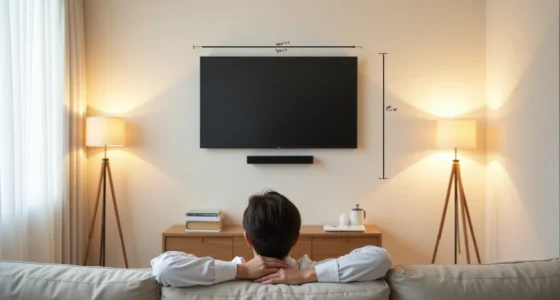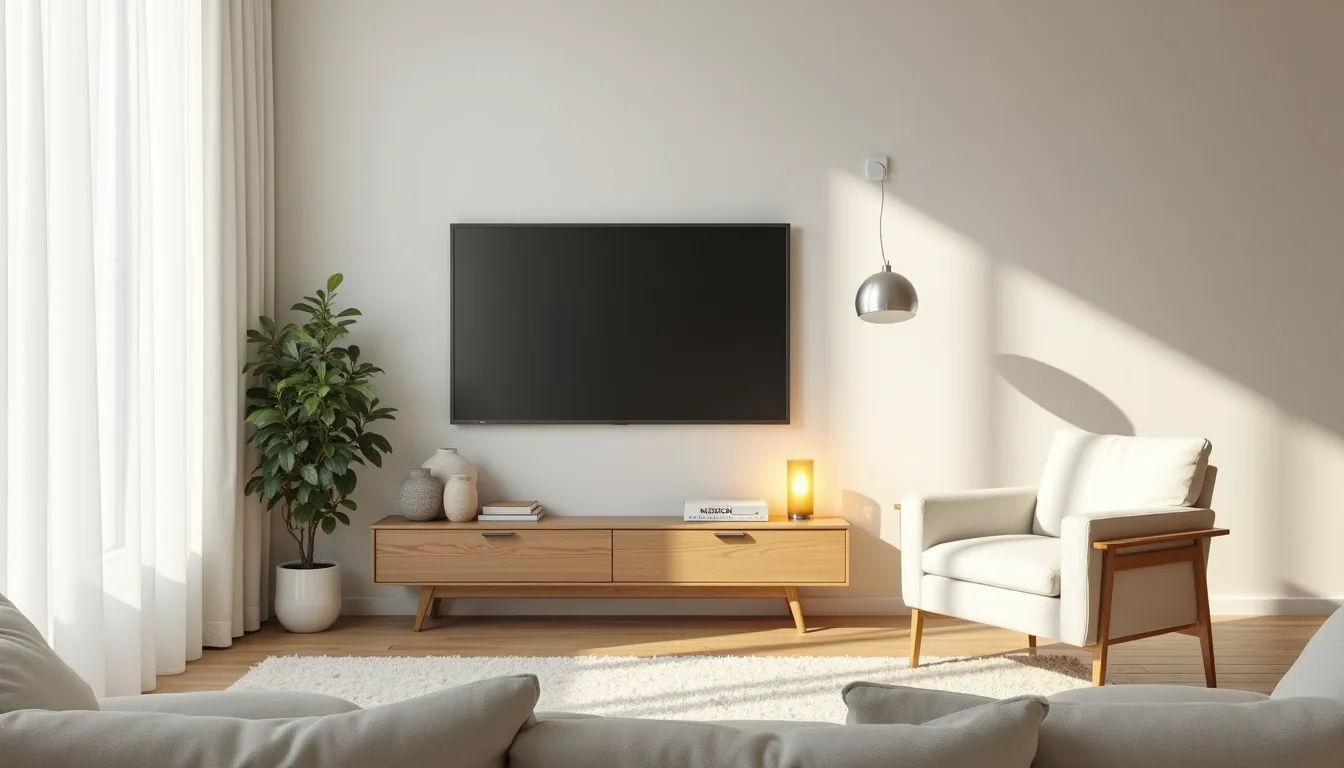
A living room TV wall fails when the screen floats on a vast, empty expanse, so fixing that proportion problem is the core of every large TV wall idea worth considering. The solution isn’t a bigger TV, it’s a deliberate composition of cabinetry, texture, and lighting that anchors the screen visually. Whether you’re working with a 65-inch display in a compact condo or an 85-inch model in an open-plan space, the right approach balances scale, budget, and your tolerance for permanent changes.
The six setups that follow range from a renter-friendly tension rod system to a built-in millwork investment, each with the exact measurements, material costs, and maintenance trade-offs you need to decide before you pick up a drill.
Key takeaways
Match the console width to at least two-thirds of the TV’s width for visual balance, but leave 4–6 inches of clearance on each side for air circulation around the screen. Symmetrical built-ins work best in rooms 12 feet or wider, giving you closed storage for media components while framing the screen with equal visual weight on both sides. For renters, use peel-and-stick wallpaper or a large fabric panel behind the TV to add texture without damaging walls, and skip any permanent mounting by placing the TV on a low console. Scale your accent wall treatment so its width equals roughly 1.5 to 2 times the TV’s diagonal measurement, preventing the screen from looking lost in oversized rooms or overwhelming in compact ones.
The Wide Console Strategy: Anchoring a Large TV Wall
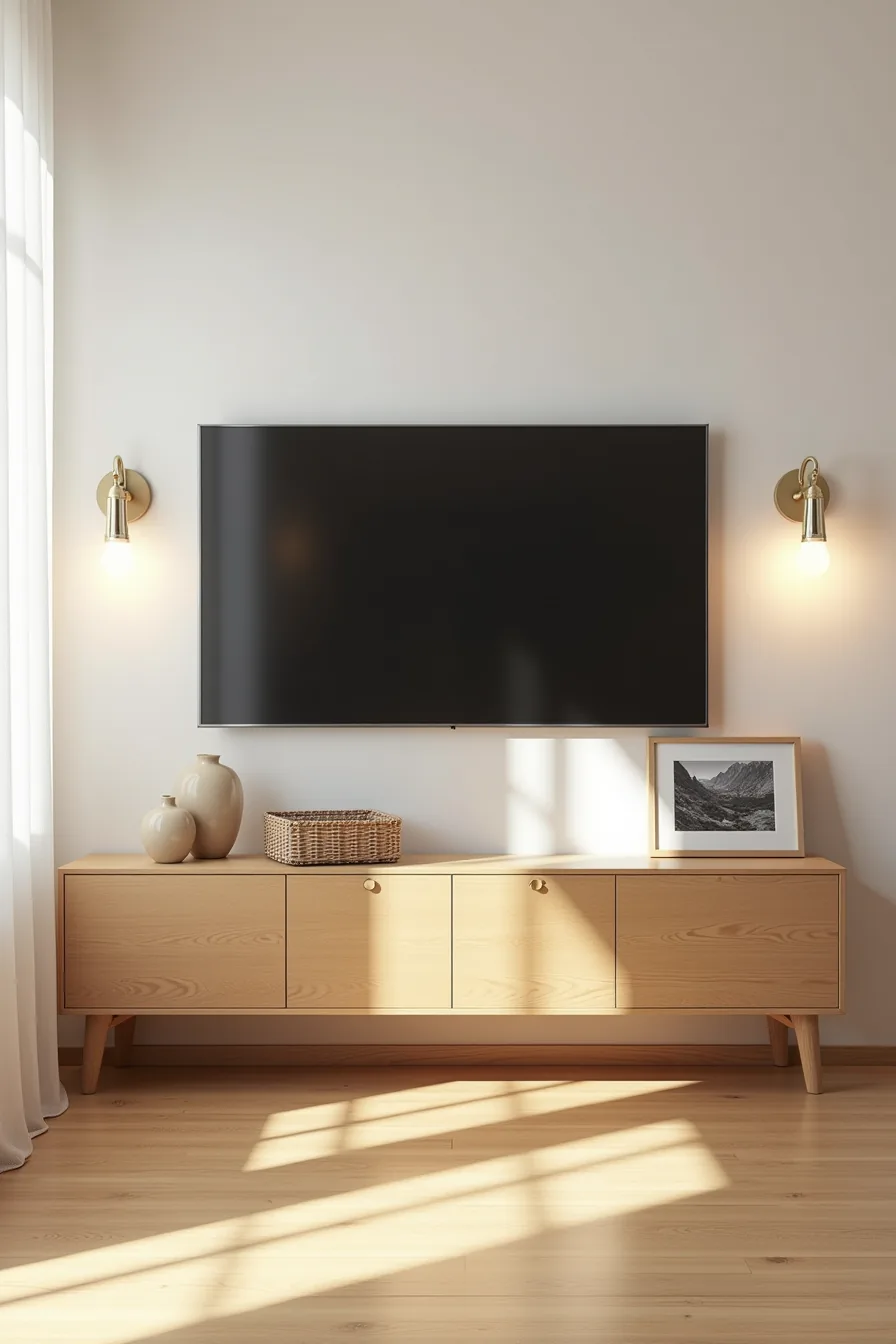
A low console spanning 48-54 inches directly beneath the set gives your eyes a place to rest, so the screen doesn’t float in visual dead space. In a typical living room with a 65-inch TV, this width keeps a balanced proportion, the furniture should reach roughly two-thirds of the screen’s width to feel intentional rather than accidental.
For a medium room (250-350 square feet), solid oak or walnut suits warm, traditional spaces; a matte black metal frame works in industrial lofts. Top the surface with a ceramic vase, a woven basket for remotes, and a framed photo to soften the hard lines of the electronics. The setup shown keeps the wall above the TV empty, deliberately minimal, which reduces visual clutter when the screen is off.
This strategy suits renters and first-time buyers because it requires no wall mounting or drilling. It works equally well in a compact apartment by scaling the console down to 40-48 inches, or in a large open-plan space by stretching toward 60-72 inches to match a bigger sofa configuration. Maintenance is straightforward: dust the console weekly and wipe the screen monthly to prevent buildup from HVAC vents.
Framing Your Large TV with Symmetrical Built-Ins
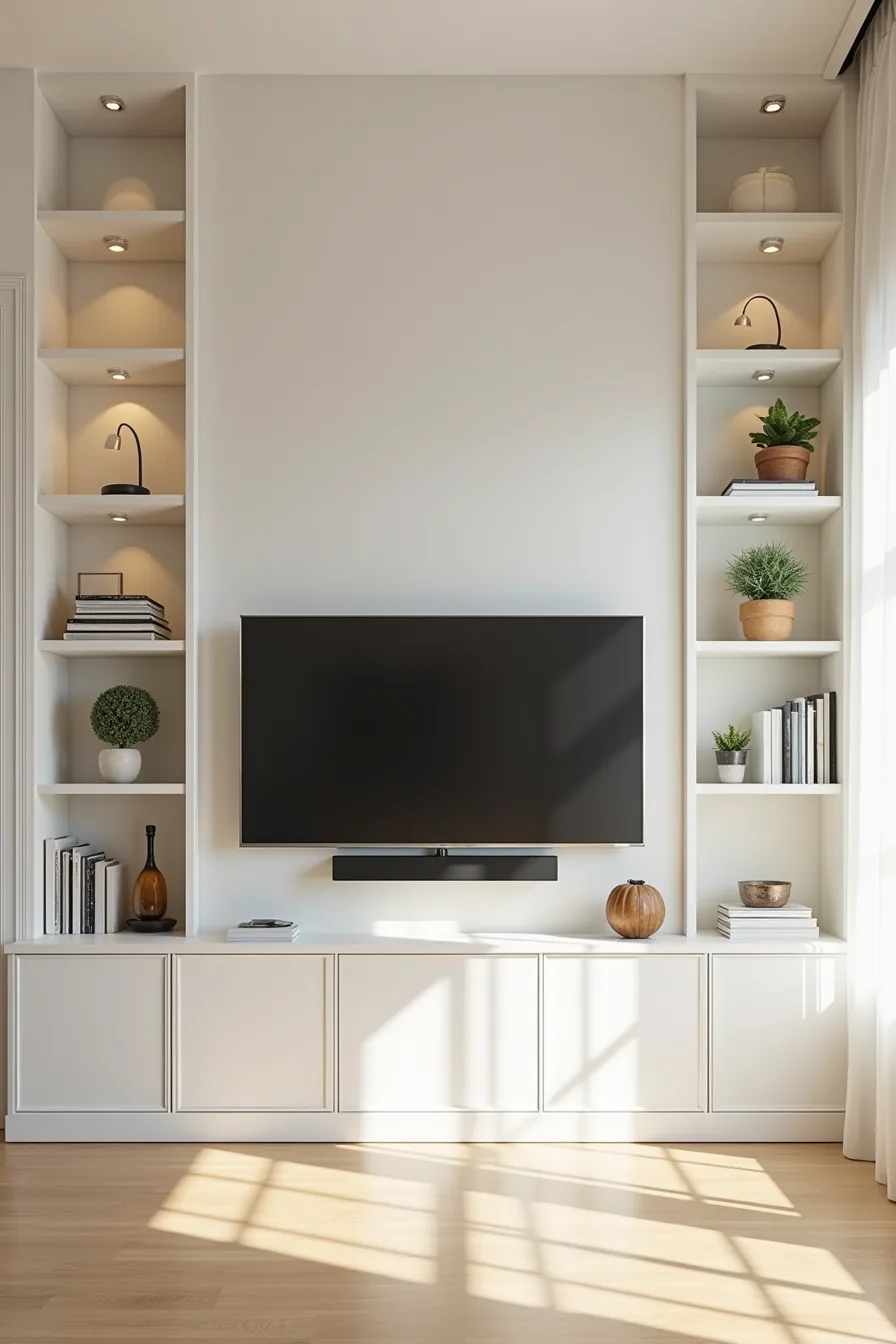
Flanking a wall-mounted screen with floor-to-ceiling shelving transforms the TV from a floating black rectangle into the centerpiece of a composed architectural feature. The symmetry in this layout, matching white built-ins on both sides, each stocked with books, decorative boxes, and potted plants, creates a sense of order that suits formal or minimalist living rooms, especially those with high ceilings you want to emphasize.
This approach works best in medium to large spaces (300 square feet or more) where you’ve the wall depth to spare. Plan for shelving units that are 18-24 inches deep to hold standard books and display objects without protruding too far into the room. You’ll need a custom carpenter or a high-end modular system, making this the long-term investment route: expect to pay noticeably more than a media console, but gain permanent storage that hides cables and gaming equipment in lower cabinets.
For a budget-friendly compromise, use two matching freestanding bookcases (60-72 inches tall) placed on either side of the TV instead of built-ins. Leave an 8-12 inch gap between the shelves and the ceiling to avoid a top-heavy look, and keep the arrangement symmetrical, mirrored objects on each side are what sell the effect. Dusting all those ledges takes 15-20 minutes weekly, so factor in that maintenance before committing.
Accent Wall Treatments: Color and Texture Behind the Screen

Painting or cladding the wall itself is the fastest route to a large TV wall that feels intentional, and it requires zero additional furniture. A deep charcoal-gray shiplap surface behind the screen does two jobs: the dark tone makes the TV bezel visually disappear, while the vertical board lines add texture that reads as architectural rather than decorative. Flanking sections in soft white keep the room from feeling like a cave, and the contrast frames the viewing zone naturally.
This is the budget and renter-friendly option. Paint costs $40-80 per gallon and covers a 12×8-foot wall in one afternoon; peel-and-stick wallpaper panels run $3-7 per square foot and remove without damaging drywall. Real shiplap is the pricier variant at $2-4 per square foot for materials, plus labor if you don’t DIY.
The thin media stand below stays visually quiet, letting the wall carry the composition. Dark walls suit rooms with ample natural light, in dimmer spaces, the charcoal will swallow ambient brightness and strain your eyes during daytime viewing.
Gallery Wall and Art Cluster Approach
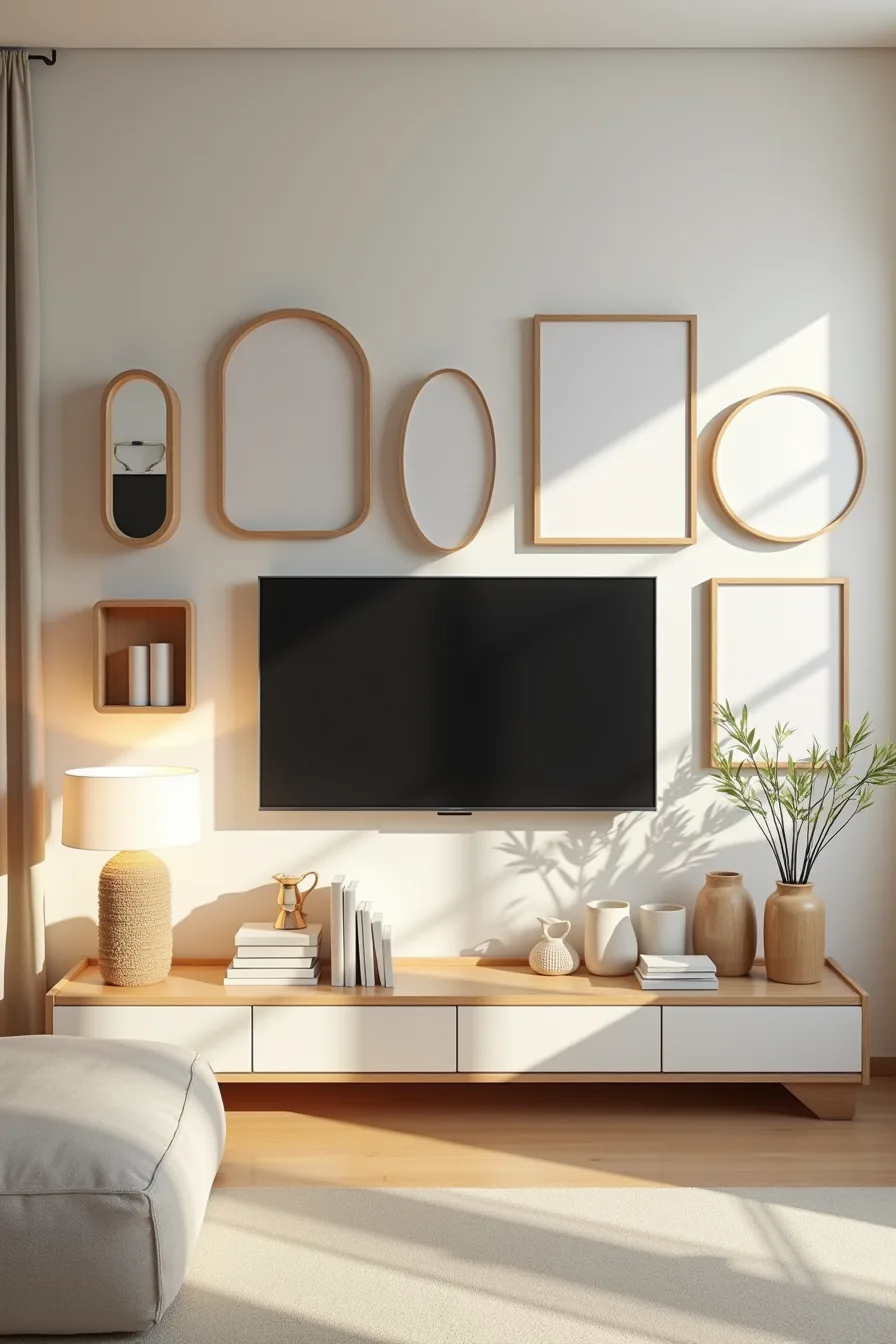
A gallery wall turns the TV into one element among many, which suits living rooms where the screen shouldn’t dominate the conversation. The centered TV mount sits mid-wall, and the surrounding 8-12 framed artworks, mirrors, and small sculptural shelves fill the negative space in a loose grid rather than a strict line. Vary frame sizes and colors deliberately, two or three oversized pieces anchor the composition, while smaller frames and round mirrors break up the rectangular rhythm.
This approach suits renters because everything hangs on removable adhesive strips rated for 5-10 pounds per frame, and the TV mount itself is the only permanent change. The trade-off is visual noise: rooms with busy sofas or patterned rugs should skip this, as competing patterns will fight the wall. Plan the layout on the floor first, using kraft paper cut to each frame’s size, and leave 3-4 inches between pieces.
The sculptural shelves should hold objects no deeper than 4-5 inches so they don’t protrude past the TV’s depth and catch sightlines from side seating.
Floating Media Wall with Negative Space
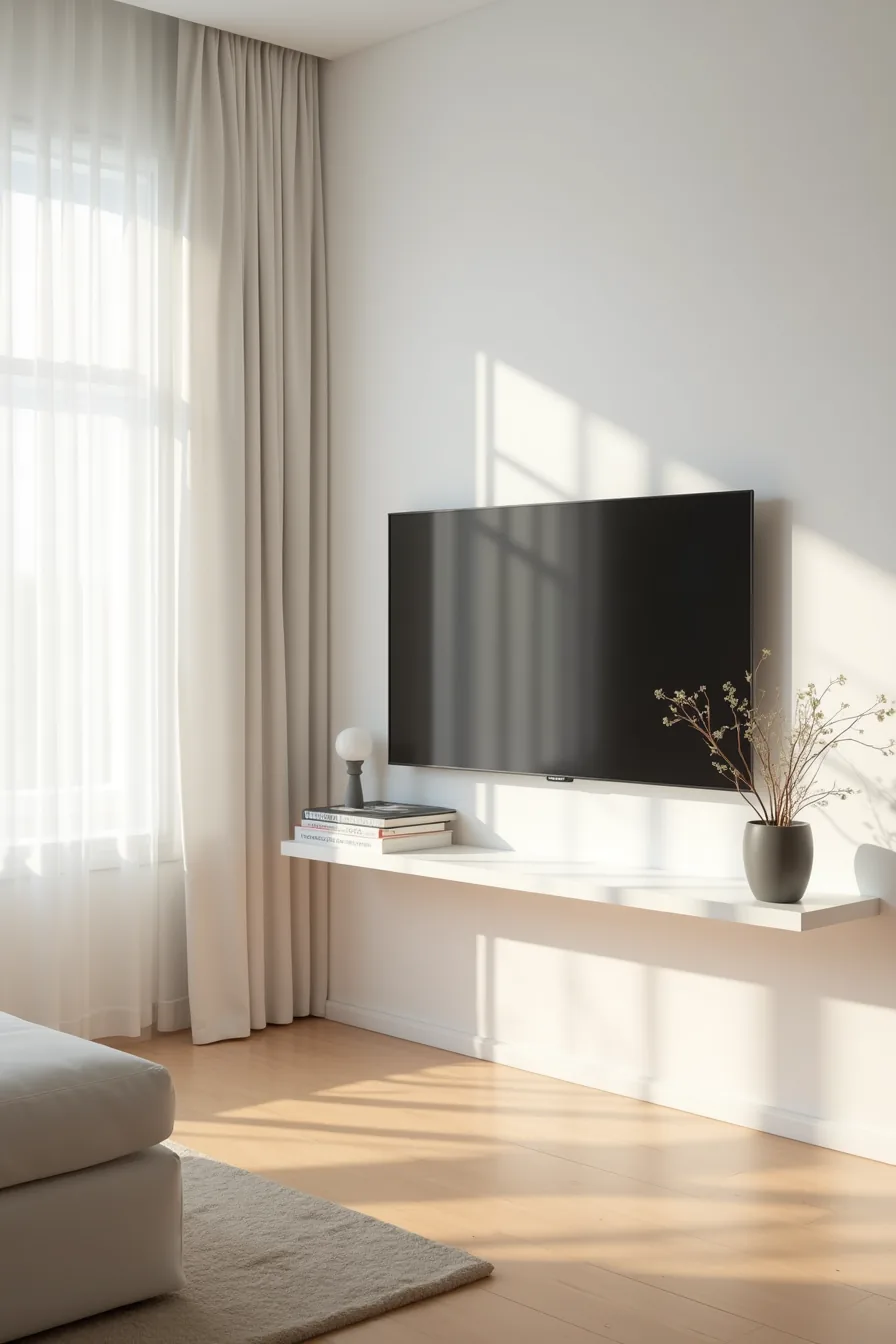
Leaving some wall blank is a deliberate choice, not an empty one. A floating shelf mounted to the right of the TV, holding a single potted plant, gives the eye a resting point while the white wall carries the visual weight. The indirect lighting along the shelf edge adds a soft glow that separates the TV from the wall without needing a backlight or a full accent-color treatment.
This setup suits busy households where the TV wall already anchors a cluttered room, it works because it subtracts rather than adds. The floating shelf should sit 6-8 inches above the TV’s bottom edge, and the plant should stay under 18 inches tall to keep the proportions balanced. The main maintenance is dusting the exposed shelf surface and wiping the plant’s saucer; there are no frames to align and no gallery layout to rebalance over time.
Adapting Large-Wall Proportions to Your Room Size
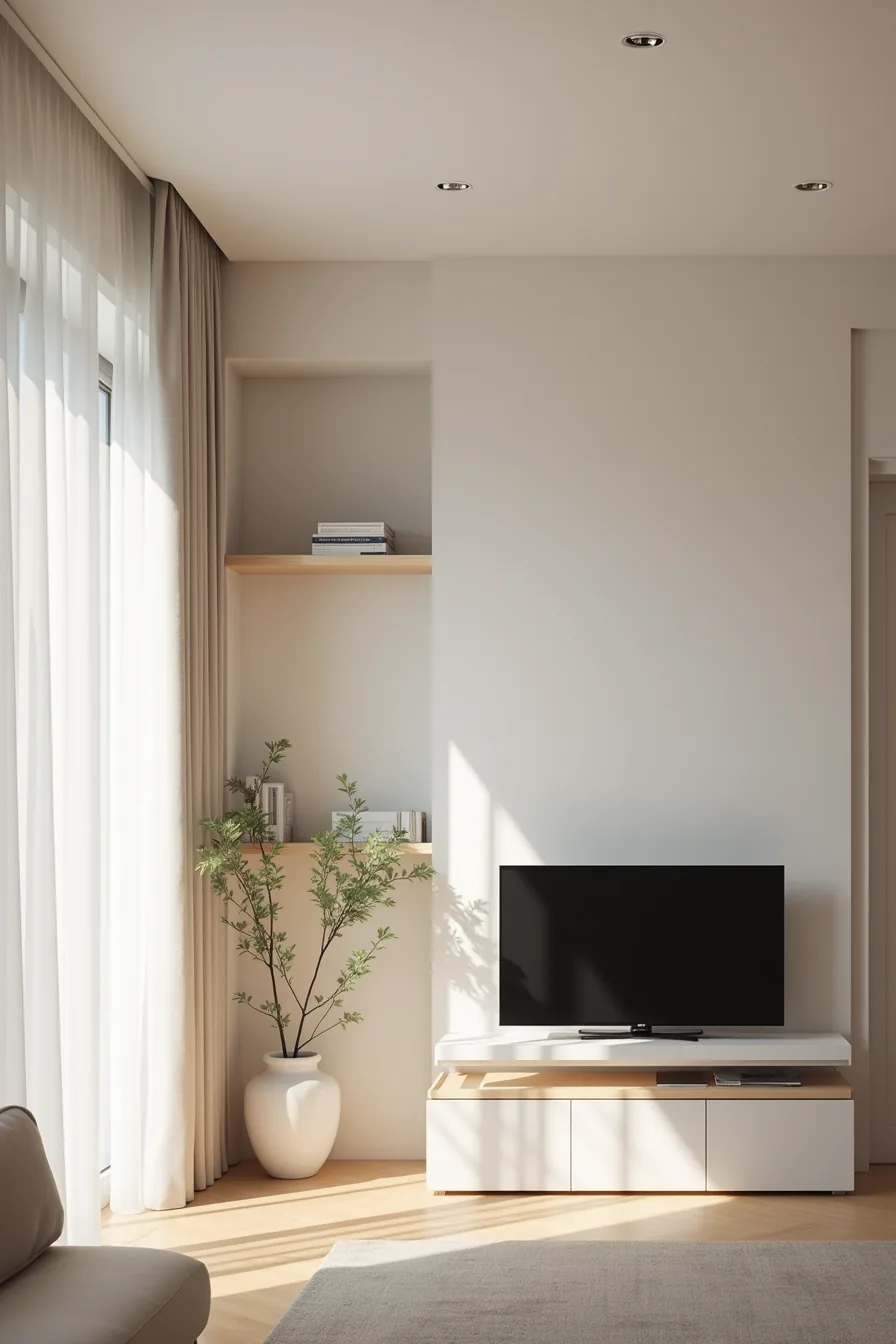
Your TV should occupy roughly one-third to one-half of the wall’s width, measured from edge to edge. In a compact living room, that means a 55-inch screen on a narrow wall with a single floating shelf above it keeps the composition tight, you leave the remaining wall bare rather than filling it, which prevents the space from feeling cramped. For an expansive open-plan room, a 75-inch screen flanked by floor-to-ceiling built-in cabinetry anchors the zone without making the TV float awkwardly in the middle of a vast surface.
The deciding factor is viewing distance, not sheer wall size. If your sofa sits 6-8 feet from the screen, even a 65-inch TV on a 10-foot wall can overwhelm the sightline; step back to 10-12 feet and the same setup feels proportional. In small rooms, stick to floating shelves and single accent panels, they add depth without eating floor space.
In large rooms, tall built-ins or full-wall paneling are worth the investment because they give the wall a defined architectural purpose.
Where to start
You don’t need to commit to a full wall build before testing proportions. Tape out the TV’s footprint and the proposed surround on the wall with painter’s tape, then live with it for 48 hours. This reveals scale problems, sightline issues, and clearance conflicts before you spend money.
Your next step: measure the viewing distance from your primary seat to the wall, then choose the largest TV size that fits that distance without exceeding a 30-degree horizontal viewing angle. That single measurement filters out half the design options above and tells you whether you need a frame, a cabinet, or a full built-in.
Frequently Asked Questions
What size TV is considered ‘large’ for a living room wall?
Most designers consider 65 inches and up as large for a living room. For truly spacious walls, 75 to 85 inches is the common range. Your viewing distance, not just wall size, should ultimately decide the exact diagonal.
How far should a TV be from seating in a large living room?
For a 65-inch screen, sit 8 to 10 feet away. A 75-inch model needs 9 to 12 feet, and an 85-inch screen performs best from 10 to 13 feet. Use these ranges to balance immersion against eye strain.
Can you make a large TV wall work in a small living room?
Yes, but only with a 65-inch screen at most and a shallow mount. Keep the console low and use a light wall color to reduce visual weight. Never let the TV exceed roughly 40 percent of the wall’s width.
What’s the best way to hide cables on a large TV wall?
Install an in-wall cable management kit with a power outlet behind the TV, this is the cleanest permanent route. For rentals, use a paintable cord cover raceway that runs vertically to the console. Always verify local electrical codes before cutting.