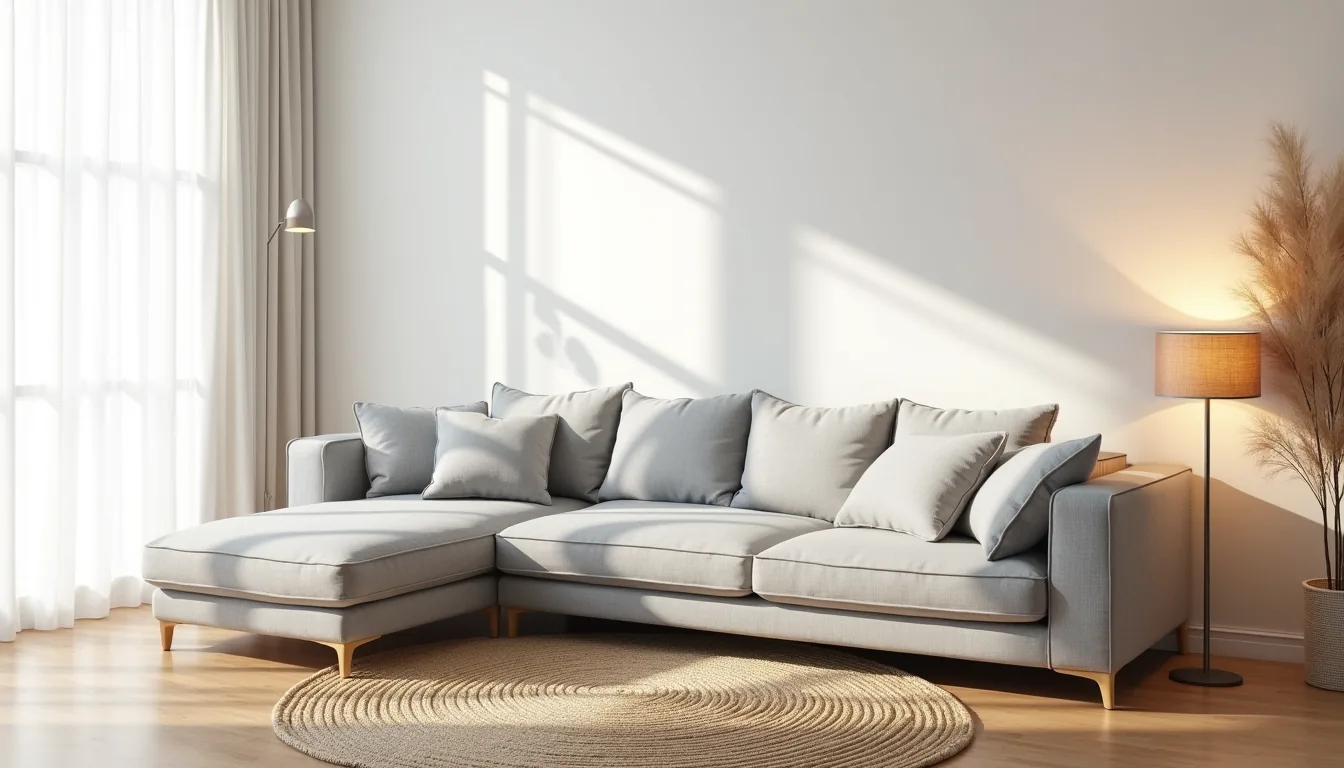
A lounger sofa is a deep-seated, chaise-style or fully reclining piece designed for stretched-out comfort, and it works best when you match its footprint and recline mechanics to your room’s actual traffic flow. Before you commit, you need to know whether you want a fixed chaise, a power-recline mechanism, or a convertible sleeper, each changes your clearance needs and budget. The right choice hinges on your wall space, daily seating habits, and whether you’re furnishing a studio apartment or a sprawling family room.
Here are six distinct approaches, from renter-friendly modulars to investment-grade leather loungers, with the dimensions, maintenance, and layout trade-offs laid out so you can decide without guesswork.
Key takeaways
- Measure your room before buying: a full chaise lounger needs at least 45 inches of floor space on the chaise side, while a compact version works in a 10- by 12-foot room.
- Flip your chaise orientation to avoid blocking doorways or windows; place the long end against a wall with 16-20 inches of clearance for a walking path.
- Under $800, a U-shaped modular sectional with two movable ottomans gives you lounger flexibility without the custom-upholstery cost, though expect lower-density foam that needs rotating every 3 months.
- For lasting support, invest in a kiln-dried hardwood frame and a 2.0-2.5 lb density high-resiliency foam cushion; expect to re-fluff and rotate cushions weekly for the first year to prevent sagging.
Deep-Seat Comfort vs. Compact Footprint
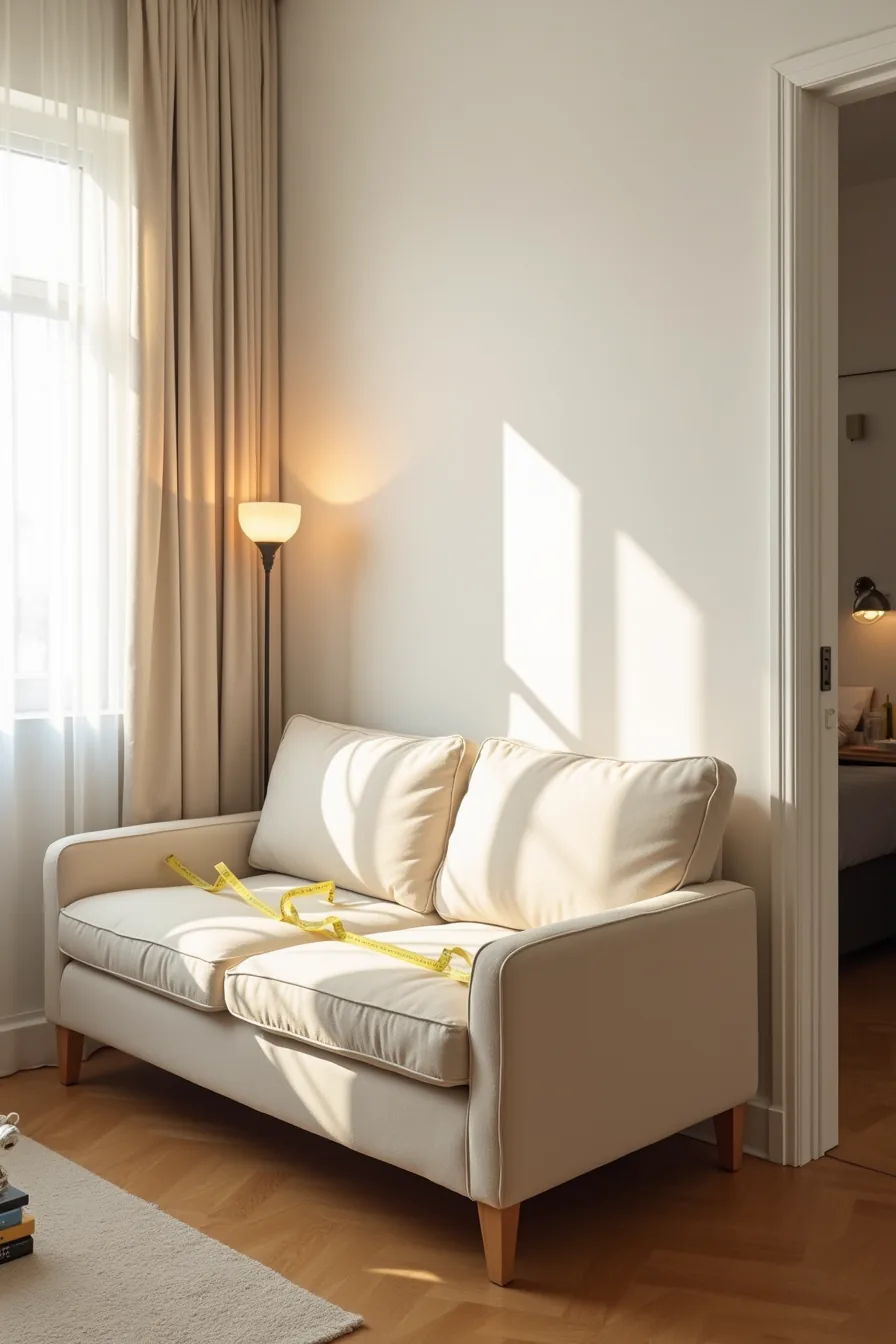
The lounger sofa’s defining feature is its depth, most run 36 to 42 inches from backrest to front edge. That extra 6 to 8 inches over a standard couch is what lets you sit cross-legged, recline fully, or nap without your knees hanging off. But you pay for that comfort in floor space: a 40-inch-deep lounger needs roughly 12 square feet just for the seat, plus 18 to 24 inches of clearance for walking or opening a nearby door.
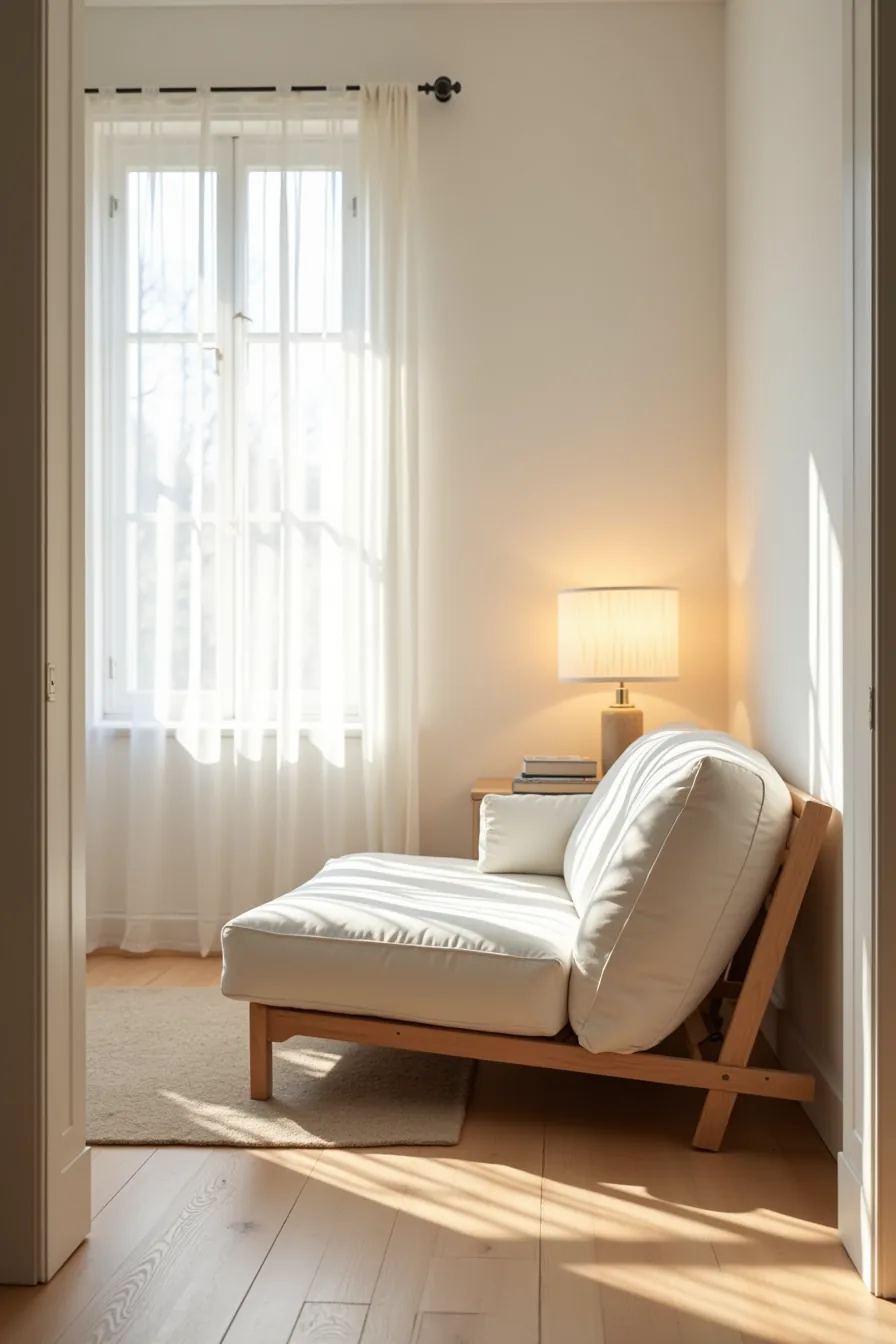
In the corner setup you’re looking at, a measuring tape laid across the seat confirms the trade-off. The sofa sits perpendicular to the window, maximizing light access, while the narrow doorway behind it stays clear because the lounger’s depth, not its width, is what eats into the path. For a small studio, stick to a depth of 36 to 38 inches; you lose some sprawl but keep a functional aisle.
Medium rooms can take the full 40 inches, while large spaces can push past 42 inches only if you place the sofa away from traffic lines entirely.
Chaise Orientation: Left-Arm, Right-Arm, and Floating Layouts
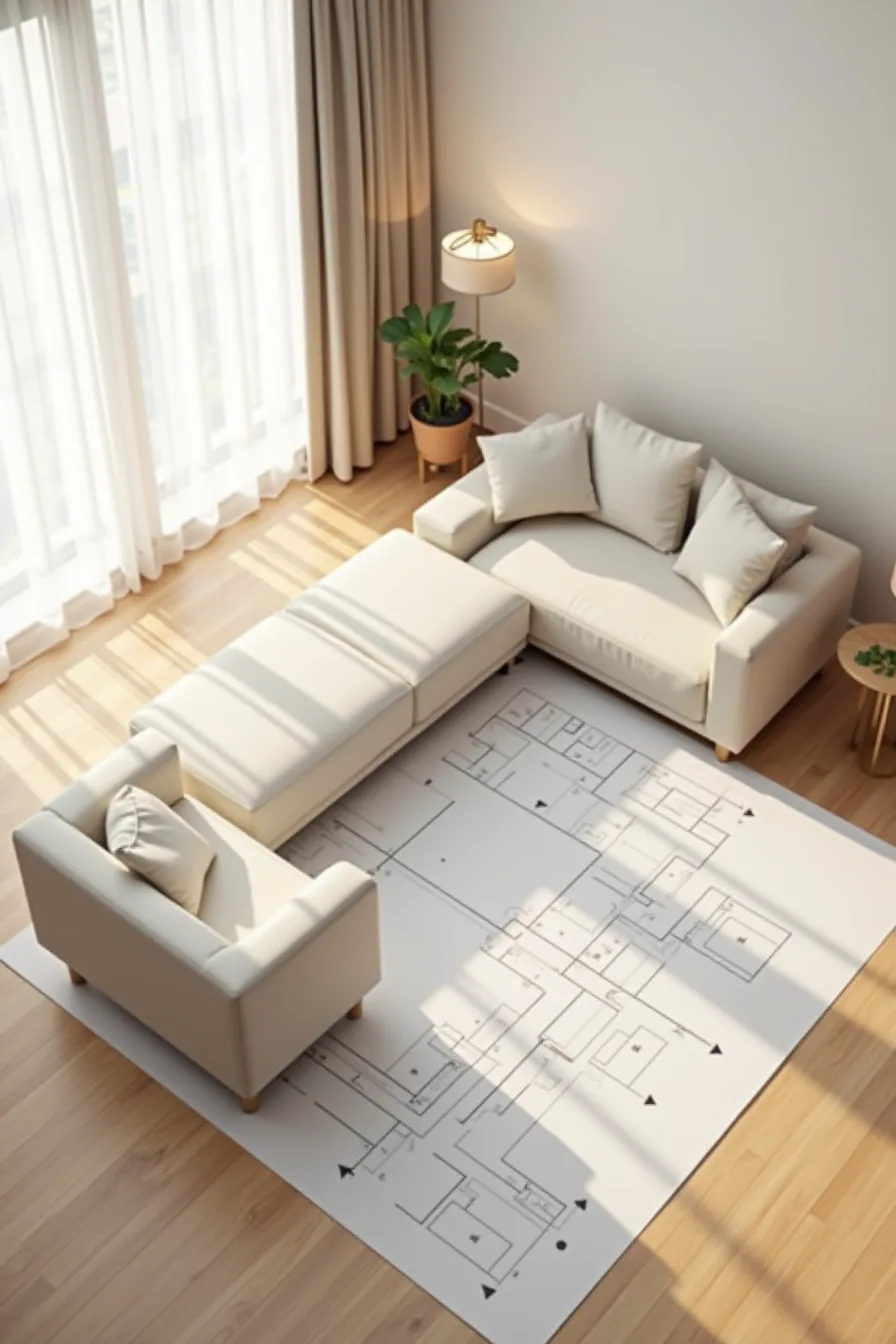
The chaise orientation determines how your lounger sofa directs traffic, not just its visual balance. A left-arm chaise (chaise on the left when you face the sofa) pushes traffic to the right side of the room; a right-arm does the opposite. Choose based on your entry point: the chaise should sit farthest from the door so it blocks nothing.
A modular lounger sofa with a detachable chaise gives you a third option, floating the chaise at a 45-degree angle from the main seating unit. The floor plan shows this arrangement on a light wood floor, with furniture placement lines tracing a clear walking path behind the chaise and alongside the main sofa. This works when you’ve 24 inches or more of clearance on both sides, because it breaks the room’s grid and creates a secondary seating zone without anchoring the chaise to a wall.
The trade-off: a floating chaise needs a rug or floor marking to visually stabilize it, and you must leave the back edge exposed, not shoved against furniture. If your room is under 10 feet wide, skip the float and stick to a wall-anchored left- or right-arm layout instead.
Budget Route: Sectional Lounger Under $800
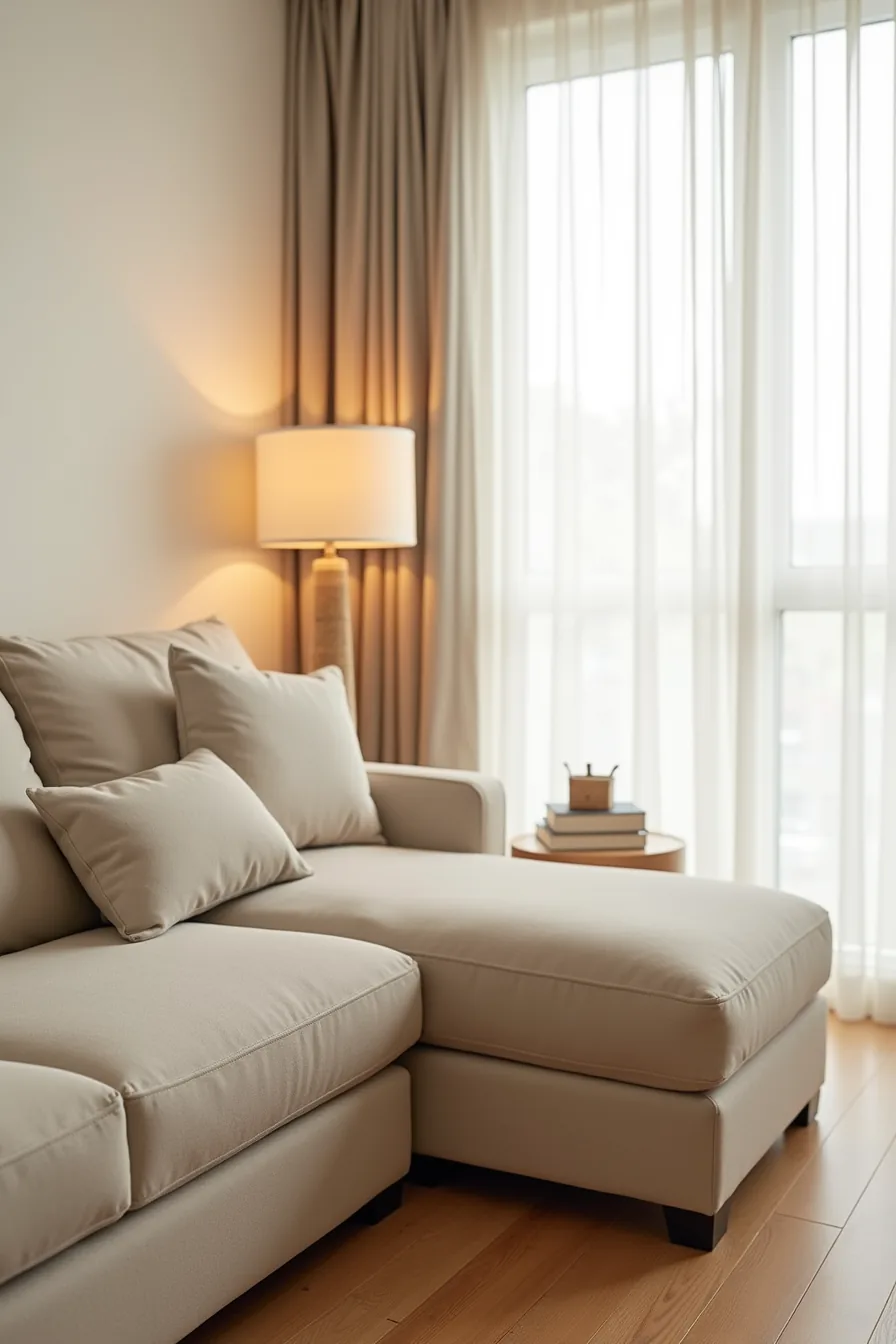
For under $800, a microfiber sectional lounger delivers the chaise experience without the four-figure price tag. The beige microfiber example in a modest living room with laminate flooring shows what you’re actually getting: a tightly woven synthetic fabric that resists stains and fading, but one that will pill and flatten in high-contact zones like the chaise seat within 2–3 years of daily use.
Mass retailers hit this price point by cutting corners you can’t see until assembly. Expect a hardwood or engineered-wood frame with staples rather than dowels, and a weight limit around 250–300 pounds per seat, fine for average use, not for jumping kids or heavy entertainers. The visible stitching at the arm joint and fabric seam is a tell: it’s functional but won’t stay razor-sharp after repeated sitting.
The side table and basic throw pillow cost extra but anchor the setup. Buy a separate chaise cushion cover ($30–50) to double the fabric’s life, and vacuum the crevices weekly, microfiber traps dust visibly on laminate floors. Skip the fabric protector spray; it stiffens the weave and accelerates cracking at stress points.
Renter-Friendly Route: Modular and Moveable Options
Modular lounger sofas solve the two problems that plague renters: narrow doorways and stairs that won’t accommodate a one-piece frame. A three-section modular lounger on a furniture dolly, with its detached legs and wooden frame pieces leaning against the wall, breaks down into components that fit through a standard 30-inch doorway, no disassembly tools beyond an Allen wrench required.
Choose sections sized 28–32 inches wide each. That keeps individual pieces under 80 pounds, so you can move them alone without hiring help or risking a herniated disc on moving day. The trade-off is seam lines where sections meet; sitting directly on a junction feels a hard edge through the cushion, so position throw pillows over the gaps.
Look for modular systems with interchangeable backs and seats rather than fixed chaise attachments. You can reconfigure the layout in a new apartment without buying new pieces. Skip any modular lounger that requires tools to separate sections, the whole point is adaptability, and a hex-key dependency will frustrate you at 11 p.m.
In a parking garage.
Investment Route: Upholstered Lounger Sofas for Longevity

A hardwood-frame lounger sofa with kiln-dried joinery and high-density foam cushions is the purchase that outlasts three rental-grade alternatives. Expect to pay $1,800–$4,000 for a piece with eight-way hand-tied springs, a solid kiln-dried hardwood frame, and a down-blend wrap over a high-resilience foam core. At that price, you’re buying a 15–20 year lifespan versus the 5–7 years a budget frame delivers.
The charcoal linen lounger sofa with brass nail head trim along the arm and hand-stitched piping on the cushions works because linen tightens with age rather than sagging, and the brass trim protects the arm edge from the exact wear point your forearm hits daily. Match the hardwood flooring’s warm undertone to the frame’s finish so the piece grounds the room rather than floating in it.
This route pays off when you plan to keep the sofa through at least one move and one reupholstery cycle. Factor $600–$1,200 for professional reupholstery at year 10, and buy a fabric with a high rub count, over 30,000 double rubs, if you’ve kids or pets. A linen weave at that grade resists pilling but stains easily; treat it with a fabric protector at purchase and vacuum weekly to pull dust from the weave before it embeds.
Style a Lounger Sofa for Family Movie Nights

A navy lounger sofa becomes the anchor of a family screening room when you layer it for function first. Drape a chunky knit throw blanket over the chaise end so it stays within reach of whoever claims that spot, typically the person who runs cold, so keep it oversized enough to cover shoulders and lap simultaneously. Scatter pillows in varying sizes, but cap the total at five for a six-seat configuration; beyond that, you’re fighting for sitting space during a three-hour film.
Position a wooden side table within arm’s reach of the chaise, not the middle seat, since that’s where drinks and remotes actually land. Choose one with a lower shelf to stash extra blankets when not in use. Place a floor lamp behind the arm opposite the chaise and aim it at the ceiling; indirect light reduces screen glare while still letting you see snack bowls during scene changes.
For a full movie night setup, keep the table’s surface clear except for the ceramic mug and remote visible here, clutter on side tables becomes the first casualty of a dark room.
Your decision checklist
Before you buy, measure your doorway and hall clearance, many lounger sofas arrive in two or three sections, but some chaise frames don’t split. Check the seat depth against your height: 20–22 inches suits most people under 5’10”, while taller users need 23–25 inches. Verify the fabric’s rub count (30,000+ for homes with kids or pets) and whether the chaise cushion flips for even wear.
What to do first: Sketch your room’s dimensions on graph paper, mark your TV and walkways, then tape the sofa’s footprint on the floor. Live with that outline for two days, if you still have clear paths and comfortable sightlines, you’re ready to order.
Frequently Asked Questions
What is the difference between a lounger sofa and a regular sectional?
A lounger sofa includes a chaise extension, an attached, legless seat for stretching out, whereas a standard sectional typically has symmetrical seating with a corner. Loungers prioritize reclining comfort over uniform seating capacity.
How much space do you need for a lounger sofa in a small apartment?
For a small apartment, you need at least 8–10 feet of wall length and 4–5 feet of floor depth. A compact lounger with a 60–70 inch chaise fits most studio layouts without blocking doorways.
Can you put a lounger sofa against a window or does it need wall clearance?
Yes, you can place it against a window, but leave 6–12 inches of clearance for curtains and airflow. Avoid blocking a radiator or baseboard vent; the chaise should face the room, not the glass.
What fabric holds up best for a lounger sofa used daily by a family?
High-performance polyester or solution-dyed acrylic blends, rated for 50,000+ double rubs, resist stains and fading. Crypton or Sunbrella fabrics are ideal; avoid natural linen or cotton, which pill and stain quickly with heavy use.