

A simple sofa is the most forgiving piece of furniture you can buy, provided you match its scale to your room, choose upholstery you can live with for years, and place it with deliberate intent. That flexibility means six genuinely different approaches can all qualify as “simple,” from a slipcovered two-seater to a tight-backed modular unit. The right choice depends on your square footage, your tolerance for maintenance, and whether you plan to keep it for three years or fifteen.
Below, you’ll find concrete dimensions, fabric trade-offs, and placement rules to pin down your version before you spend a dollar.
Key takeaways
- Start with neutral upholstery in a medium-toned gray, beige, or oatmeal to create a foundation that pairs with any accent color and hides everyday wear better than stark white.
- Anchor the room with scale: a 72–84 inch three-seater suits most medium living rooms, while a 60–66 inch loveseat prevents crowding in small spaces under 10 by 12 feet.
- Choose performance fabrics with a rub count of 30,000–50,000 for households with kids or pets, and expect to vacuum cushions weekly and rotate them monthly to prevent sagging.
- Layer seasonal textures like linen throws and wool pillows to shift the sofa’s look without reupholstering, and budget $150–$400 for a slipcover as a renter-friendly alternative to permanent fabric changes.
Neutral Upholstery as Your Foundation
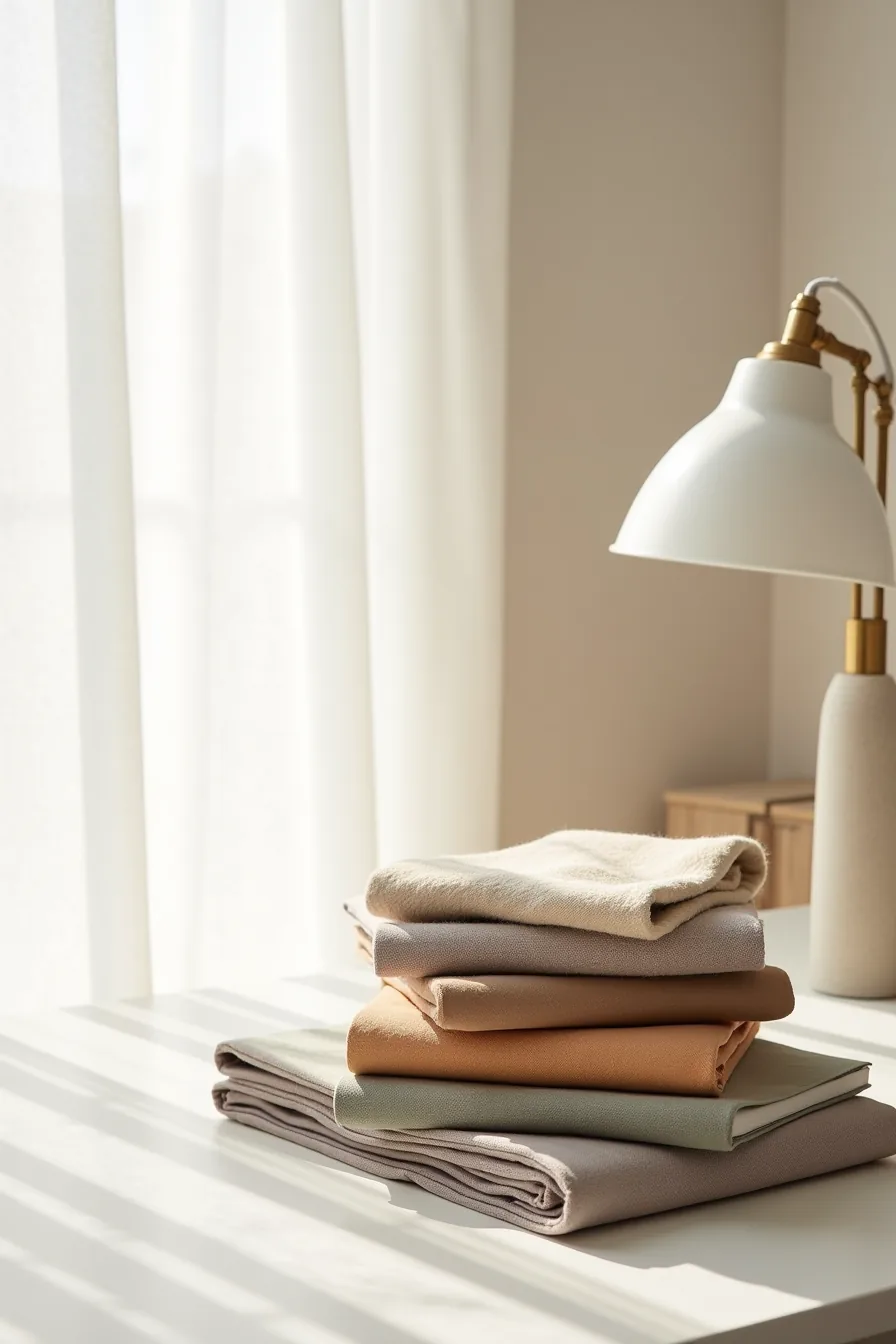
A neutral palette on a simple sofa is the single most effective way to keep your living room flexible for years. Oatmeal linen, greige polyester blends, warm taupe performance fabrics, and soft gray leather each bring different personalities, linen reads relaxed and breathable, while leather develops character and requires almost no upkeep beyond occasional conditioning.
Choose your fabric weight based on how the sofa will actually be used. If you’ve kids or pets, a tight-weave performance fabric in taupe or greige resists stains and stands up to daily wear. For a formal or low-traffic sitting room, linen offers a softer, more textured look but wrinkles easily and shows dirt faster than synthetic blends.
Stick to colors with warm undertones, oatmeal, greige, and taupe, because they pair effortlessly with both cool and warm accent pieces. Gray leather reads more modern but can feel stark against warm wood tones. The right neutral is the one that disappears into the background, letting your pillows, throws, and artwork carry the visual interest without competing for attention.
Simple Base, Bold Accents Strategy
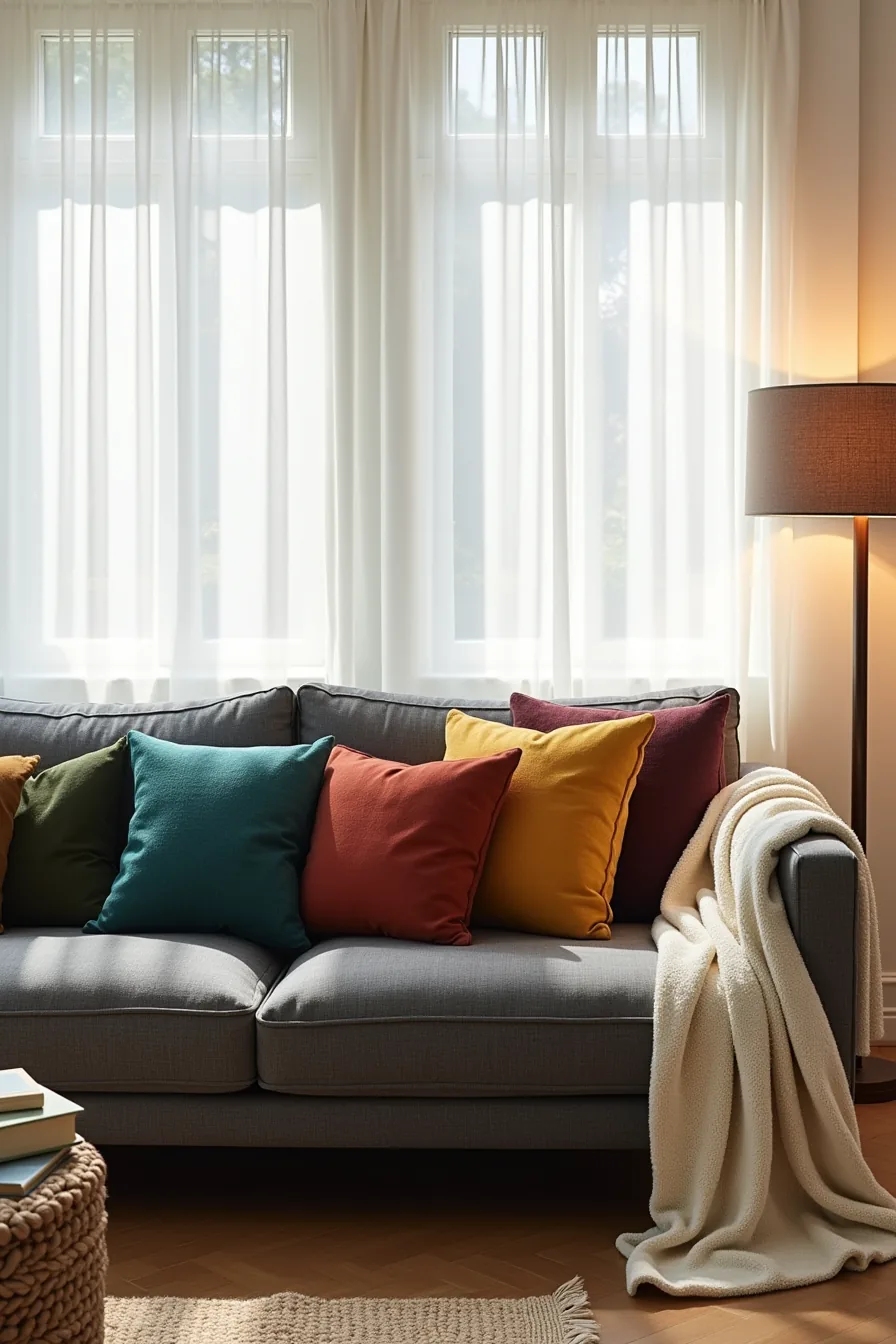
Turn your simple base into a rotating gallery by concentrating color exclusively in the accents. A charcoal gray sofa provides the darkest, most forgiving canvas of any neutral, five throw pillows in emerald, sapphire, rust, mustard, and burgundy create immediate visual weight without overwhelming the frame. The offset pillow arrangement (three on one side, two on the other) breaks the symmetry that makes sofas feel stiff, while a cream throw blanket draped over one arm adds a light counterbalance to the deep jewel tones.
This strategy works best in rooms with white, beige, or light wood walls, where the accents become the only saturated elements. The simple base bold accents approach suits renters who can’t paint and homeowners who tire of trends quickly. Swap pillow covers seasonally, burnt orange and rust for autumn, emerald and sapphire for winter, at roughly $15–$30 per cover.
Choose 18–20 inch square inserts with down-alternative filling so the pillow shape stays crisp under the cover swaps.
Timeless Silhouette: Scale and Proportion
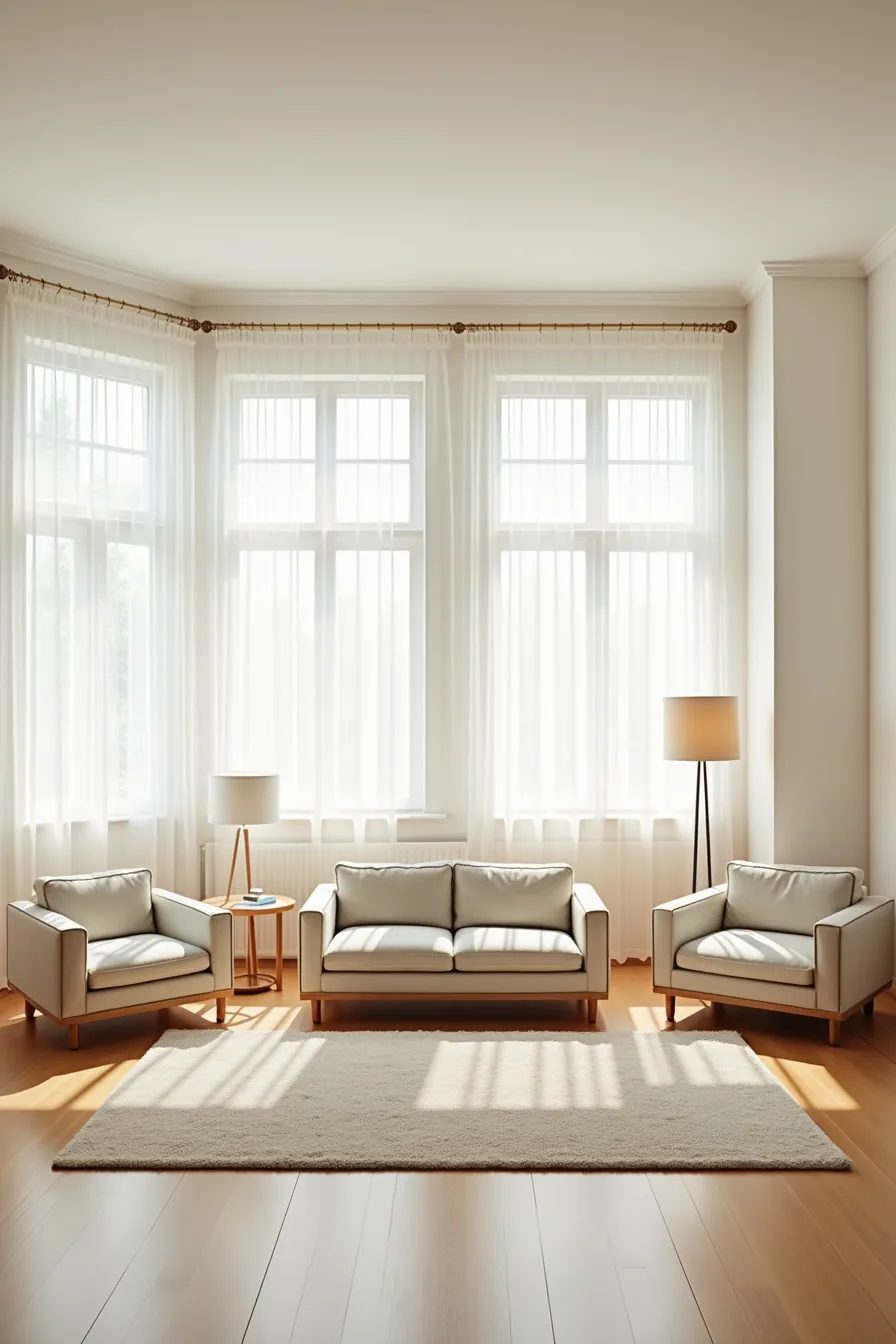
A timeless silhouette only works if the proportions fit the room. That means measuring floor space before you shop, not just eyeballing the wall. For a compact apartment, a three-seater around 72–75 inches wide keeps walkways clear; most standard living rooms handle an 84–88 inch sofa comfortably; and a sectional spanning 120 inches or more belongs only where you’ve at least 36 inches of clearance on the open side for traffic flow.
Depth matters as much as width. Sofas with 36–40 inch seat depth suit loungers, while 32–34 inches keeps upright conversation easier. Arm height typically runs 22–28 inches; lower arms read more casual and make the sofa feel longer, while taller arms add structure and back support.
In a 12 by 14 foot room, a deep 40-inch sofa with low arms dominates the space; in a 16 by 20 foot room, the same piece looks undersized, so match the silhouette to the wall length, leaving 12–18 inches of visible floor on each side of the frame. The three sofas on their own area rugs demonstrate this: the 72-inch version anchors a small corner, the 84-inch balances a standard wall, and the 120-inch sectional claims a large open plan without crowding the surrounding floor space.
Material Choices for Durability and Maintenance
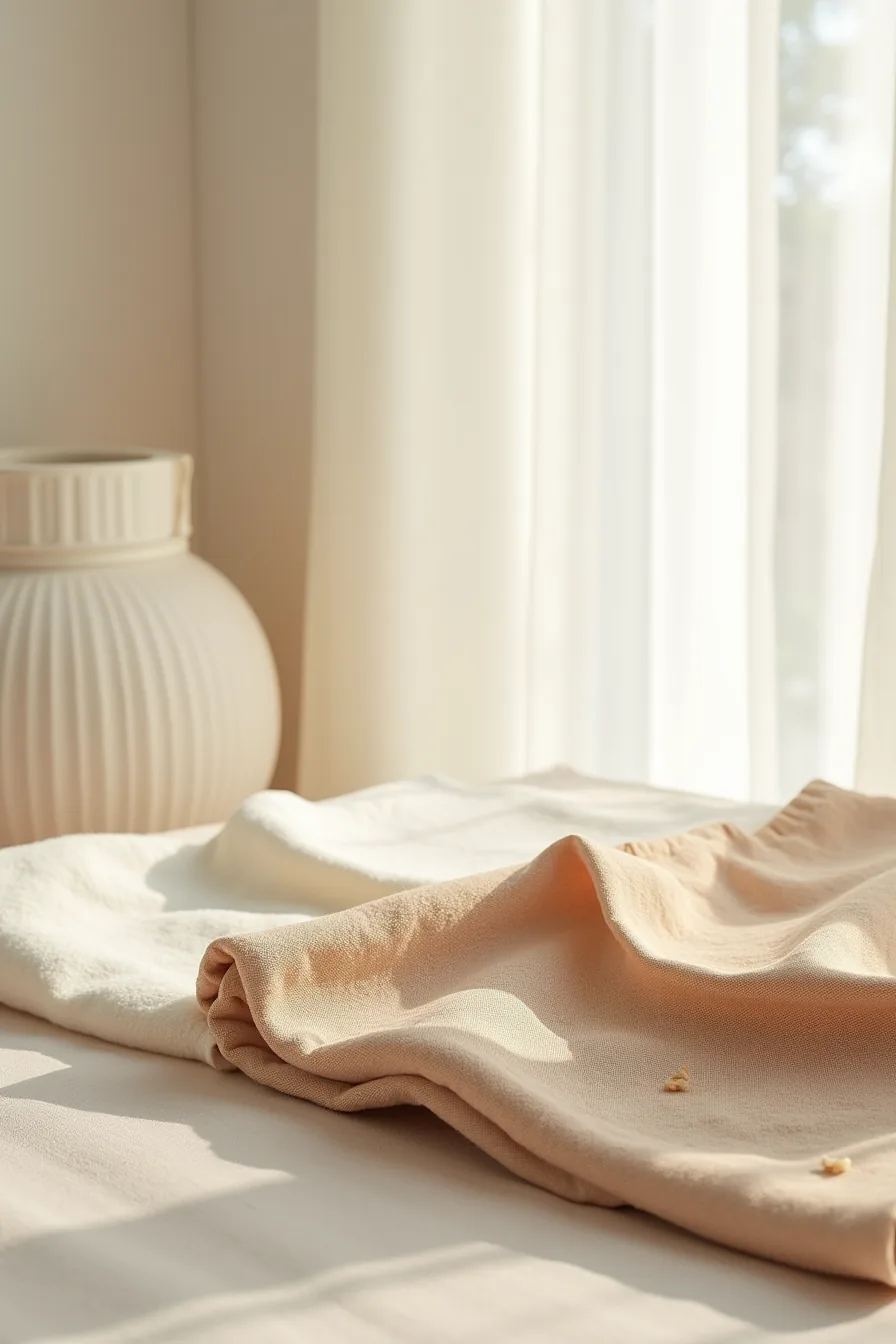
The fabric you choose determines how much effort this sofa will demand over its lifespan. Linen drapes beautifully and breathes well, but it stains readily, expect water droplets to darken the weave immediately and require professional cleaning for oil-based marks. Polyester blends offer the opposite trade-off: they’re stain-resistant and budget-friendly, typically lasting 5–7 years, but they can pill and feel less breathable in warm climates.
Performance fabrics, engineered with tight weaves and protective finishes, sit in the middle: they repel water and shed crumbs easily while costing 20–40% more than standard polyester. Leather is the long-term play, a quality hide lasts 15–20 years and wipes clean with a damp cloth, though it needs conditioning twice yearly and scratches visibly with pets. A flat lay of these four materials tells the story at a glance: the matte linen sample darkens where water hits, the polyester beads droplets, the performance weave lets crumbs slide off, and the leather surface wipes back to its original sheen.
Match the material to your actual lifestyle, not the aesthetic ideal, and the sofa will look simple for years rather than simply worn.
Refresh a Simple Sofa With Seasonal Textures
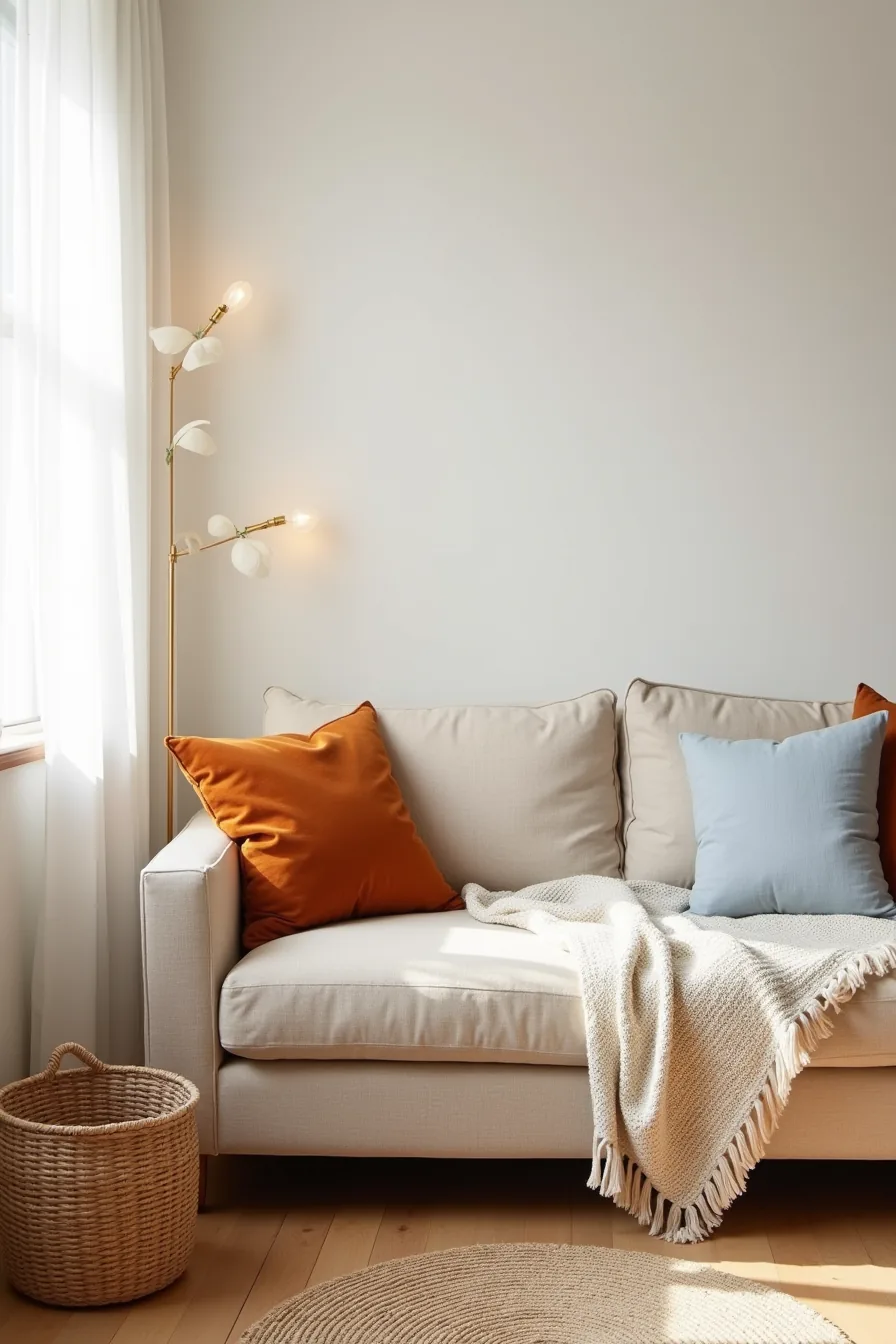
Rotating textures is the cheapest way to make a simple sofa feel intentional year-round, and you only need three layers: pillows, a throw, and a storage basket. For autumn, swap in burnt orange velvet pillows and a chunky knit throw, the velvet’s short pile traps warmth visually, while the knit’s open weave adds literal coziness. Come spring, replace both with pale blue linen pillows and a lightweight cotton throw; linen’s loose weave reads cooler and dries fast after unexpected spills.
Store off-season pieces in the woven or wicker basket beside the sofa, never in plastic bins, which trap moisture and encourage mildew in natural fibers. A standard 20-by-20-inch pillow insert fits most covers, so buy two sets of covers per insert instead of whole pillows; you’ll halve your storage footprint. Match the basket’s scale to the sofa: a 2-seater needs a basket roughly 18 inches tall, while a 3-seater calls for 24 inches.
Set a calendar reminder for the equinoxes to swap, that keeps the rotation routine instead of a vague someday task.
Budget, Renter, and Investment Routes
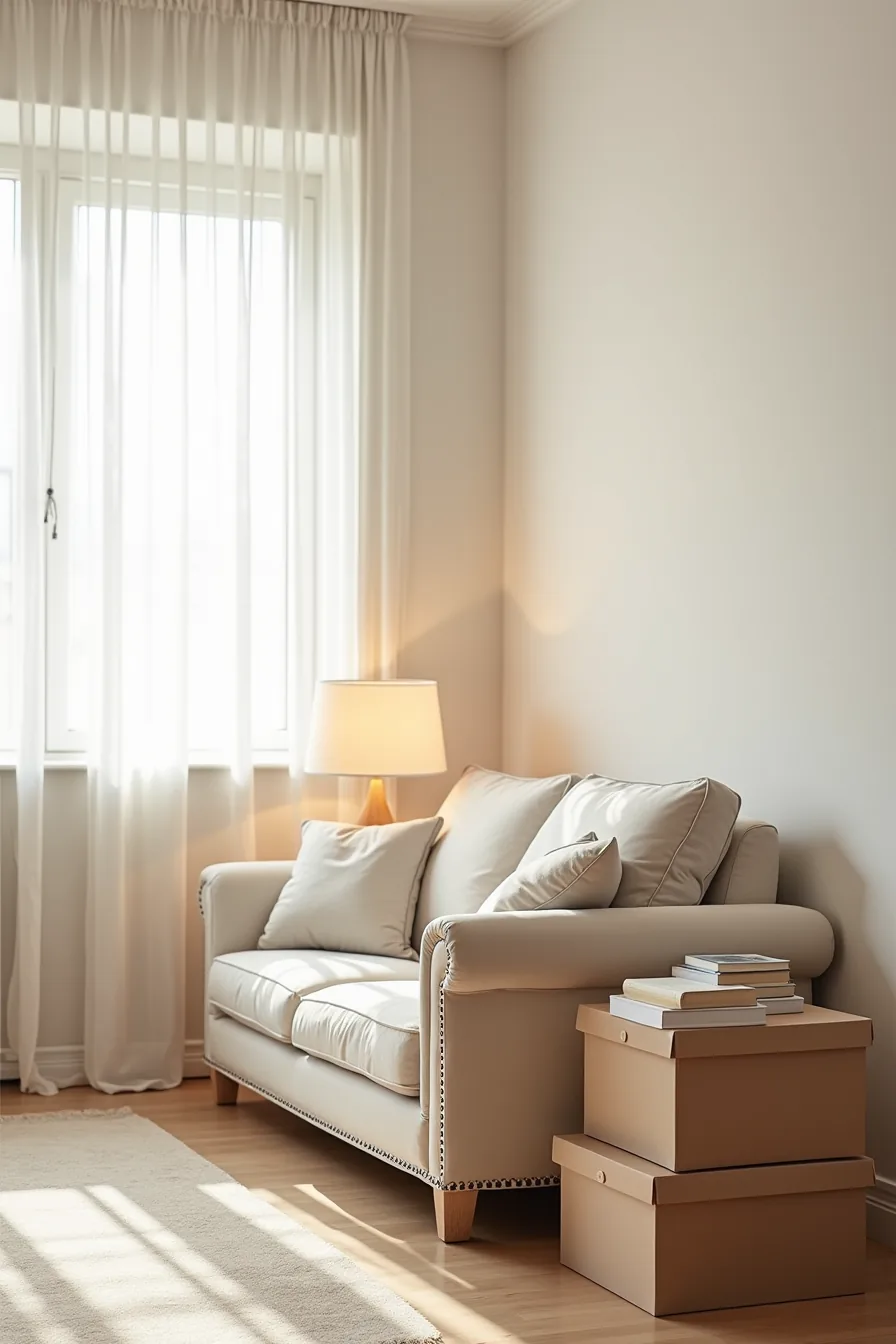
The flat-pack modular sofa stacked in unassembled boxes beside the frame is your budget route: expect to pay $500–$900 for a 3-seater, with 2–4 hours of assembly and a 1–2 year lifespan before foam flattens. Undo a few bolts and it moves through doorways and up stairwells without complaint, ideal if you relocate often or live in a walk-up.
The mid-range upholstered piece with nailhead trim runs $1,200–$2,500, arrives fully assembled, and typically lasts 5–7 years with weekly vacuuming. The nailhead trim isn’t decorative; it hides the staple line where fabric meets frame, so check that the trim is firmly anchored before buying, loose trim signals a rushed job.
The premium sofa with tight-rolled arms and hand-tufted cushions is the investment: $3,000–$6,000, built on kiln-dried hardwood with eight-way hand-tied springs. The tufting requires regular plumping to keep buttons from pulling fabric taut, and you’ll need professional cleaning every 18–24 months. This is the buy-once, keep-for-15-years option, best for a permanent home where reupholstering is a realistic future cost.
Where to start
Start with your room’s dimensions, not a sofa photo. Measure the wall you plan to fill, then note door widths and stairwell turns, a 90-inch sofa won’t help if it can’t reach the living room. Next, decide your budget ceiling before browsing, since fabric quality and frame construction scale directly with price.
Your first concrete step: sketch your floor plan on graph paper (1 square = 1 foot) and tape the outline on the floor with painter’s tape. Live with that footprint for 48 hours. If you’re not tripping over it, you’ve found your size.
Then shop with that outline in your pocket, not a Pinterest board in your hand.
Frequently Asked Questions
What size simple sofa fits a small living room without overwhelming the space?
Choose a two-seater or apartment-size sofa measuring 60–72 inches wide. Leave at least 18 inches of walkway clearance in front and 12 inches on each side. Skip chaise extensions.
Can you put a simple sofa in a rental, and what options avoid damage deposits?
Yes. Use a slipcovered sofa with washable, removable covers, no permanent fabric stains. Add felt pads under legs to prevent floor scratches.
Avoid leather or light velvet, which show wear quickly.
How often should you clean a simple sofa, and what’s the best method by fabric type?
Vacuum weekly; deep-clean every 3–6 months. For cotton or linen, use a mild detergent and cold water. For polyester or microfiber, use a damp cloth and mild soap.
Never soak wool or silk.
Does a neutral sofa look boring, and how do you style it to feel intentional rather than bland?
No. Pair it with textured throws, one bold accent pillow, and a contrasting rug. Add a sculptural floor lamp or wooden coffee table. Choose a warm greige or oat tone over stark white for depth.