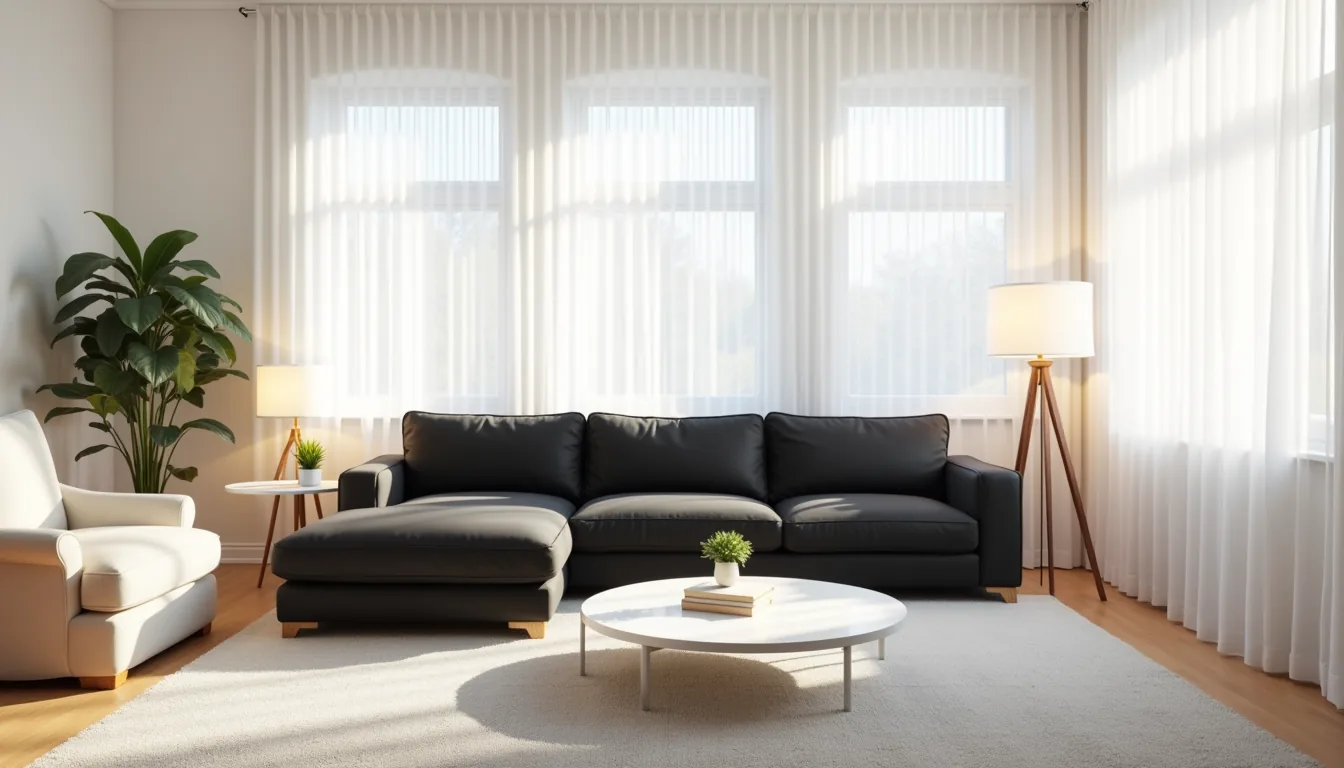
A black sofa is the single most versatile piece of furniture you can own, but it demands a deliberate room strategy to avoid looking like a void. Done right, it anchors a space with sophistication; done wrong, it swallows light and shrinks the room. The solution lies in six specific, reproducible approaches, each with clear trade-offs in cost, maintenance, and scale.
You’ll know exactly which one fits your floor plan and budget by the end.
Key takeaways
Black sofas need texture layering, velvet, bouclé, or leather, to prevent them from reading as a flat, shadowy void in low-light rooms. Warm metal accents like unlacquered brass or oil-rubbed bronze in lamps, legs, and frames add visual heat without competing with the upholstery’s darkness. For small spaces, choose a two-seater or track-arm black sofa with exposed legs and pair it with a light rug to keep the floor plane visually open, leaving at least 18 inches of clearance around the piece. Leather or performance fabric in a matte finish hides pet hair and smudges better than shiny or high-pile alternatives, but expect to vacuum weekly and rotate cushions to avoid permanent body impressions.
Monochromatic Depth: Building Contrast Without Color
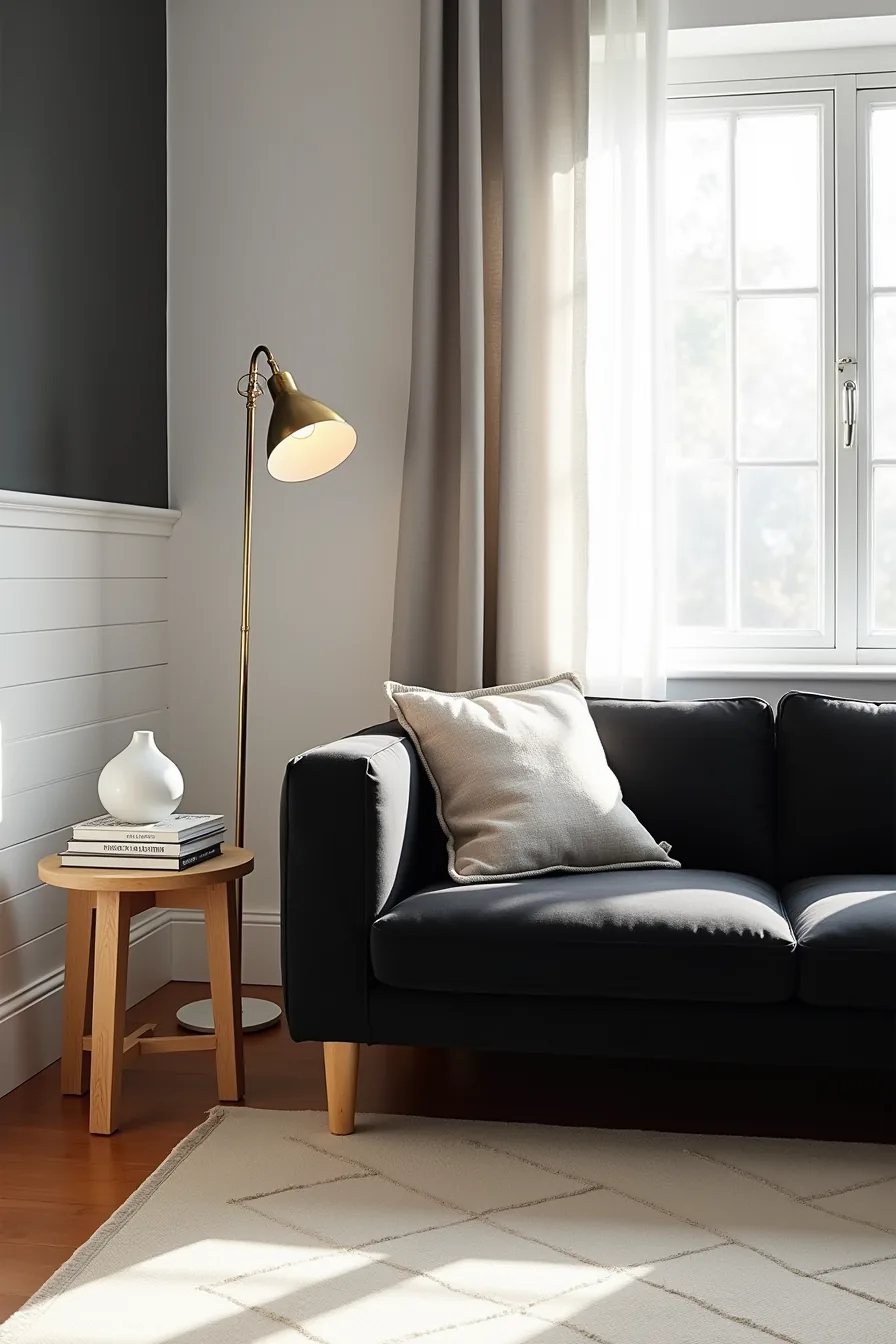
A black sofa doesn’t have to darken a room when you layer grayscale tones with intent. This setup pairs the sofa against a charcoal accent wall, with white shiplap paneling beside it to break the mass and bounce light around the seating zone. The contrast between matte wall paint and the sofa’s upholstery texture keeps the eye moving instead of settling into a shadow.
Material variety does the heavy lifting here. Soft gray linen curtains frame the tall window, while a chrome floor lamp at the sofa’s corner adds a reflective surface that brightens the dark seating area. A light oak side table holding a white ceramic vase introduces warmth without introducing color, and the cream wool area rug with subtle geometric texture anchors the composition while preventing the dark pieces from visually sinking the floor.
This approach suits medium-to-large living rooms with decent natural light, or anyone who prefers calm, gallery-like interiors over high-contrast palettes. To reproduce it, position the sofa perpendicular to the window rather than facing it directly, and aim for at least three distinct light-reflecting surfaces, the shiplap, the chrome lamp, and the rug, within arm’s reach of the seating area. If you want a balanced living room inspiration that won’t feel cold, swap the chrome for brushed nickel and keep the wood tones light.
Warm Accent Strategy: Gold, Brass, and Wood Tones
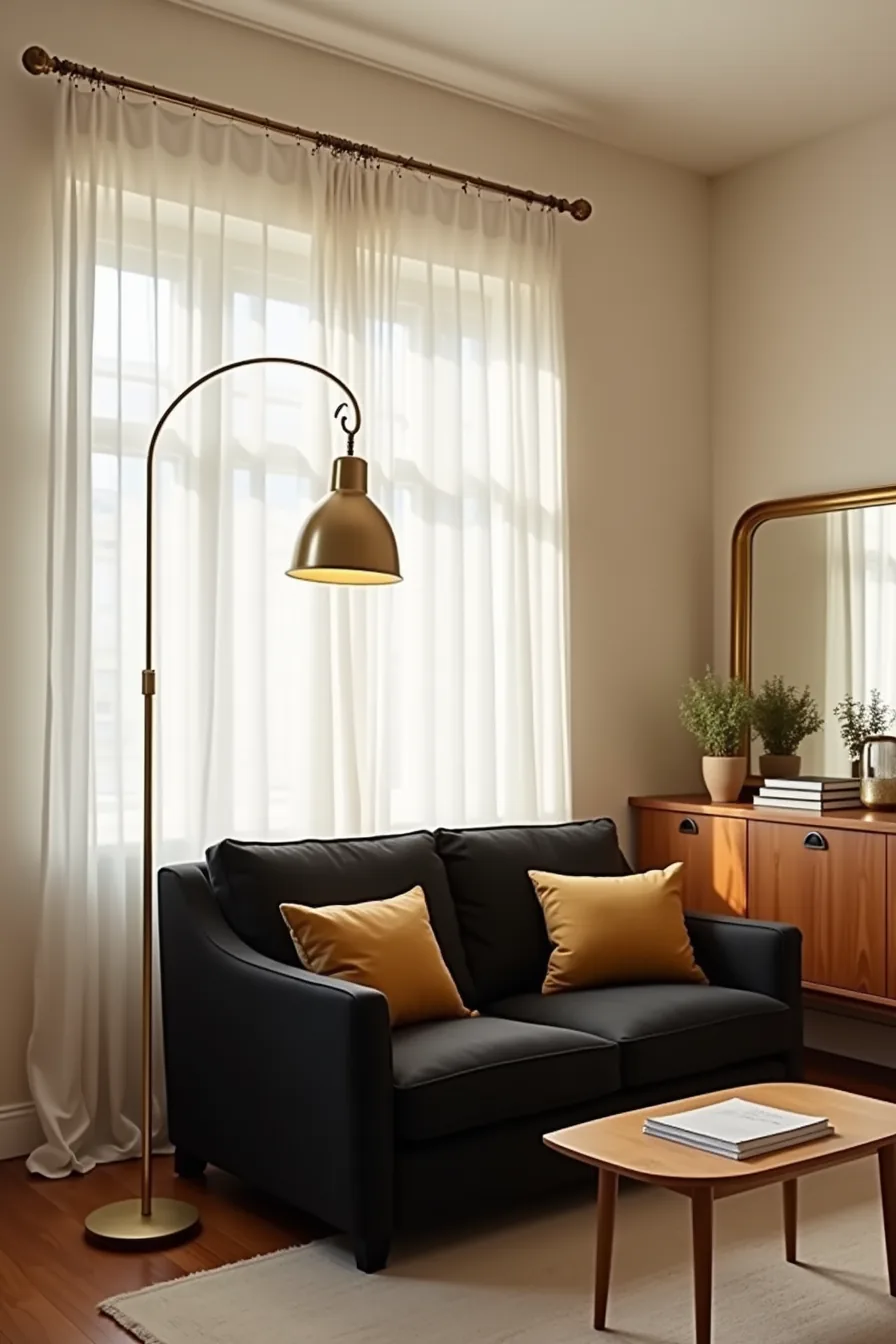
Warm metallics and natural wood neutralize the starkness of a black sofa without diluting its presence. The brass floor lamp arching over the sofa’s arm creates a deliberate frame, drawing the eye to the seating zone while its reflective finish bounces light across the dark upholstery. The brass-framed mirror above amplifies that effect, doubling the available glow in the room rather than letting the sofa absorb it.
The walnut coffee table and honey-toned credenza add warmth in layers of scale. The credenza runs the length of the opposite wall, grounding the room visually, while the coffee table stays low and substantial, roughly 10–14 inches shorter than the sofa seat height, to keep sightlines open. Gold throw pillows bridge the metallics and textiles, creating a visual chain from lamp to mirror to seating.
This strategy suits medium-to-large rooms with beige or greige walls and at least one window near the seating area. To reproduce it, limit warm accents to three zones: one overhead light source, one eye-level reflective piece, and one substantial wood anchor. Keep wood tones consistent, mixed walnut and oak reads as accidental; matched walnut reads as intentional.
In smaller rooms, replace the credenza with a floating shelf at the same height and choose a slimmer lamp arm to avoid overwhelming the space. For a budget route, paint a thrifted wooden sideboard in a warm walnut stain and install a basic swing-arm brass lamp. This is stylish black sofa decor that works best for renters who can mount a mirror but want to avoid drilling into walls for shelving, use adhesive hooks for the mirror or lean it on the credenza instead.
Cool Jewel Tones: Emerald, Navy, and Sapphire Accents
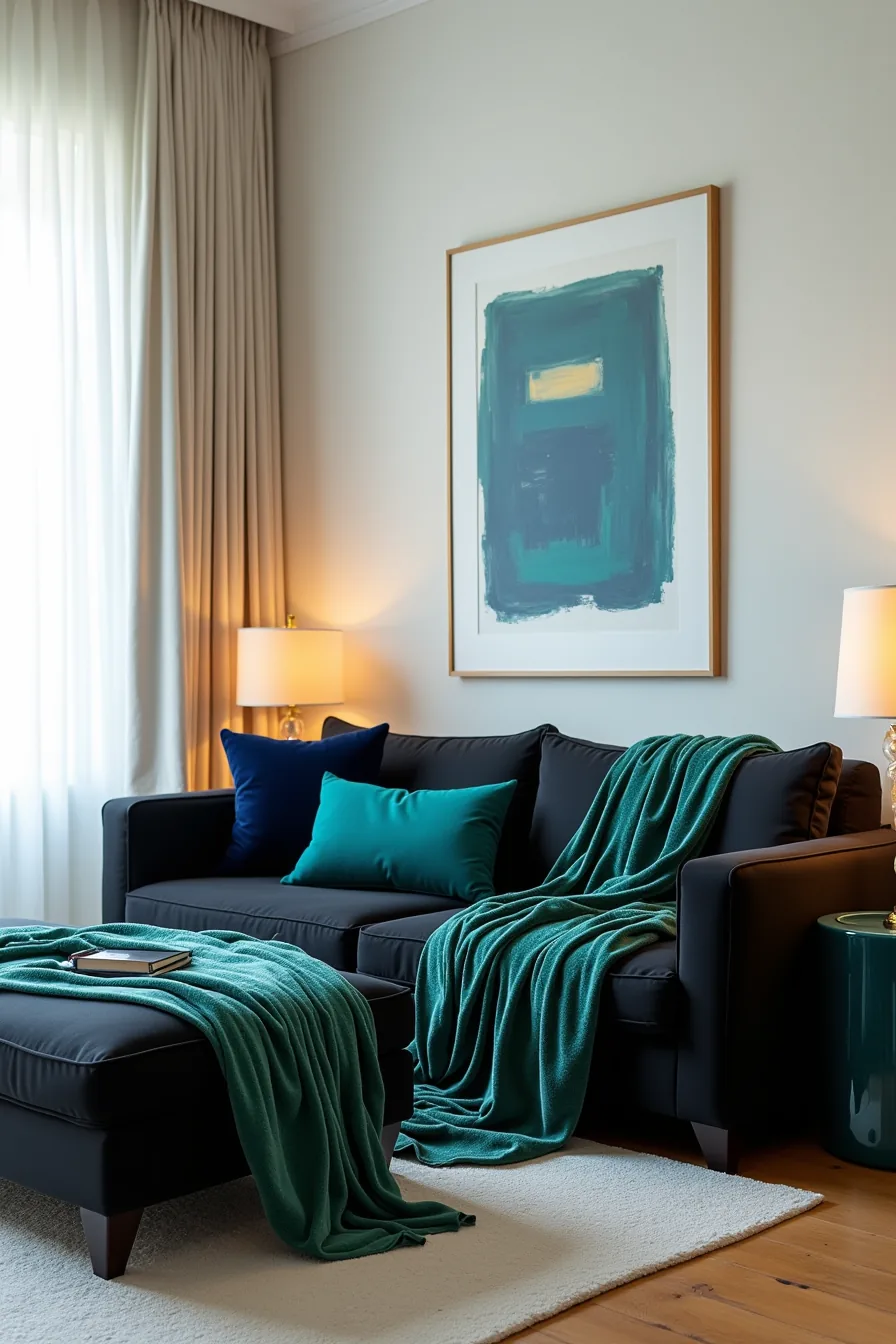
Jewel tones work because they share black’s inherent depth, they absorb and reflect light in similar ways, so the combination reads as sophisticated rather than jarring. A black sofa draped with an emerald velvet throw anchors this palette, while navy and sapphire patterned pillows introduce variation without competing for dominance. The dark teal ottoman in front extends the seating surface while visually shortening the sofa’s run, which helps balance a long wall in medium-sized rooms.
The sapphire-blue ceramic side table functions as both accent and utility, giving you a drink surface without introducing a fourth material into the mix. Above the sofa, a jewel-toned abstract art print on the white wall provides the necessary contrast, without that light backdrop, the deep colors would blur into a single dark mass.
This approach suits north-facing rooms where warm metallics would fall flat. To reproduce it, keep the ratio at roughly three parts jewel-toned textiles to one part ceramic or glass accent, and let the white wall carry at least 40 percent of the visual weight. For a renter-friendly route, swap the ottoman for a floor cushion in teal and use a removable velvet sofa cover instead of a throw, you get the same color blocking without committing to permanent upholstery changes.
Maximalist Black: Pattern, Texture, and Statement Pieces
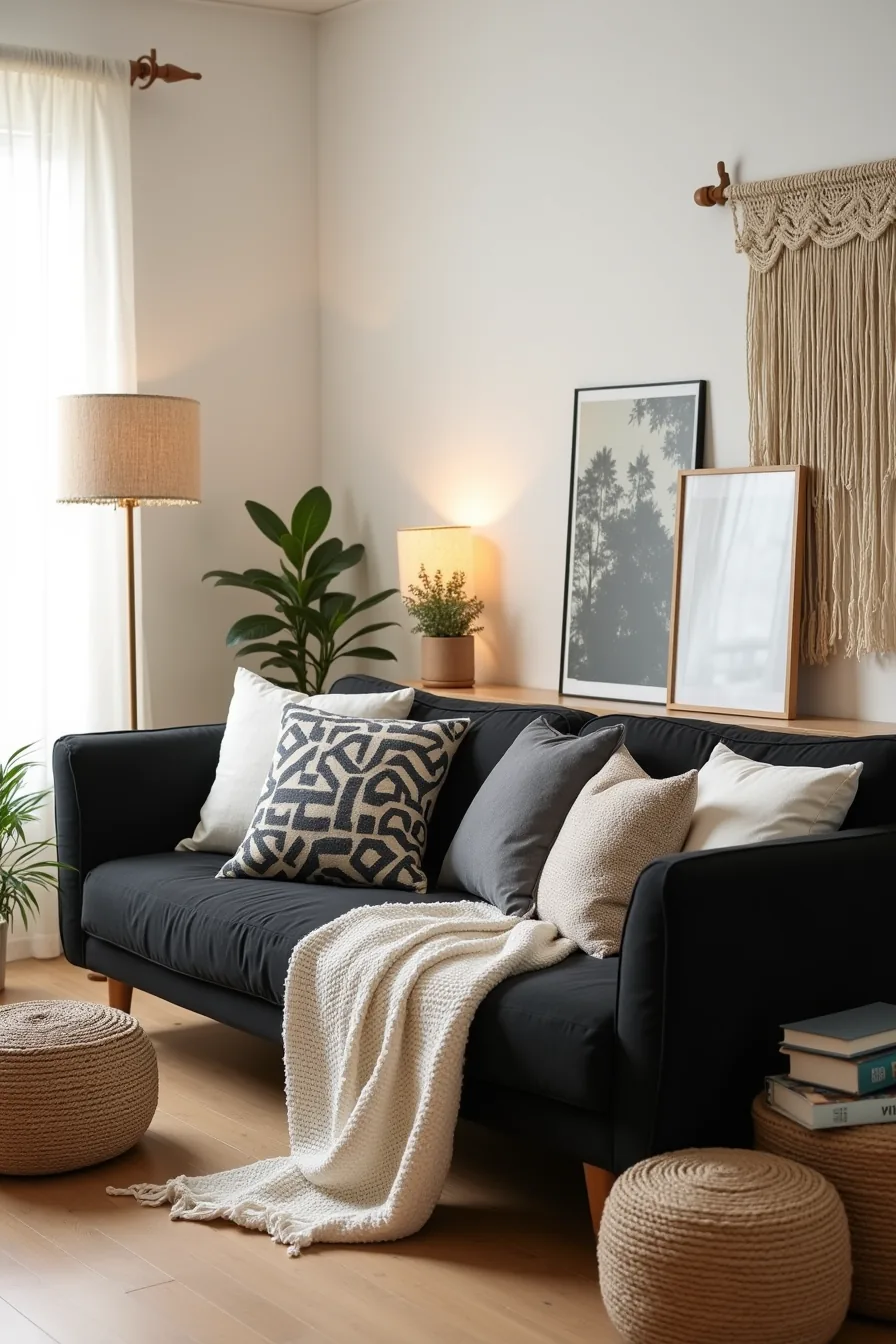
Maximalism rescues a black sofa from reading as minimalist by flooding it with competing textures. Layer geometric and botanical print pillows across the seating surface, then drape a chunky knit throw over one arm to create a tactile contrast against the sofa’s smooth upholstery, the knit’s loose weave catches light where the sofa absorbs it, giving the piece dimension without additional lighting.
The woven jute poufs in front serve double duty as footrests and extra seating for gatherings, while their rough natural fiber balances the sofa’s formality. Behind the sofa, a macramé wall hanging adds vertical texture, and eclectic framed abstract art leaning against the wall, rather than hanging, signals intentional curation. Potted plants on the side surfaces introduce organic shapes that break up the straight lines.
This approach suits creatives and collectors who want their living room to feel assembled over time. To reproduce it, commit to at least four distinct textures beyond the sofa itself, and vary pillow sizes from 18 to 24 inches to avoid uniformity. The budget route: source jute poufs under $40 each and lean thrifted frames instead of buying a matched art set.
Small-Space Black Sofa Solutions: Proportion and Light
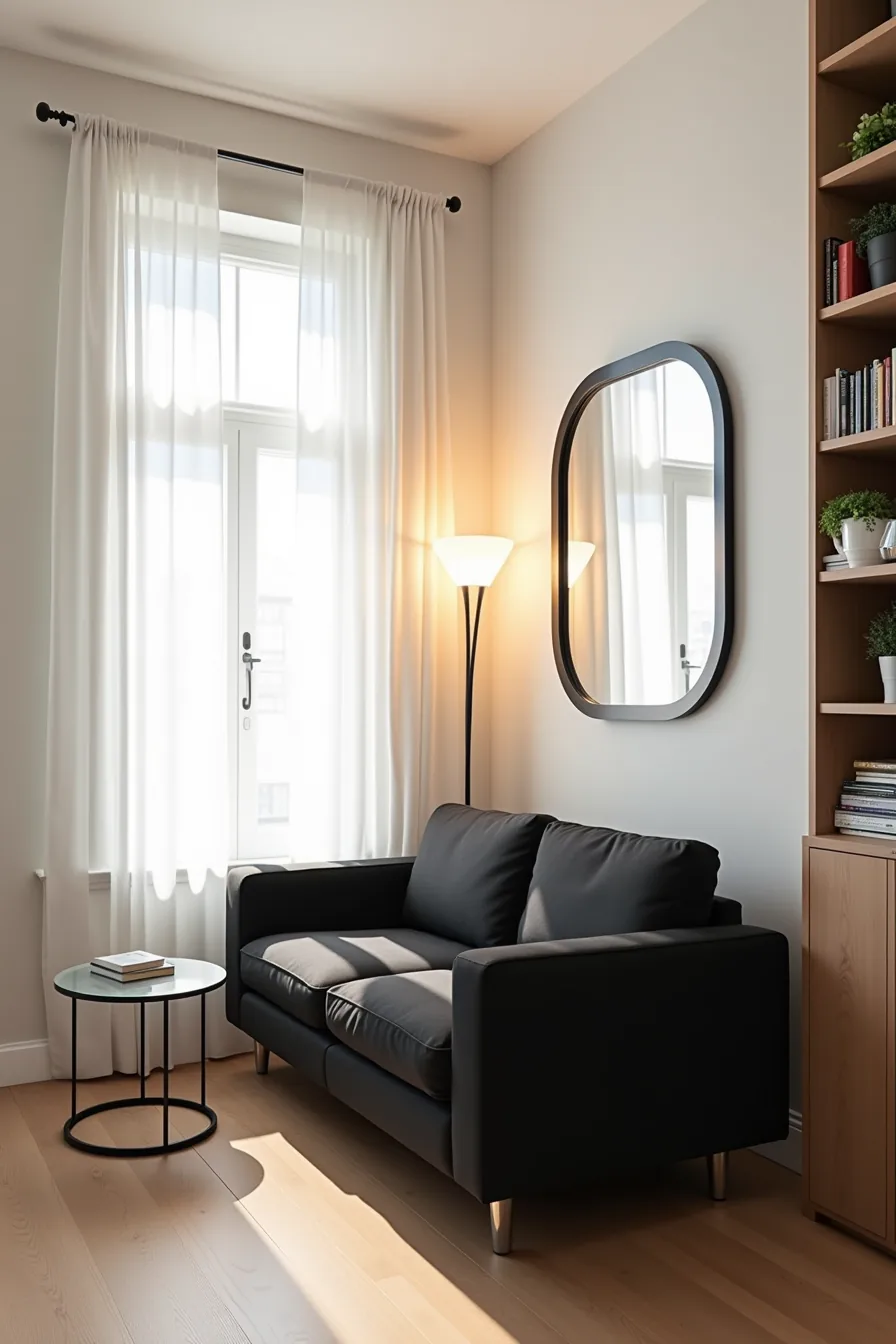
A black loveseat angled into the corner of a compact room reads as intentional rather than imposing, because its shorter length, most loveseats run 56–64 inches wide versus 72–90 for a standard sofa, leaves visible floor space on both sides. Skip the full-size sectional entirely in rooms under 200 square feet; the visual mass of dark upholstery in two directions will swallow the available light.
The large mirror with a thin black frame mounted above the loveseat does the practical work of doubling the window’s output, reflecting daylight across the seating area while its slim profile avoids adding shadow. A low-profile glass side table beside the sofa keeps the sightline open at ground level, and the narrow vertical shelving unit along the adjacent wall draws the eye upward, using the room’s height to compensate for its footprint. Pale walls with recessed lighting complete the setup, the contrast between the dark seating and light surfaces creates depth without requiring square footage.
This arrangement suits studio apartments and narrow living rooms where every inch matters, and it costs less than a large sofa, freeing budget for the mirror that makes the space feel twice its size.
Maintenance and Material Selection for Black Sofas
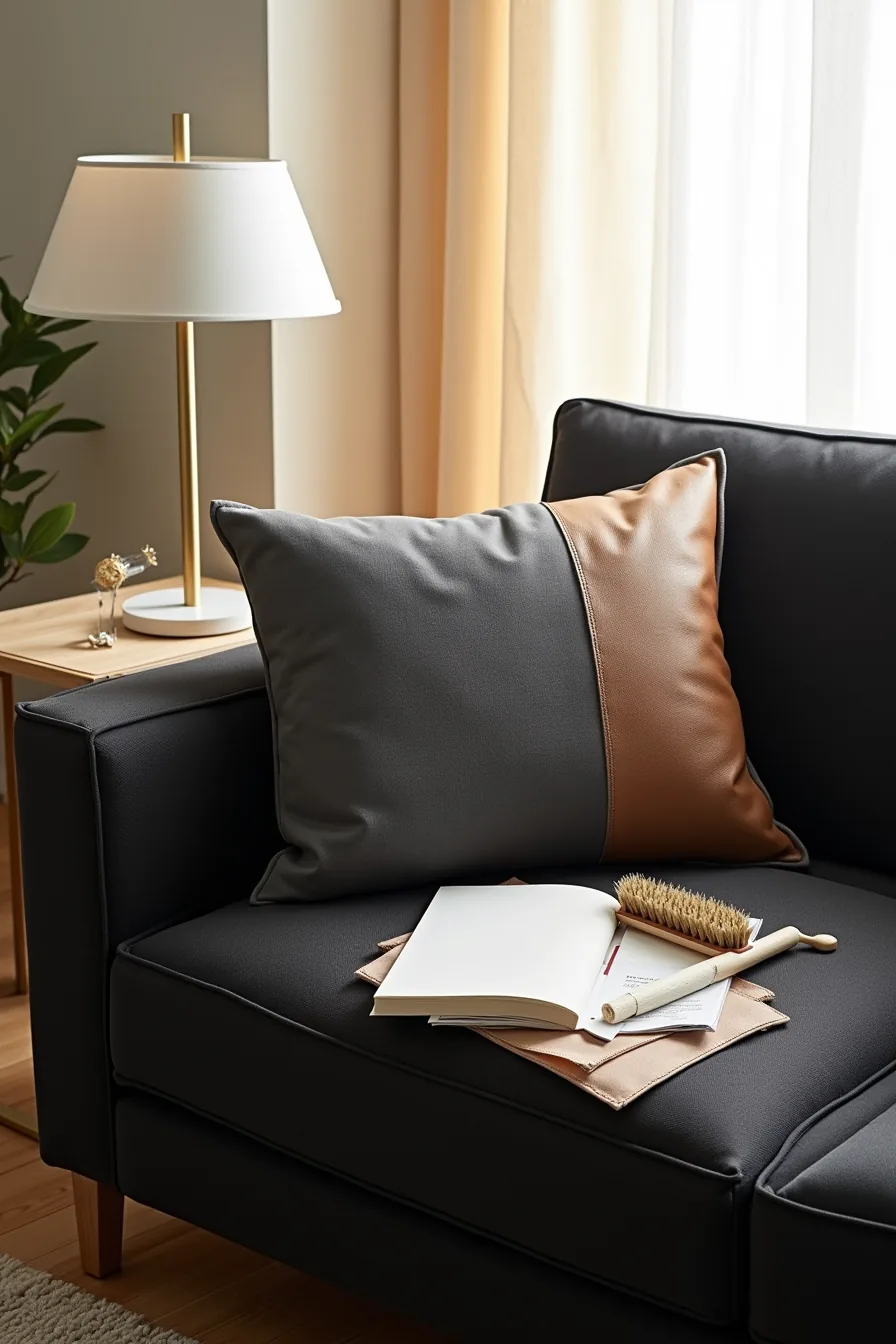
Black upholstery forgives nothing in the first year, but the material you choose determines how much vigilance that really requires. Microfiber sections, typically priced 30–50% below performance fabrics, resist water-based spills through tight weaving, though they attract lint and pet hair relentlessly, making the lint roller on the armrest your daily companion. Performance fabrics like Crypton or Sunbrella handle the heaviest use: they repel both oil and water, withstand bleach spot-cleaning, and maintain their color through 30,000–50,000 double rubs, but they run $50–$120 per yard before labor.
Leather, whether the full-grain sample or the bonded corner visible here, demands the opposite routine, weekly dusting with a soft-bristled brush, conditioning twice yearly, and permanent rejection of anything sharp since scratches become character you can’t buff out. Evaluate your household honestly: dogs with outdoor access, children under eight, or daily red-wine consumption push you toward performance fabric regardless of budget, because a $1,200 mid-tier performance sofa outperforms a $3,000 leather piece you must protect with throws. For the best of both, request a swatch fan like the one spread across your armrest and rub it with the exact substances your household spills, oil, coffee, marker, before committing.
Your 20-minute starting point
Walk into your living room and look at your black sofa with fresh eyes. Measure the wall behind it and the clearance on each side, you need at least 18 inches of walkway on the main traffic path. Snap a photo from eye level.
Then pick one idea from this guide and execute it this week. The quickest win for most rooms is swapping your current throw pillows for textured options in cream, rust, or olive, a set of four quality covers runs $40–$80 and transforms the sofa’s presence without touching the frame.
Commit to that single change. Test it for three days. If the room feels more intentional, you’ll know the direction is right for the next decision.
Frequently Asked Questions
Does a black sofa make a living room look smaller?
No, not inherently. A black sofa only shrinks a room visually if you pair it with dark walls and heavy furniture. Against light walls with visible floor space, it anchors rather than closes the room.
What color walls work best with a black sofa?
Warm whites, soft greiges, or pale sage green create contrast without harshness. Avoid pure white, which makes black read starkly. Deep charcoal walls work only in large, bright rooms, otherwise the sofa disappears into the wall.
How do I keep a black sofa from looking too formal or cold?
Add natural textures: linen throws, a chunky wool rug, and visible wood legs. Choose a casual slipcover style or a slightly rounded silhouette. Skip tufted velvet and polished metal accents, which push it toward formal territory.
What’s the best fabric for a black sofa if you have pets or kids?
Performance-grade microfiber or tightly woven polyester blends. Both resist stains, wipe clean with mild soap, and don’t show pet hair as visibly as velvet or linen. Avoid cotton canvas, it absorbs oils and stains permanently.