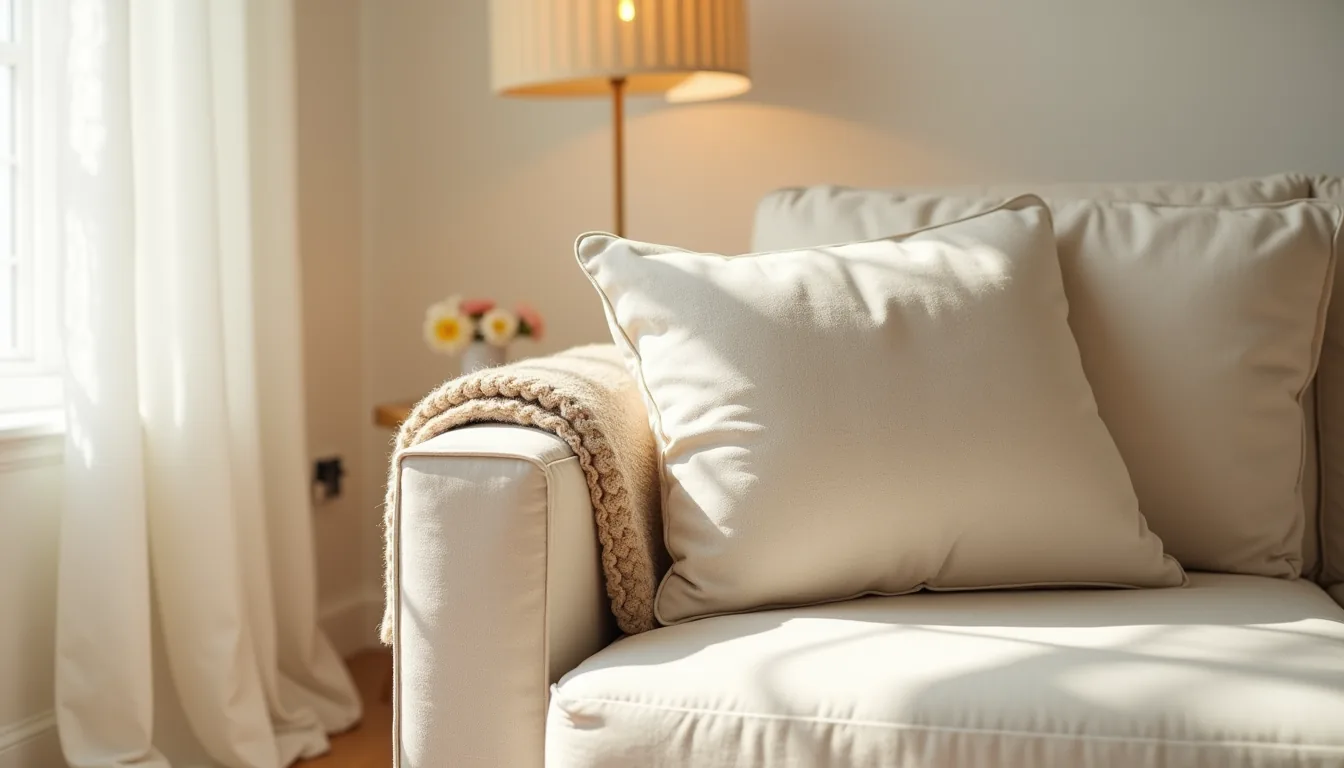
Choosing the right sofa cloth fabric comes down to matching fiber type, weave density, and maintenance tolerance to how your household actually lives, not to how a showroom photo looks. A performance polyester weave shrugs off pets, while a washed linen blend rewards a low-traffic reading corner. The six approaches below range from a $20-per-yard DIY fix to a heirloom-grade wool investment, so you can match your budget, your space, and your tolerance for vacuuming.
Key takeaways
Performance synthetics resist stains and abrasion best, making them the right call for homes with kids, pets, or daily heavy use. Velvet offers a plush, high-end look but demands more upkeep, while tightly woven fabrics like twill or canvas deliver superior durability for similar visual weight. Natural fibers like linen and cotton breathe beautifully and age gracefully, but they require professional cleaning and are a long-term investment, not a budget fix. Match fabric to your actual routine, if you eat on the couch, choose a solution-dyed synthetic; if you host formal gatherings, prioritize a low-pile weave that hides wear.
Performance Synthetics for High-Traffic Households
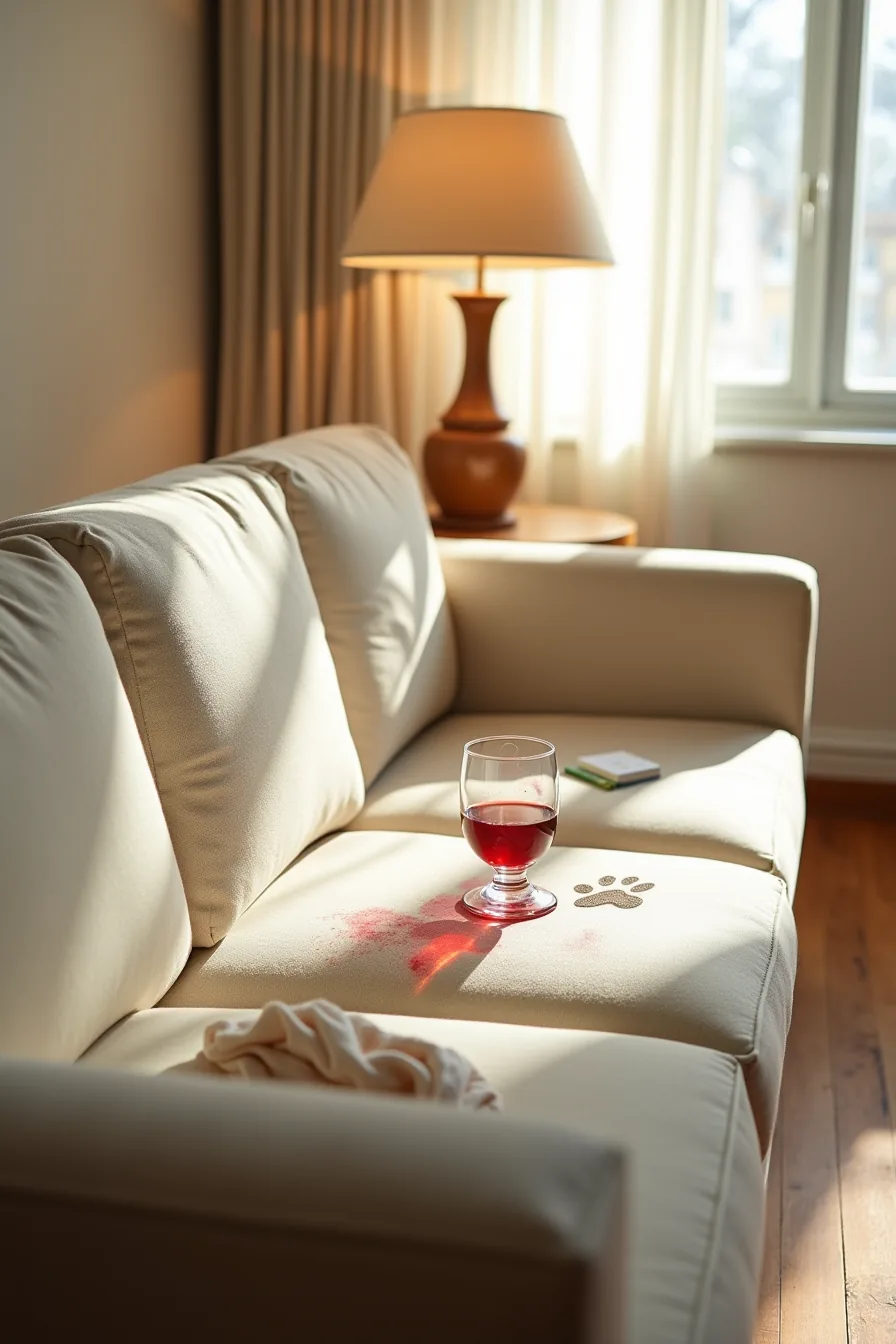
For homes with pets, toddlers, or daily chaos, solution-dyed acrylic and high-quality polyester blends are your best defense in Sofa Cloth Fabrics. The spilled red wine, muddy paw print, and crayon mark across the cushions are a realistic test: these synthetics resist absorption, so a damp cloth wiped across the surface lifts the stain before it sets. You can clean them with mild soap and water without pulling the fibers, and they dry quickly, a major advantage over natural weaves that hold moisture and odors for hours.
Choose a tight-weave, low-pile synthetic with a high rub count (aim for 40,000+ double rubs) if you want the durability to match your lifestyle. The trade-off is tactile: these fabrics feel slightly crisp initially and may trap pet hair in the weave. Budget-conscious buyers can find polyester blends at $15–$25 per yard, while solution-dyed acrylics run higher ($30–$50) but resist fading and bleaching from cleaners.
This approach suits open-plan living rooms and rented spaces where you can’t reupholster, just spot-clean and rotate cushions monthly to prevent uneven wear.
Velvet vs Woven: Texture and Durability Compared
Velvet’s pile construction creates that deep, directional sheen, but it also creates a nap you must brush consistently or accept visible wear patterns. On the display board, the crushed velvet sample already shows light tracking where fingers have pressed it, evidence of why this cloth suits formal living rooms or low-use studies where you sit upright for short periods. Expect to vacuum velvet weekly with a soft brush attachment and steam-clean it professionally once a year; the payoff is a jewel-toned luxe that woven cloth can’t replicate.
The tight woven cotton beside it tells the opposite story: a uniform surface that bounces back from daily sitting, reclining, and kids jumping on the cushions. Woven fabrics distribute pressure evenly, so you won’t see permanent creases or shading after a year of constant use. They tolerate spot cleaning with a mild detergent and dry flat without distorting the weave.
Velvet vs woven ultimately comes down to whether you prioritize a dramatic, moody aesthetic or a resilient surface that still looks presentable after movie nights and afternoon naps. For most families, the woven route wins on practicality; velvet wins only if you can commit to its maintenance ritual.
Natural Fiber Cloth for Long-Term Investment
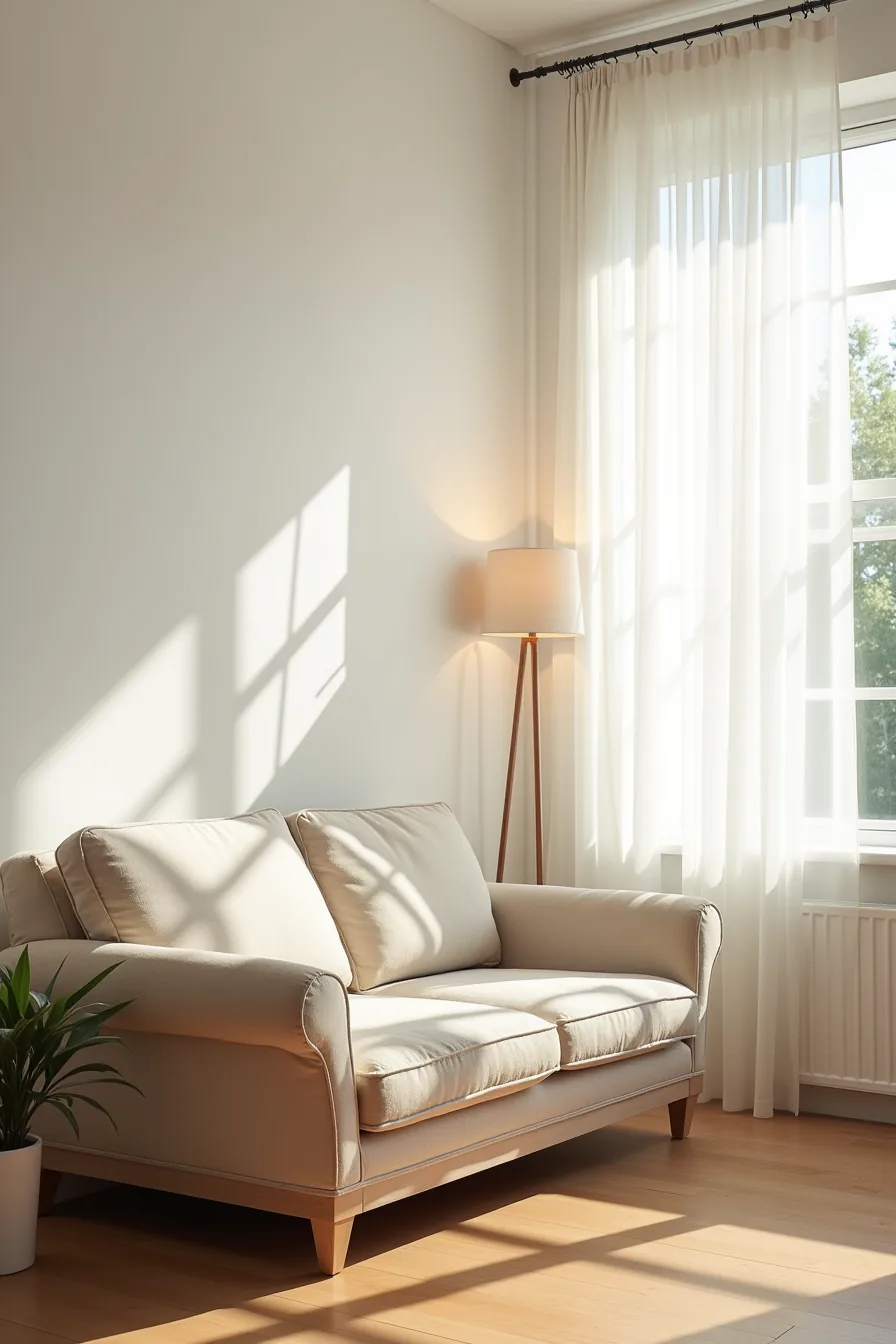
Linen, cotton, and wool sofa cloth fabrics offer a different kind of payoff than synthetics: they develop character rather than wear out. That aged linen sofa with its faded armrest and softly frayed seam isn’t a sign of neglect, it’s the natural patina of flax fibers, which soften and lighten with sun exposure over a 5-10 year period. The fraying at the seam, while charming, signals you’re approaching the point where a professional re-stitching appointment (typically $100-$200) extends the frame’s life for another decade.
These fibers demand proactive care. Expect visible fading on any armrest or seat cushion within 2-3 years if you place the sofa in direct sunlight, so rotate cushions monthly and use sheer curtains to diffuse harsh midday rays. Pilling on wool occurs within the first year as loose fibers shed, but a fabric shaver every few weeks resolves it permanently.
Professional cleaning becomes necessary every 18-24 months, more often than the 3-5 year cycle for synthetics, because natural fibers trap oils and dust deep in the weave, and home shampooing risks shrinking or distorting the cloth. Budget $150-$250 per professional cleaning for a standard 3-seater. The potted plant beside the sofa isn’t just decorative; its humidity helps keep linen supple, but you must keep the soil surface dry to avoid moisture wicking into the fabric base.
Choose this route if you accept gradual, beautiful deterioration over a decade rather than a uniform surface that looks the same on day one and day 1,000.
Texture Close-Up: Choosing Scale for Your Room Size
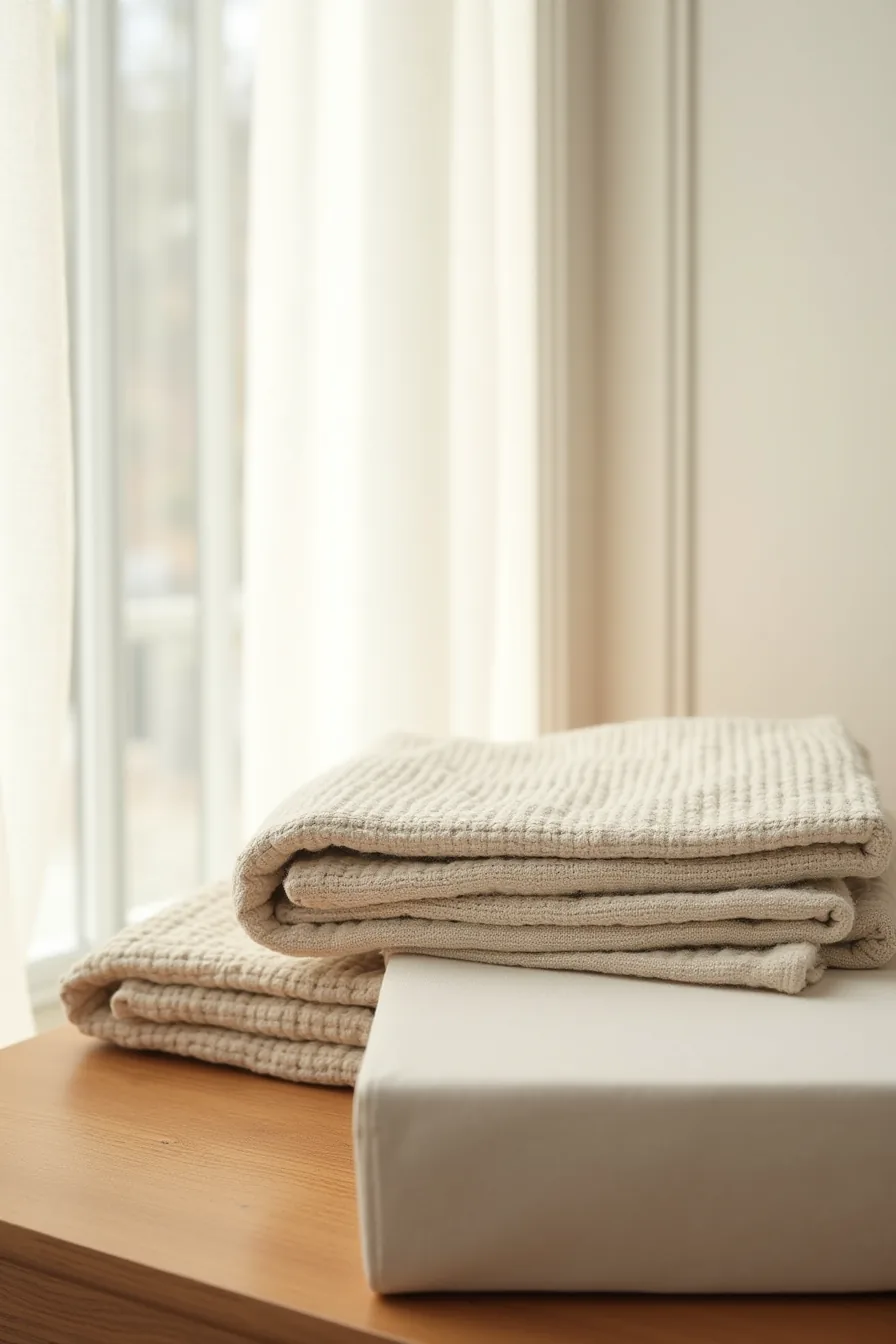
The three weaves you see side by side, a tight basketweave, a medium herringbone, and a chunky linen, represent a practical scale test, not just an aesthetic preference. Surface relief determines how the fabric reads from your typical viewing distance. A fine basketweave with minimal shadow flattens out beyond about 1.5 meters, making it ideal for compact living rooms where the sofa sits close to adjacent seating.
In those tight spaces, a pronounced texture would visually compete with your coffee table and rug.
For medium rooms in the 15–25 square meter range, the herringbone’s diagonal pattern holds interest at 2–3 meters without overwhelming the space. The chunky linen demands distance: its loose weave and deep shadows only resolve into a cohesive surface from roughly 3 meters away, so reserve it for large open-plan areas. Lighting amplifies this effect, directional afternoon sun casts stronger relief on the basketweave and linen, while diffused morning light flattens all three.
Test fabric swatches against your actual wall color and window orientation before committing.
Lifestyle Fabric Choice: Matching Cloth to Your Routine
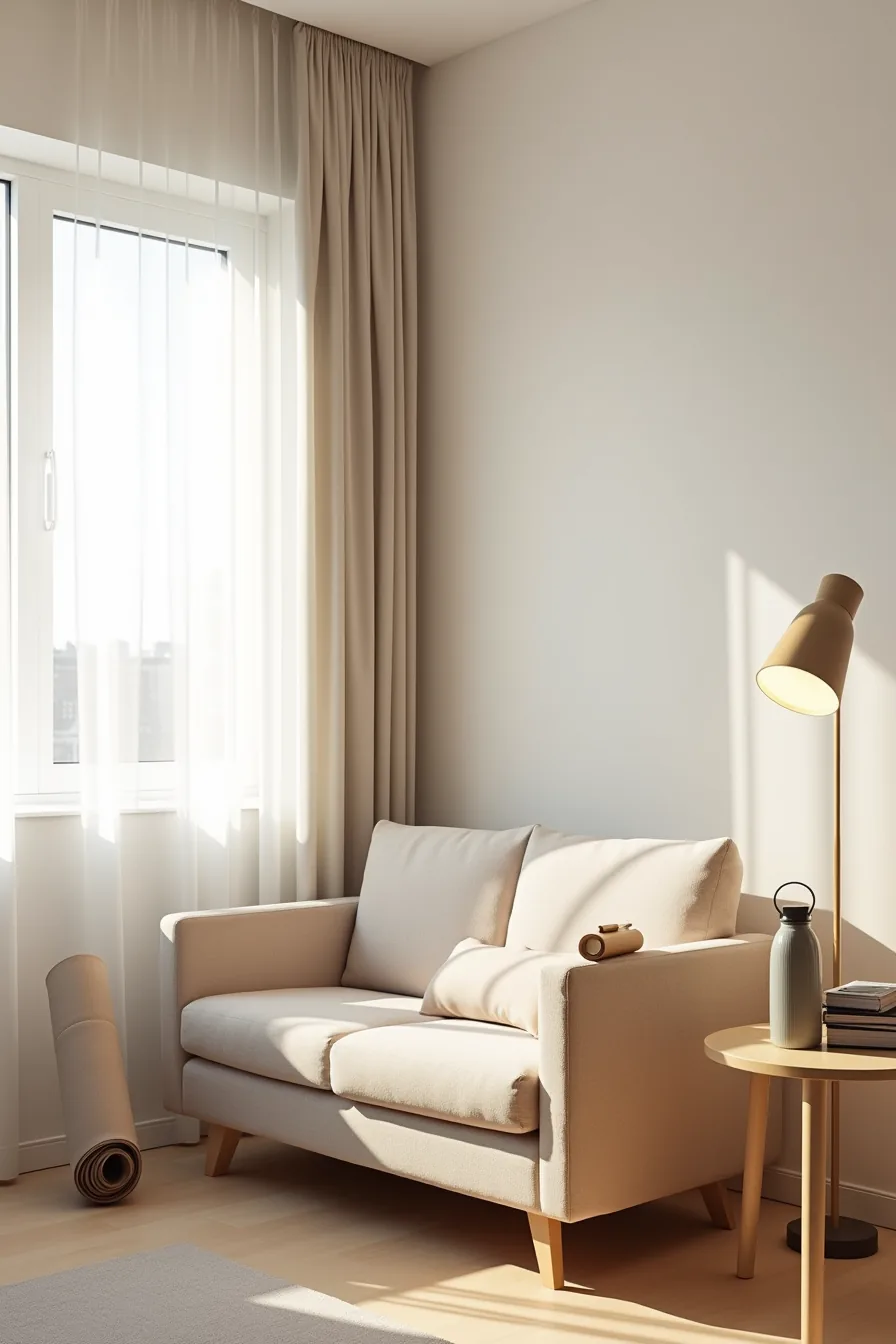
Your household’s rhythm dictates the fabric more than your style preferences do. If you work from home, eat on the couch, or share space with pets, a performance fabric with a tight weave and stain-resistant finish handles daily wear without demanding constant vigilance. The compact sofa in performance fabric beside the desk and rolled yoga mat reflects this reality: one durable material serves both the work-from-home lunch break and the post-workout cool-down, with a water bottle and phone within arm’s reach on the small side table.
For renters, a mid-range polyester-blend in a neutral tone offers the practicality of easy cleaning without the sunk cost of a custom piece you might need to abandon. Households with young children or frequent hosting benefit from removable, machine-washable covers, typically in the $800–$1,500 range for a three-seater, which extend the sofa’s visual lifespan significantly. If your routine is calmer, with meals eaten at a table and guests kept to planned visits, natural fibers like cotton-linen blends reward you with breathability and a softer hand feel.
Budget-conscious shoppers should target performance fabrics in the mid-range tier: they cost 20–40% less than premium weaves while delivering comparable stain resistance.
Maintenance and Longevity: What Each Fabric Demands

Vacuum your sofa weekly with the brush attachment, running it along seams and crevices where dust and crumbs settle. Natural fibers like cotton and linen need this more often, twice weekly if you’ve pets, because their looser weave traps particles deeper in the pile. For polyester and performance blends, a monthly pass with the soft-bristle brush lifts surface dirt and prevents it from working into the fibers.
Treat spills immediately with the spray bottle of water-based cleaner and the white microfiber cloth, dabbing, never rubbing, to avoid pushing the stain deeper. Solvent-based cleaners are reserved for oil-based marks on synthetic fabrics; using them on cotton or linen can strip natural oils and cause discoloration. The lint roller handles pet hair and pilling between deep cleans, and the vacuum attachment reaches the base and armrests where grime accumulates fastest.
Professional cleaning every 12–18 months adds $150–$300 to your cost of ownership, but it extends a mid-range fabric’s life by 3–5 years. Over a decade, a $1,200 sofa with routine care costs roughly $1,800 including professional treatments, about half the price of replacing it at year five due to neglect. Cotton and linen usually need replacement after 5–7 years of regular use; performance polyesters can reach 10–12 years with the same maintenance routine.
Your First Move
Start by identifying the room’s traffic level and your tolerance for upkeep. If you’ve kids or pets, skip the textured bouclé and opt for a tight-weave performance polyester. For a rental, the slipcover route gives you landlord-safe flexibility without a permanent commitment.
Set a budget range before you browse: durable synthetics typically land between $15–$40 per yard, while natural linen blends run $30–$60. Once you know your constraints, order three or four swatches and rub them against your palm for 10 seconds, this simulates a year of sitting.
Choose the fabric that feels right against your skin and matches your room’s light exposure. Then, buy one yard of your top pick and test it on your actual sofa cushion for a week before committing to the full order.
Frequently Asked Questions
What sofa cloth fabric is best for homes with pets and children?
Choose tightly woven performance fabrics like Crypton or Sunbrella blends. They resist stains, moisture, and abrasion, and hold up to claws and spills. Avoid loose weaves, silk, and untreated linens.
How do I know if a sofa fabric will pill or wear thin with daily use?
Check the fabric’s Martindale rub count, aim for 30,000+ cycles for heavy use. Also, feel for tightness; loose weaves pill faster. Ask for a sample and rub it vigorously with your palm.
Can I use the same cleaning method on velvet and woven sofa cloth fabrics?
No. Velvet requires dry-cleaning solvent or gentle vacuuming; water can crush the pile. Woven fabrics tolerate mild soap and water, but always test in a hidden spot first. Never use heat on either.
What’s the difference between a performance fabric and a natural fiber sofa cloth?
Performance fabrics are synthetic or treated, like polyester or olefin, engineered for stain resistance and durability. Natural fibers, such as cotton or wool, breathe better but stain easily and need more maintenance. Choose performance for kids or pets, natural for low-traffic lounges.