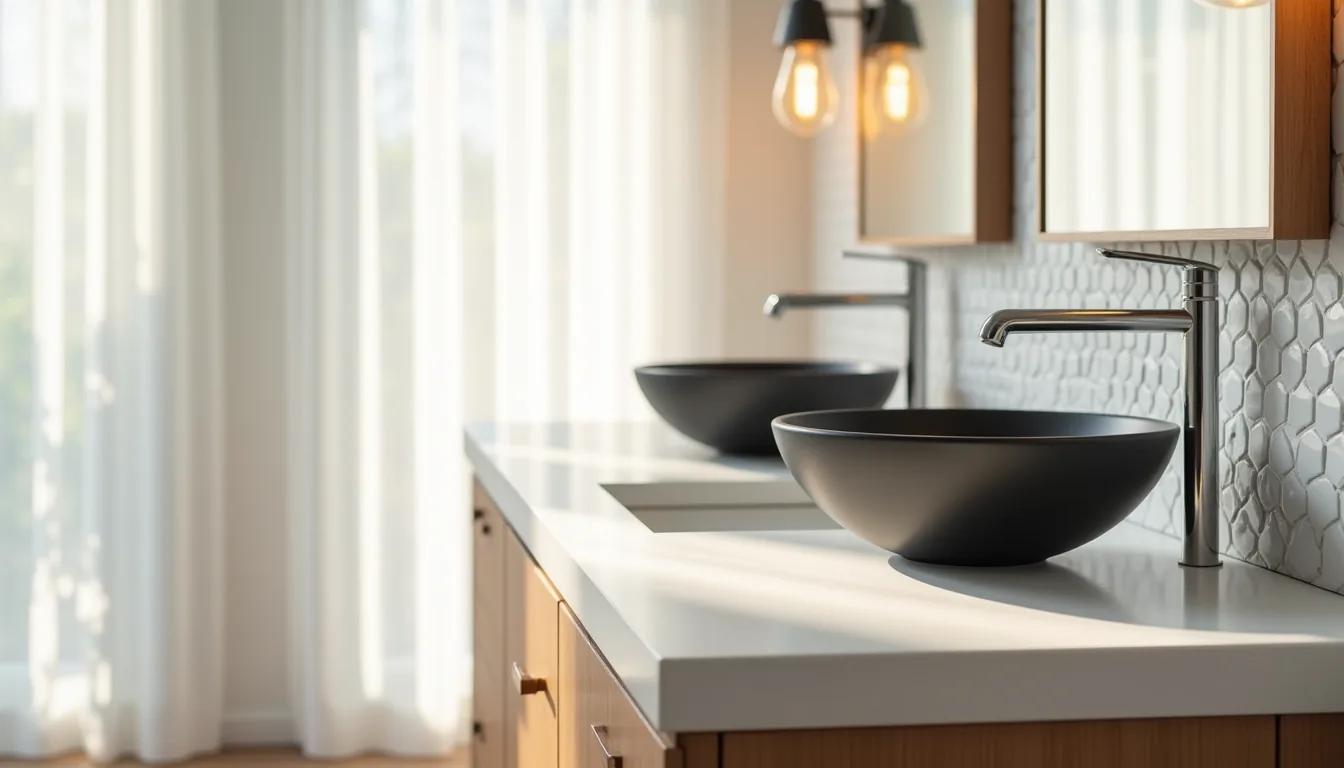
Black and white bathrooms work because the pairing is one of the few color schemes that reads as both timeless and endlessly flexible, but the look you achieve depends entirely on which of six distinct interpretations you choose to build. You can lean into crisp subway tile for a classic clinic feel, or invert the palette with matte black fixtures against warm white plaster for a moodier, modern result. The difference comes down to surface ratios, finish choices, and how much pattern you dare to introduce.
Each route carries specific maintenance demands and cost trade-offs, so match the version to your space, your budget, and your tolerance for grout lines.
Key takeaways
- Choose your era first: Vintage black-and-white bathrooms lean on hexagon tiles and clawfoot tubs, while modern versions use large-format slabs and floating vanities, pick one to avoid a disjointed mix.
- Match white tones to your light: Crisp pure white suits bright, north-facing rooms, but soft warm white (with a hint of cream) prevents a harsh glare in low-light or windowless bathrooms.
- Anchor with a patterned floor: A 2-inch hexagon or checkerboard tile at 12-by-12-inch scale grounds the look, but ensure the pattern covers at least 60% of the floor to read as intentional, not accidental.
- Layer texture over contrast: Introduce matte black fixtures, a ribbed ceramic sink, or a waffle-weave towel set, these break up flat surfaces and reduce the clinical feel without adding a third color.
Vintage vs Modern: Two Opposing Approaches
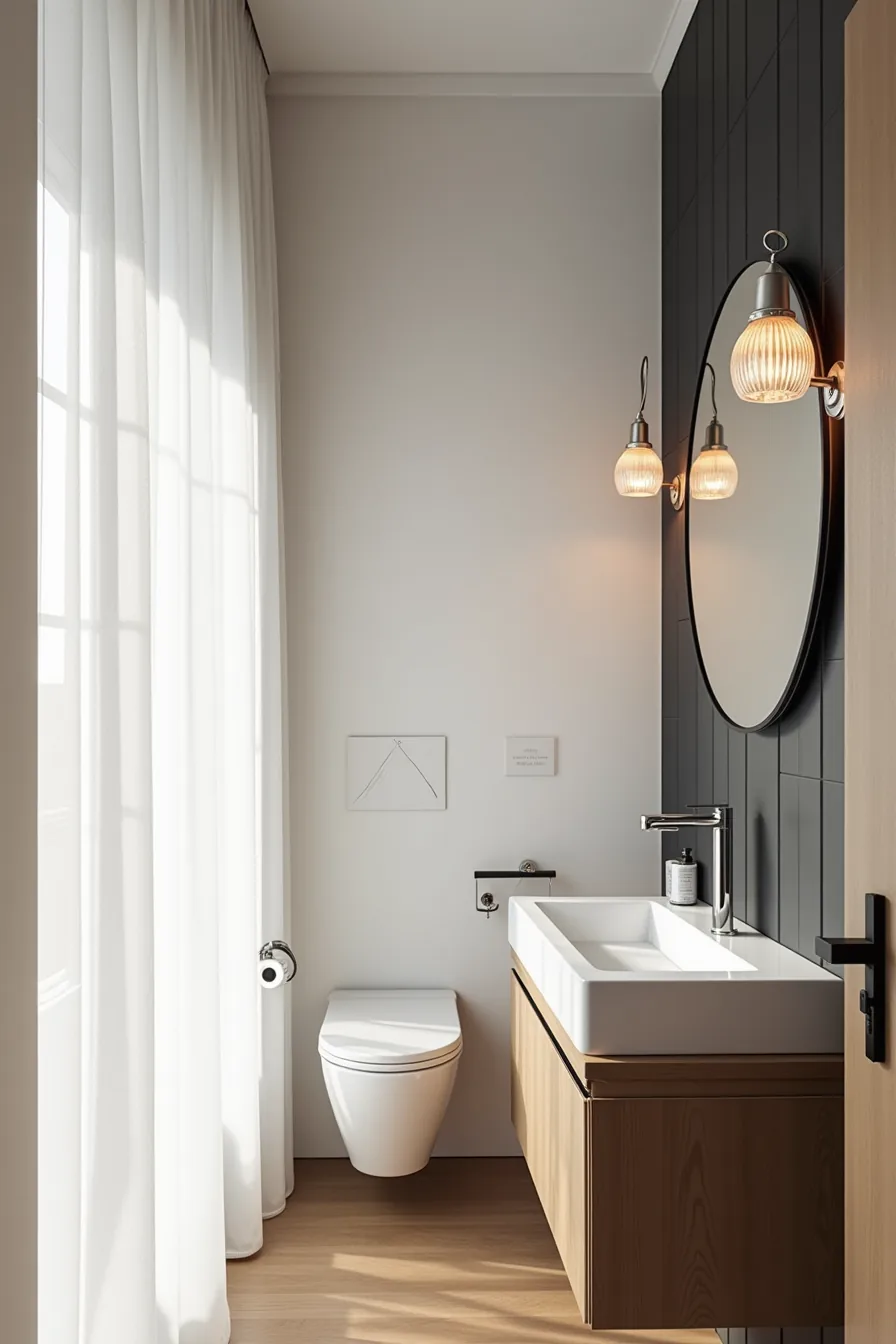
The 1920s-style white subway tiles with wide grout lines on your left wall create a distinctly retro foundation, the pronounced mortar joints and glossy finish define the vintage camp. Chrome towel rings reinforce that era-specific look, and they pair naturally with pedestal sinks and cross-handle faucets. This approach suits smaller bathrooms best, where the reflective surfaces and narrow tile format visually expand the space.
On the right wall, contemporary matte black large-format tiles with minimal grout lines shift the entire room into a modern register. The sleek stainless steel towel bar continues that clean-lined language, and it works beautifully with wall-mounted vanities and flat-panel cabinetry. Choose this interpretation for larger bathrooms, where the bold color blocks and sparse detailing can carry visual weight without feeling stark.
The transition edge between the two surfaces is your design opportunity, a thin brass strip or a crisp caulk line lets you blend both eras deliberately.
Crisp vs Soft White: Choosing Your Base Tone
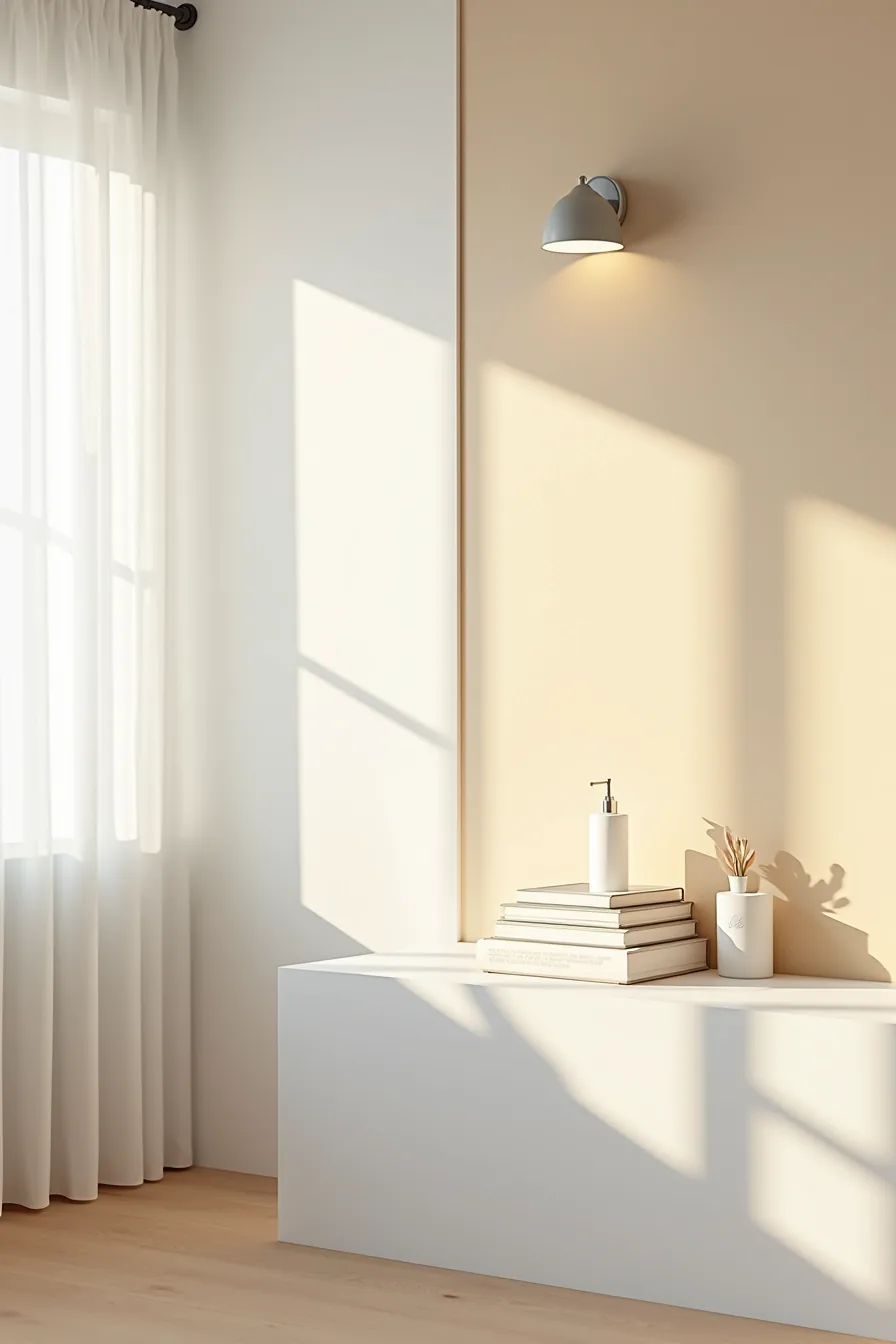
Pure white walls deliver a striking, gallery-like contrast against black fixtures, but that crispness comes with upkeep. Water droplets and soap residue show up almost immediately on the surface, making it a poor choice for busy family bathrooms or any space with hard water. If you love the sharpness, commit to daily squeegeeing or choose a semi-gloss paint, which resists staining better but still demands regular wipedowns.
Warm off-white tones offer the same black-and-white framework with far more forgiveness. The subtle cream undertone absorbs and diffuses the window light rather than bouncing it harshly, so water spots and soap residue blend into the surface instead of shouting for attention. This base suits medium-sized bathrooms, north-facing rooms with limited natural light, and anyone who prefers a softer, more inviting atmosphere.
The practical trade-off is simple: pure white reads bolder but works only with diligent upkeep, while off-white gives you visual contrast with a fraction of the maintenance effort.
Patterned Floor Options for Black and White Bathrooms
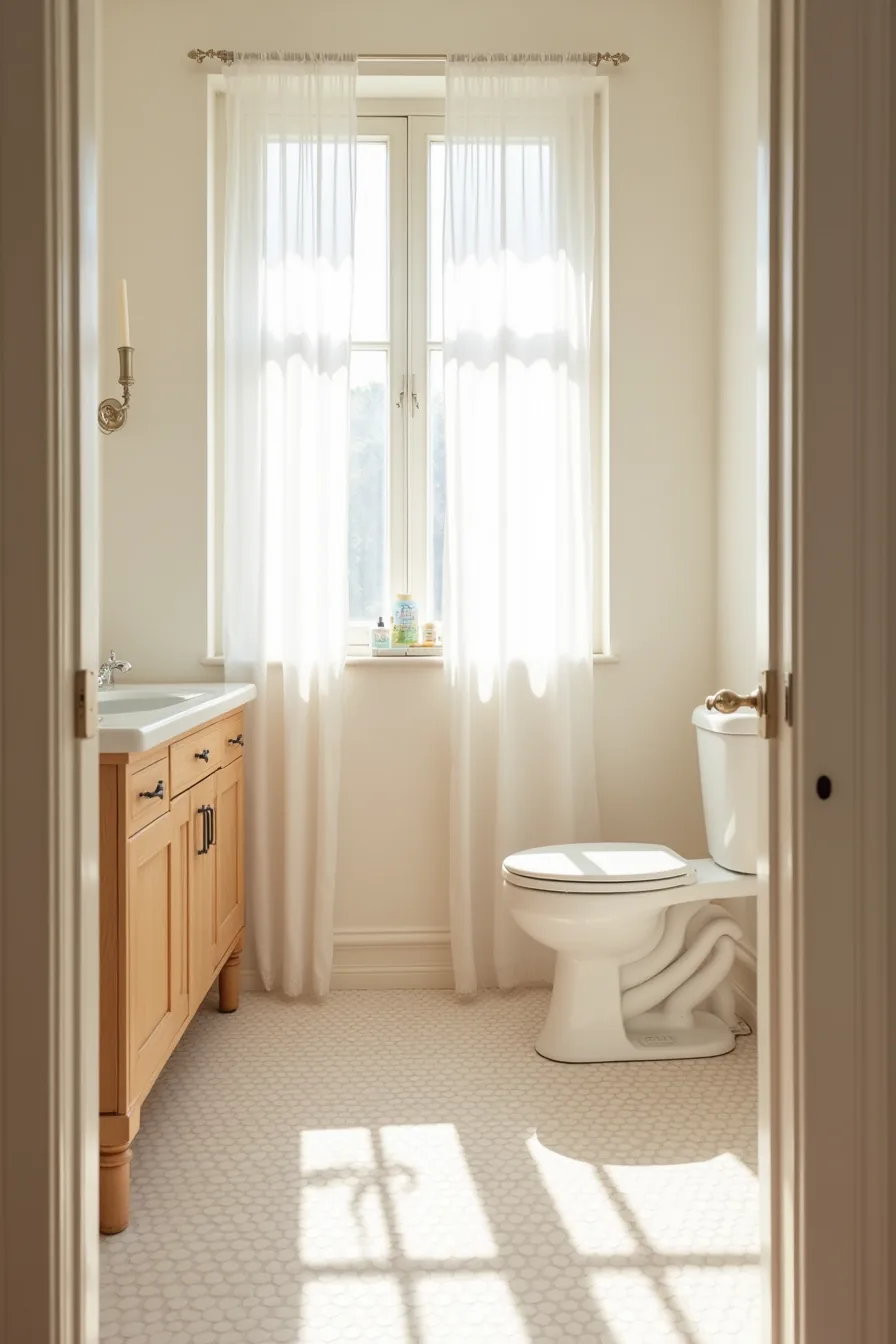
A classic checkerboard reads timeless and anchors small bathrooms with a sense of order, but it visually shrinks the room when scaled too large. Opt for 12-inch tiles in a 300-square-foot space; drop to 8-inch tiles for compact powder rooms to keep the pattern proportionate. The trade-off is grout: white grout lines gray quickly, so budget for sealing annually and expect to scrub joints monthly if you skip it.
Hexagon tiles bring a softer, more organic rhythm to the floor while still delivering the high-contrast look. Their smaller surface area hides wear better than large-format slabs, and the angled edges catch light differently across the day, which suits medium bathrooms with varied natural light. Installation costs run roughly 20–30% higher than square tiles due to the extra cutting time around fixtures like the toilet base.
Diagonal subway tile introduces directional flow, visually widening narrow galley layouts when laid at a 45-degree angle across the short axis. Terrazzo offers the same black-and-white palette with far less grout maintenance, making it the strongest choice for high-traffic family bathrooms, though it carries a premium price per square foot. For a budget route under $4 per square foot, vinyl peel-and-stick checkerboard delivers the same visual impact with zero grout upkeep, provided you level the subfloor first and accept a shorter lifespan of roughly 5–7 years.
Soften a Black and White Bathroom With Texture
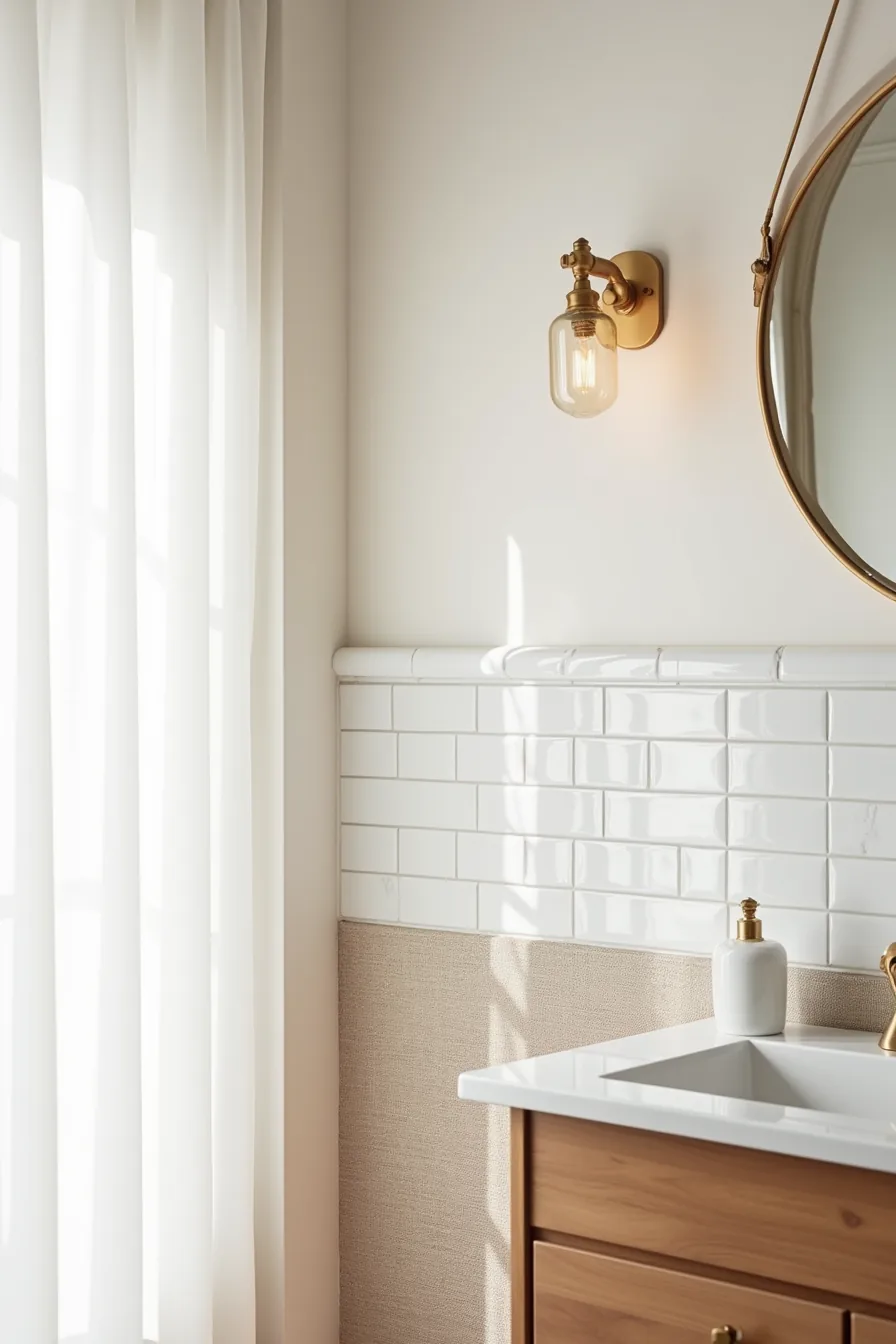
Alternating glossy white subway tiles with matte fluted tiles prevents the sterile, clinical feel that flat black and white surfaces often create. The fluted ridges cast fine vertical shadows that shift through the day, adding depth without introducing a second color. Reserve this mix for the shower wall or a feature wall behind the vanity, where the contrast reads best at arm’s length.
A linen-look surface on the lower wall section brings a soft, fabric-like grain to the room and stands up to splashes better than real textile. Pair it with rough grout joints, deliberately tooled recessed rather than smooth, to catch light and reinforce the tactile contrast. Keep glossy tiles in dry zones above the sink and fluted textures out of direct spray areas, since their grooves demand more wiping to prevent soap scum buildup.
Budget-Friendly Implementation for Renters and Owners
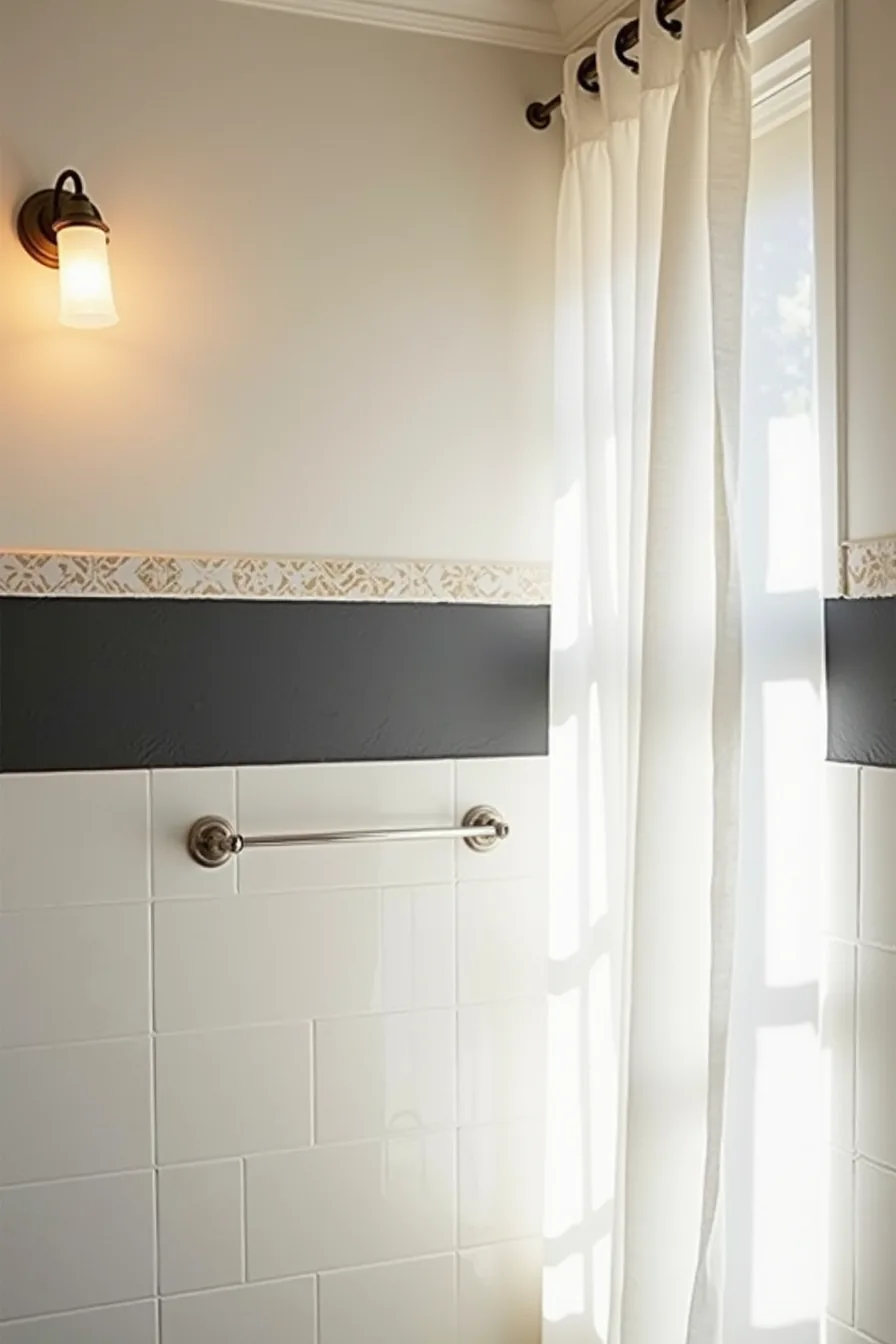
Your budget determines whether you get a weekend project or a permanent upgrade, and each tier carries different trade-offs for deposit recovery. Peel-and-stick tiles run $2–$5 per square foot and take roughly two hours per standard shower wall, but expect to lose the adhesive backing if you peel them after more than six months, most landlords accept minor residue, yet some deduct for it. Paint a single accent wall in matte black chalk paint for under $50 and mount your towel bar with temporary adhesive strips rated for 10–15 pounds; the strips release cleanly with a hairdryer, and the paint covers with two coats of primer when you move out.
For owners, a full tile renovation typically costs $15–$30 per square foot installed and adds permanent value, but it demands a two-to-three-day timeline and waterproofing membrane beneath the grout. The middle band shows the painted route’s versatility: a deep black accent behind the vanity reads as intentional design, not a renter compromise, and it pairs with white grout lines from the bottom tile section for visual continuity. Match your peel-and-stick tiles to the permanent tile’s finish, glossy against matte creates a visible seam, while identical sheen makes the transition nearly invisible at eye level.
Scaling Black and White Design Across Room Sizes
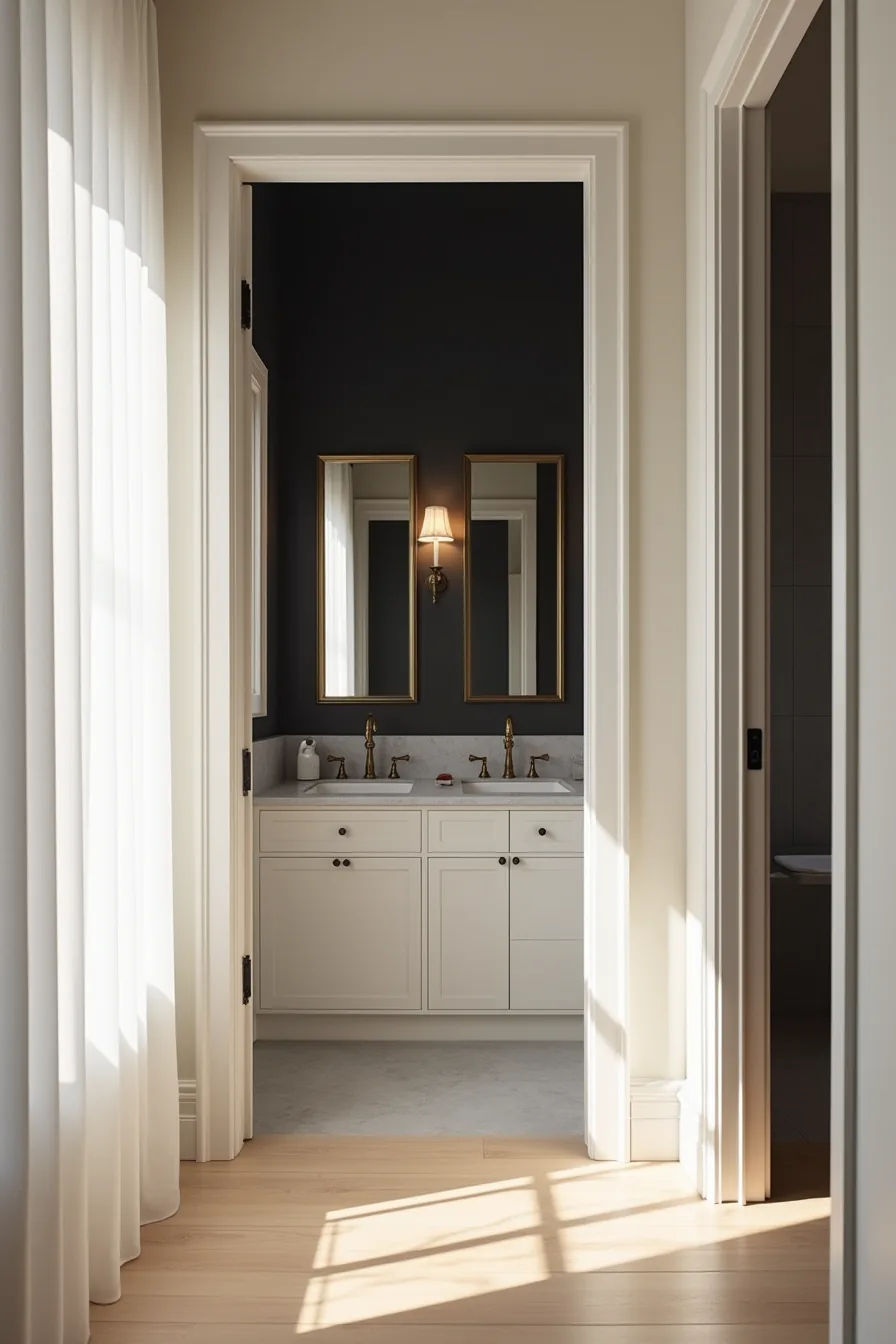
Proportion is the lever that makes bathroom black and white work at any footprint. In a powder room under 40 square feet, commit to dominance: one black accent wall behind the vanity, white fixtures everywhere else, and nothing competing for attention, the contrast reads as deliberate rather than cramped.
A standard bathroom in the 60–90 square foot range earns a balanced split, roughly 60 percent white to 40 percent black across wall and floor surfaces. The doorway view captures this middle ground: a black vanity area anchors one side, while the white shower surround and fixtures open the opposite end to keep the room from feeling like a cave.
Large master baths beyond 120 square feet demand layering, not repetition. Anchor one zone with the black vanity area, place the white shower surround across the room, then insert a gray tile relief strip at mid-height along the connecting wall, the neutral band interrupts the polarity and gives the eye a resting point between the two extremes.
Where to start
You now have six distinct approaches, but you only need one. Review your square footage, your lease terms, and your actual tolerance for grout maintenance before you buy a single tile. A renter in a 40-square-foot bath shouldn’t be planning a marble mosaic floor, just as a homeowner with a 100-square-foot primary bath shouldn’t settle for peel-and-stick contact paper.
Your concrete next step: measure your space, photograph it, and assign it to one of the six looks based on your answers above. Then order samples of your top two materials, grout color matters more than tile color, and live with them in the room for a week before committing.
Frequently Asked Questions
Does a black and white bathroom make a small space feel smaller?
Not automatically. Use white on walls and ceiling, black only on the floor or a single feature wall. High-contrast horizontal stripes read as width, but large black surfaces absorb light and shrink the room visually.
What grout color should I use with black and white tile?
Match the dominant tile color for a smooth look: white grout with white tiles, charcoal with black. For checkerboard floors, use gray grout to soften the contrast and hide dirt. Avoid pure white grout on floors, it stains visibly.
Can I achieve bathroom black and white on a tight budget?
Yes. Paint existing cabinets black, add white subway tile on one wall, and swap in black fixtures. Peel-and-stick tile works for renter-friendly floors.
Total cost runs $150–$400 for a typical small bathroom.
How do I prevent a black and white bathroom from looking cold or clinical?
Introduce warm textures: oak vanity, brass fixtures, linen towels, or a matte black toilet seat. Use warm white paint (yellow undertone) instead of cool white. Add one live plant, it breaks the monochrome and softens the contrast.