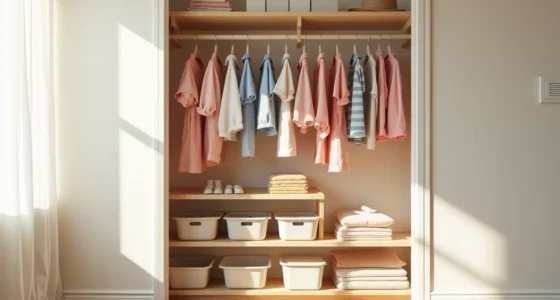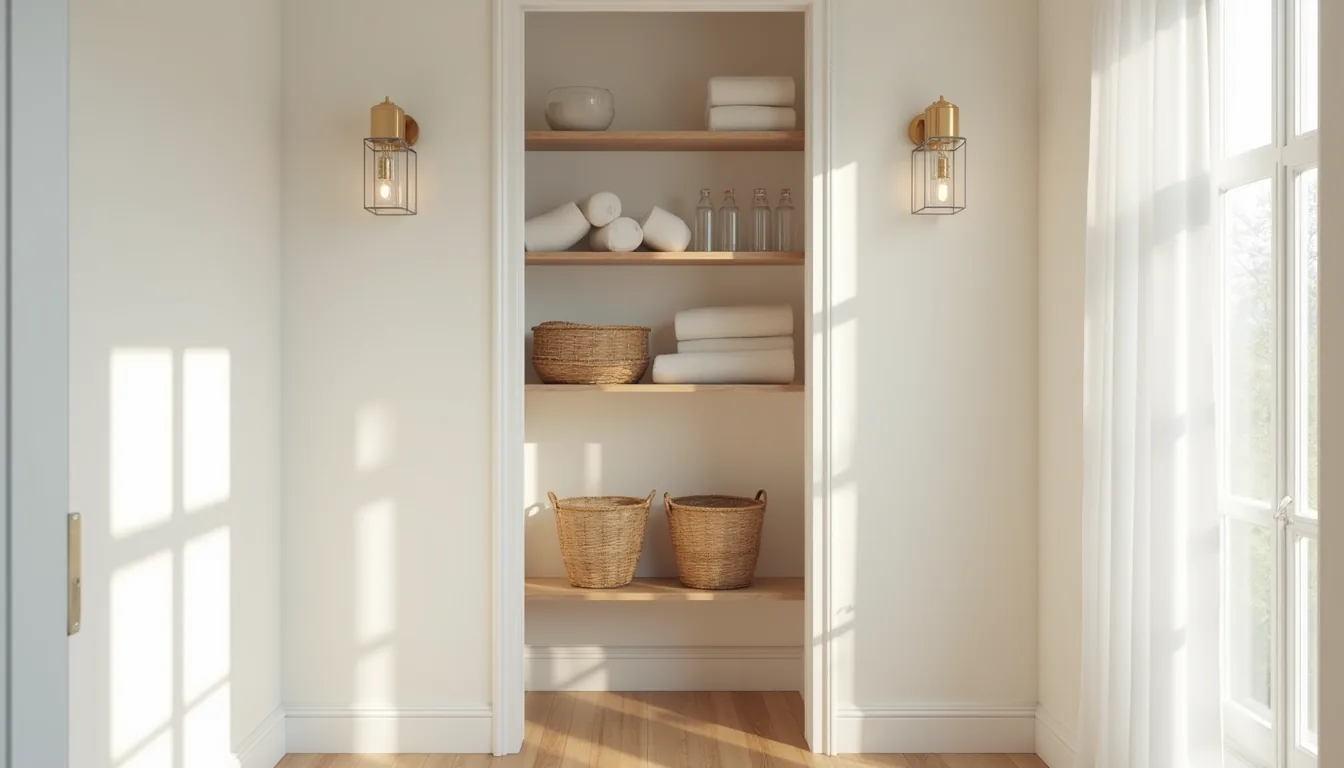
A disorganized bathroom closet usually comes down to one of three problems: too much stuff, shelves that waste vertical space, or no system for separating daily-use items from backups. The fix isn’t buying more bins, it’s matching a storage layout to how you actually move through your morning and evening routines. Below are six distinct approaches, each with the materials, dimensions, and trade-offs required to pull it off.
Key takeaways
Vertical shelving suits compact bathrooms best, using unused wall height above the toilet or beside the vanity to add 12–18 inches of storage without eating floor space. Drawer dividers and tiered racks work for medium cabinets, cutting retrieval time in half by separating items into zones like skincare, haircare, and first aid. Over-the-door racks are the renter-friendly win, they install without drilling and typically hold 20–40 pounds of products, but check your door’s clearance before loading bulky bottles. Custom built-ins pay off long-term in large bathrooms, adding 30–50% more usable storage than freestanding furniture, though they require professional measurement and a 2–4 week installation window.
Vertical Shelving for Small Spaces
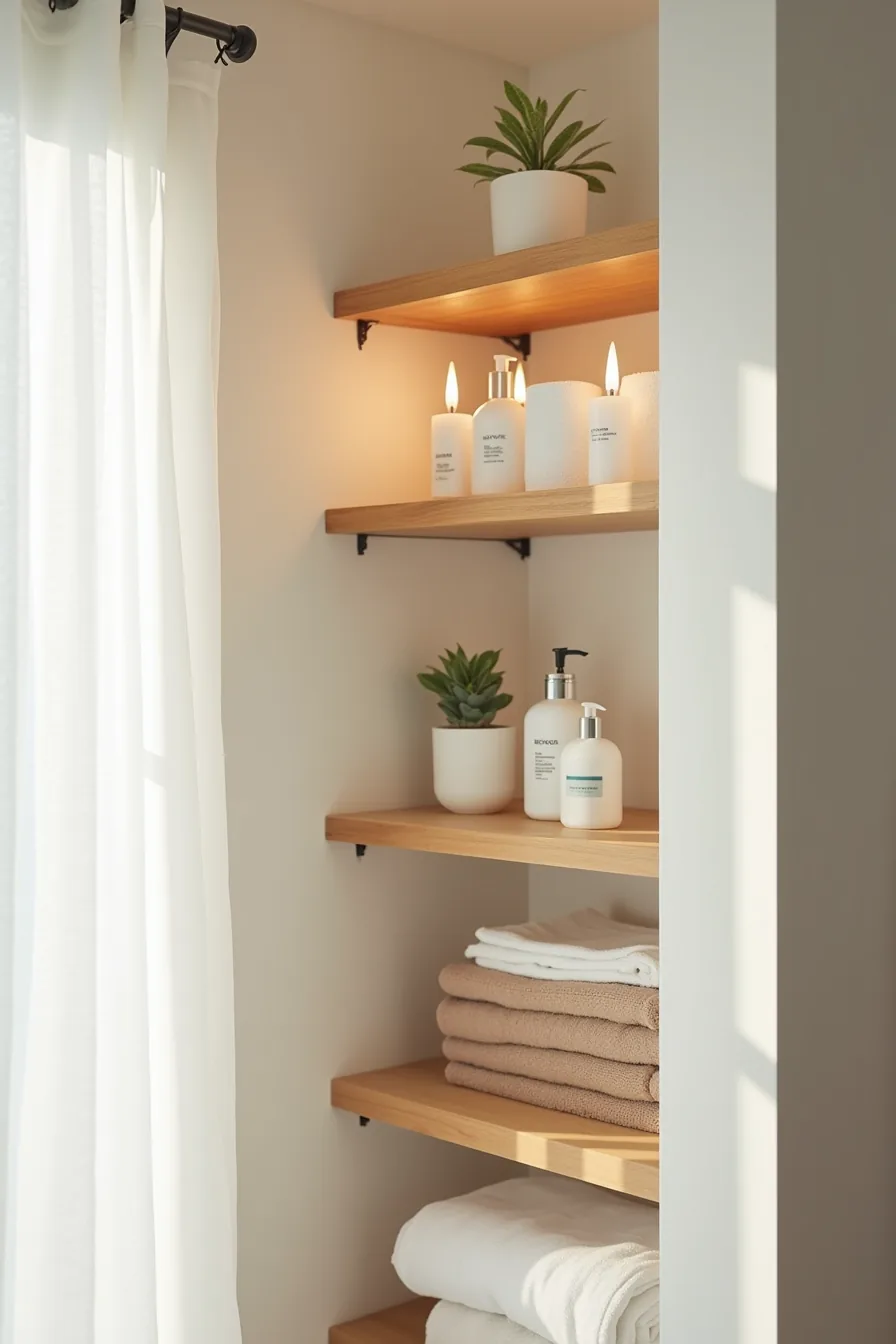
When your bathroom closet is barely wider than your shoulders, the only direction left to build is up. Five wall-mounted metal brackets with thin wooden shelves transform blank wall space into a functioning storage tower, with the top shelf reserved for rolled hand towels that you can grab without bending. The middle shelves keep skincare bottles visible and reachable, while the bottom tier holds folded washcloths, placing the items you use daily at waist height and reserving the upper levels for less frequent grabs.
Space shelves 8–10 inches apart to accommodate most lotion bottles and standard towel stacks without wasted vertical gaps. Each bracket should support no more than 10–15 pounds for dry goods only; this setup won’t handle heavy ceramic or full glass containers safely. Renting?
Use adhesive metal brackets rated for your wall type, they remove cleanly with dental floss and leave minimal marks, making this a Practical Bathroom Closet Organization Ideas planning tip you can reverse before move-out.
Drawer Dividers and Tiered Storage
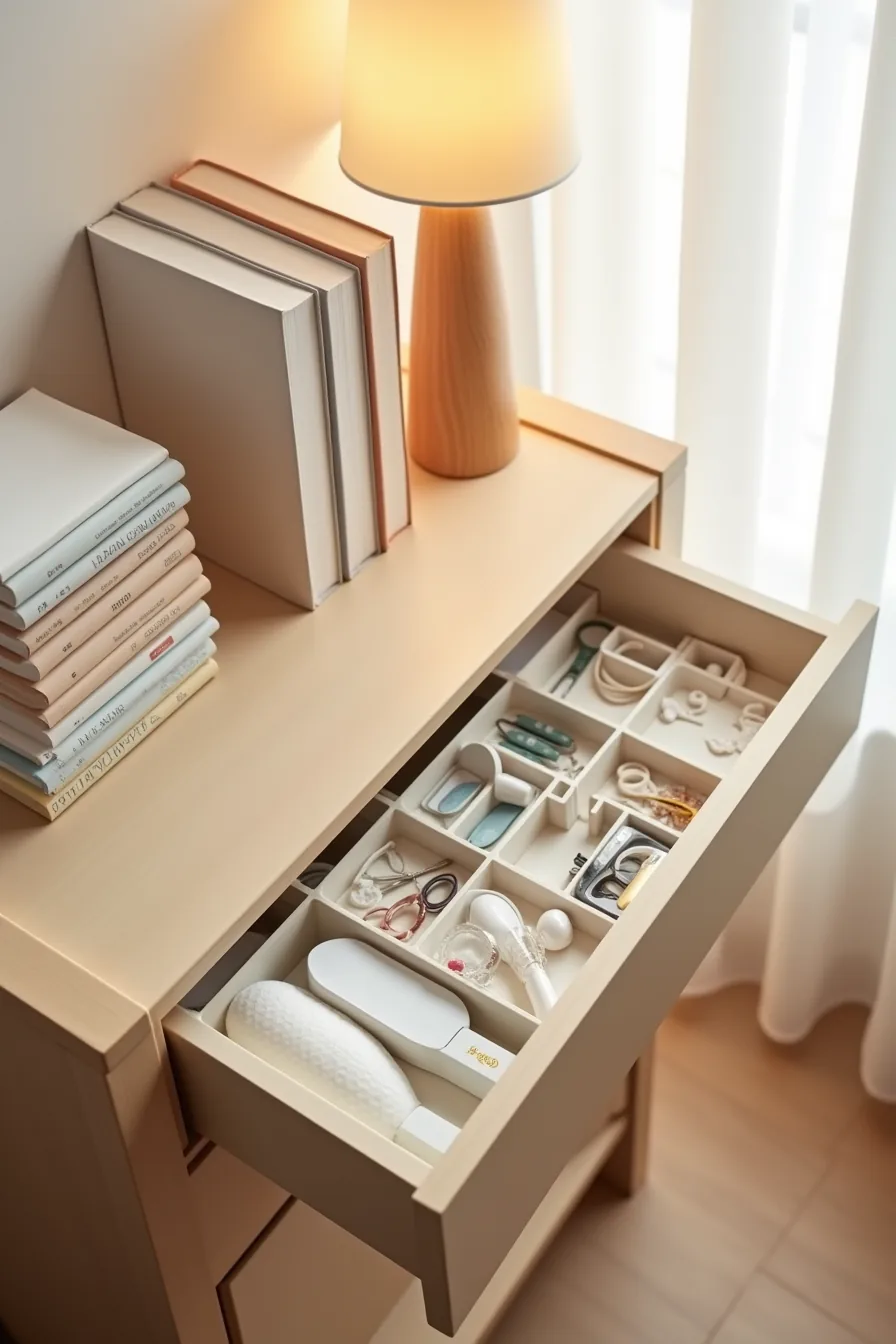
Dividers turn a jumbled drawer into six purpose-built compartments, with cotton pads, hair clips, and nail files each getting a permanent home. The modular plastic inserts require no drilling, so you can reconfigure the layout whenever your routine changes, ideal for renters or anyone still figuring out their daily lineup. Travel-size tubes and small scissors fit best in the shallower sections, while elastic bands stay contained in a narrow slot rather than migrating to the back corner.
Behind the drawer, a tiered shelf riser creates three heights for stacked folded items, doubling vertical density without any tools. Measure your drawer depth first: standard bathroom drawers run 12–18 inches deep, and risers that add over 6 inches of height will block the drawer from closing. Budget buyers can use bent bamboo trays or cut-to-fit plastic grids at a fraction of the cost of custom inserts, and both wipe clean with a damp cloth, no special maintenance beyond an occasional deep clean to catch stray hair and product residue.
These rank among the Best Bathroom Closet Organization Ideas examples because they solve the “everything rolls together” problem permanently.
Over-the-Door and Wall-Mounted Racks
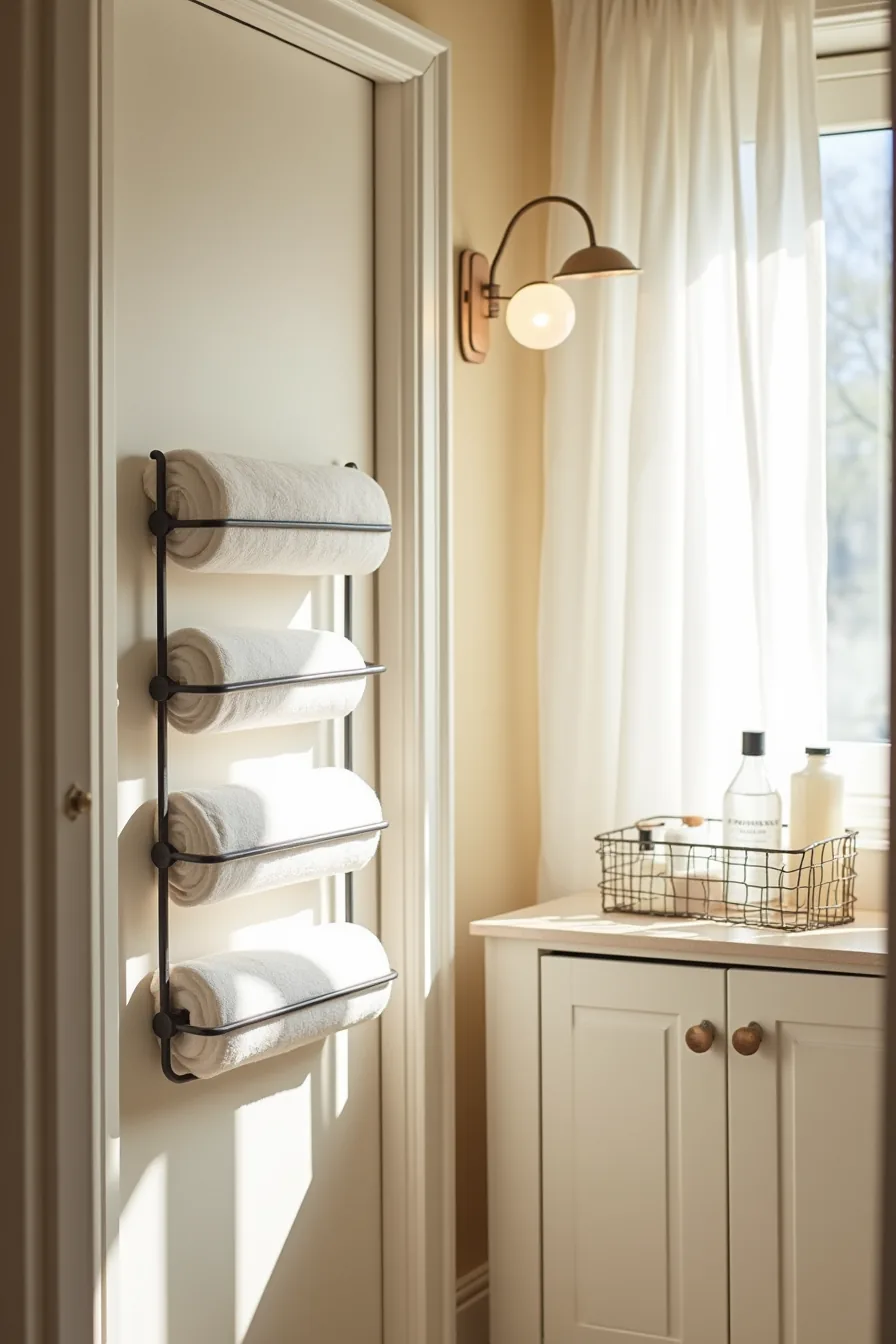
An over-the-door metal rack hung on the interior surface of your closet door turns wasted vertical space into four horizontal slots for rolled towels. Rolling rather than folding is the trick here: it lets you slide each towel in and out with one hand, and it keeps the stack from toppling when you grab the bottom one. This setup suits renters because the rack hooks over the top edge of the door, no screws, no holes, no patching when you move out.
On the adjacent wall, an adhesive-backed wire basket holds spray bottles and small containers without a single fastener. Keep it at shoulder height so you can reach the cleaner you use most often, but verify the adhesive rating matches your wall type: textured drywall or tile will need a heavier-duty strip, and anything over 10 pounds risks a mid-week crash. Most renter-friendly baskets hold 5–8 pounds reliably, so reserve the top shelf for lightweight aerosol bottles and store heavy glass containers elsewhere.
Leave a 4–6 inch clearance from the door frame so the swing path stays clear.
Custom Built-In Cabinetry and Shelving
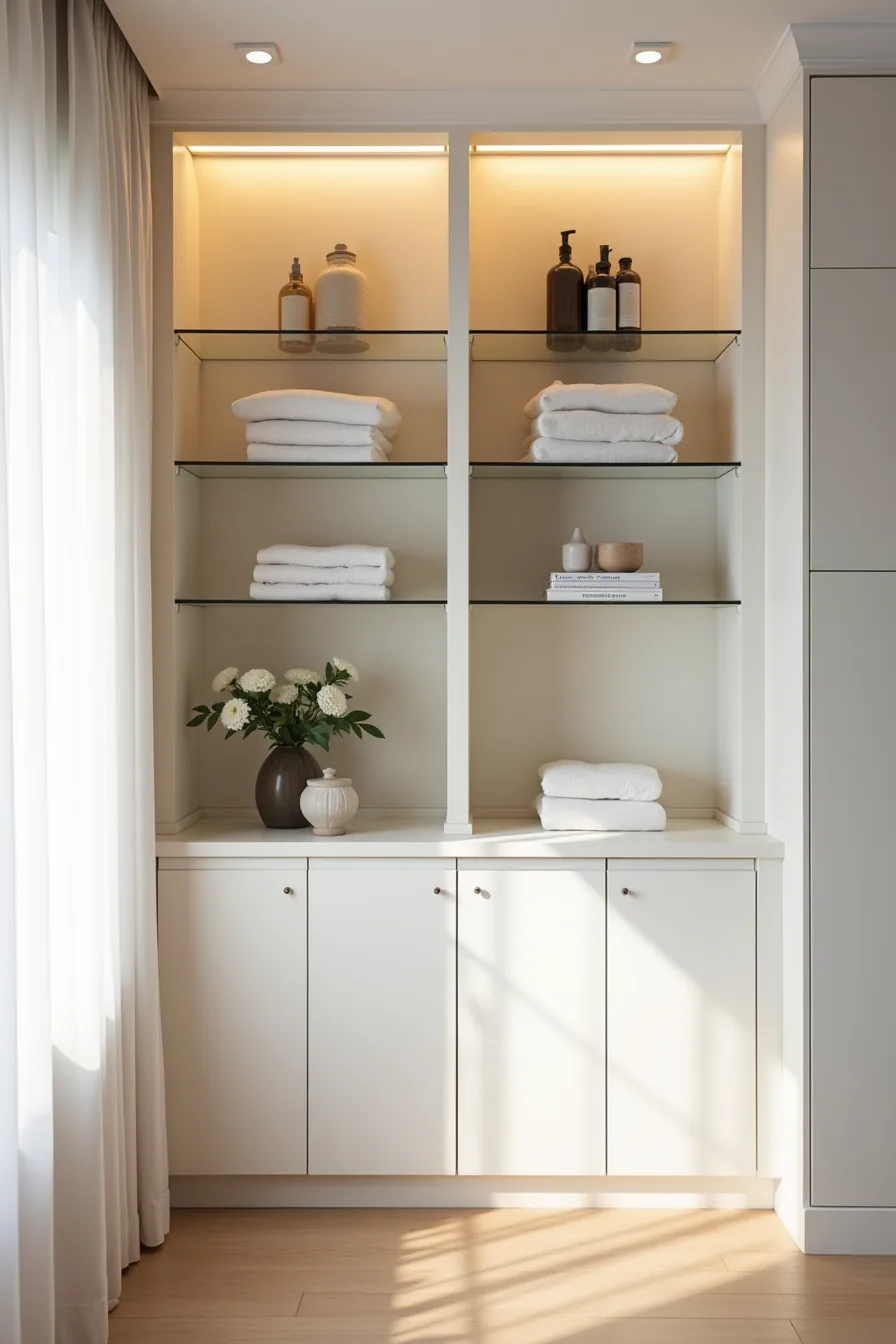
When you own the space and plan to stay for five-plus years, fitted cabinetry is the highest-use upgrade you can make. This full-height system pairs a white cabinet base with adjustable glass shelves above, creating closed storage for the visual noise, cleaning products, backups, styling tools, and open display for the items worth looking at. The integrated LED strip along the top edge does double duty: it makes the upper zone feel like a boutique display and eliminates the shadow your body casts when reaching toward the back of a deep shelf.
The budget vs. Splurge decision here comes down to the shelf mechanism. Custom wood-fitted shelving runs premium, but adjustable glass shelving with metal track brackets costs roughly a third as much and lets you reconfigure heights when your bottle collection changes. Choose this route for medium to large closets with 24 inches or more of usable depth; in a shallow reach-in, the cabinet doors eat the clearance you need.
Use the glass shelves for decorative boxes and folded linens at eye level, and park heavy bottles on the base cabinet floor, not aloft, glass shelves flex under sustained weight beyond roughly 15–20 pounds per shelf. Wipe the LED strip with a dry microfiber cloth monthly to prevent dust from dulling the light, and check the cabinet hinges for tightening twice a year to keep doors aligned.
Labeled Bins and Clear Containers
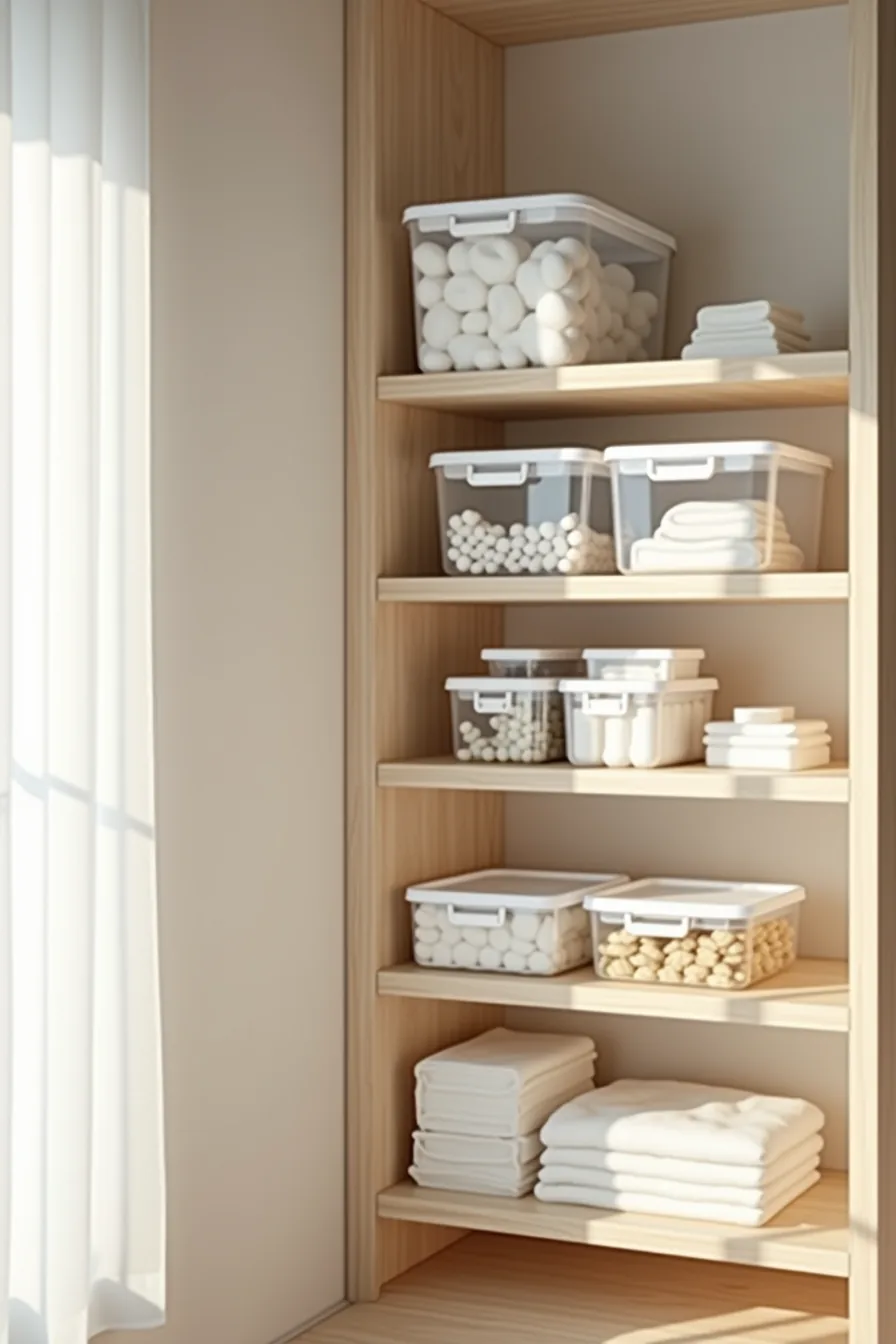
If you want order without a contractor, uniform clear bins are the fastest system to implement, and the easiest to maintain. A set of six identical boxes with solid lids (white, gray, or cream) costs less than a single custom shelf, and the transparency means you locate the cotton rounds or hair tools at a glance instead of pawing through opaque storage. Group by frequency of use: medication and first-aid supplies at eye level, cleaning cloths lower, backups on the top tier.
The solid lids do two jobs, they hide visual clutter when the closet door is open, and they let you stack two high without contents spilling between boxes. Label each lid with a permanent marker or adhesive tag; when you reorganize, swap the label, not the bin. This route suits renters because it requires zero drilling, just measure your shelf depth so bins fit without overhang, which causes them to tip when you pull one out.
For small closets, stick to one bin per category; oversized containers encourage hoarding and make the shelf feel crowded.
Common Mistakes and How to Avoid Them

The most frequent failure isn’t poor product choice, it’s cramming shelves until bottles and jars spill forward and the door physically can’t close. When you overstuff, you lose visibility of what’s behind the front row, which leads to repurchasing items you already own and a daily battle to shove everything back in place. A simple rule: leave 20 percent of each shelf empty, and if the door rubs against anything when it swings, that’s your signal to remove a category entirely.
Blocking lower air vents is a quieter, more damaging error, especially in closets housing a water heater or washer. When you stack cleaning supplies or backup bottles directly over vent openings, you restrict airflow, raise ambient humidity, and invite mildew growth on towels stored nearby. Keep the bottom six inches of any vented wall clear, and never place cardboard boxes on the floor of a bathroom closet, moisture wicks upward and ruins the contents within a few months.
Poor access planning creates daily friction. If you store daily-use items like hairdryers or styling tools above shoulder height, you’ll either skip using them or leave them on the counter permanently. Reserve the 24–36 inch eye-level band for things you touch daily, and accept that the top shelf is for seasonal or rarely needed items only.
Scattered bottles across multiple shelves with no grouping system also wastes time twice a day; assign each category a single zone and resist the urge to “temporarily” set things down in the wrong spot.
Your first move
Start with the shelf you open most often, usually the one at eye level. Empty it completely, wipe it down, and sort every item into three piles: daily use, occasional, and never.
Before buying anything, measure that shelf’s depth and height. Most bathroom closets run 12–24 inches deep, and a single shelf typically holds two stacks of folded towels or about six bins. Pick one organizing product that fits those exact numbers, then test it for a week.
That one shelf becomes your template. Once it works, replicate the system on the remaining shelves one at a time. You’ll have a fully organized closet within a month, no weekend renovation required.
Frequently Asked Questions
How do I organize a small bathroom closet with limited shelf space?
Install a tension rod for vertical hanging, then add stackable wire baskets for folded items. Use the door with an over-the-door organizer. Prioritize daily-use items at eye level, storing extras in labeled bins on the floor.
What’s the best way to store bathroom products to prevent moisture damage?
Keep products in sealed containers or original packaging, and place silica gel packets inside. Store items off the floor and away from water pipes. Ventilate the closet by leaving the door slightly open or using a dehumidifier.
Can I organize a bathroom closet in a rental without making permanent changes?
Yes. Use tension rods, adhesive hooks, and freestanding shelving units. Over-the-door organizers and stackable bins require no drilling.
Avoid peel-and-stick wallpaper on painted walls, as it can strip finish when removed.
How often should I reorganize and declutter my bathroom closet?
Declutter every three months, checking expiry dates on medications and beauty products. Reorganize seasonally when swapping towels and skincare routines. If you can’t close the door without effort, it’s time for an immediate purge.