An eclectic living room isn’t a style you buy, it’s a composition you build, and the difference between curated and chaotic comes down to a few measurable rules of scale, repetition, and contrast. You can mix a 1950s fiberglass chair with a Victorian settee and a concrete coffee table, provided they share a common anchor: a consistent color temperature or a repeating material. The six approaches that follow break that rule down into workable formulas, each with the specific dimensions, maintenance loads, and budget ranges you need to pull it off without turning your space into a storage unit.
Key takeaways
- Anchor with one color to unify furniture from different eras, using it in 30-40% of the room’s textiles, walls, or accessories.
- Scale to your space by choosing two oversized pieces in a large room, but one slim-profile anchor and wall-mounted storage in a small one.
- Budget for the mix by spending on a durable sofa or rug, then sourcing vintage side tables and lamps for under $150 each.
- Protect your investment by testing high-contrast textures (leather, velvet, rattan) in a corner first, and adding felt pads to prevent scratches on mixed wood finishes.
Layer Furniture From Different Eras Without Clashing
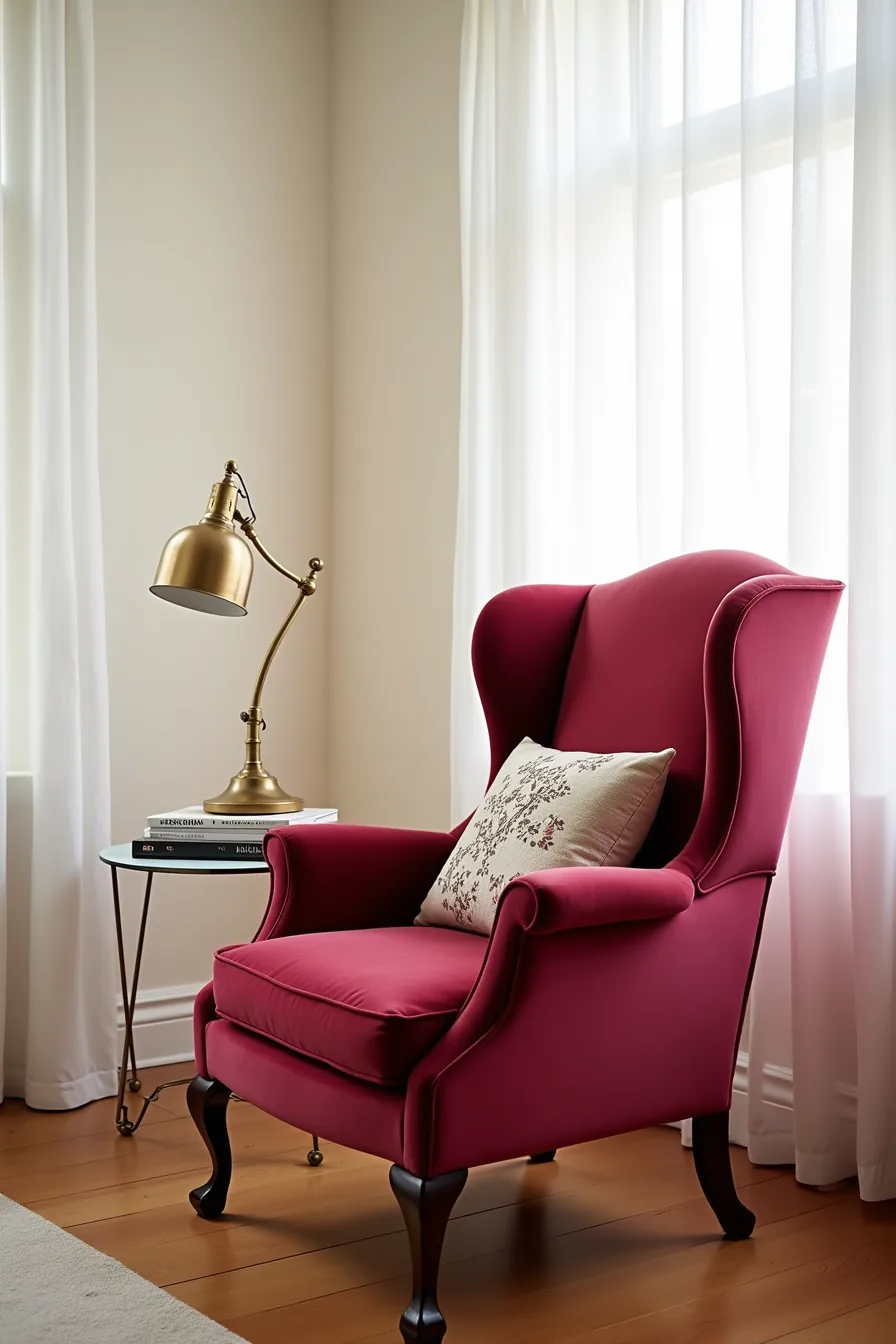
To mix eras successfully, start by naming the dominant style of the room, then let every other piece respond to it. A Victorian velvet wingback chair in a jewel tone anchors the space with strong visual weight, so a 1970s chrome-and-glass side table works as its lighter, airier counterpart, the contrast reads as calculated rather than accidental.
Match scale before you match aesthetics. The wingback chair’s tall, solid silhouette needs a table that sits lower and visually “breathes” beside it; aim for a 6–10 inch height difference between seat and tabletop. Place the chrome table within easy arm’s reach, roughly 12–18 inches from the chair’s front edge, and let a vintage brass floor lamp bend over the arrangement to connect the two pieces vertically.
Use one unifying element across eras, like a modern geometric throw pillow on the chair. This signals intentionality and softens the transition between centuries. On a hardwood floor, let each piece land fully on its own footprint rather than clustering them tightly, two distinct zones read as curated, while three overlapping pieces read as clutter.
Use One Anchor Color to Tie Mismatched Elements Together
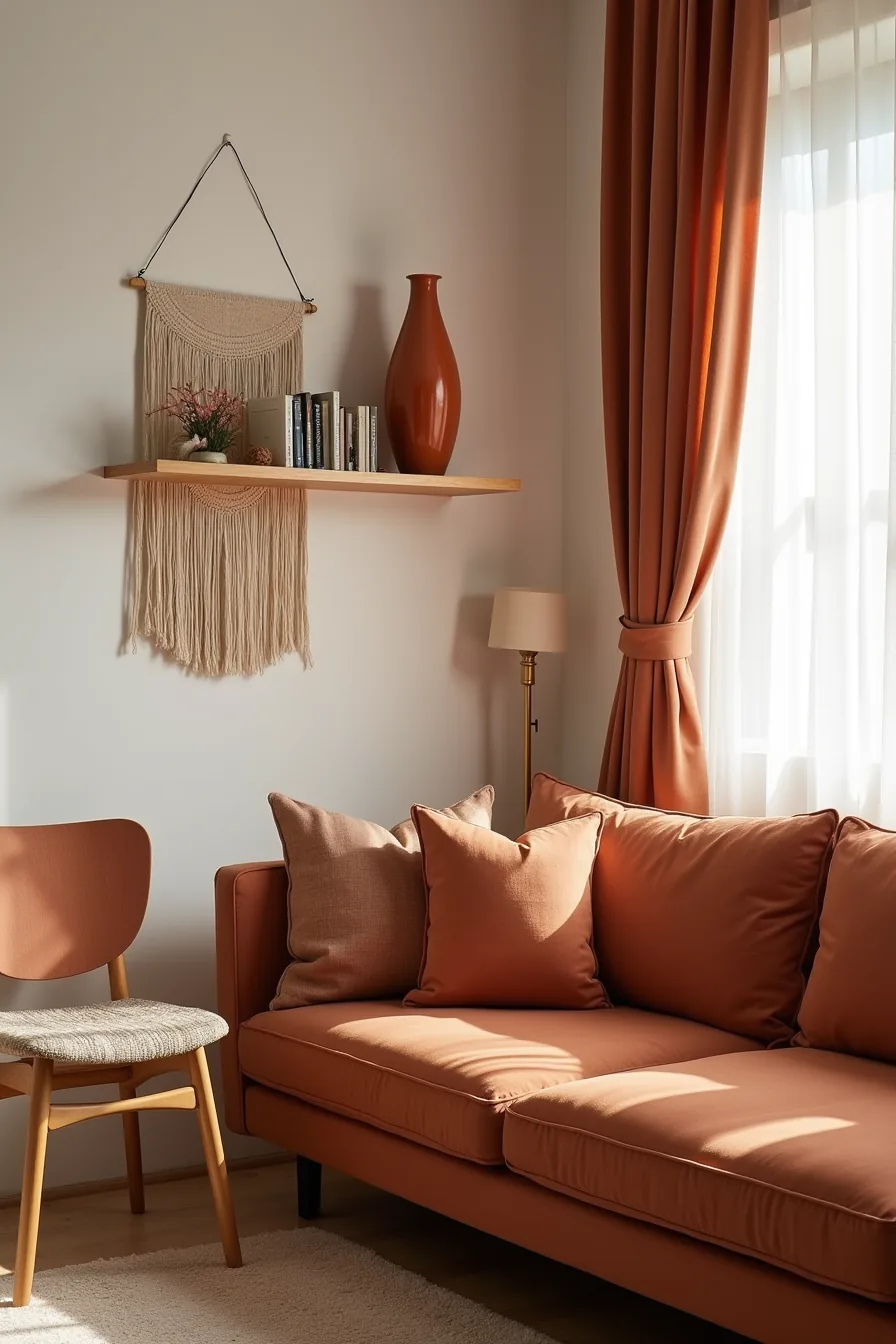
Choose one color and repeat it in at least three out of every four decorative elements, and the room will feel orchestrated no matter how different the furniture shapes are. A rust-colored upholstered sofa forms the base, but that same rust must travel: linen curtains flank the window frame, a ceramic vase punctuates a floating shelf, and a woven wall hanging carries the hue at eye level. The accent pillow on a mismatched chair is the final echo, proof the color placement is deliberate, not accidental.
Work in a triangle across the room’s sightlines. The sofa anchors the lower-left, curtains and wall hanging pull the eye up and right, and the vase and pillow create a mid-level counterpoint. Neutral walls and natural wood furniture stay quiet so the rust has room to move.
Keep the anchor color to roughly 30–40% of visible surfaces; beyond that, the space shifts from eclectic to monochrome, and the mismatched pieces start to compete instead of blend.
Build a Gallery Wall as Your Design Focal Point
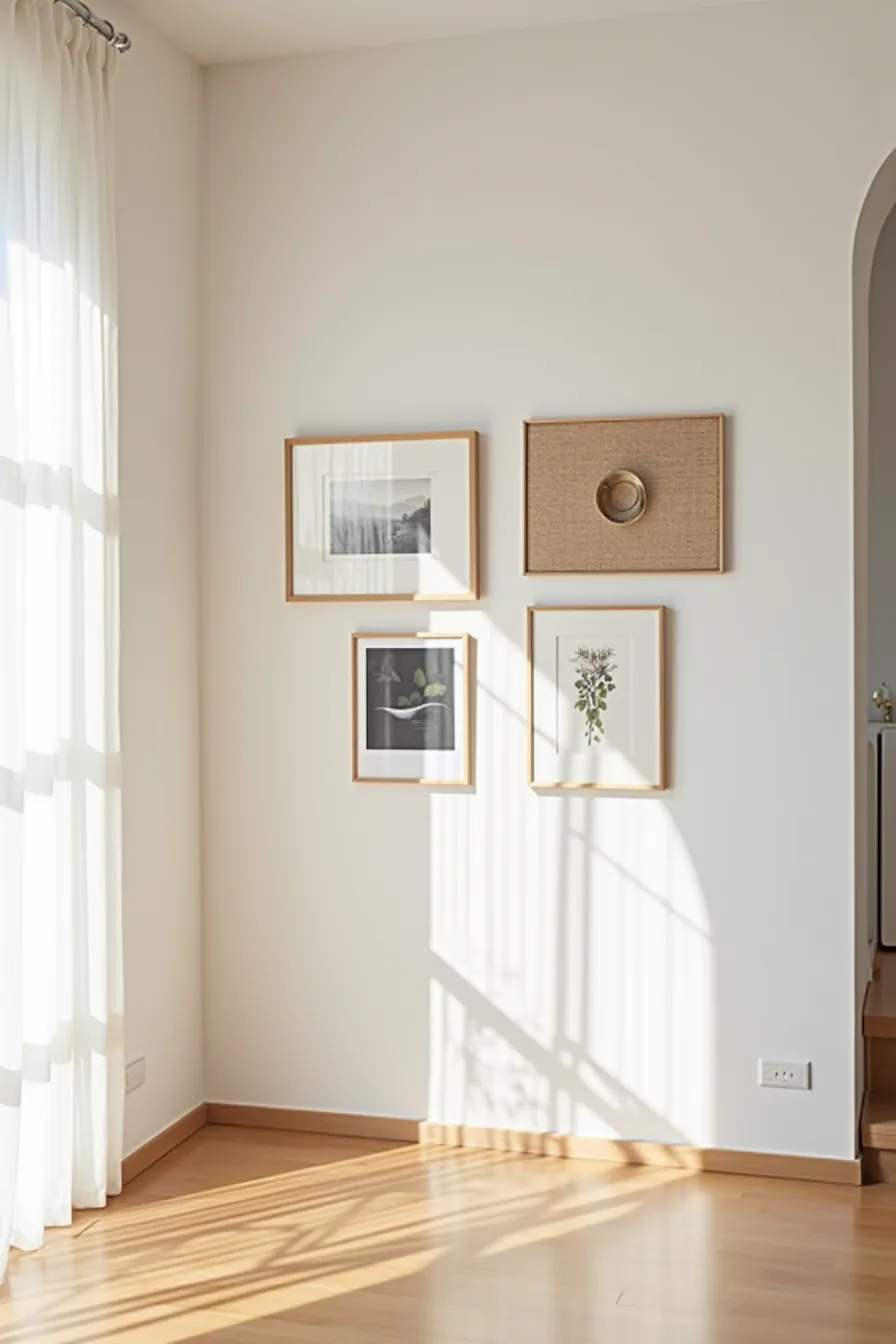
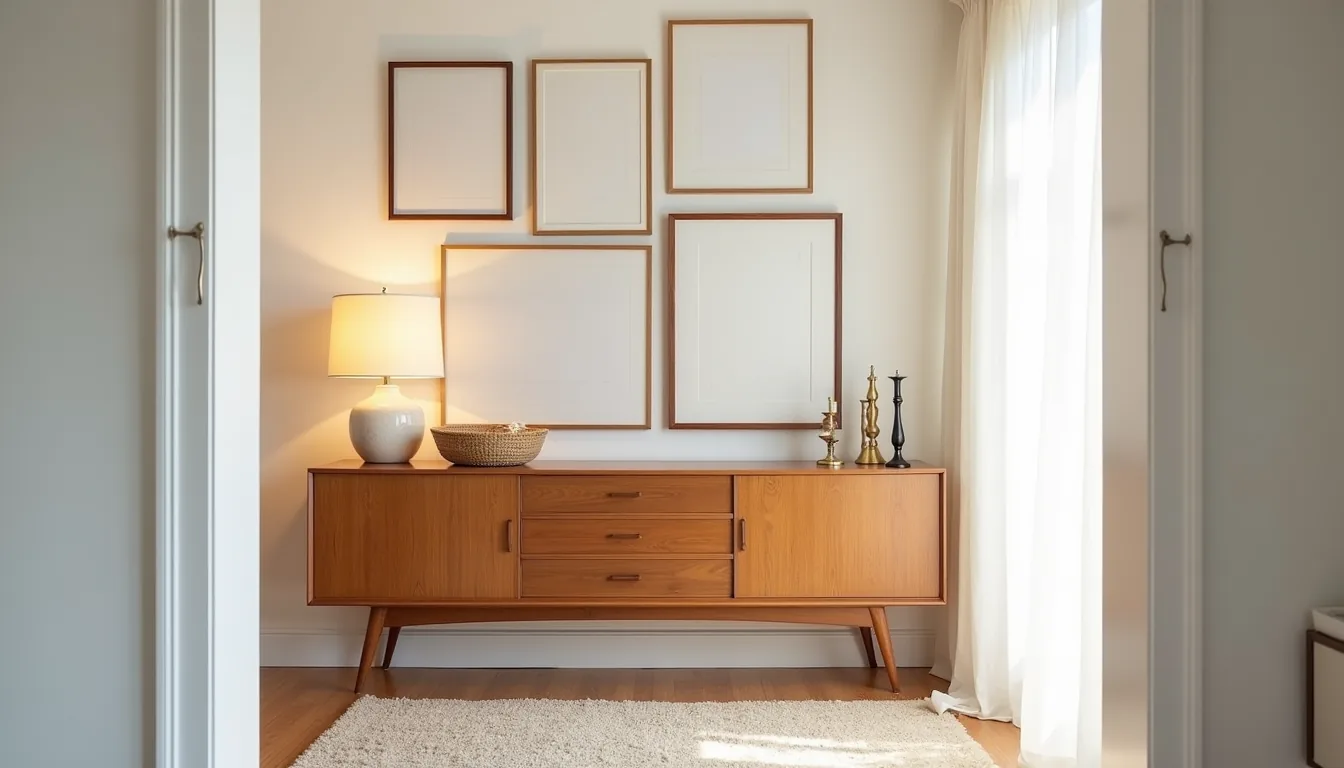
A gallery wall gives your mismatched pieces a job: each item contributes to one unified composition instead of floating independently. The setup spanning an 8-foot width works because it mixes framed abstract prints, a black-and-white photograph, a woven textile in a natural frame, a small metal mirror, a botanical illustration, and a ceramic plate. That variety of materials, paper, fiber, metal, ceramic, creates texture you can see from across the room, not just color.
Stagger the spacing deliberately rather than lining everything up on a single axis. Keep gaps between frames roughly 2–3 inches, and vary the vertical placement so the eye travels in a gentle S-curve across the wall. Hang the center of the arrangement at 57–60 inches from the floor, which aligns with average eye level.
The mirror’s reflective surface adds depth, and the woven textile softens the hard edges of the frames, a balance you lose if you hang only flat prints. This approach suits a room with a large empty wall and a seating arrangement positioned to face it directly.
Eclectic Living Room Ideas for Small Spaces
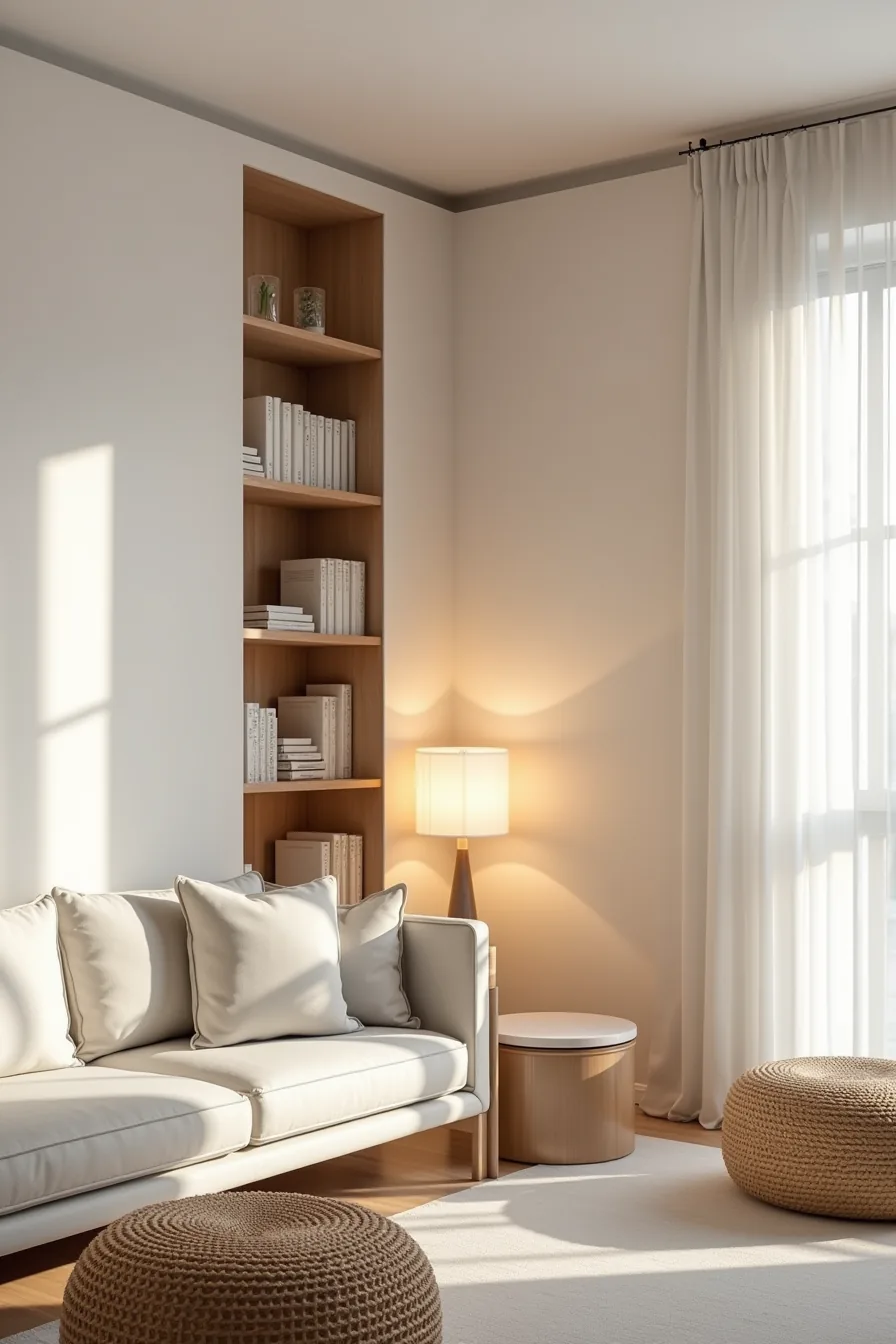
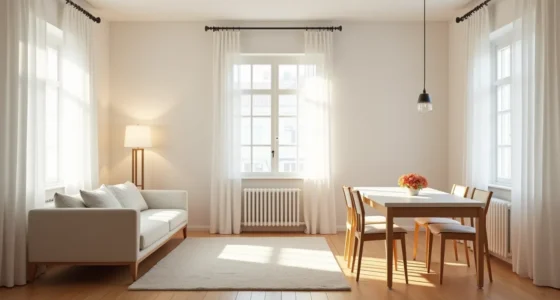
Small rooms punish overcrowding, so your eclectic mix must earn its square footage twice over. A low-profile sofa against the longest wall keeps visual weight near the floor, which makes the ceiling feel higher than a bulky sectional would. Above it, floating shelves hold books and objects at eye level, drawing your gaze upward and freeing the floor entirely.
A tall, narrow bookcase in the corner exploits vertical space that would otherwise sit dead. Woven poufs pull double duty, they seat guests when you host and stack or tuck away to clear the traffic path. Choose a small round side table over a square one; the absence of corners lets people move around it without adjusting their stride.
In a compact room, every piece you add must serve at least one function beyond decoration, or the space reads as cluttered rather than curated. Scale down your art and accessories proportionally, one oversized piece can anchor the room, but several large items will swallow it whole.
Mix Textures and Materials With Intentional Contrast
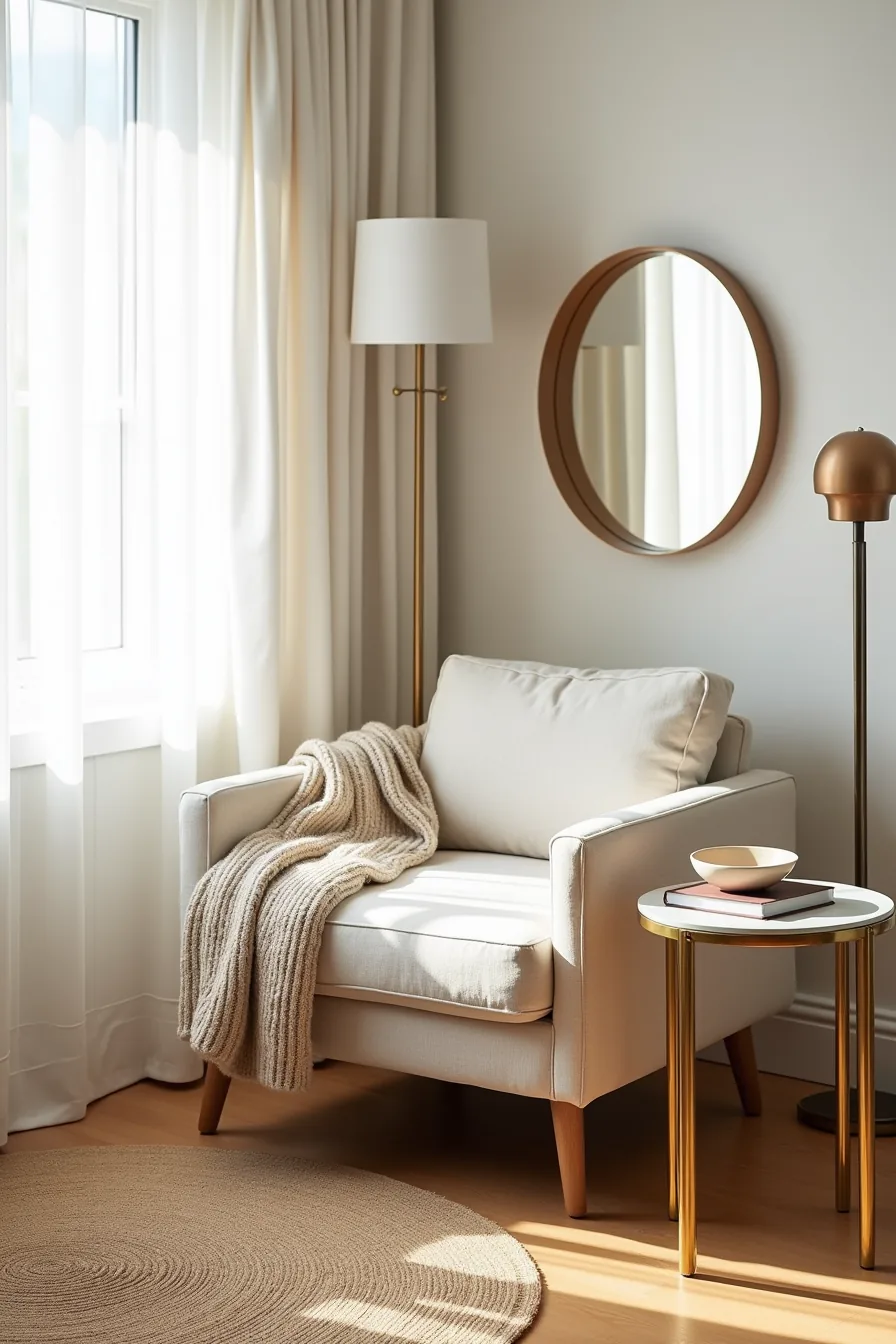
The pairing rule is simple: for every three textures you use, make one smooth, one rough, and one soft. In a typical seating vignette, a rough linen armchair holds the visual weight, while a brass side table with a glass top provides the smooth counterpoint, the metal catches light, the glass adds airiness, and together they keep the chair from feeling heavy. A chunky knit throw draped over the arm introduces softness that invites touch, and the woven jute rug beneath grounds the composition with organic irregularity.
Distribute these materials so no single texture clusters in one corner. Spread them across the room: a smooth ceramic bowl on a shelf opposite the rough linen, a matte metal mirror frame echoing the brass table’s metallic note without duplicating its shine. This deliberate scatter prevents the eye from landing on one overwhelming material and instead reads the whole room as intentionally assembled.
Neutrals with different undertones, warm beige, cool gray, olive, tie disparate surfaces together without requiring you to match anything exactly.
Adapt Your Eclectic Living Room to Your Budget and Lifestyle
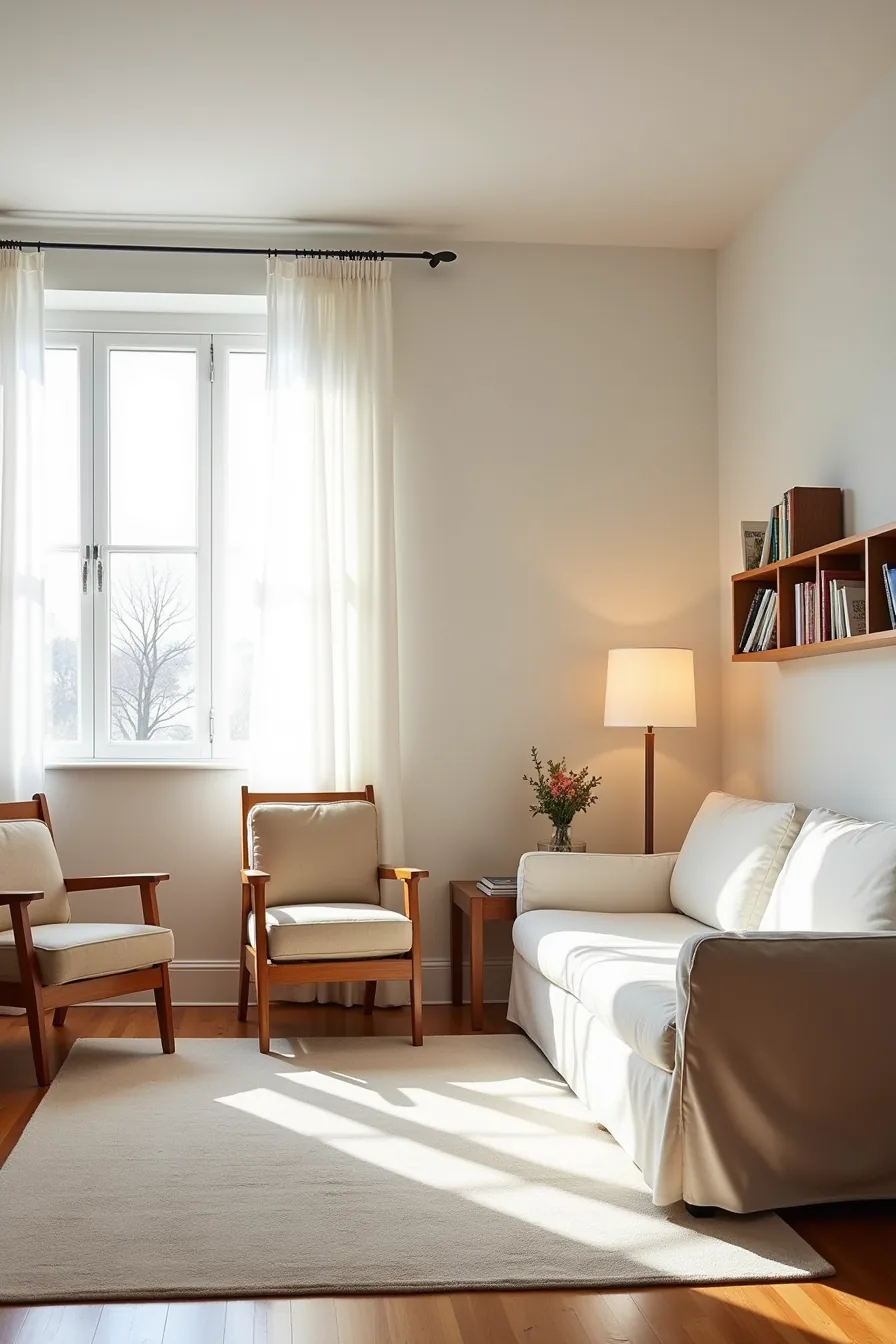
If you’re working with a tight timeline, thrifted mismatched chairs and a flea-market side table deliver an assembled-over-time look within weeks, not years, expect to spend 2–3 weekends hunting, and budget for reupholstery or a deep clean if the fabric is worn. This route suits renters and first-time decorators because the pieces are replaceable, and the total cost typically lands 40–60% below retail for comparable new furniture.
For the long-term investor, an investment-grade sofa with a removable slipcover bridges both worlds: the frame lasts 10–15 years, while the washable cover survives pets, kids, and changing taste. Pair it with wall-mounted shelving that requires no floor space, and you keep the room flexible, swap the shelf styling seasonally without committing to new case goods. This approach works best for permanent homes where you can amortize the cost per year of use, and the slipcover lets you refresh the look every 2–3 years for a fraction of a new sofa’s price.
Your 30-minute action plan
You now have six distinct paths, each with clear trade-offs in cost, permanence, and visual impact. Skip the mood-board paralysis. Instead, pick the single room zone that bothers you most, whether that’s a bare wall or a mismatched seating cluster, and apply one idea there this week.
Measure your floor space first. A 10-by-12-foot room can’t carry the same furniture scale as a 20-foot loft, so adjust proportions before buying anything.
Commit to one anchor piece, then build around it. That singular decision will pull the rest of the room into coherence faster than any paint color or accessory ever will.
Frequently Asked Questions
How do I know if my eclectic living room looks intentional or just messy?
Messy rooms lack repetition. Intentional eclectic style repeats a color, material, or shape at least three times. Stick to a neutral base for large pieces, then add contrast through smaller accents.
Can you have an eclectic living room in a small apartment without it feeling cramped?
Yes. Anchor with one oversized piece, a deep sofa or large rug, then keep everything else visually light. Use slim legs on furniture, wall-mounted shelving, and mirrors to maintain floor space and airflow.
What’s the best way to add eclectic style as a renter without damaging walls?
Use tension rods, freestanding screens, and oversized leaning art instead of drilled hardware. Command strips work for lightweight frames under five pounds. Layer removable wallpaper on a single accent wall for temporary texture.
How many different eras or styles should I mix in one eclectic living room?
Limit yourself to three distinct styles or eras. Choose one dominant style for 60 percent of the room, a secondary for 30 percent, and a playful accent for the remaining 10 percent. This keeps contrast readable.