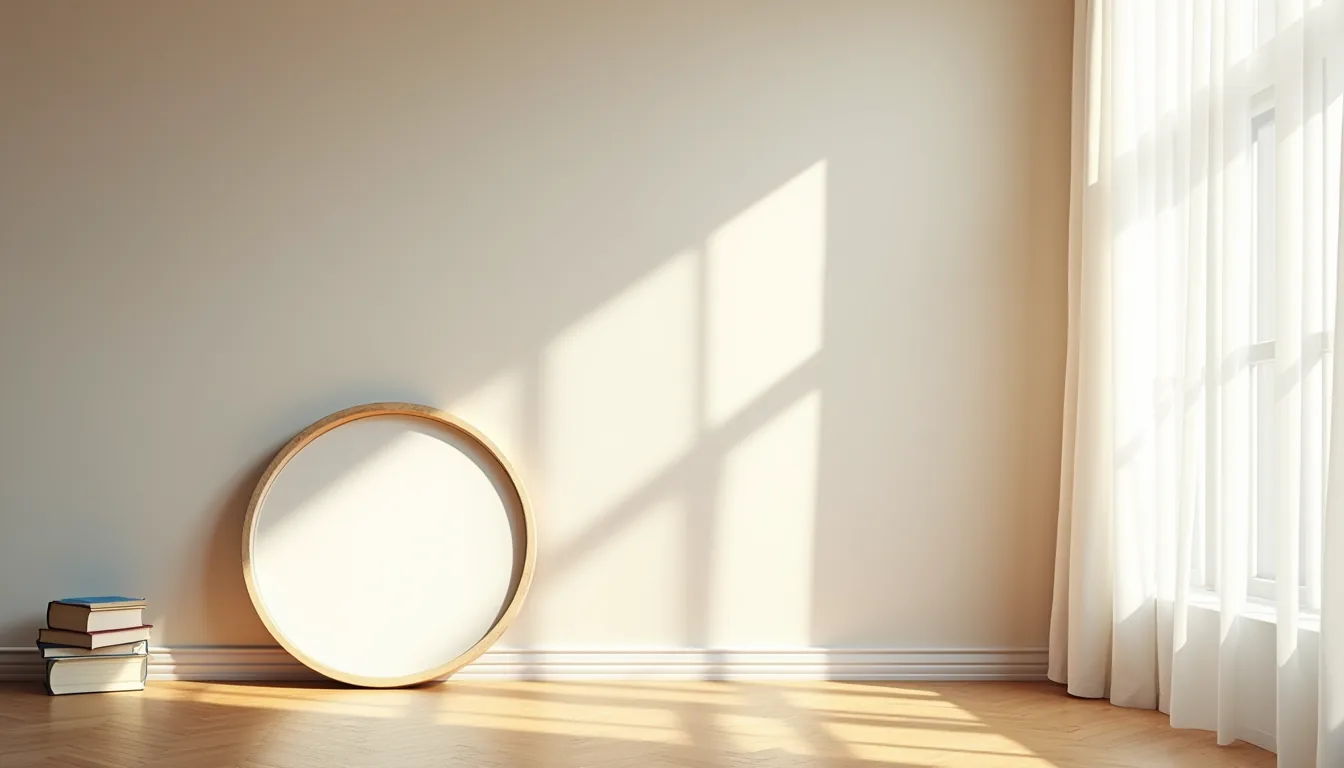

A full-length mirror propped against a wall can make a room feel twice as large, but the real skill lies in choosing the right placement, scale, and mounting method for your specific space. The six interpretations below range from a $40 leaning frame to a built-in alcove system, each with the exact dimensions, clearances, and hardware you need to pull it off. You’ll learn which option suits a rental, which pays off long-term, and how to avoid the common mistake of a mirror that blocks a doorway or radiates glare.
Key takeaways
- Place mirrors opposite or perpendicular to windows, not directly facing them, to multiply natural light without creating harsh glare or doubling heat gain.
- Choose leaning mirrors for renter-friendly flexibility and casual styling, but reserve hanging mirrors for permanent, high-traffic areas where stability matters most.
- Scale mirrors to 50–75% of the width of the furniture below them, and leave 6–12 inches of wall clearance above so the reflection captures depth, not just clutter.
- Budget routes favor frameless or adhesive-backed mirrors under $50, while long-term investments justify custom-cut, low-iron glass with beveled edges that resist tarnishing and cost 2–3 times more.
The Best Wall for a Mirror: Placement That Multiplies Light and Space
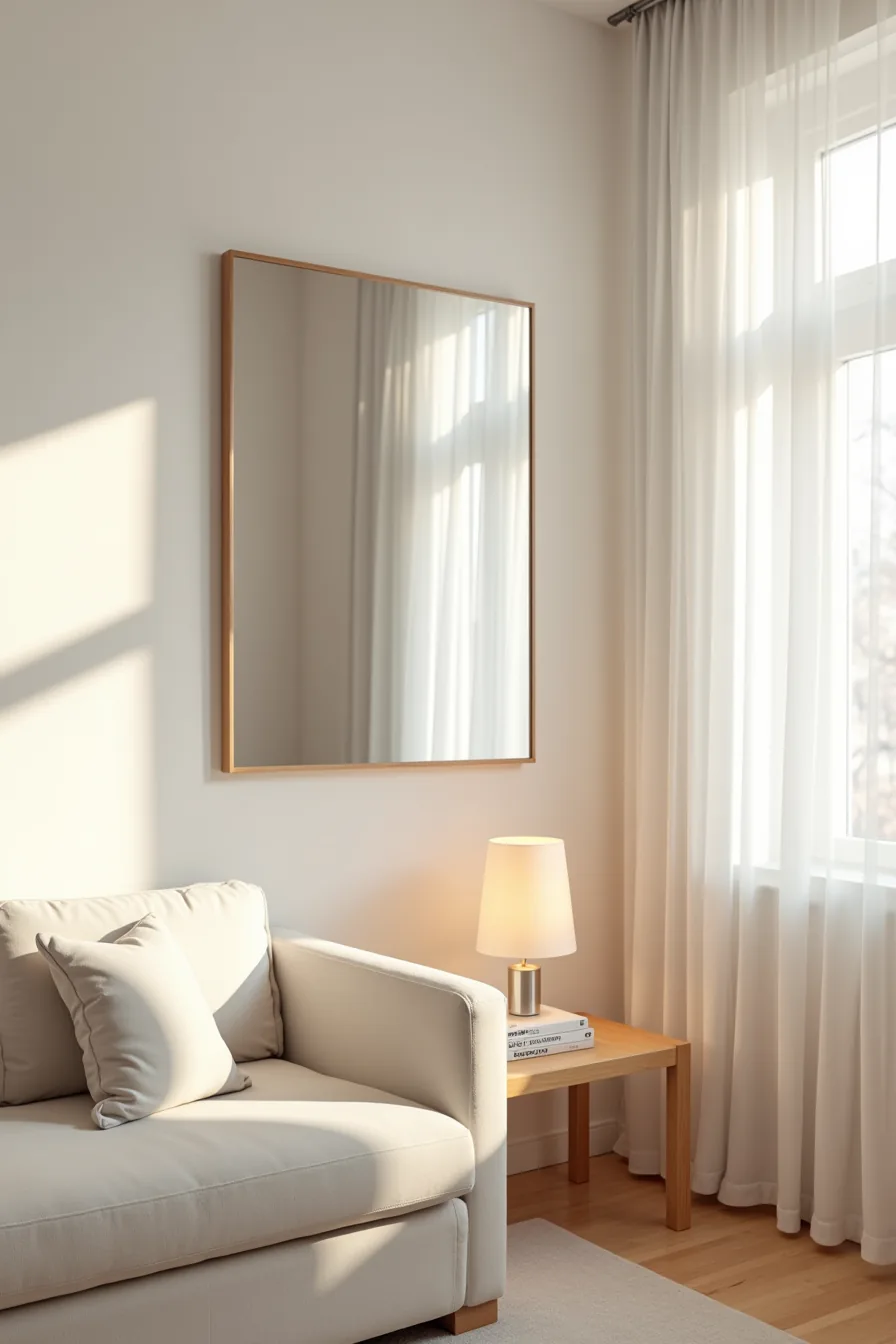
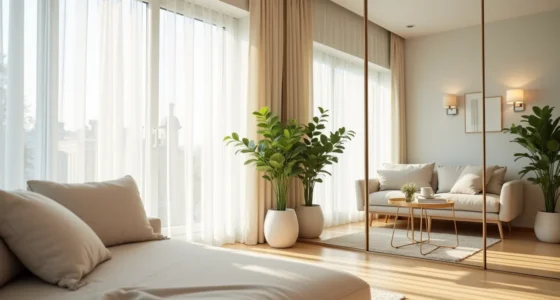
The single highest-impact decision you can make with a rectangular mirror is mounting it directly opposite your primary window. A wall-facing placement like this bounces daylight back across the room, effectively doubling the perceived brightness without adding a single watt of artificial light. In a typical living room where the window spans 60 to 80 inches, this setup works best when the mirror is roughly two-thirds of the window’s width.
The sofa arm and side table positioned in the foreground of this setup serve a critical purpose: they give the reflected light something to wash over, creating depth rather than a flat glare. For this arrangement to work, the mirror’s bottom edge should sit 36 to 40 inches above the floor, aligning with the sofa’s back height so the reflection captures the window’s upper half. Larger rooms benefit from a mirror closer to the window, while smaller spaces require pulling it a few inches back to avoid over-saturating the corner with light.
Leaning vs Hanging: When to Use Each Installation Method
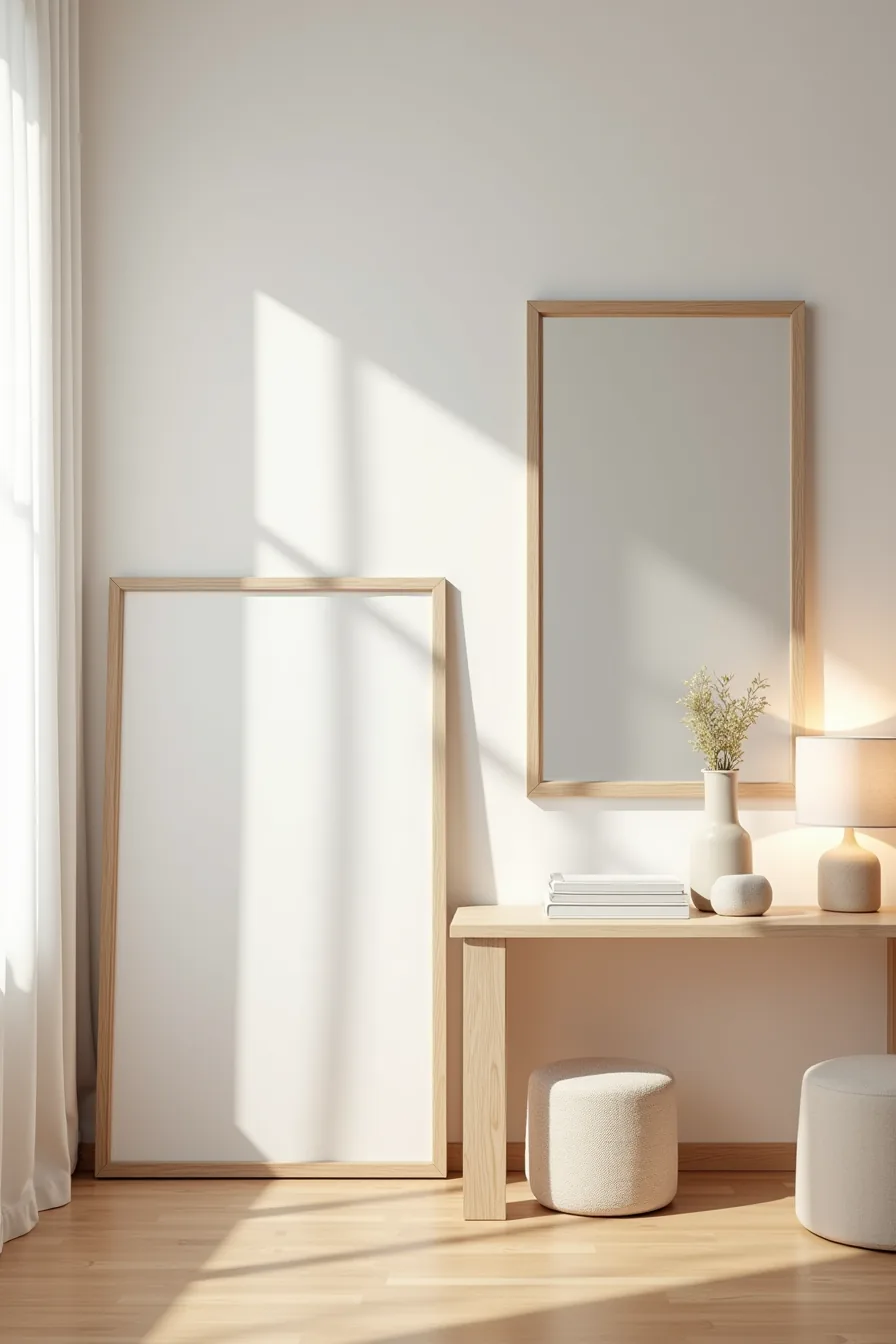
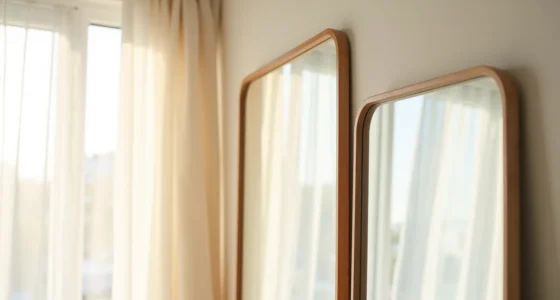
A floor-leaning mirror is the renter’s best friend. It requires no wall anchors, leaves zero drywall damage, and lets you reposition the piece whenever the light shifts or you rearrange the room. The trade-off is stability: a tall leaning mirror on hardwood flooring needs a rubber stopper or felt pad under the frame’s base to prevent it from sliding, and it should never sit in a high-traffic hallway where a passing shoulder could knock it over.
Wall-mounted mirrors, like the framed piece above the console table, suit permanent installations where you want the bottom edge at a fixed height and the surface below left fully clear. Hanging requires two sturdy anchors rated for the mirror’s weight, most framed mirrors in the 30- to 40-pound range need toggle bolts, not simple drywall screws. Choose hanging when you’ve studs available or plaster walls you trust, and leaning when you want flexibility without commitment.
A leaning mirror also works best in rooms where you can push it flush against the wall, whereas a hanging mirror frees up floor space entirely.
Mirror as a Focal Point: Creating Visual Interest Above Furniture
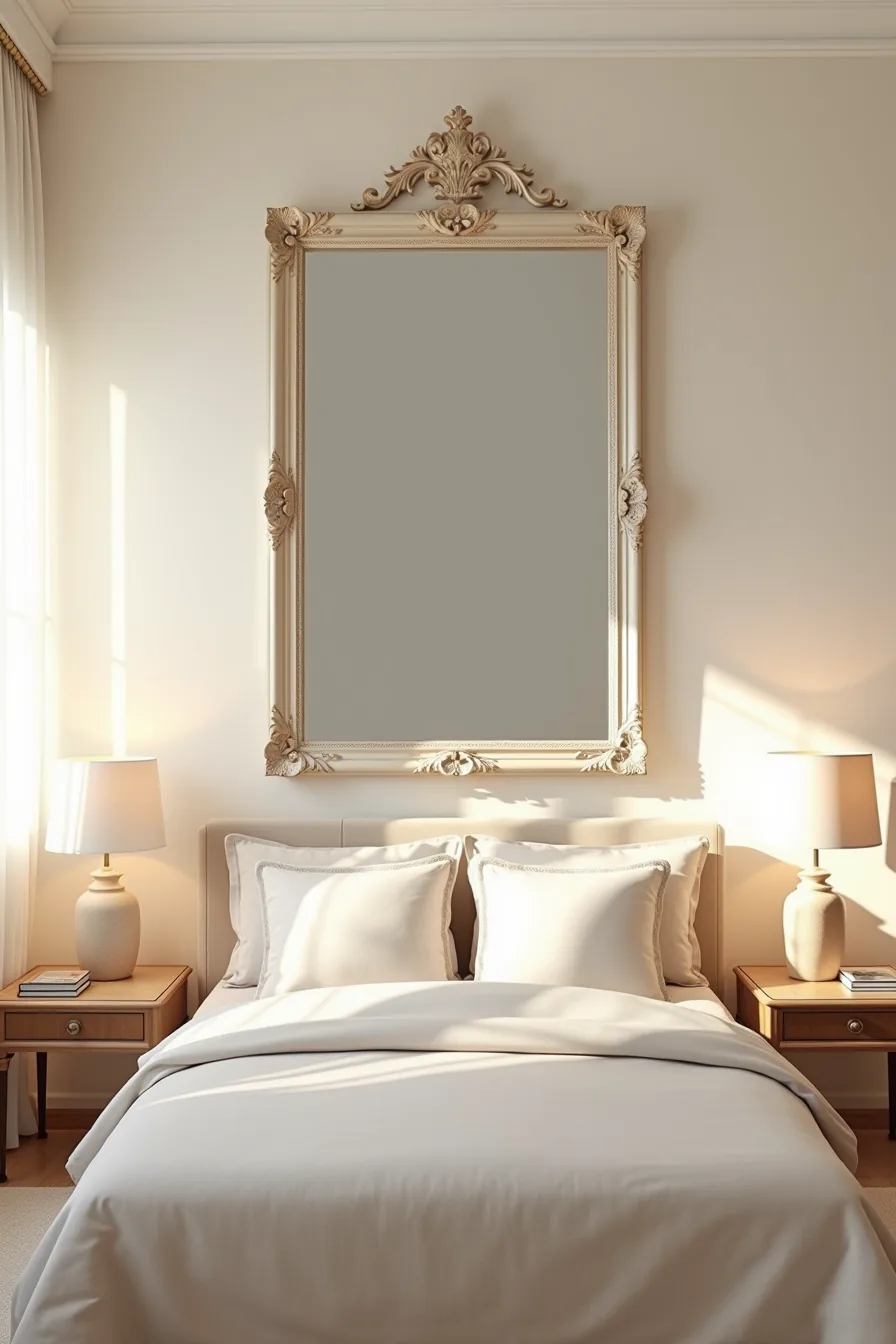
When you place an oversized, ornate-framed mirror above a low upholstered headboard, you instantly anchor the entire bedroom composition. The decorative frame acts as the room’s jewelry, drawing the eye upward and balancing the horizontal mass of the bed below. This styling works best when the mirror’s width measures 75-85% of the headboard’s width, too narrow and it reads as an afterthought, too wide and it overwhelms the sleeping zone.
For this setup, the ornate mirror pairs beautifully with the soft texture of the upholstered headboard, while matching nightstands frame the ensemble for a symmetrical, deliberate look. This approach suits traditional, transitional, and maximalist décor styles where visual richness is welcome. If your taste runs minimalist, swap the ornate frame for a sleek brass or black metal version with clean lines, the anchoring effect remains, but the mood shifts from romantic to contemporary.
To reproduce this look, ensure the mirror’s bottom edge sits 8-12 inches above the headboard’s top, leaving a breathable gap that prevents the arrangement from feeling cramped.
Small-Room Strategy: Mirror Ideas That Make Spaces Feel Bigger
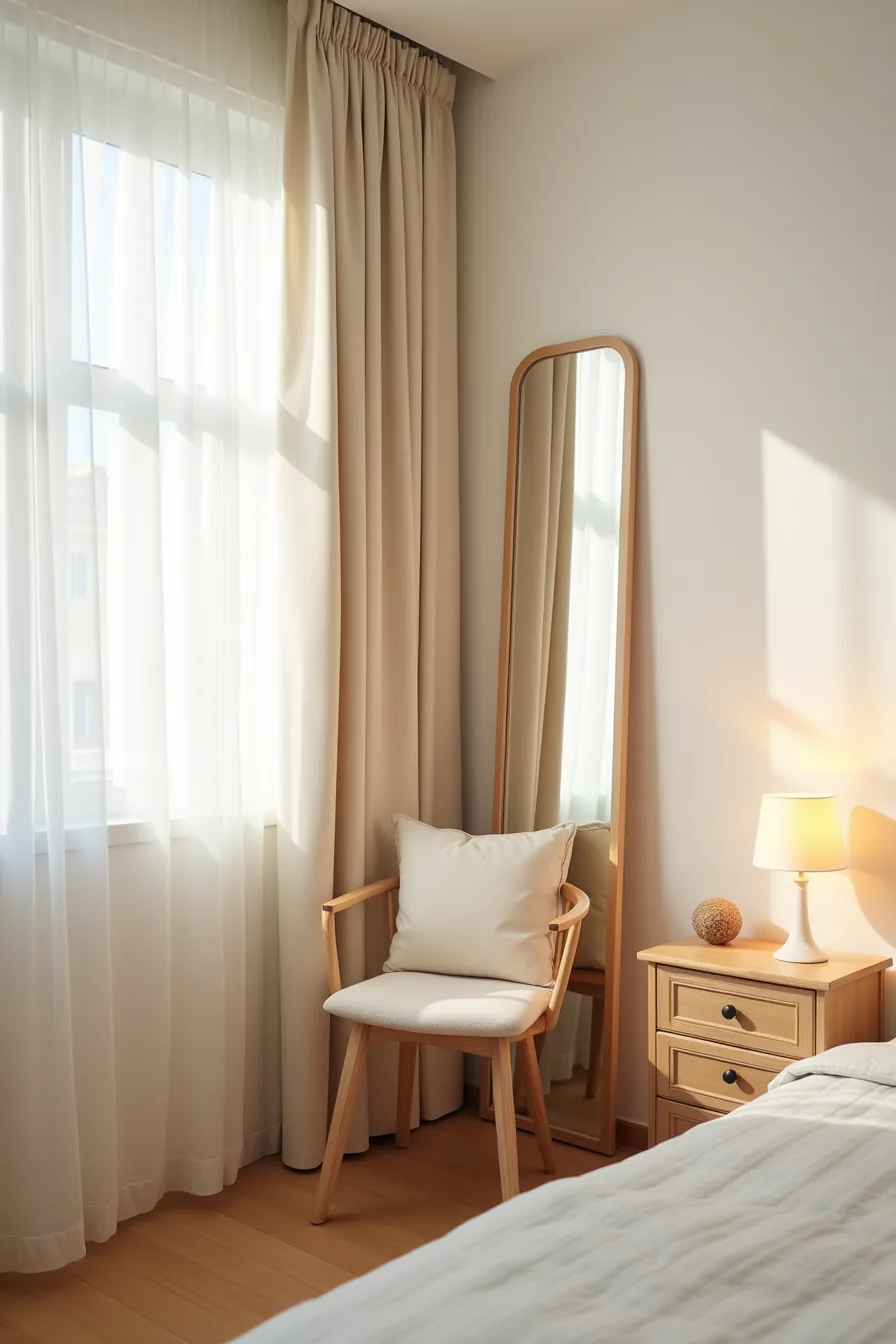
A tall narrow mirror wedged into a corner between two walls, angled slightly outward, does more for a compact bedroom than any artwork could. The outward angle catches light from two directions and visually pushes the corner back, creating the illusion of additional floor space beyond the actual wall line. This positioning works because it exploits the room’s dead zone, the corner, without sacrificing usable wall area for furniture.
The full-length proportions of the mirror matter here. A mirror reaching 70-80 inches tall in a tight corner draws the eye vertically, making the ceiling feel higher and the room less boxy. Pairing it with a single chair and a small dresser in the same corner cluster keeps the arrangement functional rather than decorative, so the mirror earns its space by reflecting the room’s depth while the furniture maintains practical use.
This strategy suits studio apartments, narrow guest rooms, or any layout where floor area is at a premium, and it costs nothing in square footage. For the strongest effect, choose a frameless or thin-edged mirror; bulky frames eat into the visual expansion you’re trying to create.
Budget, Rental, and Investment Routes: Three Paths to Mirror Success
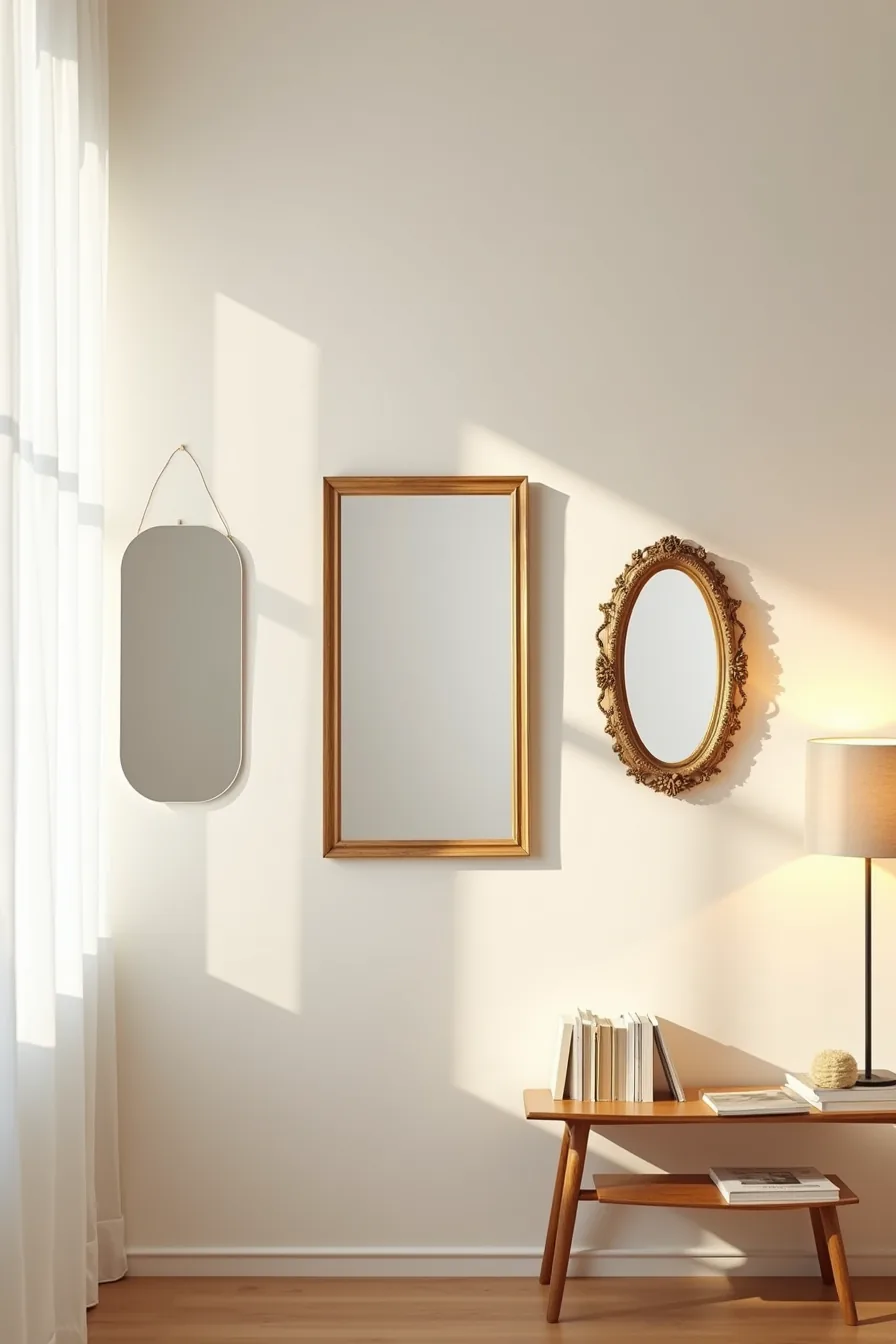
Your budget and lease terms dictate which of three mirror strategies makes sense. For renters, a frameless adhesive mirror is the practical route: it mounts with heavy-duty strips, costs $20-$60 for a 24-36 inch size, and removes cleanly without patching if you pull the strips downward rather than outward. You sacrifice repositioning ability, so measure your wall twice before peeling the backing.
Owners who want flexibility without permanence should choose a mid-tone wooden-framed mirror in the 40-60 inch range. The natural finish bridges modern and traditional decor, and the frame lets you hang it with two simple hooks, allowing easy swaps between rooms. Expect to pay $150-$400, and verify the frame is solid wood rather than MDF if you plan to move it repeatedly.
The gilded-frame statement piece is your long-term investment. It anchors a dining room or primary suite, and its ornate detailing becomes the room’s focal point, so you can keep surrounding furniture minimal. Budget $600-$1,200 for quality gilding that won’t flake, and reinforce your wall studs if the mirror exceeds 30 pounds.
Maintenance, Safety, and Scale: Practical Considerations Before You Buy
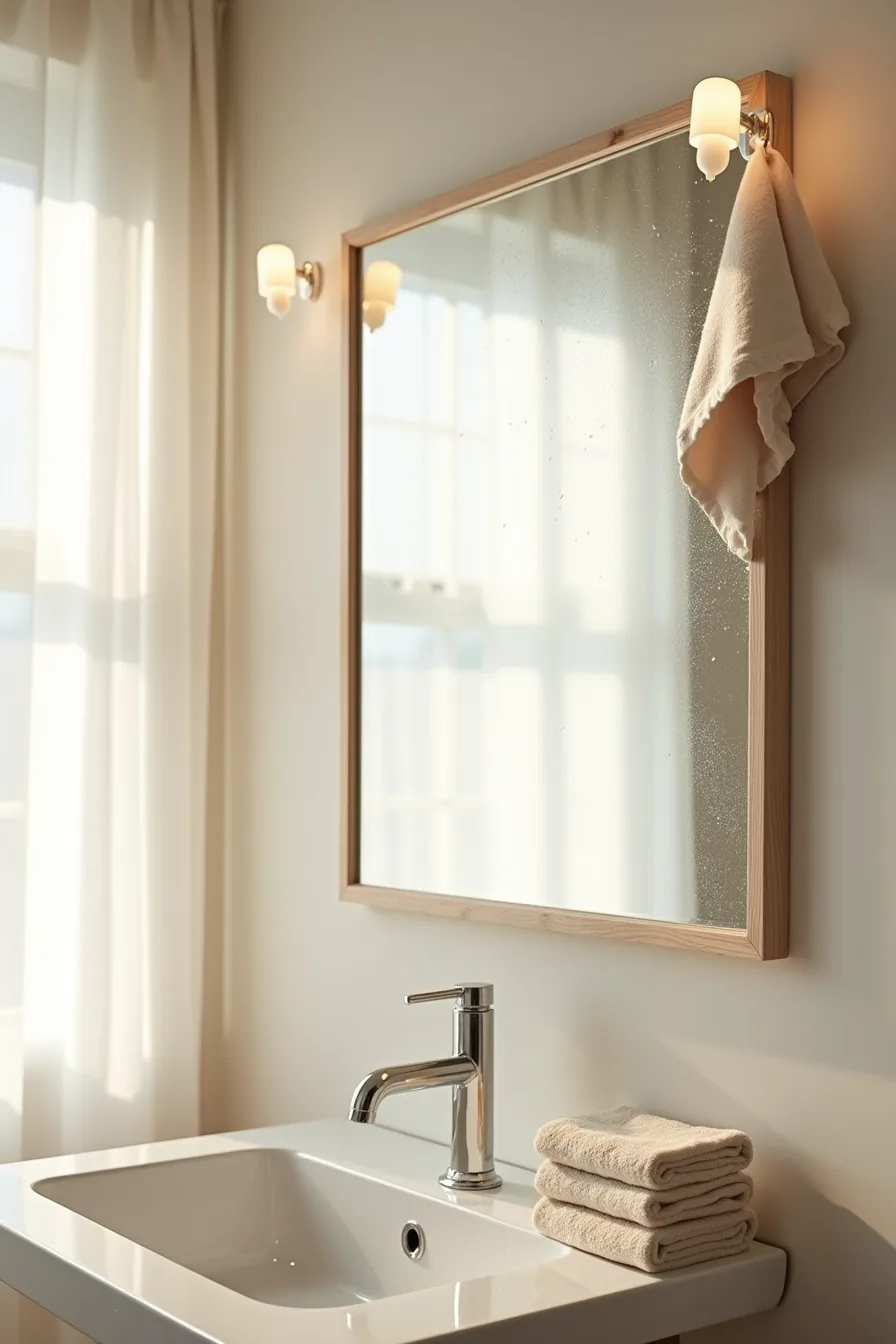
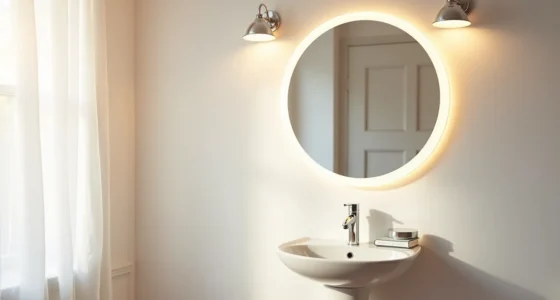
Before drilling, confirm your wall type. Drywall with no stud behind the intended spot requires hollow-wall anchors rated for at least double the mirror’s weight; a 30-pound mirror needs anchors rated for 60 pounds. If you’re mounting above a sink with water droplets and a cleaning cloth draped over the frame edge, as in a typical bathroom setup, opt for a moisture-resistant finish, unsealed wood will warp within two seasons.
For bathroom mirrors specifically, expect condensation daily if you take hot showers. Wipe the glass with a microfiber cloth every morning to prevent hard-water spotting, and check the wall anchors for corrosion every six months. The additional humidity means your adhesive strips or anchors face constant moisture exposure, so stainless steel hardware is non-negotiable.
To calculate scale, your mirror should be 2-4 inches narrower than the sink vanity below it, and its bottom edge should sit 5-7 inches above the backsplash. For a 30-inch vanity, that means a 26-28 inch mirror. In a powder room with a 24-inch sink, keep the mirror width under 22 inches to avoid overwhelming the space and blocking the light fixture’s reach.
Where to Start
Start with the largest mirror that fits your wall without crowding the furniture beneath it. Measure the wall, then subtract 6–12 inches from each side to find your maximum width. That single measurement eliminates half your options before you browse.
For most rooms, one well-placed mirror outperforms three decorative ones. Choose the primary spot, above a console, beside a door, or opposite a window, and install that first. Live with it for a week before adding any secondary mirrors.
Your next step: measure one wall today and write down the dimensions. That number is your starting point.
Frequently Asked Questions
Should I hang a mirror opposite a window or next to it?
Hang it opposite the window to maximize natural light reflection. Next to it works only if the mirror catches indirect light, but opposite doubles brightness without glare.
What size mirror works best in a small bedroom?
Choose a mirror 24–36 inches wide for a small bedroom. This scale reflects enough light without overwhelming the wall or visually crowding the space.
Can I use adhesive strips to hang a heavy mirror, or do I need wall anchors?
Use wall anchors or a stud for mirrors over 20 pounds. Adhesive strips fail on textured walls, humidity, or temperature shifts, risking a dangerous fall.
How do I prevent a leaning mirror from tipping over?
Secure it with anti-tip furniture straps anchored to the wall, or place the base against a non-slip pad. Keep it away from high-traffic paths and pet zones.