A luxury TV wall unit isn’t about spending more, it’s about engineering a focal point that balances your screen’s scale, your room’s proportions, and your daily habits into one cohesive composition. The term covers a wide spectrum, from floating oak consoles to floor-to-ceiling stone-clad installations, and the right choice depends on your wall size, seating distance, and whether you prioritize hidden storage or sculptural display. Below, six distinct approaches, each with specific requirements, cost trade-offs, and maintenance realities, help you match the unit to your space without guesswork.
Key takeaways
- Floor-to-ceiling built-ins with integrated LED lighting suit large rooms but require permanent installation and professional carpentry, typically costing 2–3 times more than standalone units.
- Symmetrical shelving compositions work best in medium spaces with a centered sofa, but demand precise spacing (12–18 inches between shelves) to avoid a cluttered look.
- Modular luxury units offer renter-friendly flexibility, choose freestanding modules with adjustable feet and no wall mounting to bypass deposit damage and reconfiguration hassles.
- Minimalist floating consoles with hidden storage fit small rooms under 200 square feet, but you must reinforce drywall with studs or toggle anchors to safely support 40–60 pounds of electronics.
Floor-to-Ceiling Built-In with Integrated Lighting

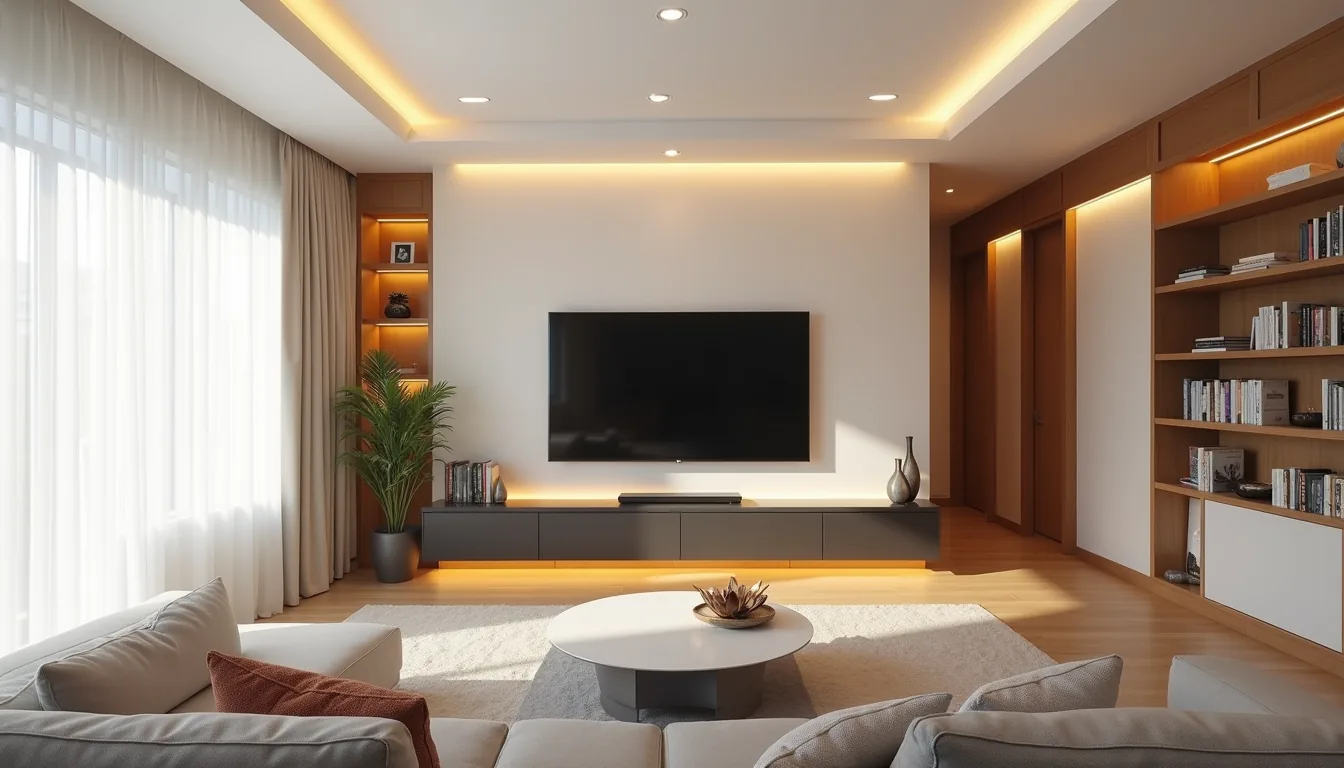
This approach anchors a room vertically, drawing the eye upward and making standard 8-foot ceilings feel taller. Floor-to-ceiling dark wooden shelving frames a centered 70-inch TV, with warm recessed LED strips running along three horizontal shelf lines. The polished concrete floor below adds an industrial counterpoint that prevents the wood from reading as heavy.
Tall side storage works best in rooms at least 12 feet wide, where the flanking towers won’t crowd seating. If your space is narrower, reduce the shelf depth to 12–14 inches rather than trimming height, preserving the vertical line matters more than depth. The warm lighting serves a functional role too: it reduces contrast between the bright screen and darker walls, which cuts eye strain during evening viewing.
Budget roughly $1,800–$4,000 for materials and carpenter labor if you build custom, or about half that using modular cabinet systems from major retailers. You’ll need to dust upper shelves weekly and check LED strip connections annually, as adhesive backing degrades within 3–5 years. This is the route for luxury TV units that make living rooms feel polished without relying on expensive veneers or stone.
Wide Luxury Composition with Symmetrical Shelving

A wide luxury composition treats the TV wall as a horizontal plane rather than a vertical one. This 14-foot run centers a 65-inch screen with identical open shelving units on both sides, each holding matched vases, books, and potted plants to create a deliberate rhythm. The cream cabinetry with soft gray tones keeps the mass visually light, while the woven area rug below anchors the entire arrangement so the wall doesn’t float.
This layout suits medium to large living rooms measuring 15–20 feet across, where a floor-to-ceiling build might overwhelm the space. Symmetry carries the design, so you don’t need expensive materials to achieve a luxury feel, consistency does the work. Recess the TV 2–3 inches into the cabinetry to reduce its visual prominence, and leave 18–24 inches of open counter space between the screen edge and the first shelf.
Open shelving demands disciplined styling; budget for identical decor pieces in odd-numbered groupings and plan to dust every 5–7 days. If you prefer less upkeep, specify closed lower cabinets with open display only at eye level. This option typically runs $1,200–$2,600 for semi-custom cabinetry, making it a strong mid-range route for Living Room Tv Wall Luxury Tv Units that prioritize balance over height.
Material-Led Media Wall with Textured Paneling
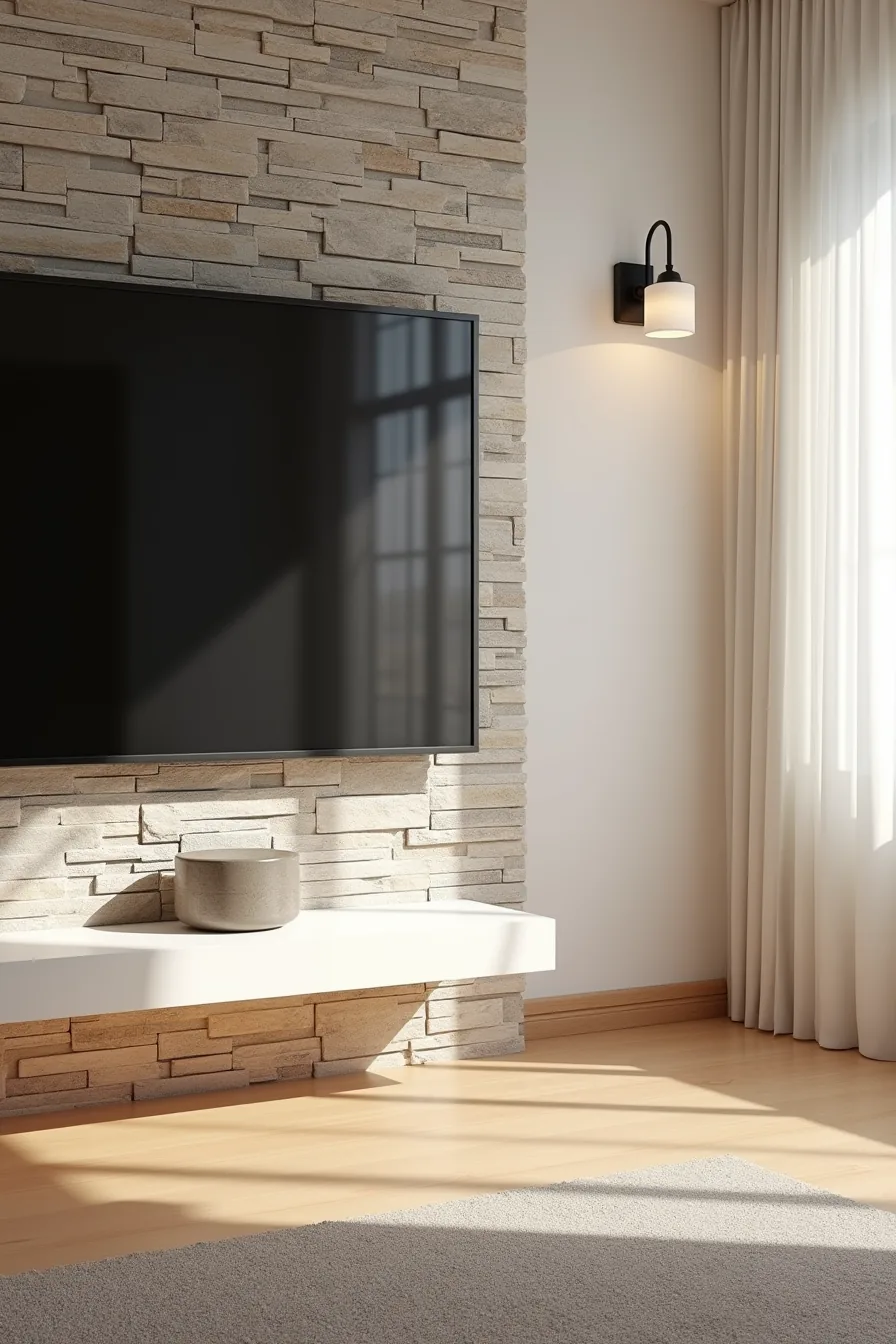
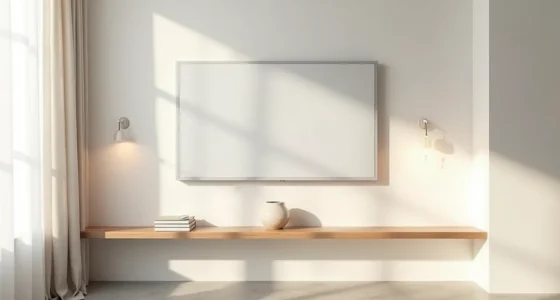
A material-led media wall shifts the design burden from storage to surface. The visible setup uses stacked stone tiles in warm gray and cream as the entire backdrop for a 60-inch television, with a single floating shelf below holding one decorative object, nothing else competes for attention. Rough-textured stone absorbs light differently than flat paint, so the wall reads as dimensional even in a dim room, and it eliminates the need for cabinet fronts, hardware, or styling discipline entirely.
This approach suits small to medium spaces roughly 10–14 feet wide, where deep cabinetry would eat floor area and visually shrink the room. It also works well for renters or anyone avoiding permanent millwork, since the stone installs as large-format panels or peel-and-stick tiles over a flat wall. Expect to pay $400–$900 for a 6–8 foot run of quality stacked stone panels, versus several thousand for built-ins.
A floating shelf must be anchored into studs, drywall alone can’t support even a lightweight decorative object reliably. The trade-off is minimal storage, so you need a separate media console or sideboard to house electronics. Keep the TV 3–4 inches off the stone surface for airflow; televisions generate heat that trapped panels can’t dissipate.
Modular Luxury TV Units for Renters and Flexible Spaces
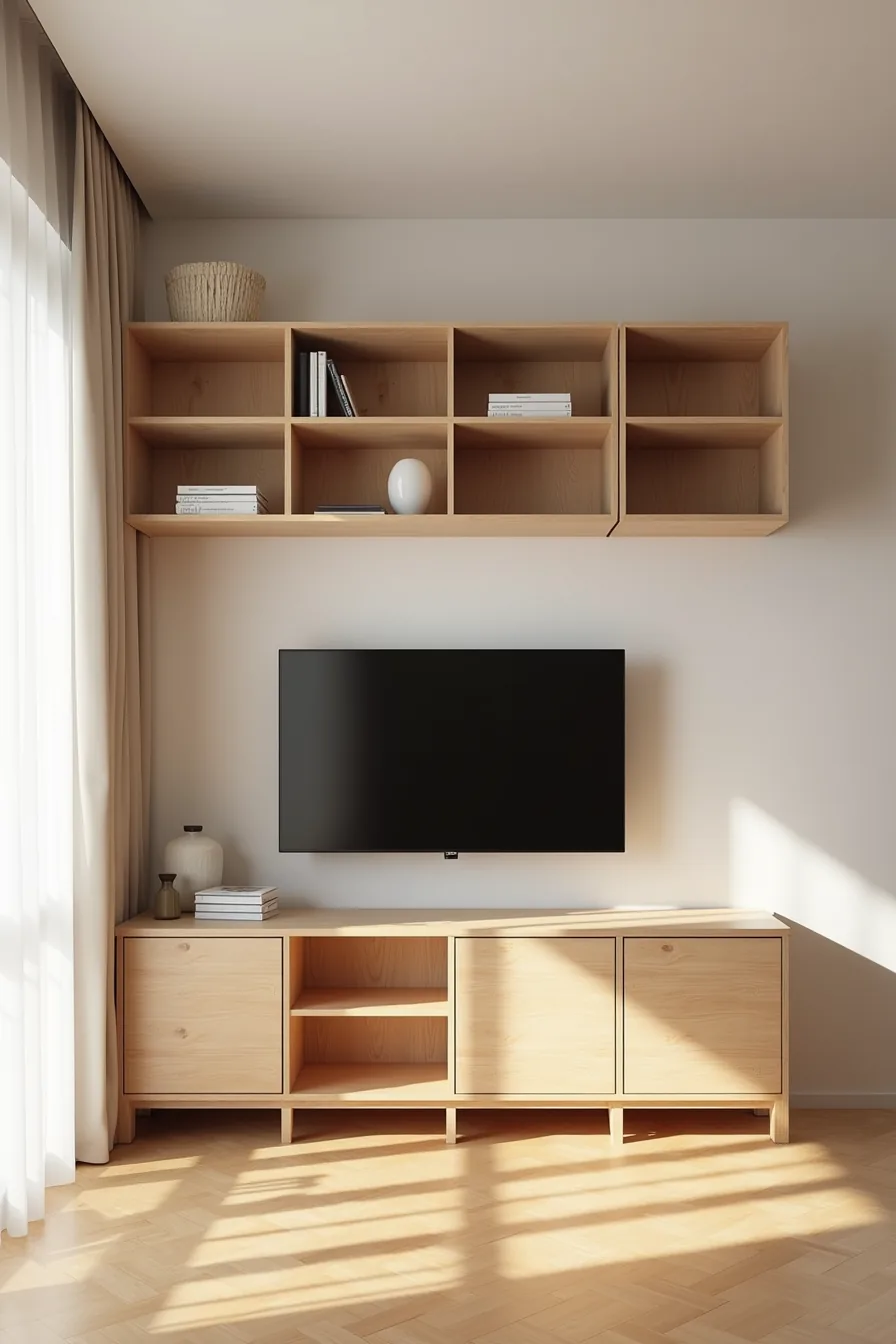
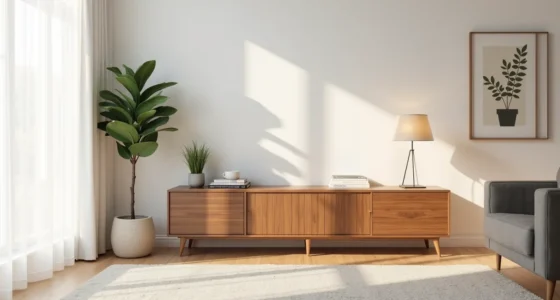
A freestanding modular system delivers the luxury look without a single screw penetrating your walls, making it the default choice for renters and anyone who rearranges rooms seasonally. In this arrangement, separate wooden boxes stack and arrange horizontally across a 10-foot span, with the central module cradling a 55-inch TV while flanking cubes alternate between open shelving and closed storage. The parquet flooring carries the visual weight, so the unit feels intentional rather than temporary.
This configuration suits medium rooms 12–16 feet wide where you want a substantial presence without committing to millwork. Choose modules in a single wood tone for cohesion, or mix two complementary finishes for depth. Expect to invest $1,200–$2,500 depending on wood grade and hardware quality, but you can relocate the entire system in under an hour with no landlord involvement.
The trade-off: freestanding units sit 24–30 inches deep, consuming more floor area than wall-mounted alternatives, and cables remain visible unless you route them through the modules’ rear channels. Use closed lower cabinets to hide power strips, and confirm each module’s weight rating before stacking, most support 40–80 pounds per shelf.
Minimalist Floating Console with Hidden Storage

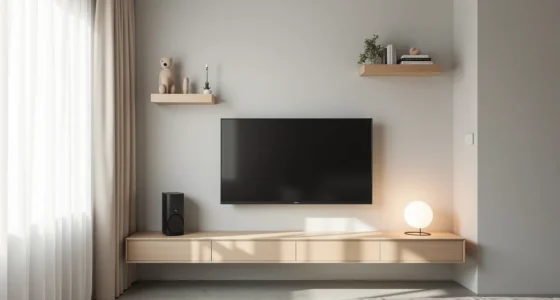
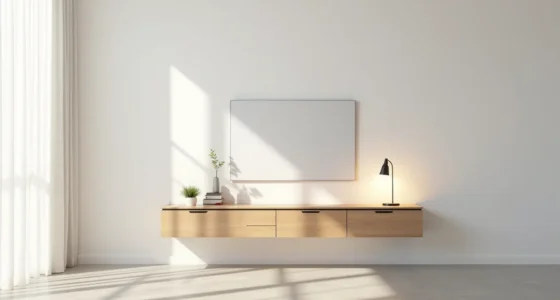
A slim floating console reads as luxury through proportion and restraint rather than material excess. The 8-foot unit mounts 18 inches above a light oak floor, leaving a clean gap that visually expands a smaller room, the wall becomes the design, not the furniture. A 55-inch TV sits to the left, while the right side carries a single closed door concealing the power strip, surge protector, and HDMI leads behind it.
This route suits compact spaces 10–14 feet wide where floor area is precious. You gain roughly 4–6 square feet of usable floor space compared to a freestanding cabinet, and the elevated sightline keeps the eye level with the screen. Expect to pay $800–$1,800 for a solid-wood or veneered console, plus $200–$400 for professional mounting into studs, drywall anchors alone won’t safely hold a 55-inch TV and console combination.
The trade-off: you lose flexibility, and any future TV upgrade means re-drilling and patching holes. A single potted plant on the console edge softens the hard lines without adding clutter, and the open floor beneath simplifies vacuuming and keeps dust accumulation visible.
Statement Wall with Integrated Media and Display Niches
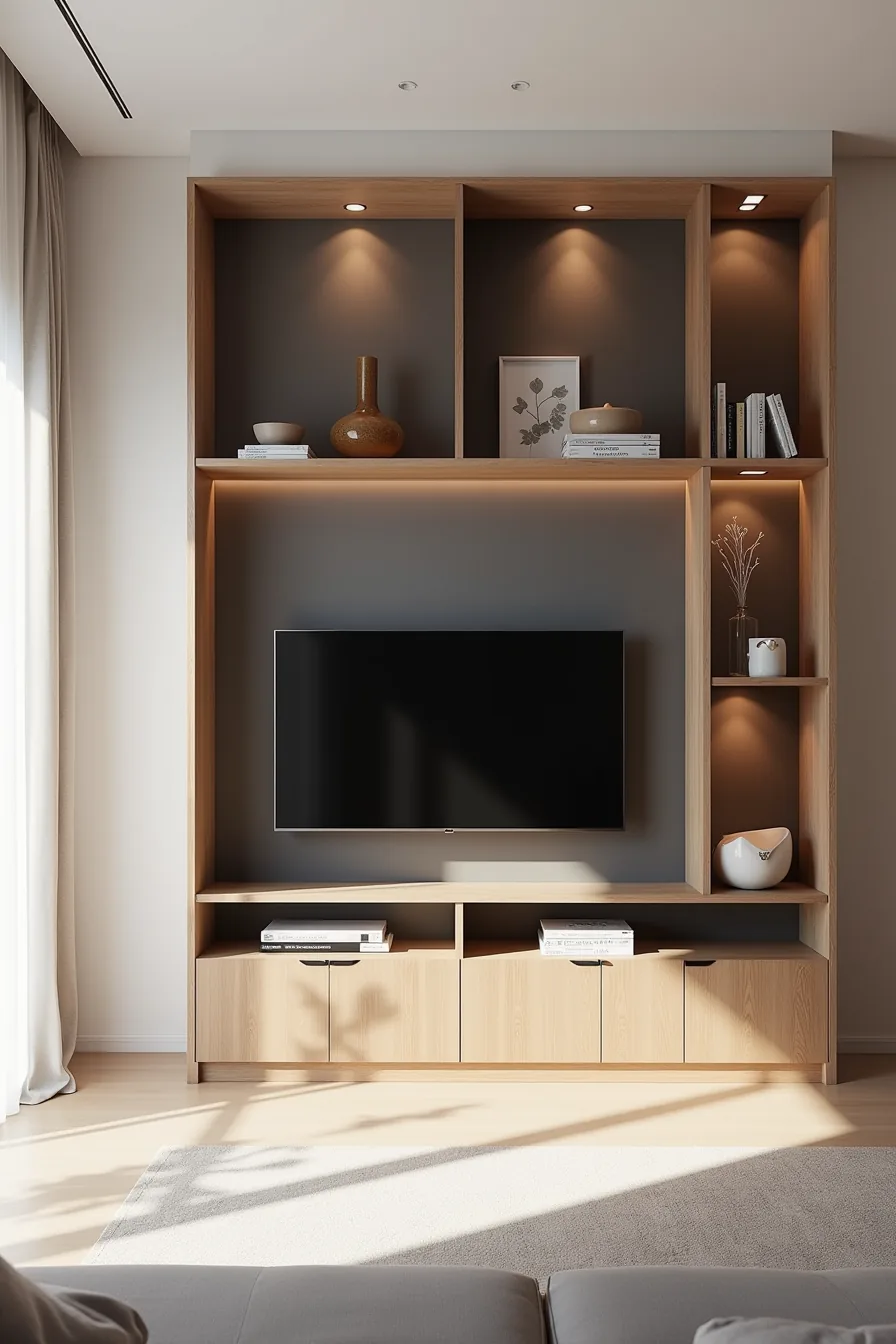
A 12-foot accent wall in deep charcoal transforms a TV into one element of a curated composition rather than the sole focal point. The 65-inch screen holds the center, while asymmetrical recessed niches at staggered heights flank it on both sides, each one holding art objects, books, and a small sculpture. Warm spotlights aimed into every niche create depth that flat shelving can’t match, and the dark background makes both the screen and the displayed pieces recede or pop depending on the lighting scene.
This approach works best in open-plan living areas 15 feet or wider, where a single large wall can carry the visual weight of the entire room. You need 10–12 inches of wall depth for the niches, which rules out partition walls and most stud walls without structural modification. Budget $3,500–$7,000 for custom joinery, including the recessed lighting and a dimmer system that separates TV viewing from display lighting.
The payoff is a wall that still looks intentional and styled when the television is off, a key advantage if your seating area faces the screen during daytime hours.
Where to start
Walk into your living room and measure the wall you’re considering. Note the distance from the floor to the ceiling, the width of the wall, and the clearance on either side. Snap a photo and sketch the rough proportions onto paper.
That single measurement session will instantly eliminate half the designs on your shortlist.
Then take that sketch to a furniture store or browse online with specific numbers in hand. Match your dimensions against the unit’s listed specs before you fall for a finish or material. The right luxury TV unit is the one that fits your space first, looks expensive second, not the other way around.
Frequently Asked Questions
What is the ideal TV wall height and distance from seating in a luxury setup?
Mount the TV center at eye level when seated, typically 42–48 inches from the floor. For seating distance, multiply your screen’s diagonal by 1.5–2.5; a 65-inch screen suits 8–13 feet.
How do I hide cables and wiring in a luxury TV unit without visible conduit?
Install an in-wall power and HDMI kit with recessed boxes behind the TV and lower cabinet. Alternatively, route cables through a channeled back panel or a floating shelf spine that conceals them entirely.
What materials hold up best for high-end TV walls in terms of durability and maintenance?
Solid oak, walnut veneer, and matte lacquered MDF resist scratches and fading best. Stone or porcelain slabs handle heat and moisture but require sealing. Avoid glossy laminates, they show fingerprints and need frequent polishing.
Can I install a luxury TV unit myself, or do I need a professional?
You can DIY a pre-assembled floating unit if you’ve a stud finder, level, and drill, allow 4–6 hours. But custom stone, backlit panels, or in-wall cable kits demand a professional for structural safety and hidden wiring.