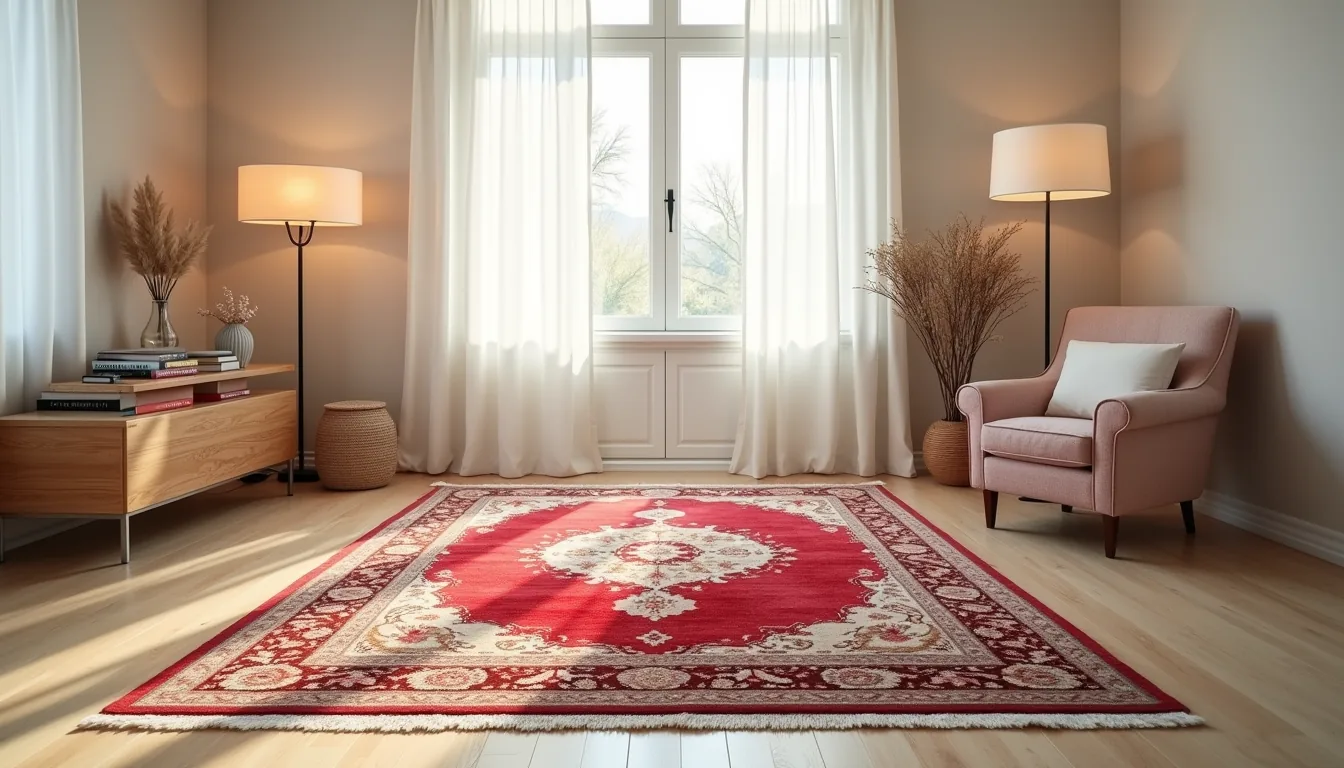
A red Persian rug is a high-impact focal point that works in nearly any room, provided you match its scale, pattern density, and pile height to your space and lifestyle. But that match is where most decisions go wrong, a dense Heriz in a tiny entryway overwhelms, while a low-pile Tabriz in a busy family room wears unevenly. The six approaches below break down which patterns suit open layouts versus compact apartments, what pile heights survive pets, and how to layer a budget-friendly flatweave without sacrificing the classic look.
Key takeaways
Scale dictates success: A red Persian rug should leave 12–18 inches of bare floor around its edges in most rooms, but in open-plan living, extend it under all key furniture pieces to anchor the zone. Neutrals temper intensity: Pairing a red Persian rug with ivory, greige, or warm white walls and linen sofas prevents the pattern from overwhelming a small or medium space. Renter-friendly options exist: Flat-weave kilims or low-pile polypropylene Persian-look rugs in the 5×7 to 6×9 range cost $150–$400 and roll up for easy transport, no padding required. Maintenance dictates longevity: Vacuum a high-pile wool Persian rug weekly and rotate it every 6 months to prevent uneven fading, while spot-clean spills immediately with a dry cloth, never rub.
Red Rug with Neutrals in Open-Plan Living
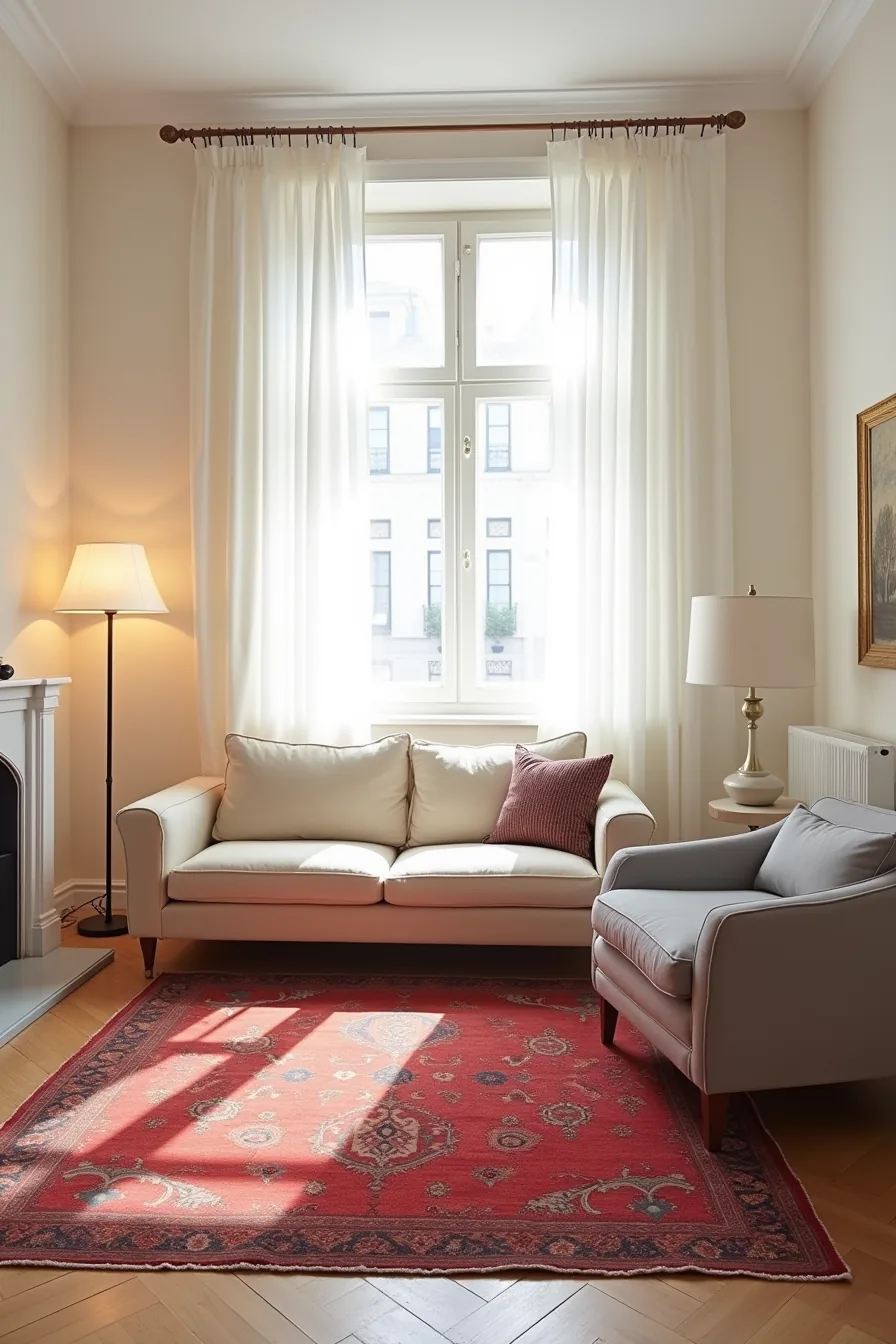
In a large, multi-functional space, the red Persian rug acts as the visual anchor that prevents the room from dissolving into chaos. The red Persian rug here defines the entire seating zone, with its edges framing the cream sofa, gray armchair, and white side table into one cohesive cluster. This setup works because the neutral palette, cream, gray, and white, absorbs the rug’s saturated red without competing for attention; the result is warmth without visual overwhelm.
This arrangement suits open-plan areas between 300 and 600 square feet, where the rug’s size (typically 8×10 or 9×12 feet) must extend at least 6 inches beyond the front legs of the primary sofa. Leave 18–24 inches of exposed floor around the rug’s perimeter to define the boundary between the living zone and adjacent dining or entry areas. For a smooth red rug with neutrals, choose a rug with a faded or distressed red field rather than a high-contrast pattern, it reads as texture, not noise, against clean-lined furniture.
Dark Wood Pairing for Traditional Dining Rooms
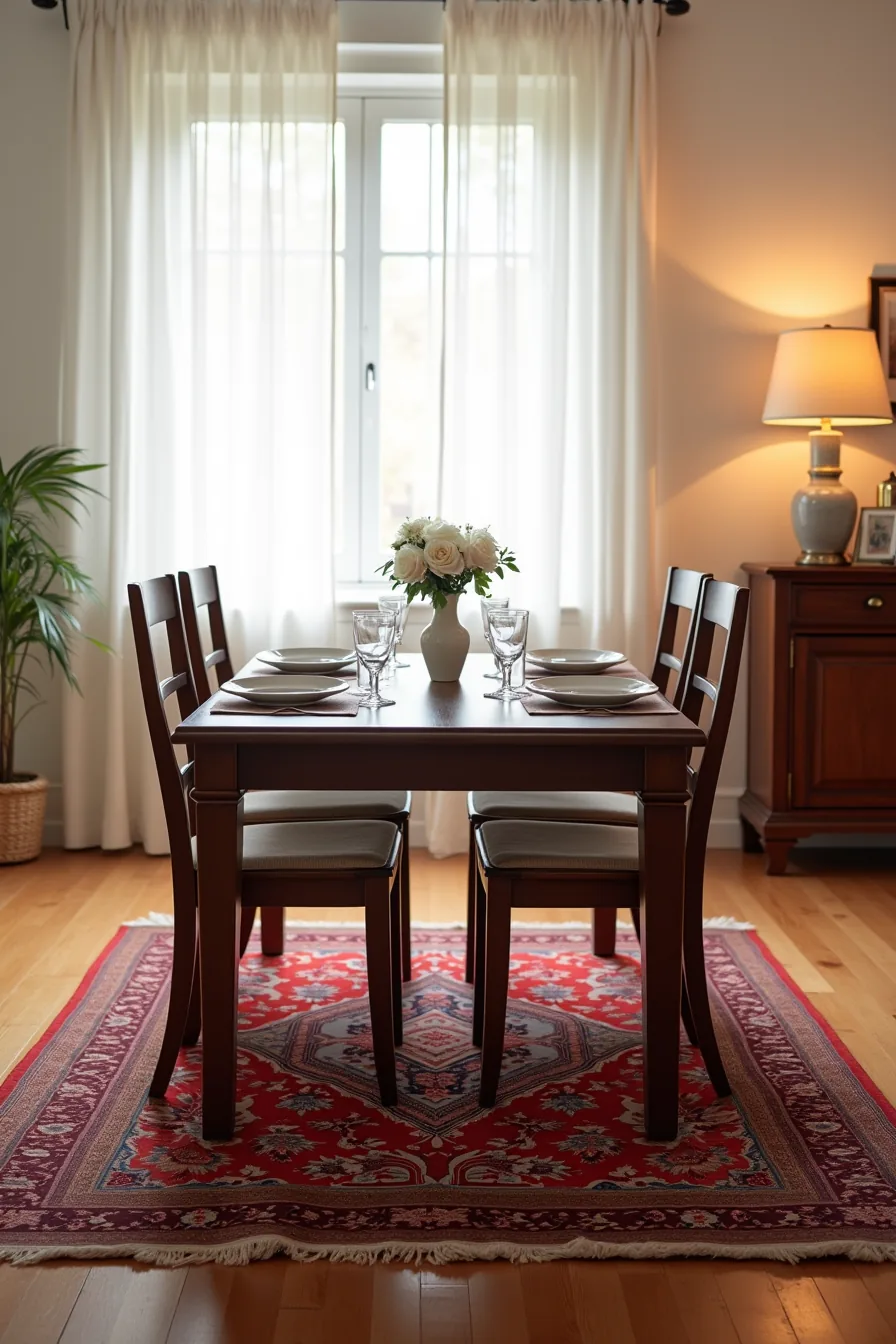
The same red Persian rug that anchors a neutral living room takes on a different personality beneath a dark wood dining table. The rug’s warm red field softens the visual weight of walnut or mahogany furniture, preventing the room from feeling like a cavern of heavy timber. This pairing works because the rug’s intricate border pattern echoes the turned legs and carved details of traditional dining chairs, creating a dialogue between textile and wood grain.
For a table set for four, choose a rug that extends 24–30 inches beyond the table’s edge on all sides. This allowance keeps chair legs on the rug when pulled out for seating, anything less and chairs catch on the edge, anything more and the rug dominates the room. A red Persian rug with a dense, low pile (typically 0.25–0.5 inches) withstands chair casters and dropped utensils far better than high-pile or distressed weaves.
Vacuum weekly and rotate the rug twice a year to distribute wear from chair traffic, and treat red wine spills immediately with cold water and blotting, never rubbing, which drives pigment deeper into the fibers.
Vintage Meets Modern in Eclectic Bedrooms
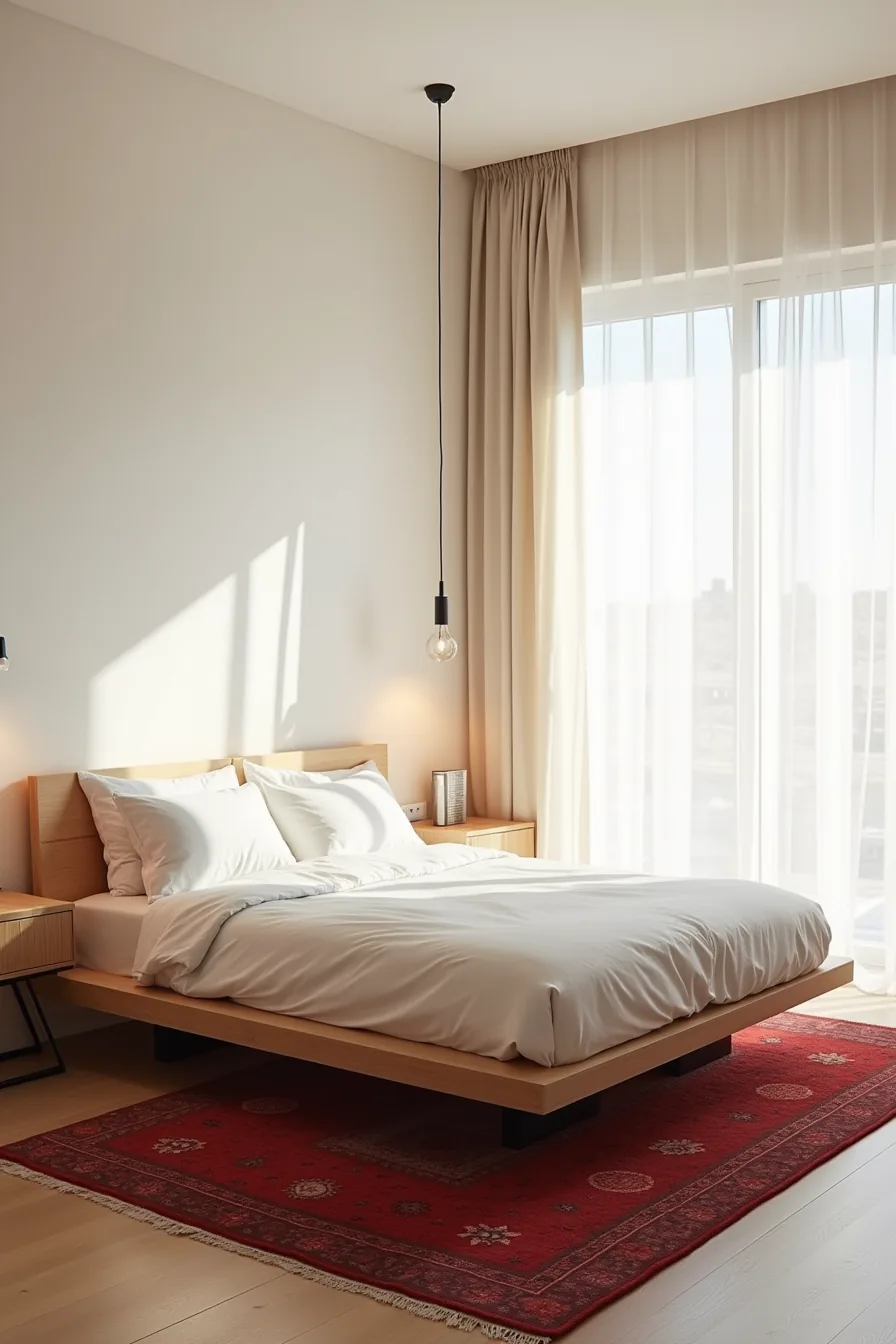
A red Persian rug at the foot of a platform bed anchors a bedroom that might otherwise float in minimalist sterility. The rug’s dense, traditional medallion pattern gives the eye a place to rest, while the low silhouette of the platform bed frame keeps the visual weight grounded at the right height. This vintage-meets-modern tension works because the rug’s color story picks up warmth that the metal nightstands’ cool finish can’t provide on its own.
The placement here does double duty: the rug breaks up the expanse of hard flooring and defines the walking path from the doorway to the bed, a functional margin of roughly 18–24 inches on each side. Choose a size that leaves 6–10 inches of bare floor around the bed frame’s footprint, too large and you’ve a carpeted bedroom; too small and the bed visually floats. The simple pendant light overhead echoes the rug’s geometry without competing with it, so the pattern stays the singular focal point.
This combination suits a bedroom with clean-lined furniture and at least one neutral wall color; the rug provides all the ornament you need.
Budget-Friendly Red Rug Alternatives for Renters
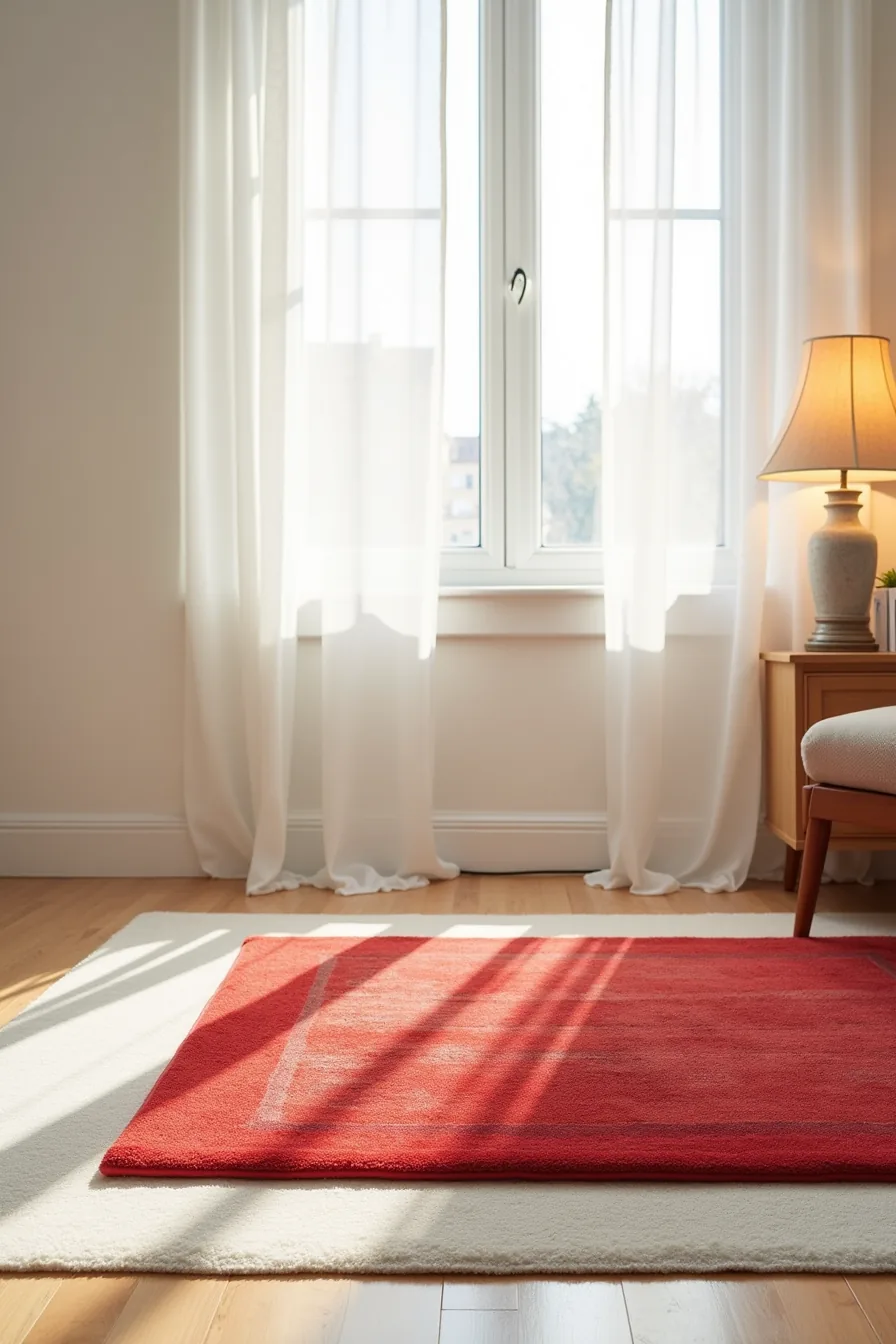
You don’t need a hand-knotted heirloom to capture the red Persian aesthetic in a rental. A machine-made rug with a traditional medallion or Herati pattern delivers the same visual impact at a fraction of the cost, expect to pay anywhere from $150 to $400 for a 6×9, versus several thousand for the hand-knotted equivalent. The trade-off is pile density and dye depth; machine-made rugs flatten faster in high-traffic zones and fade sooner under direct sun, so rotate them seasonally and expect a 5–8 year lifespan.
That transparent rug pad beneath the sample is the real renter’s trick. It grips the rug to carpet or hard flooring without adhesive, preventing the wrinkles and bunching that create trip hazards, and it protects the apartment’s surface from the rug’s backing abrasion. Layering the red rug over neutral wall-to-wall carpet warms an otherwise beige room and gives you the color story without a permanent commitment.
When you move, roll the rug, leave the pad behind if it’s worn, and your security deposit stays intact, just be sure to check your lease for any carpet-staining clauses before you commit.
Red Persian Rug Ideas for Cozy Autumn Rooms
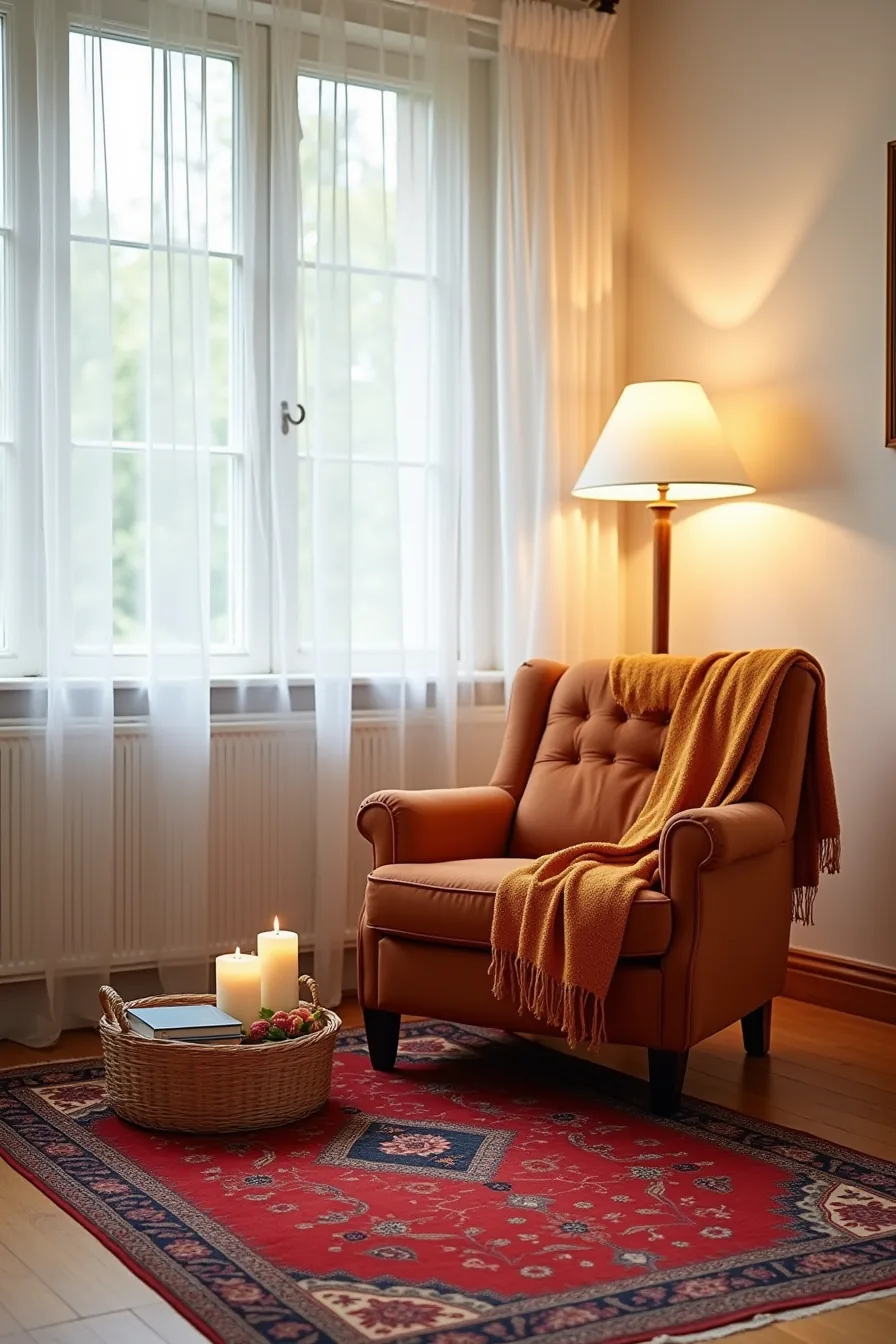
Your red Persian rug becomes the thermal anchor of a fall living room. Keep it as the unchanging base, then layer a burnt-orange throw blanket over a rust-toned armchair positioned partially on the rug, the contrasting warm hues deepen the red without competing with its medallion pattern. This pairing works because orange and red sit adjacent on the color wheel; the proximity creates a gradient of heat rather than a clashing stripe.
Add a woven basket at the rug’s edge to store extra blankets, and cluster candles on a nearby side table. The flickering low light reads as autumn warmth in a way overhead fixtures can’t. Choose unscented soy candles if the room is small, wax melts at roughly 130–150°F, and a draft from an AC vent can cause tunneling that shortens burn time.
For a 6×9 rug, angle the armchair at 45 degrees to the rug’s corner; this softens the rectangular grid and keeps the walkway clear.
Investment-Grade Red Persian Rugs for Long-Term Use
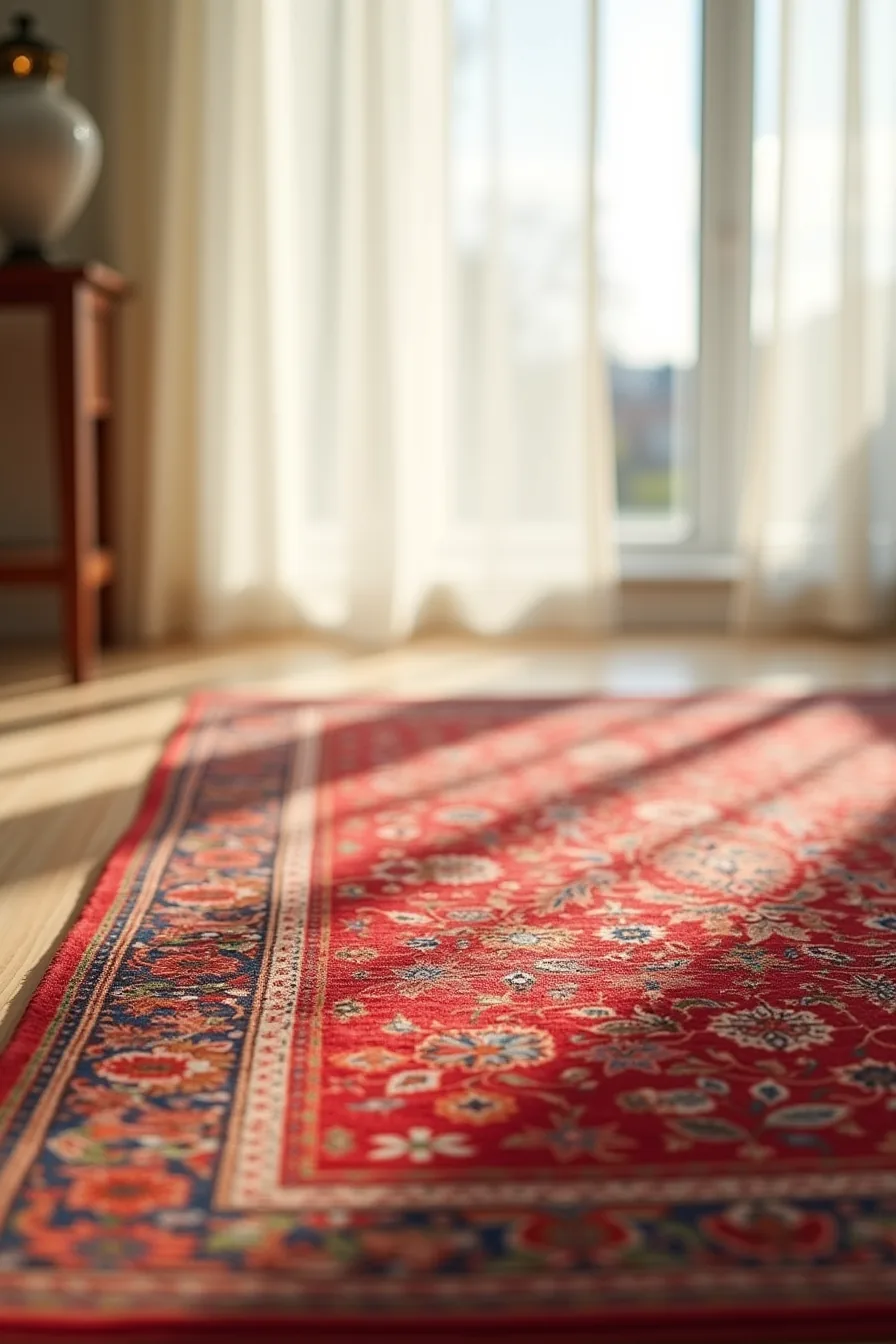
If you want a rug that outlasts a decade of daily foot traffic, the hand-knotted red Persian rug is your only serious option. The macro detail of a genuine piece reveals a densely packed pile where individual knots sit so close together the wool fibers appear almost solid in color, and a scale reference at the edge confirms the construction standard. Look for a knot density of at least 120–200 knots per square inch for Tabriz or Nain weaves; anything below 80 knots is typically a commercial grade that will shed and flatten within five years.
Dye quality separates an heirloom from a décor piece. Plant-based dyes, madder root for that deep crimson, indigo for the navy accents, meld into the wool rather than sitting on the surface, so the red gains a subtle tonal variation you can’t reproduce synthetically. Ask your dealer for a “wash test” guarantee, then budget for professional cleaning every 2–3 years at roughly $3–$6 per square foot; a 6×9 rug will cost you $160–$320 per cleaning.
Expect to pay $1,500–$4,000 upfront for a quality 6×9 from Tabriz or Kashan, but compare that against replacing a $400 machine-made rug every three years, the math favors the knot. Repair work on edges or fringes runs $50–$150 per linear foot, so skip the coffee table with sharp corners and rotate the rug twice a year to distribute wear evenly.
Where to start
You now have six distinct routes to the red Persian rug look, from a $200 machine-woven runner to a hand-knotted heirloom. Before you buy, measure your floor, tape out the rug’s footprint with painter’s tape, and walk the space for three days. That single step prevents 80 percent of sizing mistakes.
Match your choice to your real constraints: rental walls, kids and pets, or a room you plan to keep for decades. The right rug is the one you can live with, not just admire.
Start by measuring your room today and writing down the maximum width your space allows. That number decides everything else.
Frequently Asked Questions
What size red Persian rug works best for a living room?
For most living rooms, choose a rug that extends at least 12–18 inches beyond the sofa on each side. Typical sizes range from 8×10 to 10×14 feet; measure your seating area first.
How do I protect a red Persian rug from fading in a sunny room?
Rotate the rug every three to four months and use UV-blocking window film or sheer curtains. Avoid direct, prolonged sunlight; a low-pile rug with synthetic fibers resists fading better than pure wool.
Can I use a red Persian rug in a modern minimalist space?
Yes. Choose a rug with a subtle, small-scale pattern and a muted crimson or brick-red tone. Keep furniture simple and neutral; let the rug be the single bold accent.
What’s the difference between a hand-knotted and machine-made red rug?
Hand-knotted rugs use natural wool and silk, take months to create, and last decades with proper care; machine-made rugs are faster, cheaper, and often use synthetic fibers. Expect hand-knotted to cost three to ten times more.