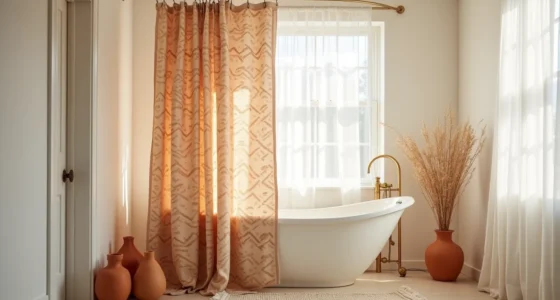
Shower curtain hooks range from a $3 pack of plastic rings to hand-finished brass that costs $12 or more per hook, and that price spread maps directly to how much weight they carry, how they hold up in humid air, and what your landlord lets you install. That gap isn’t about vanity, it’s about load limits, rust resistance, and whether you can swap them without drilling. The right choice depends on your curtain’s weight, your rod’s diameter, and whether you prioritize a five-minute swap or a twenty-year finish.
Six distinct approaches follow, each matched to a specific bathroom size and budget.
Key takeaways
- Plastic rings cost the least upfront, but they degrade quickly in humid bathrooms, expect to replace them every 6–12 months, making them ideal only for temporary rentals or guest baths.
- Match your hook finish to your faucet and showerhead hardware (brushed nickel, oil-rubbed bronze, or chrome) within the same metal family to create a cohesive look without extra expense.
- Choose decorative hooks only if your shower rod is exposed and visible; they add visual interest but require you to slide each hook individually, which slows down curtain changes.
- Invest in stainless steel (grade 304 or 316) for a 5–10 year lifespan, and pair them with snap-open rings to cut daily cleaning time by letting you detach the curtain in seconds for machine washing.
Plastic Rings: The Budget Route That Works

Standard plastic shower curtain hooks, the clear and frosted rings you see threaded onto a chrome rod, remain the most practical entry point into this category. A set of twelve typically runs $5 to $15, and that price point makes them the default choice for renters who will dismantle the setup in a year, or anyone furnishing a first apartment on a tight timeline. The clear rings against white subway tile disappear visually, which is exactly what you want when the rod and tile should carry the room’s aesthetic.
What separates a durable plastic ring from a brittle one is the polymer blend. Look for rings labeled polypropylene or nylon rather than generic polystyrene; the former flex without cracking when you yank the curtain across the rod, and they resist the yellowing that sun-exposed PVC develops. The visible wear marks and water droplets on the ring in this setup are normal, wipe the rings down with a vinegar-water spray monthly to keep mildew from colonizing the contact points.
You’re trading longevity for cost, and that trade works until the rings snap, which they’ll eventually. When they do, replace the full set rather than mixing old and new, since aged plastic can leave scuffs on a chrome rod that new rings will catch on.
Metal Finish Matching for a Cohesive Look

A brushed nickel faucet, mirror frame, and towel bar in the same finish create a continuous visual line that makes a small bathroom feel intentional. Carrying that brushed nickel onto your shower curtain hooks closes the loop, your eye travels from the vanity across the room to the rod without landing on a mismatched accent. This works because the hooks occupy the same sightline as the towel bar when the curtain is open, so a chrome hook beside a brushed nickel bar reads as a mistake even if the finishes are technically compatible.
Finish matching costs more than plastic rings: a set of twelve brushed nickel hooks runs roughly $20 to $40, while chrome sits slightly lower at $15 to $30. Oil-rubbed bronze and brass run $25 to $50 per set, reflecting the more complex plating process. The trade-off is durability, metal hooks resist cracking and yellowing indefinitely, though the plating will eventually wear at the pivot point where the hook meets the rod.
Check the hook’s finish against your existing hardware in natural light before committing, since brushed nickel varies subtly between manufacturers and a half-shade mismatch is more noticeable than a different finish altogether.
Decorative Hooks as a Statement Detail

Ornamental hooks earn their higher price when they function as jewelry for an otherwise plain bathroom. The scrolled brass finials on a set of twelve cost $30 to $60, roughly double a standard metal set, but they draw the eye upward and give a pedestal sink and cream curtain a level of detail that would otherwise require new tile or a furniture-grade vanity. In a small bathroom, limit ornament to the hooks themselves; oversized finials on a 54-inch rod will read as clutter rather than character.
Traditional and eclectic spaces suit these best. A clawfoot tub or wainscoting calls for aged brass or pewter; a maximalist bathroom with patterned wallpaper can handle ceramic hooks shaped like leaves or shells, which run $25 to $50 for twelve. Keep the curtain simple, a solid waffle-weave or matte cotton, so the hooks carry the visual weight.
Dust the finials monthly with a dry microfiber cloth; decorative curves trap soap scum and hard-water film more readily than plain rings.
Rings vs. Decorative Hooks: Choosing Your Hardware
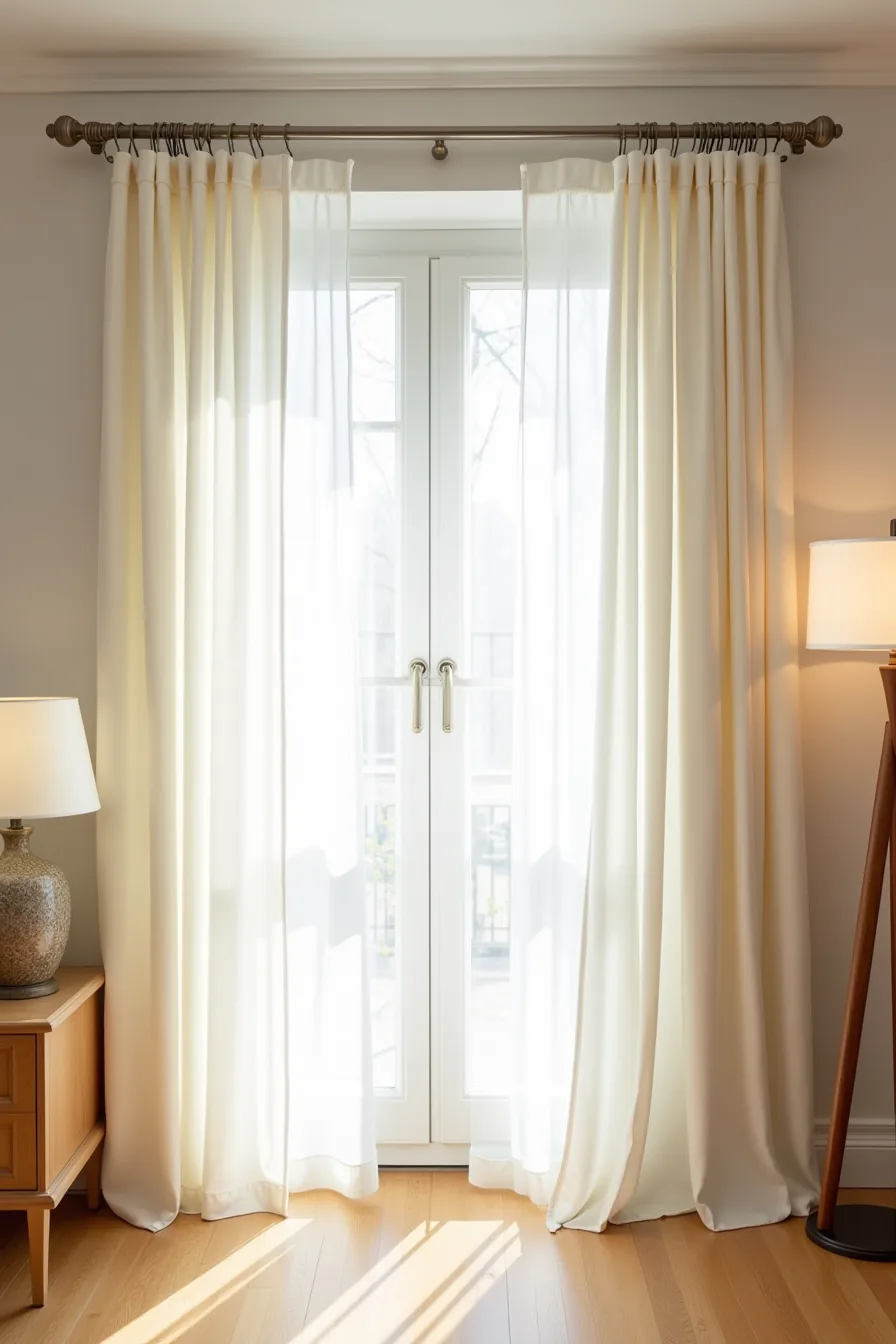
The split rod view captures the core trade-off in one glance: simple chrome rings slide over the bar and grip a lightweight cotton curtain with minimal friction, while oil-rubbed bronze hooks clip onto grommets and hold a heavier textured fabric without sagging. Rings win on ease, you lift the bar, thread the fabric, and hang it in under two minutes. Decorative hooks demand more patience: each one snaps or screws onto the curtain’s eyelets, and misaligned clips cause the fabric to bunch at the corners.
Weight dictates the choice. A 180-gram polyester curtain works fine on rings; a 340-gram waffle-weave or linen blend will pull a ring’s glide mechanism and wear it out in six to eight months. Decorative hooks distribute that load across individual attachment points, which is why textured or thermal curtains pair better with them.
If you swap curtains seasonally, rings give you flexibility; if you commit to one heavy drape for years, the extra $10 to $15 for hooks is justified.
Stainless Steel Hooks for Long-Term Investment
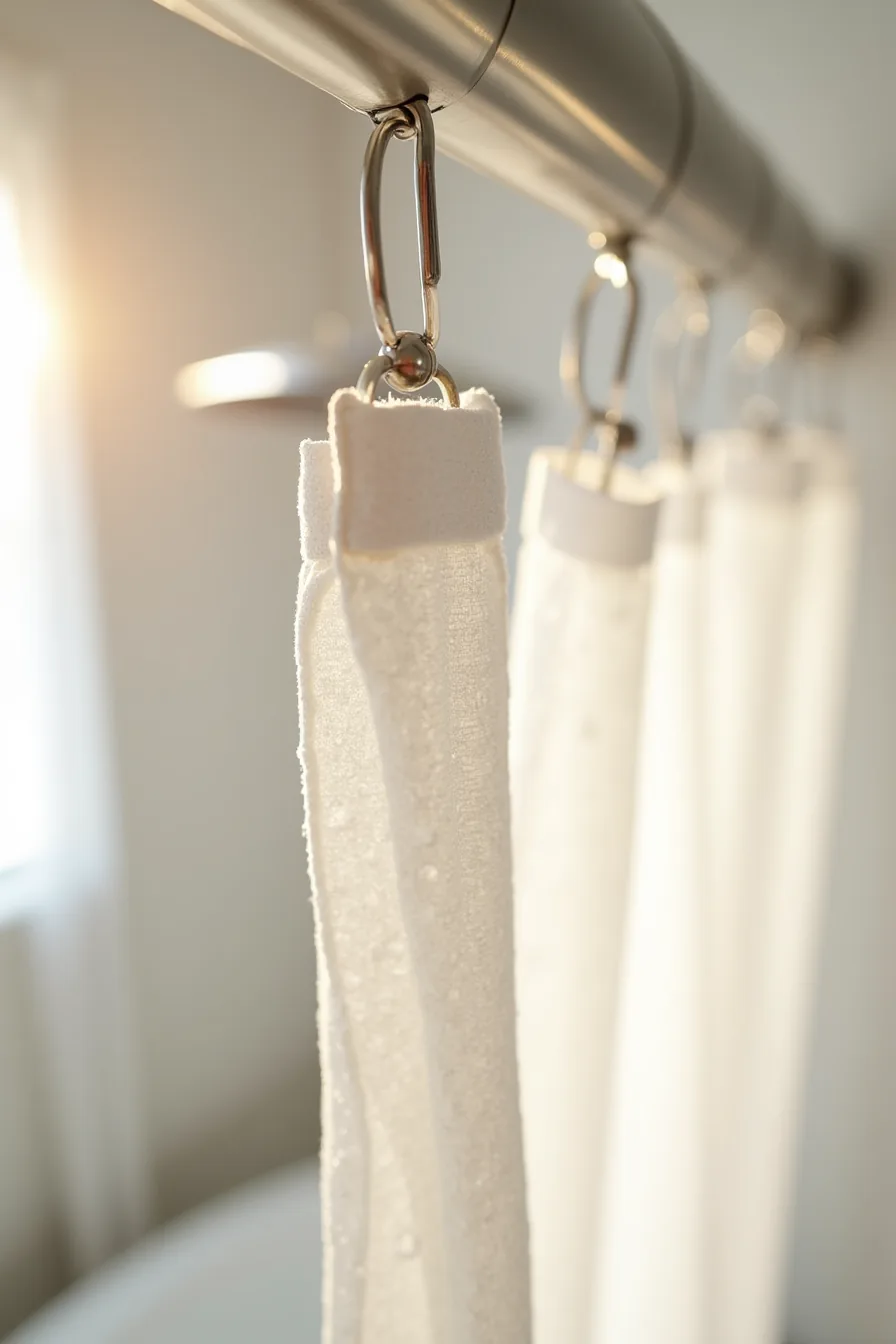
If you’re outfitting a primary bathroom you plan to keep for a decade, stainless steel is the only material worth considering. The polished surface in this setup resists the pitting and corrosion that plagues chrome-plated zinc after two or three years of constant humidity. You’ll see water beading on the metal rather than soaking in, which means a quick wipe with a microfiber cloth keeps the bearing mechanism free of soap scum and hard-water deposits.
The cost premium is real, expect to pay 30 to 50 percent more than standard plastic or zinc options, but the lifespan difference is dramatic. A quality stainless hook with a smooth roller bearing will outlast three or four sets of cheaper hardware. Look for grades 304 or 316 stamped on the packaging; anything labeled just “stainless” may be magnetic, which signals a lower nickel content that corrodes faster.
For a brushed steel rod in a large walk-in shower, pair these with a heavier fabric curtain, since the reinforced attachment points handle the load without flexing over time.
Shower Curtain Hooks That Make Cleaning Feel Easier

A simple hardware update that pays for itself is choosing hooks with a smooth-gliding bearing and a snap-open design. On the shower curtain partially slid to one side, you can see the bare tile wall behind it, that dry, exposed surface is the result of hooks that let you bunch the fabric fully against the rod end without snagging. This matters because a curtain left bunched and wet is what breeds mold; when you can clear the entire track in one motion, you can wipe down the rod and tile weekly without a wrestling match.
The finger position on the mid-slide hook demonstrates the one-handed operation that makes this routine tolerable. Hooks with a simple C-clip or roller release let you pinch the top edge, lift, and detach the curtain in under two seconds per hook, about 30 seconds for a standard 12-hook setup. For maintenance, spray the rollers with a silicone lubricant every three months and you’ll avoid the squeak that signals a build-up of soap scum inside the bearing.
The dry curtain edge visible at the end confirms the fabric isn’t wicking moisture back onto the hardware, which is the primary reason cheaper hooks corrode from the inside out.
Your next step
Start with the hooks you already own. Measure the rod diameter and test one hook’s clip depth before buying anything else, most standard rods run 1 to 1.25 inches, and clip sizes vary by a quarter inch.
Choose one upgrade that solves your biggest annoyance first. If hooks slide and bunch, buy snap-lock rings with nylon rollers at $8–15 for a set of 12. If rust is the issue, switch to stainless steel or coated aluminum, which typically last 5–7 years in damp bathrooms.
Buy one set, install it, and shower for a week before ordering the rest.
Frequently Asked Questions
How many shower curtain hooks do I need for a standard 72-inch curtain?
You need 12 hooks for a standard 72-inch curtain. Most rods come with 12 rings included, and spacing them about 6 inches apart prevents sagging and keeps the curtain taut.
Can I use decorative hooks on a heavy fabric shower curtain, or will they bend?
Yes, but choose metal hooks rated for heavier weight, stainless steel or solid brass. Lightweight decorative plastic hooks bend under thick fabric or waterproof liners. Look for hooks with a thicker gauge, around 2-3 millimeters, to avoid drooping.
What’s the difference between stainless steel and chrome shower curtain hooks in a humid bathroom?
Stainless steel resists corrosion and pitting over years of steam exposure, making it the longer-lasting choice. Chrome is cheaper but its plating can flake or rust once scratched. For coastal or high-humidity homes, stainless steel is the safer investment.
Are plastic shower curtain hooks safe for renters, or do they damage the rod?
Plastic hooks are renter-friendly because they won’t scratch or mar metal rods. However, check for sharp mold seams on cheaper plastic that can gouge finishes. Choose smooth, rounded plastic hooks; they’re lightweight and easy to remove without leaving marks.