A very small closet, typically anything under 40 square feet, forces you to make every inch count, but with the right mix of vertical storage, door strategy, and lighting, it can outperform a walk-in twice its size. The key is to stop treating it as a miniature version of a larger room and instead design for its specific constraints. You’ll learn six distinct configurations, each with the exact materials, dimensions, and trade-offs required to replicate them, plus a decision checklist to match the right solution to your space and budget.
Key takeaways
- Vertical stacking reclaims dead space above shoulder height, but only works if you install a shelf at least 18 inches deep and keep a step stool within reach.
- Door-back storage suits renter-friendly setups best, since over-door racks with 12-15 pockets attach without drilling and hold shoes, scarves, or cleaning supplies.
- Slim-profile hangers (velvet or 5-millimeter-wide plastic) cut wasted rod space by up to half, letting you double your hanging capacity without widening the closet.
- Seasonal rotation requires a second storage spot, a bin under the bed or a hallway cabinet, so reserve your tiny closet for current-season items only and swap every 3-4 months.
Vertical Stacking: Using High Shelf Strategy for Dead Space

The single highest-use change you can make in a very small closet is to claim the empty wall volume above your existing rod. This high shelf strategy transforms dead air into prime real estate for items you rarely touch. Install two horizontal shelves: an upper shelf for folded sweaters and labeled storage bins, and a lower shelf at chest height for shoes you wear weekly.
The clothing rod below keeps hanging jackets within easy reach, and the vertical rhythm prevents the closet from feeling cramped.
This setup suits renters and budget-conscious users alike. Freestanding wire shelving units (typically $30–$60) require no drilling and support 30–40 pounds per shelf. For homeowners, fixed wooden shelves with metal brackets cost $50–$120 per shelf but hold 50–75 pounds if anchored into studs.
Keep the upper shelf for lightweight bins (max 15 pounds) to avoid strain when reaching overhead. Measure your ceiling height first, if you’ve less than 24 inches between the rod and ceiling, skip the upper shelf and rely on the lower one alone.
Door-Back Storage: Reclaiming Hidden Real Estate

The back of your closet door is the only surface in the room you aren’t currently using. Mounting three narrow wire shelves and six adhesive hooks there adds 8–15 square feet of storage without stealing a single inch of floor space. This configuration targets items that otherwise clutter your main shelving: rolled scarves, belts, and small bags live on the shelves, while the hooks hold a clear shoe organizer pocket for flats and sandals.
This route suits renters because adhesive hooks and tension-mounted wire units leave no permanent damage. Expect to pay $20–$45 for the full setup, and check that the door clears its frame by at least 2 inches when closed. For heavier loads, denim jackets or full handbags, screw the shelves into the door’s inner frame, not the hollow panel, or they’ll pull loose within months.
Limit the shoe pocket to 10–12 pounds total, and you won’t stress the hinges.
Zone Division: Creating Tiny Closet Zones for Different Categories
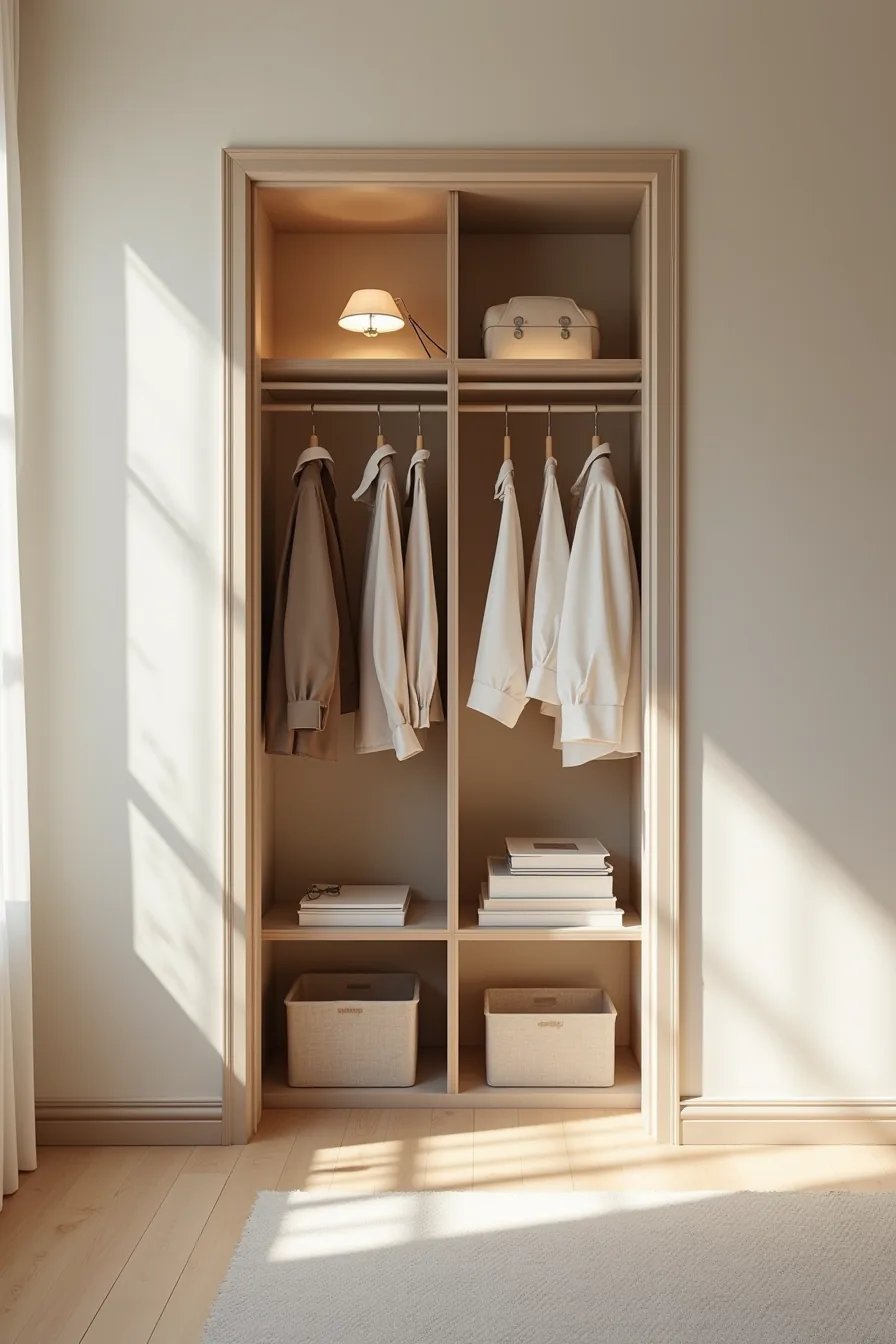
Dividing a 24–36 inch wide closet into three zones cuts your morning decision time by forcing a logical order onto chaos. Install two vertical divider rods to split the space into rough thirds: winter coats on the left, daily work shirts centered at eye level, and clear bins stacked on the right for accessories. The dividers themselves are just tension-mounted rods, about $12 each, so you avoid any permanent modification.
This system suits anyone who owns more than one category of clothing but lacks the room to separate them by season. The key is assigning zones by frequency of use: daily items occupy the middle band between knee and shoulder height, while off-season coats take the harder-to-reach outer section. Keep the accessory bins to 12×12-inch footprints so they slide out without snagging the adjacent rods.
You’ll need 4–6 inches of clearance between rod sections for coats to hang without crushing neighboring garments.
Slim-Profile Hangers and Cascading Systems
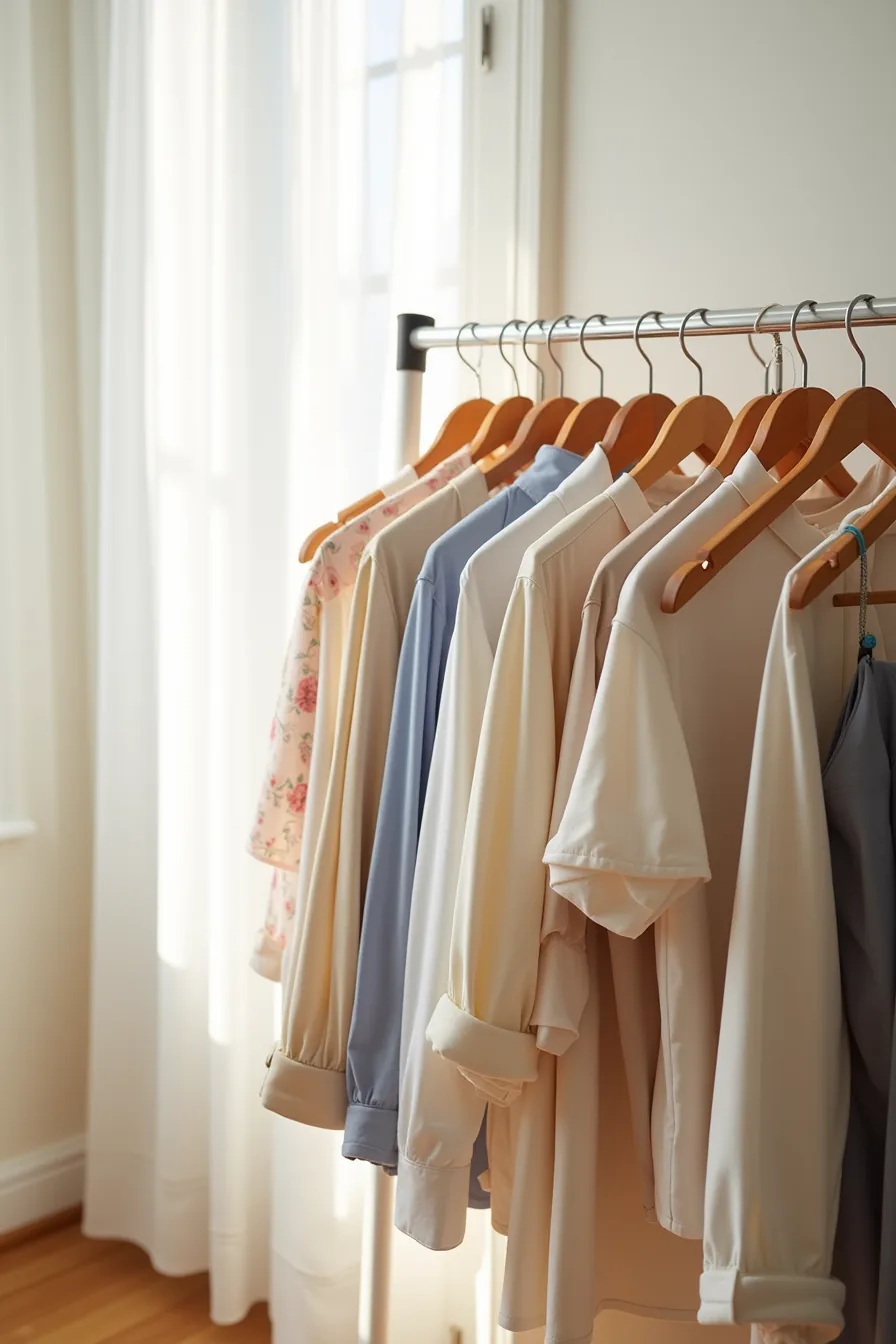
Swapping bulky wooden hangers for slim metal ones immediately frees 2–3 inches per garment, which in a 24–36 inch closet translates to an extra 6–10 pieces per rod. Cascading hangers take that further by nesting garments vertically, shirts, trousers, and dresses stack downward from a single hook, multiplying the same linear footage by 1.5 to 2 times. The example here uses thin metal frames holding ten garments in a single column, while the adjacent traditional wooden hangers occupy the same rod length for half the items.
This approach suits renters or anyone who can’t install a second rod, since it requires zero drilling, just replace what you already use. The trade-off is access: you must lift each cascade to reach the lower garment, so reserve this for daily-wear pieces where the extra 10–15 seconds per retrieval is acceptable. Choose cascading hangers with swivel clips for trousers to keep the stack stable, and stick to a maximum of 10 garments per cascade, beyond that, the hook strain and tangling outweigh the density gain.
Transparent Containers and Labeling for Quick Access

Clear plastic bins turn a tiny closet from a black box into a visual inventory. Stacked at eye level on shelves, each bin’s contents, socks, underwear, accessories, are identifiable in under two seconds, eliminating the dig-and-discard cycle that eats time in cramped spaces. Drawer dividers inside each bin keep items upright and separated, so you pull one pair rather than disturbing the whole stack.
This system suits anyone who owns more than 10 folded items or tends to buy duplicates of things they forgot they owned. The setup costs 15–30 dollars total for bins and dividers, and it requires no permanent modifications, making it the most renter-friendly option in this guide. Label each bin on the front lip, not the lid, since lids get misplaced; use a label maker or masking tape and marker.
Shelf depth matters, measure your shelf depth before buying bins, as most standard closet shelves run 12–16 inches deep, and bins that overhang by more than 2 inches become a snag hazard when you reach for items.
Seasonal Rotation and External Storage Integration

A very small closet becomes functional the moment you stop trying to store everything in it. Keep only the current season’s garments on the rod, typically 20–30 pieces for a single person, and push everything else into flat under-bed boxes. Those boxes slide beneath a standard bed frame with 6–8 inches of clearance, and each 12–15 inch tall box holds roughly 15–20 folded sweaters or 3–4 bulky winter jackets.
A wall-mounted shelf above the headboard, 8–10 inches deep, captures off-season accessories like scarves, gloves, and knit beanies that would otherwise consume a third of your hanging space. You need a stud finder and two brackets rated for at least 20 pounds; installation takes 20 minutes. This setup suits anyone with a bed in the same room as the closet, since the transfer distance between storage points stays under 10 feet.
The trade-off is a twice-yearly rotation ritual of 30–45 minutes. In exchange, your closet’s permanent capacity effectively doubles, which is what Very Small Closet Ideas for Better Daily Access ultimately delivers, more usable space without renovating.
Your 70-100 Word Final Section
What to Do First
Start by clearing the closet completely. This takes roughly 30 minutes and immediately reveals your true storage constraints.
Next, measure the interior width, depth, and usable height. Write these numbers down. They determine whether a hanging rod, shelf stack, or modular system fits.
Finally, pick one solution from this guide that solves your biggest pain point, whether that’s double-hanging for shirts or a slim shoe rack. Implement that single change before considering anything else. Once it works, layer in the next improvement.
Small closets improve through iteration, not overnight transformation.
Frequently Asked Questions
How much can I fit in a closet under 40 square feet?
You can realistically store 20–30 folded garments, 10–15 hanging items, and 8–10 pairs of shoes. Use double rods to double hanging capacity, and add shelf risers for stacked sweaters or bags.
What’s the best way to organize a very small closet on a tight budget?
Use tension rods, stackable milk crates, and over-the-door hooks, all under $50 total. Group items by frequency of use, not category. Repurpose shoeboxes for accessories, and skip custom shelving entirely.
Can renters use very small closet ideas without damaging walls?
Yes. Use command hooks, freestanding wardrobes, or tension-pole systems that don’t require drilling. Avoid adhesive strips on painted drywall if you’re worried about peeling, use removable putty or lean a leaning shelf instead.
How do I choose between vertical shelving and door-back storage?
Choose vertical shelving if you’ve floor space and need bulk storage for folded items. Pick door-back storage when floor space is tight and you store lightweight items like scarves or belts. Don’t combine both in a closet under 30 square feet, it’ll feel cramped.