A 9-cube organizer is only as useful as the system you build around it, so before you buy a single basket or bin, inventory what you actually own and measure the space where the unit will live. That single step separates a functional focal point from a cluttered catch-all. The 17 approaches that follow range from fixed built-ins to renter-friendly tension systems, each with specific capacity limits, access trade-offs, and maintenance demands.
Your next move is matching your measured footprint and item volume to the right configuration, which is exactly what the breakdown below walks you through.
Key takeaways
- Audit first, measure your cube footprint and inventory what you’re storing before buying any system, since a 6-cube unit holds roughly 12–18 folded sweaters or 24–36 paperback books, and mismatched bins waste more space than they save.
- Choose your frame, fixed wooden units (typically 11–13 inch cube openings) suit heavy books and records, while adjustable metal or wire systems (with shelves that move in 1-inch increments) better accommodate tall vases or stacked bins, but renter-friendly options like freestanding fabric cubes or tension-mounted shelves avoid wall damage and cost 20–40% less upfront.
- Alternate open and closed cubes in a checkerboard pattern, say, three open display cubes for plants or ceramics and three with woven or fabric bins for cords, remotes, or toys, to cut visual clutter by half while keeping everyday items within arm’s reach.
- Label every closed bin on the front edge with a 1–2 inch tag or chalk label, not the lid, so you can identify contents without pulling anything out, and schedule a 15-minute seasonal refresh to wipe down interiors and swap out off-season items.
Audit Your Belongings Before Buying Containers

Measure before you shop. Grab a ruler and notepad, then empty each storage zone into three piles: rolled socks, stacked books, and coiled scarves. Count every item in each pile, this gives you the exact volume you must accommodate, not the volume you guess you own.
Sort by frequency of use, not just category. The items you reach for weekly deserve open cubes at eye level; seasonal or sentimental pieces can sit higher or lower. For a 9 cube organizer ideas decor configuration, you’ll typically fit 12-18 rolled pairs of socks per cube, 8-12 paperbacks, or 6-8 coiled scarves, so your counts dictate how many cubes you need for each category.
Write the totals on your notepad and add 10 percent for future acquisitions. This audit prevents the most common mistake: buying a 6-cube unit when your actual inventory requires nine, forcing you to stack items on top and defeat the organizer’s purpose.
Fixed vs. Adjustable vs. Renter-Friendly Cube Systems
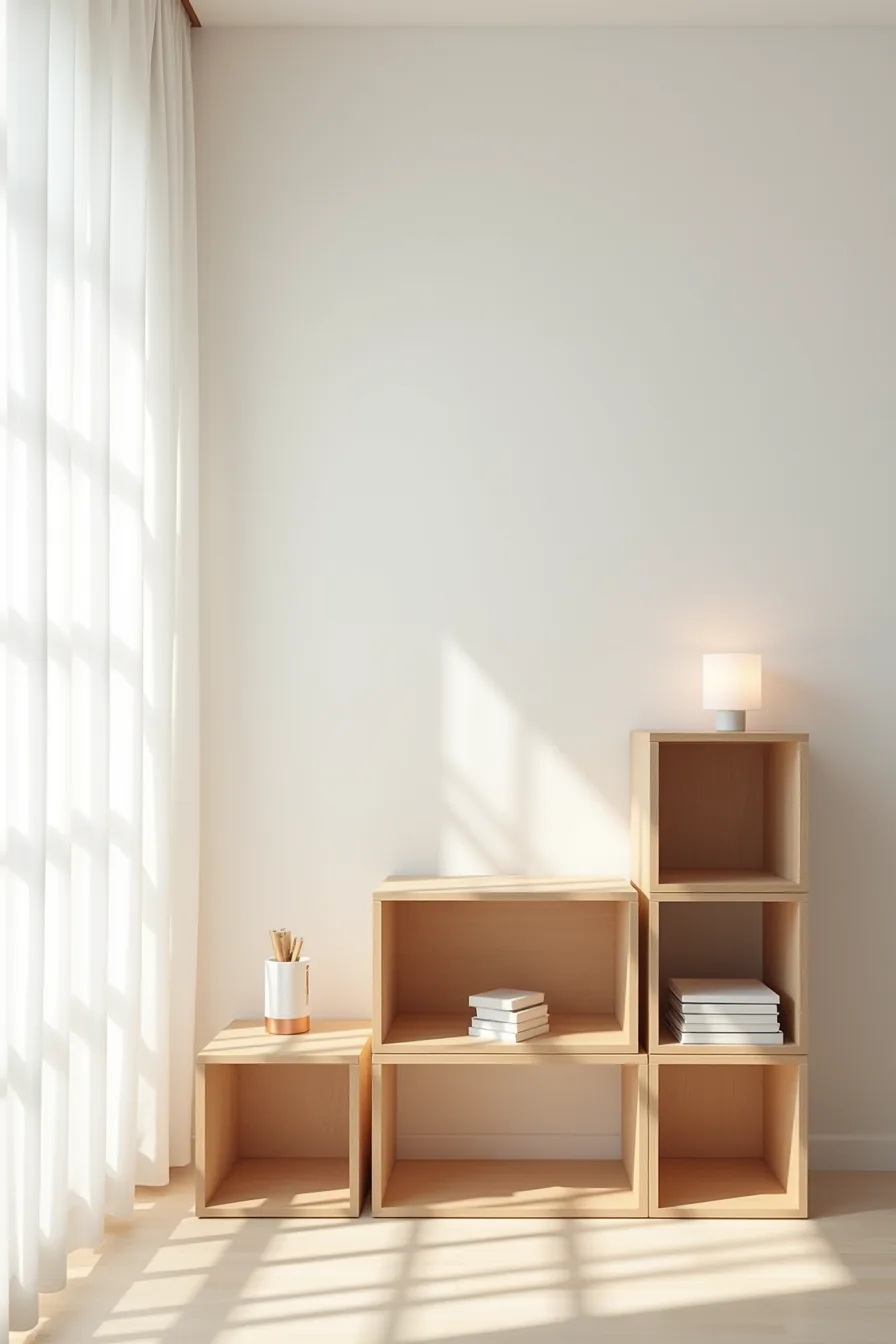
A wall-mounted fixed unit runs 18-24 inches deep and anchors directly into studs, giving you the most stable option for heavy books or electronics. Expect to pay $200-$400 for materials and hardware, plus a full day of installation, and you forfeit the deposit if you rent.
Freestanding modular cubes with adjustable dividers cost $60-$150 per eight-cube unit and reconfigure in minutes. The trade-off: at 11-13 inches per cube, you lose roughly 15 percent of usable depth compared to a fixed unit, and the particleboard construction sags after three to five years under sustained weight loads.
The tension-rod system, at 35-50 pounds weight capacity per rod, suits renters entirely, no holes, removed in under an hour. Position the white-wall example so the wall-mounted unit anchors your entertainment zone, the modular cube handles your craft bins, and the tension rods divide a coat closet. Adjust the rods incrementally once a month as shoe piles shift.
Alternate Open and Closed Cubes for Balance
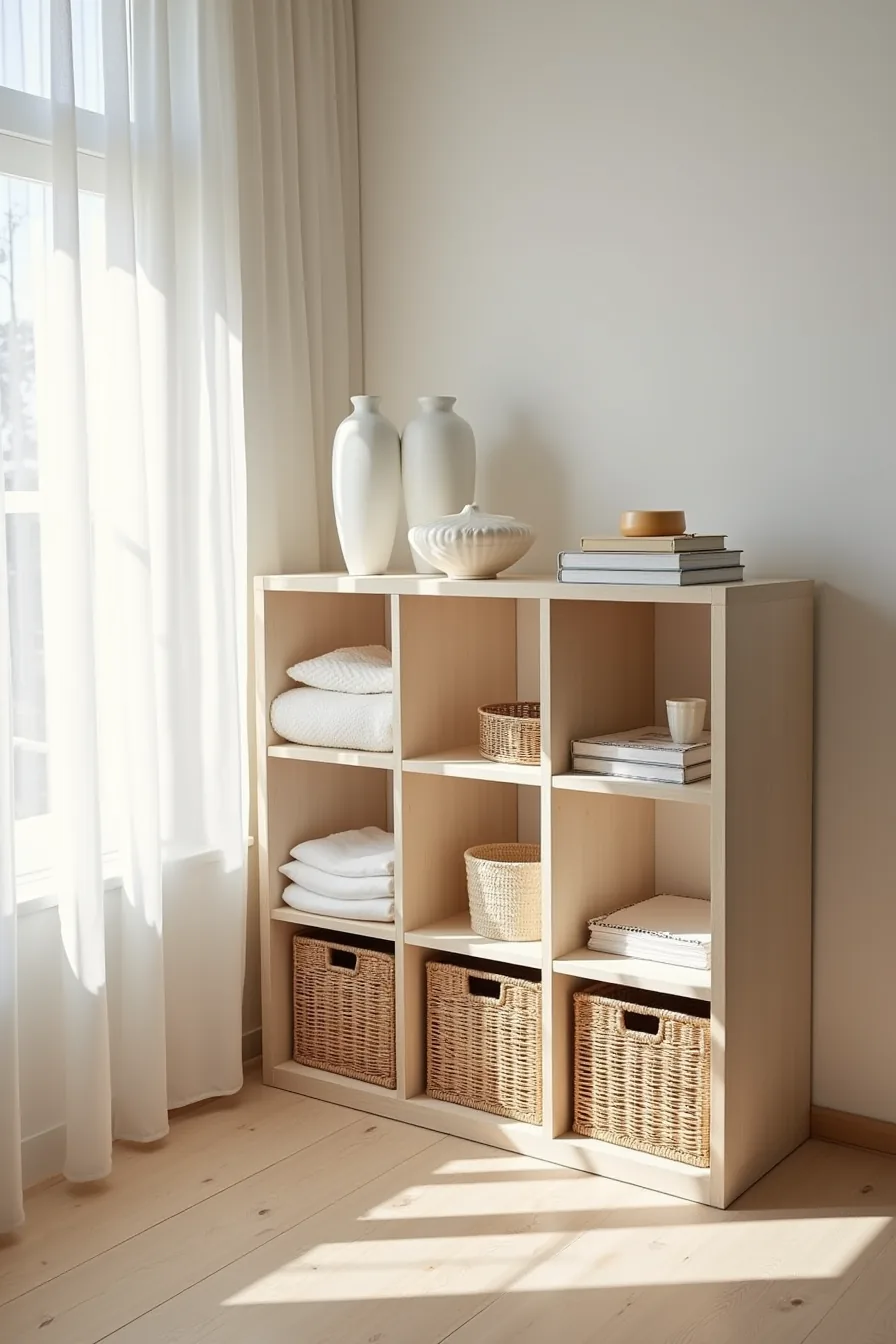
Mixing open and closed cubes isn’t just about looks, it changes how you use the unit daily. In a 2×3 configuration, assign the two top cubes to open display: folded linens and ceramic vases read as intentional decor while staying within arm’s reach. The two middle cubes get woven baskets for items you want accessible but visually quiet, like charging cables or kids’ toys.
Close off the bottom two cubes with wooden drawer fronts for the 20 percent of your storage that’s genuinely unattractive, bills, batteries, off-season accessories. That bottom placement matters: heavy or rarely used items belong lower for stability and easier lifting. Match basket depth to the cube’s interior (most standard cubes run 11-13 inches deep), and leave a 1-2 inch gap between basket rim and shelf above so you can grip and pull without snagging.
Open shelves collect dust visibly within two weeks, so reserve them for items you rotate or wipe down monthly.
Color-Blocked Storage and Labeling Strategies
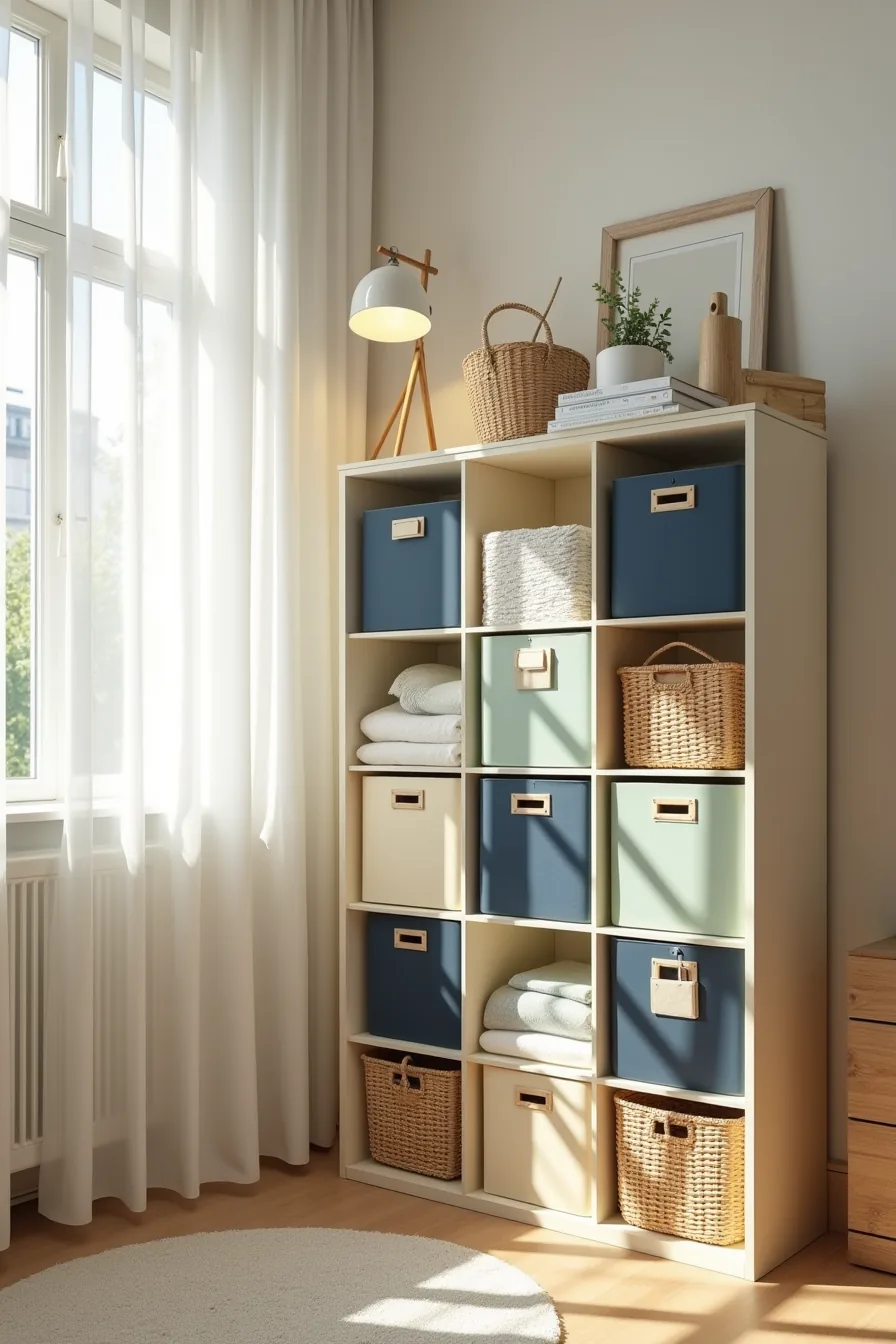
Color-blocking works because it replaces visual noise with a deliberate grid. In a 3×3 unit, assign one color family per horizontal row: navy baskets on the bottom, cream bins in the middle, sage green boxes on top. This creates a rhythm your eye reads instantly, and it makes retrieval faster, you remember that cables live in the cream row without reading a single tag.
Choose three colors max, and keep them in the same saturation range so no single cube dominates. The hanging tags on basket handles are your labeling system; use blank tags with a permanent marker or a label maker for a cleaner finish. Write the category on both sides of the tag so it reads whether the basket faces left or right.
For consistency, pick bins with opaque fronts for the lower rows and reserve clear containers for upper cubes where you can see contents at eye level. This color-blocked storage approach suits renters too, nothing adheres to the unit itself, so you can reconfigure the palette when you move.
Living Room Cube Styling for Different Space Sizes
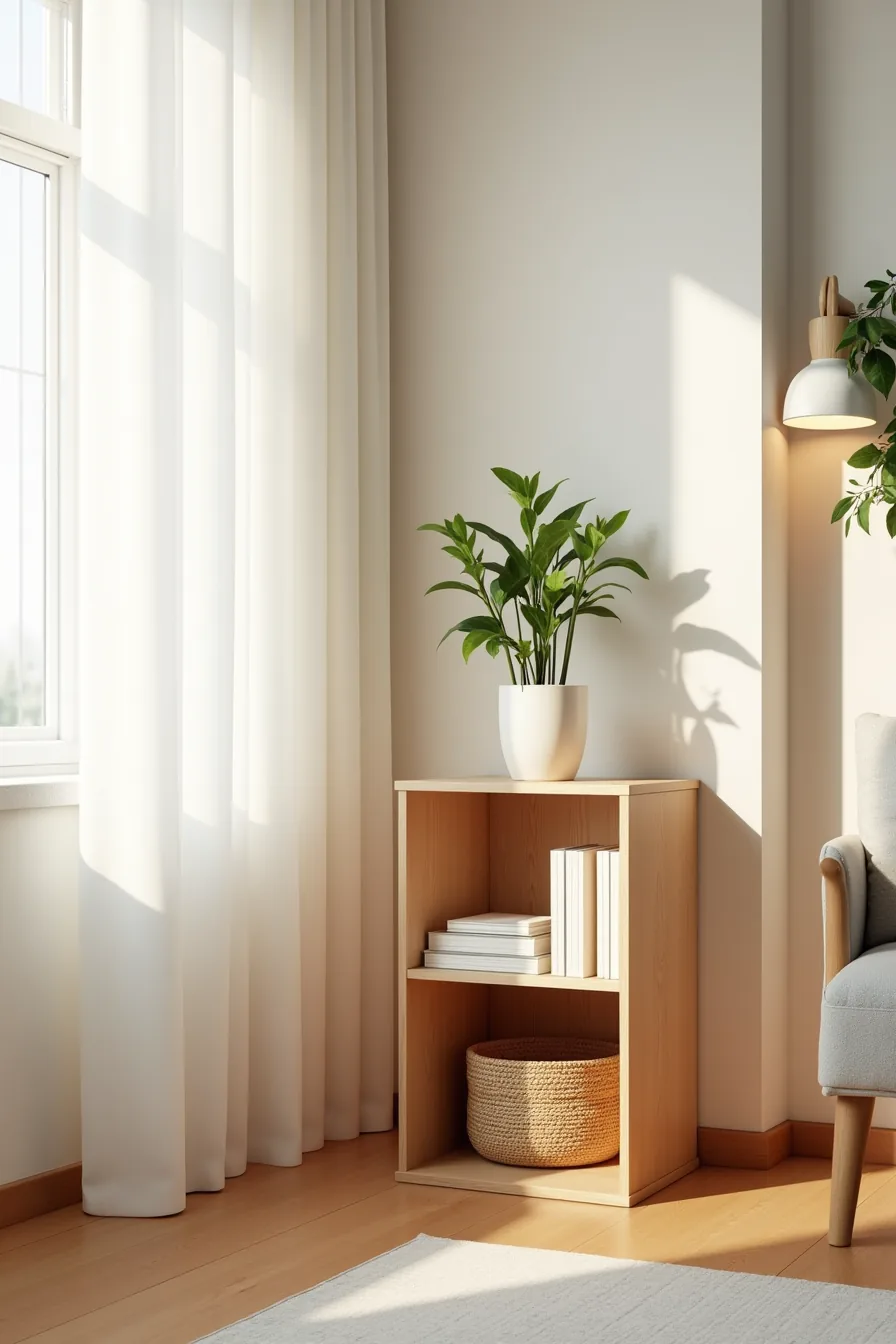
In a small apartment, a single 2×2 cube unit against a wall keeps the floor plan open. Anchor the visual weight with a woven basket in the bottom cube for blankets, then style the top surface with a small potted plant, this creates height without encroaching on walkways. Leave one open shelf for two or three decorative objects, but cap it there; in tight quarters, every visible item adds perceived clutter.
For medium rooms, scale up to a 3×2 layout placed perpendicular to the sofa to act as a room divider. You can double the closed storage by repeating the woven basket motif on the bottom row, while upper cubes hold books and framed art. In large open-plan areas, cluster two cube units side-by-side to form a 6-foot media console.
Match the unit’s wood tone to your floor, not your furniture, so the piece reads as architectural rather than temporary. Keep the top 12 inches clear of decor in high-traffic zones, this prevents accidental knocks and preserves sightlines across the room.
Maintenance, Safety, and Seasonal Refresh Routines
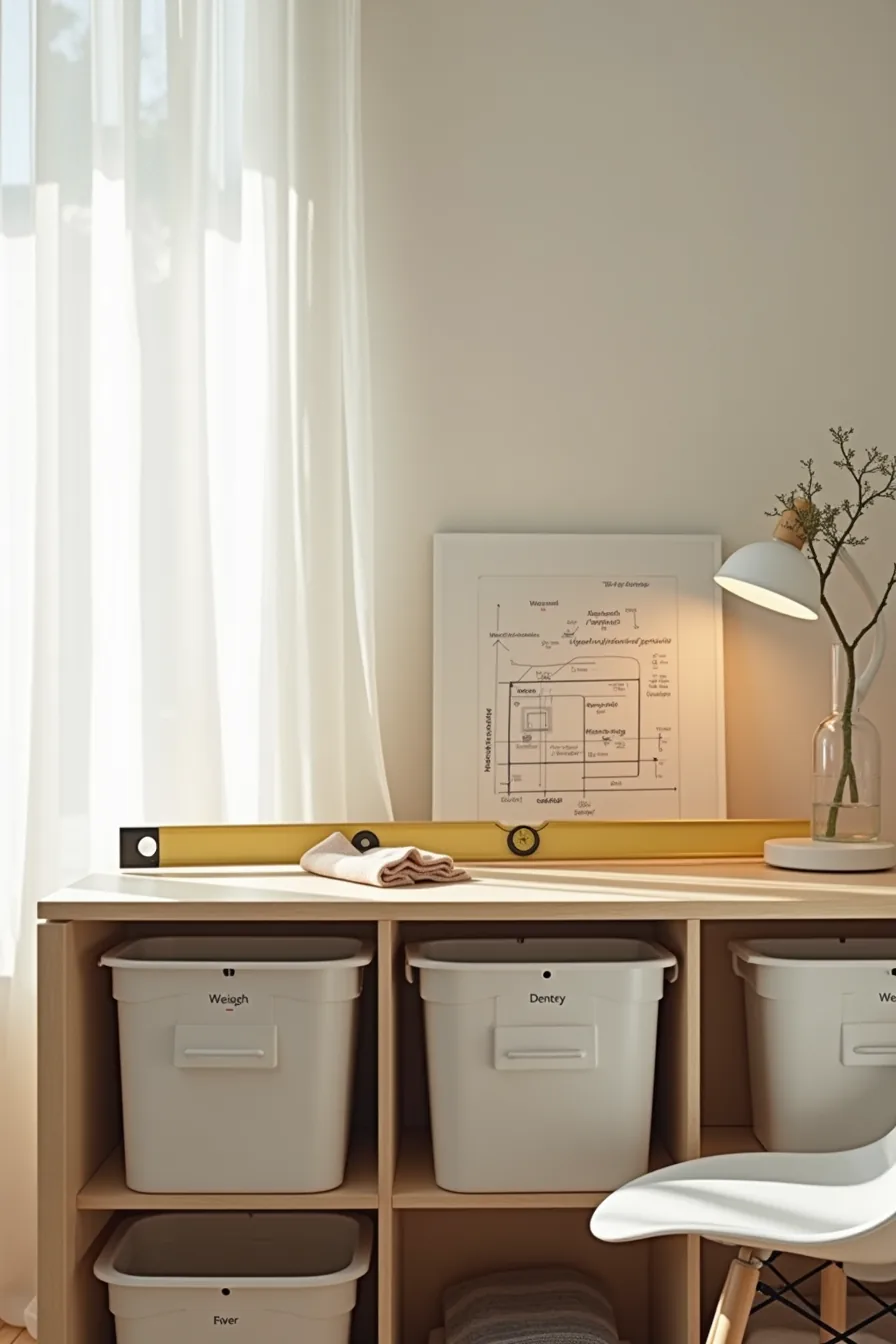
Wipe down shelves every two weeks with a damp microfiber cloth; skip spray cleaners on raw wood or laminate edges to prevent warping. Check the frame’s level with a spirit level after any heavy lift, then retighten corner bolts, most units loosen within the first month of use.
Cubes rated for 30–50 pounds per shelf take books, but distribute weight evenly: place the heaviest bins on the bottom row and never exceed half the rated capacity on a single shelf. If you’ve toddlers, anchor the unit to the wall with furniture straps, even when it sits flush against a baseboard, and store breakables above waist height.
Rotate decor seasonally by swapping labeled bins, not by dismantling the frame. Keep one bin for warm-weather items, light linens, summer reads, and a second for cold-weather accents; the swap takes 15 minutes and doubles as a Cube Organizer Decor for a Quick Room Refresh without moving a single anchor point.
What to do first
Start with the room you use most, not the one that looks worst on social media. Measure the wall space and count the items you actually need to store before buying a single cube. A 6-cube unit holds roughly 12–18 folded sweaters or 24–30 paperback books, so match the configuration to your real inventory.
Choose adjustable shelving if you anticipate swapping decor seasonally; fixed cubes work fine for permanent collections. For rentals, skip adhesive hooks and use freestanding units with anti-tip straps instead.
Your next step: take photos of your cluttered corner, print them, and sketch three cube layouts directly on the images, then pick the one that keeps your daily-use items at waist height.
Frequently Asked Questions
How do I know if a 9-cube organizer will fit my space?
Measure the height, width, and depth of the intended area first. Most 9-cube units run 48–72 inches tall, 36–48 inches wide, and 12–16 inches deep, so compare those ranges against your wall and floor clearance.
What’s the difference between a 9-cube and a 6-cube organizer, and which should I choose?
A 9-cube adds one full row of three cubes vertically or horizontally, giving roughly 50% more storage. Choose 9-cube for taller rooms needing bulk storage; pick 6-cube for low-profile spaces, under windows, or tighter wall segments.
Can I use a 9-cube organizer in a rental without drilling holes?
Yes. Use freestanding units with anti-tip straps anchored to walls via removable adhesive hooks, or place them against heavy furniture. Avoid tension rods, most 9-cube frames lack the structural points to support them safely.
How much weight can a typical 9-cube organizer hold per cube?
Most particleboard or MDF units support 20–35 pounds per cube, while solid wood frames often handle 40–60 pounds. Check the manufacturer’s label; never exceed the stated limit, and distribute heavier items toward the bottom rows.