Hidden storage works best when you first decide what actually needs to disappear, because the right solution depends entirely on the items you’re hiding, the room’s traffic flow, and how often you need access. A mudroom bench that conceals out-of-season boots fails if you grab those boots daily; the same bench excels for holiday decor you touch twice a year. Before you buy a single basket or build a banquette, you’ll need a 30-minute inventory audit and a clear-eyed ranking of what you use hourly, weekly, or never, because that triage determines every choice that follows, from cabinet depth to hinge type.
Key takeaways
- Audit first: Inventory every item by category and frequency of use before buying any hidden storage, or you’ll waste money on containers that don’t fit your actual volume.
- Match furniture capacity: A lift-up bed frame typically holds 12-18 inches of clearance, while a storage ottoman offers 1.5-3 cubic feet, choose based on whether you need bulkier seasonal gear or daily-access items.
- Prioritize renter-safe options: Use tension rods, freestanding shelving units, or adhesive hooks for hidden storage in rentals, since built-in recessed walls and under-stair modifications require landlord approval and permanent installation.
- Scale by room size: In a small room, limit hidden storage to one multi-functional piece (like a bench with drawers) and keep 30-36 inches of clear walkway; in large rooms, distribute storage across two or three zones to avoid a single massive unit that blocks airflow or access.
Audit Your Belongings Before Choosing Storage
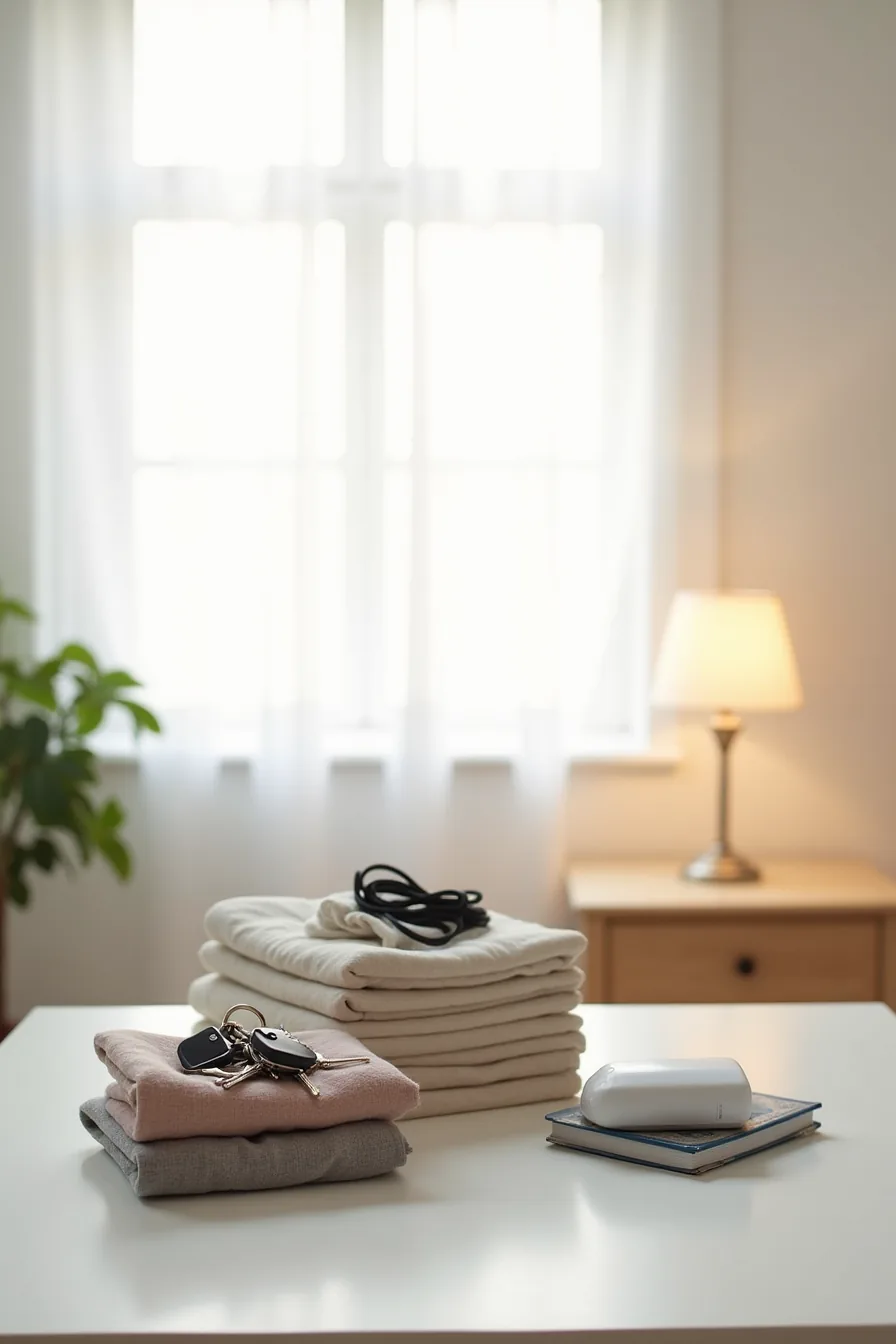
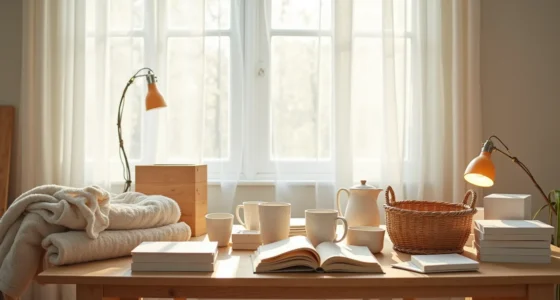
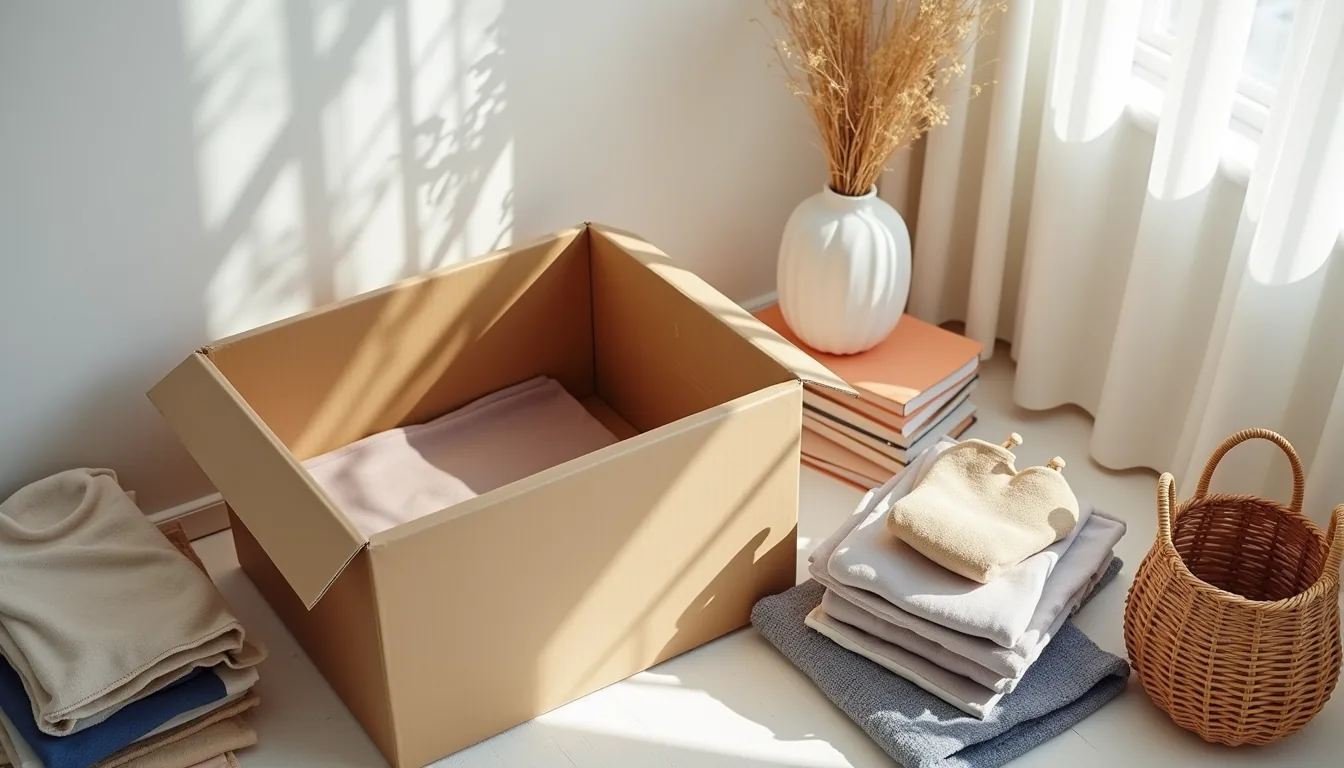
Hidden storage fails when you design around imagined needs instead of what you actually own. Before you shop for a single container, sort everything into three piles: keep, donate, and discard. You can see how this works on a tabletop level with a small pile of frequently used items (your keys, a phone charger), a medium stack of seasonal clothing, and a larger donation pile, exactly the categories that determine what deserves prime hiding spots.
Frequency of use dictates access. Daily items like keys and chargers belong in concealed but reachable locations, such as a drawer near the entry. Seasonal clothing can sit in higher or deeper storage you access monthly.
The donation pile tells you what not to store at all, most households can eliminate 20–30 percent of their belongings at this stage, which shrinks the footprint of any hidden storage solution you buy. Skip this audit and you risk overstuffing a cleverly concealed cabinet, turning a design feature into an awkward, hard-to-reach clutter trap.
Furniture with Secret Capacity: Beds, Benches, and Ottomans
Lift-top beds and storage ottomans conceal the most volume per square foot of floor space, but they trade accessibility for capacity. A typical queen lift-top bed base holds 150–250 liters beneath the mattress platform, enough for off-season bedding, bulky coats, or luggage, yet requires you to clear the mattress surface before lifting. That makes it a monthly-access solution for master bedrooms, not a nightly drop zone.
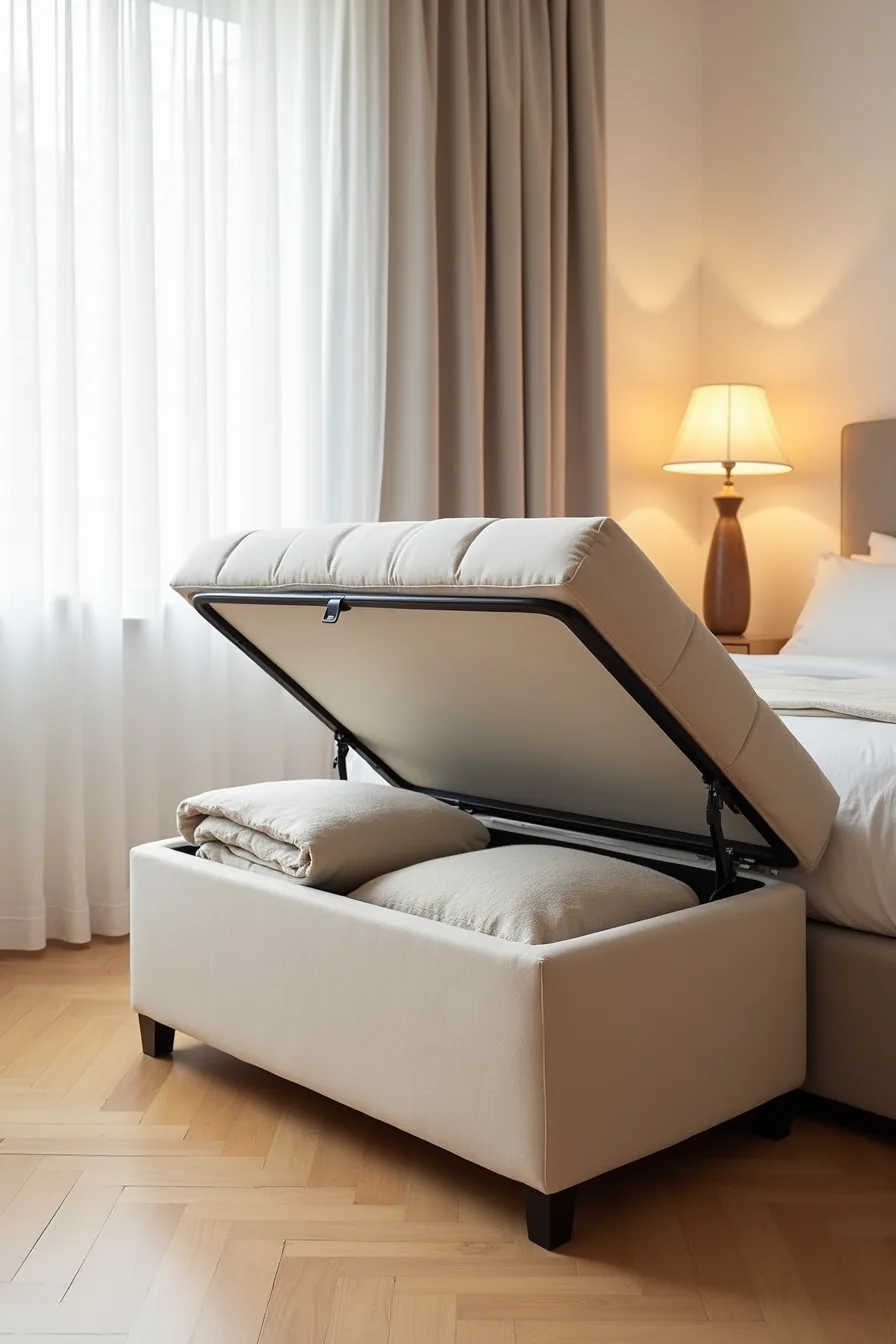
The upholstered storage ottoman at the foot of your bed offers the opposite rhythm. A hinged lid propped open reveals folded blankets and pillows that you can retrieve in seconds without moving anything else. Most square ottomans in the 90–110 cm range accommodate 60–80 liters, and gas-lift hinges keep the heavy lid from slamming onto your hands.
Choose one with a solid, plywood base rather than a particleboard frame if you plan to sit on it daily; a 120 kg weight limit is typical, but check the manufacturer’s rating before using it as a seat.
Storage benches work best in narrow entryways or at the end of a twin bed. Their shallow depth (40–50 cm) limits capacity to 40–60 liters, but the top doubles as a perch for putting on shoes. In all three pieces, look for removable liners, most use cedar or polyester, that you can wash annually to prevent musty smells from trapped moisture.
Under-Stair and Recessed Wall Storage for Fixed Spaces
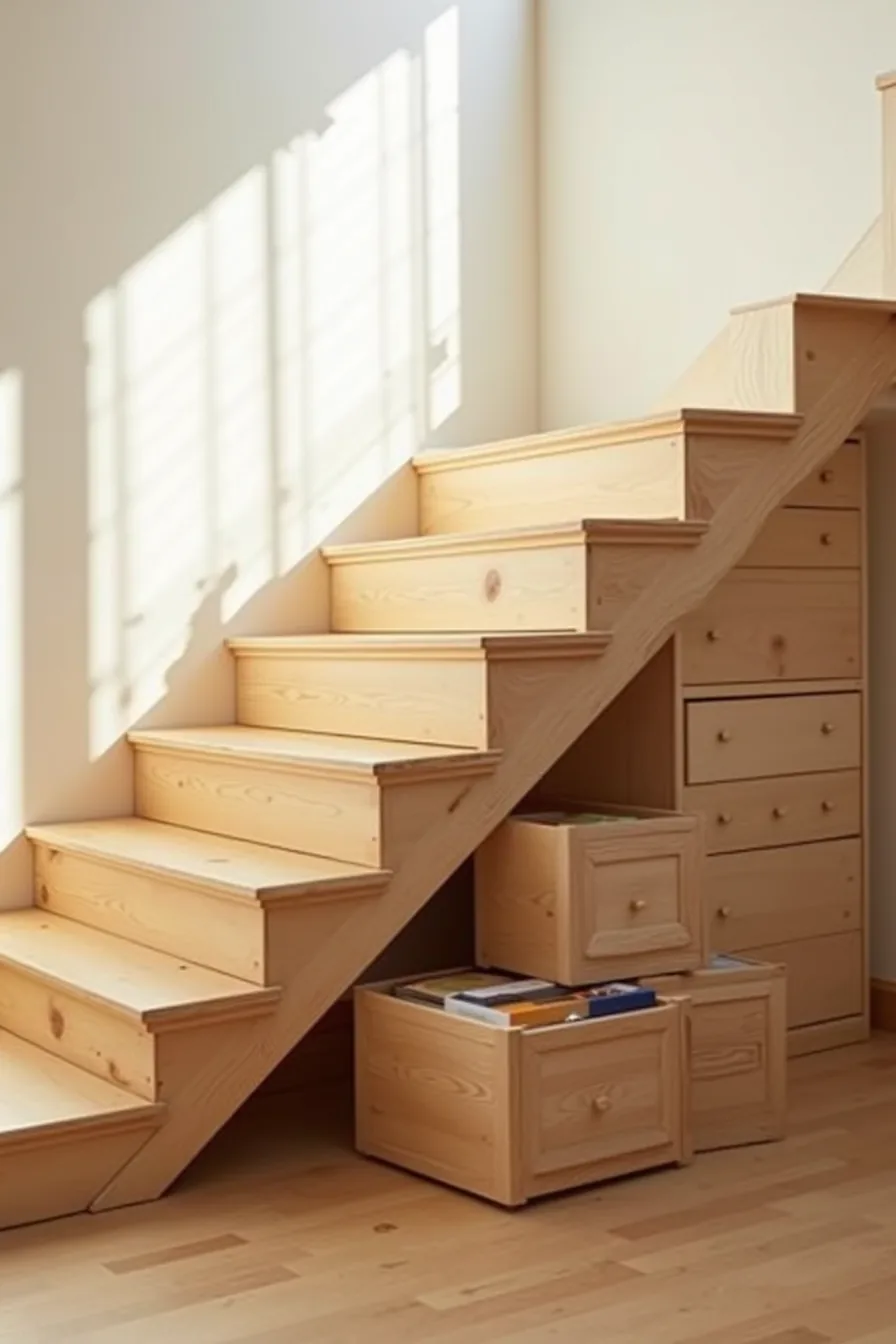
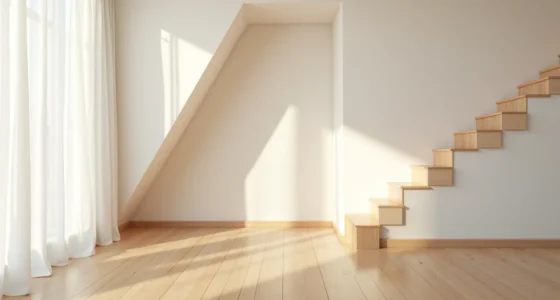
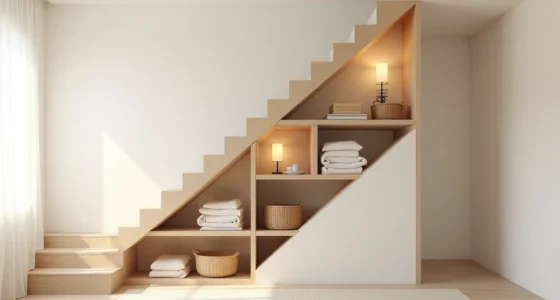
Under-stair drawers exploit the single most wasted volume in most homes, but they demand precision. Each step’s riser typically hides 45–60 cm of usable depth at the tall end, tapering to nothing at the low side. Built-in drawers fitted flush with the stair risers, as in a wooden staircase with matching warm tones, convert that wedge into pull-out storage for shoes, tools, or holiday decorations.
You gain roughly 100–150 liters per standard flight of 13 steps, though the irregular trapezoid shapes limit what fits to items under 40 cm wide.
Recessed wall shelving in an alcove or between studs runs 10–15 cm deep, fine for toiletries, spices, or paperbacks, but useless for anything bulkier. Alcove units can stretch 60–90 cm deep if the wall is load-bearing and the cavity is original, yet cutting into it affects insulation and wiring, so hire a professional unless you can confirm the space is empty. Both options need a moisture check first: stairwells and exterior walls accumulate condensation, and sealed storage traps it.
Add a vapour barrier or leave 2–3 cm of airflow behind drawers in damp climates, and expect painted MDF or birch ply to cost 30–50% more than freestanding equivalents because of custom fitting.
Adjustable and Renter-Friendly Hidden Storage Systems
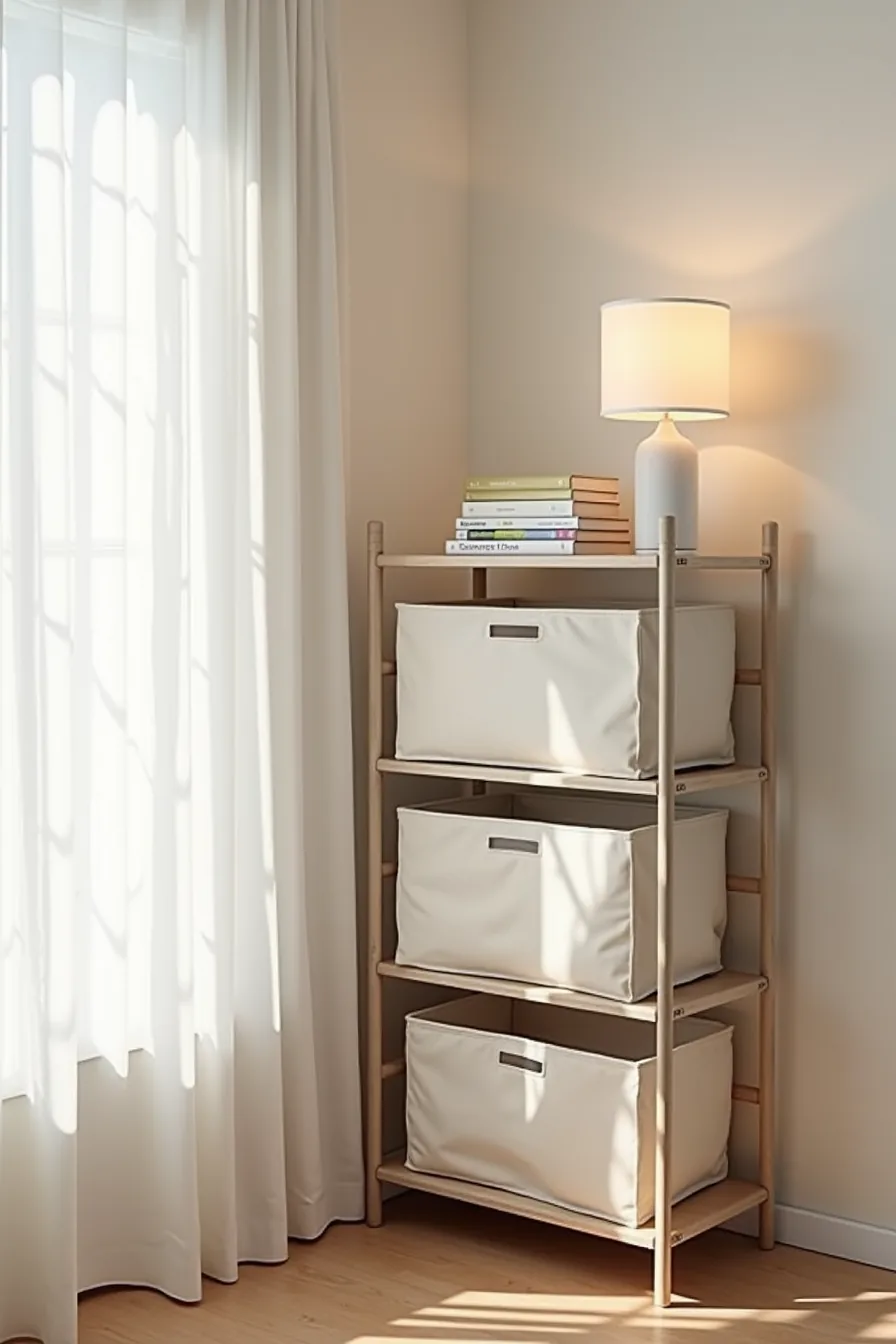
A freestanding metal shelving unit with removable fabric storage boxes delivers concealment without a single hole in the wall. The key is the boxes: solid-front fabric bins in a neutral tone hide the contents, while the open metal frame keeps the silhouette light. Look for units rated at 35–50 kg per shelf for general household goods, and expect the boxes to run $12–$25 each.
Since nothing is fixed, you can swap the entire arrangement when you move, or reconfigure shelf heights in minutes with a mallet.
Adhesive-backed panels offer another no-drill route. Peel-and-stick wall panels with shallow hooks or small ledges support up to 2–3 kg per point, enough for keys, mail, or lightweight kitchen tools. They leave residue on some painted surfaces, so test a corner first and use a hairdryer to soften the adhesive for clean removal.
For rentals with strict clauses, freestanding pieces are your only safe bet; avoid tension rods and spring-loaded systems on plaster or textured walls, as they can chip the finish. Weigh the trade-off: renter-friendly setups cost 15–30% less than built-ins upfront but carry lower weight limits and rarely match a room’s proportions as precisely. This approach suits anyone prioritizing their security deposit over permanent integration.
Concealment Through Color, Doors, and Paneling
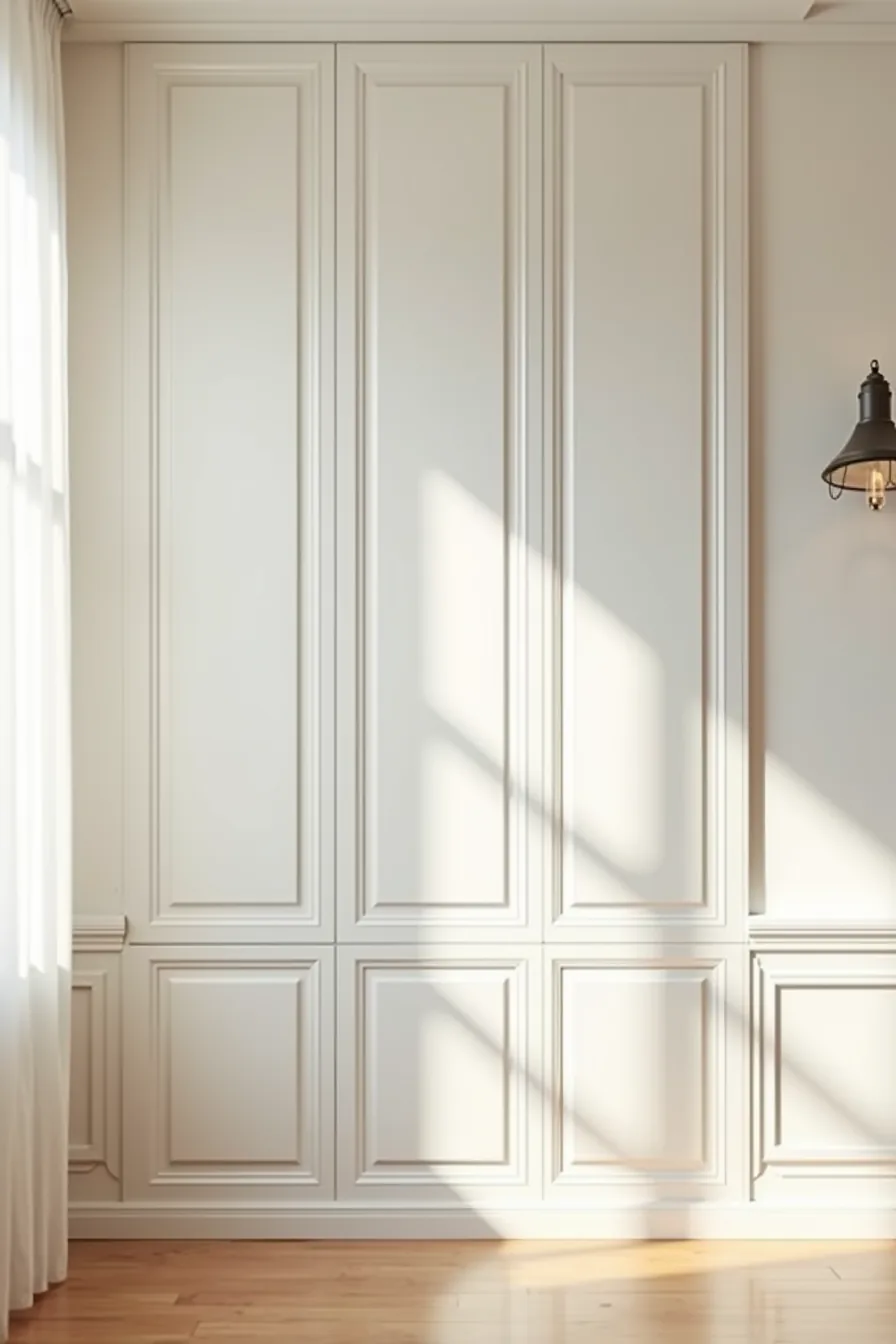
Paint is the cheapest disguise you already own. A floor-to-ceiling cabinet finished in the same white as your wall paneling and baseboards recedes from view entirely; your eye reads the surface as architecture, not furniture. The trick hinges on matching sheen levels, use a satin or eggshell finish across both wall and cabinet so light reflects uniformly and gives no hint of a break in the plane.
Frame-and-panel doors that echo your existing trim profile complete the illusion. Recessed hardware, or none at all with push-to-open latches, eliminates visual clutter and keeps the facade smooth. Budget for a quality primer and two top coats; cabinet doors take more handling than walls, so a durable acrylic-alkyd enamel will outlast standard wall paint by several years before touching up.
Maintenance stays simple: wipe doors with a damp microfiber cloth monthly, and vacuum the recessed pulls weekly to prevent dust buildup. This approach suits medium to large rooms where a full wall can be dedicated to storage without cramping the layout, and it costs 40–60% less than a custom millwork installation using stock cabinet doors and off-the-shelf trim.
Scaling Hidden Storage to Room Size and Layout
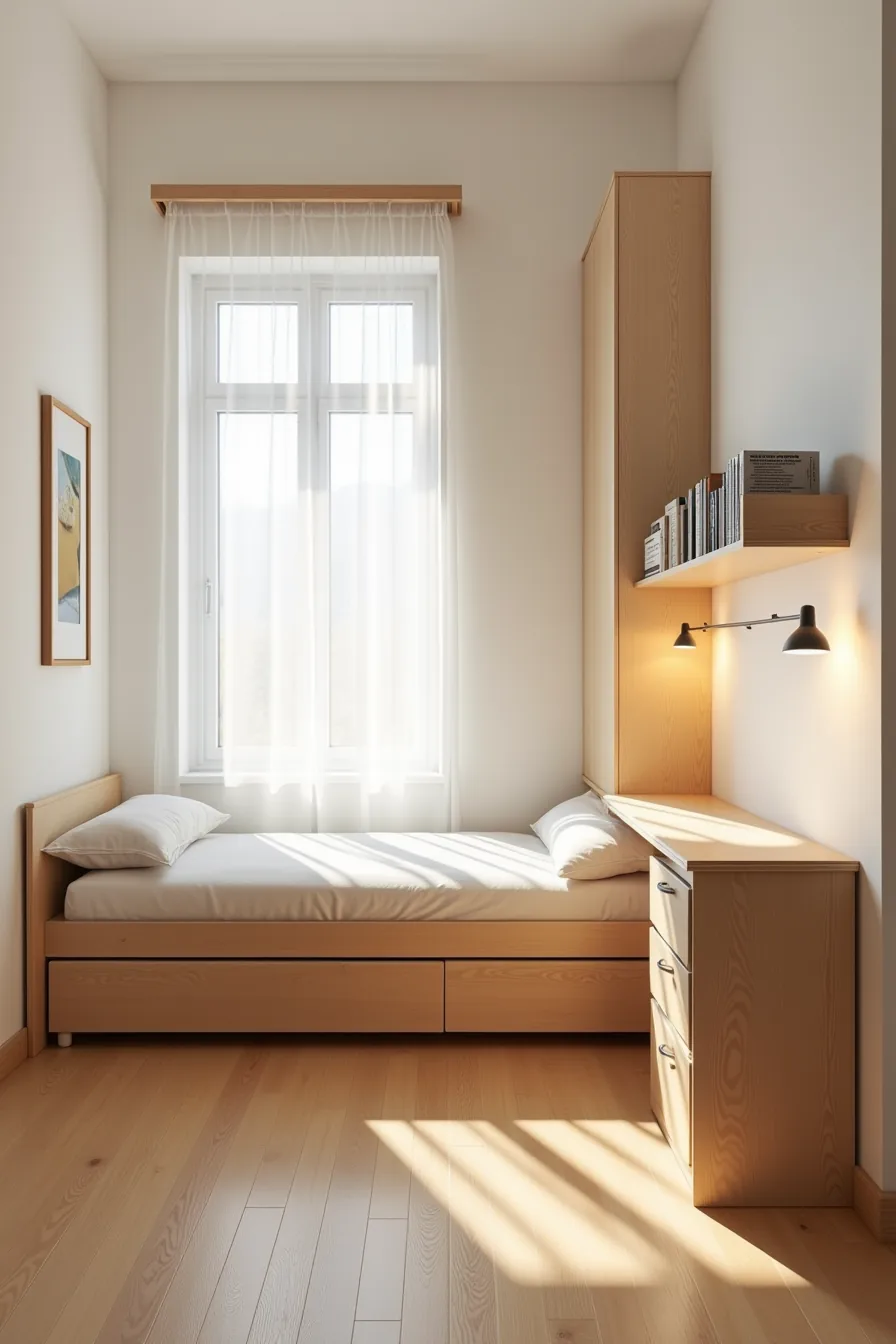
In a studio apartment, every square foot carries a double duty. A bed with drawers built into its base gives you 30–50 cubic feet of storage for off-season clothing or bedding while occupying the same footprint as a standard mattress, zero extra floor space consumed. Pair that with wall-mounted shelves above a desk, set 12–18 inches above the work surface so a monitor and lamp fit comfortably below, and you reclaim vertical real estate that otherwise sits idle.
Finish the arrangement with a slim vertical cabinet in the corner, no deeper than 16–20 inches, to swallow linens or cleaning supplies without protruding into the walkway.
Proportion is the governing rule here: in compact rooms, storage depth should never exceed one-third of the room’s width, or circulation suffers. For medium homes, shift to island seating with lift-up tops, a 36-inch-wide base yields roughly 12–15 cubic feet for bulky cookware or board games. Larger spaces justify dedicated zones, like a walk-in closet with floor-to-ceiling shelving on one wall only, leaving 36 inches of clear aisle for comfortable movement.
No matter the size, keep the heaviest items in lower drawers and reserve upper shelves for lightweight, infrequent-use goods to avoid strain and accidents. These Hidden Storage Ideas for Small Homes and Apartments prioritize function over flourish, ensuring every hidden compartment remains accessible and safe.
Before You Buy Anything
The single most effective move is to walk through one room with a notepad and identify what you touch daily but have nowhere to store. That list, not Pinterest, determines whether you need a bench, a cabinet, or nothing at all.
Match the system to your habits, not your aspirations. A pull-out pantry suits someone who cooks; a wall-mounted valet rod suits someone who drops keys at the door. Renter-friendly options like tension rods and over-door hooks cost under $30 and leave no damage.
Your next step: choose the one item you reach for most often in your busiest room, and find its dedicated hiding spot this week. Start there, and the rest of the room follows.
Frequently Asked Questions
What is the difference between hidden storage and regular storage furniture?
Hidden storage disguises its function, a bench that opens, a mirror that swings away. Regular storage furniture declares its purpose with visible drawers, shelves, or doors. Hidden prioritizes aesthetics and stealth; regular prioritizes access and capacity.
Can you add hidden storage to a rental apartment without losing your security deposit?
Yes, if you stick to freestanding pieces like ottomans, lift-top coffee tables, or storage benches. Avoid anything screwed into walls or floors. Use felt pads under feet to prevent floor scratches.
Keep original furniture to swap back when you move.
How much weight can typical hidden storage furniture like ottomans or lift-top beds hold?
Most lift-top beds support 300–500 pounds of mattress and sleepers, but the storage compartment itself safely holds 50–100 pounds of items. Ottomans generally support 200–300 pounds sitting weight, with interior capacity around 20–40 pounds. Always check the manufacturer’s label.
What items should never go in hidden storage due to safety or maintenance concerns?
Never store flammable liquids, aerosol cans, or batteries in enclosed ottomans or beds, heat buildup can be a fire risk. Skip perishables, which attract pests, and damp items, which cause mildew. Also avoid heavy tools or books that exceed the furniture’s weight limit and strain hinges.