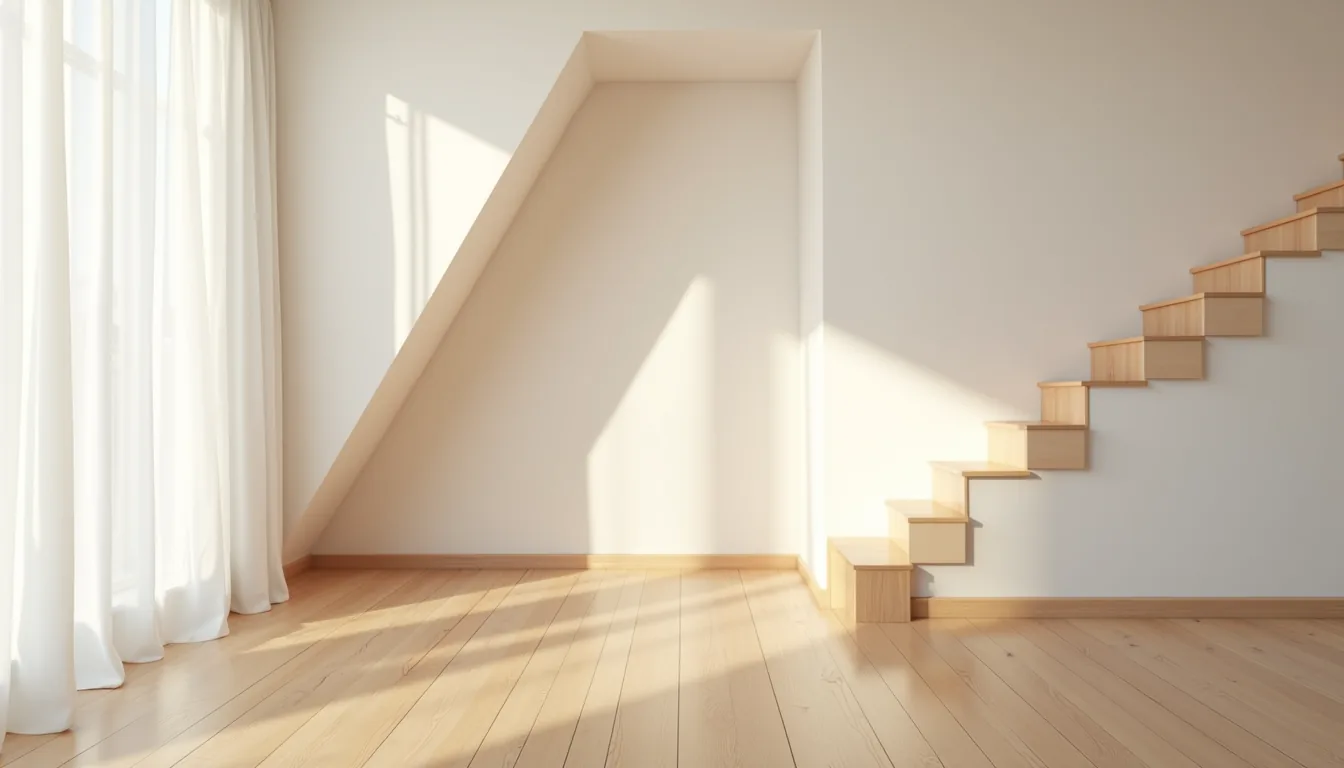
The average home loses 40–60 square feet of usable space to the triangular void beneath its staircase, yet most of that area sits empty because homeowners default to a single bulky shelf or a pile of boxes. That wasted footprint can hold everything from seasonal coats to a compact home office, but only if you match the storage system to your access, budget, and ceiling height. The right approach turns a forgotten corner into a high-capacity zone without blocking the staircase’s structural supports or your daily traffic flow.
The six solutions ahead range from renter-friendly tension units to permanent built-ins, each with clear trade-offs in cost and installation effort.
Key takeaways
- Audit first: Sort every item under your staircase into keep, donate, and discard piles before measuring or buying a single container.
- Measure twice: Fixed built-ins suit tall, deep stairwells (most under-stair spaces run 3–6 feet at the highest point), while adjustable shelving fits shallow or awkward angles without custom carpentry.
- Match access to use: Open shelves work for daily-grab items like shoes and bags, but drawers or cabinets keep seasonal gear dust-free and hidden.
- Budget trade-offs: Renter-friendly tension rods and freestanding units cost $50–$200, whereas custom built-ins run $1,000–$5,000, so choose based on how long you’ll stay.
Audit Your Clutter Before Choosing a System

Before you price a single drawer or shelf, you need a full inventory. Spread everything you intend to store, from holiday decorations to sports equipment, across a flat surface with a measuring tape, a notebook, and a pen. Group items by category and frequency of use, then measure the depth and height of your stair alcove at its shallowest and tallest points; most under-stair areas taper significantly, so a standard 24-inch-deep cabinet won’t fit near the base of the steps.
This audit tells you exactly how much volume you need. A household storing only seasonal items, two or three medium cardboard boxes of ornaments, a spare vacuum, and a luggage set, typically requires about 20 to 30 cubic feet. Over-building capacity beyond that wastes money and creates a maintenance burden: empty shelving collects dust, and oversized drawers invite clutter you don’t actually own.
Match the system to the inventory you’ve, not the one you imagine owning.
Fixed Built-In Drawers and Cabinets
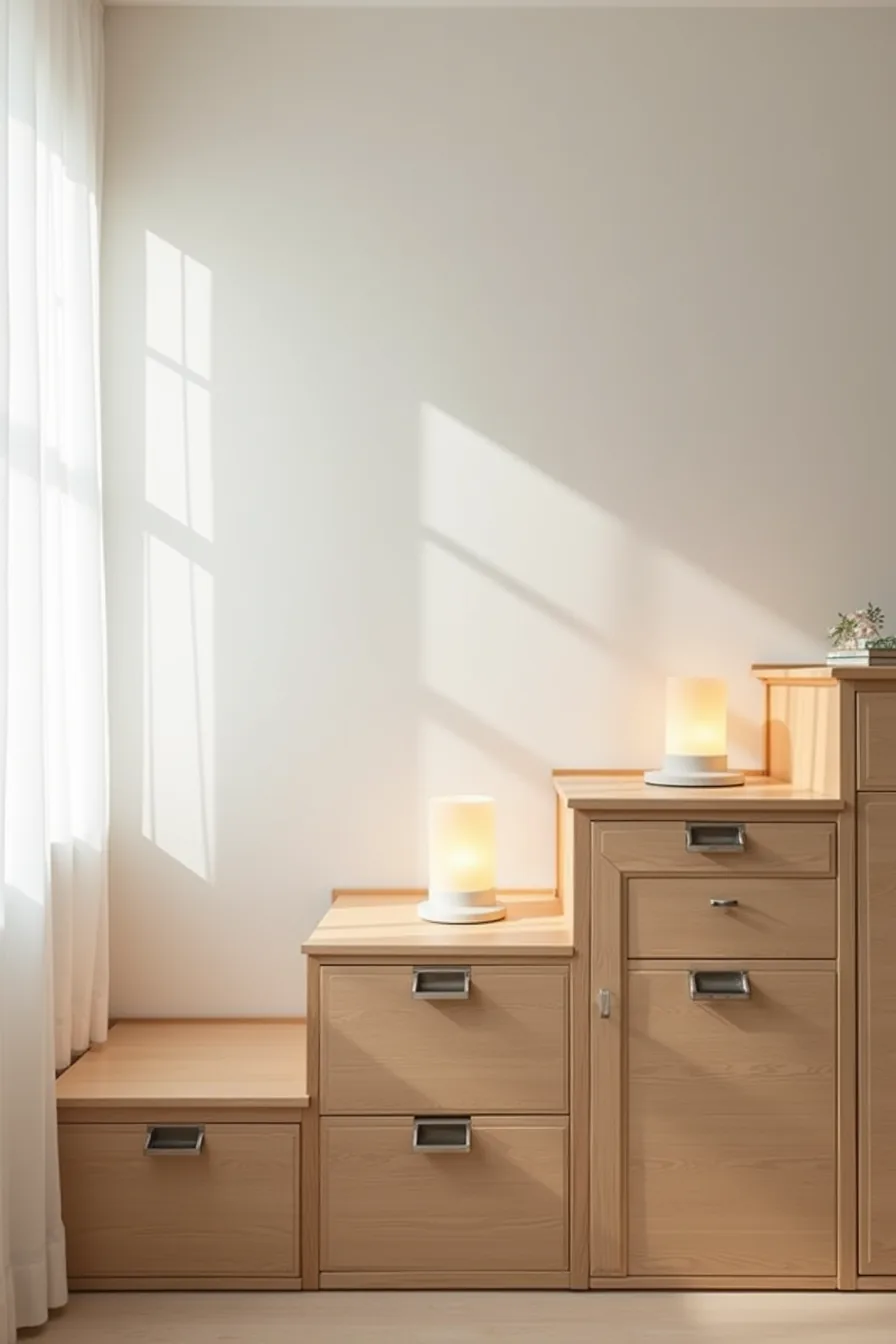
A custom drawer bank like the one in this example, three graduated wooden drawers with metal handles, fitted flush to the angled soffit, suits homeowners planning to stay put for five or more years. The graduated front heights track the staircase pitch, so each drawer gains usable depth as the ceiling rises; the bottom drawer typically reaches 30-36 inches deep, while the top drawer may only permit 12-18 inches. You sacrifice structural flexibility for seamlessness: every cubic inch becomes usable, and the hidden drawers disappear into the stair profile entirely.
Expect to pay $2,500 to $6,000 installed for a bespoke plywood carcass with soft-close slides and a hardwood face, depending on your regional labour and finish grades. This system requires wall anchoring into studs, a carpenter confident cutting compound angles against the stringer, and a clear construction zone for two to four days. Choose solid-front drawers over hoppers if you store mixed-height objects, open shelves, by contrast, demand tidier stacks.
Ensure you leave a 1-inch ventilation gap behind the upper cavity if any section abuts an exterior wall, and confirm the drawer slides can handle the weight of dense items like tools before you fill them.
Open Shelving Under Stairs for Accessible Items
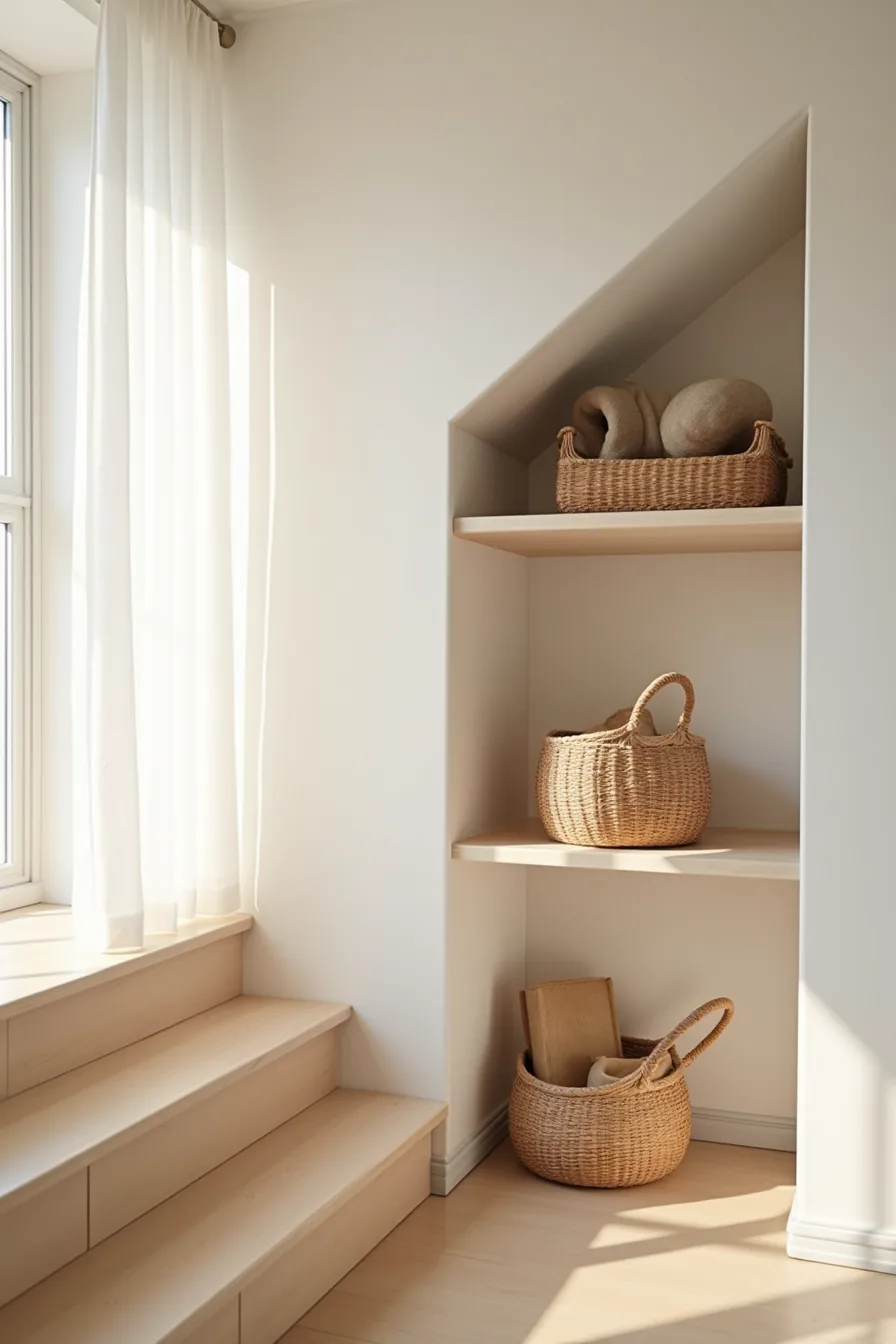
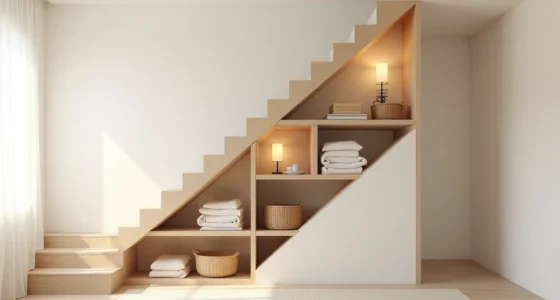
Open shelving under stairs trades hidden capacity for instant retrieval, making it ideal for items you reach for daily, think cookbooks, board games, or a rotating stash of throws. The stepped shelf heights in this setup mirror the stair angle, so each platform lands at a natural arm’s reach; the shallowest top shelf typically holds 8-10 inches of depth, while the bottom tier extends to 16-18 inches. The woven baskets corral small loose objects like gloves or remote controls, while the rolled textiles stack vertically to save horizontal space and add softness against the hard wood.
Sizing matters more than styling here. Measure the tallest item you plan to store, a cereal box, a wine bottle, and cut your minimum shelf clearance to that height plus 2 inches. Because everything is visible, dust settles on exposed surfaces weekly; a microfiber duster or a vacuum with a brush attachment handles the job in under five minutes.
Keep the visual weight light by limiting shelf contents to two colors or one material family, the baskets and linen rolls achieve this naturally, so the space reads intentional rather than cluttered. Label the baskets with a single word on a small tag if multiple people use the storage; skip labels if you live alone and value the clean line.
Renter-Friendly and Adjustable Storage Systems
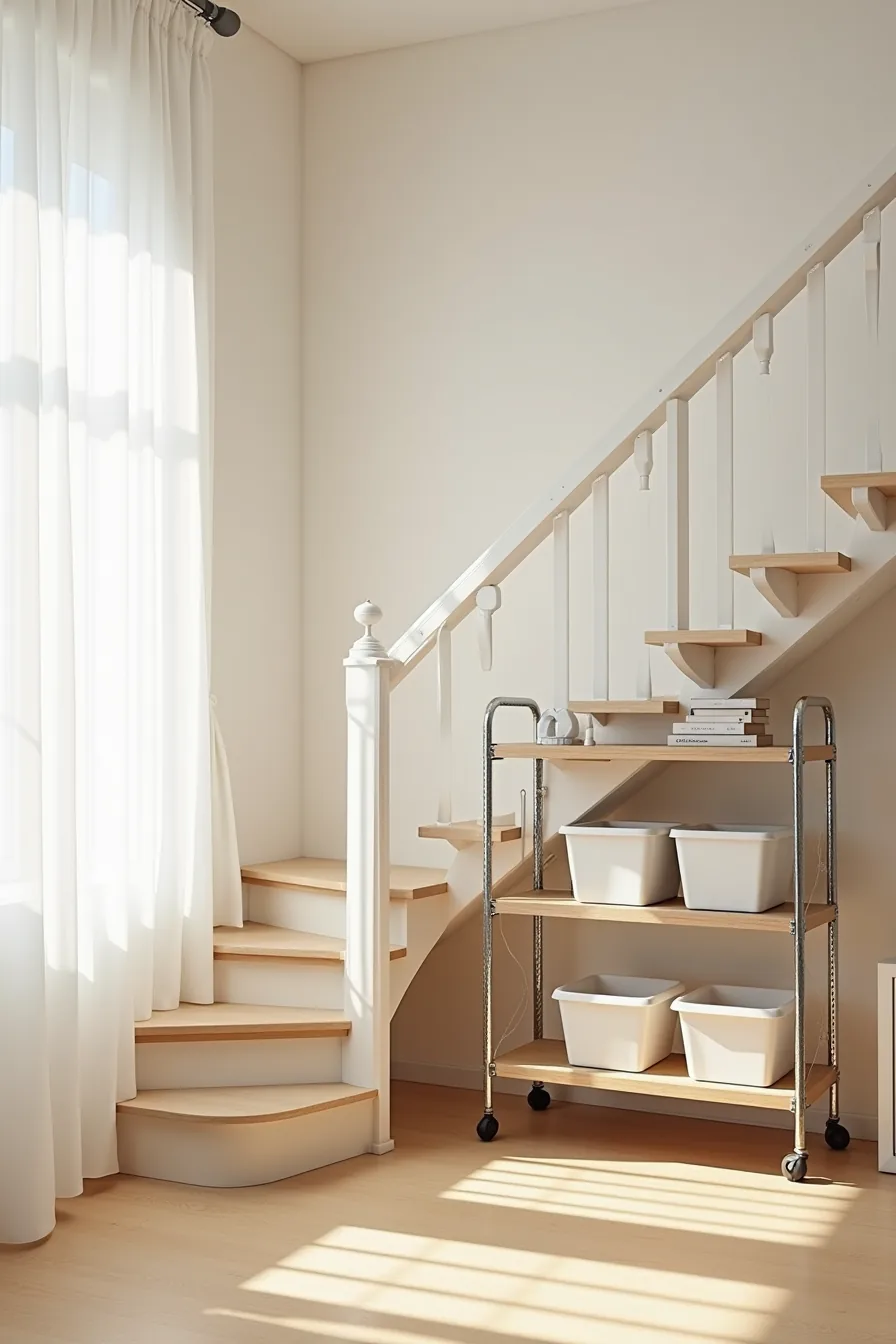
Freestanding metal shelving solves the under-stair problem without a single screw in the wall, making it the default choice for rentals or anyone hesitant to commit. The unit’s adjustable pegs let you reconfigure shelf heights as your storage needs shift, move a shelf up 3 inches to fit a taller bin, or remove it entirely for oversized gear. Load capacity depends on the gauge of the steel and the number of support pegs per shelf; most residential units in this class carry 40-60 pounds per shelf if the weight is evenly distributed.
Stack plastic storage bins on the lower tiers for heavier, rarely used items, and reserve the upper shelves for lighter everyday access. The key limitation is stability: a fully loaded tall unit can tip forward, especially if you pull heavy bins from the top. Secure it with anti-tip straps anchored into studs, these leave only a tiny hole you can patch with spackle on move-out.
Alternatively, angle the unit so the top leans gently against the stair stringer, which naturally braces it. Budget for $80-$150 for a decent five-shelf unit, and verify the footprint fits your stair’s depth before assembling, since most units run 12-18 inches deep.
Multi-Purpose Staircase Storage for Family Clutter Control
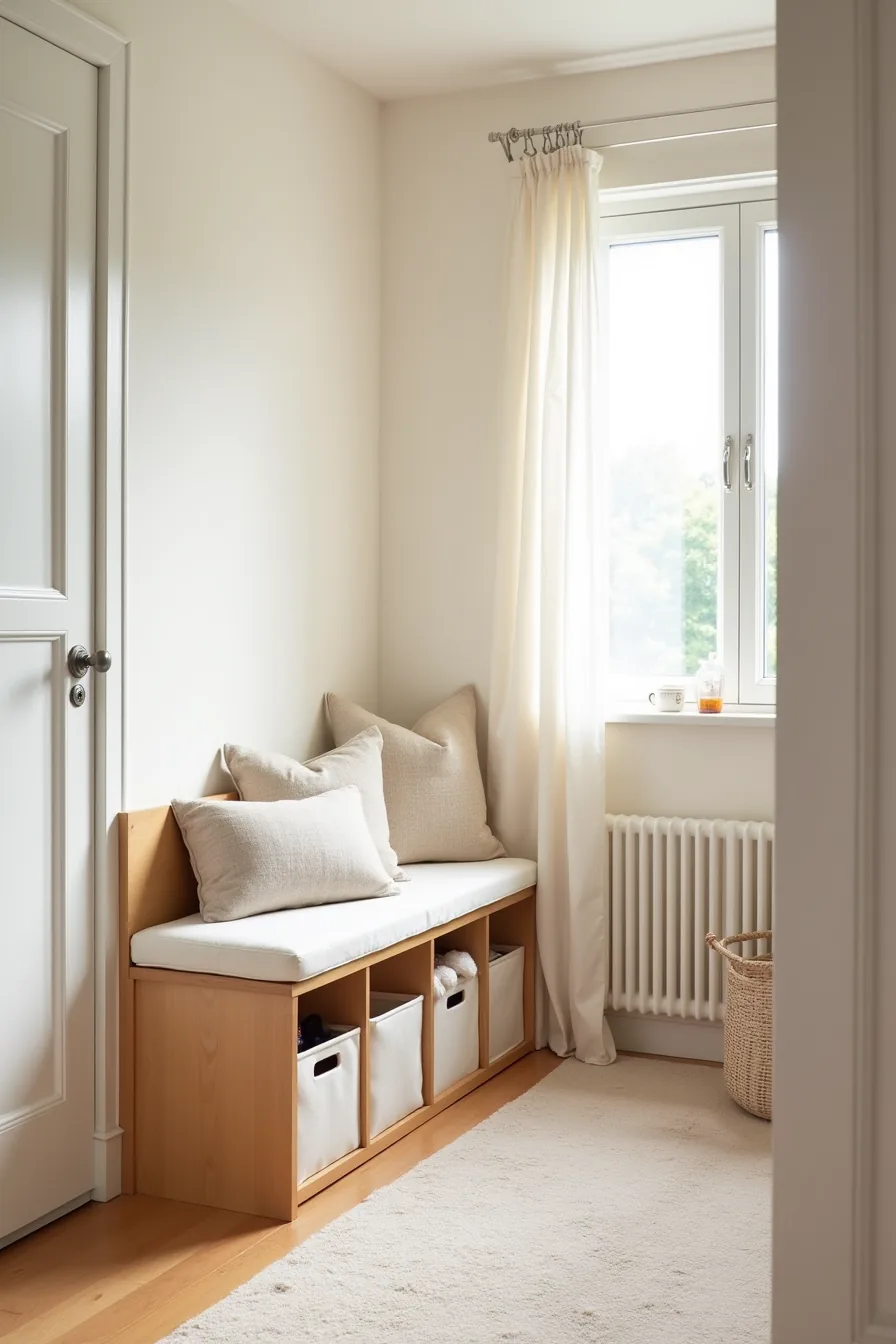
A hybrid unit with a cushioned bench seat on one side and open cubbies beneath handles the three biggest household clutter generators, shoes, toys, and out-of-season gear, in one continuous footprint. The bench gives you a spot to sit while pulling on boots, and the cushion means it doubles as a landing zone for bags or a quiet reading nook for a child. Beneath the seat, dedicate the lower two cubbies to toy bins sized to the largest item you need to store, most standard fabric bins fit 13-15-inch openings, and reserve the top row for shoes sorted by frequency of use.
Zone the entire unit by household member: assign each person a bin and a shoe cubby, and label everything from day one. This system works best when you match activity to access height, daily items at eye or hand level, seasonal gear in the deeper or higher compartments. Measure your stair’s depth before ordering, because hybrids typically run 15-20 inches deep, and the bench seat should sit at least 17-19 inches high for comfortable adult use.
Budget $200-$400 for a modular unit with bins included, and add door fronts later if you want to hide the visual noise. For large families, this single footprint replaces a separate shoe rack, toy chest, and hall bench, which is why multi-purpose staircase storage remains a top Under Staircase Storage Idea for family clutter control.
Materials, Finishing, and Long-Term Maintenance
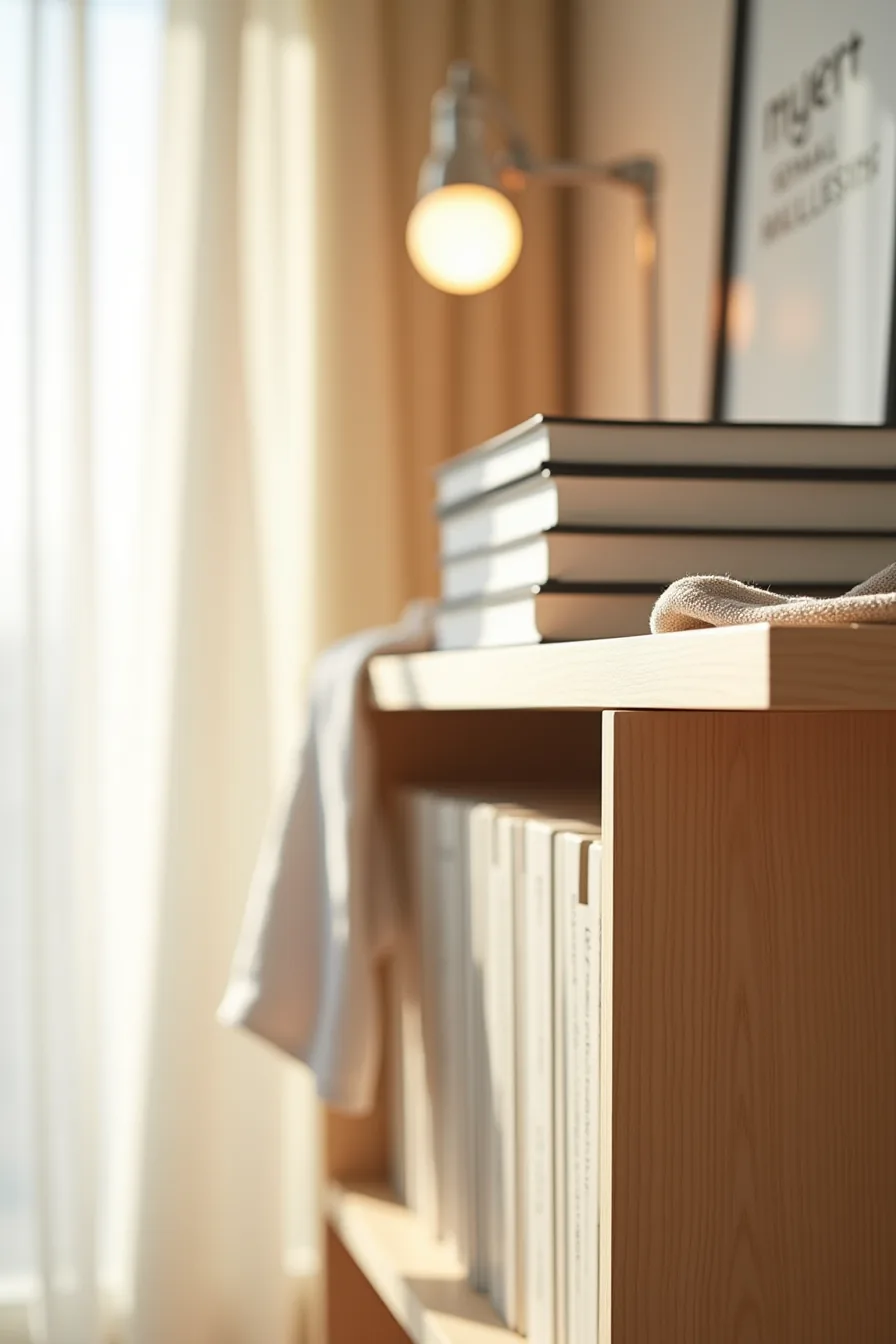
Solid wood stands up to daily abuse but expands and contracts with humidity swings, so expect seasonal gaps around drawer fronts unless you choose plywood with a hardwood veneer, it stays dimensionally stable at roughly half the cost of solid oak. Metal brackets and tracks handle heavy loads without sagging, but they transmit noise, so add felt pads at every contact point. Composite shelves resist moisture better than raw MDF, yet they chip at the edges; seal exposed cuts with edge banding before installation.
Dust accumulates fast in enclosed stair voids because airflow is minimal. Use a microfiber cloth on horizontal surfaces weekly, and vacuum the floor track monthly to prevent grit from scratching sliding mechanisms. Wipe down metal corner brackets with a damp cloth quarterly, and re-tighten screws after seasonal humidity changes, wood movement loosens them.
Upgrade when hinges feel gritty or shelf edges show visible wear. Replace particleboard shelving that has swollen near the base, that indicates moisture intrusion you can’t reverse. Budget $30-$60 annually for touch-up supplies: wood filler, matching stain pens, and felt pads.
What to do first
Start with a single afternoon dedicated to emptying the storage under your staircase completely. Sort every item into three piles, keep, donate, and relocate, before you measure a single shelf. This inventory step prevents you from buying organizers for things you no longer need.
Once you know what stays, measure the height, depth, and width of your space at the lowest and highest points. Then match your keep-pile volume to one of the four system types: fixed shelving for permanent collections, adjustable units for changing needs, freestanding frames for rental flexibility, or budget-friendly modular cubes for a tight cost.
Frequently Asked Questions
How much weight can storage under stairs safely hold?
Most standard under-stair storage systems handle 50–100 pounds per shelf when wall-studded. For heavy items like tools or books, distribute weight across multiple shelves and avoid loading any single shelf beyond 150 pounds.
Can I install storage under stairs if I rent my home?
Yes, use freestanding modular units, tension rods, or adhesive hooks. Avoid drilling into walls or stairs unless your lease permits. For a built-in look, choose furniture-style cabinets that don’t require permanent attachment.
What’s the best way to prevent dust and moisture buildup in under-stair storage?
Install a dehumidifier or moisture absorber, seal gaps with weatherstripping, and use airtight bins. Wipe surfaces monthly and add silica gel packs. Keep items off the floor on shelves to allow airflow.
How do I measure the angled space under stairs to order or build storage?
Measure the highest point of the stair run, the depth at floor level, and the angle from the floor to the stair underside. Sketch a triangle, noting the rise and run. Double-check the clearance at the lowest point, which often limits shelf depth.