An empty bedroom corner is wasted square footage, but the right chair transforms it into a reading nook, a dressing station, or a drop zone, provided you match the seat’s scale and function to the room’s traffic flow. The mistake most people make is choosing the chair first and the purpose second, which is why so many corners end up holding laundry instead of life. Before you buy anything, measure your clearance, map your morning route, and decide whether the chair will serve as daily furniture or an occasional perch.
The six setups below cover every budget and room size, so you can pick the one that actually fits your habits, not just your Pinterest board.
Key takeaways
- Match chair scale to room size: a 28–32-inch-wide chair fits small corners, while 36–40-inch options suit medium rooms, leaving at least 24 inches of walkway clearance.
- Anchor the corner with a floor lamp and side table within arm’s reach, this turns an empty spot into a functional nook without blocking the door swing or closet access.
- For renters, choose a lightweight chair under 30 pounds and a freestanding floor lamp; avoid wall-mounted fixtures that require drilling or leave marks.
- Budget buyers should prioritize solid wood or metal frames over upholstered bases, they last longer and cost 20–40% less to re-cover than replacing a cheap foam-filled chair in two years.
The Reading Nook: Layered Comfort for Daily Use
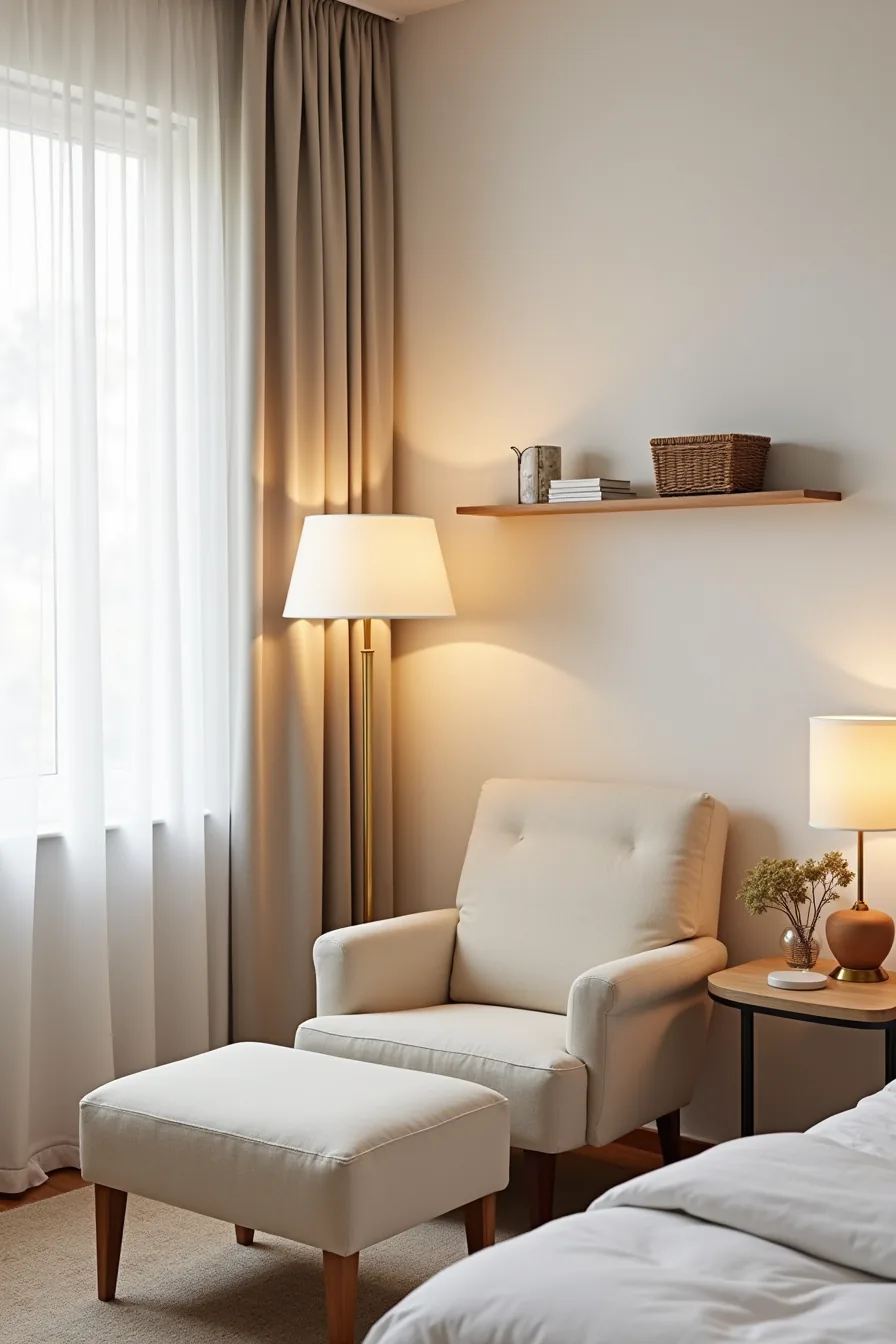
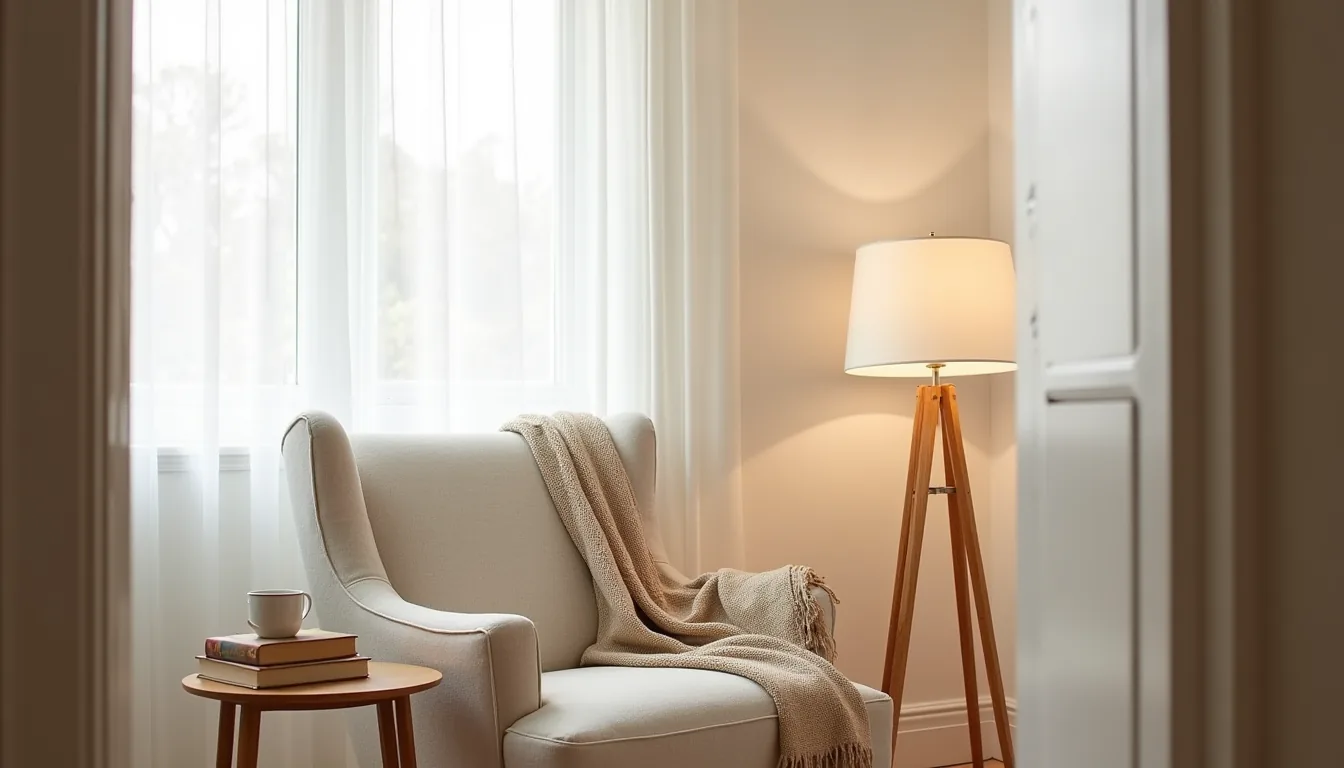
Position the chair’s back flush against the corner wall, angled at 45 degrees so it faces the room’s center rather than the blank wall. A medium-scale armchair with a coordinating ottoman creates a flat surface for propping your feet, which transforms the corner from dead space into a deliberate destination you’ll actually use daily.
A brass three-tier floor lamp placed behind the chair’s shoulder casts light over your reading material without glare on a screen, and the upper tiers can wash the wall with ambient light in the evening. Mount a floating wooden shelf on the adjacent wall at arm’s height to hold a basket for current reads, a glass of water, and decorative objects that ground the zone visually. The patterned area rug should extend at least 18-24 inches beyond the chair’s front edge on all sides, otherwise the chair will look stranded and the rug will catch on the ottoman’s legs as you move.
This setup suits medium to large bedrooms (roughly 12 x 14 feet or larger) where a corner isn’t needed for storage. It requires about 36-45 inches of clearance in front of the chair for comfortable leg extension and getting up. Skip it if your corner sits directly opposite a radiator or air vent, the ottoman will block airflow and the floor lamp creates a fire hazard near heat sources.
Small Chair vs. Oversized Chair: Choosing the Right Scale
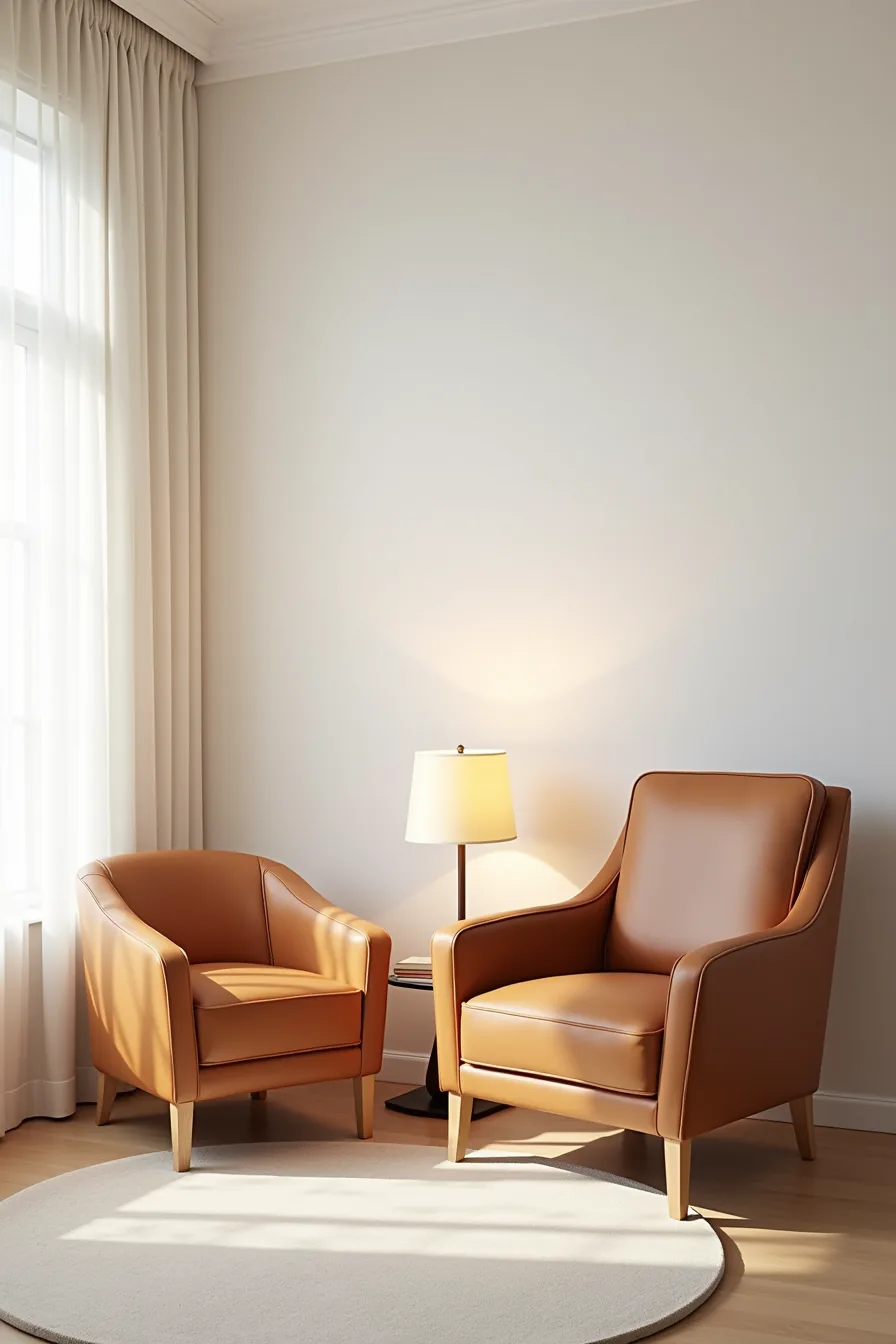
A compact barrel chair under 30 inches wide suits corners in rooms around 10 x 12 feet, where a bulky silhouette would swallow the floor space and crowd the path to your bed. Its rounded back tucks neatly into the corner without leaving awkward gaps, and it pairs well with a slim side table that doesn’t compete for visual weight.
For a corner in a master bedroom exceeding 14 feet on either side, a leather club chair in the 36-42 inch range anchors the space with presence. The larger frame demands at least 24 inches of clearance on each side for the room to breathe, and the heavier upholstery reads as intentional rather than overwhelming when the corner is the room’s focal point.
Between these extremes, measure your corner’s wall span, the distance from the corner point to the nearest door frame or window, and subtract 6 inches for visual breathing room. That number is your maximum chair width, regardless of how much floor area the room has.
The Renter-Friendly Corner Setup
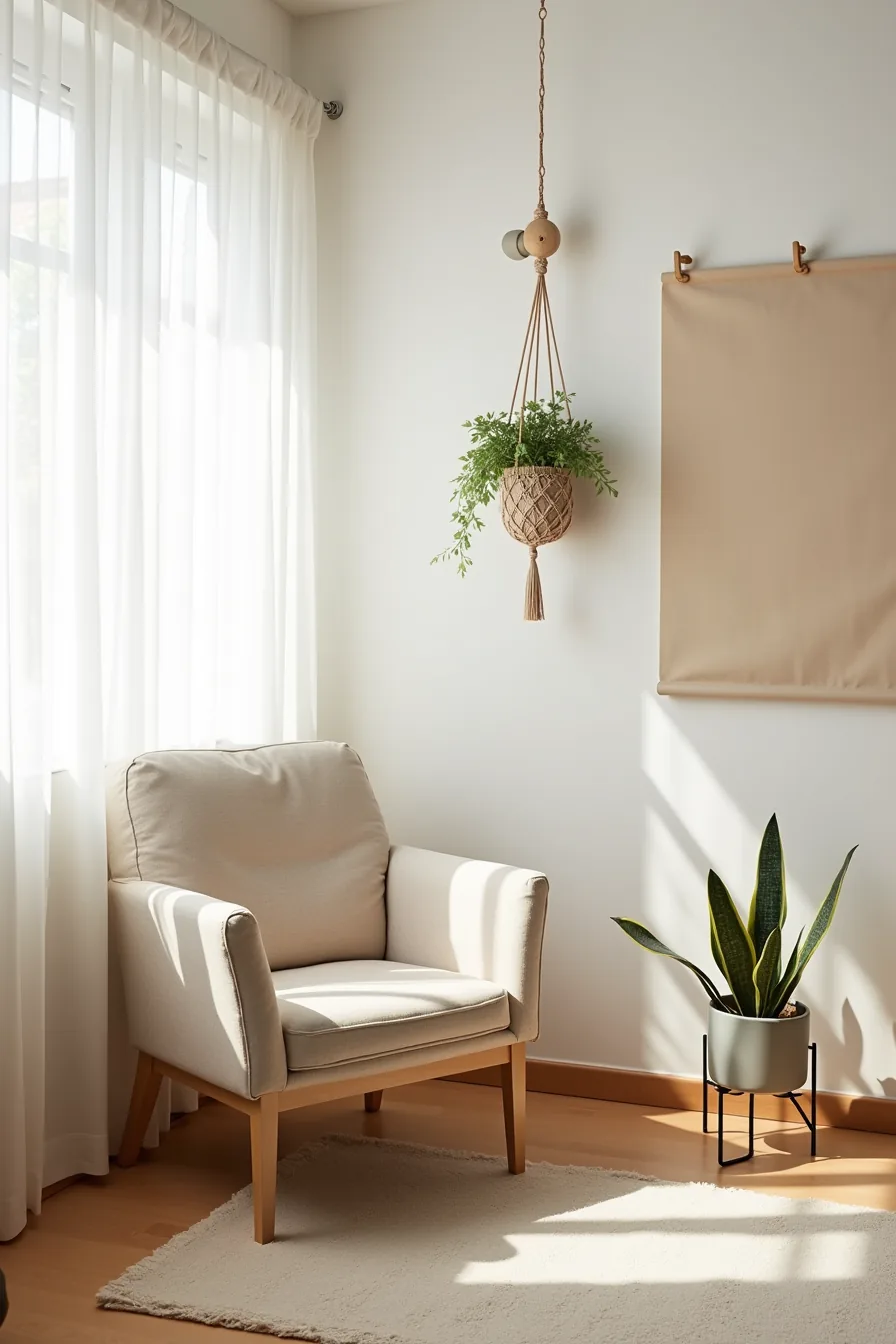
A lightweight fabric chair around 30 inches wide gives you an empty corner rescue that requires no permanent commitment. This setup pairs it with a portable area rug that defines the seating zone and can roll up in minutes when you move. Since the chair weighs under 40 pounds, you can shift it across the room for movie nights or guest overflow without scratching the floor.
Adhesive-backed wall hooks hold a macramé plant hanger without leaving holes, and a folding metal plant stand beside the chair adds greenery at eye level. A single removable peel-and-stick wallpaper panel on the wall section behind the chair creates a focal point you can peel off cleanly when your lease ends. This approach suits short-term rentals or anyone who changes their décor seasonally, and the total setup costs less than a single upholstered accent chair while delivering the same visual payoff.
Hotel-Inspired Corner Seating for a Refined Bedroom
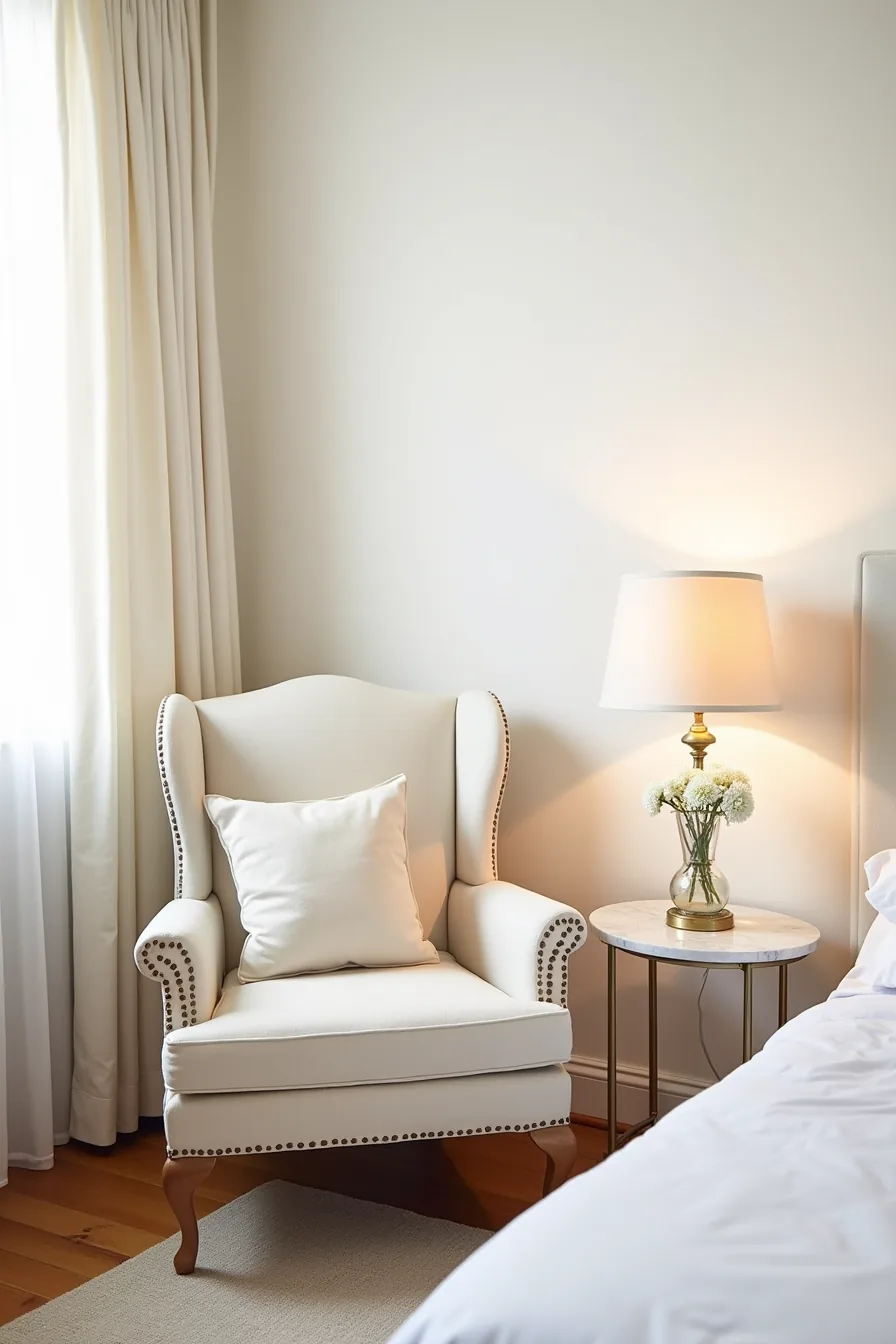
A cream linen wingback chair anchors this corner with the quiet confidence you find in boutique hotel lobbies. Its high back and rolled arms create a defined silhouette that reads as intentional, not incidental, even when the chair sits at an angle rather than flush against both walls. The linen upholstery softens the space acoustically, which matters more in bedrooms than you might expect, hard surfaces bounce sound, and a fabric chair absorbs some of that ambient noise.
Layer the chair with a matching throw pillow in a slightly deeper neutral tone to add depth without introducing competing colors. A marble-top side table beside the chair gives you a stable surface for the glass water pitcher and single flower stem vase, practical touches that double as styling elements. The brass table lamp with a linen shade casts a warm, diffused glow at eye level when you read, and the soft neutral area rug underneath defines the entire seating zone as separate from the rest of the room.
This setup suits bedrooms with at least 4 feet of clearance in front of the chair, since wingback designs need breathing room to open and close fully. Bedroom Corner Chairs for a Polished Hotel Feel work best when the palette stays restrained, creams, warm grays, and soft taupes, so the corner feels expensive without relying on pattern or bold color. The marble top needs sealing annually to prevent etching from water rings, and the linen cover will require professional cleaning rather than machine washing.
Budget-Conscious Corner Chair Solutions
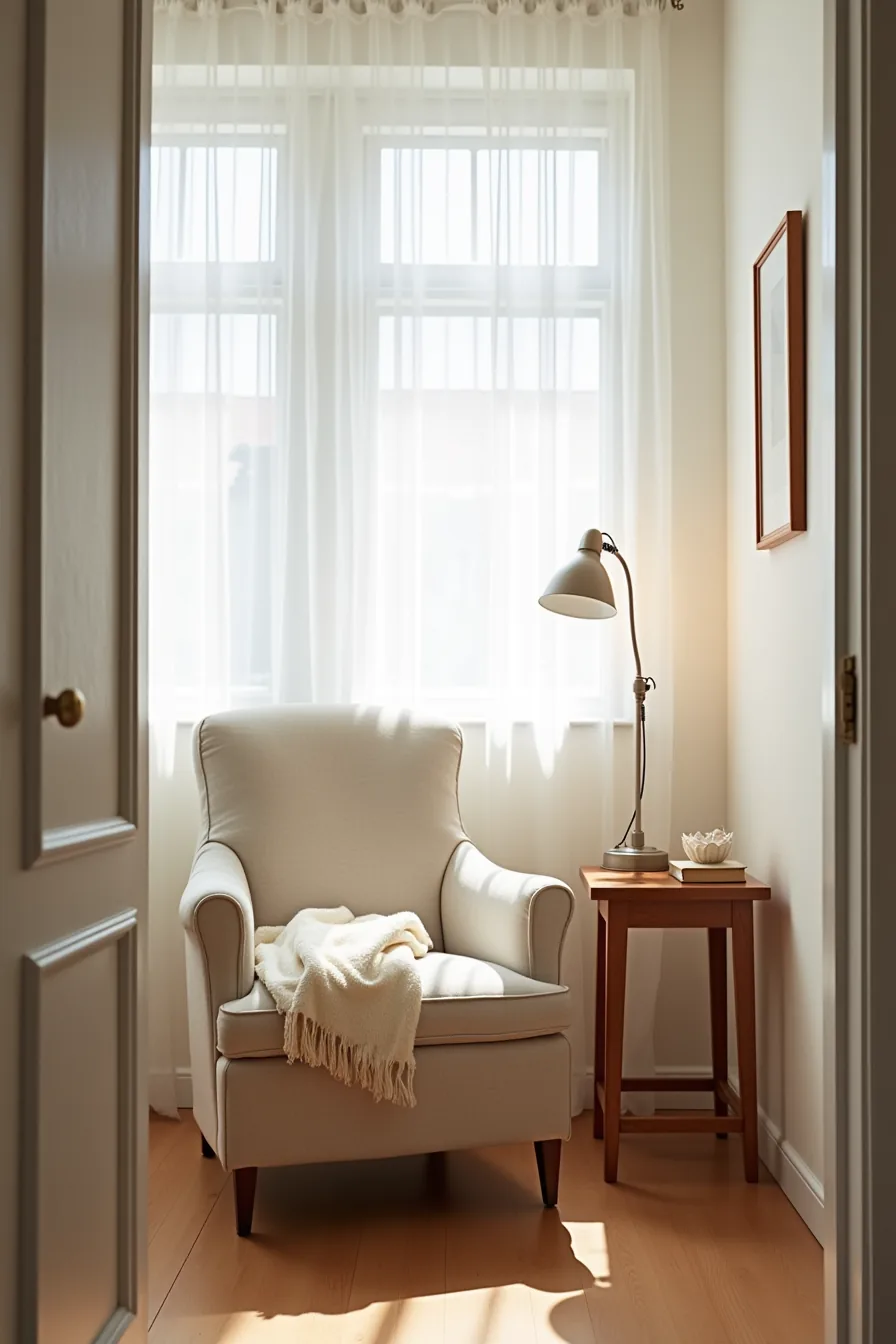
You don’t need a designer budget to make a bedroom corner feel finished. A reupholstered thrift-store armchair in a solid, durable fabric like tweed or performance velvet gives you the structure of a custom piece at a fraction of the cost, expect to pay $20–60 for the frame and $150–300 for professional reupholstery if you skip the fancy welting and go with a straight skirt.
Pair it with a simple wooden side table you’ve refinished yourself; a $10 thrift find with a fresh stain and new hardware looks intentional next to a clip-on reading lamp attached to the table edge, which saves you the cost of an end-table lamp and frees up surface space. Fold a cotton throw blanket over the seat to hide any imperfections in the upholstery and add a layer of texture that reads as styled, not accidental. This route suits renters and first-time homeowners who want a curated look without committing to expensive pieces they might not keep long-term.
Adapting Your Corner Chair to Room Size and Layout
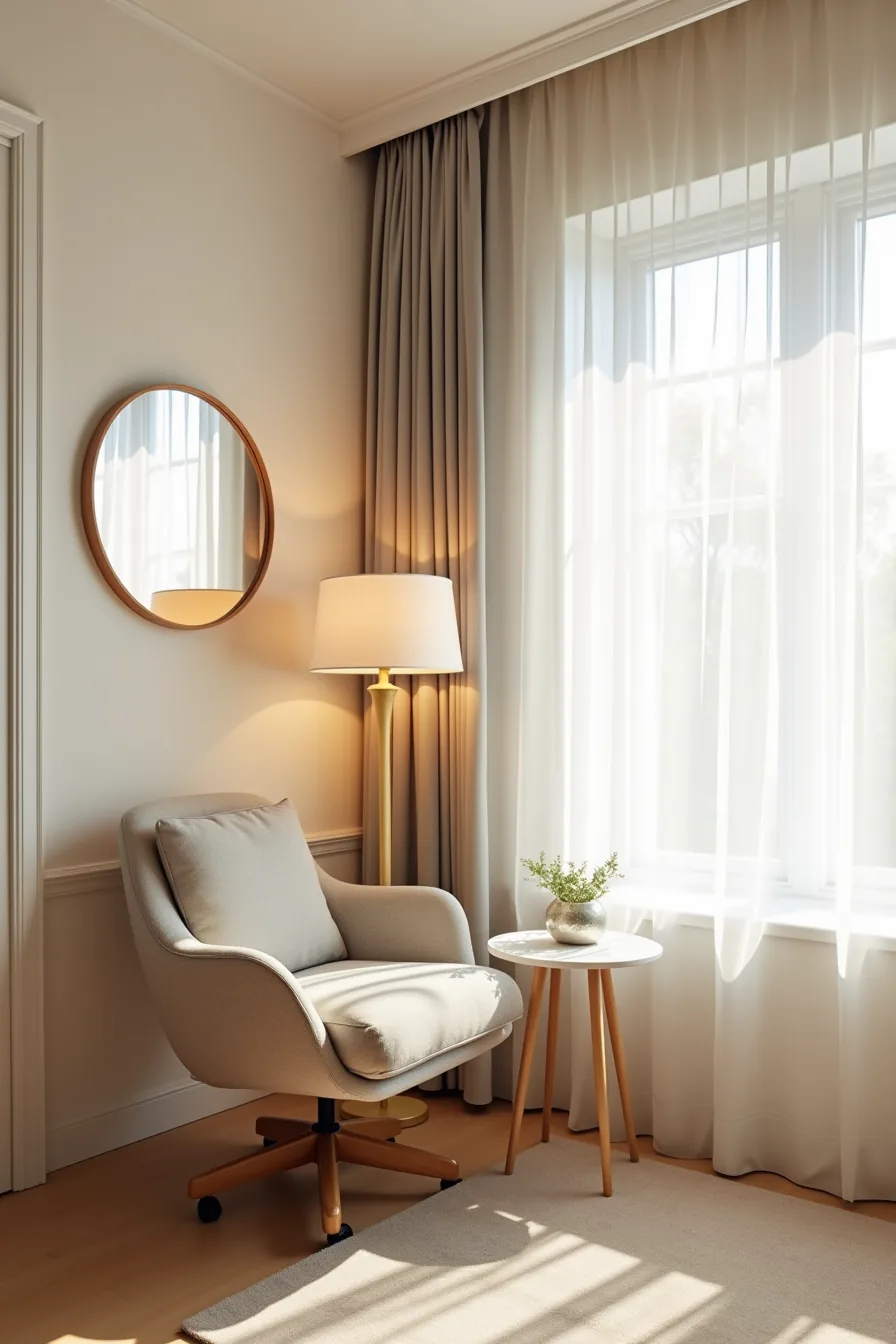
Before you buy, measure the door swing radius and the clearance from the chair’s front edge to the nearest walkway. In a tight bedroom with a 30-inch doorway, you need at least 24–28 inches of open floor in front of the seat to avoid bruising your shins on late-night bathroom trips. A compact swivel chair with a 22-inch seat depth fits a small nook where a standard armchair wouldn’t, and the swivel function lets you rotate toward the bed for reading or toward the room for conversation without moving the base.
Pair it with a narrow side table no deeper than 12 inches to preserve that clearance, and mount a small round mirror on the wall above to bounce light into the corner rather than adding a bulky floor lamp that crowds the space. In a standard bedroom, position the chair diagonally across the corner, not squared off, so the armrests sit parallel to the walls and the back angles into the corner, which visually softens the room’s hard lines and opens up the floor area. For a master suite with French doors or a large window behind the chair, keep the chair’s back below the window sill line (most sit 30–34 inches high) so you don’t block natural light or the view.
Your 20-Minute Starting Point
Walk into your bedroom and stand at the doorway. Look at the corner you’re considering, measure the floor space and note how much clearance you need to open drawers, doors, and walk past comfortably. That single measurement will eliminate half your options before you browse a single product page.
Then grab a dining chair from your kitchen and place it in that corner temporarily. Live with it for two days. If the proportions feel right and the traffic flow works, you can confidently invest in the real piece.
If it feels cramped, scale down your plans.
Frequently Asked Questions
What size chair fits best in a bedroom corner?
Measure your corner’s floor footprint first. A standard armchair needs roughly 30–36 inches of width and depth; a slim accent chair works with 24–28 inches. Leave at least 18 inches of walking clearance around it.
Can you put a chair in a bedroom corner if the room is small?
Yes, if you choose a compact design, an armless chair, a small boudoir chair, or a folding seat. Keep the profile low and visually light, and place it diagonally to avoid blocking door swings or closet access.
How do you style a corner chair to look like a hotel bedroom?
Anchor it with a small side table, a table lamp, and a folded throw. Choose a neutral upholstery with one textured accent, linen, bouclé, or leather. Keep the palette monochromatic and add one sculptural object for a curated feel.
What’s the cheapest way to add a chair to a bedroom corner?
Check thrift stores, Facebook Marketplace, or Craigslist for a solid wood or metal-frame chair under $50. Reupholster the seat cushion yourself with fabric and a staple gun, or simply add a washable cushion and throw to refresh the look.