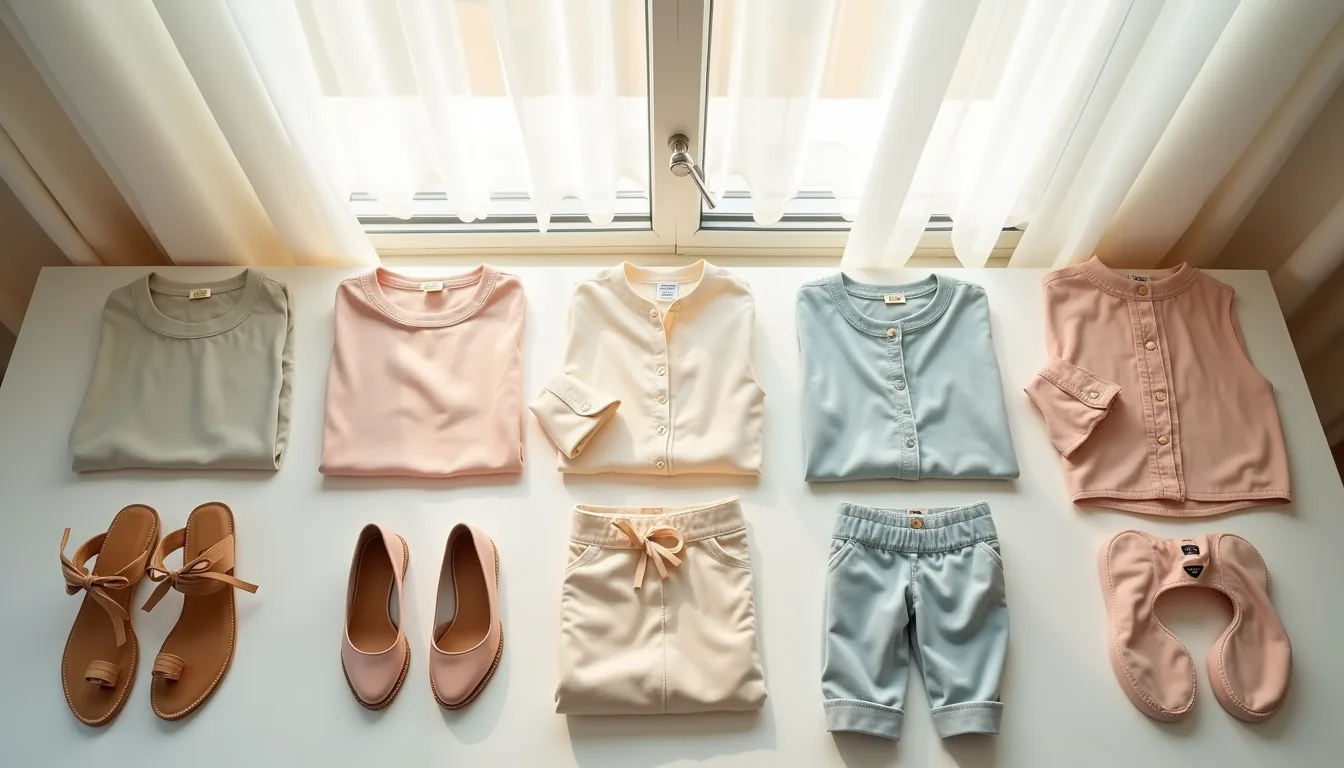

Your bedroom wardrobe ideas should start with what you actually store, not with how the doors look, because every layout, material, and budget decision flows from that inventory. Sort your hanging items, folded stacks, shoes, and accessories first; the count dictates your depth, rod length, and drawer configuration. Skipping this audit leads to wasted space or cramped access.
The six layouts below each solve a specific storage profile, from a 4-foot reach-in for a capsule wardrobe to a full wall of custom cabinetry for seasonal bulk, and each comes with its own scale, cost, and upkeep trade-offs you’ll need to weigh before you buy.
Key takeaways
- Measure your clothing by category before choosing a wardrobe, since a person with 50 folded sweaters needs different shelving than someone with 80 hanging garments.
- For small bedrooms, prioritize a single tall wardrobe (around 72 inches high) over a wide low unit, as vertical storage frees up floor space and works better in rooms under 100 square feet.
- Budget and renter solutions favor freestanding IKEA PAX or similar modular frames that assemble without wall mounting, while a built-in or custom fitted wardrobe remains the long-term investment for permanent homes.
- Plan a seasonal rotation every six months, moving off-season items to high shelves or under-bed bins, so your wardrobe’s usable capacity stays roughly 20% below its maximum to avoid clutter.
Assess Your Daily Routine and Clothing Volume
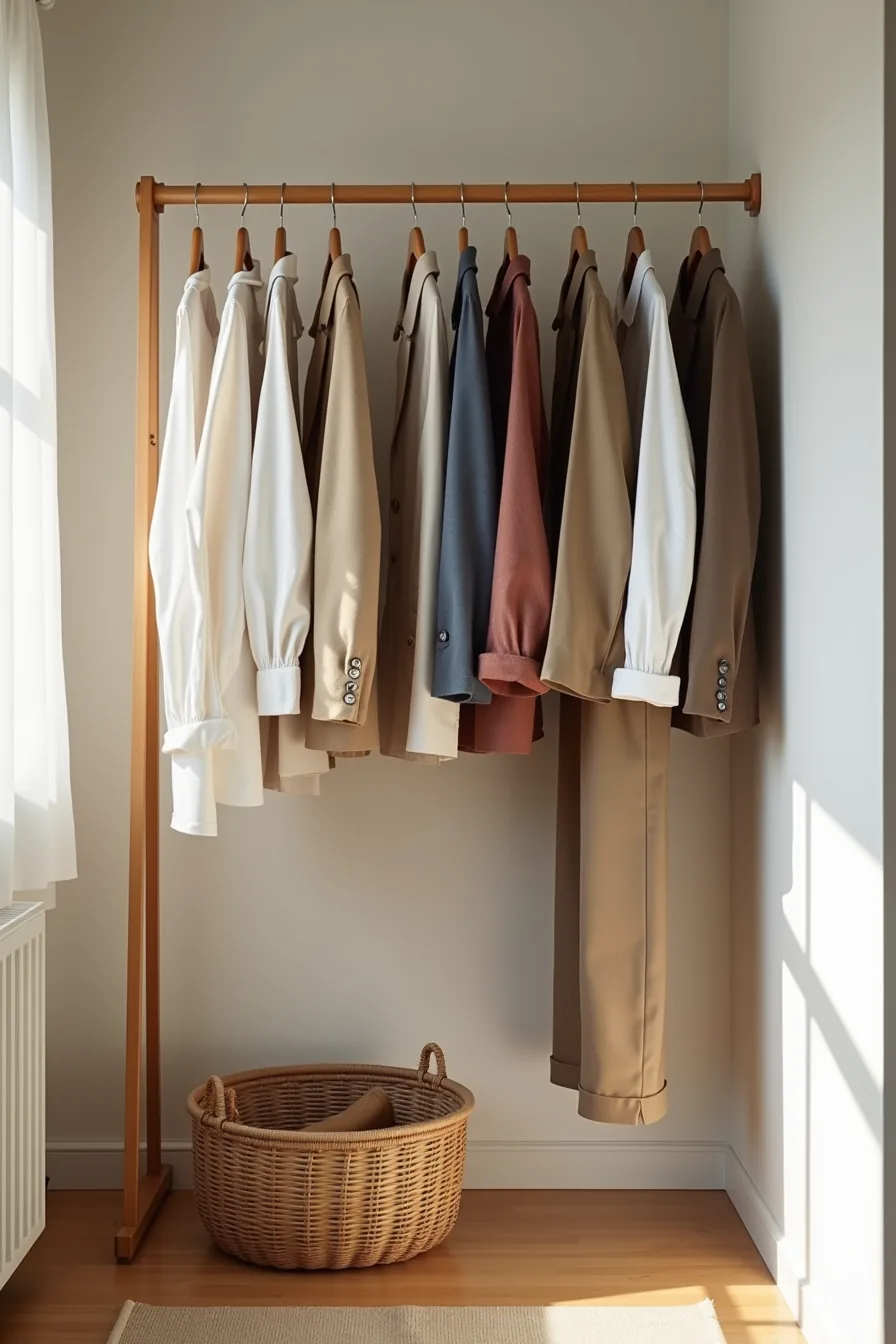
Before you buy a single hanger, plan your bedroom wardrobe around your daily routine. Track what you actually reach for over two typical weeks, work blazers, casual shirts, and trousers likely dominate, while occasion wear gathers dust. This audit tells you exactly how much hanging space you need versus how much can live in drawers or baskets.
A setup with 15–20 garments clustered by category on a single open rod works because it matches the volume most people cycle through in a fortnight. Group work blazers together, keep casual shirts adjacent, and stack trousers at the end so your morning grab takes seconds. Place a woven basket on the floor beneath the rod for off-season items, this keeps them accessible, not buried, and prevents the rod from becoming overcrowded with pieces you won’t wear for months.
This approach suits anyone with a modest wardrobe who prioritizes speed over display. If you own more than 30 hanging garments, budget for a second rod or deeper storage, because an overstuffed single rod makes every item harder to see and retrieve.
The Compact Wardrobe Approach for Small Bedrooms
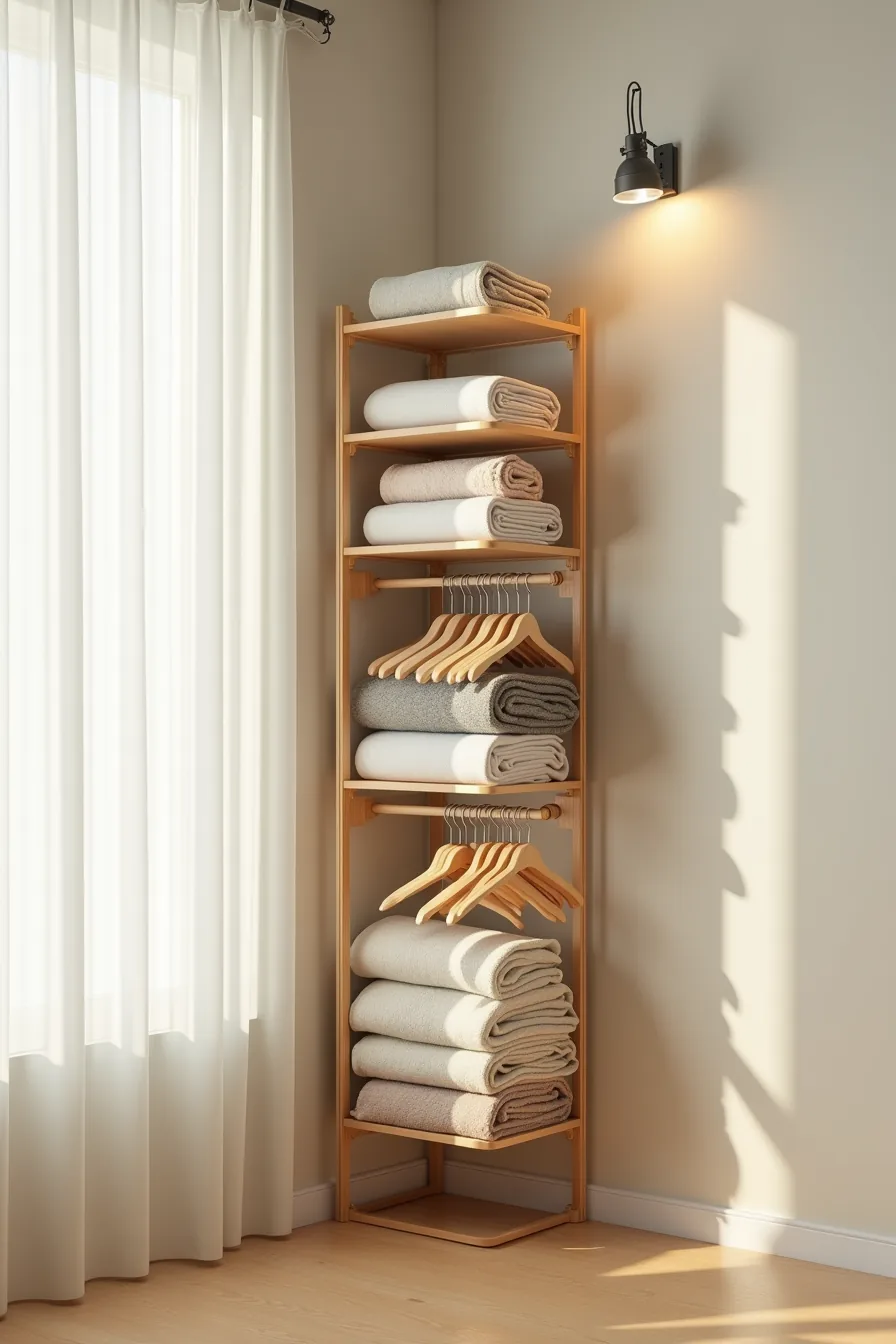
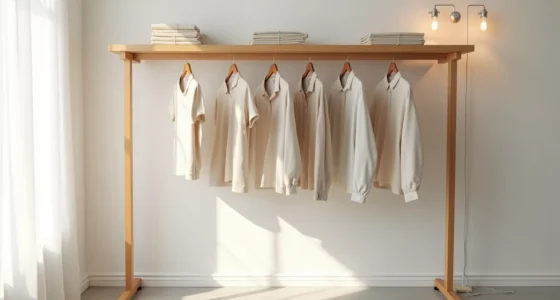
In rooms under 120 square feet, your wardrobe must work vertically or it will consume your floor plan. A tension rod installed floor-to-ceiling in a narrow corner exploits otherwise dead space, and when fitted with cascading wooden hangers, it can hold 8–10 folded items stacked horizontally per hanger. This configuration suits a capsule wardrobe of 30–40 pieces, giving you the equivalent of a small armoire without eating into walking space.
The shallow shelf above the rod, displaying rolled sweaters, doubles as a visual inventory, you see every option at a glance without rummaging. This setup works best for renters or anyone avoiding permanent fixtures, since tension rods install in minutes and leave no wall damage. Be pragmatic about the rod’s weight limit: tension rods typically hold lightweight garments well but struggle under heavy coats, so reserve this area for knitwear and shirts.
For the complete vertical silhouette, store shoes on the floor below the lowest garment to maintain a clear, uninterrupted line.
Closed vs Display Storage: When to Use Each
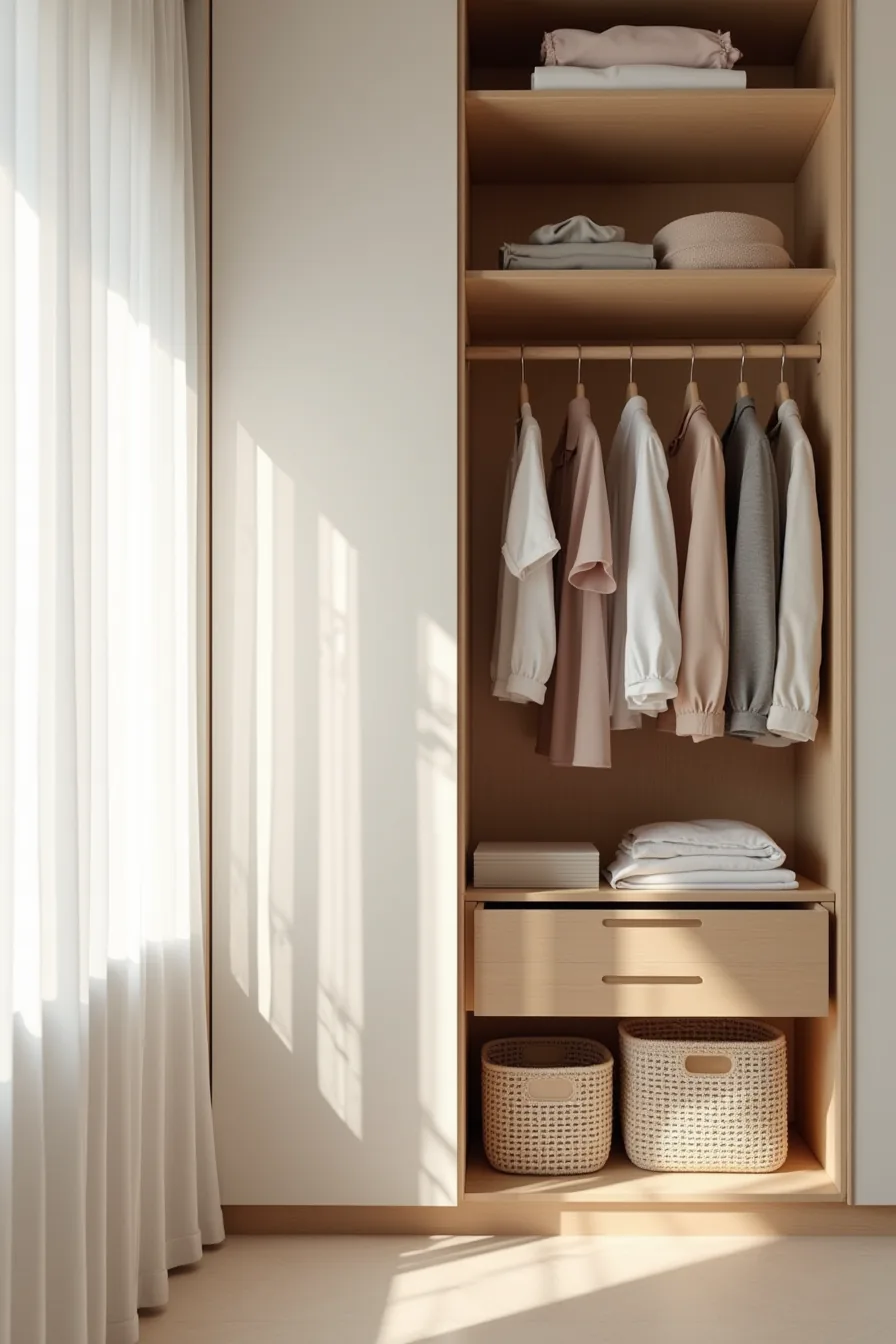
The split between closed and display storage comes down to a single question: what do you want your room to do at 7 a.m.? Solid-door cabinets like the one on the left hide visual noise, which matters in a bedroom where you wake to whatever your eyes land on first. That enclosed system also traps less dust than open shelving, meaning you can extend time between deep cleans to every 4–6 weeks rather than weekly wipe-downs.
Choose this side if you keep a mix of textures, colors, or occasional pieces that don’t coordinate into a palette.
Open shelving works when your clothing doubles as decoration. The right side of this setup uses stacked folds and woven dividers to create rhythm, and because you see every item, you’ll actually rotate your wardrobe more often, out of sight truly is out of mind. This route suits a curated color story where 80 percent of pieces share a neutral base.
The trade-off: open shelves collect lint and require tidier folding habits, since a single crooked stack reads as chaos. If you’re weighing closed vs display storage, measure how much visual stimulation you tolerate, if you value calm over convenience, close the doors.
Boutique-Style Wardrobe for Medium Bedrooms
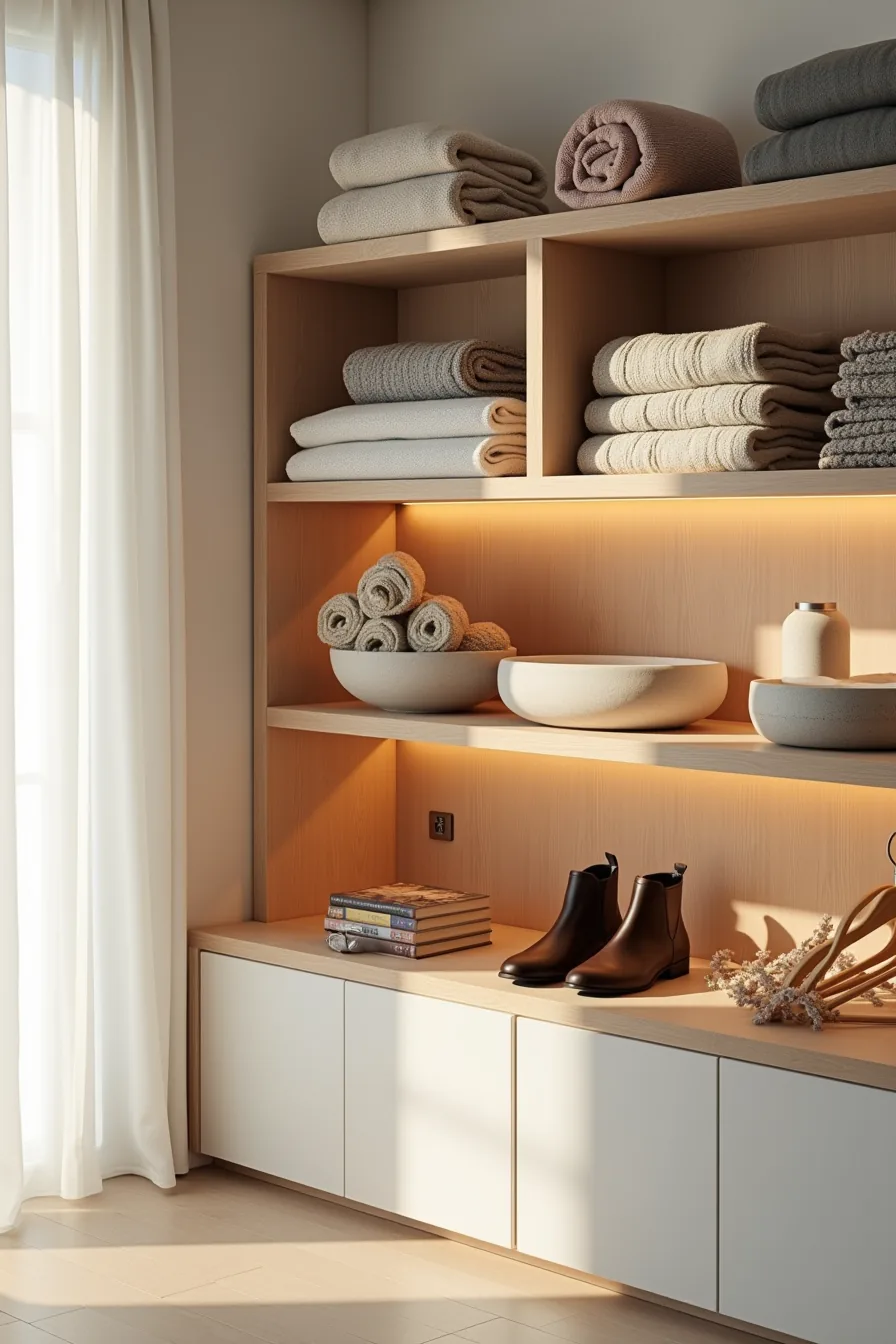
A boutique-style wardrobe transforms a 120–200 square foot bedroom into a personal retail experience. The wall-mounted system uses wooden shelves at graduated depths, roughly 12–16 inches for folded sweaters, 10–12 inches for shoe displays, to create visual layering without consuming floor space. You’ll typically need 4–6 linear feet of wall to accommodate 20–25 garments comfortably.
The setup works because it separates clothing into zones: folded knits stack no more than five deep to prevent wrinkles, while 3–4 hanging pieces on quality wooden hangers (choose 1.5-inch shoulder width to preserve jacket shape) anchor the top rail. A ceramic bowl corrals rolled scarves, doubling as a styled catchall that eliminates drawer clutter. Leather shoes sit on the lowest shelf, their natural patina adding warmth that fabric alone can’t achieve.
This approach suits someone who wears 80 percent of their closet weekly and enjoys the ritual of selecting pieces. It demands disciplined folding and a neutral palette, introduce no more than two accent colors or the display reads as clutter rather than curation. Dust every 1–2 weeks, and rotate seasonally to keep the composition intentional.
Budget-Friendly, Renter-Friendly, and Investment Routes
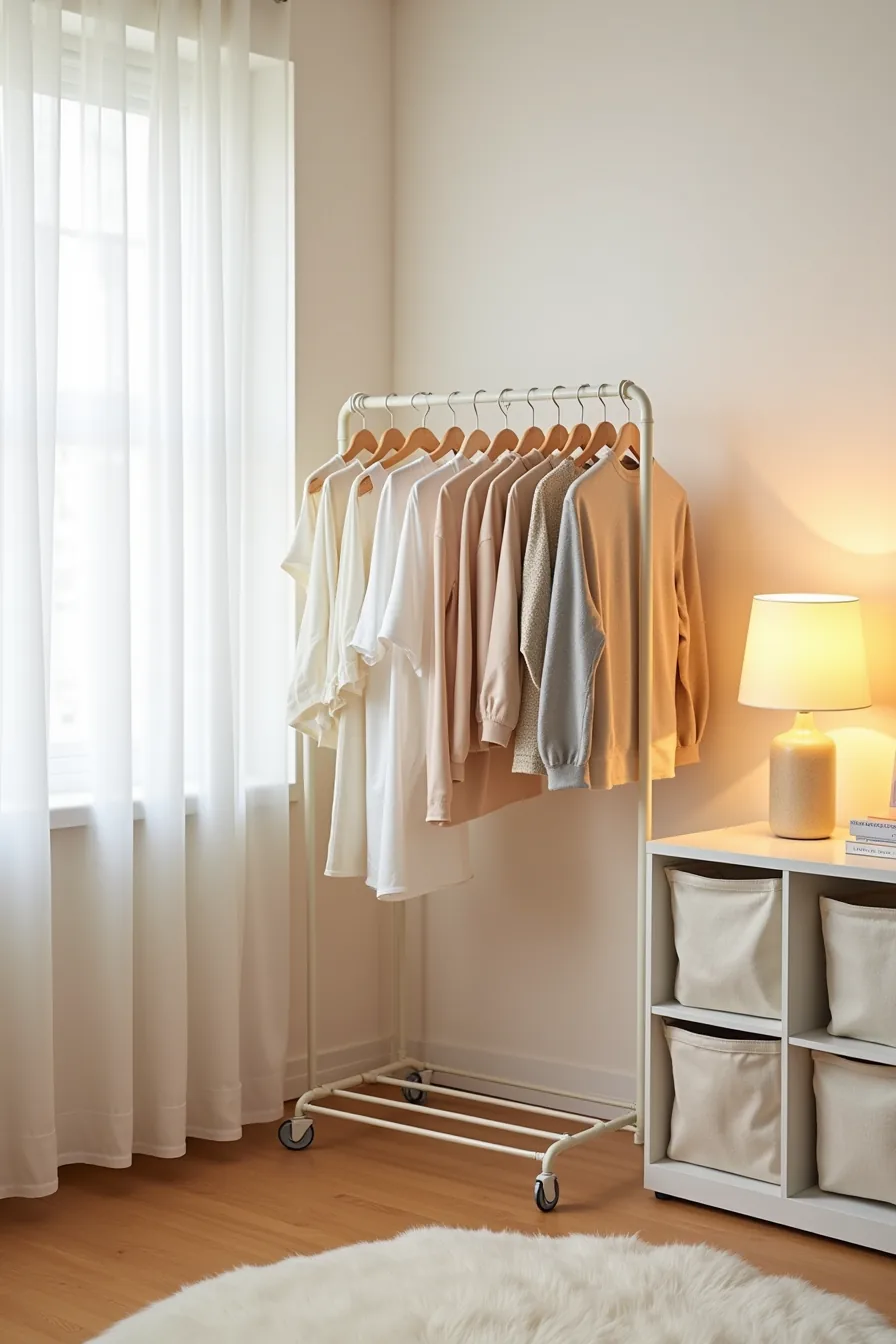
If you’re working with under $300, a freestanding rack paired with a plastic cube organizer offers the fastest route. The rack’s removable hooks let you shift 12–15 garments between zones in seconds, while fabric bins on the cube organizer catch folded items you’d otherwise pile on a chair. Expect this setup to last 2–3 years before the rack’s joints loosen, fine for a first apartment, but not a long-term solution.
Renters should stick to damage-free components: the freestanding rack requires zero wall fasteners, and the fabric bins slide out for easy transport. You’ll lose the dust protection of a closed wardrobe, so budget for garment covers on anything you wear less than once a month.
For homeowners, a built-in system costs 10–20 times more but delivers custom hanging heights, integrated lighting, and drawers that outlast a decade of daily use. The trade-off: you commit to a footprint that survives your next move only as a selling feature.
Maintenance, Seasonal Rotation, and Scaling Up
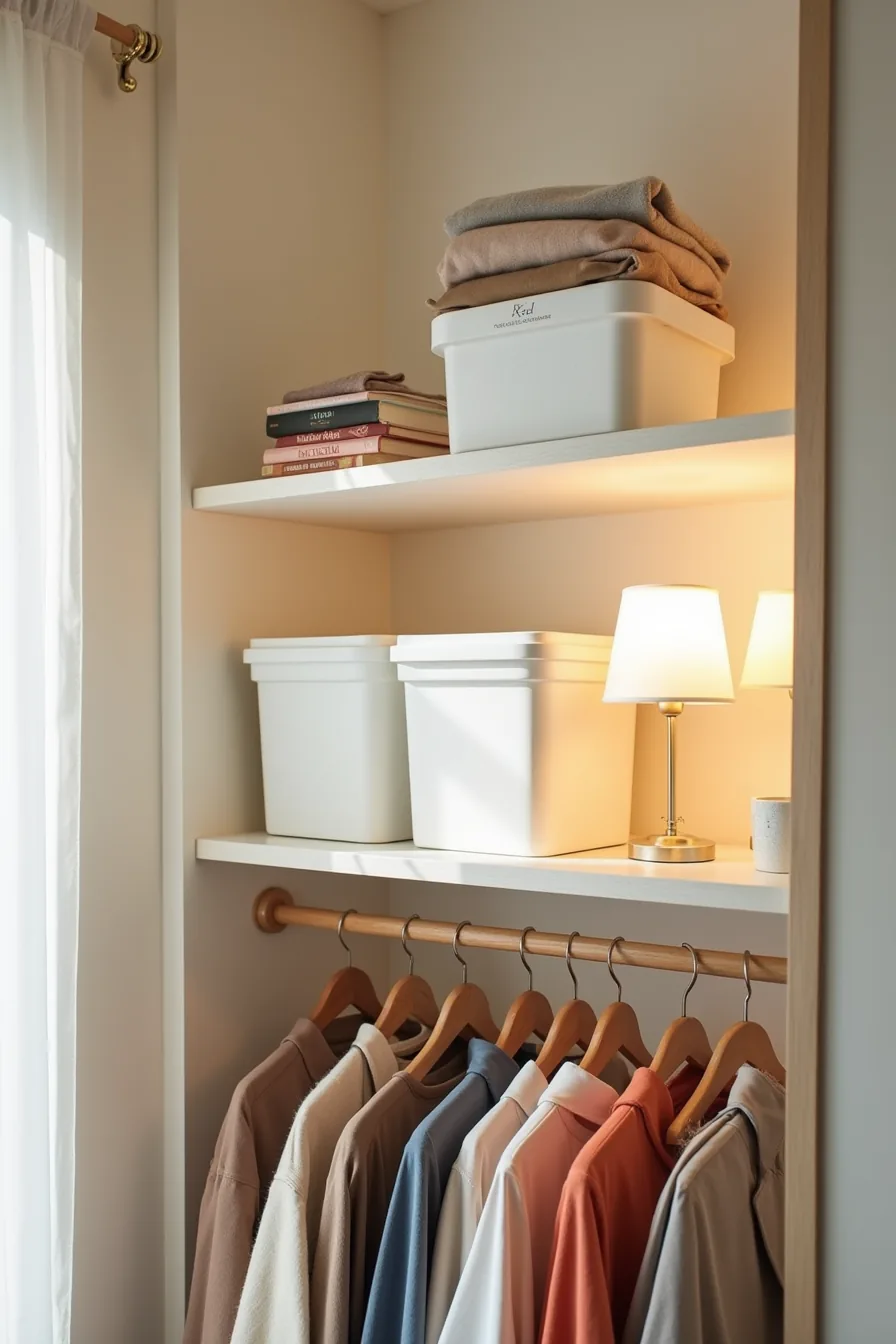
Your wardrobe’s lifespan depends on dust control and rotation habits, not just construction quality. Store off-season items in clear plastic storage boxes stacked on upper shelves, then slip cedar blocks inside to deter moths without chemical smells. Folded knits belong in these boxes; anything on hangers, like the active-season shirts on your lower shelf, needs breathing room, so keep hanging density below 60% of the rod’s capacity.
Rotate twice a year, timed to daylight-saving changes, and use each swap to inspect for stains or loose seams. When your collection outgrows the system, add one modular component, a second freestanding rack or a rolling cart, rather than replacing everything. This scales your storage without reworking the layout, and it keeps your most-worn pieces within arm’s reach while the boxes handle the rest.
What to do first
Before you buy anything, measure your floor-to-ceiling height and the wall length you’ve to work with. That single number determines whether you can use a tall reach-in, a modular system, or a freestanding piece, and it prevents the most common sizing mistakes.
If you’re renting, start with a tension rod and fabric panels; it costs under $50 and requires no drilling. Homeowners with solid walls should invest in a built-in or modular system with internal drawers, which outperforms open shelving for long-term storage.
Your next step: measure the wall, then decide between open rail, closed doors, or a mix based on what you own.
Frequently Asked Questions
How much closet space do I actually need for a functional bedroom wardrobe?
You need roughly 24-30 inches of hanging rod per person for daily wear, plus 12-18 inches for folded items. Small walk-ins run 4×6 feet; reach-in closets need at least 24 inches of depth.
Can I use bedroom wardrobe storage ideas in a room with limited wall space?
Yes. Use freestanding wardrobes against the shortest wall, corner units, or ceiling-mounted rails. A 30-inch-wide armoire or a hanging rail with a curtain can fit in a 3-foot gap without blocking circulation.
What’s the difference between a compact wardrobe and a boutique-style wardrobe?
A compact wardrobe maximizes density with double hanging rods, pull-out drawers, and narrow shelving in a 24-30 inch footprint. A boutique-style wardrobe prioritizes display, featuring open shelving, lighting, and visible garment rails, requiring 36-48 inches of width.
How often should I rotate seasonal clothing in my bedroom wardrobe system?
Rotate twice a year, at the start of spring and fall. Store off-season items in vacuum bags or bins on upper shelves. This keeps your daily wardrobe to 30-40 pieces and reduces clutter.