
Before you buy a single storage bin or browse a single headboard, take a full inventory of what you actually need to store, clothes, linens, seasonal gear, or paperwork, because every bed designs with storage decision you make should start from that list, not from a photo you like. That inventory dictates whether you need deep under-bed drawers for bulky sweaters or shallow trays for folded t-shirts, and it separates a genuinely useful purchase from a decorative impulse. Once your list is set, the following six approaches, from renter-friendly risers to fixed platform builds, offer distinct trade-offs in access, capacity, and cost.
Key takeaways
- Audit first, then buy: Sort your bedroom items into keep, relocate, and discard piles before measuring for storage, because this prevents you from purchasing systems sized for clutter you no longer need.
- Choose lift-up frames for bulky items like luggage and seasonal bedding, but reserve them for low-use gear since accessing them requires clearing the bed surface each time.
- Prioritize fixed drawers for daily-use clothing and linens, as they offer full pull-out access without moving the mattress, though they demand a 12-18 inch clearance around the bed for smooth operation.
- Match the system to your lease: If you rent, opt for freestanding storage beds or adjustable bed risers with fabric bins, which install without drilling and can be removed in under an hour without repair costs.
Audit Your Belongings Before Choosing a System

Start by pulling everything out and sorting it on the floor, exactly like the flat lay setup here: an open suitcase, stacked sweaters, shoe boxes, seasonal blankets, and throw pillows. Group these items by frequency of use and size. Daily-use items like throw pillows belong in easy-reach zones, while off-season blankets and extra shoes can sit deeper.
Measure the footprint your piles occupy, this gives you a realistic cubic-foot target for the storage capacity you need. A queen bed frame with drawers typically offers 20-30 cubic feet of usable space, so compare that against your measured pile to see if you need a lift-up frame with a deeper cavity instead. Skipping this audit is the most common reason people end up with a Bed Designs With Storage system that looks tidy but can’t actually contain their belongings.
Fixed Under-Bed Drawers vs. Lift-Up Bed Frames

The pull-out drawer system on the left suits people who access their storage several times a week. Each drawer glides on full-extension runners rated for 50-75 pounds, so you can load them with off-season sweaters or extra bedding without worrying about sagging. Drawers give you compartmentalized organization, each one holds a distinct category, which makes labeling and retrieval straightforward.
The trade-off is the 10-12 inch clearance they require above the floor, which raises your mattress height noticeably.
The hydraulic lift frame on the right compresses your entire under-bed area into one continuous cavity, typically 12-16 inches deep from slats to floor. That single opening handles bulky, rarely-needed items like luggage, folded holiday decorations, or a second set of linens for guests. You sacrifice the ability to grab something mid-sleep-cycle without lifting the entire mattress, and the gas pistons add $200-400 to the frame’s cost compared to a drawer-equipped model.
Renters should lean toward lift frames since they bolt together without cutting into existing structure; homeowners investing in permanent millwork usually find drawers more practical for daily use. Either way, ensure the cavity clears your baseboard height, most run 4-6 inches, or your bed will sit too far from the wall.
Built-In Bed Storage for Small Room Space Savers
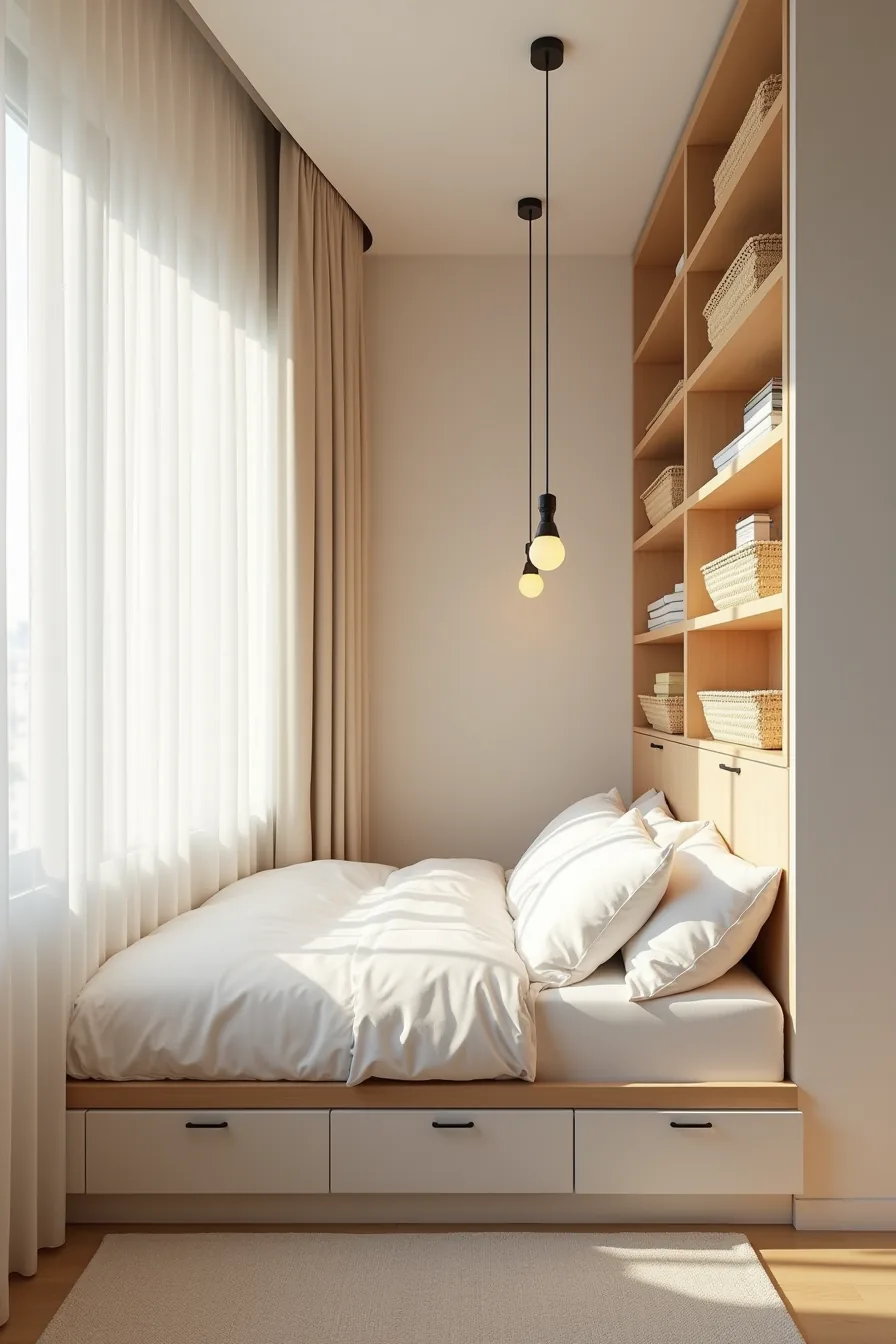
A low platform bed with built-in cubbies transforms the wall behind your pillow into a vertical dresser, reclaiming floor space in rooms under 100 square feet. The setup pairs a platform base with roughly 8-10 inches of floor clearance, enough for a vacuum or storage bins, but low enough to keep the visual mass minimal. Along the headboard wall, cubbies run in a grid of 12-16 inch squares, each one holding a woven basket that slides out for access without shifting the bed.
This system suits small rooms because it stacks storage upward, not outward. The headboard shelves hold daily-use items, glasses, a book, folded sweaters, while the baskets corral smaller clutter like chargers, socks, or accessories. To reproduce it, mount the cubby wall first, then position the platform bed against it; leave a 2-3 inch gap between mattress and shelving to avoid moisture buildup.
Use a platform with short legs or a solid base so the cubbies, not the floor, do the heavy lifting. For renters, anchor the shelving with brackets rated for 30-50 pounds per shelf, and choose baskets with cut-out handles so you can pull them out one-handed when the bed is tight against the wall.
Adjustable and Renter-Friendly Storage Bed Ideas

If you can’t modify your walls or frame, a bed skirt with pockets turns the perimeter of your mattress into a shallow but accessible storage ring. The fabric panels hang roughly 12–14 inches from the box spring to the floor, with each pocket holding items up to a few pounds, think reading glasses, remote controls, or a tablet you grab nightly. Because the pockets sit at floor level, they suit low-traffic sides of the bed rather than the main walkway.
Rolling under-bed containers handle the heavier load without a single screw. A pair of 15–20 inch wide bins on casters slides beneath a standard 12–18 inch bed clearance, and you pull one out with your foot when needed. Choose opaque lids if you want a cleaner look; clear ones help you spot items at a glance but show dust.
For install, simply lift the mattress, slide the containers under the frame, and confirm the casters clear any center support legs, a common blockage in queen and king frames. Wash the bed skirt on a gentle cycle monthly, since floor-dragging fabric collects dust and pet hair quickly. This whole system relocates in minutes, making it ideal for a dorm, a one-year lease, or a rental where the landlord forbids drilled anchors.
Materials, Labeling, and Maintenance for Clutter-Free Bedrooms
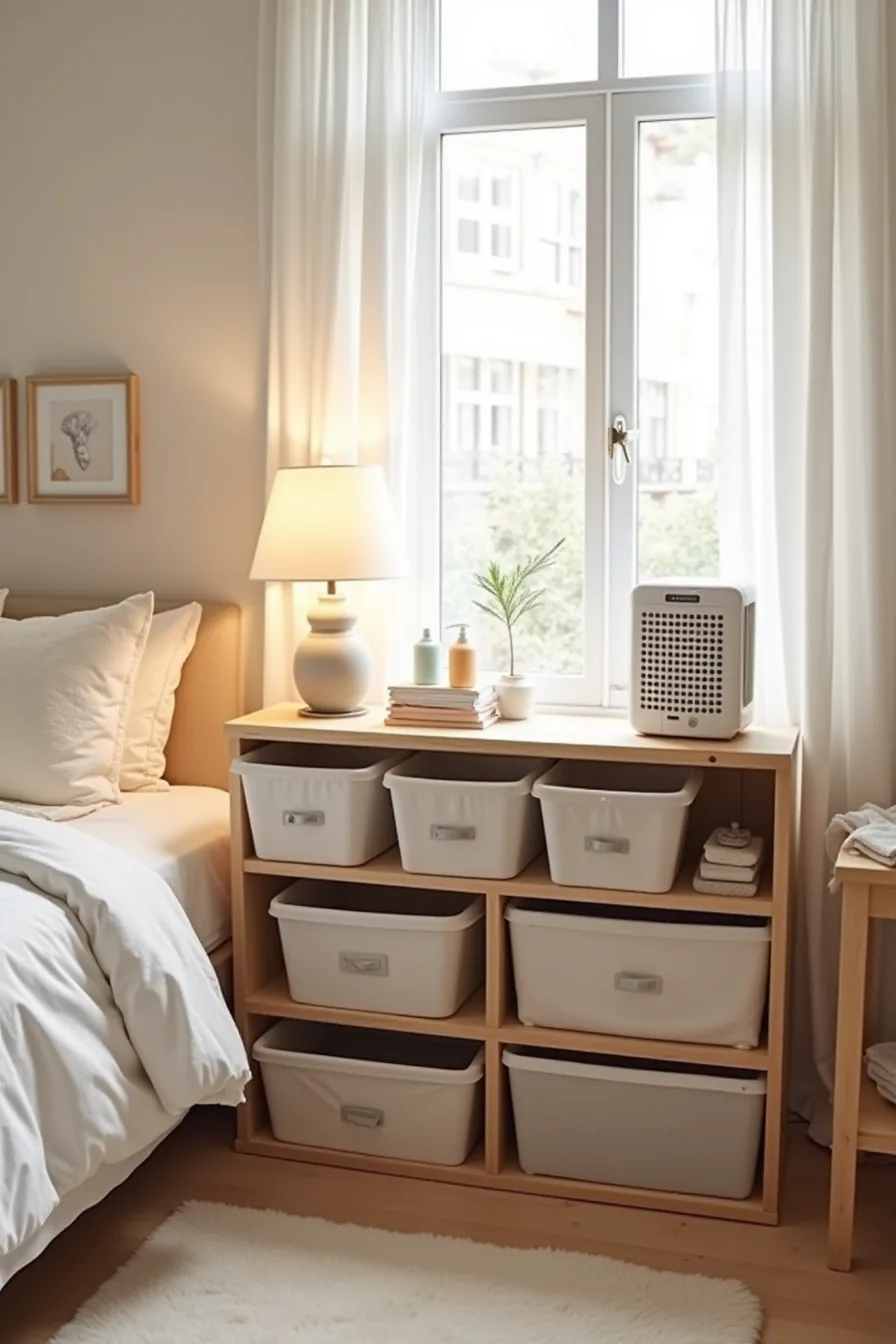
Your container material dictates how often you clean and what you can safely store. Clear plastic bins seal out dust and moisture but trap humidity; breathable fabric containers prevent mildew on linens but let dust settle on contents. Wooden boxes add visual warmth and stack well, though they weigh more and require occasional oiling.
For seasonal clothing, stick with breathable cotton or canvas; for electronics and paperwork, sealed plastic wins.
A small dehumidifier in the corner, a 200–400 ml capacity unit, keeps under-bed air dry if you live in a humid climate or store anything prone to warping. Run it daily during damp months and empty it weekly. Keep a microfiber cloth and a soft brush nearby; wipe containers down every two months and vacuum fabric bins quarterly.
Label the short side of each bin with a handheld label maker or masking tape and permanent marker, facing the label toward the foot of the bed means you read it without crouching. A tag system covering what’s inside, the season, and the last-use date prevents the “which box holds the winter blankets” search. Never store perishables, flammable liquids, or items over 15–20 pounds per bin in rolling containers, as frequent pulling strains the casters and the frame above.
Sizing and Placement for Medium and Large Bedrooms

For rooms over 200 square feet, resist the urge to fill the space. A king-size bed with dual storage drawers on either side works best when you leave at least 36 inches of clearance around the footprint, enough to open the drawers fully without forcing you to shuffle sideways. Measure the drawer depth before purchasing; most under-bed drawers extend 18–24 inches when open, so position the bed so that extension path doesn’t intersect the door swing arc.
Place the bed against the longest uninterrupted wall, then position the dresser across the room on the opposite wall. This creates a visual axis that draws the eye across the floor space rather than toward the storage hardware. The walking path from the door to the bed remains clear when the dresser sits at least 30 inches from the bed’s footboard, that gap accommodates a person bending to access lower drawers.
Match the bed’s wood tone to the dresser’s finish within one shade of warmth, but vary the hardware style so the pieces read as a curated set rather than a matching suite. Center the bed on the wall; if nightstands flank it, keep their width within 10 inches of the bed’s height to preserve visual balance.
Where to start
Begin with the inventory step before buying anything. Measure your bed frame’s clearance and list what you actually need to store, this determines whether under-bed drawers, a hydraulic lift, or a headboard shelf will serve you best. Match the system to your floor type, mattress weight, and how often you access items.
For renters, prioritize freestanding units that don’t require modifications. Your next step: take five minutes to photograph your bed area and note the exact clearance height, then compare that number against the storage options you’re considering.
Frequently Asked Questions
How much weight can under-bed storage drawers typically hold?
Most under-bed drawers on casters handle 30–50 pounds safely, while heavy-duty drawer systems support 75–100 pounds. Always check the manufacturer’s weight rating and distribute heavier items evenly to prevent frame stress.
Can you add storage drawers to an existing bed frame?
Yes, if your frame has at least 6–8 inches of clearance. Measure the under-bed height first, then install rolling drawer units that slide independently. Avoid this option for platform beds with less than 5 inches of clearance.
What’s the best way to prevent moisture and dust in under-bed storage?
Use sealed plastic bins or vacuum bags inside drawers, and place a breathable cotton dust cover over the entire bed base. Add silica gel packets monthly in humid climates. Never store items directly on bare carpet.
Are lift-up bed frames worth the cost compared to drawer systems?
Lift-up frames cost 2–3 times more than drawer systems, but they offer easier access to bulky items like luggage and seasonal bedding. Choose drawers if you need frequent access to smaller items; choose lift-up if storage capacity matters more than convenience.