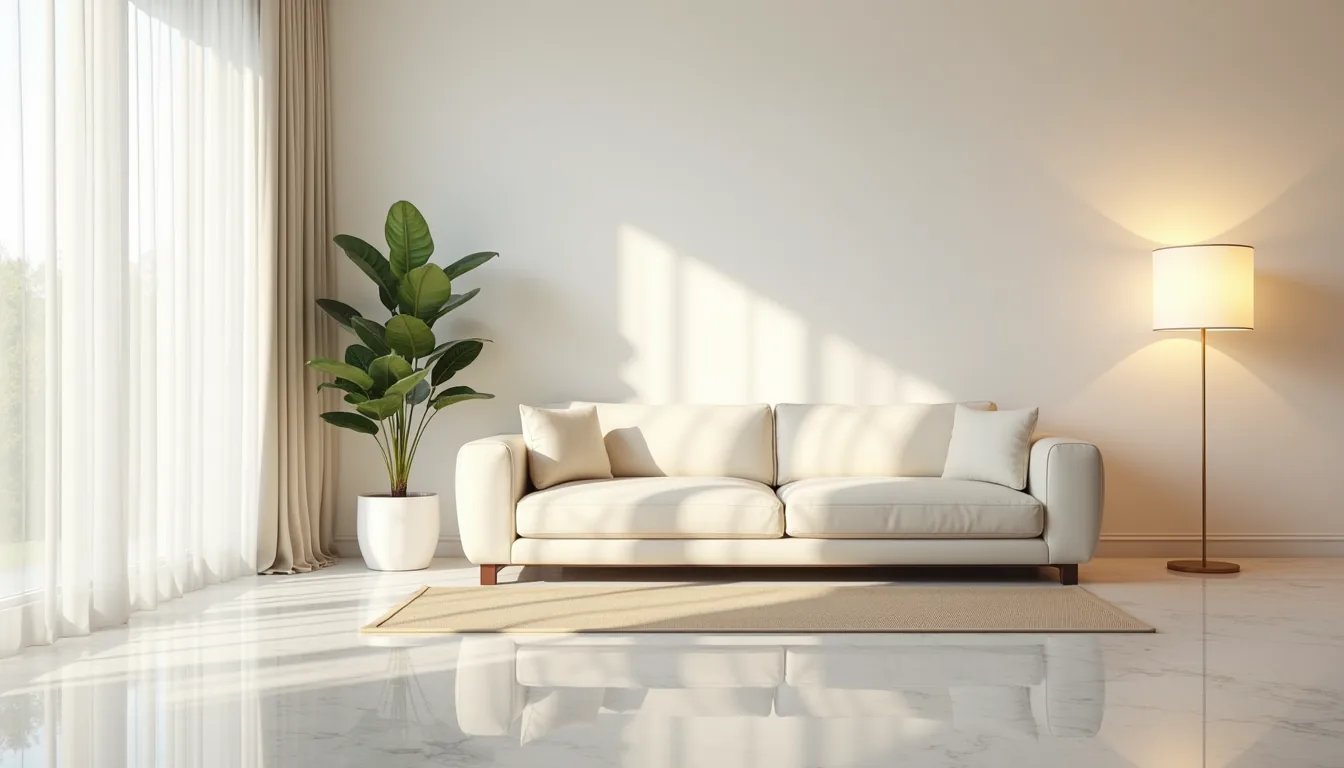
A marble floor living room is a permanent design decision, not a temporary styling choice, and the difference between a space that feels like a showroom and one that feels like home comes down to how you manage scale, contrast, and daily maintenance from day one. Get those three factors right, and you unlock a surface that cools your room in summer, reflects light to make small footprints feel larger, and anchors almost any furniture style. Get them wrong, and you face slippery zones, relentless streak marks, and a palette that fights every rug you own.
The six approaches below break down exactly which installation, finish, and upkeep routine matches your space, and your tolerance for mopping.
Key takeaways
- Choose honed marble if you want a matte, slip-resistant surface that hides scratches and requires far less upkeep than polished stone in high-traffic living rooms.
- Mix large-format marble tiles with a contrasting wood or stone border to visually expand a small room, keeping grout lines minimal and the pattern intentional.
- Anchor your seating with a rug that covers at least 60% of the floor area beneath the sofa and coffee table, leaving a 12-18-inch stone border exposed for balance.
- Swap in large-format porcelain slabs that mimic marble for a budget-friendly, chip-resistant alternative, expect to pay roughly 30-50% less than natural stone while gaining easier maintenance.
Polished Marble with Warm Textiles
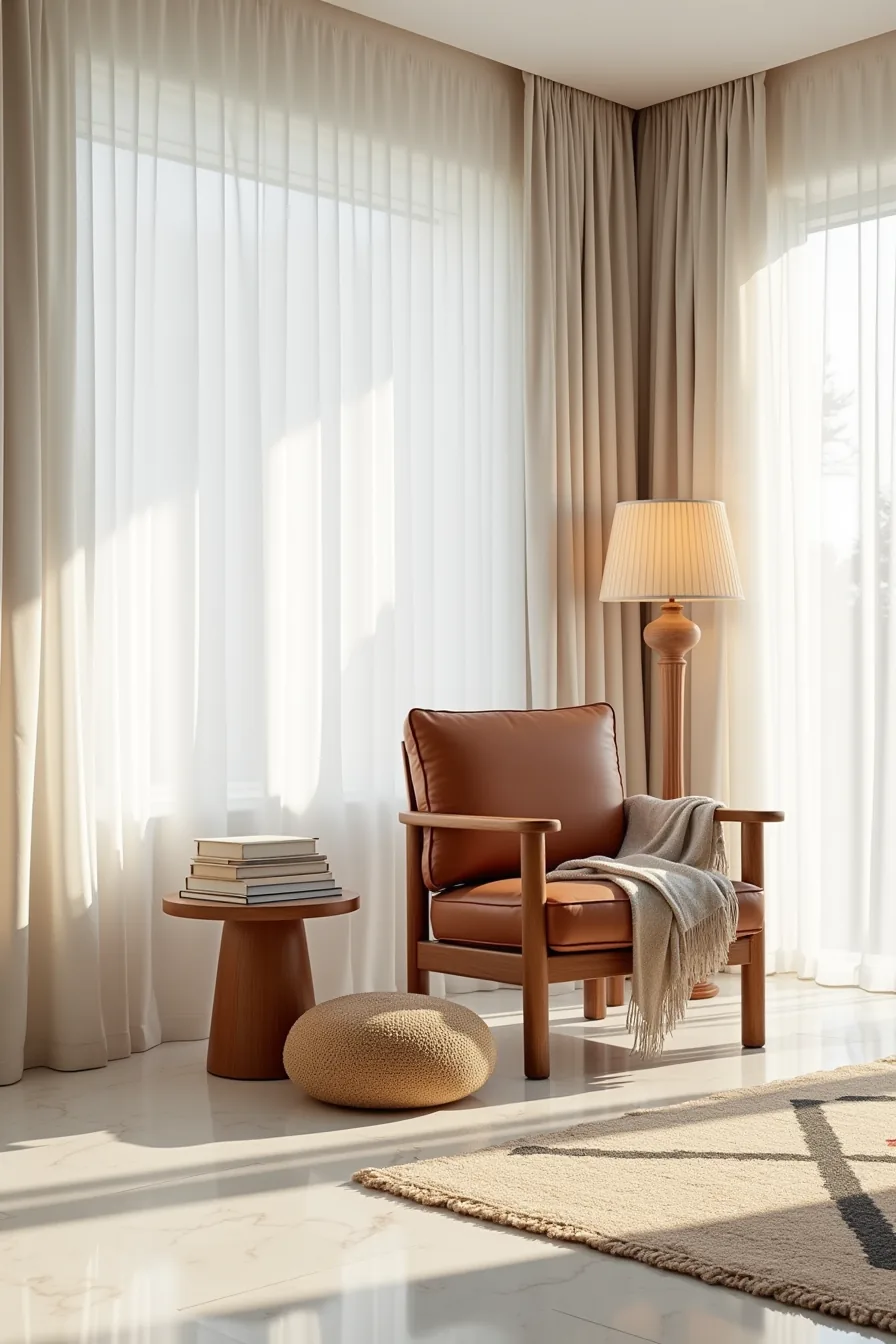
A polished marble floor living room reads cold on its own, that high-gloss surface reflects light and sound rather than absorbing them. The fix is layering textiles with contrasting texture and weight. A geometric patterned rug anchors the seating zone and breaks up the reflective floor plane, which matters most in medium to large rooms where bare stone can feel cavernous.
The cognac leather armchair introduces warm undertones that play against the marble’s cool gray veining, while the wooden side table adds an earthy counterpoint. Stack books flat on that table rather than upright, the horizontal lines echo the floor’s expansiveness. Drape a linen throw over the chair arm and place woven poufs beneath the table; both soften the transition between furniture and floor and give you flexible extra seating without committing to permanent pieces.
This approach suits anyone who wants modern luxury balance without surrendering comfort. Reproduction cost runs moderate: a 4×3-meter wool-blend rug typically lands 400–1,200 USD, and the leather chair 600–2,000 USD. You can scale the look down by swapping the armchair for a fabric version in caramel tones, cutting the price roughly in half while keeping the palette intact.
Honed Marble for Low-Maintenance Living
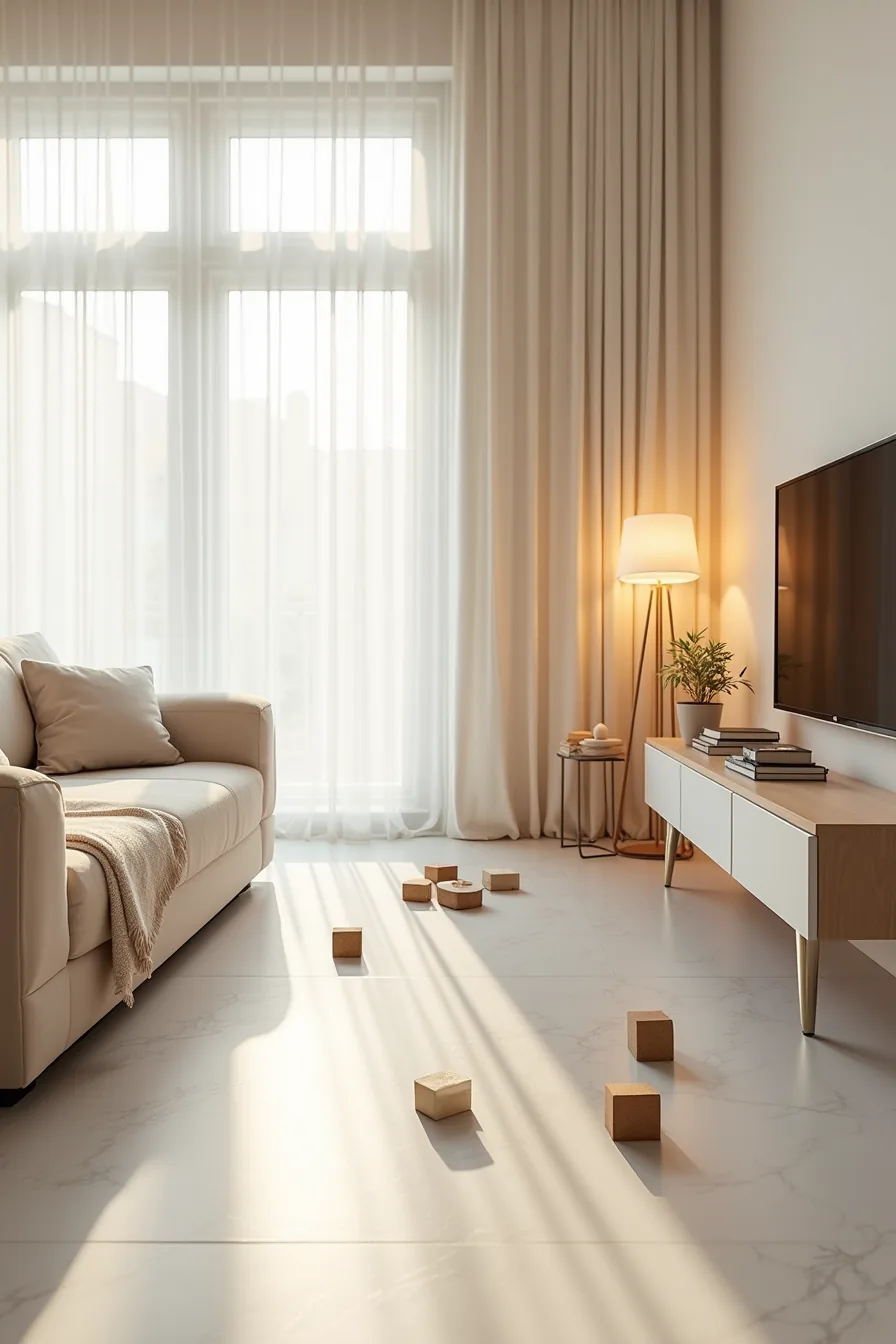
A honed marble floor living room trades the glossy reflection of polished stone for a matte, velvety texture that hides smudges and daily scuffs far better. The matte finish also improves slip resistance underfoot, a real advantage when toy blocks scatter across the surface and little feet chase after them. You get the same stone’s durability, resistant to heat and heavy foot traffic, without the high-maintenance shine that demands frequent buffing.
This setup works specifically for busy households because the entire furniture scheme anticipates wear. The sectional’s washable slipcover unzips for machine cleaning, while the chrome-leg coffee table lifts off the floor for easy sweeping beneath it. A cleaning cloth resting on the edge of the frame isn’t decoration; it signals that a daily 5-minute sweep plus a weekly damp mop with a pH-neutral stone cleaner keeps this floor looking composed.
Skip wax-based or acidic cleaners, they dull honed surfaces over time.
Choose honed marble if you want a stone floor you don’t have to tiptoe around, and pair it with furniture that forgives the same level of use. It suits families with young children, pet owners dealing with tracked-in grit, and anyone who entertains casually without watching every drop. Expect to pay 15–30% more for honed over polished in the same stone grade, but you’ll save on maintenance products and refinishing frequency.
Marble Tile Blends for Smaller Spaces
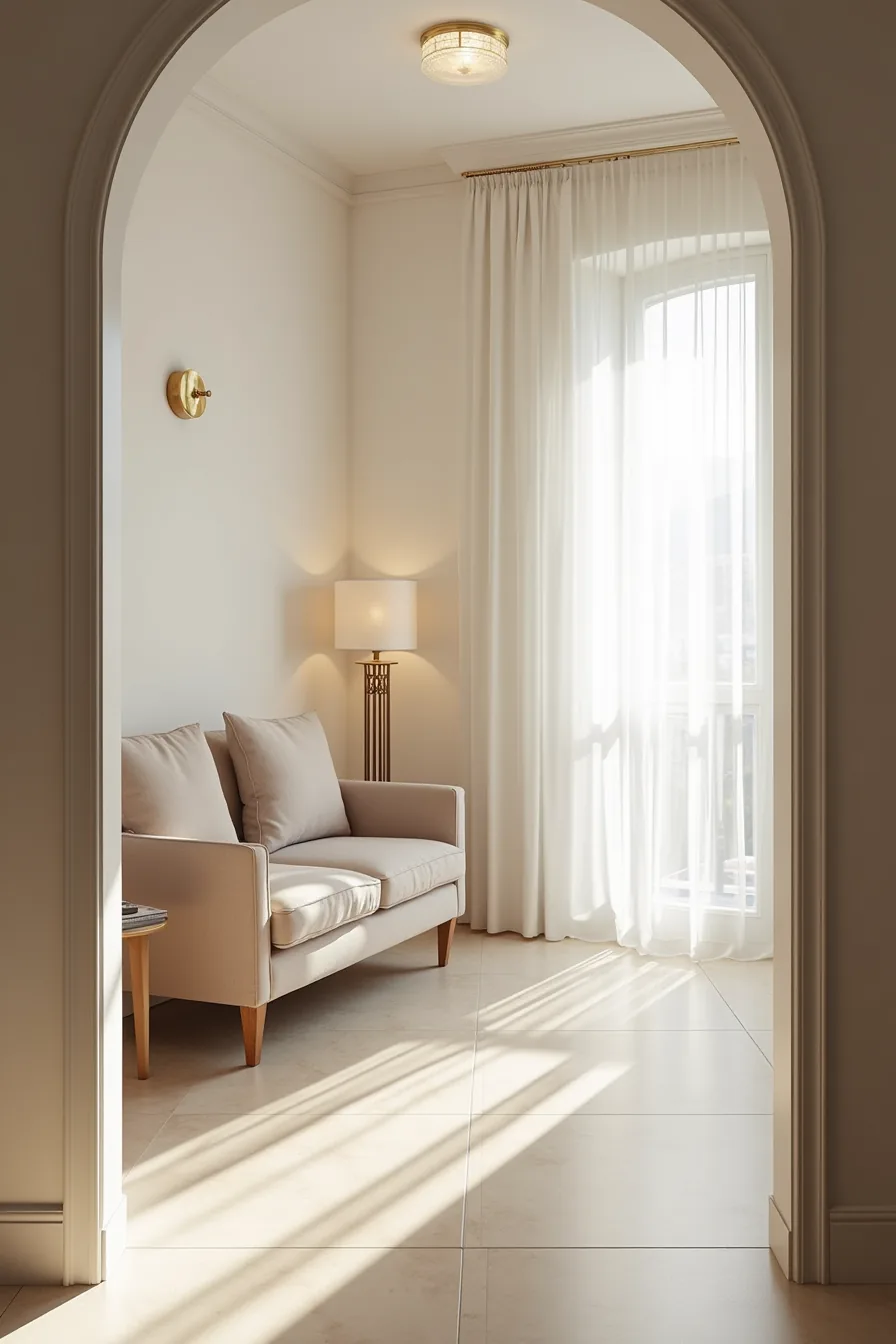
A marble floor living room doesn’t require massive slabs. In a compact space, small-format marble-look porcelain tiles, typically 12×12 or 8×8 inches, read as an intentional pattern rather than an overwhelming expanse of stone. Porcelain costs roughly 40–60% less than natural marble and won’t stain from a spilled glass of red wine, making it the practical choice for tight quarters where every surface earns its keep.
A loveseat placed against the wall, a narrow console behind it, and a round side table beside it create a clear circulation path, leave at least 30 inches between furniture pieces for comfortable movement. The single pendant light overhead draws the eye upward, preventing the floor from visually shrinking the room. A mixed layout, alternating tile directions or using a subtle checkerboard, adds texture without requiring expensive large-format tiles that are difficult to maneuver through narrow doorways.
This approach suits renters and first-time homeowners who want the marble aesthetic without the permanence or price tag of natural stone.
Rug Placement on Stone Floors

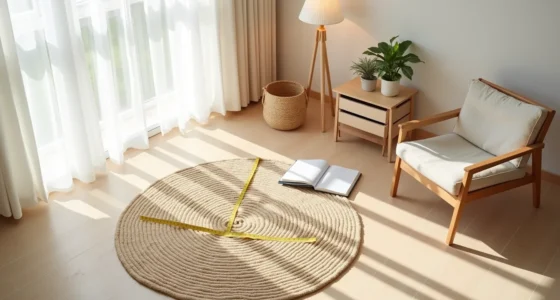
Anchor your seating zone with a rug that leaves a consistent border of marble visible on all four sides, typically 12 to 18 inches of exposed stone. That defined perimeter is what makes the floor feel intentional rather than accidental. In the example, the natural-fiber rug sits precisely parallel to the L-shaped seating, with all four edges visible and the conversation grouping centered squarely on top.
Sizing is where most placements fail. A rug too small floats in the middle of the room; one too large swallows the seating and negates the marble entirely. Measure your longest sofa section, then add roughly 24 inches on each side for a proportion that works.
Natural fibers like jute or sisal provide the grip that silk or flat-weave alternatives lack on polished stone, and their textured surface masks the fine scratches that inevitably develop on high-traffic paths. For a rented space, choose a rug with a non-slip pad underneath, the pad also absorbs the echo that hard stone amplifies.
Budget-Friendly Marble Alternatives
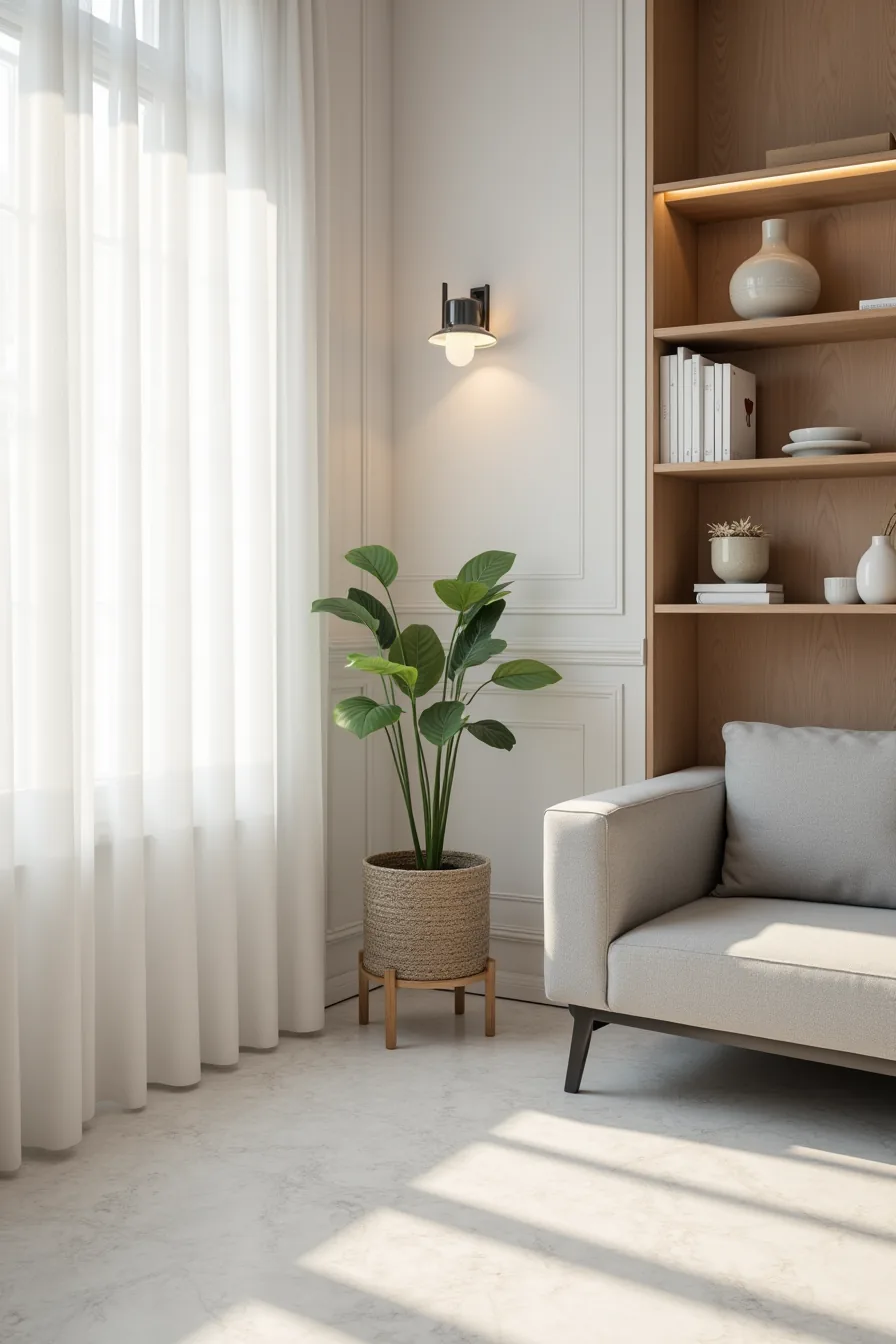
Polished concrete gives you the cool gray base and subtle veining of marble at roughly one-quarter of the cost, and it stands up to heavy foot traffic without the etching that acid-prone marble suffers. To get the aesthetic without the commitment, apply peel-and-stick marble tiles selectively, covering a corner section beside the concrete, as this setup does, creates a deliberate material contrast that reads as a design choice rather than a compromise. The gray sofa anchors the composition, while the metal shelving unit and potted plant add visual weight on the opposite side, balancing the busy tile pattern against the calm concrete expanse.
This route suits renters and first-time homeowners who want the look without the permanence. Budget roughly $2–4 per square foot for peel-and-stick tiles versus $8–15 for engineered stone, and expect to replace the adhesive tiles every 3–5 years in high-traffic zones. For a long-term upgrade later, engineered quartz or large-format porcelain slabs (24×24 inches or larger) deliver the same visual at a fraction of natural marble’s installation cost.
Marble Floor Living Room Maintenance Essentials
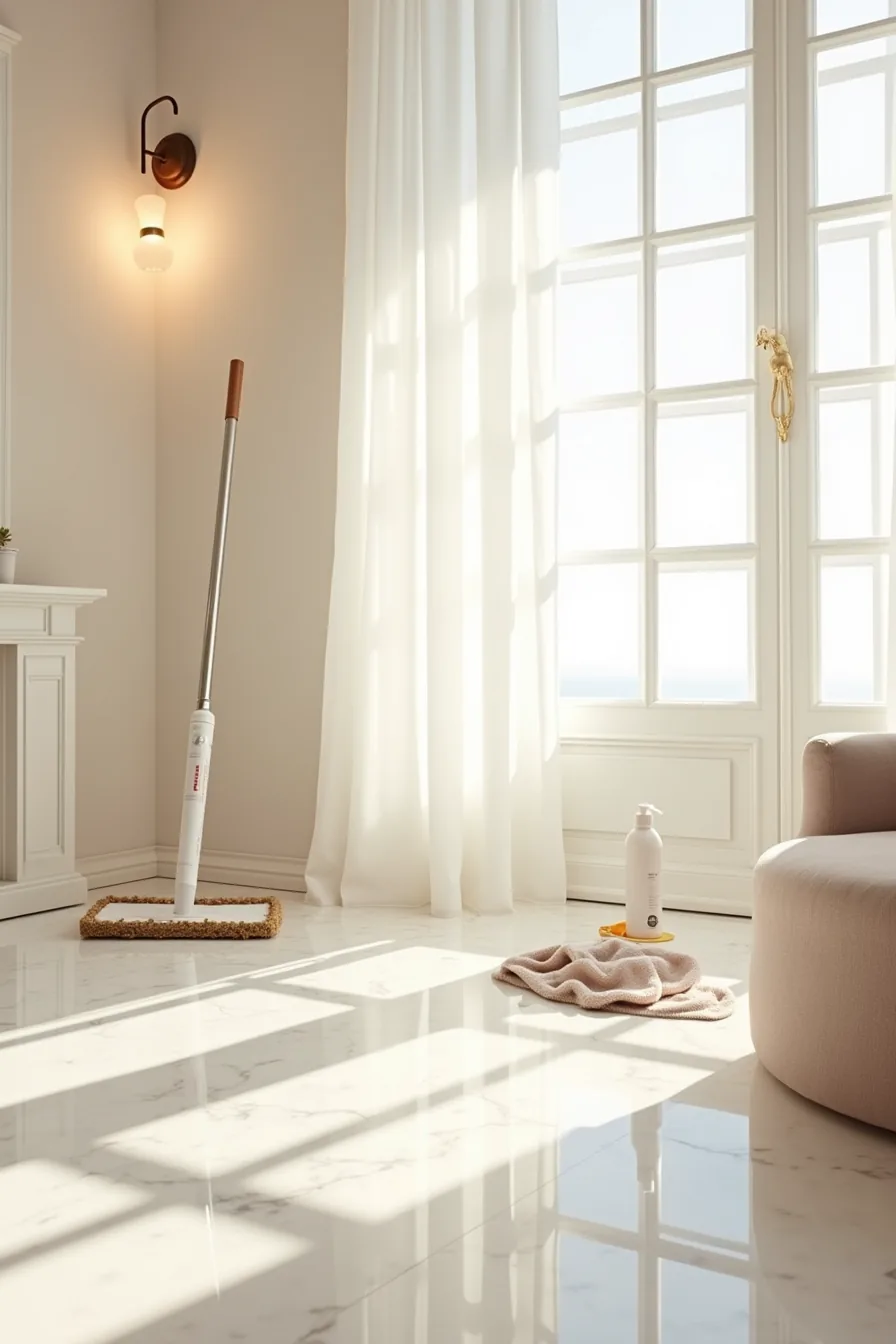
Your marble floor’s longevity depends less on how often you clean it and more on what you use. A pH-neutral cleaner is non-negotiable, anything acidic (vinegar, citrus, most all-purpose sprays) will etch the calcium carbonate surface, leaving dull spots that require professional honing to remove. Keep a dedicated microfiber mop for marble only; a standard mop can drag grit across the surface, acting like fine sandpaper on the polish.
For daily upkeep, dry-dust with a soft-bristle broom or microfiber cloth to remove abrasive particles before they scratch. Damp-mop weekly with the pH-neutral solution, and always blot spills immediately, wine, coffee, and juice are the most damaging because they stain before you notice. Residential marble typically needs resealing every 12–18 months; test by dripping water on the surface, if it beads up, the sealer holds; if it darkens the stone, it’s time to reapply.
Seasonal adjustments matter. Winter brings salt and sand from footwear; place heavy-duty entrance mats outside and absorbent runners inside to trap debris before it reaches the stone. In summer, humidity can accelerate moisture absorption, so keep the sealer schedule strict.
Call a professional stone restoration specialist when you notice etching, dullness, or hairline cracks, DIY polishing compounds often worsen the problem by leaving residue that attracts more dirt. Expect professional honing and resealing to cost $3–6 per square foot, depending on your region and the marble’s condition.
What to do first
Start with a single square foot of marble, not the whole room. Buy one large-format porcelain tile with a marble print (₹60–₹120 per square foot) and a genuine marble sample (₹300–₹500) side by side. Place them in your living room for three days, morning and evening light.
That test tells you what you actually need: movement, gloss, or true stone. If you rent, skip installation entirely and order 3mm marble-look vinyl planks that lay loose over your existing floor.
Your next step: measure your room’s longest sightline and book a 15-minute consult with a tile supplier to confirm load-bearing capacity and underfloor heating compatibility.
Frequently Asked Questions
Is marble too slippery for a living room with kids or pets?
Honed or brushed finishes provide adequate traction for most households. Polished marble becomes slick when wet, so use area rugs in high-traffic zones and wipe spills promptly. For toddlers learning to walk, consider honed marble or extensive rug coverage.
Can you put a marble floor living room in a small apartment?
Yes, with constraints. Light-colored marble with large-format tiles (24×24 inches or larger) visually expands tight spaces. Keep the floor uncluttered and pair it with white walls.
Avoid busy veining patterns, which can overwhelm a compact room.
How often do you need to seal marble floors?
Seal every 6-12 months for living areas, depending on foot traffic and the sealer type. Test absorption by dropping water on the surface; if it darkens within 60 seconds, reseal. Penetrating sealers last longer than topical ones but require professional application.
What’s the real cost difference between polished and honed marble?
Polished marble typically costs 10-20% more per square foot than honed. The price gap narrows for exotic stone. Installation and maintenance offset the difference: honed requires less frequent sealing and hides etching, making it cheaper long-term despite the lower upfront cost.