
A club chair is defined by its low seat, deep cushion, and wrapped arms, a design that trades upright formality for immediate, enveloping comfort, and the six approaches that follow show you exactly how to adapt that silhouette to your room, budget, and lifestyle. You’ll see the full range of valid interpretations, from a budget-friendly IKEA hack to a heirloom-grade investment. Each example includes the scale, materials, and maintenance trade-offs you need before you commit.
By the end, you’ll have a decision checklist that matches a specific chair to your square footage, traffic patterns, and cleaning habits.
Key takeaways
Measure your space before buying, because a standard club chair runs 30–36 inches wide and 30–34 inches deep, and you need at least 18 inches of clearance in front for comfortable legroom. Choose leather for longevity if you want a 15–20 year piece, but expect to pay 2–3 times more than a comparable fabric chair and commit to occasional conditioning. Pick a low-back fabric model (28–32 inches tall) for small rooms under 150 square feet, and pair it with a slim side table rather than a bulky ottoman. Test the seat depth before purchase, a depth of 20–22 inches suits average heights, while deeper 24–26 inch seats require a bolster for shorter users.
Classic Leather Club Chair: The Timeless Investment

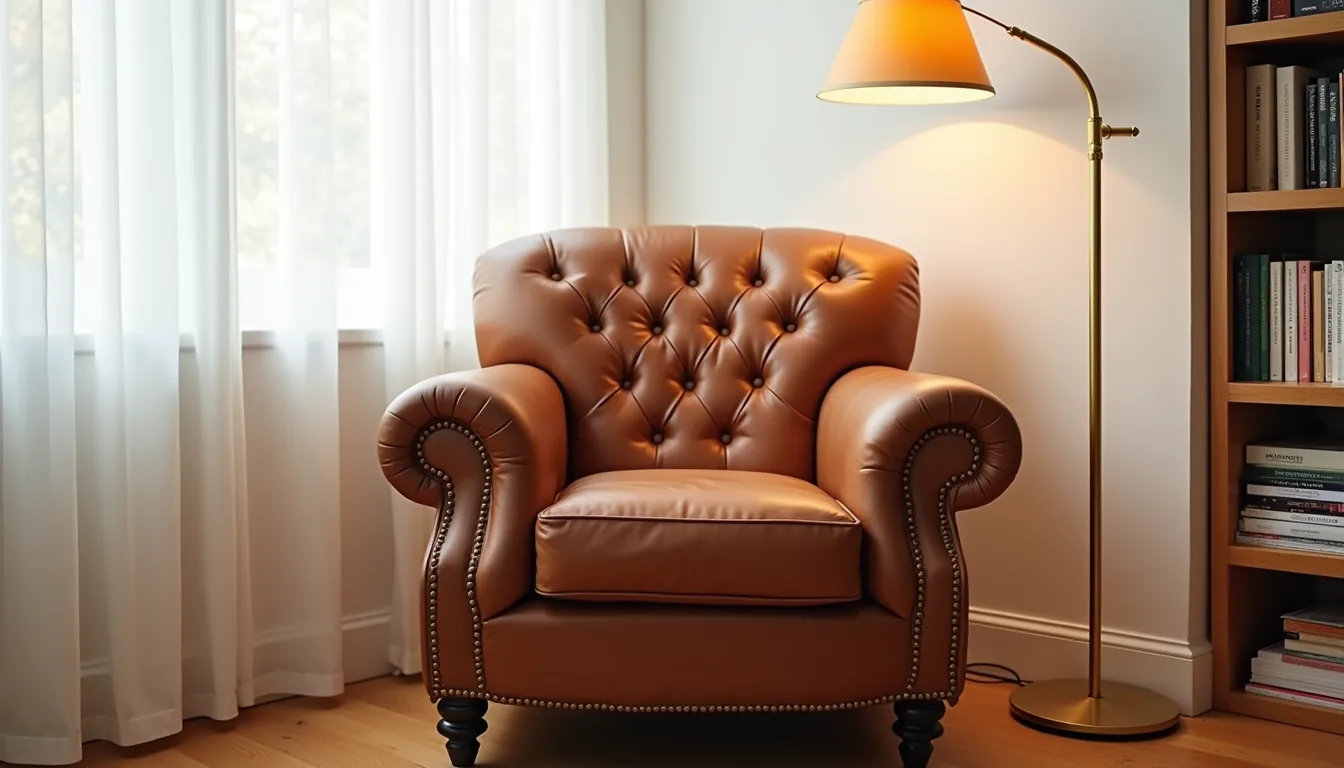
A full-grain or top-grain leather club chair is the rare furnishing that improves with age, developing a patina that no new piece can replicate. Expect to pay 2-3 times more than a comparable fabric chair, but the lifespan, typically 15-25 years with proper care, justifies the premium for a primary living room seat or a home office reading corner, not for a high-traffic kids’ playroom where punctures and spills will test your patience.
The caramel leather arm and seat junction, with its hand-stitched seams, reveals the construction quality you’re buying. Those visible stitch lines should be even and tight; loose or uneven stitching signals a lower grade hide wrapped around a cheaper frame. The leather care cloth draped over the arm is non-negotiable, wipe down the chair every 4-6 weeks with a damp cloth, then apply a conditioner twice yearly to prevent the hide from drying and cracking, especially in heated homes.
Most leather club chairs run 30-34 inches wide, 32-36 inches deep, with a seat height of 18-20 inches. That footprint suits a medium-to-large living room where the chair can float 12-18 inches from the wall without crowding a side table. If you’re choosing between classic vs updated club chair styling, the leather version leans traditional, pair it with a modern fabric sofa to avoid a period-piece look.
Modern Fabric Club Chair: Softness and Versatility
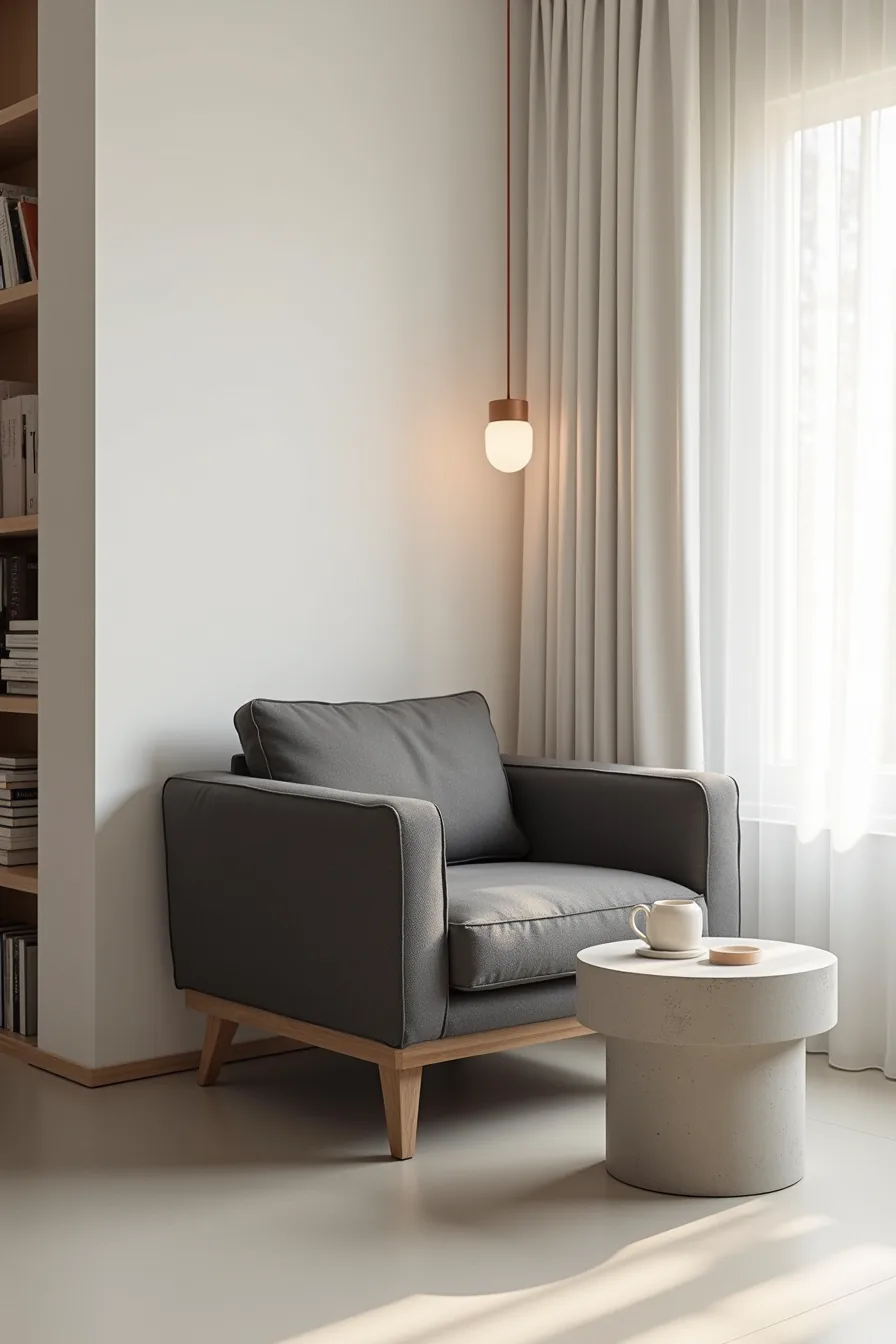
A charcoal linen-blend club chair with track arms trades the formality of leather for a softer silhouette that anchors a contemporary corner without visually dominating it. The fabric choice matters more than the frame here: linen-blends in dark, heathered tones like charcoal hide daily dust and minor spills far better than light solids, while the textured weave adds depth that flat weaves lack. Pairing the chair with a low concrete side table, about 16-18 inches tall, roughly 4-6 inches below the chair’s arm height, keeps the sightline clean and gives you a stable surface for a ceramic mug without the visual weight of a wooden table.
Fabric durability grades run from 15,000 to 100,000 double rubs; for a chair that serves as a primary seat, target 30,000 or higher, which most linen-blends in the mid-price range meet. This fabric route suits renters because the chair remains neutral enough to move between apartments, and you can refresh the look with a washable throw or new pillows instead of reupholstering. Expect to pay roughly 30-50% less than the leather equivalent, but budget for a professional cleaning every 12-18 months, as fabric traps oils and odors that vacuuming alone won’t remove.
Scaled Club Chairs for Small Spaces

Most standard club chairs run 32-38 inches wide and 30-34 inches deep, which crowds a studio or a narrow living room. Look for petite versions that trim each dimension to 26-30 inches wide and 28-32 inches deep, and keep the arm height below 22 inches so the chair reads as lighter at eye level. A compact scale also lets you keep the defining rolled arms and low back without the piece swallowing the room.
In a studio nook, position the chair 24-30 inches from the wall so the back doesn’t press against the baseboard, and place it between a window and a slim wooden console table no deeper than 14 inches. That gap preserves a walkway of at least 36 inches and keeps the window fully accessible for opening and light. Verify the chair’s seat height, 18-20 inches is the standard range, so the proportions stay comfortable even when the frame is smaller.
Cozy Reading Seat: Club Chair in Winter Corners
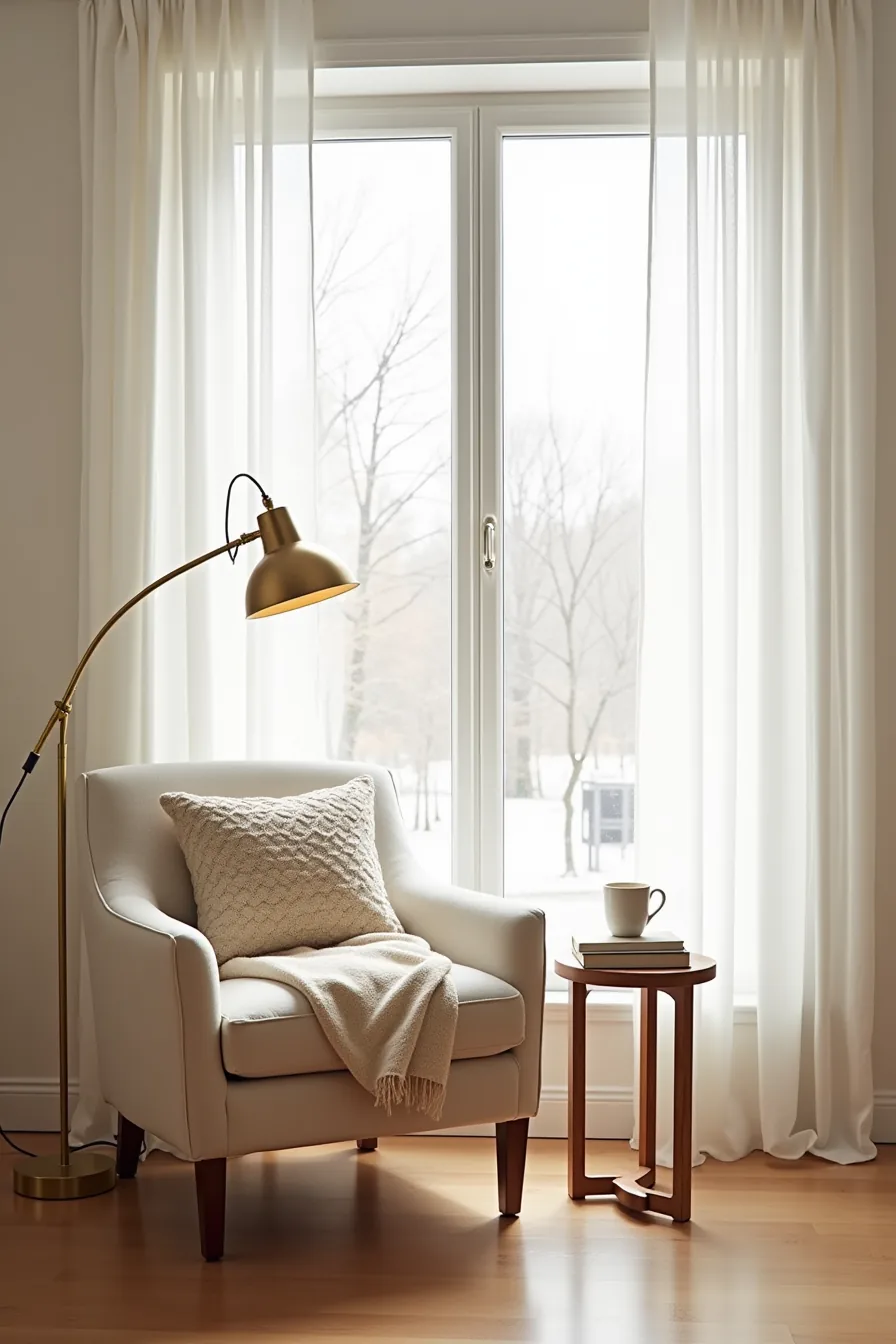
Position the club chair at a 20-30 degree angle to the window, so you face the light without glare hitting your book page. That orientation also lets you see the room’s entrance, which keeps the corner feeling secure rather than exposed. Flank it with a wooden side table set at armrest height (19-22 inches is the typical range) and a brass arc floor lamp whose shade drops to roughly 42-46 inches above the floor, low enough to illuminate a page, high enough to clear your head.
Layer a cream wool throw across the back and seat, plus a lumbar pillow with a patterned cover. The throw adds insulation on cold winter evenings, and the pillow supports your lower back during longer reading sessions. This setup suits anyone who reads for 30-plus minutes at a stretch or takes video calls from home; the armrests give you a place to rest a tablet or notebook, and the low back lets you glance up at the window without craning your neck.
Budget-Friendly Club Chair: Fabric and Frame Options

Under $400, you’re mostly buying kiln-dried hardwood frames wrapped in high-density foam, that combination holds up for 3–5 years of daily use. Skip chairs with particleboard or stapled-on trim; those fail at the joints within a year. Look for a removable cushion cover, which lets you wash or replace the fabric instead of tossing the whole chair.
A polyester-blend upholstery in oatmeal or greige hides spills and pet hair better than linen or cotton, and it won’t pill noticeably for at least two years. The woven pouf beside the chair doubles as a footrest or extra guest seat, so you’re not buying a second piece of furniture. This setup suits renters and first apartments: the neutral fabric works with any future decor, and the chair’s 30-32-inch seat height matches most standard sofas, so it won’t look out of place in a mixed seating group.
Statement Club Chair: Color, Pattern, and Placement
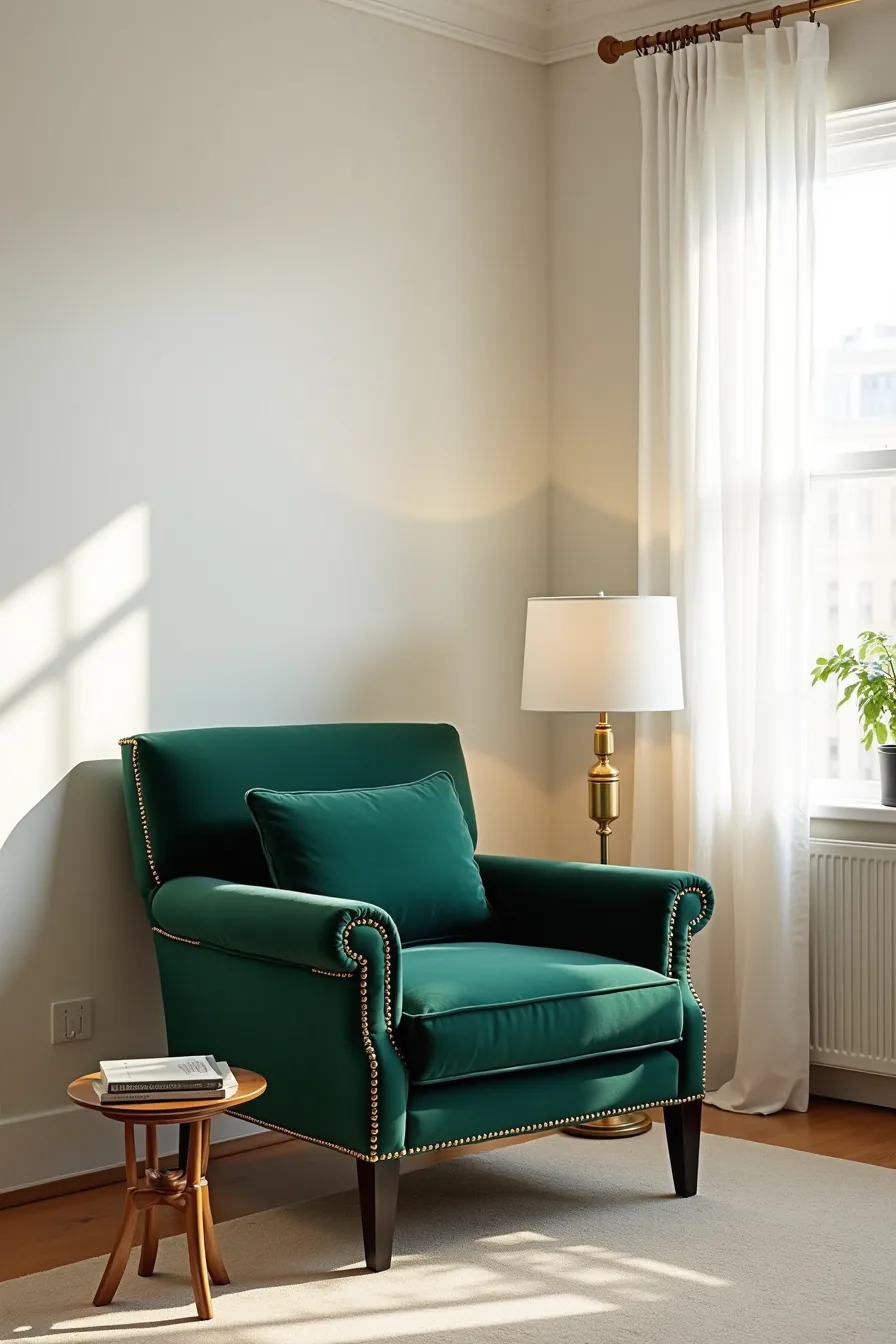
When you want a room to feel intentionally designed rather than merely furnished, let one club chair do the heavy lifting. An emerald velvet club chair with brass nailhead trim against pale walls and light oak flooring creates instant contrast without requiring you to redecorate everything around it. The jewel tone reads as deliberate, while the metallic trim adds a tailored edge that keeps the piece from feeling overly plush.
This approach works best in rooms where the chair occupies a visual axis, facing a fireplace, angled toward a window, or anchoring a corner that currently floats. Keep surrounding furniture neutral and low-profile so the chair becomes the room’s punctuation mark, not just another seat. The velvet demands more care than polyester: brush it weekly to prevent crushing, and keep it out of direct afternoon sun to avoid fading.
For a lower-commitment version of this look, choose a patterned boucle or a textured weave in the same saturated color family, you get the focal-point effect with greater durability for high-traffic households. This setup suits anyone who wants one bold piece to define the space, and it pairs directly with the neutral foundations from the previous section.
Your Decision Checklist
Before you buy, confirm the chair’s depth matches your room’s clearance, you need 15–18 inches of walking space in front of it. Verify the seat height suits your height; your knees should sit level with your hips. For fabric, choose a high-abrasion rating (over 30,000 rubs) if you’ve kids or pets.
Match the frame to your commitment level: solid hardwood for a forever piece, engineered wood for a budget-friendly swap in five years. Measure your doorways and stairwells before ordering.
What to do first: Grab a tape measure and mark the intended corner’s footprint with painter’s tape. Live with that outline for two days, it will instantly reveal whether the scale works.
Frequently Asked Questions
What is the typical width and depth of a standard club chair?
Most club chairs run 30–36 inches wide and 32–38 inches deep, with seat heights around 18–20 inches. Compact versions shrink to 28 inches wide, while oversized loungers stretch past 40 inches.
Can you use a club chair in a small apartment, and how do you arrange it?
Yes. Choose an armless or low-back model under 32 inches wide. Place it diagonally in a corner, angled toward the sofa, leaving 18 inches of clearance for walkways.
Skip a matching ottoman to preserve floor space.
Is leather or fabric better for a club chair in a high-traffic household?
Leather wins for durability, wipe spills instantly, and it develops a patina over decades. Fabric, especially performance weaves like Crypton or Sunbrella, resists stains but requires regular vacuuming and professional cleaning every 12–18 months.
How do you clean and maintain a fabric club chair over time?
Vacuum weekly with an upholstery attachment, rotating cushions to equalize wear. Blot spills immediately with a dry cloth; never rub. Use a mild detergent-water solution for spot cleaning, and schedule professional steam cleaning annually.
Check the manufacturer’s cleaning code first.