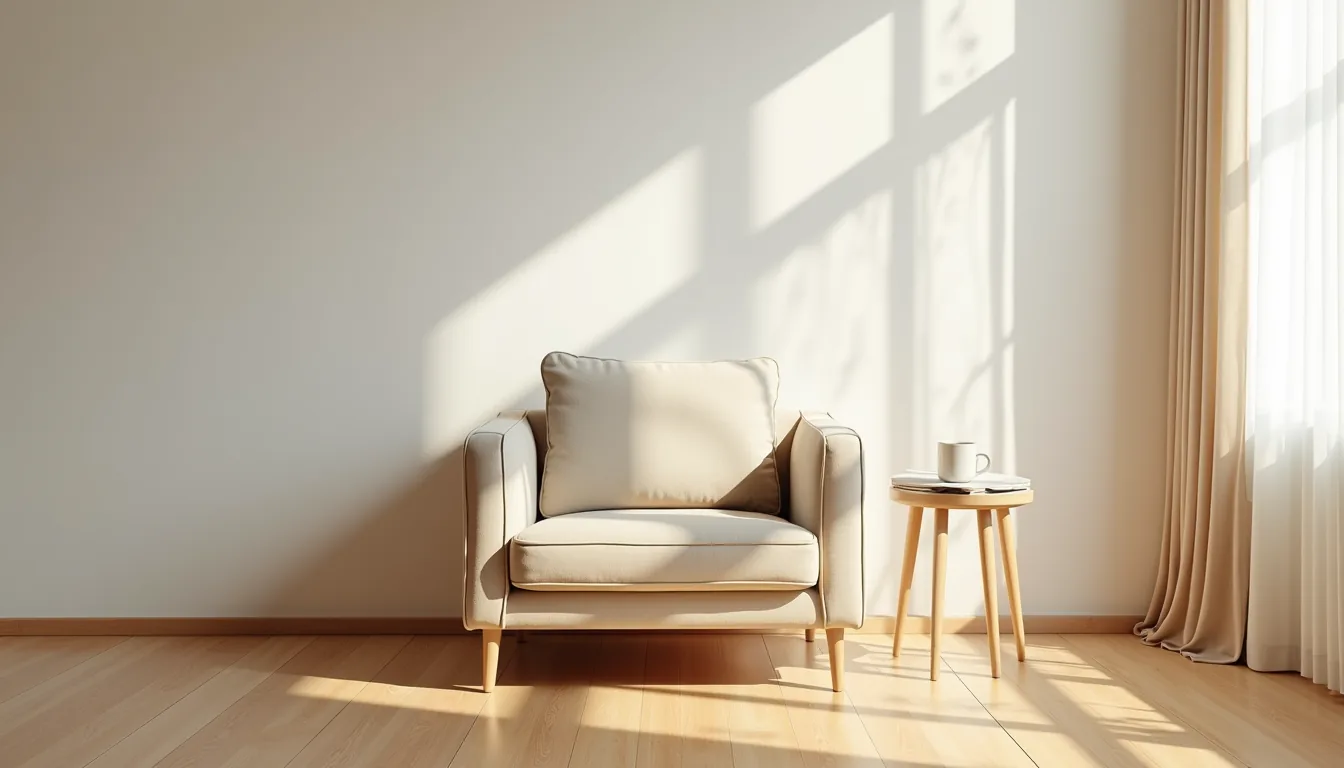

The arm chair living room isn’t a single look but a seating strategy, one that hinges on how you position, scale, and pair a single chair with the rest of your layout. Done well, it pulls double duty: filling an awkward corner, anchoring a conversation zone, or adding a quiet perch without competing with your sofa. The trick is knowing which silhouette, material, and placement actually fit your room’s dimensions, and which ones will make it feel cramped.
Below, six distinct approaches, each with the practical trade-offs you need to decide before you buy.
Key takeaways
- One anchor armchair works best at 28–32 inches seat height in rooms under 200 square feet, leaving at least 18 inches of clearance to the nearest wall.
- Pairing armchairs with a sofa requires matching seat heights within 2 inches and leaving 14–16 inches between the sofa and chair for comfortable conversation flow.
- For rental spaces, choose a slim-profile armchair (under 38 inches wide) with removable, washable slipcovers to avoid permanent wall damage and ease future moves.
- Budget-conscious buyers should prioritize solid hardwood frames over upholstery grade, since a $400–$700 chair with a quality frame outlasts a $1,200 option with a soft composite base.
The Solo Statement: One Armchair as a Room Anchor
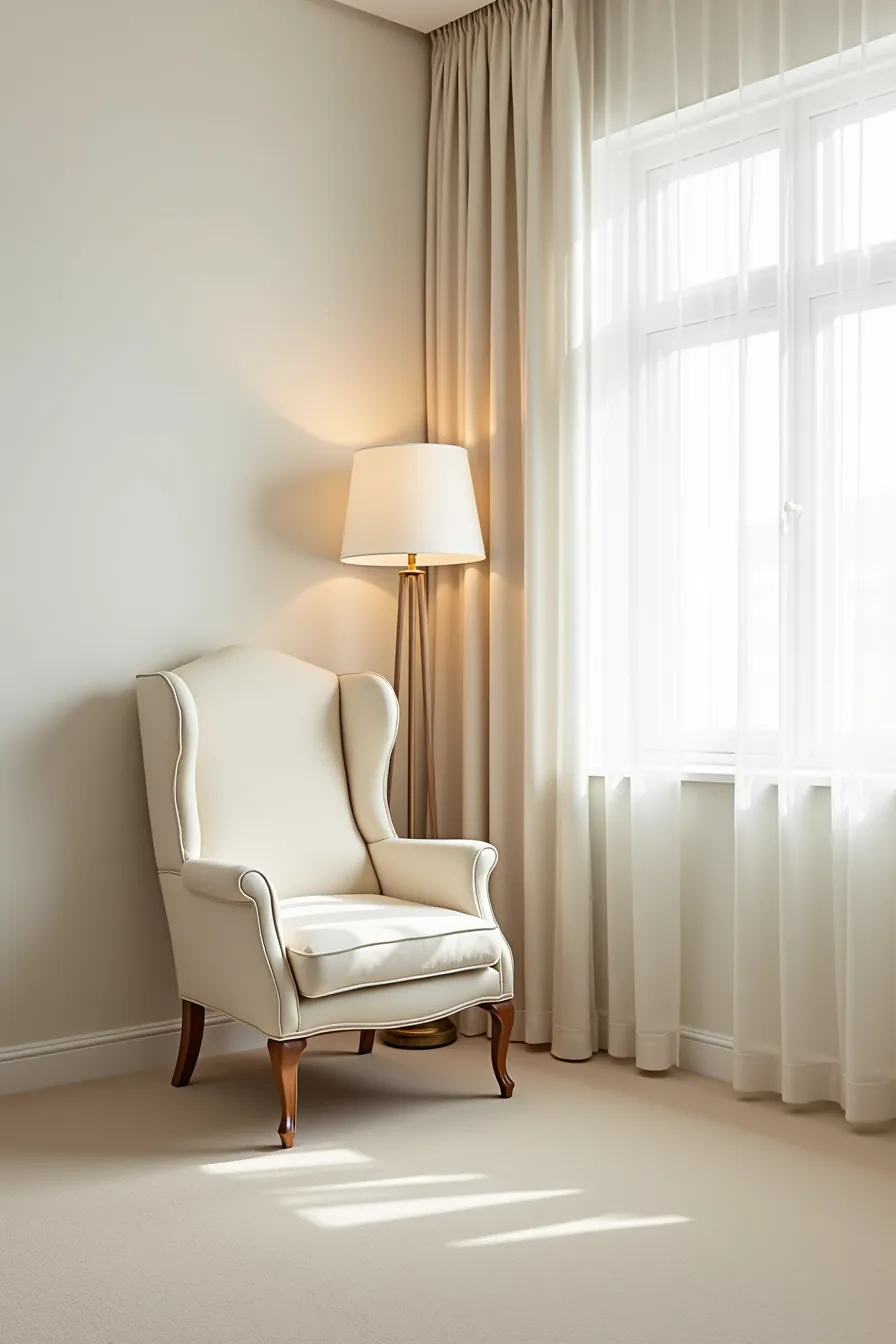
A single wingback armchair, angled toward a corner window, does more work than a full sofa in a compact living room. The floor lamp beside it creates a deliberate pool of light, while the neutral carpet grounds the setup without competing for attention. What makes this arrangement succeed is the empty wall behind the chair, it gives the piece room to breathe and makes its silhouette the entire point.
This approach suits rooms roughly 120–200 square feet where a full seating arrangement would crowd the space. For the anchor to hold, choose a chair with a seat depth of 20–22 inches and a back height of 38–42 inches; anything smaller reads as accidental furniture rather than intention. Keep the angle toward the window at 30–45 degrees to preserve sightlines and circulation.
The wingback’s high sides add visual weight, so pair it with a slim floor lamp base, never a bulky drum shade, to avoid overwhelming the corner. Expect to invest $600–$1,200 for a frame that merits solo placement; cheaper pieces lack the structural presence to carry the room.
Beside Sofa or Solo: Pairing an Armchair with Your Main Seating
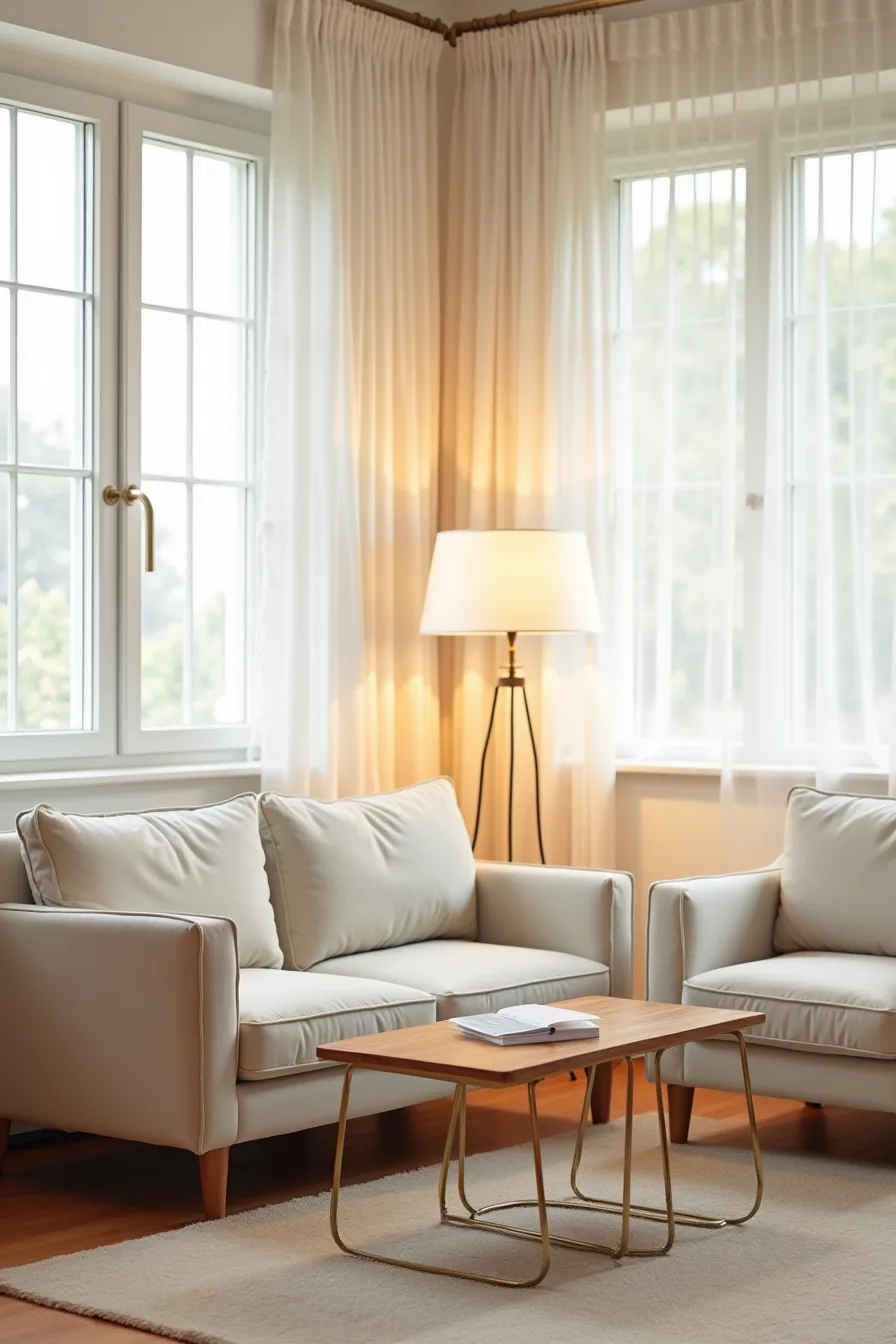
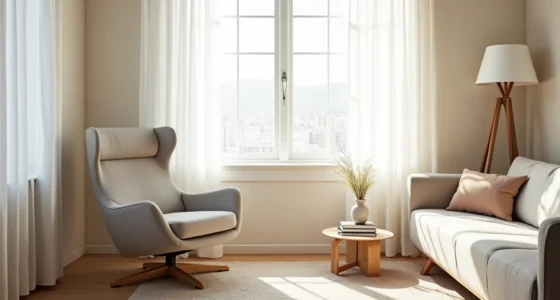
The L-shape configuration, sofa along one wall, armchair perpendicular at its end, creates a conversation zone without turning the room into a waiting area. Position the chair so its front edge aligns with the sofa’s front edge, then leave an 18-inch gap between the two pieces. That spacing keeps the setup visually connected while allowing someone to pass behind the chair without brushing the sofa’s back.
The low coffee table between them should sit 14–18 inches from each seat front, close enough for a mug to be set down without leaning forward.
This layout works best in rooms 200–300 square feet where a U-shape would block the path to a doorway or window. Match the chair’s arm height to the sofa’s, a 24–26-inch arm on both keeps sightlines level and the pair reading as intentional. A fabric chair here’s the practical choice; the gap makes it the most touched surface in the room, and leather shows every accidental scrape from coffee tables and side tables.
Expect the chair to cost $400–$900 if it needs to harmonize with an existing sofa without competing for dominance.
Reading Corner Setup: Creating a Dedicated Armchair Zone
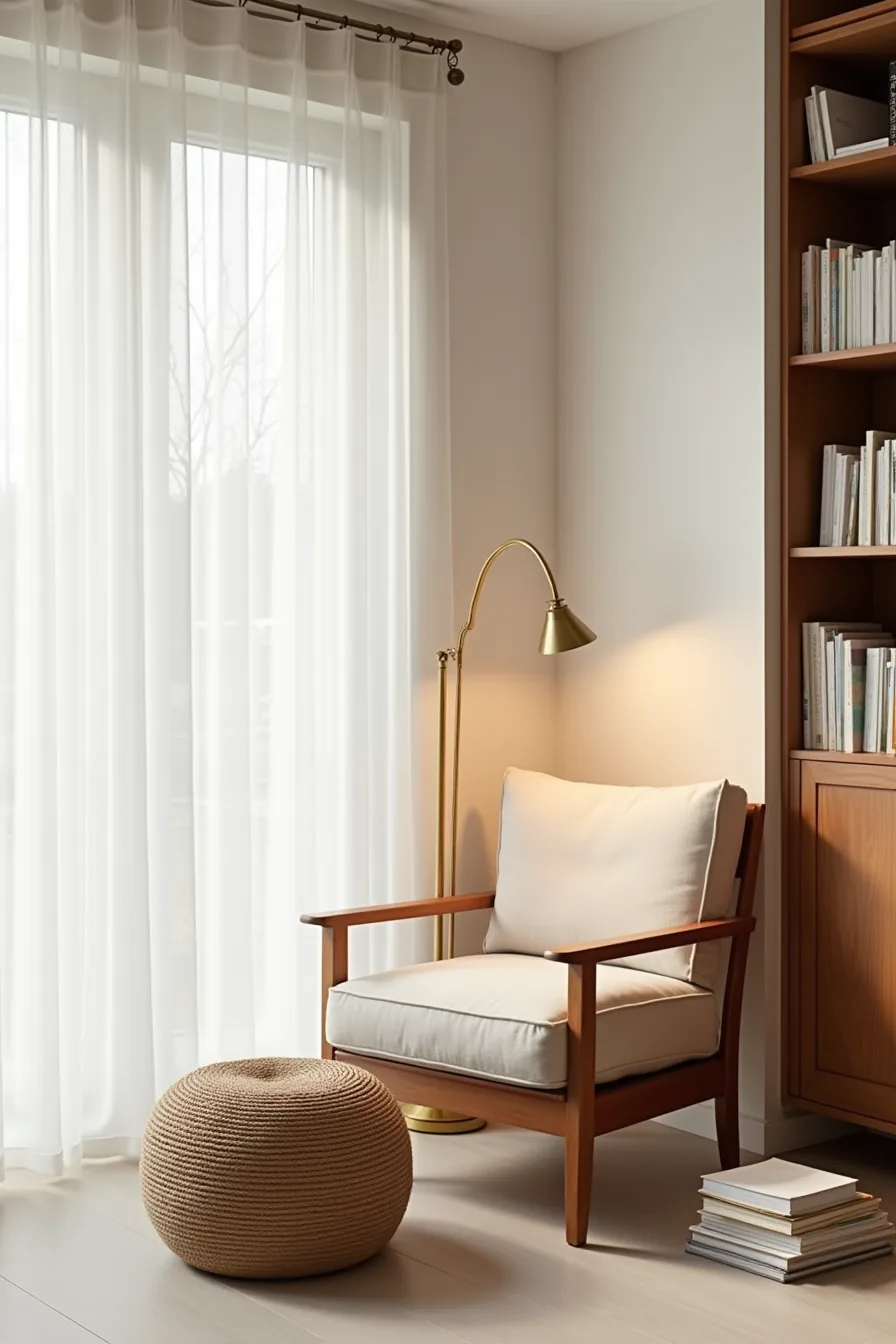
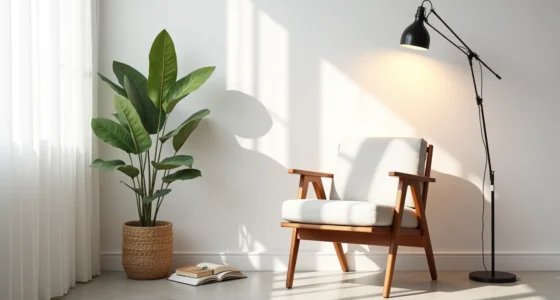
A reading corner needs just three elements to function: a chair, a light source, and a surface for a drink or book. The low-slung armchair angled toward the tall bookshelf creates a sightline that pulls you into the space, while the brass arc floor lamp curving over the chair’s arm directs light exactly where your book sits. The woven ottoman serves double duty, footrest when you’re reading, extra seat when someone joins you.
You’ll need roughly 6–8 square feet of clear floor space for this setup, so it fits in a 10-foot-wide bedroom corner or an unused hallway nook. Stacked books on the floor beside the chair work only if you commit to rotating them; otherwise, they become a dust collection surface you’ll trip over. Choose a chair with a 20–22-inch seat depth for shorter reading sessions, or 24+ inches if you plan to curl up for hours.
Position the arc lamp’s base behind the chair, never where you’d kick it while crossing your legs, a weighted base prevents tipping when you reach for a fallen book.
Balance the Seating Plan: Multiple Armchairs in One Room
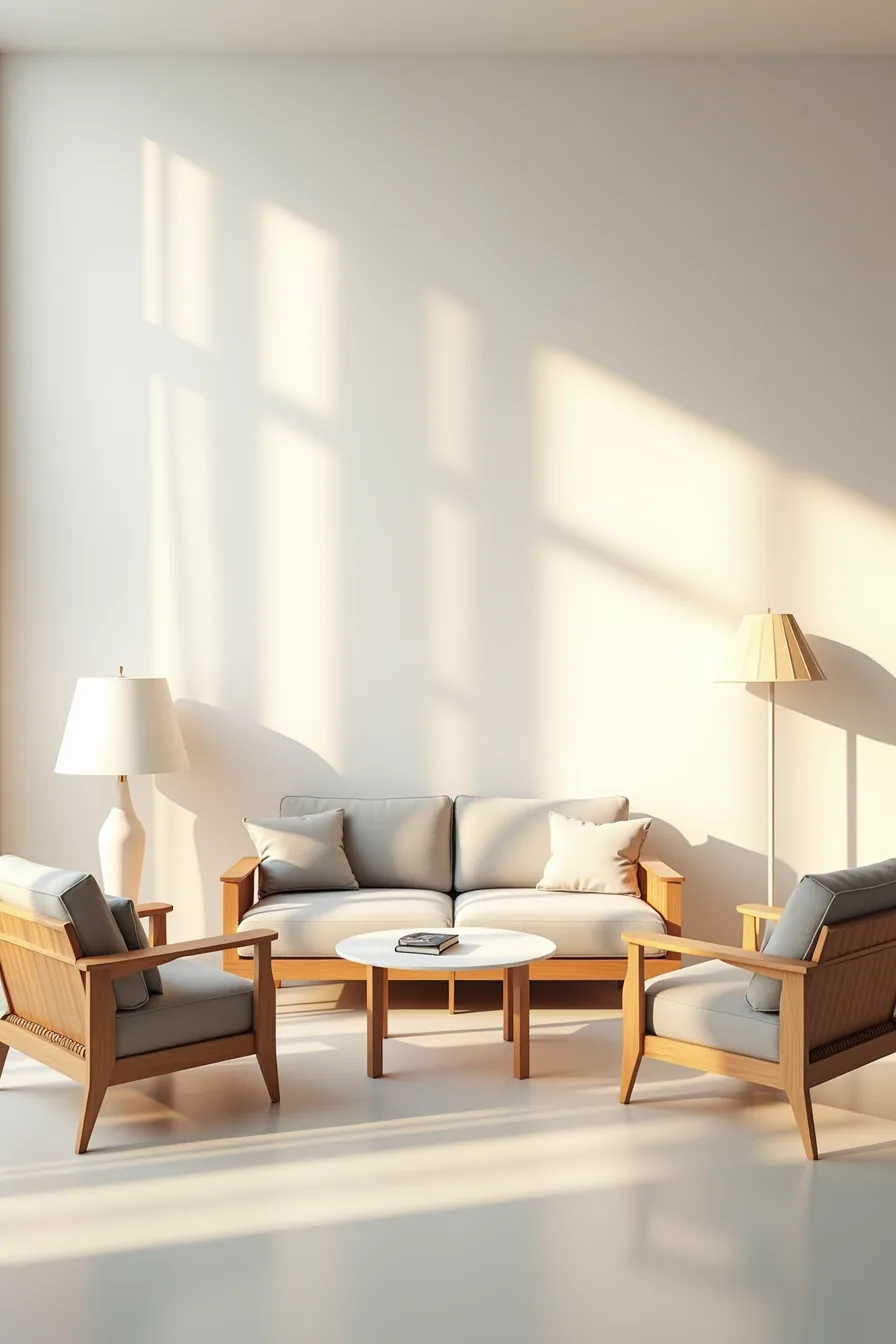
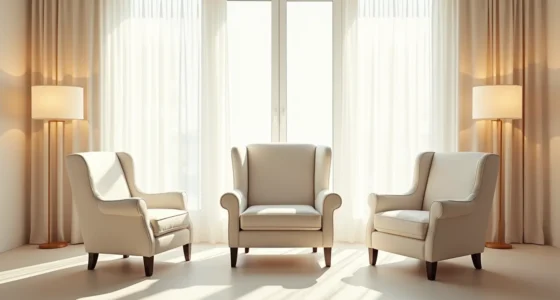
Two matching armchairs flanking a sofa create a symmetrical anchor that instantly organizes a large living room. The 45-degree angle placement toward the sofa opens the center of the room, allowing a round table to sit equidistant from all three pieces without blocking traffic flow. On light flooring, this arrangement defines separate zones, conversation near the sofa, passage behind the chairs, without needing a single rug to do the work.
You’ll want at least 18 inches between each armchair and the sofa’s edge for comfortable legroom, and roughly 24–30 inches between chair arms and any wall. This layout suits rooms 14 feet wide or larger; in tighter spaces, skip the center table and pull the chairs closer to the sofa instead. Matching chairs read as intentional, but if your sofa is patterned, choose solid upholstery in a tone pulled from the fabric to balance the seating plan without competing for attention.
Choose Armchair Placement That Opens the Room
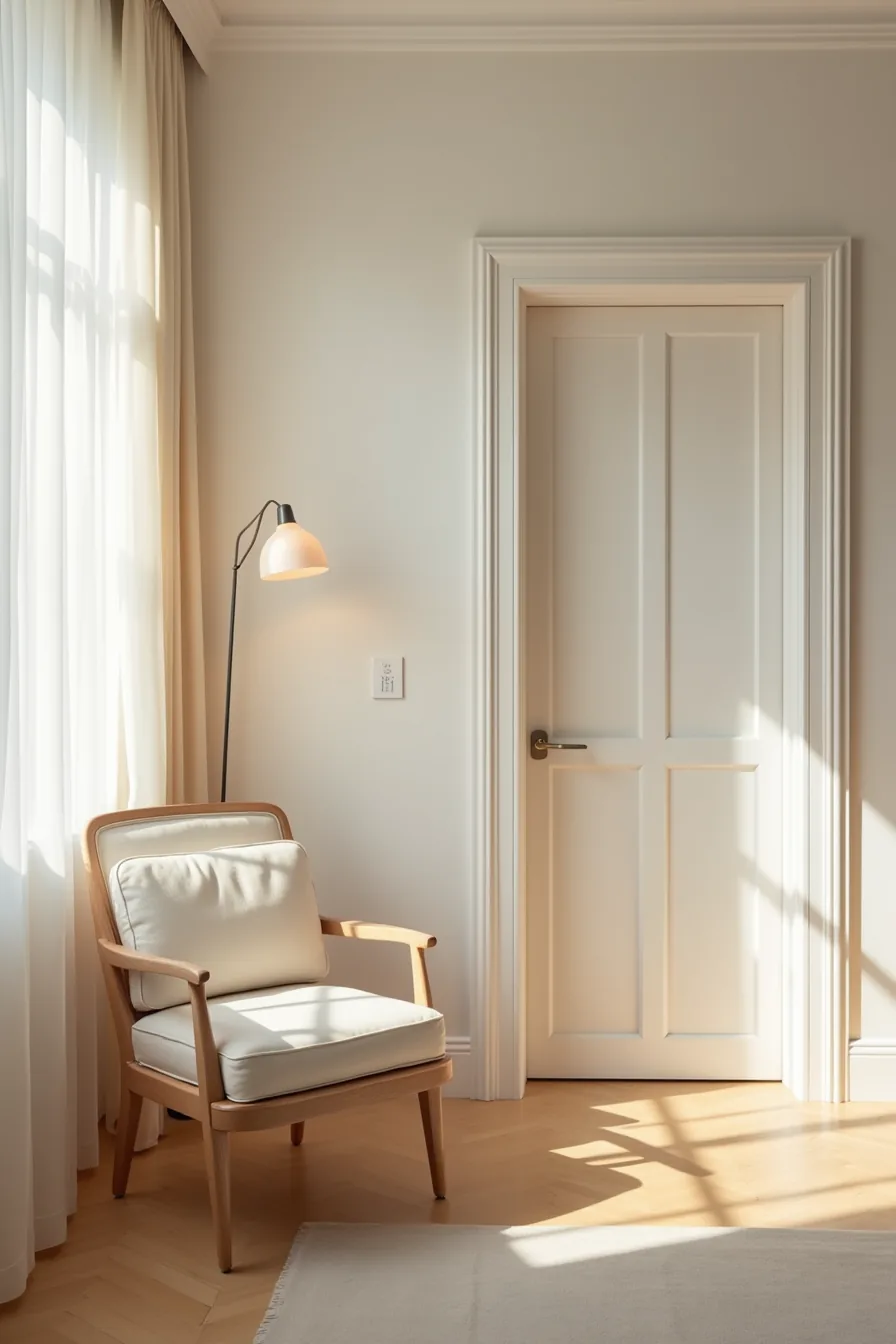
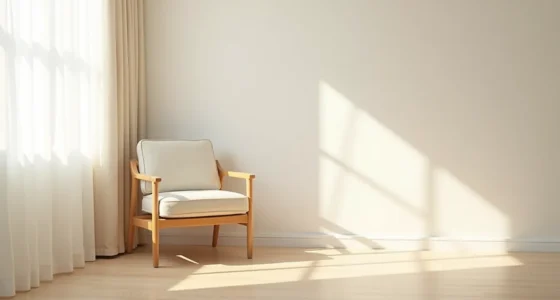
Positioning a single armchair against a side wall, pulled a few inches forward from that wall, exposes the floor in front of it and visually expands the room. That gap between the chair’s back and the wall reads as available space, even when the gap is only 3–6 inches. In the setup described here, the armchair sits far enough from the doorway that the door swings fully open without contacting the chair’s armrest, a clearance of at least 24 inches is a safe minimum to maintain.
You also want an unobstructed sightline from the entry point to the far wall, which this placement preserves by keeping the chair’s depth parallel to the wall rather than jutting into the room’s diagonal path. This works best in rooms 10–13 feet wide where a floating chair creates a reading nook without splitting the space. Skip this approach if the wall is load-bearing with a radiator or baseboard vent, since the chair will block airflow and require you to move it seasonally.
Budget, Rental, and Investment Routes for Armchair Living Rooms
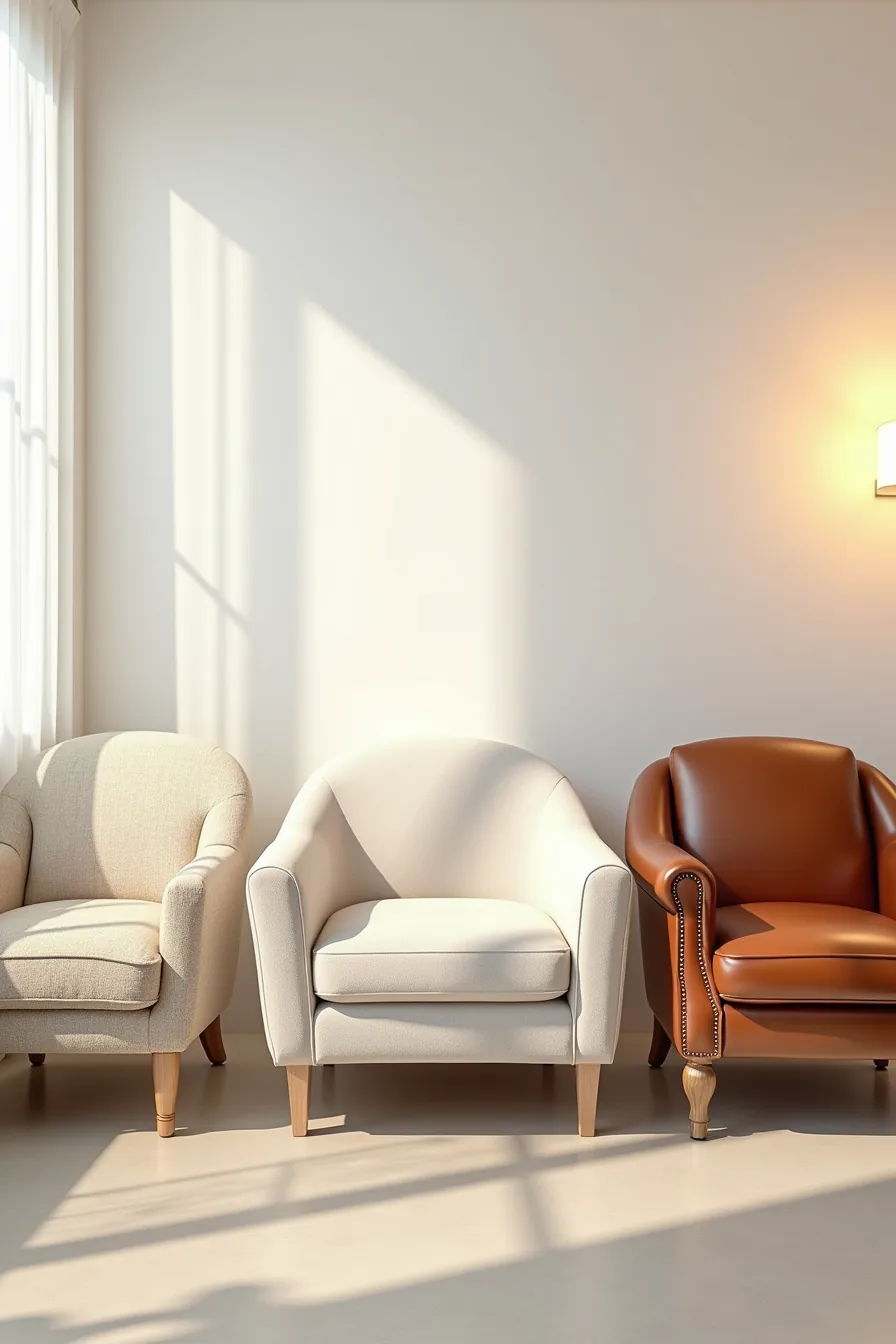
The three chairs in this row illustrate the cost spectrum. The simple fabric frame chair on the left is your budget route: a fixed upholstery piece in a mid-weight polyester or cotton weave, typically running $150–$350. It suits a first apartment or a room with low foot traffic, but expect the cushion to flatten within two years and the fabric to pill where you sit.
You replace it rather than repair it.
The slipcovered chair in the center is the renter-friendly route. The fitted cover unzips entirely for machine washing, and you can change the cover color when you move without hauling the frame. Expect to pay $300–$600 for a decent hardwood frame with a separate cover; the trade-off is that slipcovers wrinkle and need re-tucking weekly if you actually use the chair daily.
The leather wingback with nailhead trim on the right is the long-term investment. Full-grain hide over a kiln-dried hardwood frame with eight-way hand-tied springs runs $1,200–$2,500. It develops a patina rather than wearing out, and the nailhead trim is purely decorative, if you dislike the look, skip it and save roughly 10–15 percent, since you’re paying for the brass application labor.
You condition the leather twice a year and keep it out of direct sun to prevent fading.
Where to start
Measure your floor space before you shop. A standard armchair needs roughly 30–36 inches of clearance in front for comfortable sitting and standing, so pull out a tape measure and mark the footprint with painter’s tape. That single step eliminates most sizing mistakes before you spend a dollar.
Then match your top priority, budget, renter flexibility, or long-term investment, to the options above. Place your order, and test the chair in the room for a full day before committing to the final layout.
Frequently Asked Questions
How much floor space do you need around an armchair to keep a room feeling open?
Keep at least 18–24 inches clear on all sides for traffic flow. In tight corners, 12 inches works, but anything less makes the chair feel trapped and the room cramped.
Can you fit two armchairs and a sofa in a small living room without it looking crowded?
Yes, if the sofa is compact (under 72 inches) and the armchairs are slim-profile, under 30 inches wide. Arrange them in an L-shape rather than facing each other to preserve sightlines and walkways.
What’s the best armchair size for a reading corner in a medium-sized room?
Choose a chair with a seat depth of 20–22 inches and an overall width of 30–34 inches. This fits a standard floor lamp and side table without overwhelming the corner or blocking window access.
Should an armchair match your sofa or can it be a different color or style?
Different is better. Match the undertone or wood finish, not the exact fabric. A contrasting color or silhouette adds depth; identical sets read as showroom, not lived-in.
Keep both pieces within the same visual weight.