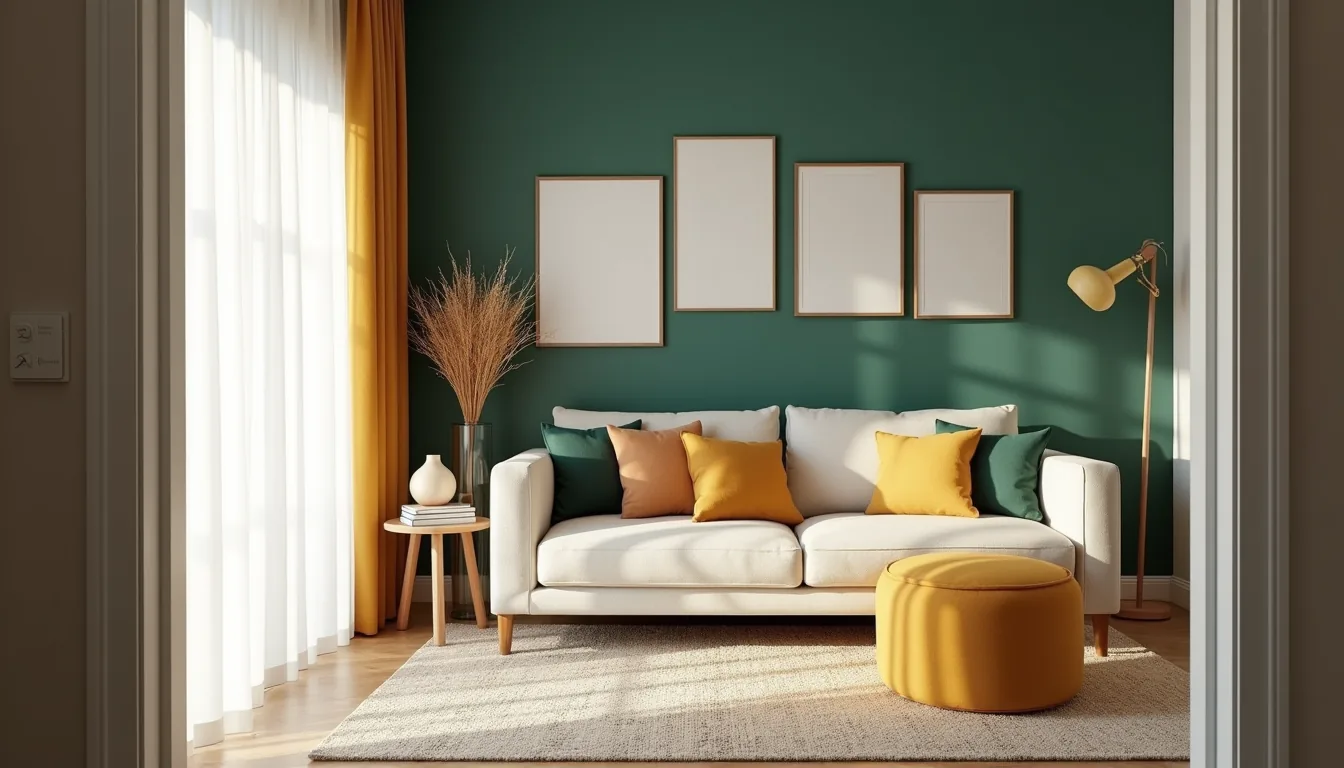
A maximalist living room rejects the “less is more” rule, but it still demands the same discipline as minimalism: every bold color, layered texture, and collected object must earn its place through scale, contrast, and function. Done right, it isn’t clutter, it’s curation. The following six approaches show you how to build that depth without sacrificing livability, whether you’re working with a rental, a tight budget, or a long-term renovation.
Key takeaways
- Start with walls, saturated paint or bold wallpaper defines maximalism instantly, and a single accent wall costs 40-70% less than outfitting a full room with new furniture.
- Layer art in odd numbers, group 3, 5, or 7 frames of mixed sizes within a 6-8 inch grid spacing to create visual rhythm without overwhelming a small wall.
- Mix three fabric weights, pair a heavy velvet sofa with a linen throw and a faux-fur or woven rug to add depth; this works best in rooms over 200 square feet where texture won’t crowd circulation paths.
- Thrift and DIY cut costs by half, repaint mismatched wooden chairs and reupholster a secondhand armchair for under $150 total, but budget 4-6 hours per piece for sanding, priming, and finishing.
Color Saturation and Wall Treatment
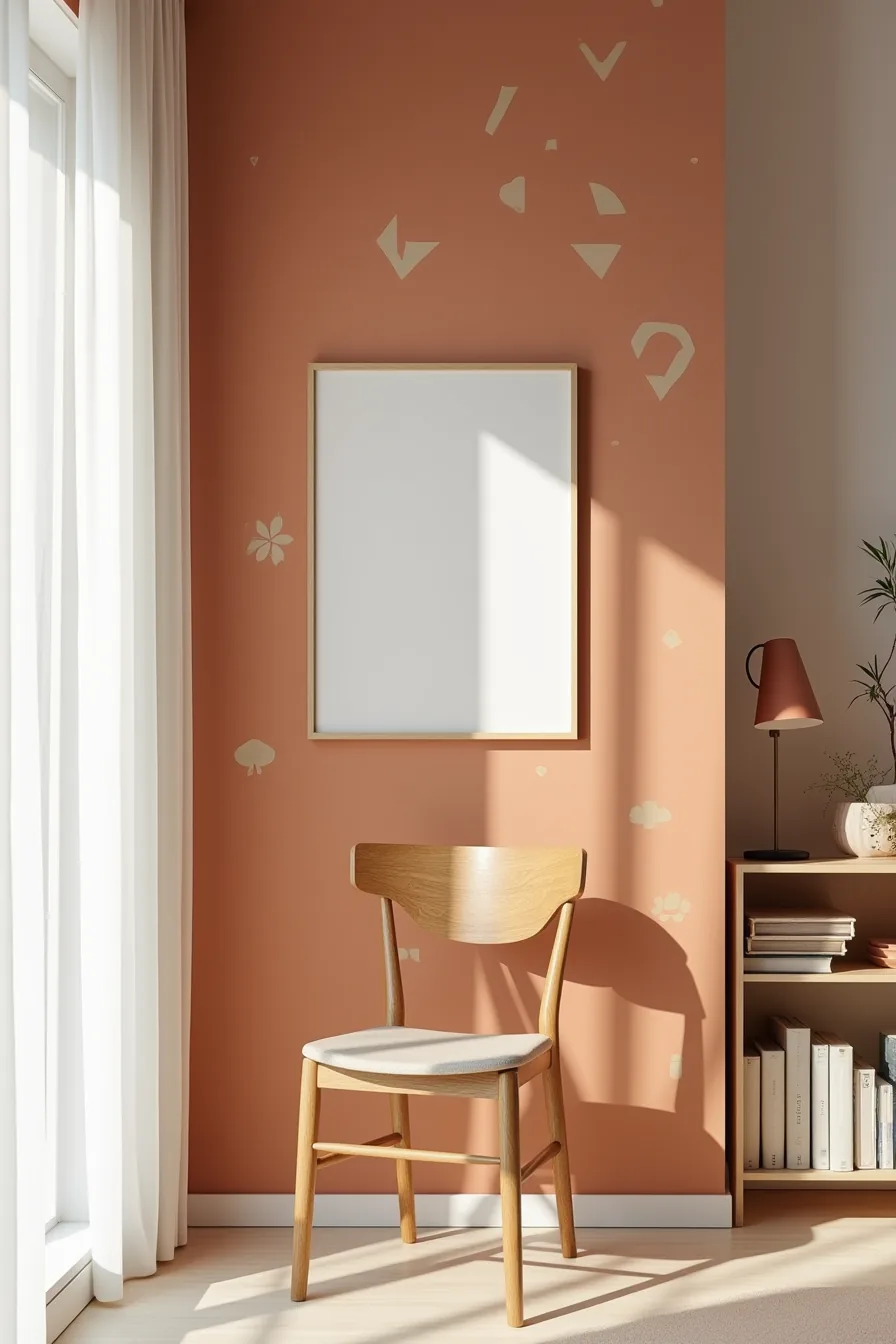
Your wall color sets the entire mood of a maximalist living room, so choose it first rather than last. A saturated terracotta anchor wall reads warm and collected without the visual fatigue of a full four-wall color commitment. You can apply a geometric stencil pattern in cream over the base coat to add depth; this works best on a flat, well-primed surface and takes roughly two days including drying time between coats.
Pair that wall with a simple wooden chair placed about 12 inches from the wall, and hang a botanical print in a plain frame at chair-back height, typically 58 to 62 inches from the floor to the frame center. This treatment suits medium to large rooms with good natural light, since deep pigments can make a dim, small space feel heavier. If you rent, use removable wallpaper in a similar pattern instead of paint and stencil, which will peel cleanly without damaging the surface beneath.
Gallery Wall Layering and Display Strategy
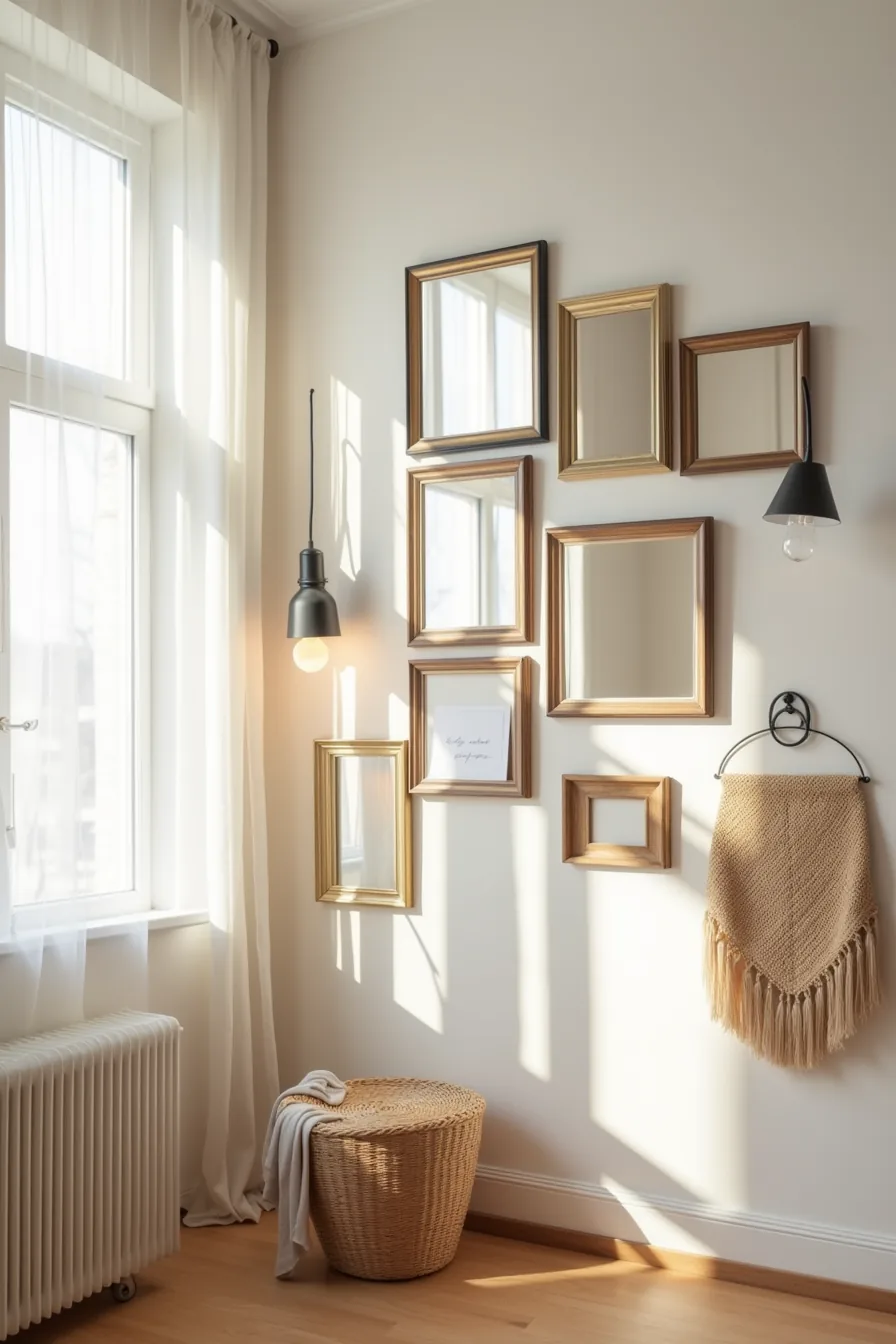
Gallery wall layering is where maximalism earns its keep: it lets you pack a wall with personality without adding a single piece of furniture. The salon-style arrangement that works best clusters twelve pieces of mixed sizes around a central anchor point, with the largest frame placed at the visual center and smaller pieces radiating outward. You want a blend of wood, brass, and black metal frames, with small mirrors interspersed to bounce light and a woven wall hanging breaking up the hard edges of the frames.
Start on the floor: lay out the full arrangement on newspaper, trace each piece, and tape the outlines to the wall before committing to nails. Keep a gap of 2 to 3 inches between frames for breathing room, and position the cluster’s center at eye level, roughly 60 inches from the floor. This layout suits medium and large rooms because it draws the eye upward and makes a high ceiling feel intentional rather than cavernous.
For renters, use command strips rated for the weight of each frame rather than nails; just verify the weight limit on the package, typically 4 to 5 pounds per strip.
Texture Mixing and Fabric Layering
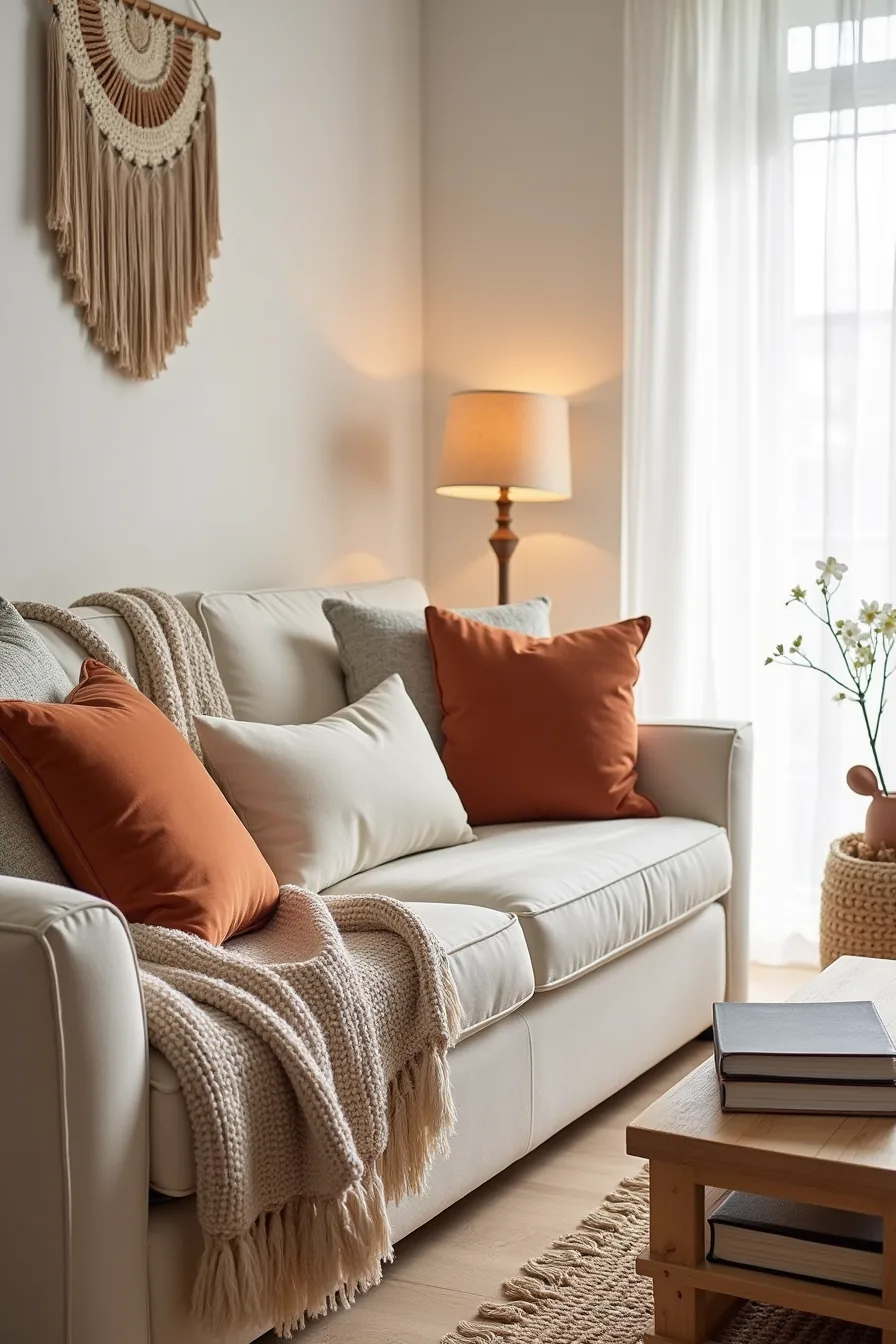
Texture does the heavy lifting in a maximalist living room where pattern already competes for attention. Contrast is the goal: pair a smooth velvet cushion against a coarse linen pillow, then drape a chunky knit throw over the sofa back so its ribs cast visible shadows. This combination works because each material catches light differently, giving the eye multiple points of interest without requiring additional furniture.
Layer the floor the same way. A fringed area rug with visible weave grounds the seating zone, while a macramé wall hanging behind the sofa adds vertical softness that frames the space. Limit yourself to three or four distinct textures per seating area, more than that reads as clutter rather than curation.
For maintenance, vacuum the knit throw weekly and dry-clean velvet cushions seasonally, as the nap flattens with repeated use. This approach suits medium to large rooms where seating sits away from walls, letting the rug’s fringe extend 12 to 18 inches beyond the sofa’s front edge.
Maximalism on a Budget: Thrift and DIY Routes
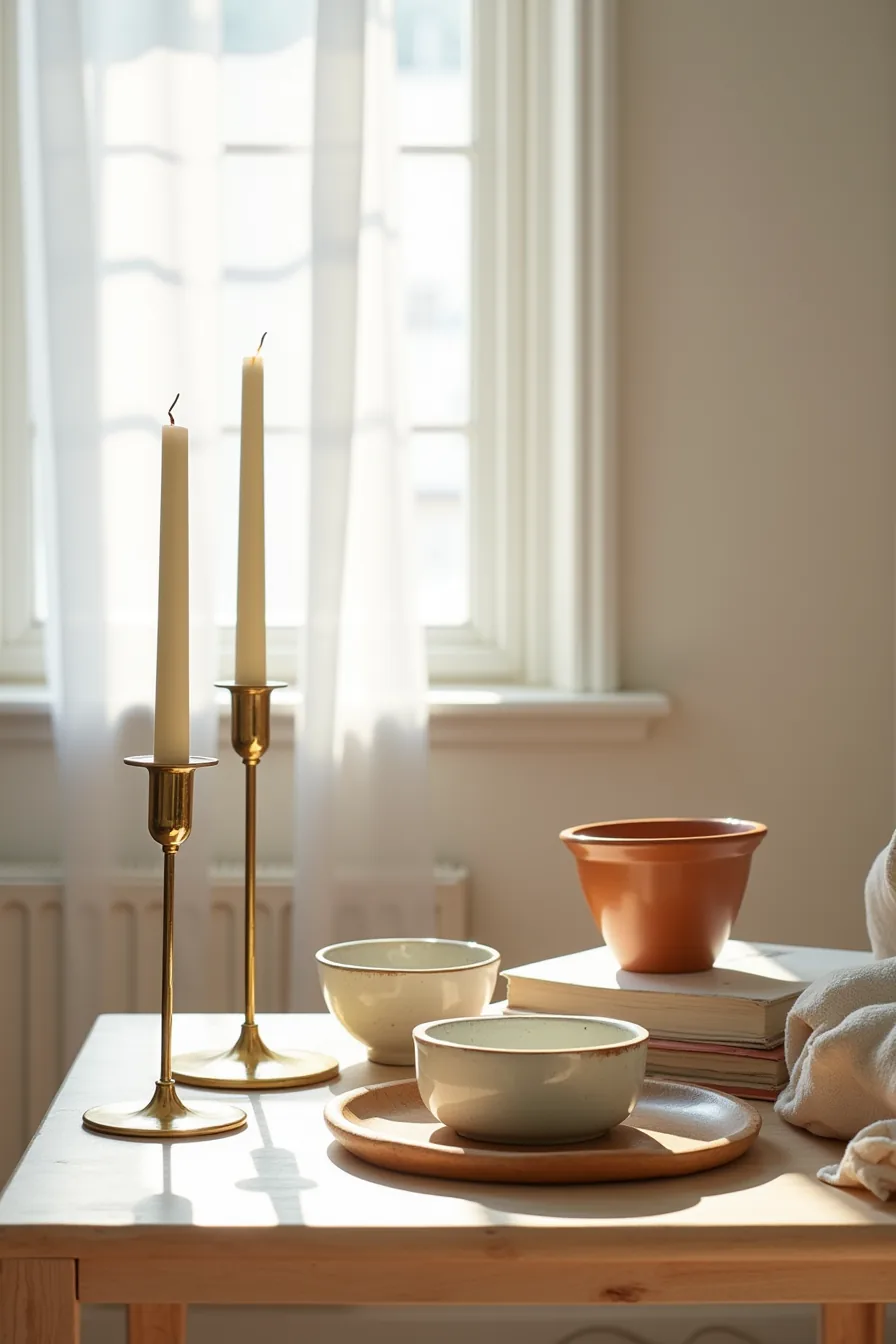
Start with a stamina strategy: commit to four Saturday-morning rounds across local charity shops and Facebook Marketplace before you buy anything new. You’re hunting for structural pieces with good bones, solid wood frames, brass that needs only polish, rather than finished looks. A low table found for $40 becomes the anchor when you pair it with a hand-painted wooden tray and mismatched ceramic bowls in glazes that only harmonize because they share a warm earth tone.
The flat lay on that table tells the whole budget story: vintage brass candlesticks at varying heights, rolled fabric remnants you can repurpose into cushion covers with a basic sewing machine, and a terracotta pot transformed with a single coat of latex paint. The total outlay for this vignette typically lands between $60 and $110, versus $300 or more for retail equivalents. The trade-off is time, allow two to three weekends for sourcing and drying paint, and you must resist the urge to buy items that merely fill space.
Every thrifted object should earn its place by matching your color story or a specific texture you lack.
This route suits renters and first-time decorators who want flexibility. Paint the pot, but skip painting walls; use fabric remnants as temporary wall panels affixed with removable adhesive strips. When you move, the table, candlesticks, and bowls travel with you, and the only sunk cost is the paint itself.
Make Maximalist Style Work in a Small Living Room
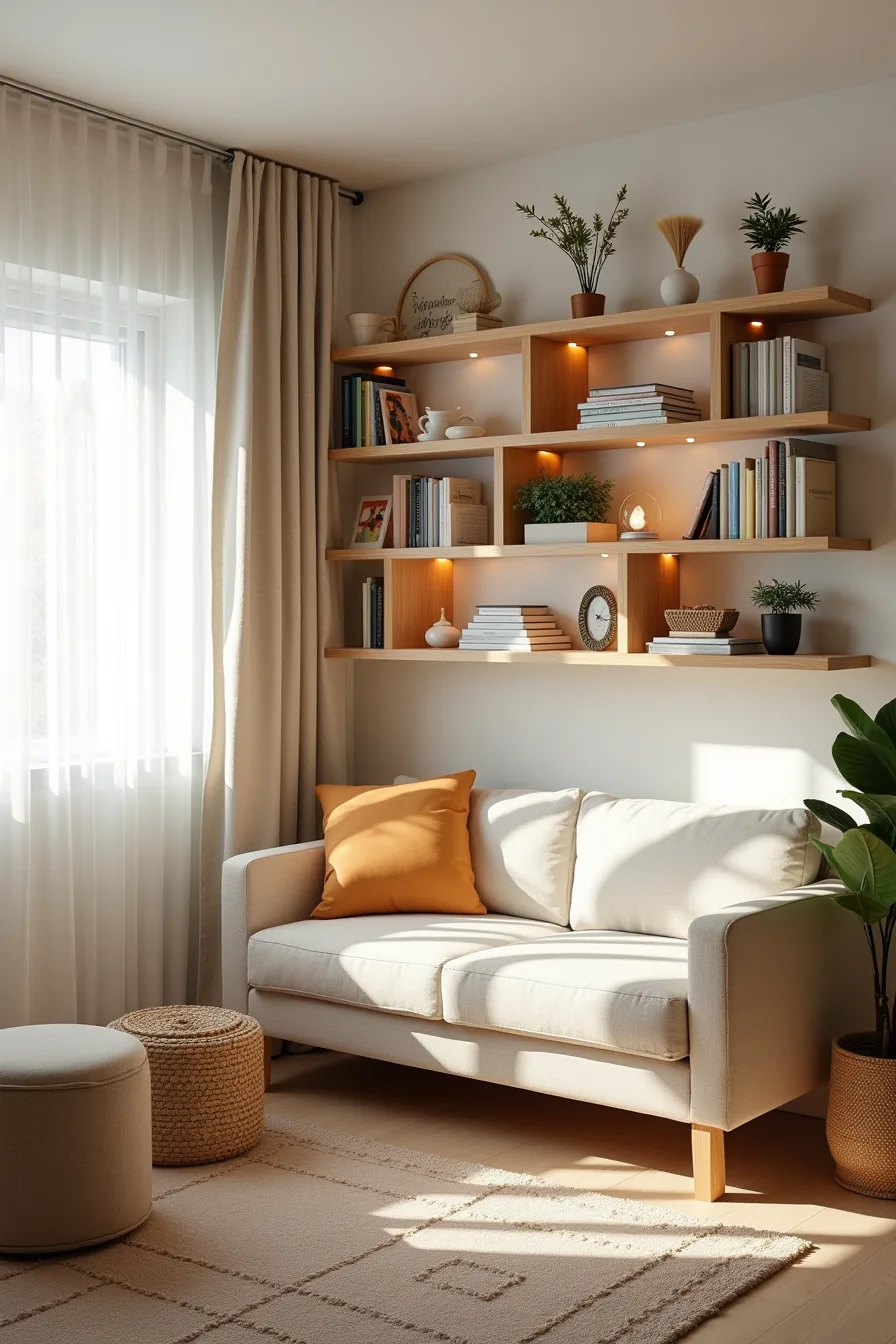
Small rooms punish horizontal accumulation, so shift your maximalist energy upward. Floor-to-ceiling shelving, typically 84 to 96 inches tall in standard rooms, turns an entire wall into a display system. Arrange stacked books and objects by color gradient rather than by topic; the rainbow effect reads as intentional design instead of noise.
Reserve the two lowest shelves for closed storage baskets that hide cables, remote controls, and off-season throws.
A compact sofa, kept to 72 inches or under, leaves floor space open, and placing vertical storage baskets beneath it exploits dead air. One patterned rug, ideally 5×7 feet in a standard apartment, anchors the seating zone without competing with the shelving. Paint a single accent wall in a deep jewel tone to give the room depth; the other three walls stay neutral so the eye lands on the color block rather than feeling surrounded by it.
This approach suits studio apartments and narrow living rooms where a large rug or oversized sectional would block circulation. The trade-off: you sacrifice floor-level display space for volume storage, so rotate your curated objects seasonally to keep the shelves feeling curated rather than cluttered.
Furniture Scale and Functional Layering
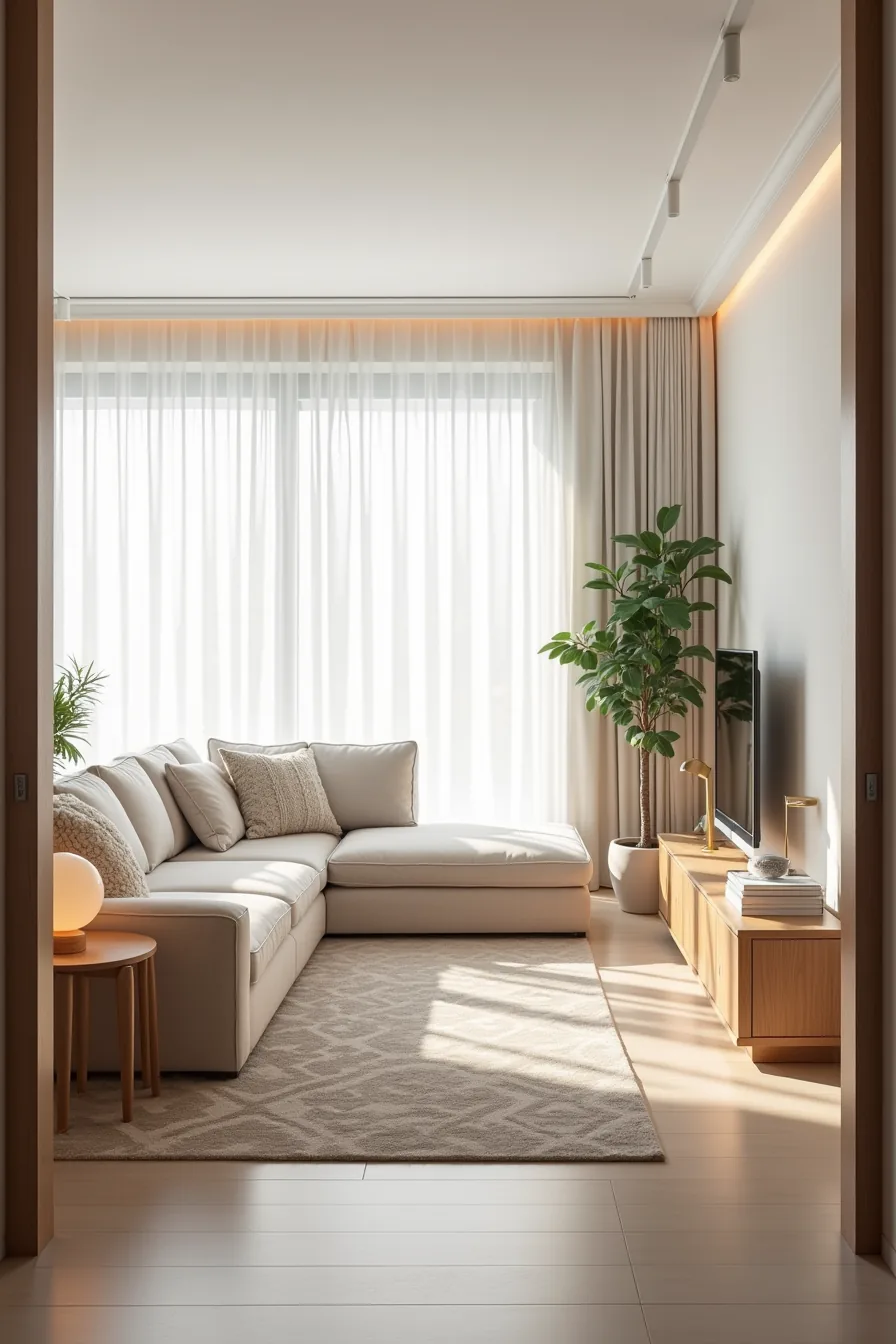
In a medium to large room, the sectional sofa should define the seating zone before anything else. Choose a substantial L-shaped model that seats five to seven people, and pull it 12 to 18 inches off the wall to create a circulation path behind it. Layer three to five cushions in varying sizes, a 22-inch square, an 18-inch lumbar, and a 12-inch bolster, mixing solids with one bold pattern.
The large patterned rug beneath should extend at least 6 inches beyond the front edge of the sectional on all sides; a typical 8×10 or 9×12 size anchors the zone without being swallowed by the floor.
The console table behind the sectional serves as both a visual anchor and a functional drop zone. Set it at the same height as the sofa back (32 to 36 inches typical) so objects are visible from standing height. Use a pair of low side tables flanking the seating to hold drinks and lamps, keeping the surface area near the sofa clear of clutter.
When pieces are sized to the room rather than the walls, the maximalist living room retains flow and usability, you can move through it, sit comfortably, and still display your collections without tripping over them.
Your Next Step
Start with the piece that annoys you most. If your sofa feels lifeless, layer a patterned throw and two mismatched pillows before touching anything else. If your walls look bare, hang one oversized frame at eye level and build outward from there.
Commit to styling that single element this weekend.
You’ll know the look works when the room feels collected, not cluttered, and every object earns its place. Bookmark this guide, then walk into your living room and pick your starting point right now.
Frequently Asked Questions
How do I prevent a maximalist living room from looking cluttered or chaotic?
Anchor the room with a single dominant color or pattern, then layer textures and objects in odd numbers (3 or 5). Edit ruthlessly every season, remove anything broken, unused, or visually redundant.
Can I do maximalist style in a rental apartment?
Yes, using renter-friendly wallpapers, peel-and-stick panel moulding, command hooks, and large area rugs. Focus on furniture and textile layers instead of permanent paint or tile. Secure heavy items properly, and avoid blocking windows or exits.
What’s the difference between maximalism and just having too much stuff?
Maximalism follows a curated design logic: pieces relate by color, era, or mood, with clear visual hierarchy and negative space. Clutter lacks intent, has no focal point, and impairs movement or daily function. If you can’t walk the room, it’s clutter.
How much should I budget to create a maximalist living room from scratch?
A realistic range is $1,200–$6,000 depending on furniture quality and sourcing. Start with a thrifted bold sofa ($300–$800), mix budget textiles ($150–$400), and invest in one statement piece, like a patterned rug or gallery lighting, for $500–$1,500.