A TV wall design living room fails when the screen becomes an afterthought, but it succeeds when you treat the wall as a functional composition of scale, sightlines, and storage, here are six proven approaches to get it right. Each option below targets a different room size, budget, and lifestyle, from a renter-friendly floating shelf to a built-in media unit that anchors a large space. You’ll also get the exact measurements, material trade-offs, and maintenance needs that separate a polished install from a frustrating one.
Key takeaways
- Centered TV walls suit formal, symmetrical rooms with a sofa directly opposite; measure the distance from screen to seating and keep it within 1.5–2.5 times the TV’s diagonal size for comfortable viewing.
- Offset placement works best when a fireplace, window, or built-in bookcase already anchors one side; position the TV at eye level (42–48 inches from floor to center) and angle it toward the main seat without blocking natural light or airflow.
- Built-in cabinetry adds 12–18 inches of depth around the TV and hides cables, but budget 15–25% more than a floating mount for materials and installation, and leave 2–3 inches of clearance behind the unit for ventilation.
- Floating mounts with minimal framing are the renter-friendly route: they require only two studs for support, cost $30–$80 for a basic bracket, and you can patch the holes with spackle when you move out, avoiding permanent wall damage.
Centered TV Wall for Balanced Symmetry
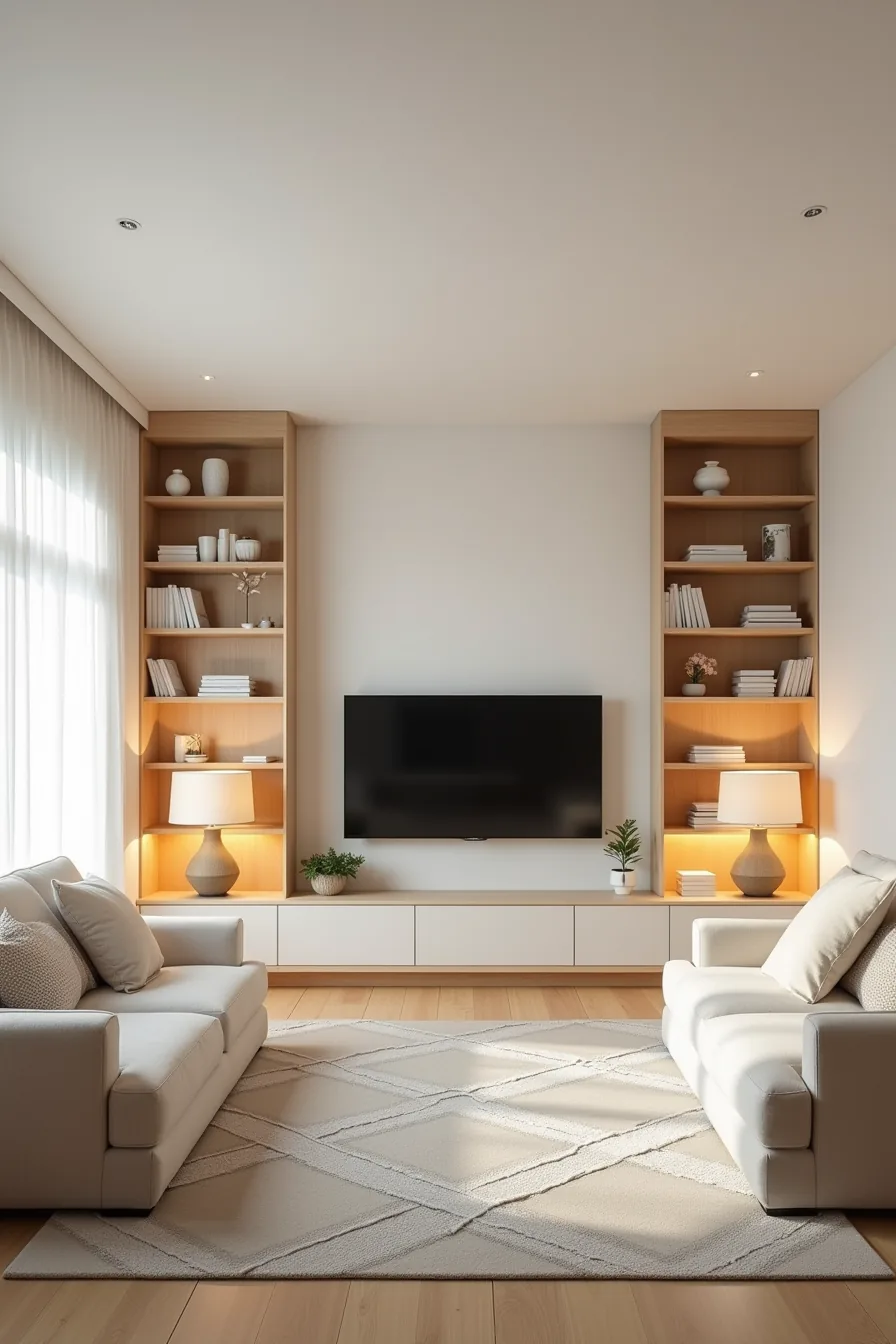
A centered TV wall works best in standard rectangular rooms where the seating area faces the wall directly. This layout suits anyone who prioritizes movie nights or gaming over conversation-heavy entertaining, because the focal point pulls every eye in one direction.
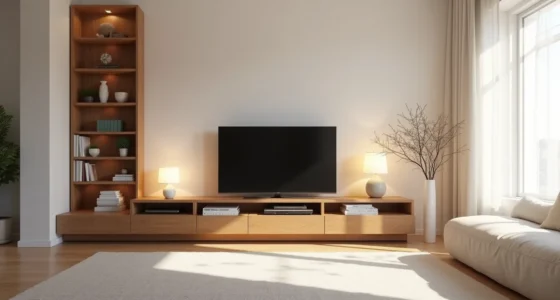
Position the TV at the visual center of the wall, with its midpoint roughly at seated eye level, typically 42–48 inches from the floor for most sofas. Flank it with two identical tall bookcases to anchor the composition; matching table lamps on either side of the sofa mirror that symmetry, and throw pillows in repeating patterns reinforce the balance. A geometric rug with a centered pattern ties the zone together without competing for attention.
You can reproduce this look with bookshelves you already own, provided they match in height and depth. If they don’t, paint them the same color to create visual twins. Budget route: use open shelving units under $150 each and style them with baskets and books rather than custom cabinetry.
The main trade-off is flexibility, this arrangement commits you to a single viewing axis, so avoid it if you frequently rearrange furniture or host large groups.
Offset TV Placement Against Architectural Features
Offsetting the TV from center works when your room’s architecture already dictates a focal point, a window, a fireplace, or a doorway. This arrangement suits loft-style or open-plan living rooms where traffic flows diagonally through the space, because it keeps the primary sightline clear of foot traffic.
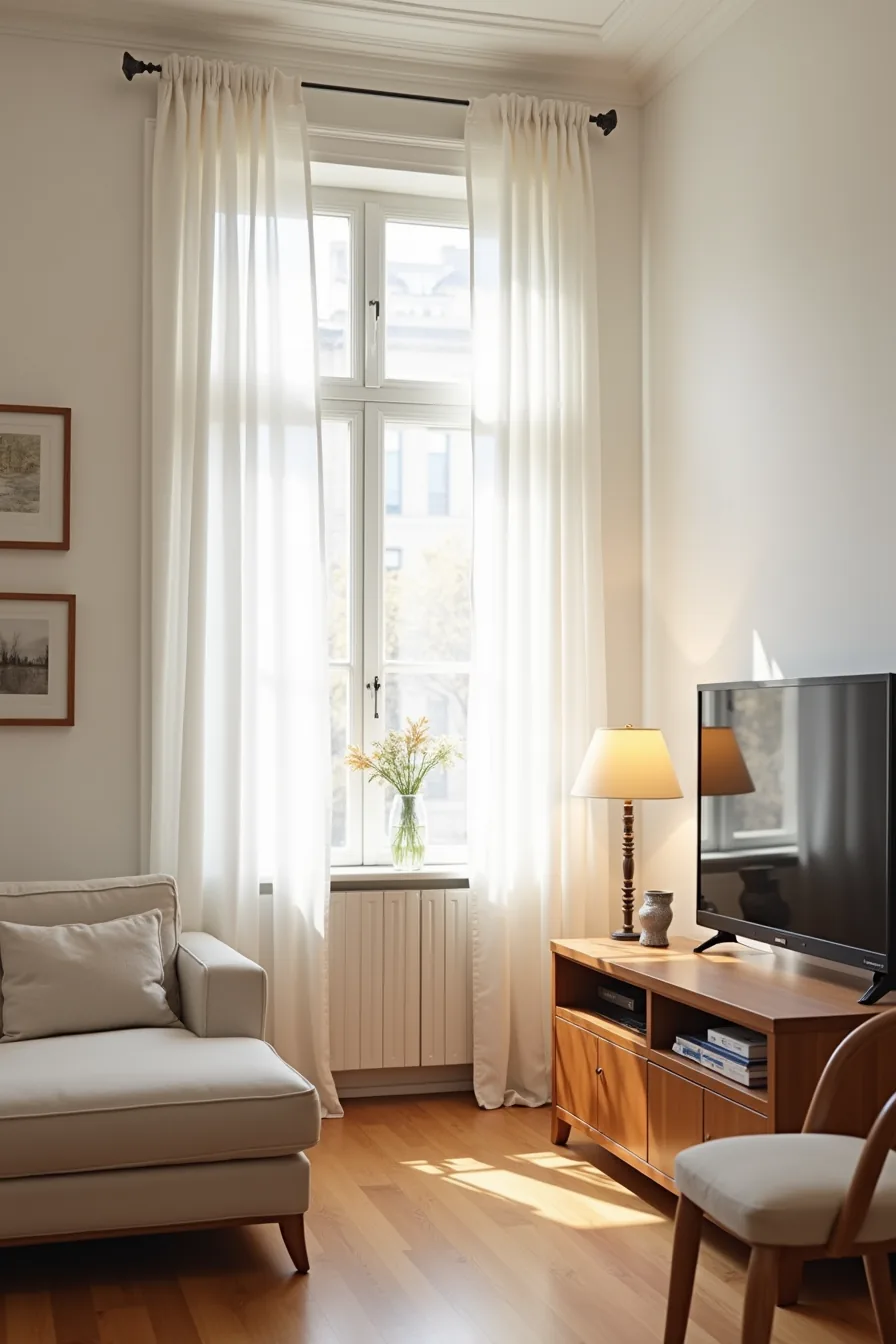
In the setup visible here, the TV mounts to the right of the window frame, with the white trim and sheer curtains left unobstructed. That window becomes the daylight anchor, while the asymmetrical gallery wall on the left balances the composition without competing for attention. A console table beneath the TV grounds the unit and hides cables, and the hardwood floor extending to the room’s edge keeps the visual weight low.
To reproduce this, align the TV’s outer edge with the window trim rather than centering it on the wall, typically leaving 12–18 inches of breathing room. Choose a console that matches the window trim’s white finish for architectural alignment. This approach suits renters, since it works with freestanding furniture and requires no built-ins; the trade-off is that your seating must angle slightly toward the screen, which reduces straight-on viewing comfort for more than three people.
The Sofa-View Test: Measuring Comfort and Angle
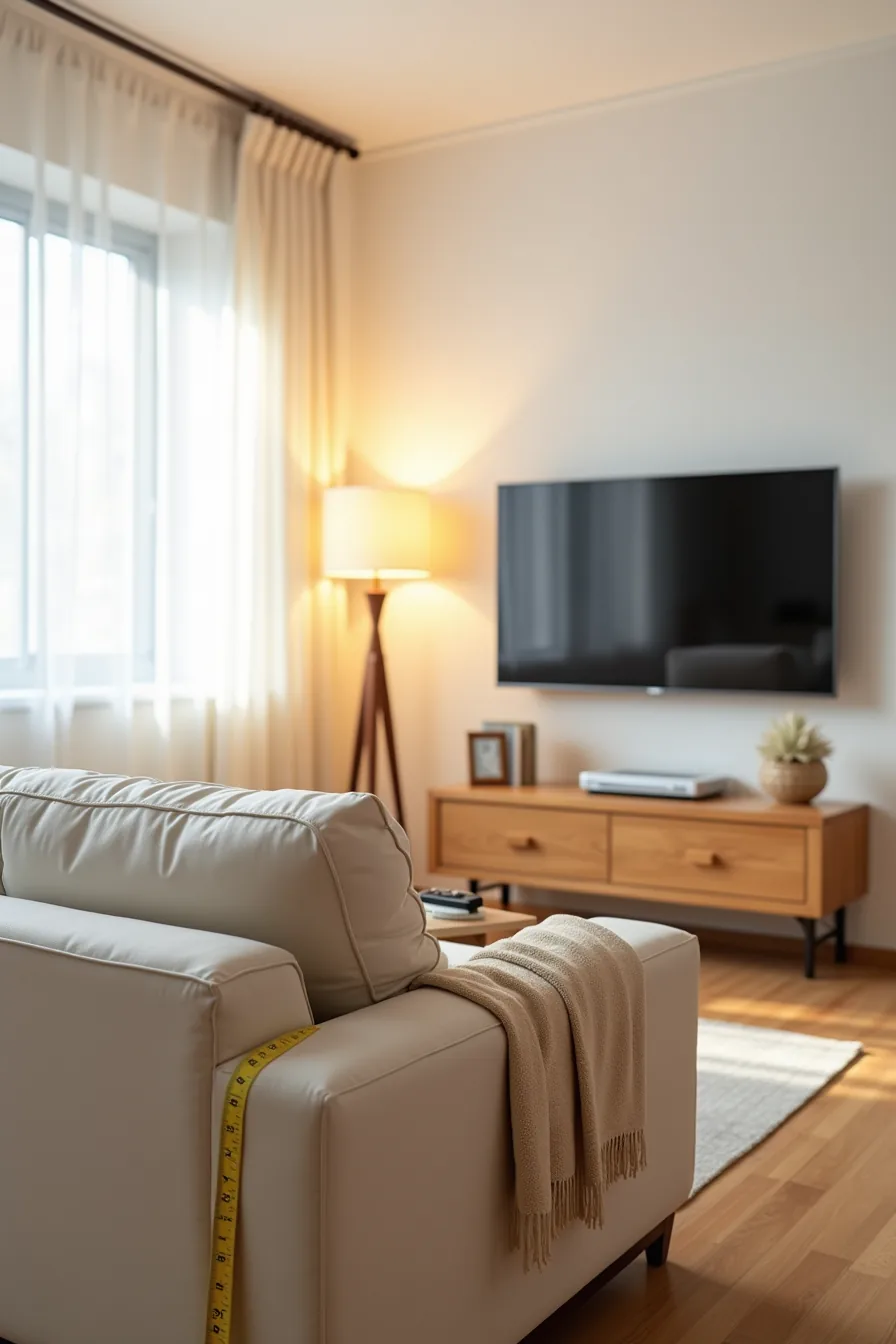
Before you commit to any mount height, sit at your actual viewing position and test the sightline. From a typical sofa seat height of 18–20 inches, your eye level lands around 40–42 inches from the floor; the TV’s vertical center should match that, not the room’s midpoint. Drape a measuring tape from the sofa’s front edge toward the wall to confirm the distance: for most 55–65-inch screens, 8–10 feet of separation keeps the viewing angle within the comfortable 30-degree cone.
In this low-angle setup, the tape runs roughly 8 feet from the sofa edge to the wall, and the TV sits at seated eye level, no tilting mount required. The throw blanket on the arm and the side table with the remote confirm this is a daily-use spot, not a formal arrangement. For smaller rooms where you can’t achieve 8 feet, reduce screen size rather than pushing the sofa closer; at 6 feet, a 50-inch TV is the practical ceiling before eye fatigue sets in.
Built-In Cabinetry for Storage and Visual Weight
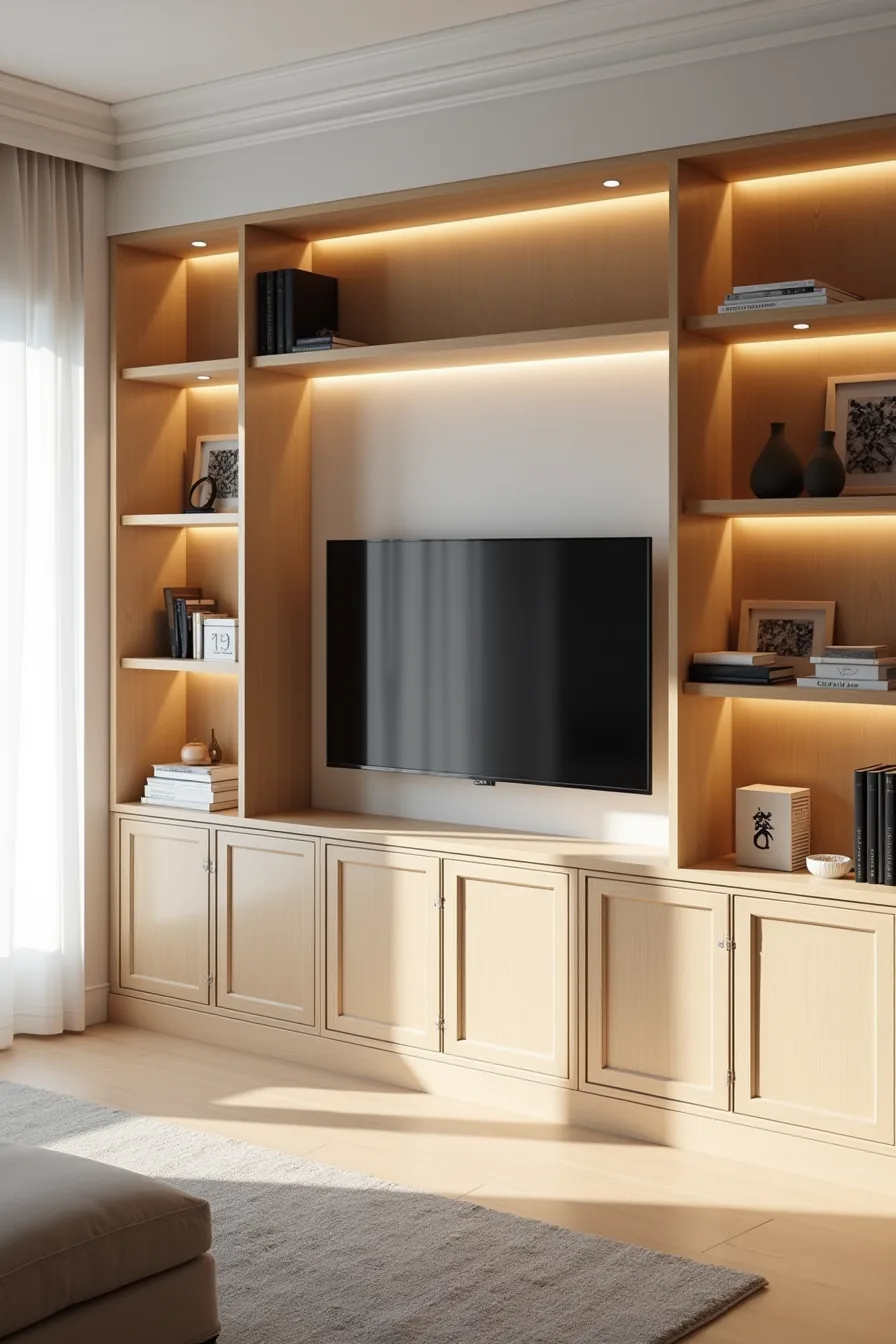
Built-in cabinetry treats the TV as one component of a larger storage system rather than the focal point itself. The setup here uses a continuous wood-grain finish across the full wall, with closed cabinet doors below and open shelves above the screen. That split matters: closed lower storage hides media players, cables, and board games behind doors, while the open upper shelves display books and decorative objects that soften the screen’s black rectangle.
The wood-grain finish runs floor-to-ceiling, which visually anchors the TV and keeps the wall from feeling top-heavy. Recessed lighting above the shelves casts light down the cabinet face, reducing the contrast between the bright screen and dark cabinetry during evening viewing.
This approach suits medium to large living rooms where you’ve at least 12–14 inches of depth to spare for shelving on either side of the TV. In a compact apartment, slim the design by using 12-inch-deep cabinets instead of the standard 16–18 inches, and skip the upper open shelves if you don’t have decorative objects to style them. Expect to pay a premium over a simple mount: custom-built cabinetry runs roughly three to five times the cost of a floating shelf setup, and it’s a permanent installation you won’t take with you when you move.
Accent Wall Treatments: Paint, Tile, and Texture

Shiplap paneling spanning the entire wall behind the mount gives the TV a textured backdrop without adding depth that interferes with sightlines. The horizontal wood slats run in a natural finish, catching subtle shadows that break up the screen’s flat black rectangle. Because the shiplap ends at the wall boundaries rather than framing the TV with a dedicated surround, it reads as an architectural choice, not a media console.
This treatment suits living rooms where you want warmth without committing to built-ins. It works in small spaces, since the slats take up zero floor area and actually make a narrow wall feel wider through repeated horizontal lines. The TV protrudes slightly from the surface on its mount, creating a shallow shadow line that adds dimensionality for under $200 in materials if you install it yourself.
Maintenance is the trade-off. Natural wood slats require occasional dusting between the grooves, and unsealed finishes can show fingerprints near the screen where people reach to adjust the angle. Painted shiplap is the budget route, around half the cost of natural wood, but it shows scuffs more readily.
Stone veneer offers a higher-end alternative at two to three times the cost, yet it demands professional installation and collects dust in its grout lines. Renter-friendly option: stick-on wallpaper panels that mimic the slat texture and peel off without damaging the paint.
Floating Mounts and Minimal Framing for Clean Aesthetics
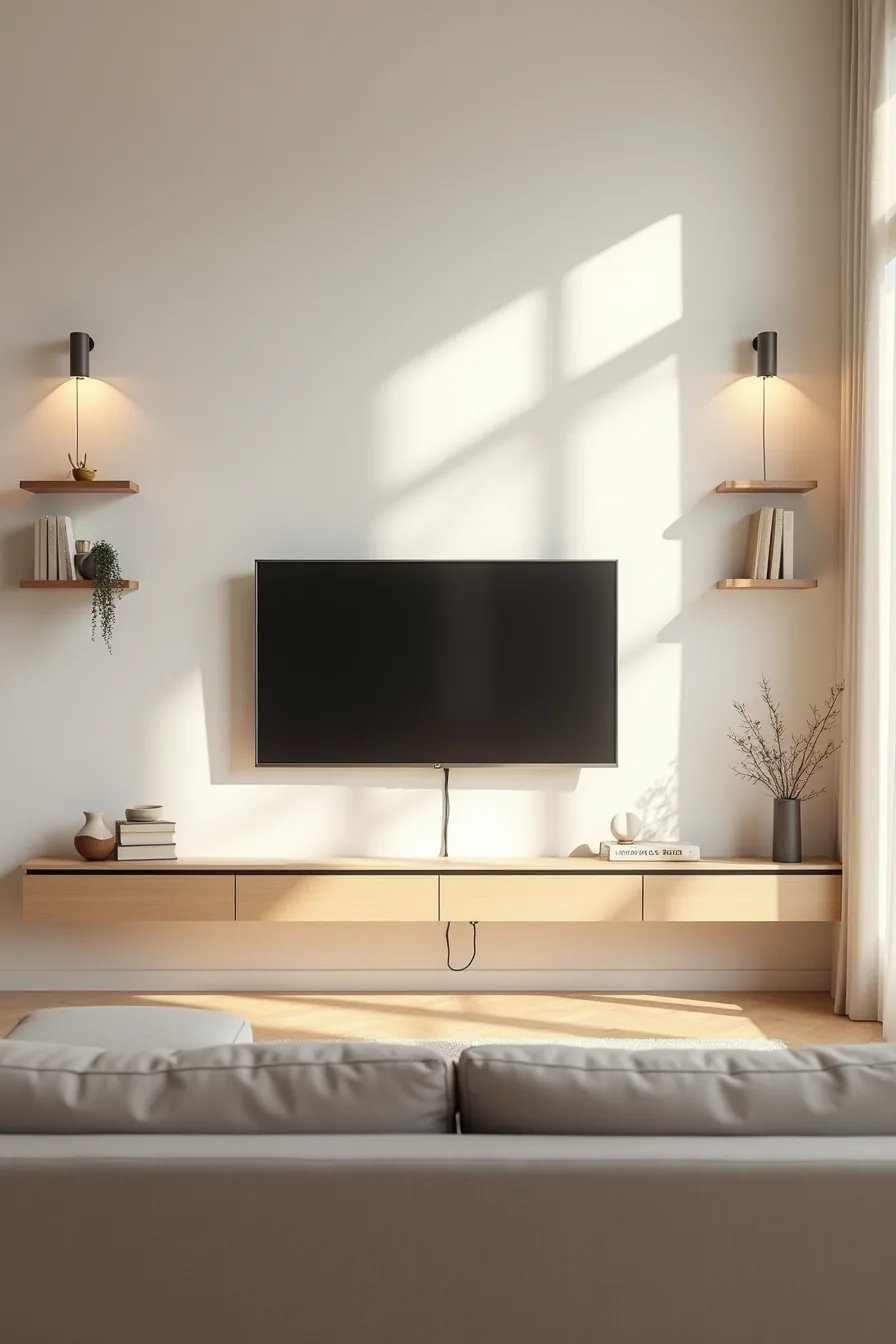
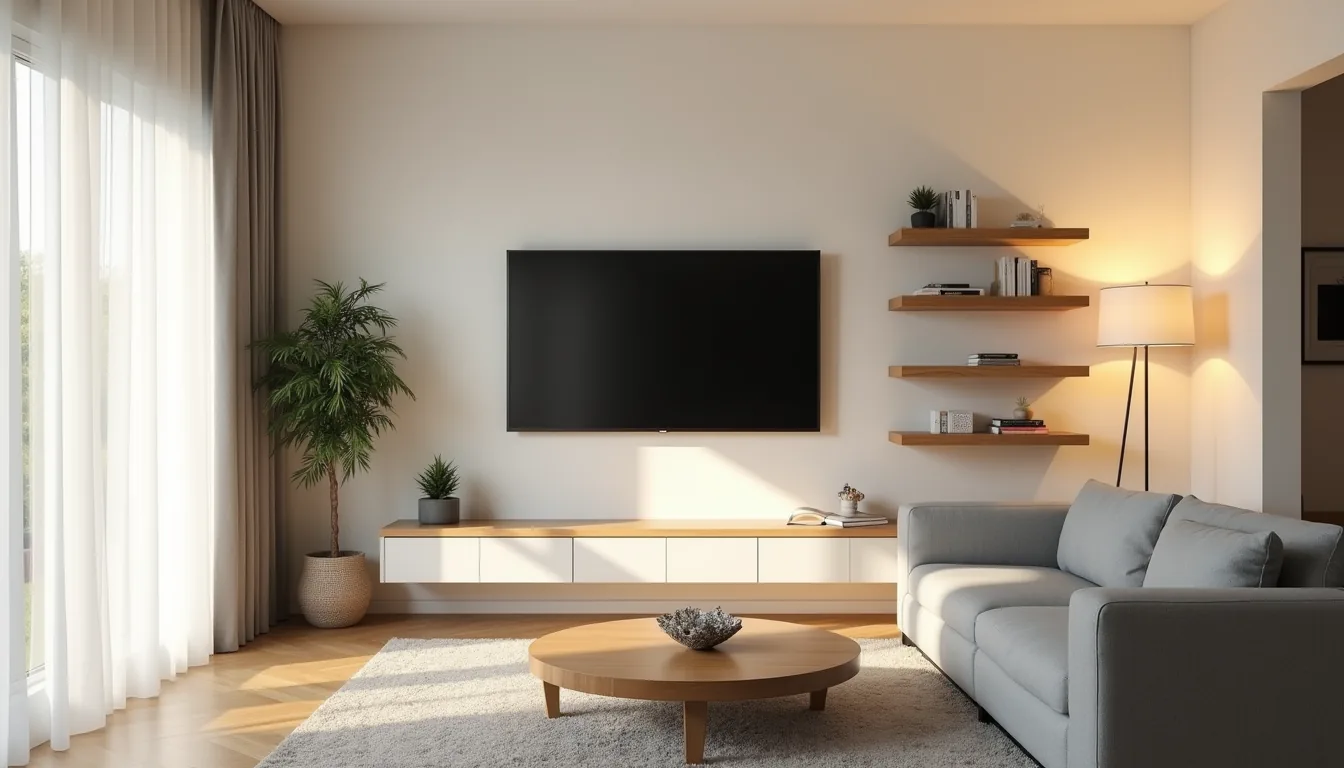
A floating mount on a plain painted wall eliminates the visual weight of a console, leaving the screen as the single focal point. The thin metal bracket holds the TV close to the surface, and a wall conduit routes cables vertically behind the drywall so nothing dangles below the screen. This setup only works if you’ve access to the wall cavity and a clear path to an outlet, retrofitting conduit into an exterior masonry wall is rarely worth the expense.
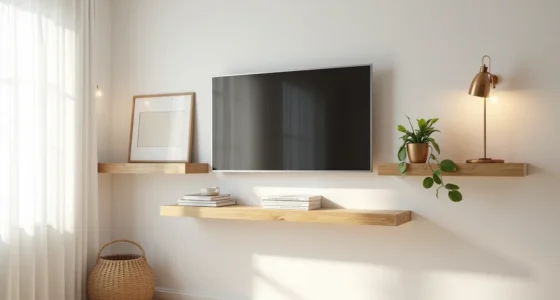
Floating shelves on either side carry the decorative load: a plant, a stack of books, a soundbar. They give the eye somewhere to rest without competing with the screen, and they suit medium to large rooms where the TV wall has at least six to eight feet of clear width. In a small room, the same approach feels sparse rather than minimal, and you lose the storage a console would provide.
You’re committing to a tidy lifestyle here. Without a console, every cable, remote, and game controller needs a designated hiding spot. This is the long-term investment route, the bracket, conduit, and professional drywall repair cost more upfront than a budget console, but the result reads as custom.
If you rent, skip the conduit and use a cord cover painted to match the wall; it costs about $20 and leaves no permanent trace. For living room TV walls for a cleaner everyday look, this is the strongest argument against clutter you can make.
Your two-hour decision plan
Before you buy anything, measure your wall and your seating distance. That single number determines whether you need a 55-inch screen or a 75-inch, and whether your console should be 48 or 72 inches wide. Most designers agree: the TV should span roughly 60 percent of the wall’s width, and the bottom edge should sit at seated eye level.
Then grab painter’s tape and mark the exact footprint on the wall. Live with it for a day. If the layout blocks a doorway, reflects glare, or forces you to crane your neck, adjust before you spend a dollar.
Your first move: take those two measurements and tape out the TV’s position tonight, then choose which of the six approaches fits your space, budget, and lease terms tomorrow.
Frequently Asked Questions
What is the ideal distance to sit from a TV in a living room?
Sit roughly 1.5 to 2.5 times the screen’s diagonal measurement away. For a 55-inch TV, that’s about 6.5 to 11.5 feet. Adjust for personal comfort and viewing angle.
Can I mount a TV on a rental apartment wall without damaging it?
Yes, use a freestanding TV stand or a floor-mounted pole system. Alternatively, patch and repaint small holes before moving out. Always check your lease for specific wall modification rules first.
How do I hide cables and wires behind a wall-mounted TV?
Install an in-wall cable management kit, which typically includes two low-voltage boxes and a conduit. This requires cutting drywall, so it’s best for permanent installations. For rentals, use a cord cover that paints to match your wall.
What size TV wall design should I choose for a small living room?
For a small living room, a 43 to 55-inch TV generally works best. Ensure the TV occupies less than 60 percent of the wall’s width. This maintains proportion and leaves space for other design elements.