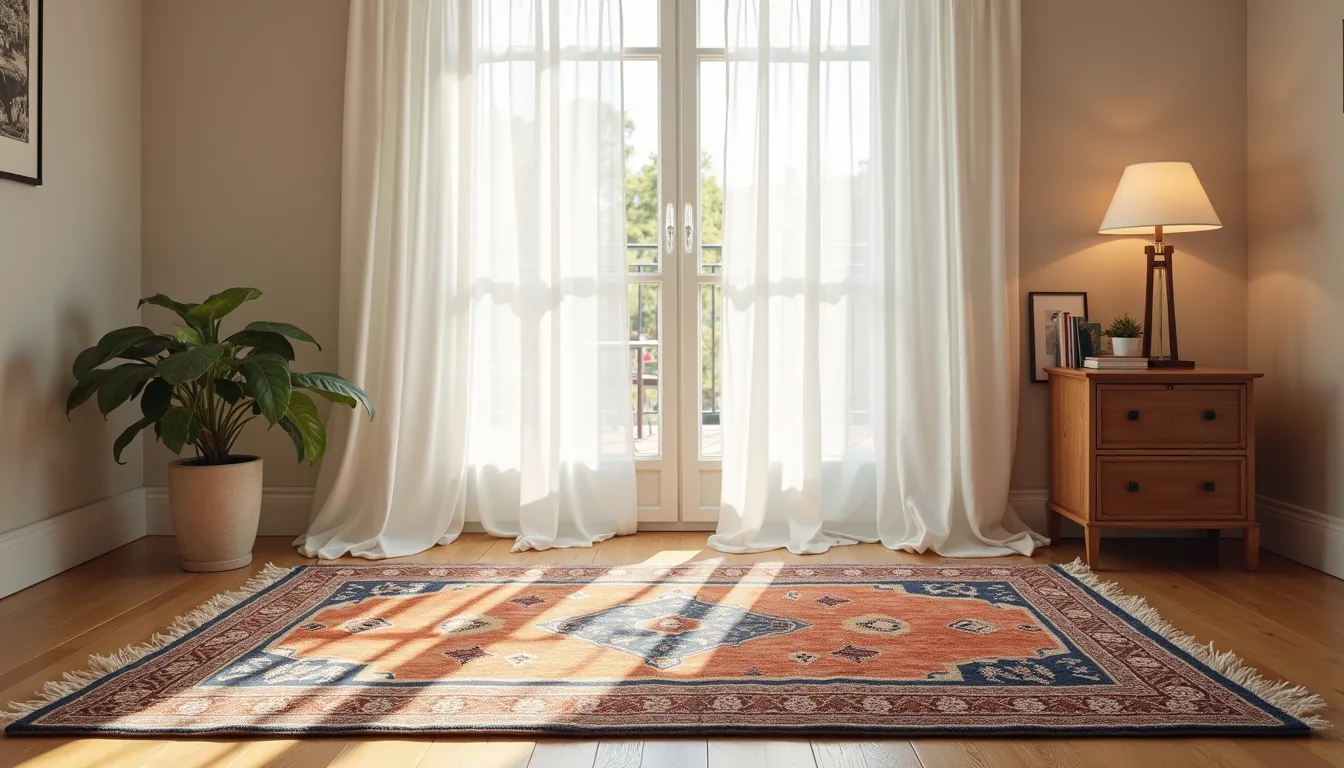
An Arabic rug isn’t a single pattern but a design strategy that pairs geometric or calligraphic motifs with practical material choices, and the right one anchors a room without dictating its style. What follows is a decision-ready breakdown of six distinct interpretations, from wool-heavy investments to renter-friendly flatweaves, matched to your space, budget, and maintenance tolerance. You’ll learn exactly what scale, border, and fiber work in each room, plus the trade-offs that separate a smart purchase from a costly mistake.
Key takeaways
- Build your palette from the rug’s dominant hue, not its accent colors, to ensure wall, furniture, and textile tones harmonize without clashing.
- Anchor a modern sofa with a traditional Arabic rug (typically 8×10 feet for a standard living room) to create contrast, letting the rug’s geometric pattern carry the visual weight.
- Choose a low-pile wool or flat-weave rug (0.25–0.5 inches thick) for high-traffic open-plan areas, as it resists crushing and makes vacuuming and spot-cleaning far easier.
- For renters, opt for a washable polypropylene or viscose blend rug (often under $300 for a 5×7) and secure it with double-sided rug tape, avoiding permanent floor adhesives that risk deposit deductions.
Build Your Rug-Led Color Palette Around Pattern
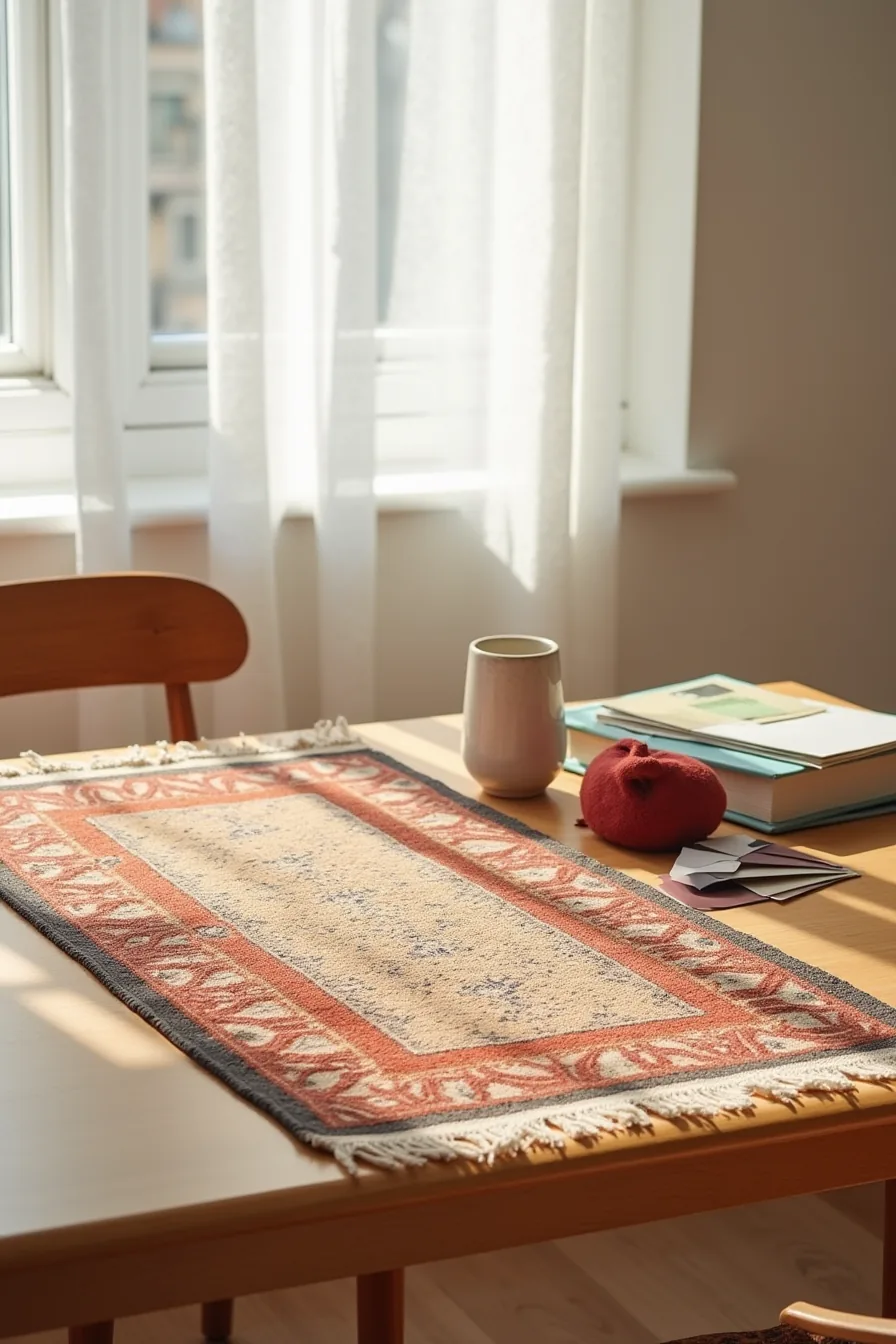
Instead of picking paint first and hoping the rug matches, reverse the process. Lay a rust-and-cream Arabic rug swatch on a wooden table, then fan paint chips in charcoal, rust, and cream beside it. Those three colors, one dark anchor, one warm mid-tone, and one neutral, form the entire room’s palette.
Pull fabric swatches and a ceramic object in the same tones to test how textures will behave before you commit.
This method works because it guarantees cohesion without matching. The charcoal grounds the space (try it on a fireplace wall or sofa), rust adds warmth (cushions, throws, or a single armchair), and cream keeps walls light to prevent the pattern from feeling heavy. For small rooms, limit rust to accessories; in larger spaces, let it take a sofa.
The rug-led color palette approach removes guesswork, every purchase coordinates because it answers to the rug’s own pattern.
Traditional Arabic Rug Paired with Modern Furnishings
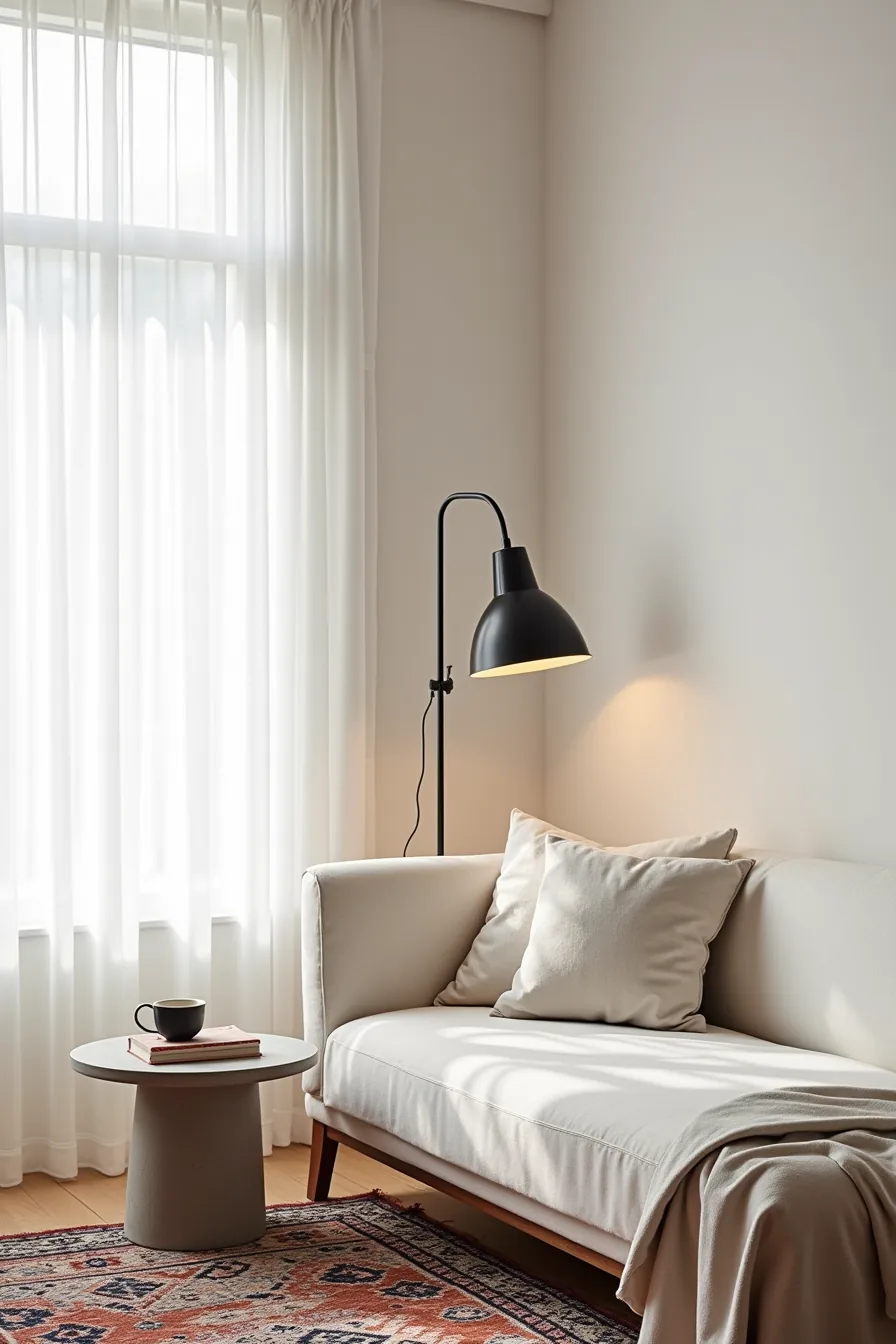
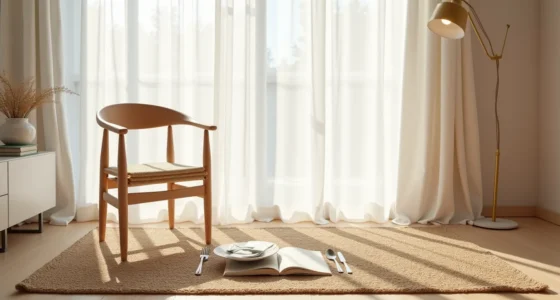
A geometric Arabic rug in navy, terracotta, and ivory holds its own against sleek black metal, crisp white linen, and raw concrete. The medallion or repeating-star pattern provides the visual weight; the modern pieces supply clean lines that don’t compete with it. That contrast between a centuries-old design language and contemporary materials is what makes the pairing feel curated rather than accidental.
This setup suits a living room where you want warmth without clutter. The rug grounds the seating area while the metal floor lamp and concrete side table keep the eye moving upward instead of letting the pattern flatten the space. For a 10×13-foot room, choose a rug that leaves 12-18 inches of bare floor on all sides.
If your sofa is white, the navy in the rug will anchor it; if your sofa is darker, the ivory fields will provide the contrast you need.
Use an Arabic Rug to Warm Minimal Rooms
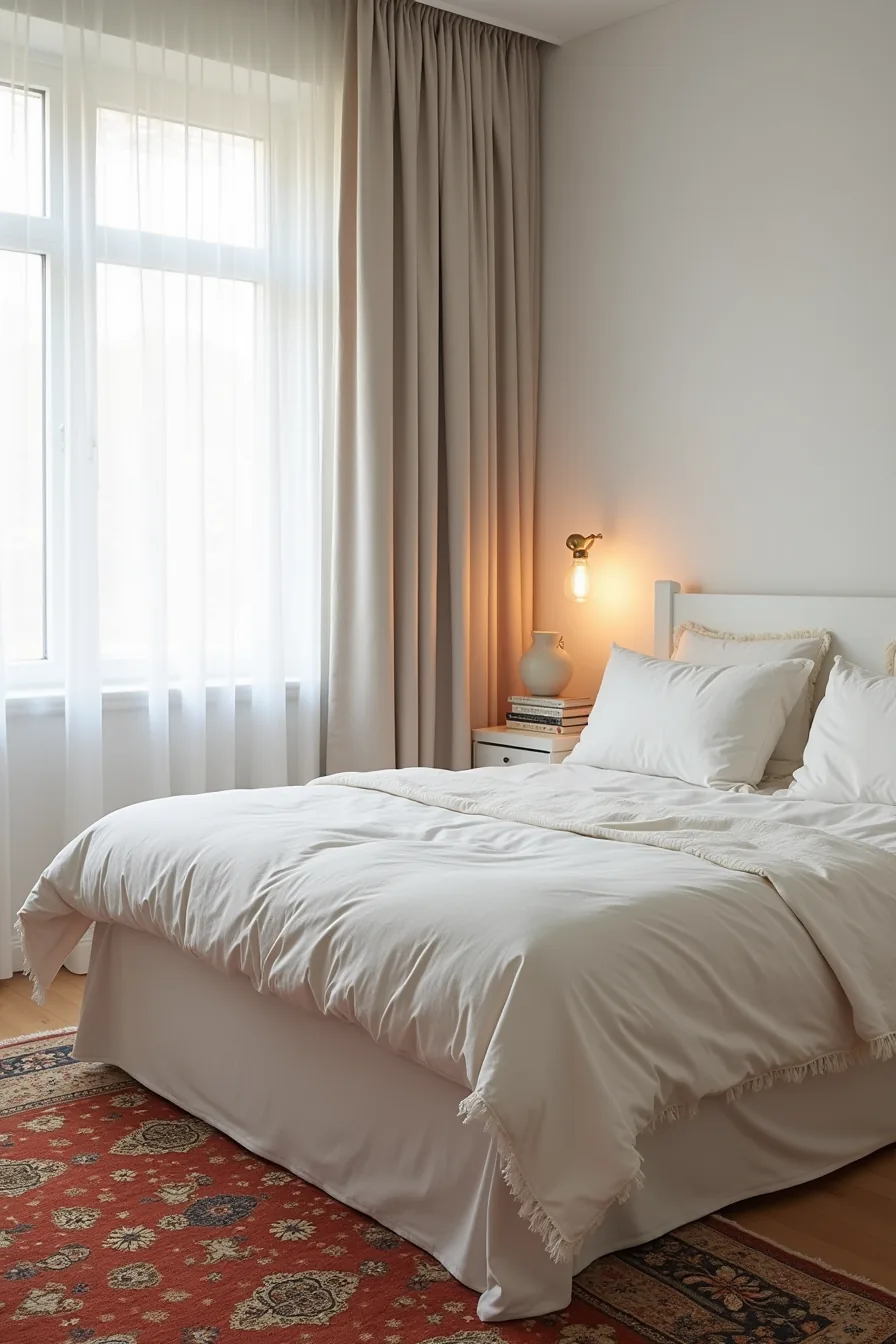
A single ornate Arabic rug in warm terracotta, gold, and cream transforms a sparse bedroom with pale gray walls and a white bedframe into a space that feels inhabited rather than merely staged. The rug introduces the only strong color in the room, so it carries the entire emotional weight of the palette without requiring any additional decor. Because the bedframe and walls stay neutral, the rug’s dense pattern reads as texture and warmth instead of visual noise.
This approach works best for you if you prefer bare surfaces but find all-white interiors cold. Place the rug perpendicular across the foot of the bed, leaving 12-18 inches of floor visible on either side, this proportion keeps the bed visually grounded without letting the pattern swallow the room. The uncluttered nightstand with a single ceramic vessel preserves the minimalist intent; adding more objects would compete with the rug’s complexity.
For maintenance, expect to vacuum weekly and have the rug professionally cleaned every 12-18 months, since high-traffic foot-of-bed placement accumulates wear faster than a side-table runner.
Pattern as Focal Point in Open-Plan Layouts
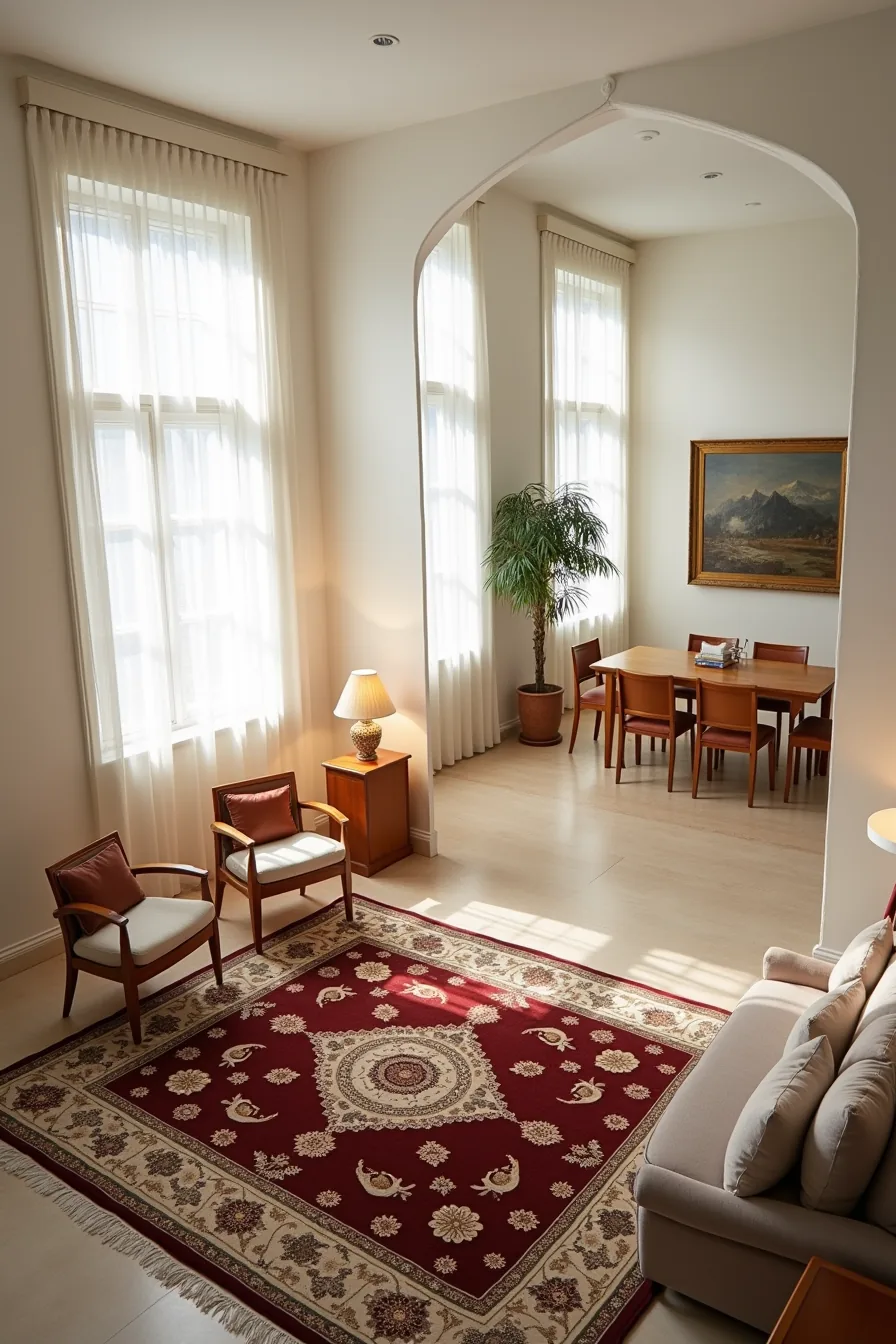
In an open-plan room, a large Arabic rug with a medallion design in burgundy, gold, and ivory does more than decorate, it anchors the conversation zone and prevents the space from feeling like a furniture showroom. The rug’s bold central medallion draws the eye to the seating cluster, while its defined boundary visually separates the lounge area from the dining table positioned beyond its edge. This works because the medallion pattern, not the ceiling or wall color, becomes the room’s organizing principle.
Position the rug so its front legs of the upholstered sofa rest on it, with the two accent chairs arranged at the opposite corners. You should leave at least 24-30 inches of bare floor between the rug’s edge and the dining table, this gap clarifies the zone transition without making either area feel cramped. The burgundy field reads as warmth against neutral walls, while the gold accents echo light from the dining side, pulling the two zones into one cohesive palette.
For a 12×15-foot living area, choose a rug no smaller than 8×10 feet; anything smaller will make the seating cluster feel like a floating island rather than a grounded destination. Vacuum weekly and rotate the rug twice a year to keep the medallion centered and wear even.
Sizing and Placement for Different Room Types
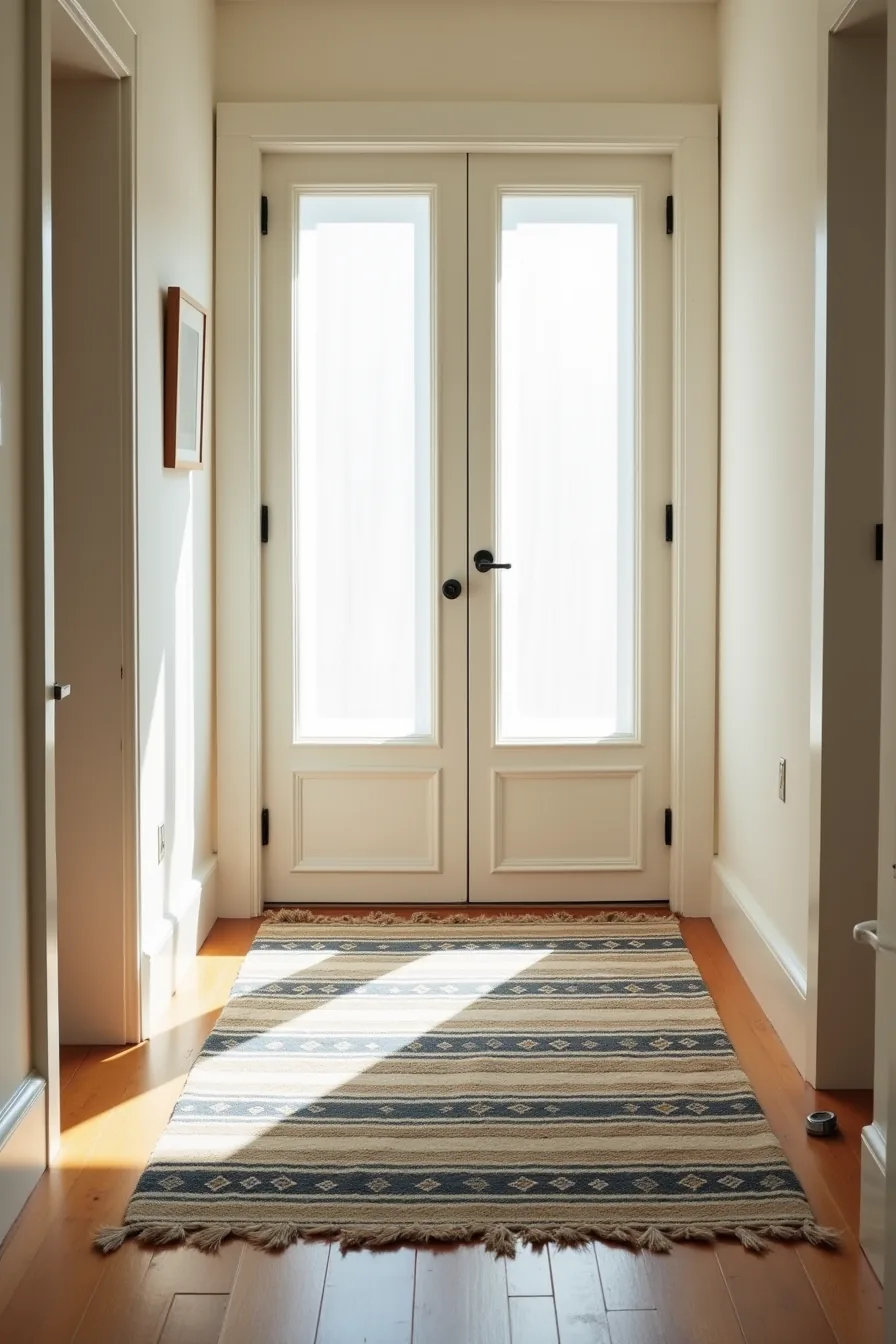
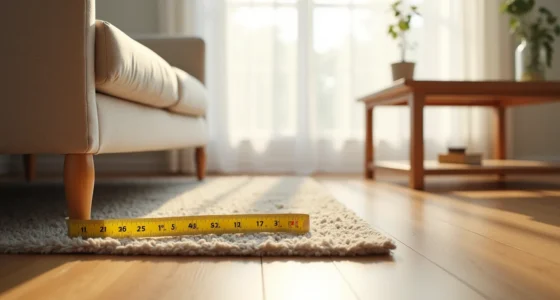
The entryway demands different proportions than a living room. An Arabic rug runner in navy and cream stripes, laid perpendicular to the door and extending down the hallway, creates a visual corridor that guides movement. The runner should measure roughly 2.5 to 3 feet wide, and its length should extend at least 6 to 8 feet from the threshold.
Use a measuring tape to confirm the runner leaves at least 4-6 inches of bare floor on each side; this prevents the space from feeling tunneled and keeps the pattern readable.
In bedrooms, place a 6×9-foot Arabic rug perpendicular under the lower two-thirds of the bed, leaving 18-24 inches of rug visible at the foot and sides. This grounds the bed without forcing you to choose between a rug too small for the room or too large for nightstands. For renter-friendly installation in any room, skip adhesive tape and use a non-slip rug pad cut to size; it holds the rug flat without damaging hardwood or laminate.
Measure the doorway swing arc before committing to a runner, the rug must sit fully clear of the door’s path to avoid bunching and tripping hazards.
Budget, Renter, and Investment Routes
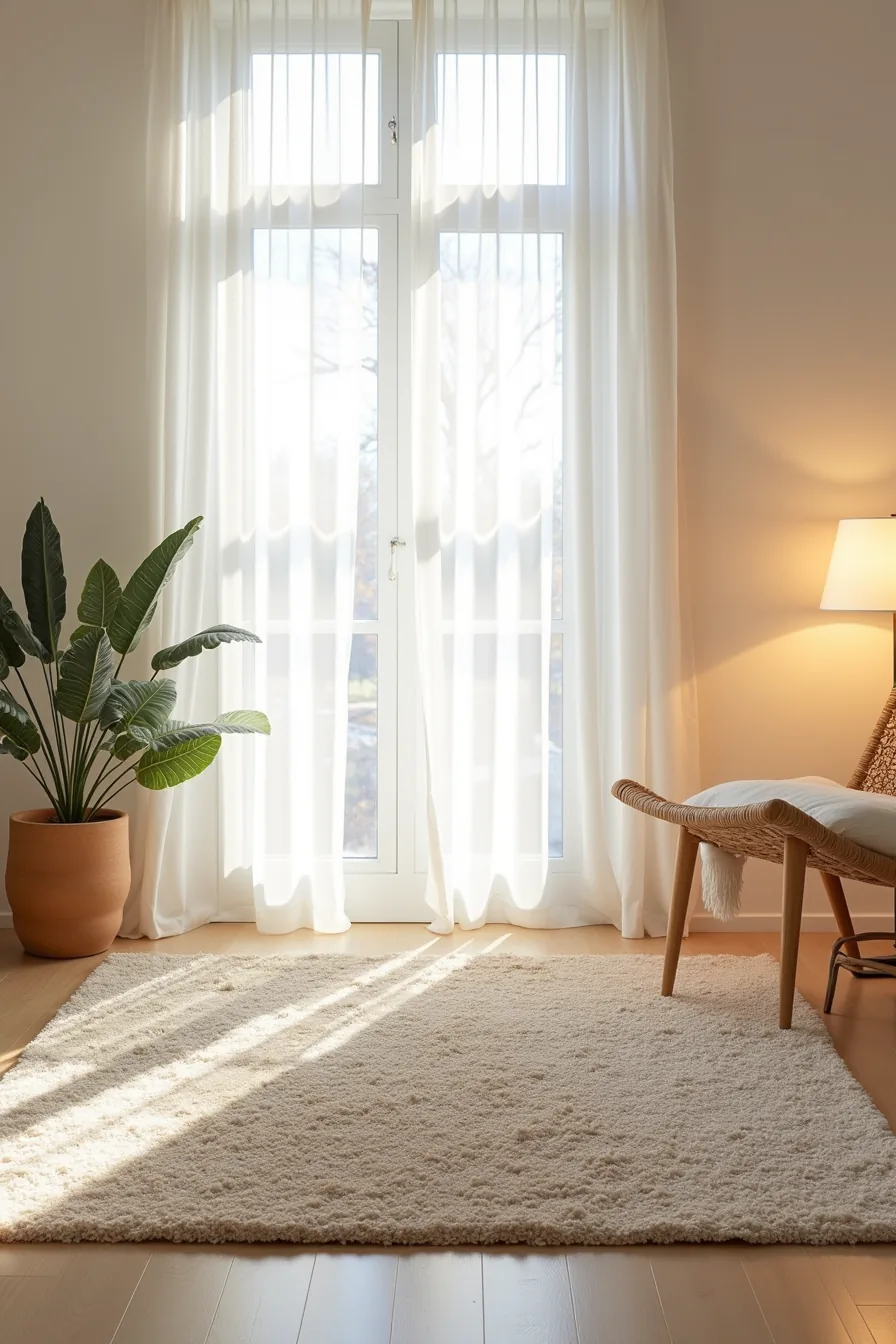
For a budget route, a machine-made synthetic rug with a simple geometric pattern delivers the Arabic rug aesthetic for roughly $100–$300 in a 6×9 size. Synthetic fibers resist stains and fade slowly in direct sunlight, but the low pile flattens permanently under heavy foot traffic within 2–3 years, treat it as a 3-year solution, not a keepsake.
A hand-knotted mid-range piece in wool or wool-blend costs $800–$2,500 depending on knot density and size. The visible knots confirm hand construction, and wool’s natural lanolin repels spills, so a single deep-clean yearly plus prompt blotting keeps it sound for 10–15 years. Choose this if you want a traditional pattern that anchors a dining room or study for a decade without committing to heirloom pricing.
The investment-grade rug, dense hand-knotting, premium wool, complex multi-border design, runs $3,000–$8,000 for a 6×9. Expect 1,200–1,800 knots per square inch, which produces crisp curves and a heavy, plush hand. This option suits a formal living room where the rug is the centerpiece; budget for professional cleaning every 2 years and rotation every 6–12 months to prevent uneven wear and sun bleaching.
The trade-off is clear: you pay for longevity and resale value, but only if you commit to the maintenance schedule.
Your decision checklist
Before you buy, match these five points against any rug you’re considering: pile height under 0.5 inches for high-traffic zones, wool or viscose for durability, a pattern that hides the inevitable coffee ring, a size that leaves 18 inches of bare floor on all sides, and a backing that won’t slide on your specific flooring.
What to do first
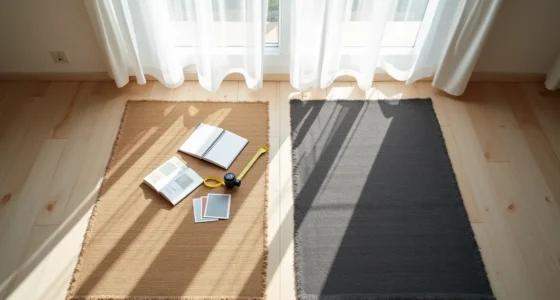
Measure your room’s seating area, then order the three largest swatches from two different retailers. Live with them on your floor for a week, see them in morning light, evening lamp light, and after a day of foot traffic. That week will tell you more than any product photo.
Frequently Asked Questions
What size Arabic rug do I need for a 12×14 living room?
Choose an 8×10 or 9×12 rug. Leave 12–18 inches of bare floor around the perimeter. This anchors your seating group while keeping walkways clear.
Can I use an Arabic rug in a rental without damaging the floor?
Yes. Use a rug pad with a non-slip, felt-and-rubber liner. Avoid adhesive tapes.
The pad protects hardwood and prevents slipping, and you can remove everything cleanly at move-out.
How do I clean and maintain a traditional Arabic rug?
Vacuum weekly without a beater bar. Blot spills immediately with a dry cloth, never rub. Professionally deep-clean wool rugs every 12–18 months.
Rotate the rug twice yearly to even out sun and traffic wear.
Does an Arabic rug work in a modern minimalist space?
Absolutely. Choose a flat-weave kilim with geometric patterns in muted tones, navy, cream, or gray. Keep surrounding furniture simple.
One strong rug anchors the room without visual clutter.