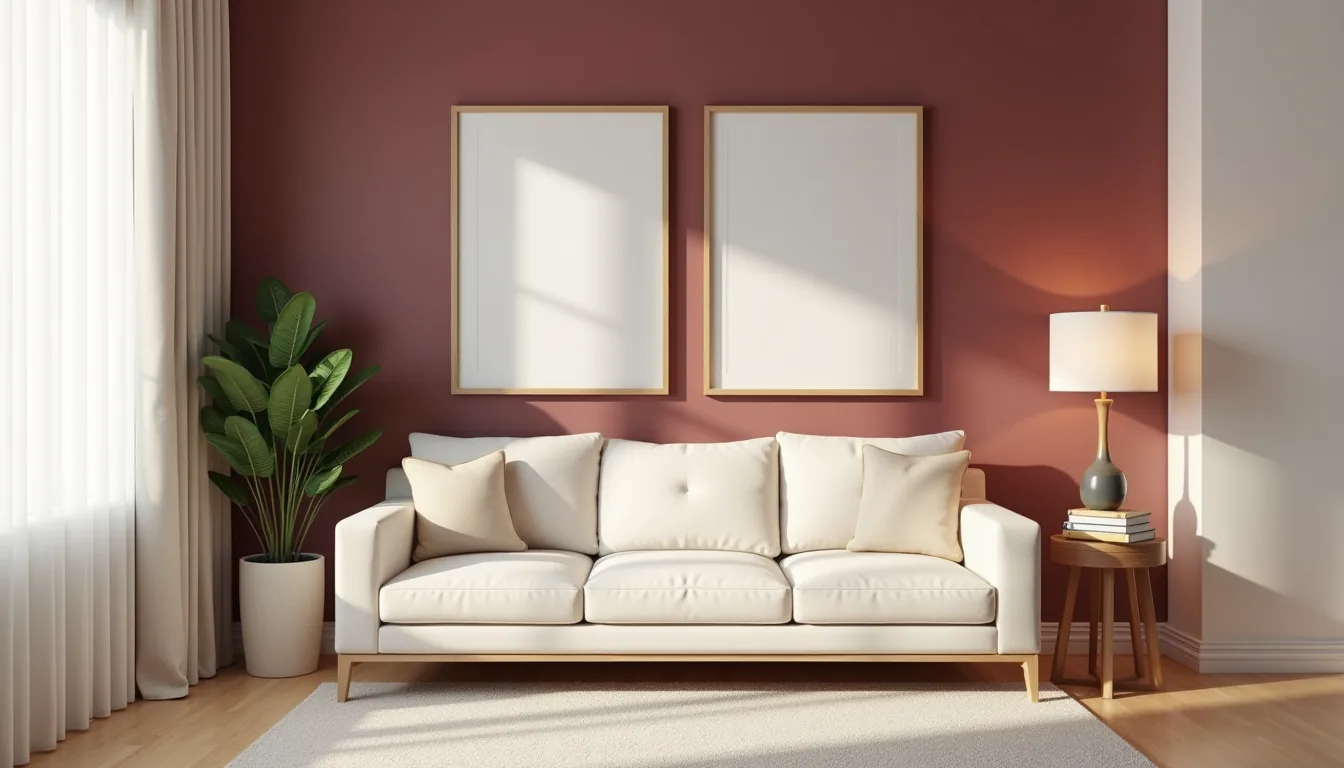

Red Christmas decor ideas fail most often not because red is hard to style, but because the shade, scale, and placement are chosen without a plan for the room they’ll live in. A deep burgundy reads elegant in a dim dining nook, while the same ribbon looks muddy in a bright, white-walled kitchen. The fix is matching the red family to your lighting, traffic flow, and how long you want the setup to last.
The six approaches below cover that range, from a $12 tabletop swap to a permanent built-in, so you can pick the one that fits your space and your lease.
Key takeaways
- Deep red walls demand matte or flat paint to avoid glare, so test a large swatch and live with it for 48 hours before committing.
- Garland layering works best when you mix three textures, like faux pine, berries, and velvet ribbon, and secure them with floral wire to prevent sagging.
- Ornament clusters read as intentional when grouped in odd numbers (3, 5, or 7) inside a shallow bowl or cloche, not scattered randomly.
- Washable covers on red textiles (like cotton or polyester blends) are non-negotiable if you’ve kids or pets, since red dye bleeds in the wash.
Deep Red Accent Wall with Minimal Accessories
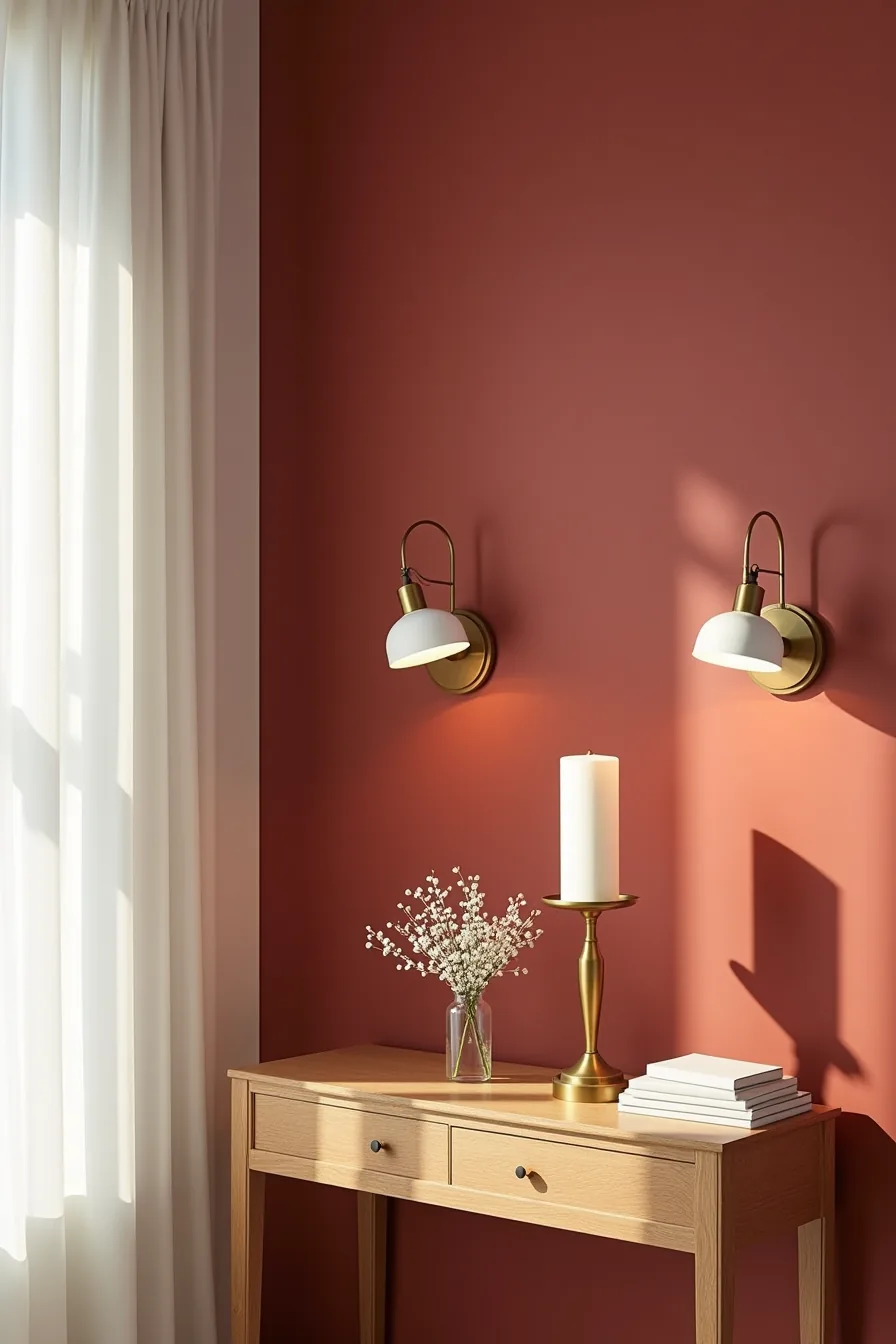
Paint one wall in a deep crimson or burgundy to give your room a Christmas focal point that doesn’t require a single ornament. The setup pairs a saturated wall with a wooden console table, a brass candlestick holder, and white branches in a glass vase, three objects that read clearly against the pigment without competing for attention. This approach works because the wall carries the visual weight, so your accessories can stay sparse and deliberate.
For scale, a single accent wall suits rooms of any size, but the proportion matters. In a small room (under 150 square feet), paint the narrowest wall to avoid shrinking the space visually; in a large room, choose a wall at least 10 feet wide so the color has enough surface to feel intentional rather than accidental. The paint finish matters too, use a matte or eggshell sheen, which hides imperfections better than gloss and softens the color under artificial light.
Renters can replicate this with peel-and-stick wallpaper in a deep red tone, which typically removes cleanly from smooth walls without damaging paint. Budget-wise, a gallon of quality paint runs most people $30–60 and covers roughly 300–400 square feet, making this one of the lowest-cost ideas on this list. Maintenance is minimal: touch up chips before storing your paint can, and wipe the wall with a dry microfiber cloth during the season to prevent dust dulling the finish.
Red Garland and Mantel Layering for Focal Points
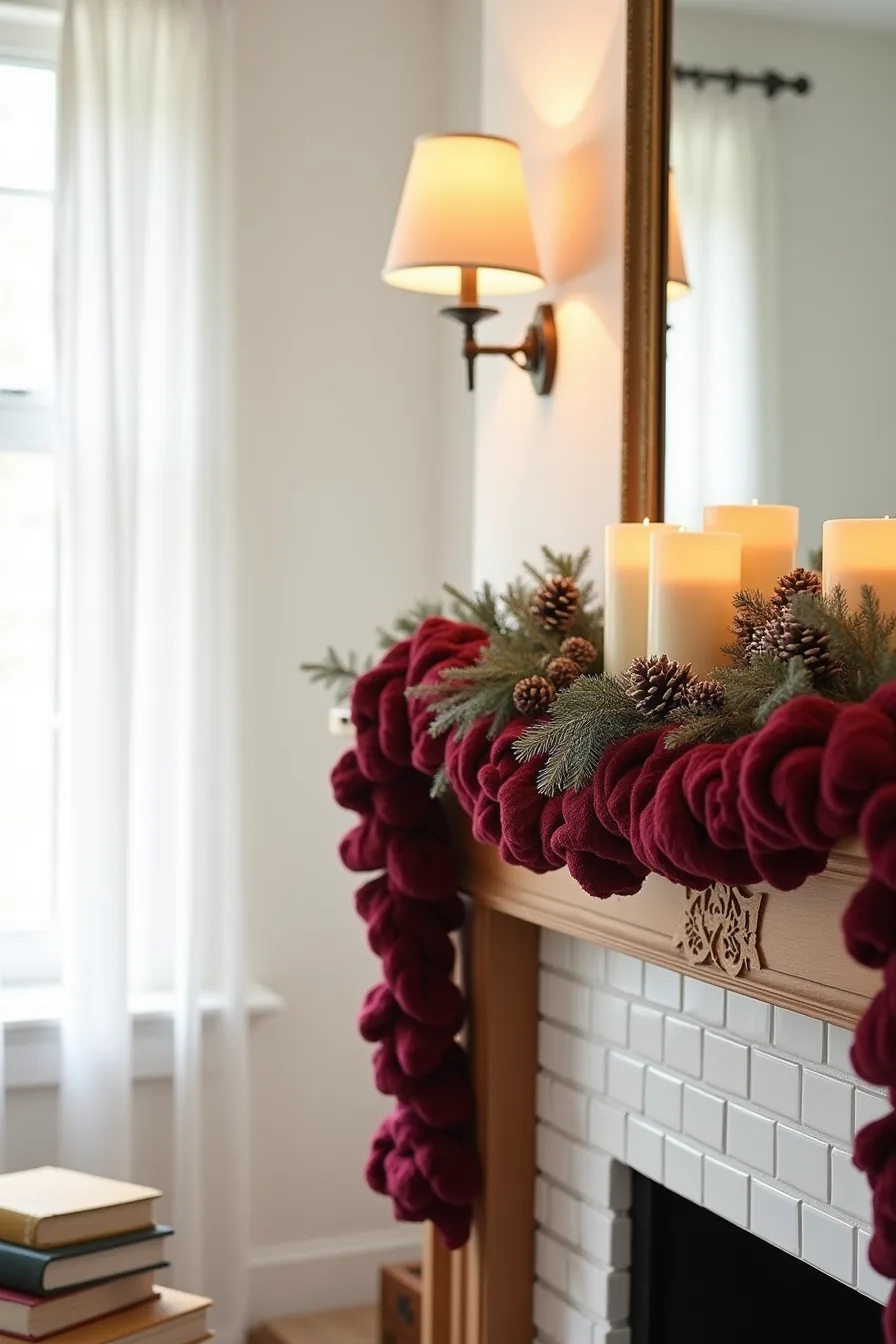
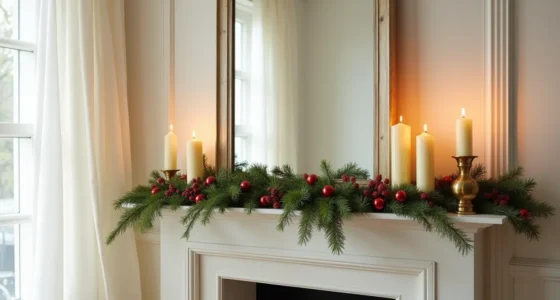
A mantel draped in burgundy velvet garland, gold ribbon, and scattered pinecones creates depth because each texture catches light differently. Layer three pillar candles of varying heights, place the tallest at the back corner, the shortest in front center, to draw the eye upward and break the garland’s horizontal line. This setup suits living rooms with fireplaces as the natural gathering point; if your mantel is under 48 inches wide, trim the garland to end at the edges rather than spilling down the sides.
Ceiling height determines your layering density. For 8-foot ceilings, keep one ribbon weave per foot of mantel; for 10-foot ceilings, double the ribbon and add a second garland strand twisted with the first for fullness. Position candles at least 3 inches from the garland and never leave them burning unattended, velvet and pine dry out quickly and ignite faster than you expect.
Budget-wise, pre-lit velvet garland runs $25–50 per 6-foot strand, while DIY ribbon and pinecones cost under $15 total if you forage the cones yourself and bake them at 200°F for 30 minutes to kill pests. This is one of the most beginner-friendly Best Red Christmas Decor Ideas examples because mistakes in placement are easy to adjust without redoing the whole arrangement.
Red Ornament Displays and Tabletop Arrangements
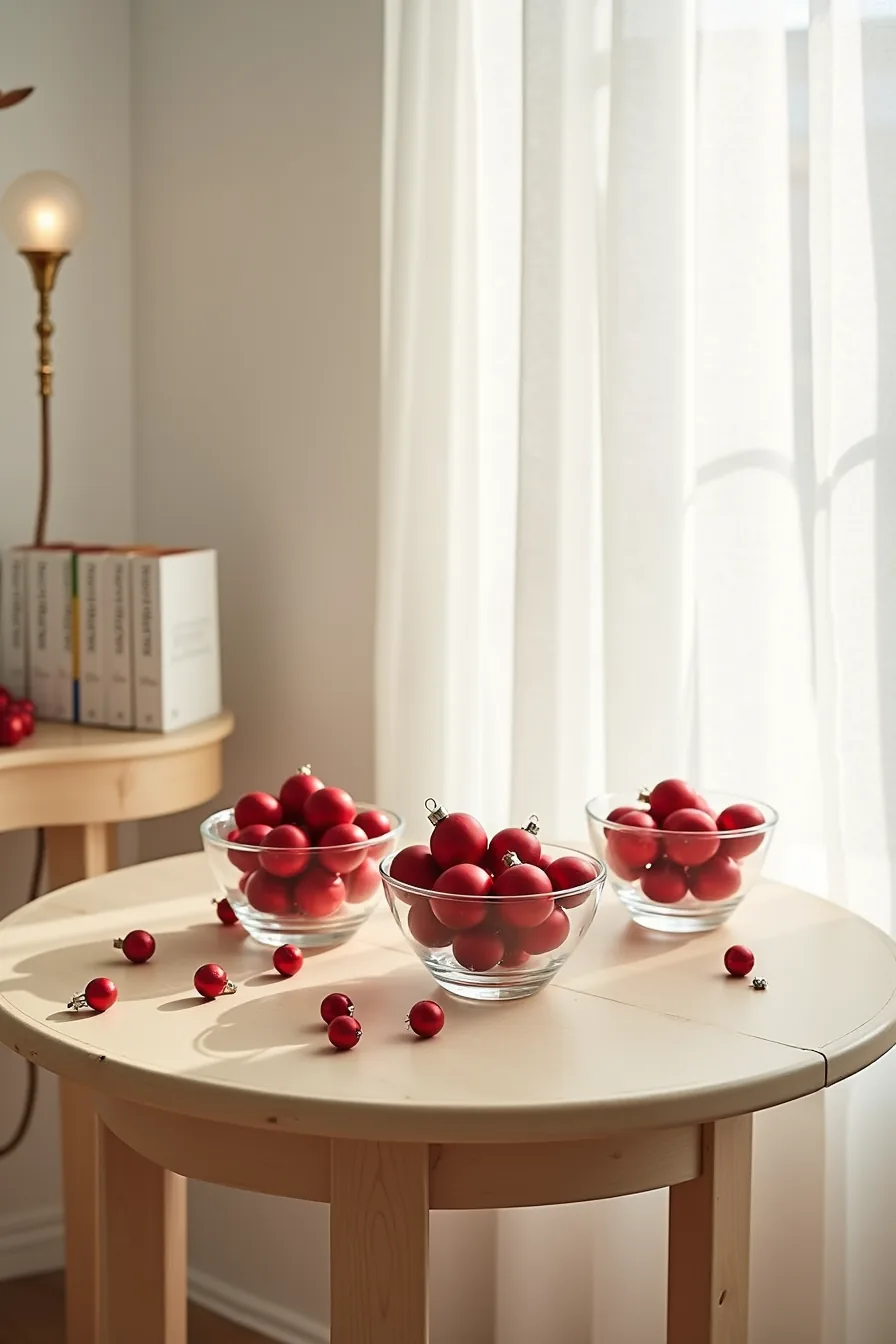
Cluster ornaments in clear glass bowls rather than scattering them individually, grouping 15–20 ornaments in one vessel reads as intentional design, while a few strays look like unpacking leftovers. On a round wooden console table, place three bowls of varying diameters (roughly 6, 8, and 10 inches) at different heights using stacked books or small pedestals beneath the bowls. Mix matte and glossy red finishes in a 60/40 ratio: matte absorbs light and anchors the arrangement, while glossy reflects it and adds sparkle without extra cost.
This setup works best on entryway consoles or sideboards at least 36 inches wide, leaving 6–8 inches of clear surface on each side for keys or mail. For smaller spaces, one bowl with 8–10 ornaments on a stack of two hardcover books delivers the same effect at one-third the footprint. Budget route: fill bowls with mixed finishes from dollar stores at $1–2 per ornament, accepting thinner glass that may chip by next season.
Splurge route: invest in hand-blown glass ornaments at $8–15 each, they survive storage better and the deeper red tones won’t fade after multiple Christmases. Avoid overfilling bowls past 80% capacity; ornaments need room to shift without clinking and cracking against each other.
Red Lighting and Projection Effects
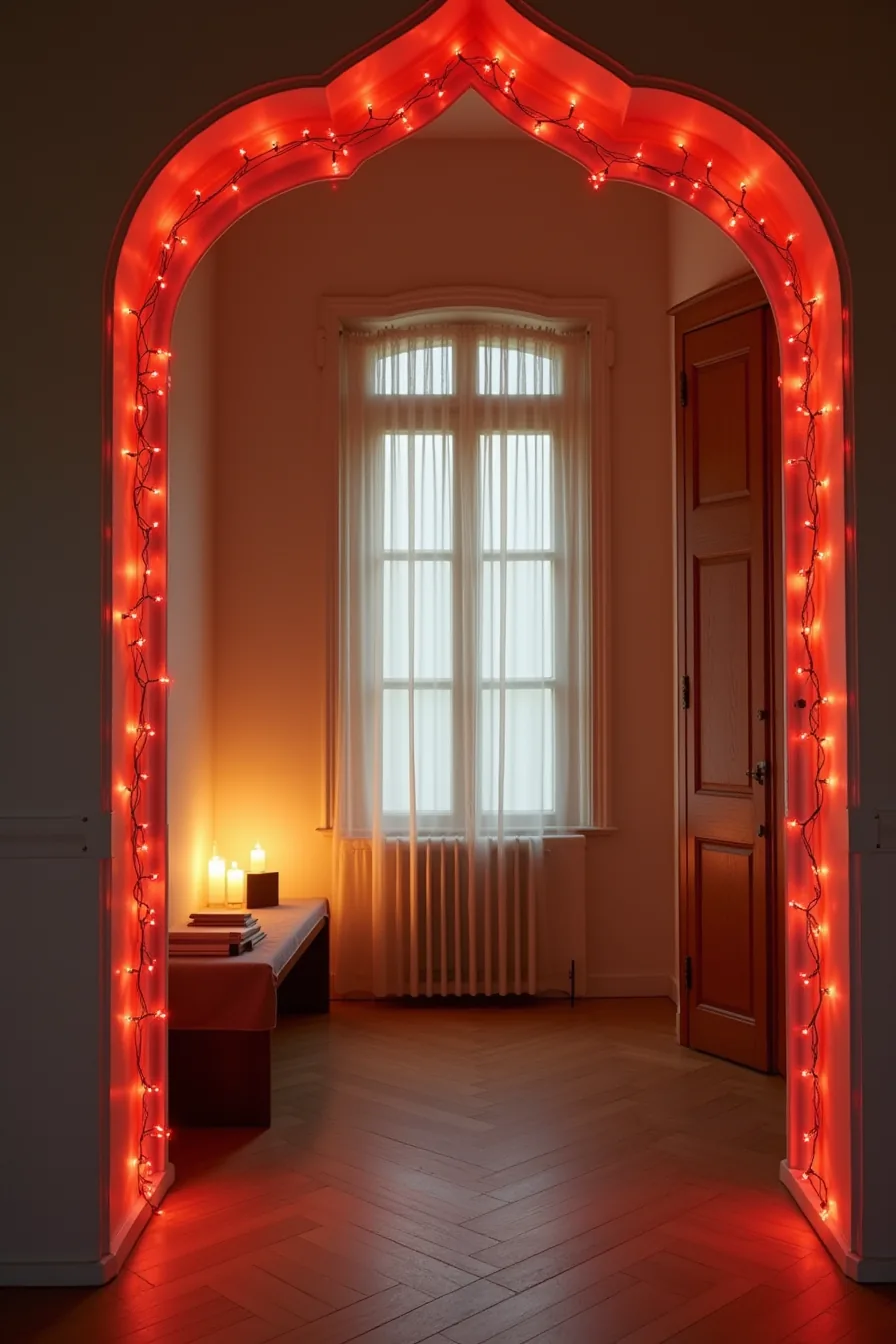
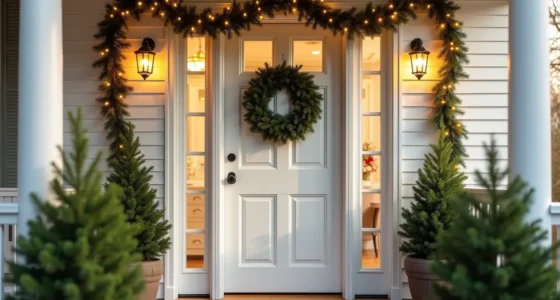
String lights offer the fastest way to transform a room’s mood, and red versions deliver a warm, theatrical glow that other colors can’t match. Drape 100-count LED string lights along a doorframe archway, securing them with command hooks so you avoid damaging the paint, a key advantage for renters. The resulting light pools on the floor create a soft, inviting ambiance without overwhelming the space.
For a more dynamic effect, add a red-hued projector that casts subtle snowflake or geometric patterns across walls and ceilings. These units typically run $30–$60 and operate on standard outlets, making them a low-commitment option for apartments. Pair the lights with battery-operated red LED candles on nearby shelves to layer the glow, but skip any open flames near fabric or wrapping paper.
Keep electrical safety in mind: connect no more than three strands per outlet and use a surge protector. When storing, wrap cords loosely to prevent kinks, and test each strand before next season, LEDs last years, but wires can fray. This approach works equally well in a compact entryway or a sprawling living room, adapting to your available surfaces and outlet locations.
Red Textiles and Soft Furnishings Strategy
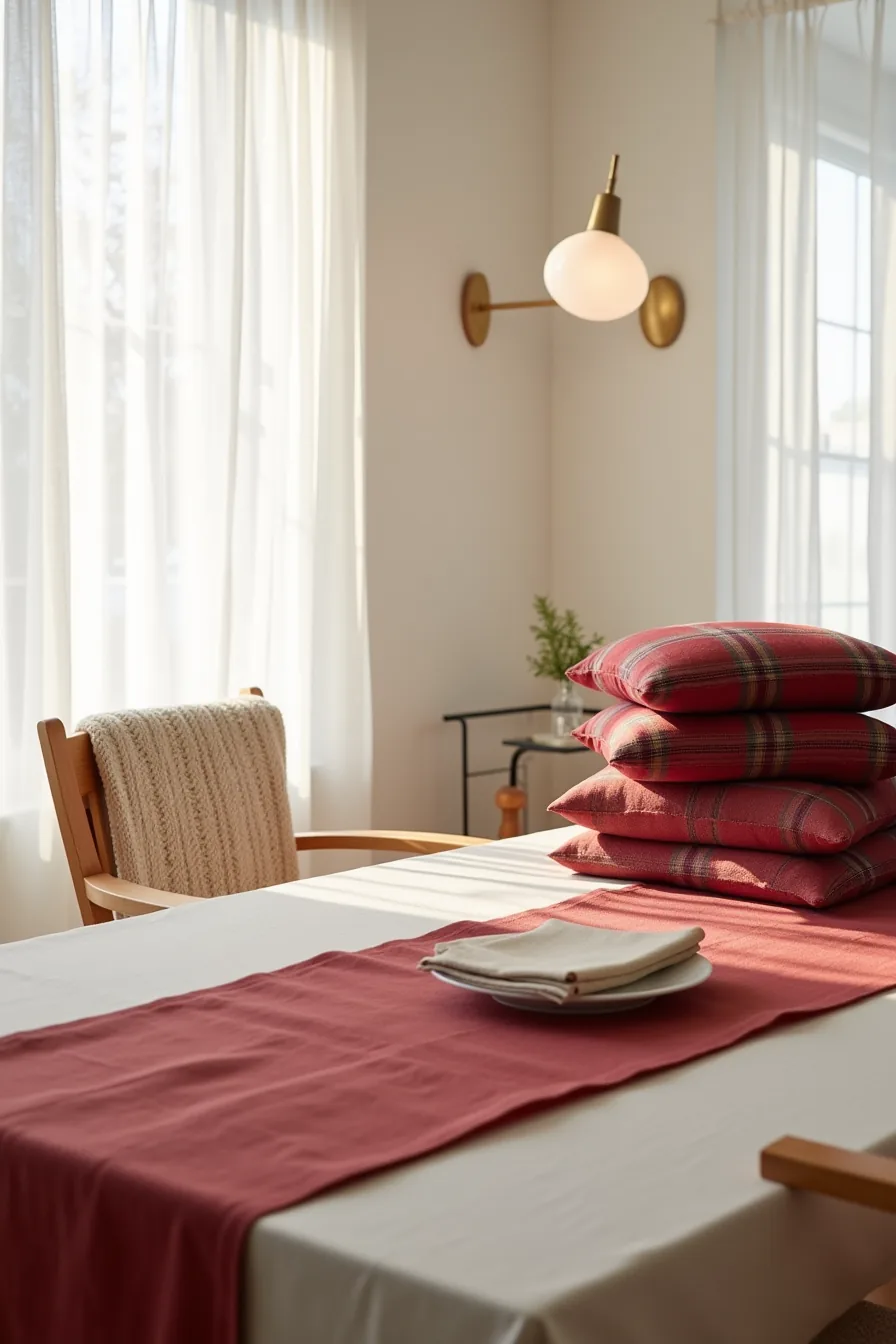
A deep red linen table runner instantly anchors a dining table, while red plaid throw pillows stacked on a nearby chair create a cohesive vignette that reads as intentional rather than scattered. The cream knit blanket draped over the chair back softens the intensity of the reds, preventing the palette from feeling one-dimensional in a medium-sized dining area.
For a small apartment, limit textiles to two zones, one table surface and one seating area, to avoid visual clutter. Large homes can carry a runner on the dining table, pillows on a sofa, and a red throw across a bed, but keep the reds in the same tonal family for continuity. Linen and cotton blends hold up to washing, so machine-wash them in cold water before storage to prevent stains from setting.
When the season ends, vacuum-seal the textiles in bags and rotate them annually; quality pieces last five-plus years, making them a smarter investment than disposable decor.
Avoiding Common Red Christmas Decor Ideas Mistakes
Mismatched reds, scarlet plastic garland tangled with burgundy velvet ribbon, create a dissonant clash that draws the eye for the wrong reason. Before you buy anything, gather your existing decorations and compare their undertones; if they lean orange, pair them with true reds, and if they lean purple, match them with berry shades. The cluttered corner shelf proves another common failure point: when oversized ornaments crowd a small entranceway, they reduce the walkable width below the standard 36 inches needed for comfortable passage.
Place your largest red pieces first, then step back and remove a third of what remains to let the shelf breathe. Delicate paper snowflakes peel away from the wall within days in humid conditions, so use a removable adhesive putty rated for your wall type and press firmly for ten seconds. Test any adhesive on a hidden corner first, as some pigments can stain paint, and store fragile ornaments in individual paper sleeves to prevent scratches.
Where to start
Start with one anchor piece, not six. Pick the single red element that will have the most visual impact in your primary living space, a tree skirt, a throw, or a garland, and build outward from there. Measure the wall or furniture surface it will occupy before you buy anything; red reads bold, so proportion matters more than with neutral palettes.
Your next step: take one photo of your living room, circle the spot where red would add the most contrast, and shop for that one item today. Commit to it before considering anything else.
Frequently Asked Questions
What shade of red works best for Christmas decor in a small apartment?
Cranberry or brick red reads sophisticated, not cramped. These deeper tones absorb light less harshly than fire-engine red, keeping walls visually open. Avoid bright scarlet in tight spaces, it visually shrinks rooms.
Can I use red Christmas decor in a rented space without losing my security deposit?
Yes, if you skip paint, wallpaper, and adhesive hooks. Use freestanding trees, removable command strips rated for your wall type, and door-hanging wreaths. Always photograph your setup before removal and patch any minor holes with spackle.
How do I prevent red decor from looking dated or overly traditional?
Pair red with unexpected neutrals like warm gray, cream, or matte black, and choose modern shapes, geometric ornaments, slim trees, or velvet ribbons. Skip plaid and gold tassels. Add metallic copper or brushed nickel accents for a contemporary edge.
What’s the most cost-effective way to refresh red decor year to year?
Swap texture, not color. Buy plain red baubles and ribbons once, then change them with mixed materials, felt, glass, or matte plastic, each season. Add a new throw pillow or table runner in a different red tone (crimson vs. Rust) for under $20.