
Your dishware is only as functional as the system that stores it, so before you buy another rack, empty every cabinet and sort your plates, bowls, and mugs by frequency of use to reveal your true capacity needs. That ten-minute audit separates the real problem, overflowing stacks or wasted vertical space, from the symptom of a missing organizer. The six solutions ahead range from fixed wooden inserts to renter-safe tension shelves, each matched to a specific cabinet depth and dish volume, so you can skip the trial-and-error phase entirely.
Key takeaways
- Inventory first, buy second: Count your plates, bowls, and mugs by type, then measure your cabinet’s interior height and depth before purchasing any organizer.
- Stacked plates waste space: Vertical dividers or racks increase accessible capacity by up to 25% in the same footprint while eliminating the lift-and-shuffle motion that damages rims.
- Drawer storage demands liners: Use non-slip, washable liners and keep dividers at least 1 inch apart from the drawer walls to allow airflow and prevent moisture trapping.
- Adjustable shelving wins for renters: Choose tension-mounted or peg-style racks that install without drilling; they support most standard dish loads but require a stable, level surface for safe daily use.
Inventory and Declutter Before Choosing Your System
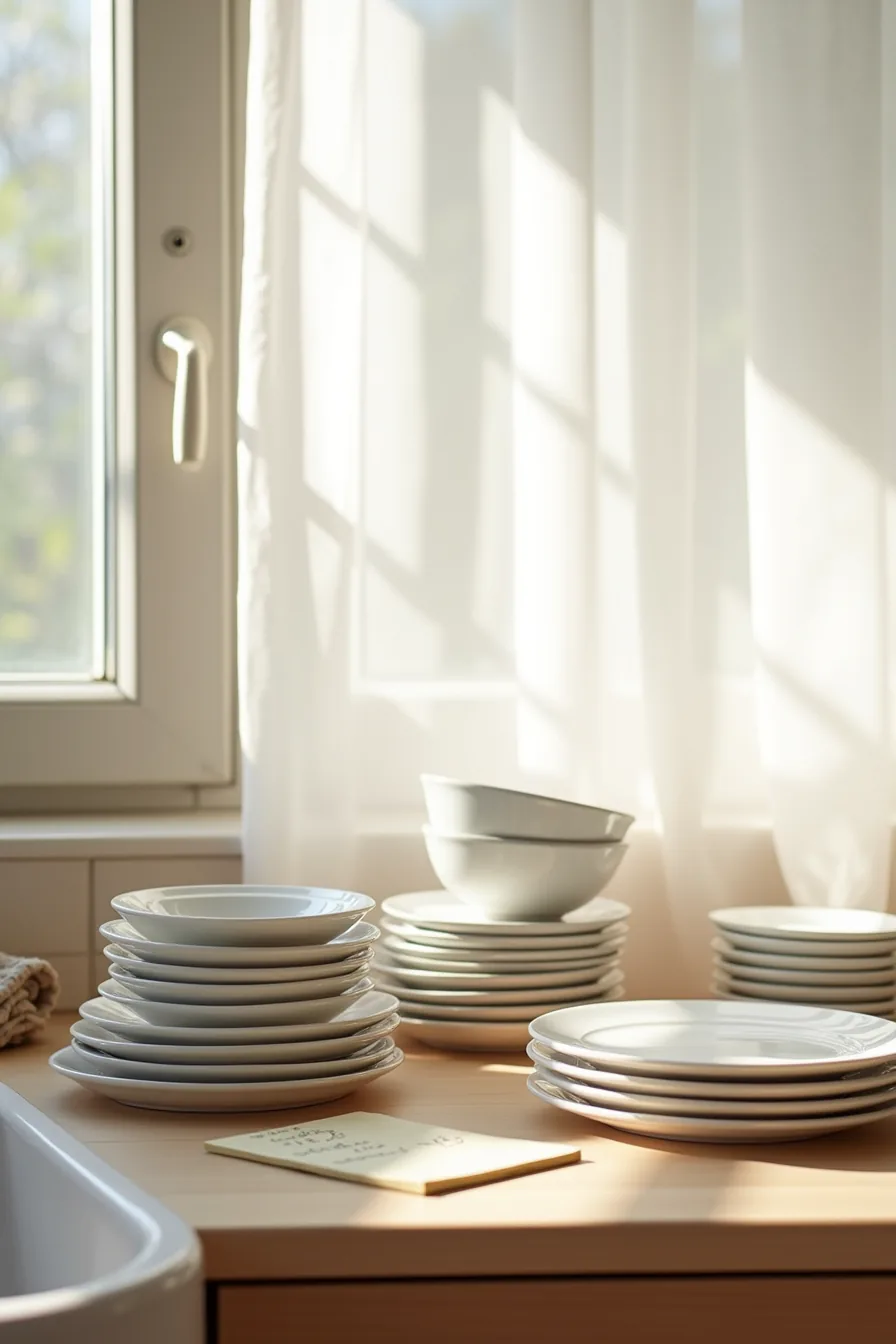
Before you buy a single Dish Organizer, count what you actually own and use weekly. Pull every plate, bowl, and mug from the cabinets and sort them on a cleared counter into three groups: daily drivers, occasional-use items, and pieces with chips or cracks.
In the flat lay example, twelve matching dinner plates sit in one stack, six ceramic bowls form a separate pile, and four chipped plates are set aside, each group with a handwritten tally mark on a notepad. This quick audit takes under fifteen minutes and reveals whether you need capacity for twelve place settings or just six. Dishes with visible damage should go straight to donation or disposal; they waste prime shelf space and pose a safety risk.
The number you’re left with determines whether a compact countertop rack or full cabinet shelving system makes sense for your kitchen.
Vertical vs Stacked Plates: Access and Space Trade-offs
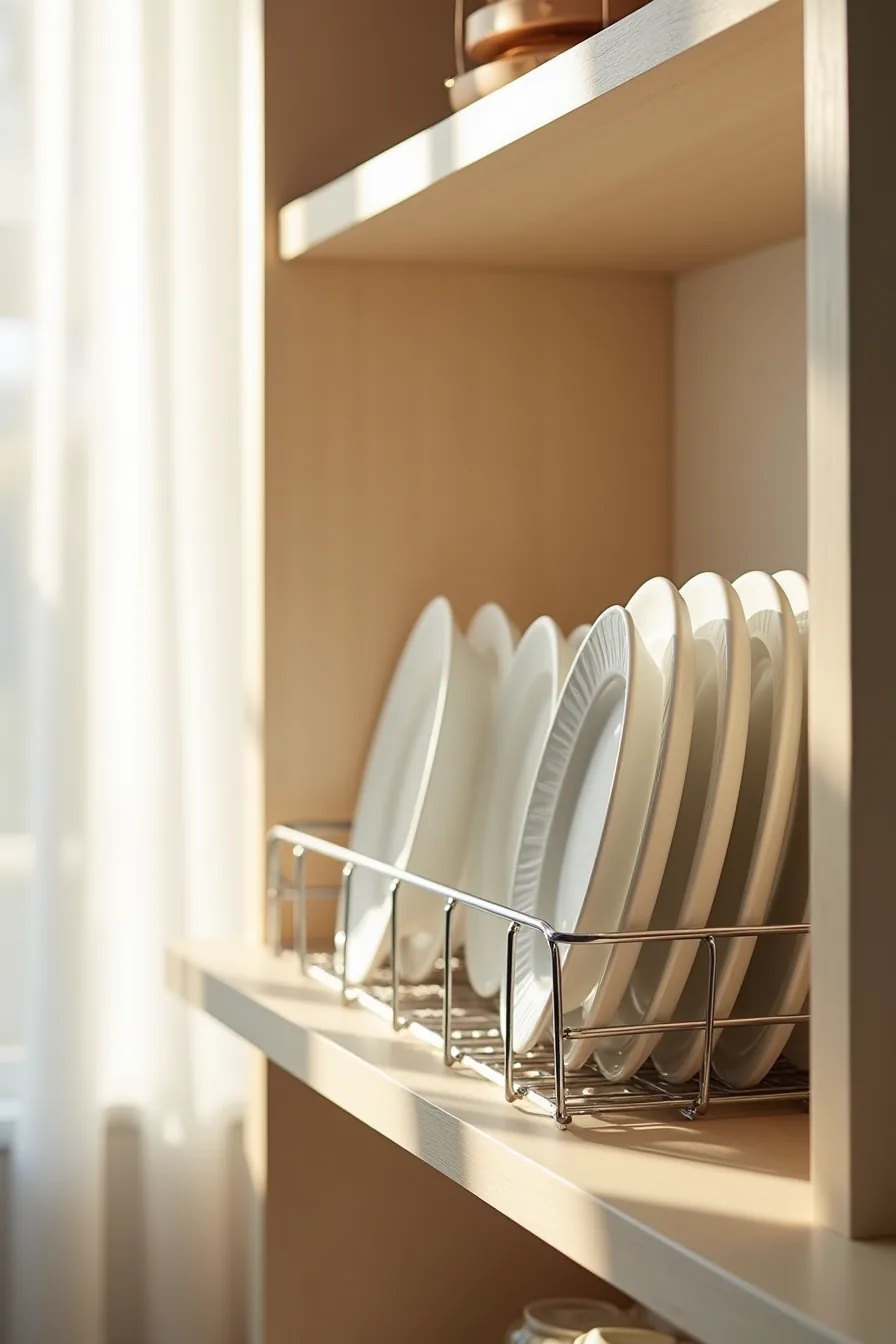
The stainless steel vertical plate rack in a tall narrow cabinet holds eight dinner plates upright with roughly half an inch of space between each, letting you see every rim at a glance. That edge-on visibility is the core advantage of vertical vs stacked plates, you grab the exact pattern you want without lifting a tower, and the upright position keeps glaze from chipping along the foot of each piece.
You pay for that access in cabinet depth. Most vertical racks need 11–13 inches of interior clearance to accommodate a standard dinner plate’s diameter, while stacking fits plates into barely 6–8 inches of shelf height. If your cabinets are shallower than that, skip the rack and stack, but rotate the bottom plate to the top weekly so weight distributes evenly and you never face a stuck stack.
Drawer Dish Storage: Dividers, Liners, and Maintenance
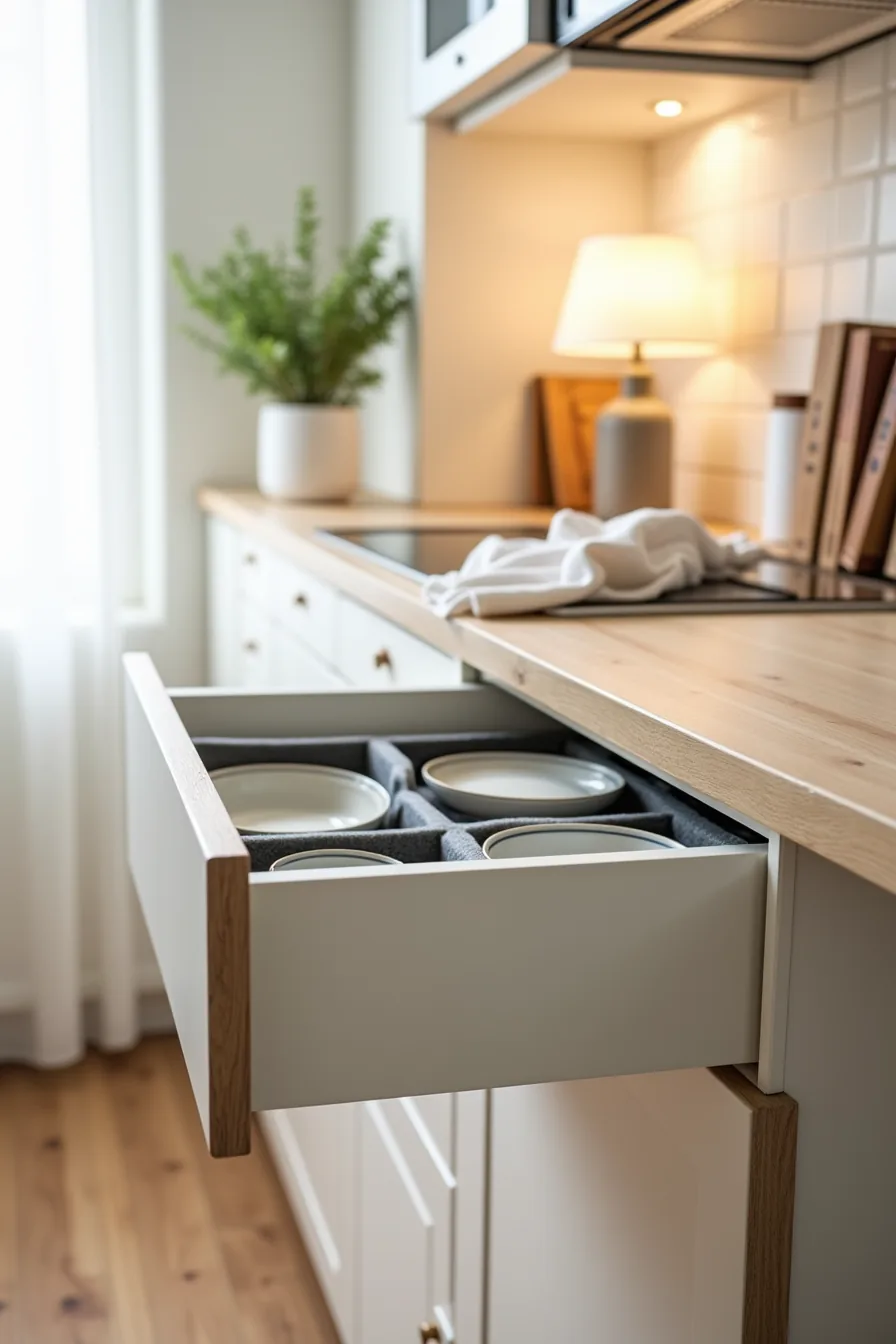
Gray felt dividers transform a deep drawer into four dedicated compartments, one for dinner plates, one for salad plates, one for bowls, and one for small plates. Felt outperforms plastic or bamboo in this setting because it grips plate edges and prevents sliding when you open and close the drawer, while soft cloth liners beneath the dividers catch crumbs and absorb light moisture.
Measure your drawer’s interior width before buying dividers; most expandable felt sets adjust from 16 to 22 inches and require at least 3 inches of depth to hold standard plates upright. Wash the felt pieces by hand every two weeks with mild soap, then air-dry completely before reinstalling, damp felt traps humidity and can transfer odor to your dishware. Run a soft cloth over plate surfaces and drawer corners weekly to keep dust from settling along the rims, and check dividers monthly for compression, replacing them when they no longer hold plates snugly upright.
Small Cabinet Solutions: Nesting and Compact Racks
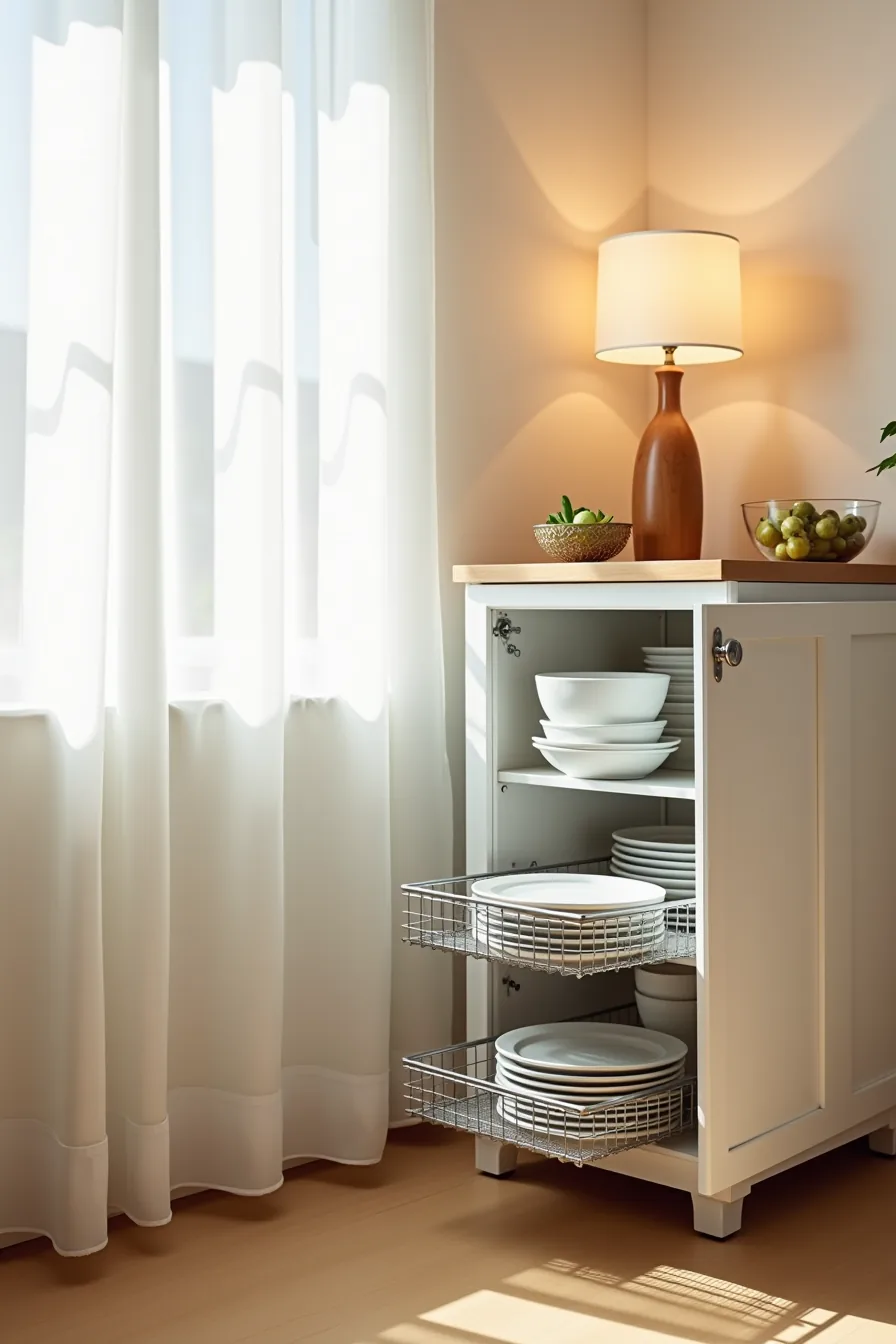
In a 24–30-inch-wide base cabinet, a tiered riser is the highest-use small cabinet solution you can install. Set it near the cabinet’s front edge so the graduated sizes of your nesting bowls remain visible and reachable without pulling out the entire stack. The riser’s upper tier holds the smallest bowl, the lower tier the largest, which keeps the center of gravity low and prevents the whole set from toppling when you grab a mid-size piece.
Pair the riser with a pull-out wire basket on the shelf beneath it to store stacked salad plates. The basket’s rails grip plate edges so they don’t shift when you slide the unit forward, and the pull-out mechanism gives you full access without reaching past stored items. If your cabinet is only 24 inches wide, choose a basket no deeper than 16 inches, anything longer will collide with the door hinge when you close it.
Nesting sets save roughly one-third of the shelf footprint compared to separated stacks, so you gain an entire shelf for platters or baking dishes. Clean the wire basket monthly with a damp cloth, and wipe the riser’s edges with a dry microfiber cloth to avoid water spots on the bowl rims.
Fixed vs Adjustable Shelving: Installation and Flexibility
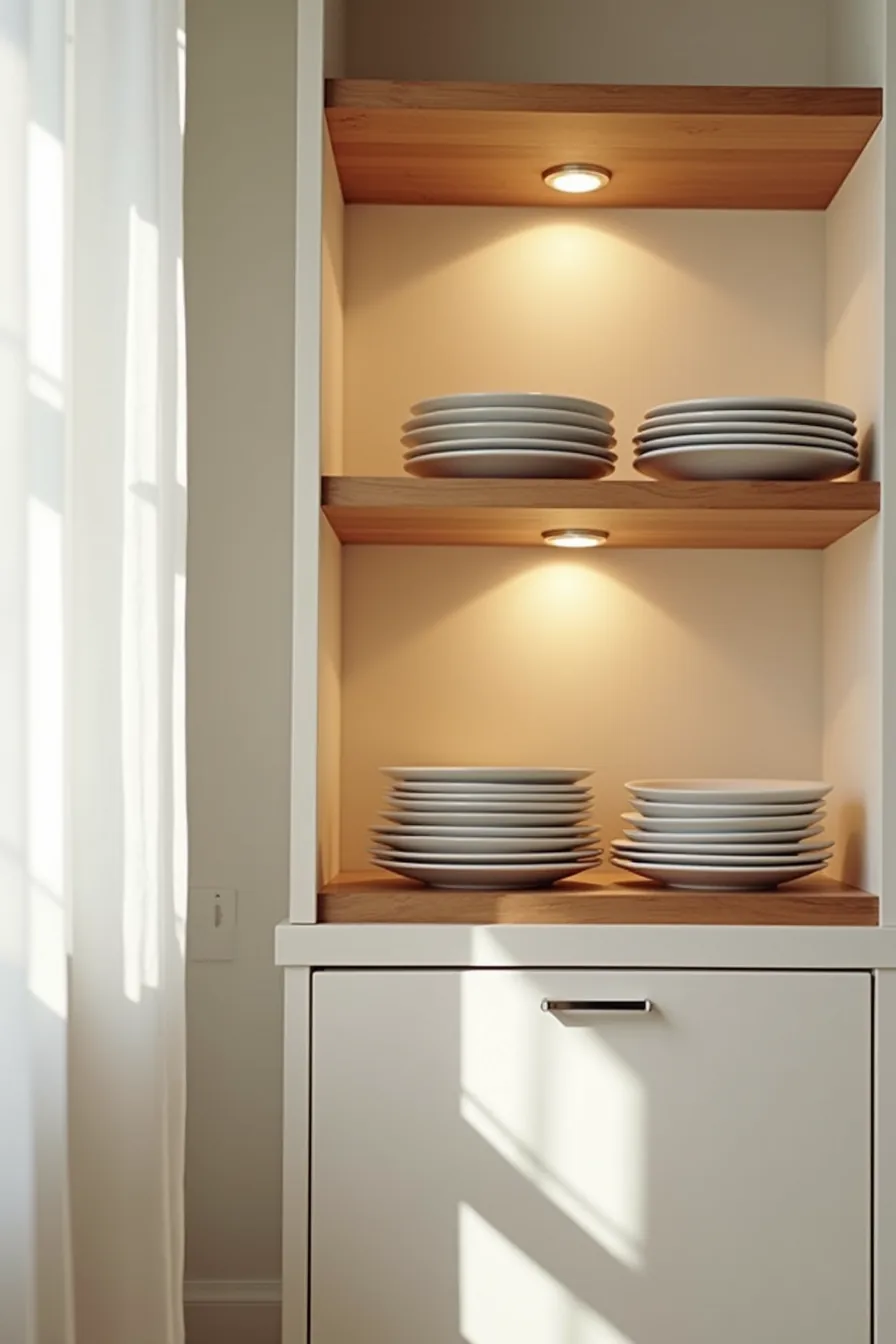
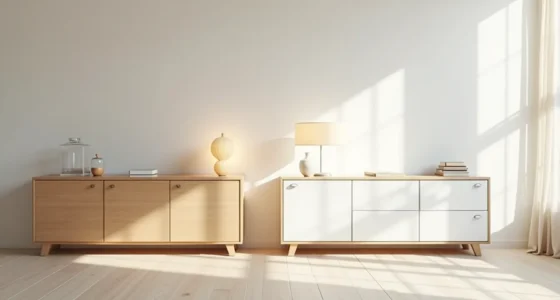
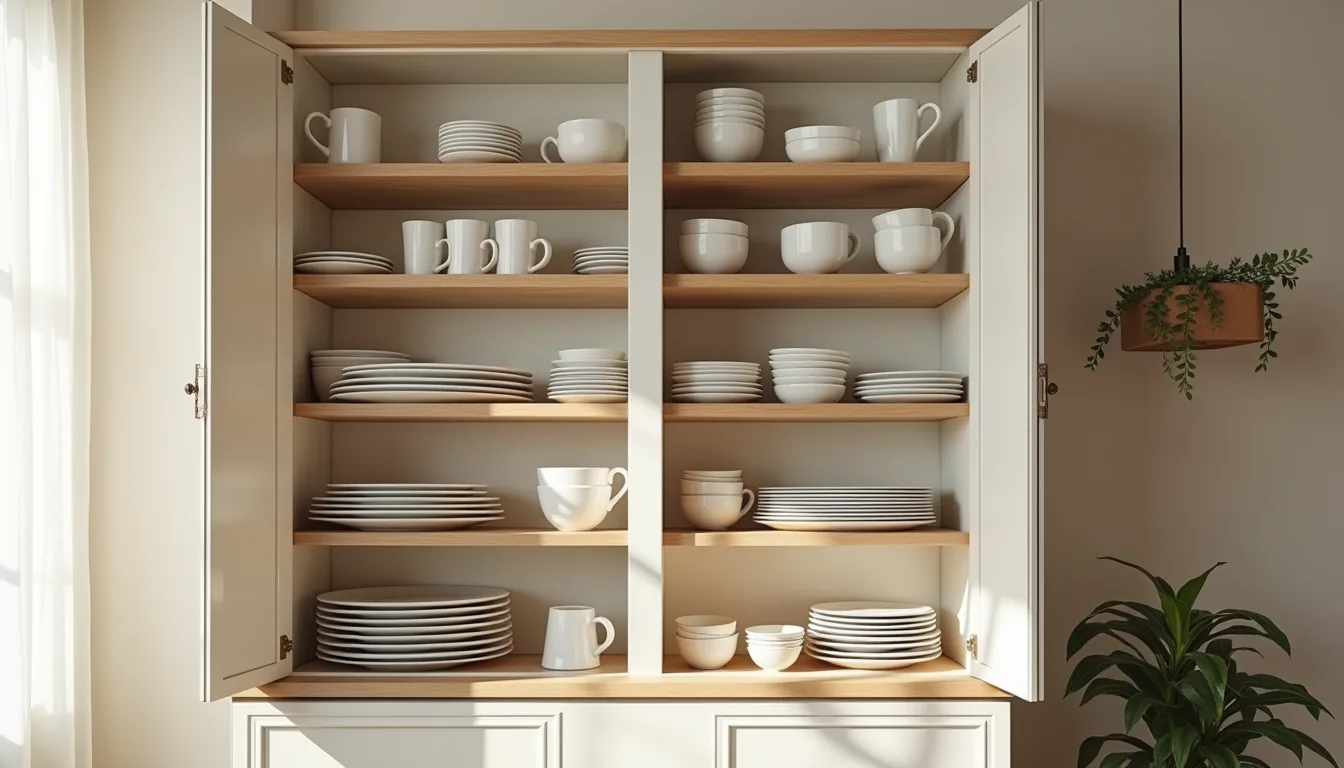
Permanent wooden dividers cost more upfront but demand zero maintenance, so they suit homeowners who know their plate stack won’t change for years. The three fixed compartments in the setup you’re looking at require a router and wood glue to install, and they effectively lock your cabinet into one layout, removing them means patching screw holes and refinishing the wood. If you rent or expect your dish collection to grow, metal shelf pegs offer a smarter trade-off.
The pegs insert into pre-drilled holes and let you reposition the wire shelf in under a minute, creating a taller compartment for a mixer or a shorter one for espresso cups. Tension rods are the cheapest alternative, but they only support lightweight items like saucers, and they can slip on smooth cabinet walls. Match the peg hole spacing to your tallest plate before drilling, and keep the pegs themselves removable so future reconfiguration stays a five-minute task.
Labeling, Rotation, and Daily Cleanup Routines
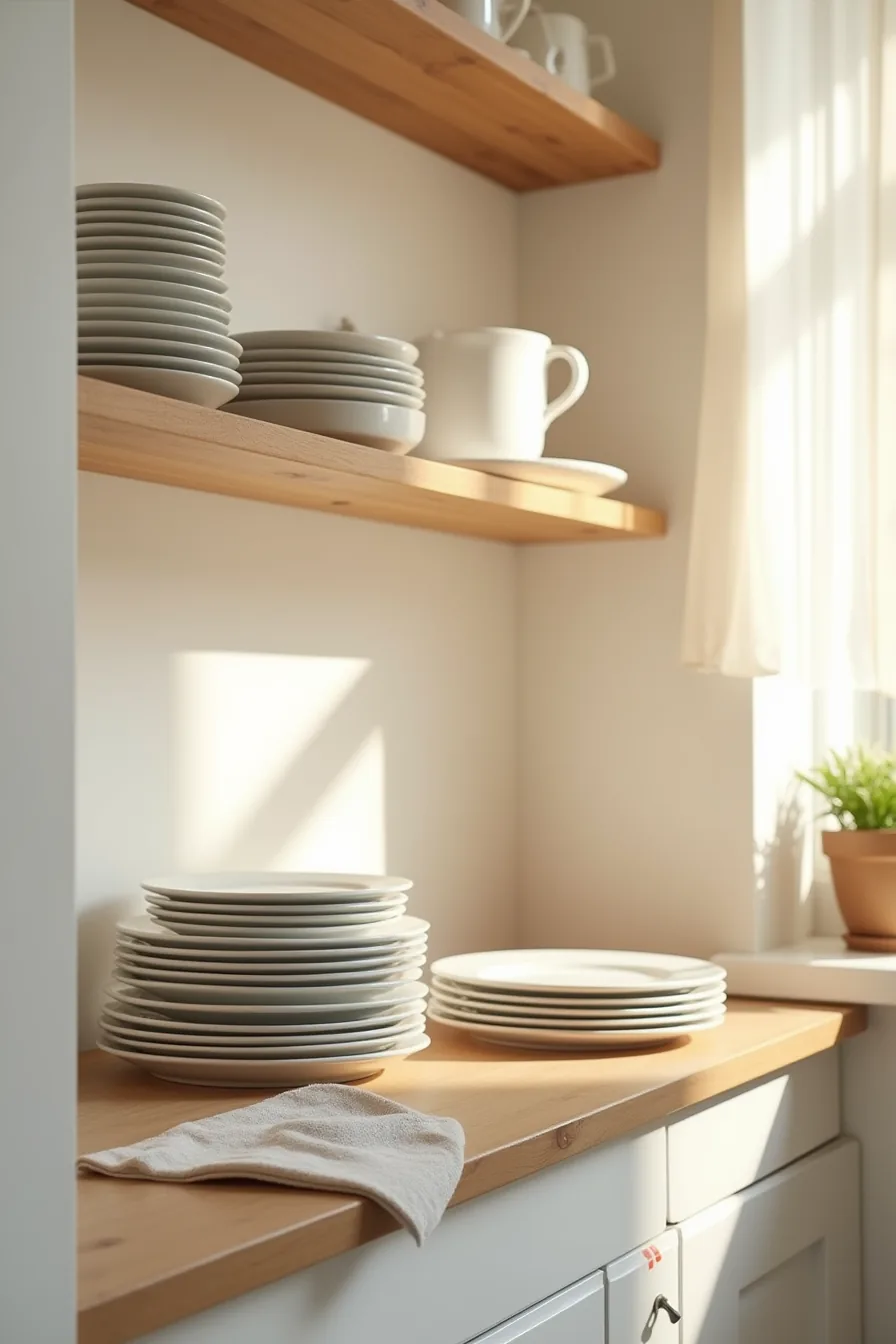
A color-coded sticker system on the cabinet shelf turns loading the dishwasher into a sorting exercise, and you can place each stack so the oldest plates sit front and center. Mark the newest stack at the back with a green sticker, the mid-age stack with yellow, and the oldest with red, then adopt a first-in-first-out rule: you always pull from the red stack first. The result is that no plate sits unused long enough to collect dust, and you eliminate the archaeological dig through mismatched stacks when you need a specific size.
Daily cleanup stays a thirty-second task if you keep a damp microfiber cloth draped over the shelf edge, you wipe the surface as you rotate stacks, and the cloth itself gets rinsed and hung to dry overnight. This system costs under five dollars in stickers and a cloth, and it works for any cabinet depth because the labels simply stick to the shelf lip, not the dishes themselves.
Your decision checklist
Before buying anything, measure your cabinet interiors and count your everyday dishes, not the holiday china. Match the system to your space: fixed racks suit large dishwashers and deep cabinets, adjustable grids work for medium kitchens, and over-the-sink or countertop tiers fit rentals without permanent installation.
Prioritize access over aesthetics, you should reach your most-used plates without stretching. Check that materials withstand frequent washing (stainless steel and coated wire resist rust; bamboo needs hand-washing). Label zones if you share the kitchen, and leave clearance between stacked items for airflow.
Your next step: grab a tape measure, inventory your dish pile, and choose one system sized to your top three daily-use pieces.
Frequently Asked Questions
How do I know if vertical or stacked plate storage is right for my kitchen?
Choose vertical storage when cabinet depth exceeds 12 inches and you want easy access. Stacked storage suits shallow cabinets under 12 inches deep or everyday dish sets you use constantly.
Can I use a dish organizer in a rental apartment without damaging walls?
Yes. Use freestanding countertop racks or tension-mounted shelf organizers that require zero drilling. Adhesive hooks work on tile or glass but may peel paint, test with painter’s tape first.
What is the best material for drawer dividers to protect dishes?
Bamboo or cedar dividers with felt-lined slots offer the best scratch protection. Avoid bare metal edges, which can chip ceramic rims. Plastic dividers are cheaper but slide more under heavy loads.
How often should I clean inside a dish organizer to prevent dust buildup?
Wipe down the organizer every two weeks and deep-clean monthly. Remove all dishes, wash the rack with warm soapy water, and dry completely. This prevents abrasive grit from scratching plates during removal.