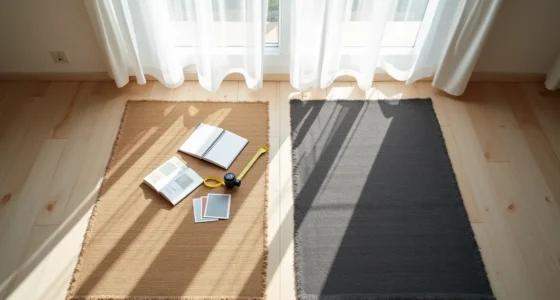

A rug under bed is the single most effective way to anchor your bedroom’s layout, define the sleeping zone, and add underfoot comfort, but only if you choose the right size, placement, and material for your specific room. The wrong proportions can make a spacious room feel cramped, while the wrong pile height can turn a king bed into a tripping hazard. The six interpretations that follow range from a budget-friendly runner to a renter-safe layering trick to a permanent, wall-to-wall investment.
Each one serves a different room shape, traffic pattern, and maintenance tolerance, so you can match the look to your real-life habits rather than a catalog photo.
Key takeaways
- Anchor rugs should extend 18–24 inches past each side of the bed to frame the sleeping zone without tripping your feet on the edge.
- Opt for a two-sided placement only if your nightstands are at least 24 inches wide; otherwise, the rug will jam against the furniture and bunch up.
- In rentals, a partial rug under the bed’s foot two-thirds works best, it avoids shifting the bed’s center of gravity and leaves your skirting board fully visible for the deposit check.
- Layer a flat-weave cotton rug over a plush wool base to get both softness and easy washing; just keep the top rug’s corners secured with double-sided tape to prevent curling at doorways.
Anchor a Rug Under Bed to Define Your Sleeping Zone
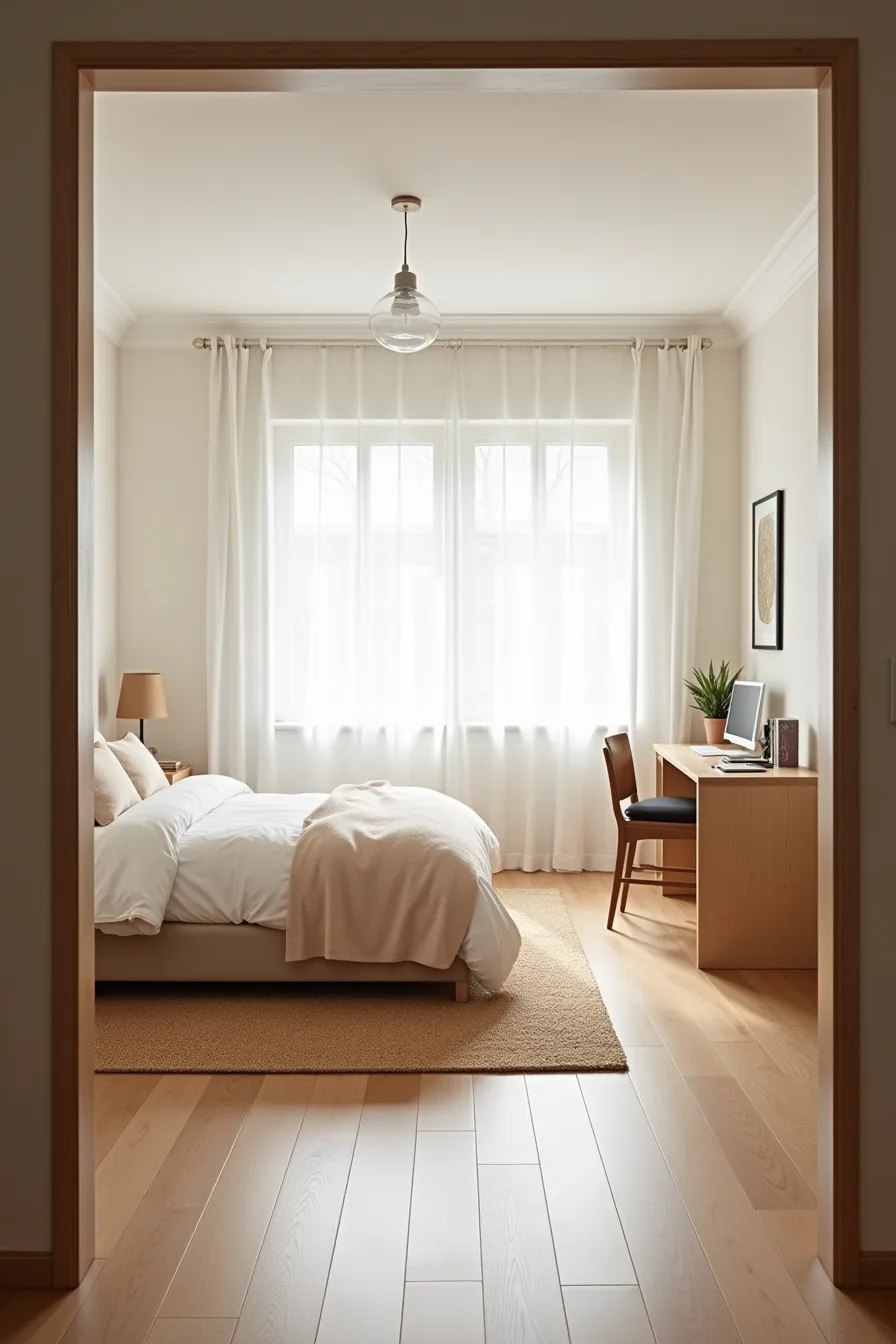
A rug under bed anchors the sleeping area by creating a defined perimeter that separates rest from activity. In an open or multi-use bedroom, this visual boundary prevents the bed from floating ambiguously in the room. A standard 8×10-foot jute rug positioned beneath a queen bed leaves 18-24 inches of floor visible on each side, which is enough to read as intentional without swallowing the room.
The jute material works for this setup because its neutral tone contrasts subtly with hardwood or tile, so the zone reads clearly without clashing. The desk and chair sitting beyond the rug’s edge reinforces the split: sleep on the fiber, work off it. This placement suits bedrooms over 12 feet wide where you’ve surplus floor space to sacrifice.
Vacuum jute weekly and rotate the rug twice a year to prevent uneven wear along the bed’s foot traffic path.
The Two-Sided Placement: Rug Under Bed with Nightstand Coverage
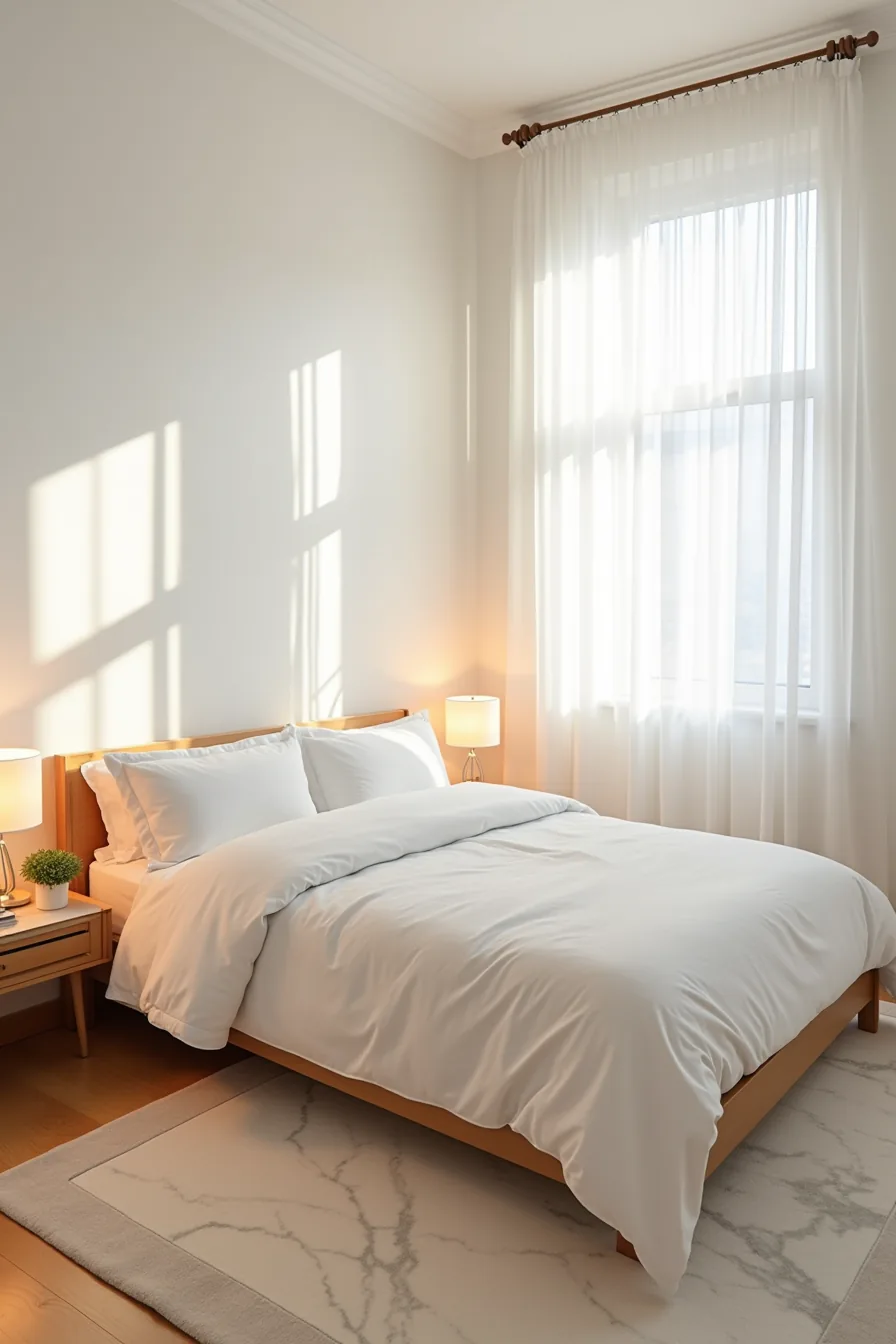
Extending a rug fully beneath both nightstands creates a symmetrical island that visually ties the bed, paired nightstands, and table lamps into one cohesive unit. This setup requires a 9×12-foot rug for a queen bed or a 10×14-foot rug for a king, with the outer rug edges aligning precisely with the outer legs of your nightstands. The 18-24 inches of exposed floor along each side frames the composition without crowding the walls.
This placement suits medium to large bedrooms where the bed sits against the center of a wall rather than a corner. Low-pile wool or a flatweave works best here because the rug sits under nightstand legs, which means constant pressure points that would crush high-pile or looped textures over time. Expect to lift the nightstands when rotating the rug, plan for this twice a year to distribute foot traffic wear evenly across the center.
Vacuum weekly, and use felt pads under the nightstand legs to prevent permanent fiber compression.
Partial Rug Under Bed for Tight Spaces and Rentals
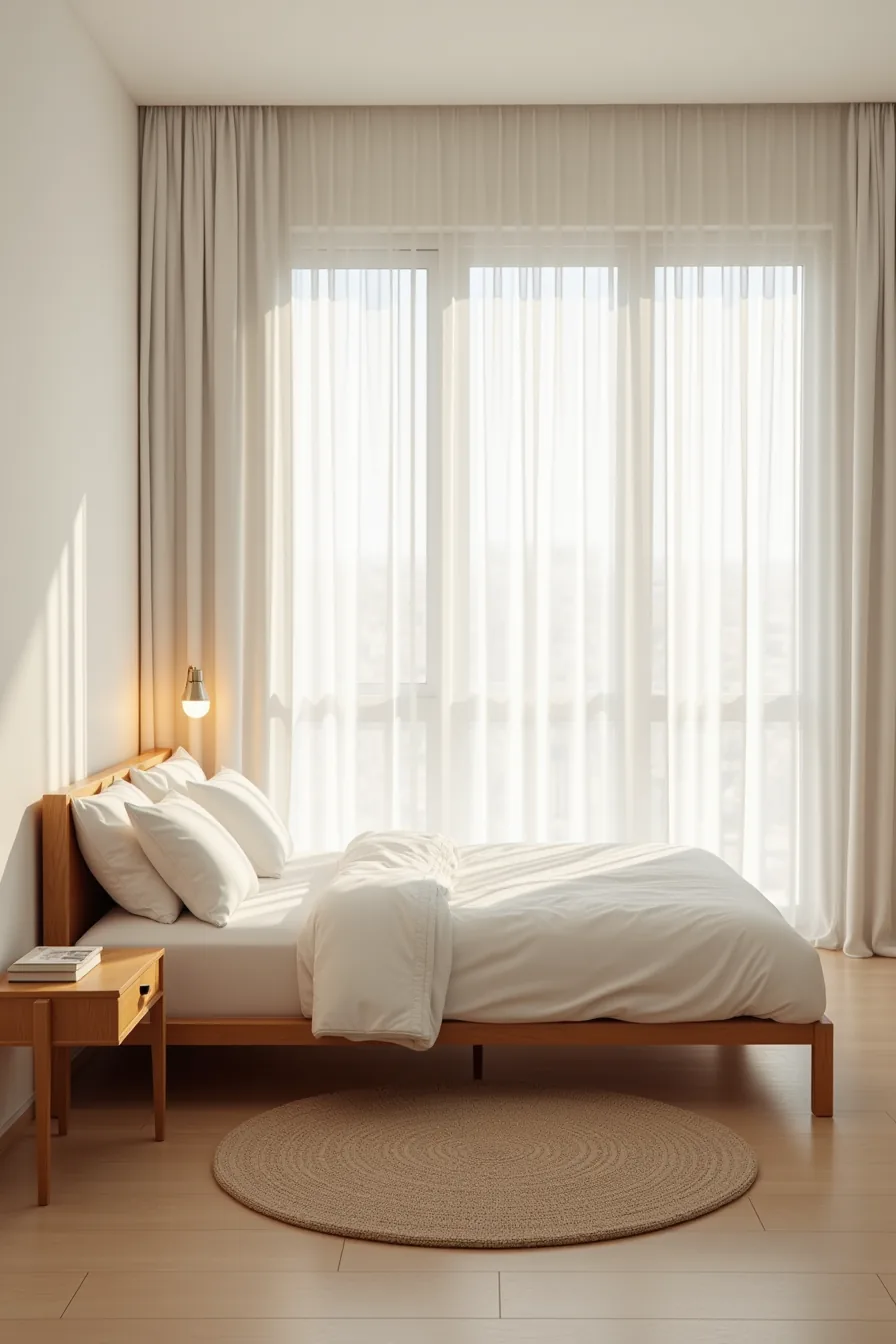
When your bedroom is under 10 feet wide, a full rug beneath the bed leaves little room to walk, so anchor only the foot of the bed instead. A 5×7-foot rug placed at the bottom third of the bed, with the headboard and side areas exposed, keeps narrow floor paths on both sides fully clear, critical for a room where you squeeze past the bed to reach the closet. This partial placement suits rentals because you avoid committing to a large area rug that may not fit your next apartment’s dimensions.
The compact setup works best with a low-pile rug; a 0.25- to 0.5-inch pile height won’t catch under bare feet or create a noticeable lip at the edges. Use a rug pad with a non-slip grip to keep the corners flat, and leave at least 12 inches of bare floor between the rug’s edge and the nearest wall to maintain balanced bedroom layouts. If the rug sits near a door swing, choose a thinner flatweave to prevent the door from scraping the pile.
Vacuum weekly and spot-clean spills immediately, since a partial rug takes more concentrated foot traffic at the foot of the bed. For a budget route, a 5×7 cotton flatweave typically costs less than a comparable wool version, while a wool blend adds durability without the full price tag of pure wool.
Layered Rugs Under Bed for Texture and Color Contrast
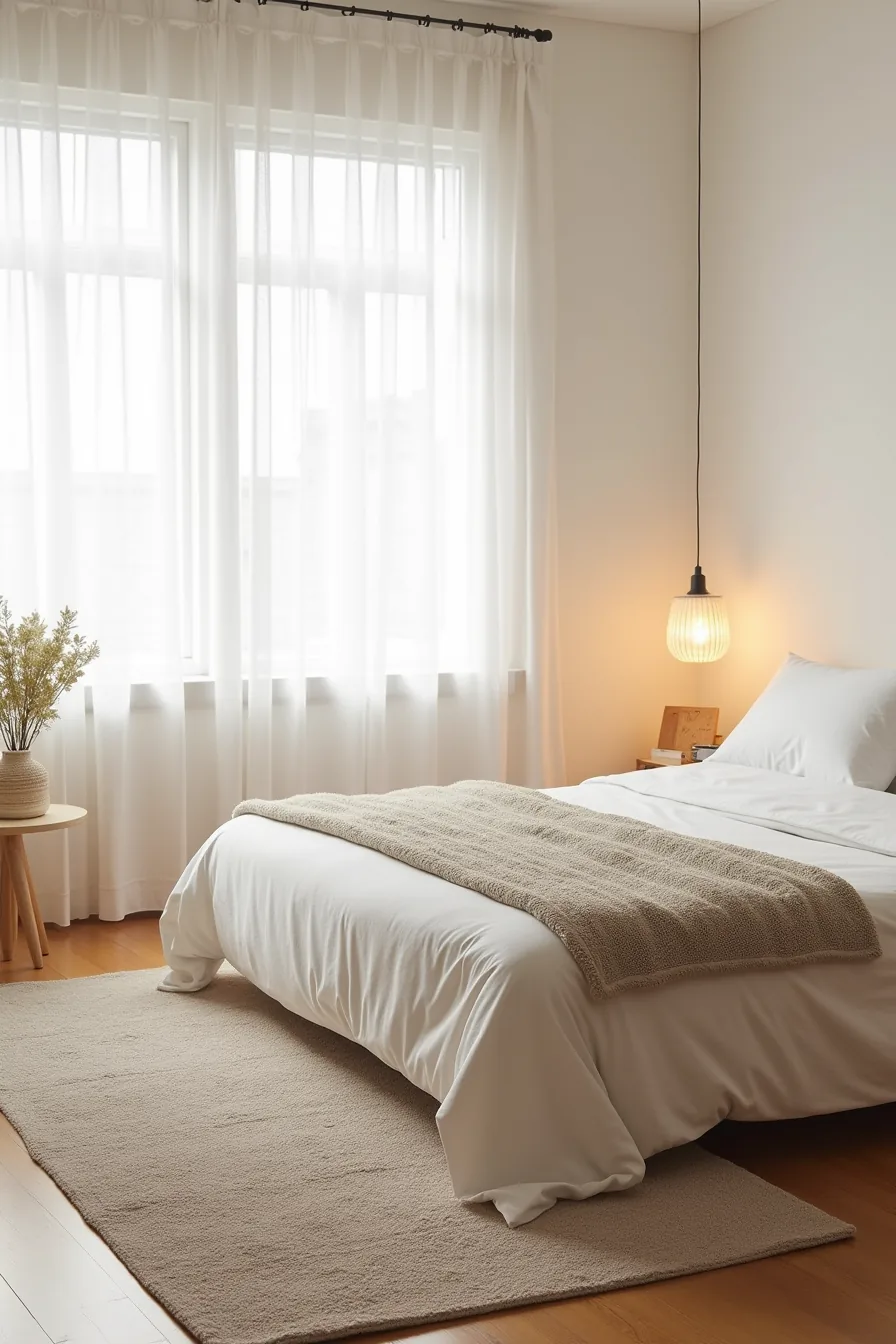
A 9×12-foot solid neutral base rug paired with a 6×8-foot patterned rug layered on top creates the depth that single-rug layouts lack. Offset the smaller rug toward the foot of the bed so it catches sightlines when you enter the room, leaving at least 18 inches of base rug exposed on three sides to define the layering clearly. The contrast between a textured wool base and a flatweave patterned top gives the floor visual weight without competing with your bedding.
This approach suits medium-to-large bedrooms, roughly 12 feet square or larger, where two rugs won’t crowd the furniture footprint. You lose the layered effect if the top rug disappears under the nightstands, so verify your bed width plus 12 inches on each side fits within the base rug’s dimensions. Maintenance doubles: vacuum both layers weekly, and rotate the top rug every three months to keep wear even, since the patterned piece takes concentrated traffic at the bed’s foot.
For a renter-friendly route, choose a washable cotton top rug that travels with you, while investing in the neutral wool base that adapts to any future room.
Natural Fiber Rugs Under Bed: Durability and Long-Term Investment
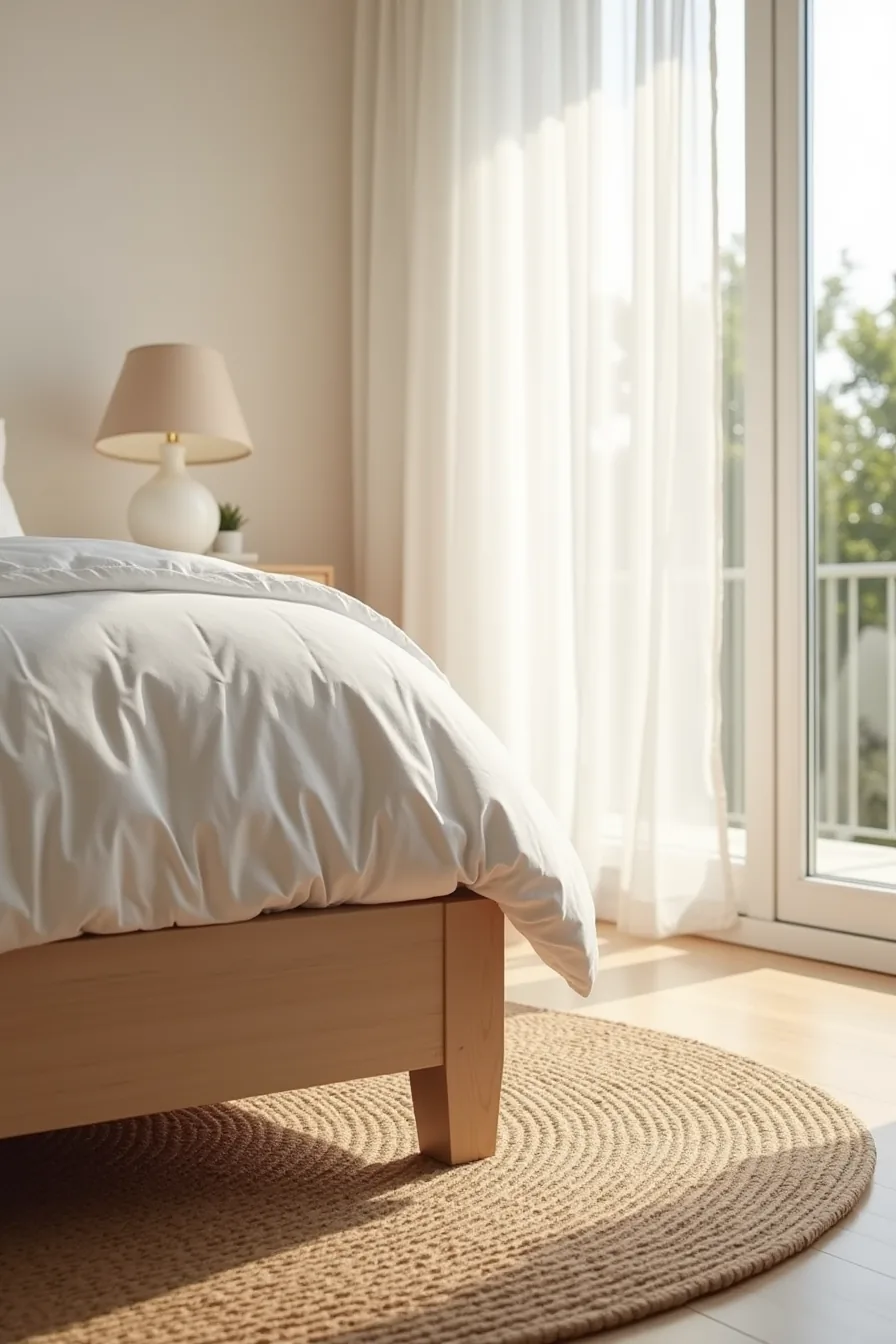
A sisal rug under bed delivers the permanence that layered cotton or wool blends can’t. The close-up detail of a bed edge framed by a natural sisal rug shows why: the woven texture compacts under foot traffic rather than matting, and the exposed bed leg sitting directly on the fibers proves the rug can handle continuous pressure without crushing. Sisal and jute run roughly $4 to $10 per square foot, while wool sits higher at $8 to $15, but all three outperform synthetic blends in lifespan, typically holding their structure for 8 to 12 years with proper care.
Cleaning demands are the real trade-off. Natural fibers stain easily and resist spot-cleaning, so you need a vacuum with a beater bar turned off to avoid fraying the weave, plus immediate blotting for any spills. Shedding is normal for the first three to six months, especially with sisal, and diminishes as the fibers settle.
For high-traffic zones near the bed’s foot, place a washable cotton runner on top to absorb daily wear while the natural fiber underneath stays protected.
This route suits owners who want a permanent flooring solution and can commit to protective measures. Budget buyers should skip jute, it’s the least durable and shows wear fastest. Instead, choose a tight-weave sisal in a low-pile construction for the best longevity per dollar.
Rug Under Bed Color and Pattern Matching to Your Bedroom Style
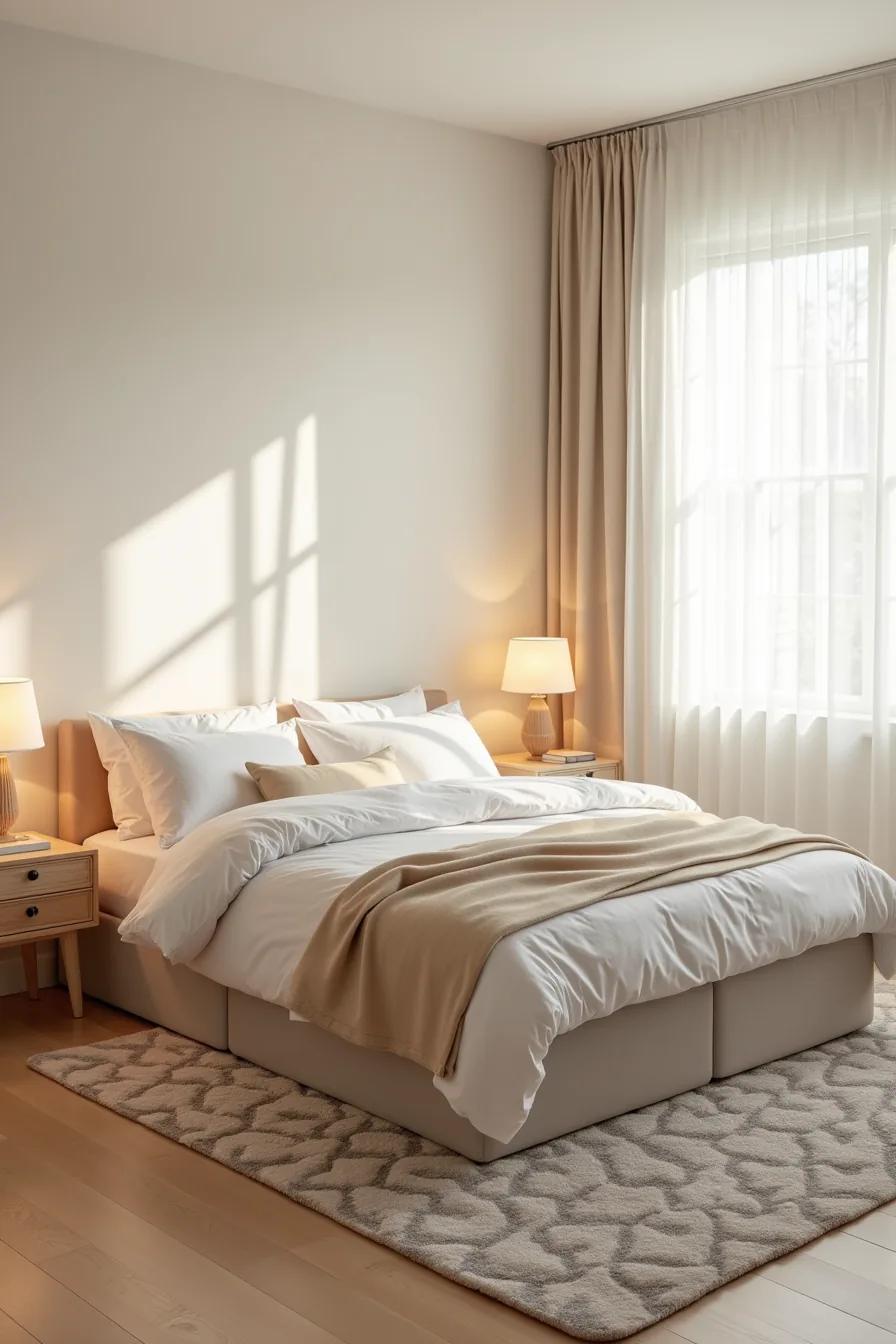
An 8×10 patterned rug under bed anchors a full bedroom layout when the pattern pulls from existing decor instead of competing with it. In this setup, a geometric rug in muted terracotta and sage echoes the wall color and picks up the warm tones in the bedding, while the furniture’s dark wood frames the composition. The result is cohesion without monotony, the pattern adds visual interest while the repeated palette keeps the eye moving smoothly across the room.
Color choice directly controls perceived space. Light, low-contrast rugs make a small bedroom feel larger by reducing visual boundaries, while deep or high-contrast patterns draw the room inward, creating intimacy in larger spaces. For pattern scale, match it to room dimensions: small bedrooms suit patterns under 12 inches in repeat, while spacious rooms handle bolder motifs up to 24 inches without overwhelming.
This scale relationship is what separates a deliberate design choice from a rug that simply takes up floor space.
Before buying, lay out painter’s tape on the floor in the rug’s dimensions and view it from the doorway at different times of day. This confirms how the pattern interacts with your wall color under both natural and artificial light, a step that prevents the most common mismatch: a rug that looks perfect in the store but clashes with your room’s specific lighting conditions. For a cozy bedroom inspiration, the geometric rug paired with coordinating bedding and wall color demonstrates the safest route to a polished, intentional look.
Your checklist before you buy
Before you commit to a rug, run through these three checks. First, measure your bed’s footprint and add 24–36 inches on each side for a proper border. Second, match the rug pile to your room’s traffic, low pile for high-traffic bedrooms, plush for low-use guest rooms.
Third, verify the rug’s backing works with your floor type, especially if you’ve hardwood and need a non-slip pad.
The one step that matters most
Start with painter’s tape. Mark the rug’s intended footprint on your floor, then live with it for two days. You’ll quickly see if it blocks your dresser doors, catches your morning path, or feels too small.
Only then order the rug. That 48-hour test costs nothing and saves you a return shipping fee that typically runs $30–$60.
Frequently Asked Questions
What size rug should go under a queen bed?
For a queen bed, choose a rug 8 by 10 feet if you want it to extend past the sides and foot. For a narrower runner effect, a 5 by 8 feet rug placed horizontally under the lower two-thirds works well.
Can you put a rug under a bed in a small bedroom without it looking cramped?
Yes, use a thin, low-pile rug and leave at least 18 inches of bare floor around the rug’s perimeter. Opt for a light color or subtle pattern to visually expand the space rather than anchoring it.
How do you keep a rug under a bed from sliding or bunching?
Use a rug pad that matches your floor type, grippy felt for carpet, rubber for hardwood. Check and re-stretch the rug monthly, especially after vacuuming, to prevent wrinkles from forming under the bed’s weight.
Is a rug under bed easy to clean, and how often should you vacuum it?
Yes, most rugs under beds are easy to clean with a vacuum’s low setting. Vacuum twice weekly to remove dust and allergens, and spot-clean spills immediately. Deep-clean with a steam cleaner every 6 to 12 months, depending on foot traffic.