Bedroom rug inspiration isn’t about finding the single perfect rug, it’s about choosing the right placement and material strategy for your specific room size, budget, and daily habits. A 5×8 rug under a queen bed anchors the space differently than two runners flanking a king, and a flatweave cotton fails where a dense wool thrives. The real work happens before you browse: measuring your floor plan, mapping traffic paths, and deciding whether you want warmth underfoot or visual contrast.
What follows are six distinct approaches, each with the exact dimensions, material trade-offs, and maintenance realities you need to replicate them without guesswork.
Key takeaways
- Anchor the bed with a rug extending 18–24 inches beyond each side and foot, or use two runners flanking the bed if floor space is tight.
- Choose a runner 24–30 inches wide beside the bed to protect bare feet and high-traffic paths without blocking dresser or closet access.
- Match pile height to season and use: low-pile wool or flatweave for year-round durability, or a 1.5–2.5 inch plush rug for winter warmth at the cost of harder vacuuming.
- Size by room, not bed: small rooms under 100 sq ft need a 5×8 or two 2.5×7 runners, medium rooms suit an 8×10, and large rooms over 180 sq ft can take a 9×12 with furniture fully on the rug.
Under-Bed Rug Placement for Anchor and Warmth
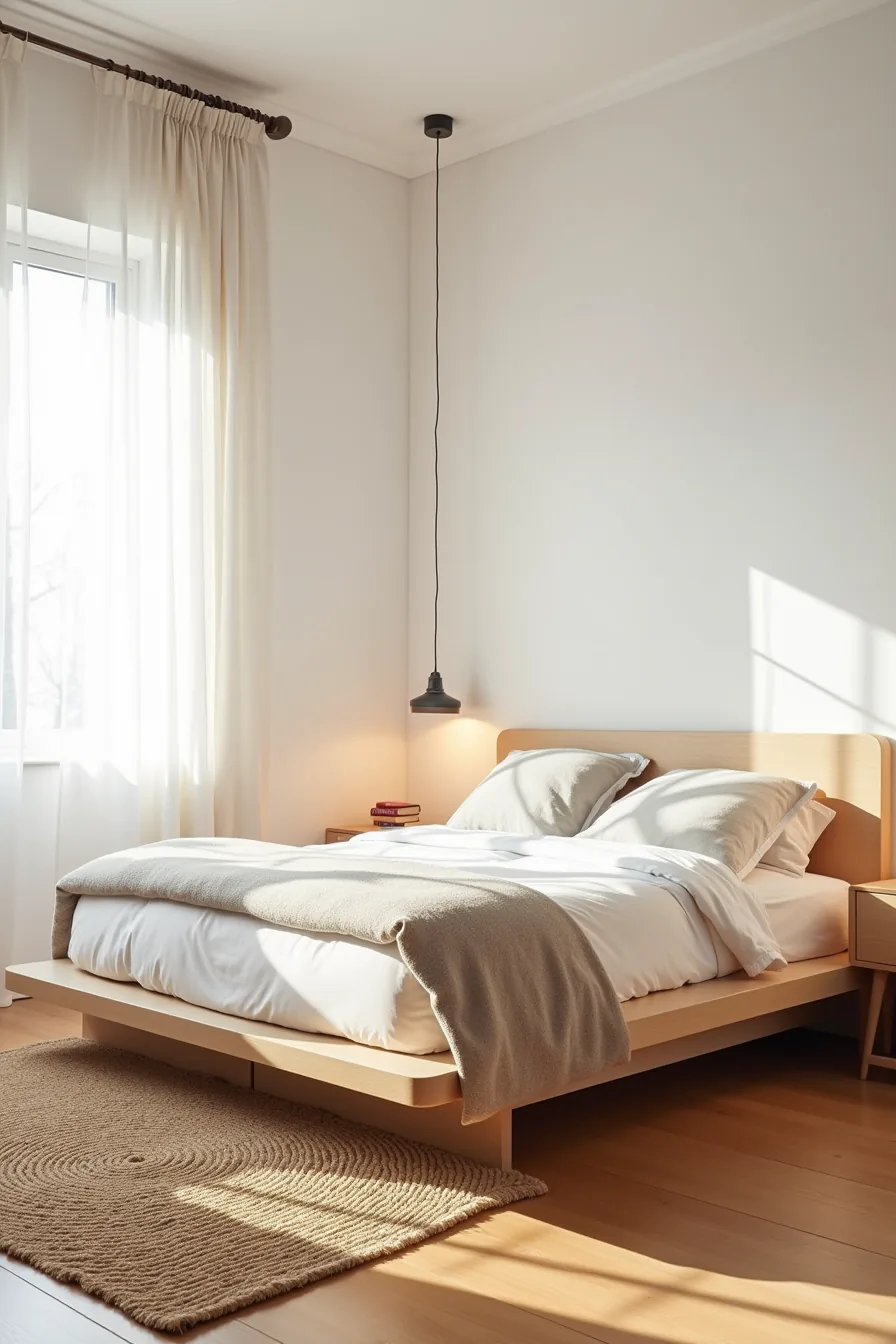
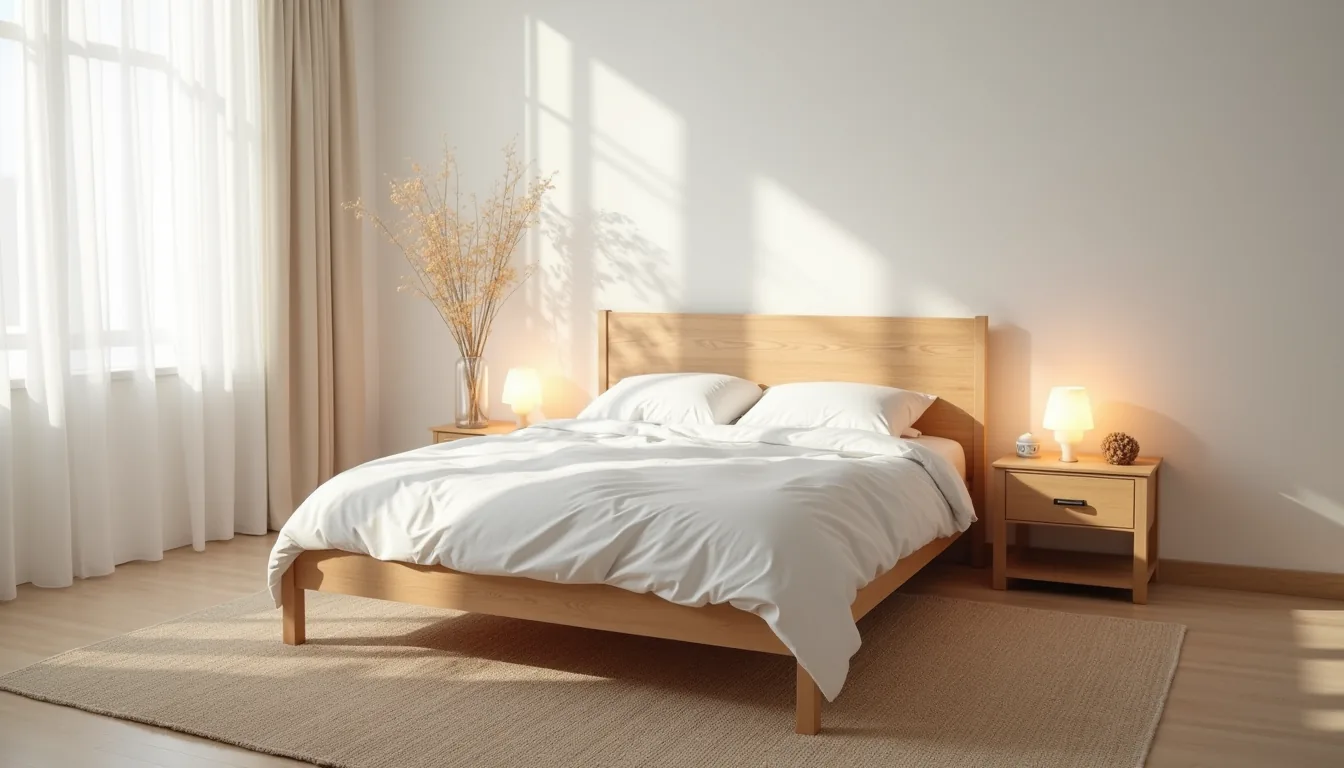
The most reliable way to generate Bedroom Rug Inspiration that actually functions is to start with the bed itself. In a small bedroom with a low-profile platform bed and bare wood floors, a jute rug extending fully beneath the frame creates a clear visual anchor. Leave roughly 12–18 inches of visible rug on each side; this proportion grounds the bed without making the room feel smaller.
The natural fiber adds thermal comfort underfoot for those first cold steps in the morning, while the pendant light above draws the eye upward to balance the visual weight below.
This setup suits anyone who wants warmth without pattern commitment. Jute is durable but rough, so pair it with a flat-weave or wool layer if you walk barefoot frequently. For a medium or large bedroom, keep the same principle but scale up: the rug should extend 24–36 inches beyond each side of the frame, creating a generous landing zone that anchors the entire sleeping area.
Avoid letting the rug stop mid-way under the bed, that creates a trip hazard and breaks the visual continuity.
Runner Beside Bed for Narrow Spaces and Traffic Flow
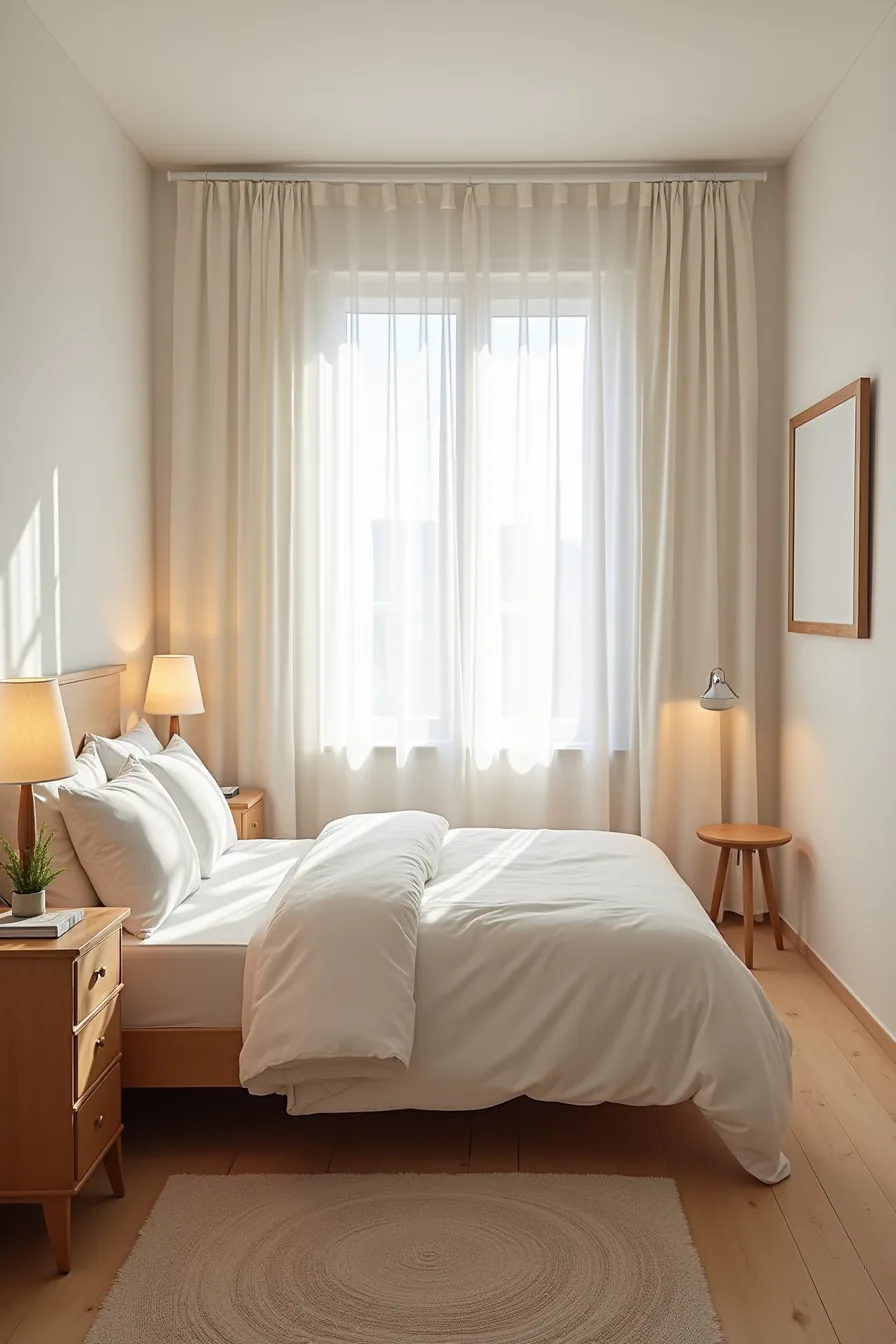
When floor space is tight, a runner beside bed solves two problems at once: it protects your most-used path from cold floors and defines a clear walkway. In this setup, a long, thin runner rug roughly 2.5 feet wide runs along one side of the bed frame, leaving 18 inches of clearance to the opposite wall. That gap keeps the room feeling open while giving you enough room to move comfortably.
The dresser at the foot stays fully accessible because the runner never extends past the bed’s edge.
This approach suits compact bedrooms, guest rooms, or any layout where a full-area rug would crowd the space. Choose a low-pile wool or flat-weave runner with a non-slip pad underneath, narrow rugs shift easily, and a pad prevents both slipping and bunching. For a queen bed, a runner between 6 and 8 feet long works well; for a king, extend it to 9 or 10 feet so the rug runs the full length of the frame.
If you need access from both sides, place two runners symmetrically rather than one wide rug, which keeps the visual rhythm intact without sacrificing floor space.
Soft Texture Focus: Material Selection for Winter Warmth
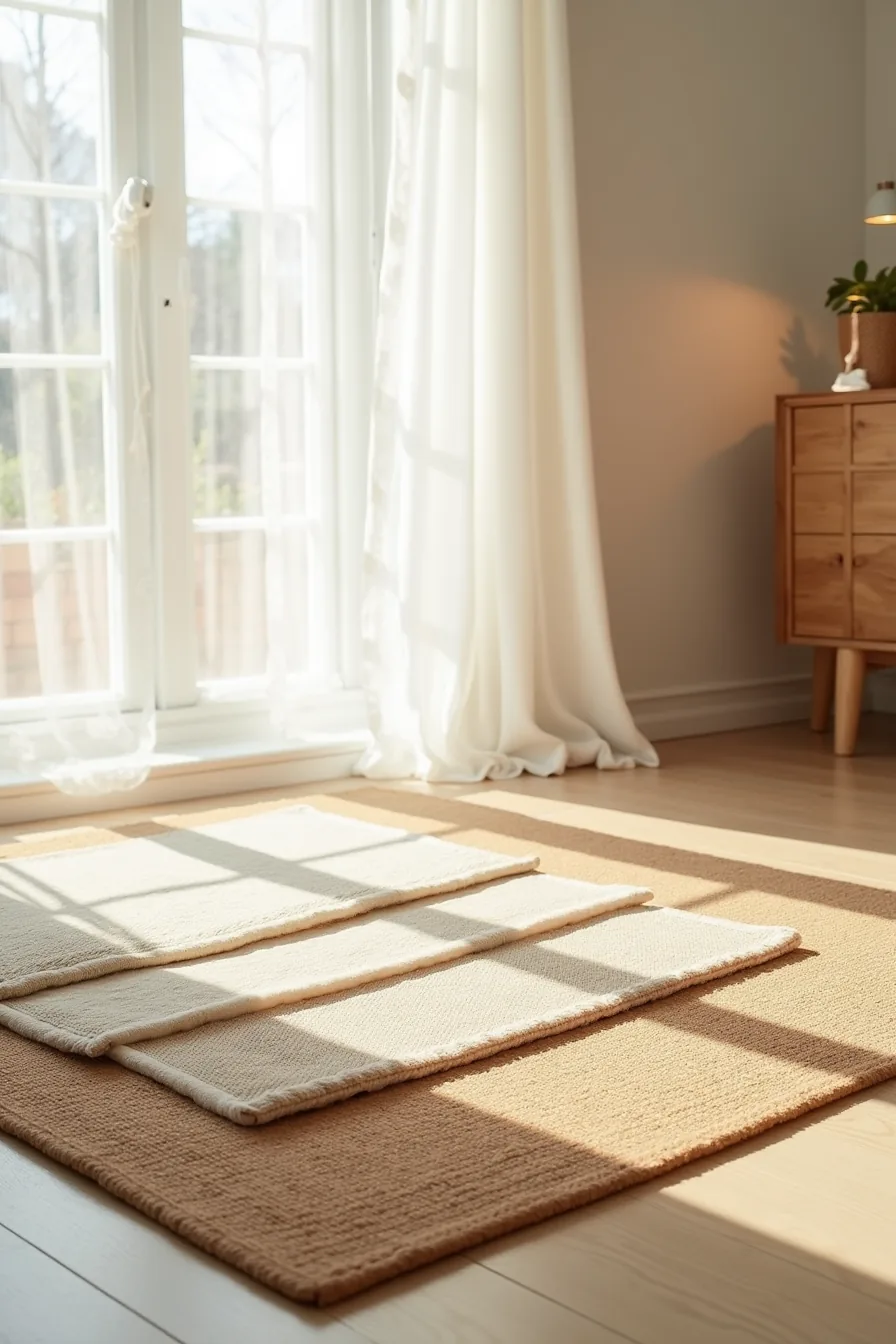
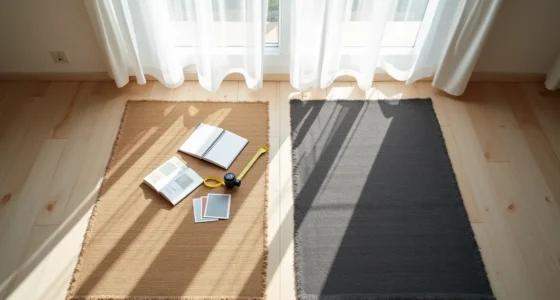
Four swatches tell the full story of winter rug performance: thick wool, natural jute, synthetic polypropylene, and sisal. Wool leads on heat retention and softness, it traps air in its fibers, keeping bare feet noticeably warmer than any alternative, and it withstands heavy foot traffic for decades if rotated seasonally. Expect to pay roughly $8–$15 per square foot for quality wool, and budget for professional cleaning every 12–18 months.
Jute and sisal offer natural texture and lower cost ($3–$7 per square foot), but both are coarse underfoot, better suited as a base layer over which you place a smaller wool mat where you step out of bed. They also absorb moisture readily, so they require a breathable pad underneath and immediate drying if spilled on. Polypropylene sits at the value end ($1.50–$4 per square foot): it resists staining and fading, dries quickly, and works well for renters who may need to discard a rug after a few years.
The trade-off is a synthetic feel and inferior insulation, you’ll want slippers rather than bare feet on cold mornings. If you’re investing for the long term, prioritize wool; if you’re furnishing a temporary space, polypropylene gives you 80% of the visual warmth at a third of the cost.
Color and Pattern Strategies for Bedroom Rug Ideas
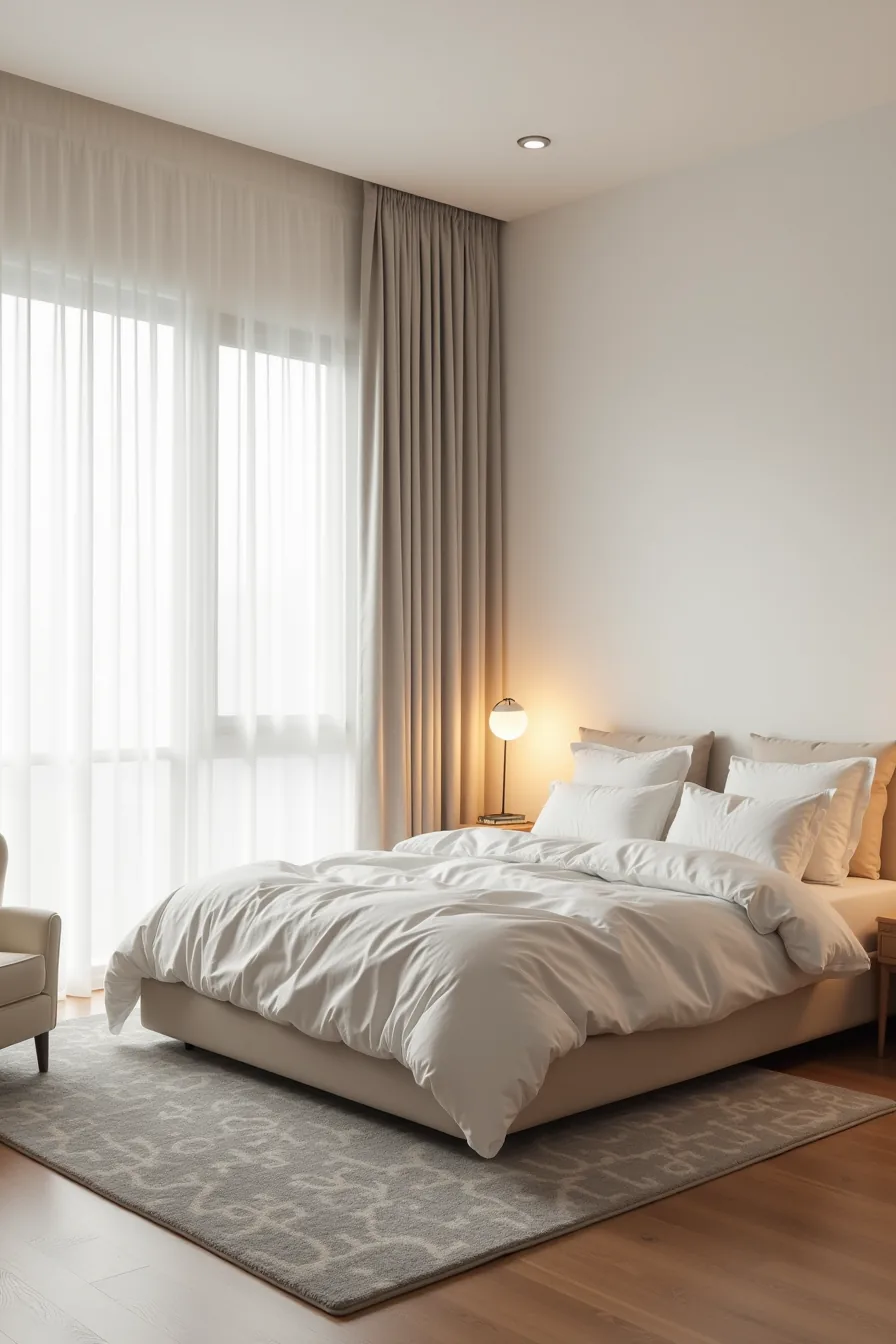
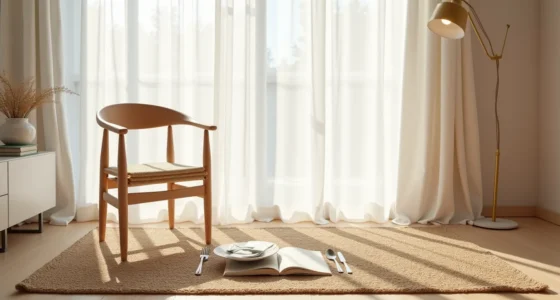
Color does the heavy lifting before pattern ever gets a chance. In a north-facing bedroom with pale walls and minimal natural light, a soft gray patterned rug with subtle geometric lines prevents the space from feeling flat without introducing the contrast that would shrink it. The accent chair in cream echoes the rug’s lighter tones, keeping the visual weight distributed evenly across the room.
Low-contrast patterns, think tonal lines rather than bold checks, read as texture from a distance, which means you get visual interest without the busyness that makes small rooms feel cramped. In south-facing bedrooms where sunlight floods in for most of the day, those same pale gray tones can wash out; you would need a deeper charcoal or a pattern with a stronger value shift to anchor the space against the glare.
Pattern density also controls mood. Fine, repetitive geometries calm a room and suit minimalist styling; larger-scale motifs add energy but demand simpler bedding and window treatments to avoid competing for attention. North-facing rooms benefit from warm undertones in the gray (taupe or greige) to compensate for the cool light, while south-facing rooms can handle cooler blue-grays that temper the warmth.
For Bedroom Rug Ideas for a Warmer Winter Feel, opt for a pattern with a cream or ivory background, it reflects the limited winter light better than darker fields do.
Sizing and Proportion Rules for Different Room Dimensions
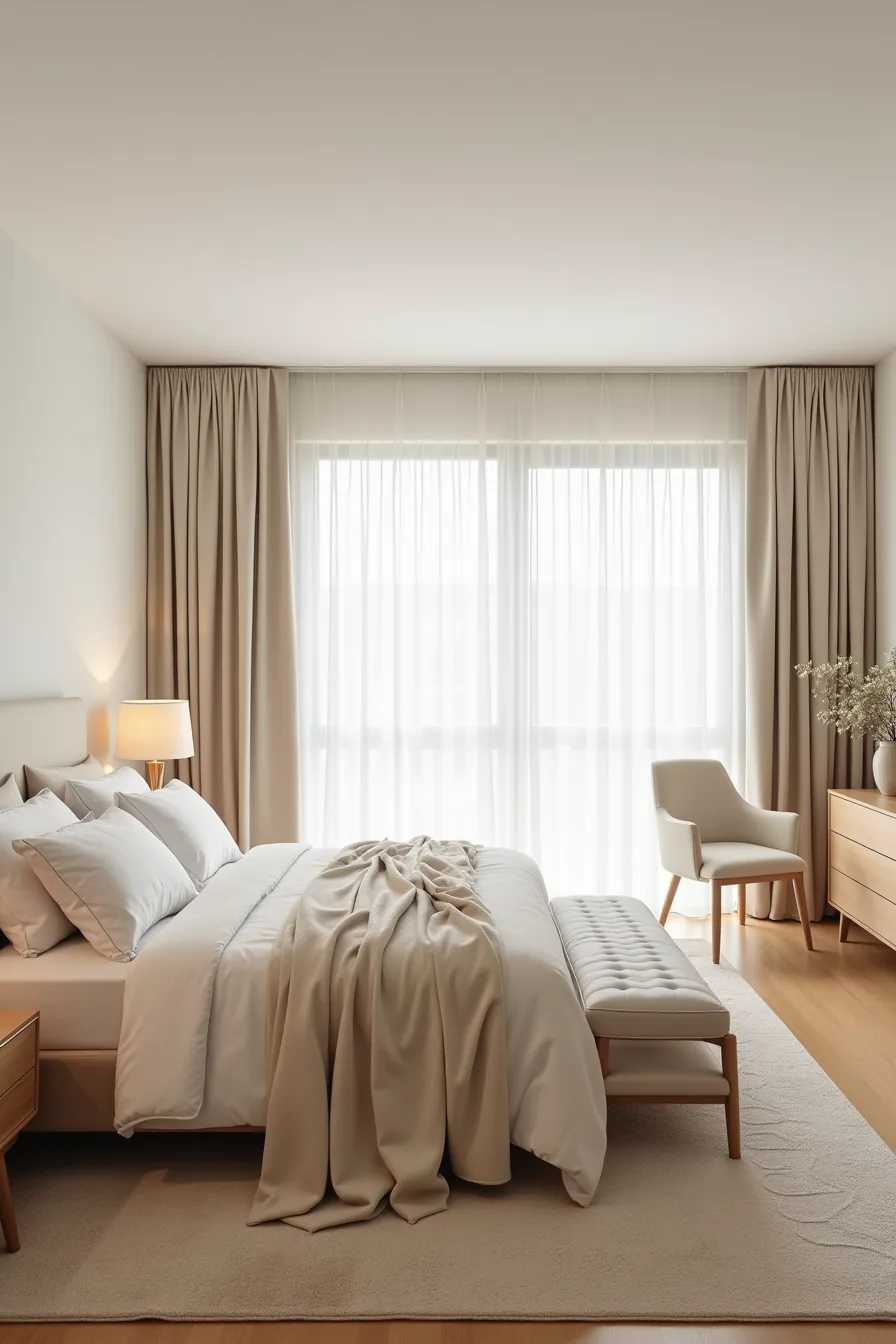
For bedrooms under 120 square feet, your rug should stop 12–18 inches from the walls on all sides. A queen bed takes a 5×7 or 6×9 rug, leaving just enough floor exposed to define the perimeter without making the room feel like a postage stamp. You can place the rug entirely under the bed with only 12–18 inches extending past the foot, never run it wall-to-wall, which visually shrinks the space further.
In a 120–200 square foot room, a king bed calls for an 8×10 or 9×12 rug. Position it so it extends 24–36 inches beyond the sides and foot of the bed, which lets nightstands sit fully on the rug without their legs teetering at the edge. This central anchoring reads as intentional design rather than a floating mat.
For rooms over 200 square feet, follow the 36–48 inch extension rule on three sides of the bed, the headboard side can sit flush against the wall. A 200+ square foot master with a king bed and a bench at the foot needs a 10×14 or 12×15 rug; the bench and nightstands both park on the rug perimeter, which visually stitches the furniture group into one cohesive zone. If the rug runs shorter, the room’s generous proportions will make it look like a bath mat, err large, not small, when in doubt.
Budget, Renter-Friendly, and Investment Routes
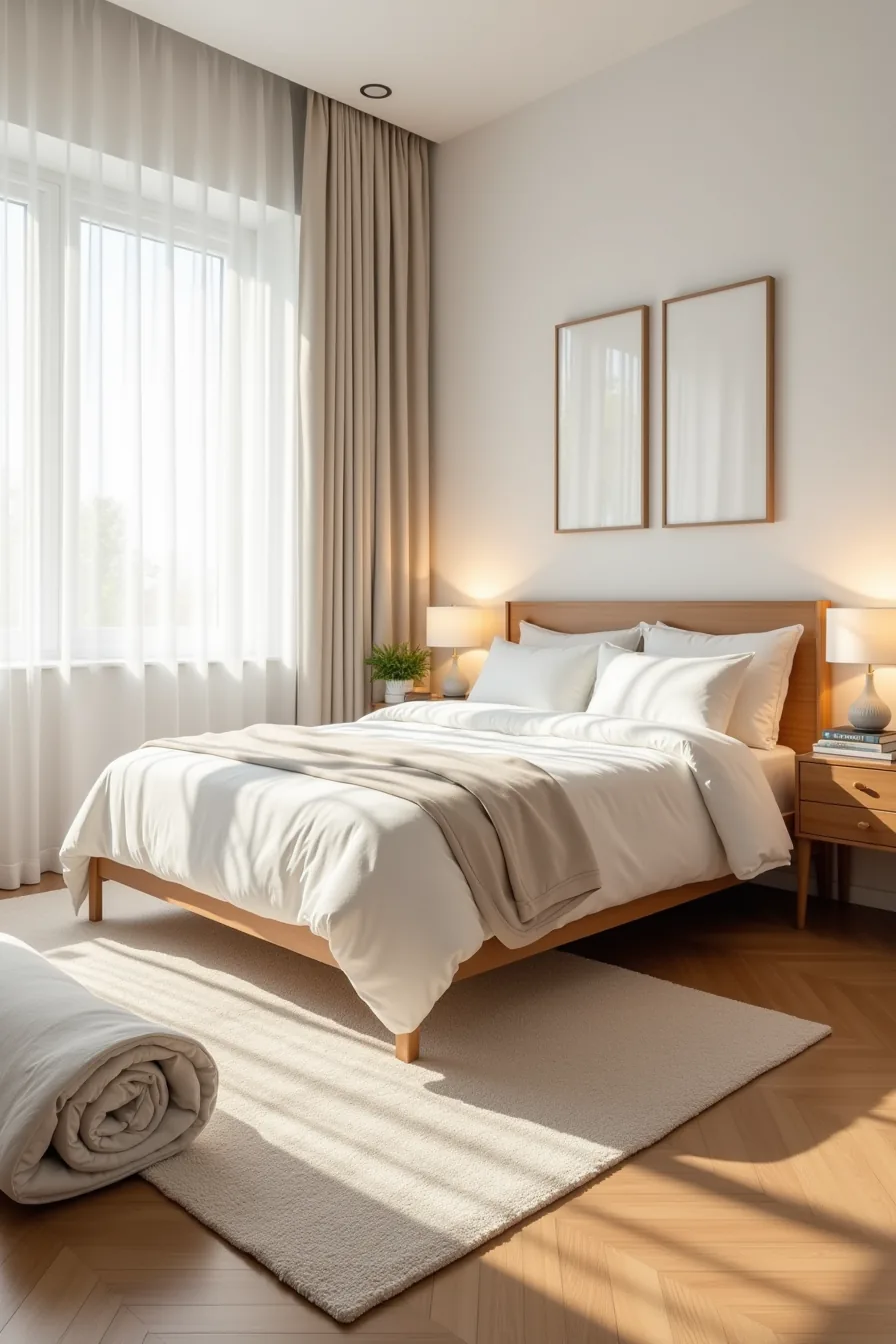
If you’re renting or testing a style for the first time, a synthetic polypropylene rug in a 5×7 or 6×9 size runs $80–$200 and lasts 3–5 years before the fibers crush under foot traffic. Pair it with a non-slip rug pad, the rolled pad and synthetic rug sitting at the foot of your bed keep the setup fully removable, leaving zero marks on the flooring when you move out. This route suits anyone who switches decor seasonally or expects to relocate within a few years.
For a permanent home, a hand-knotted wool rug in the same footprint costs $800–$2,500 but holds its pile for 15–20 years with proper vacuuming and rotation. The wool rug anchoring your bedroom alongside matching bedside tables and framed art absorbs the daily wear of bare feet and pets, and wool’s natural stain resistance means a single spot-cleaning session usually lifts coffee or tea spills without professional help. Choose wool if you want one purchase that outlasts two lease cycles and improves the room’s acoustics, synthetic options can’t match wool’s sound-dampening density or its ability to recover from heavy furniture indents.
Your one-step shortcut
You don’t need to master all six approaches at once. Pick the one that solves your most pressing problem, whether that’s covering cold floors, anchoring a bed that floats, or hiding a stain-prone area.
Measure your bed frame first. That single number determines every rug size that will work.
Then buy a swatch or order a sample in your shortlisted material. Live with it for three days, placing it where the rug will go. Notice how it feels underfoot at 6 a.m.
And how it reflects light at dusk. That small test costs less than a wrong full-size purchase and settles the decision faster than any mood board.
Frequently Asked Questions
Should a bedroom rug go completely under the bed or just partially?
Fully under the bed works best for grounding the space, extending 18-24 inches beyond the sides and foot. Partial placement suits small rooms or layered looks, but ensure at least 12 inches of rug visible at the foot and sides for balance.
What rug size works best for a small bedroom with limited floor space?
Choose a 5×8 or 6×9 rug placed perpendicular under the lower two-thirds of the bed, leaving 18-24 inches of bare floor at the headboard. This anchors the bed without overwhelming the room or blocking nightstands.
Are natural fiber rugs or synthetic rugs better for bedroom warmth and durability?
Synthetics like polypropylene offer superior stain resistance and durability at lower cost, but feel less plush. Natural wool provides warmth and softness with better insulation, though it requires professional cleaning and costs more upfront. For high-traffic bedrooms, synthetics win on maintenance.
Can renters use bedroom rugs without damaging flooring or violating lease terms?
Yes, use rug pads made of felt or rubber that are non-staining and non-adhesive. Avoid tack strips, glue, or tape. Keep rugs dry and vacuum regularly to prevent mold or discoloration, which could trigger lease penalties.